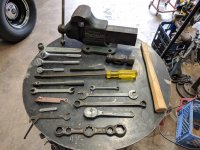
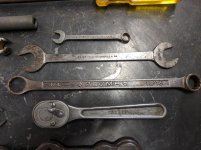
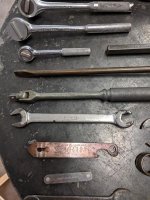
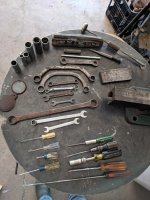
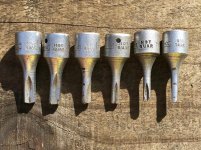
It's not that it's intended to fail, but realistically, Snap-on knew it might eventually fail due to physics, or the tool's "nature" (as Snap-on put it), not to their design, material or workmanship. If you think about the end of a 3/16" drive pin, or those thin flanges on a carb jet puller, or the shape of a #1 (smallest there is...) cross-recess (Phillips) screwdriver tip, it becomes easier to understand. Nothing you can do is going to prevent those things from possibly being bent or broken eventually. Plomb and many other mfgrs exempted the same tools.
Here is the note on page 3 of their 1939 catalog. I paged through and made a list of all the tools with the star. Then I did it for every successive catalog through the early 50's. Their rationale became very clear very quickly.