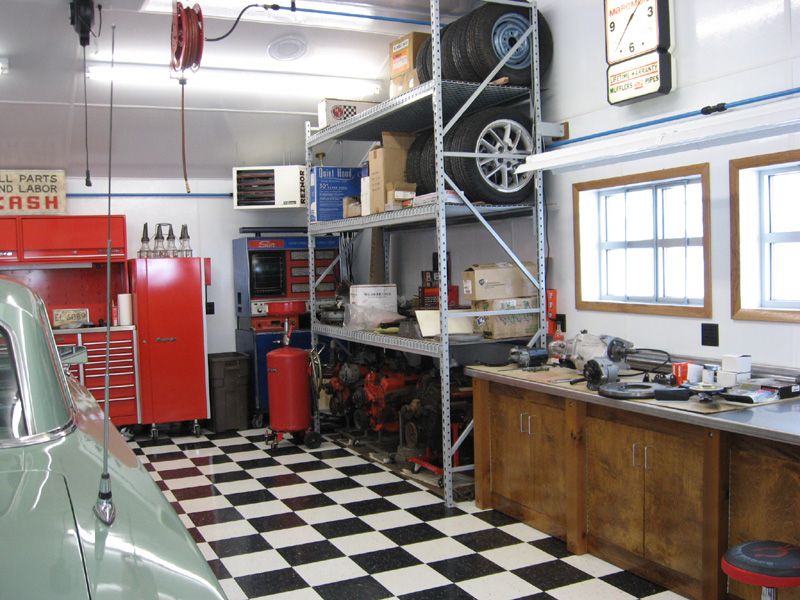
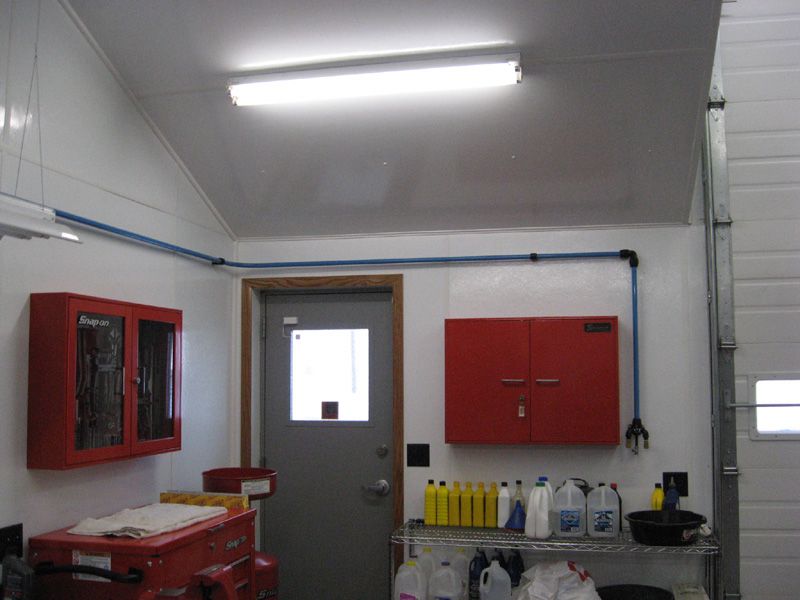
The original air lines were iron pipe and the air compressor in the shop when I bought it was a single stage, 60 gallon vertical unit. It was operating fine and a son took that for his home shop. Since I was going to use a bead blasting cabinet I knew I would need a large air source.
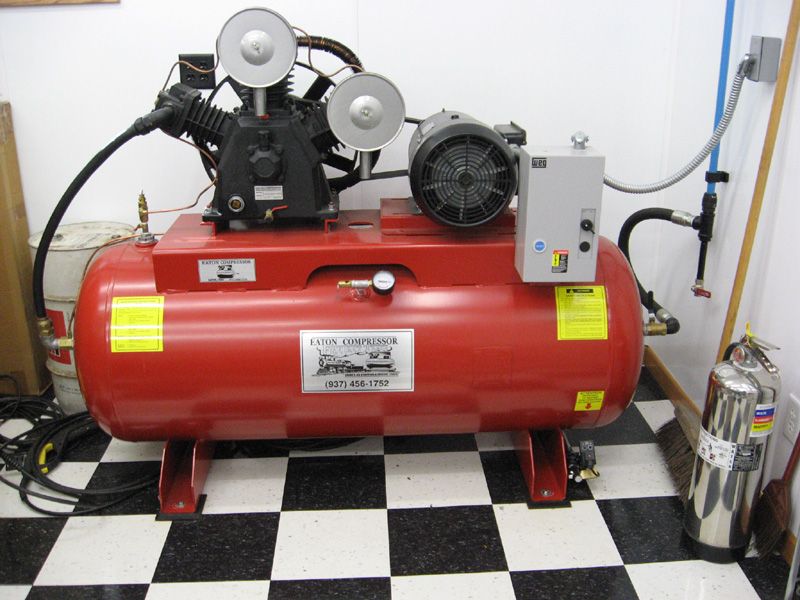
This is what I decided on. Made by Eaton in Ohio, single phase, 10HP, 3 cylinder, 120 gallon. Go to their web site if you want more info. Suffice it to say it's a rugged unit made to be serviced when the time comes and has a host of clever features. Two that really attracted me was the fact that it runs at half the rpm than on most compressors, turning only 1750 rpm. That helps the pump run cooler, last longer and is much quieter in operation at 73 db. The other is a run on feature which is useful when I'm bead blasting or otherwise using large volumes of air. With this feature engaged the electric motor never turns off, but the valves on the pump open so that it's not pumping. When air in drawn down the valves reengage and it starts pumping again. Cycling on and off this way continuously. The advantage of doing this is that you're not starting and stopping the electric motor. That is what most of the electrical draw is from, starting the motor up. It takes very little power to run the motor with the pump free wheeling.
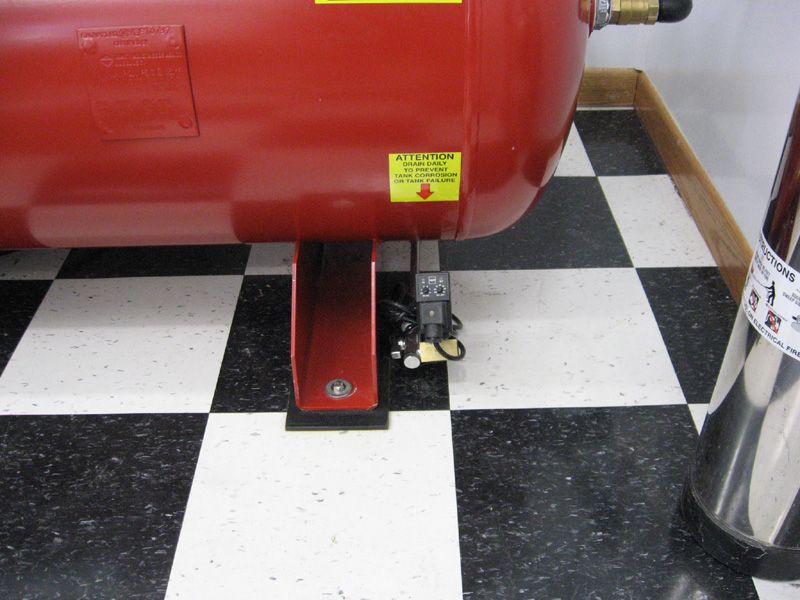
The air compressor also featured an auto drain on the tank. This unit automatically purges water from the bottom of the tank on a schedule that can be set up on this unit. It can be set to how often ( every 5 minutes or every hour etc. whatever you want) and for what duration ( 1 second purge, or 5 sec, 20 sec etc. )
To connect the pump to the shop air line I had a local hydraulic shop make up a short flexible line. It's 1" ID ( inside diameter)
I put a drain valve right at the bottom of the first vertical line.
At Eaton's suggestion I hung the first 20' of horizontal line with a slight slope back to the tank. Almost all the moisture will condense in this amount of line and then run back to the tank where the auto drain will purge it from the system. It's important to drain water out of the tank frequently and doing it this way makes it seamless and hassle free. I'm not doing any painting with this system so this is all the water separator I need.
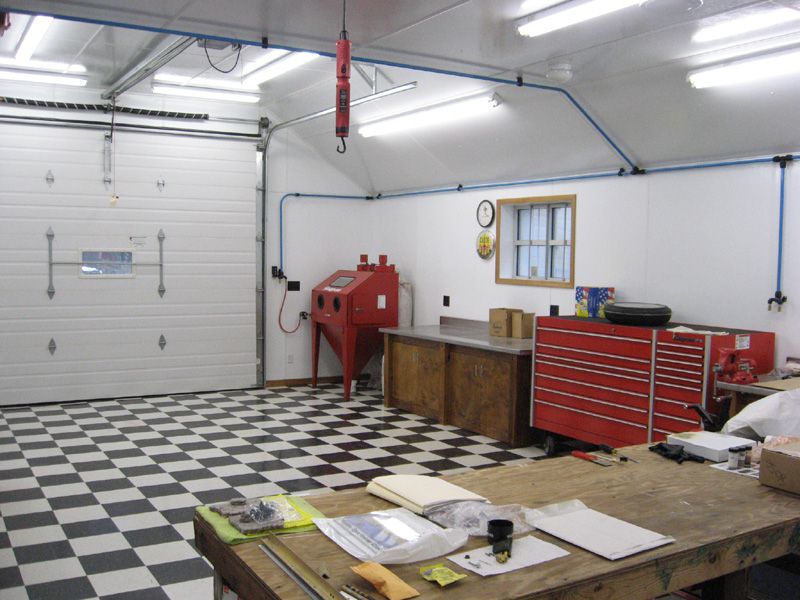
This is across the room from the compressor.
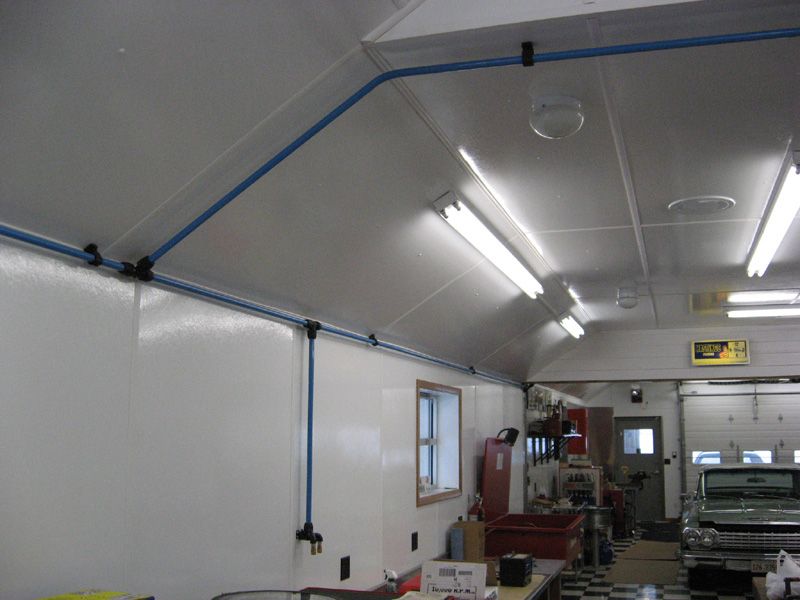
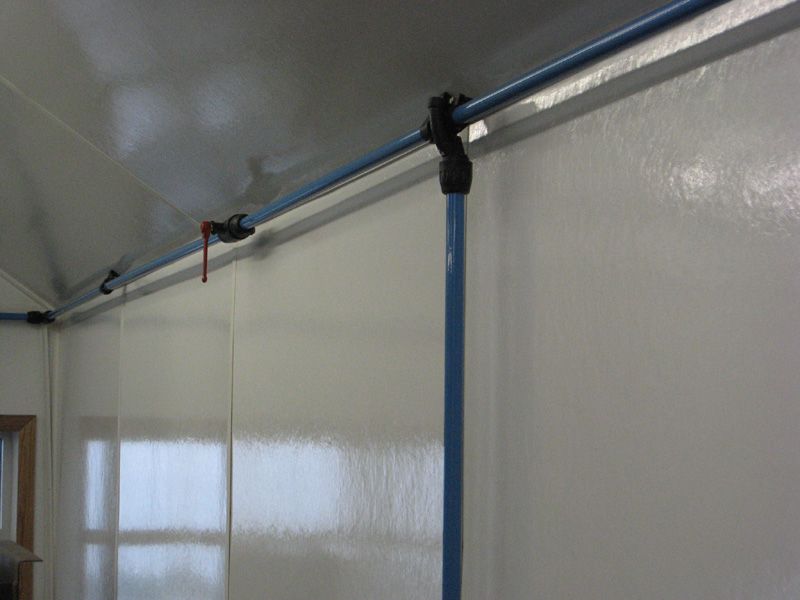
As the air line moves toward the other end of the shop. This is German made, powder coated aluminum pipe as previously discussed. You can bend it with a conduit bender. This is a link to the manufacturer, curtsy of Shocker from page 15, post #299, thank you sir.
 http://www.transairaluminumpipe.com/
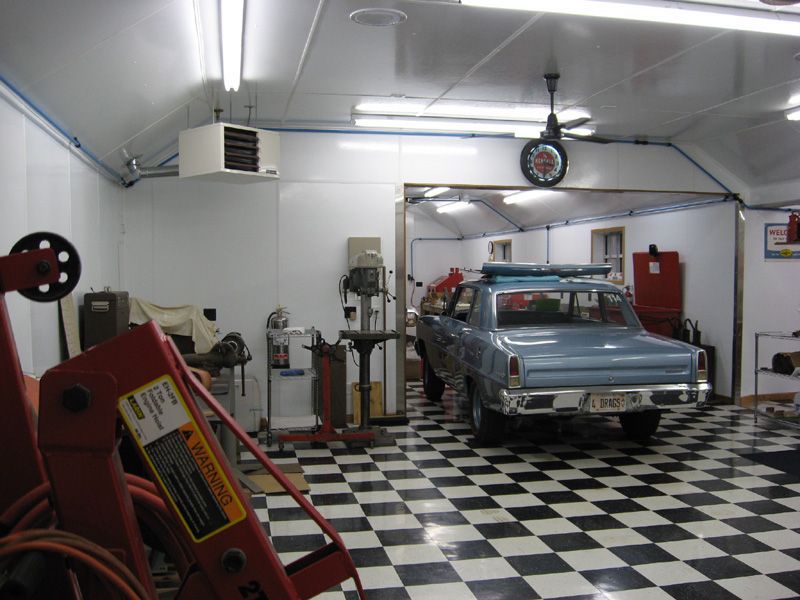
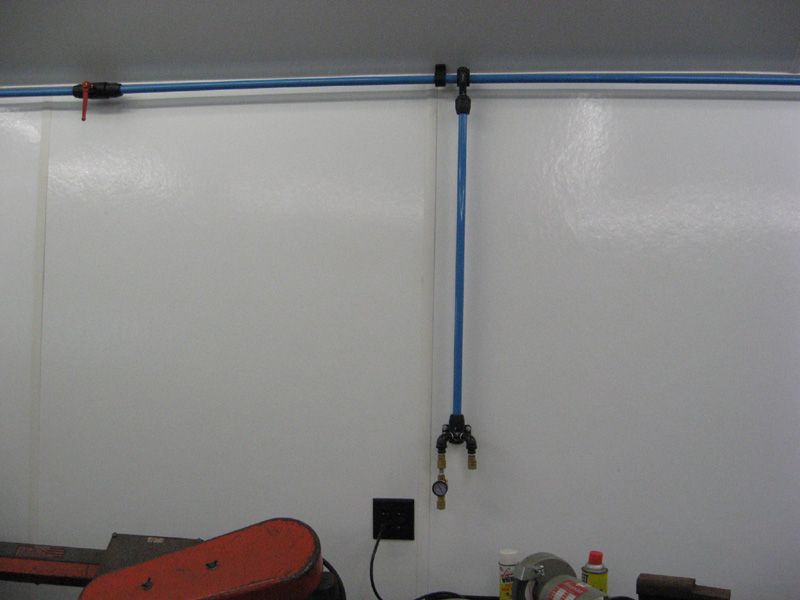
As the air line enters the fab room on the right.
Notice you can't see any writing on the air line anywhere. I made sure to turn the printing toward the wall. I just like the cleaner look.
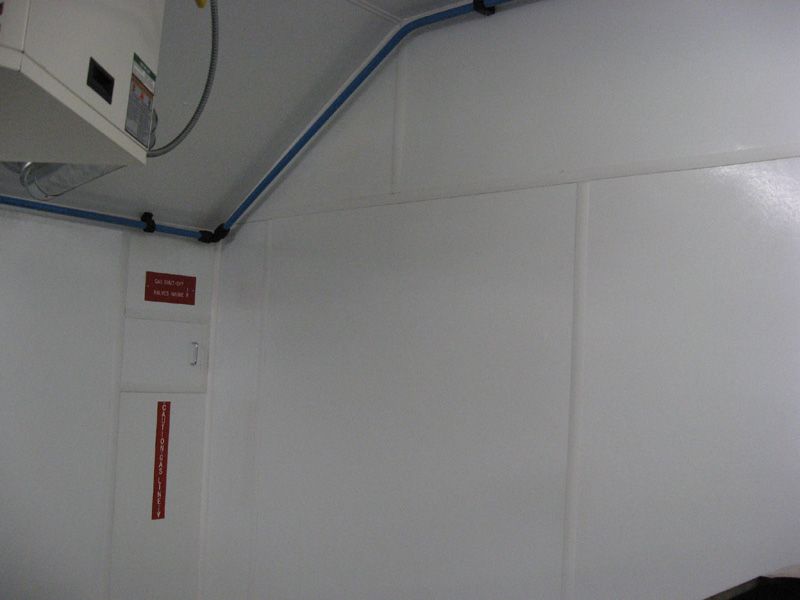
A closer look at some shop details while we're here.This is where the furnace gas lines and valves are located. In case I'm hit by a bus and can't pass this information on to the next occupant of the shop they won't go drilling holes on the wall around here........ I hope!

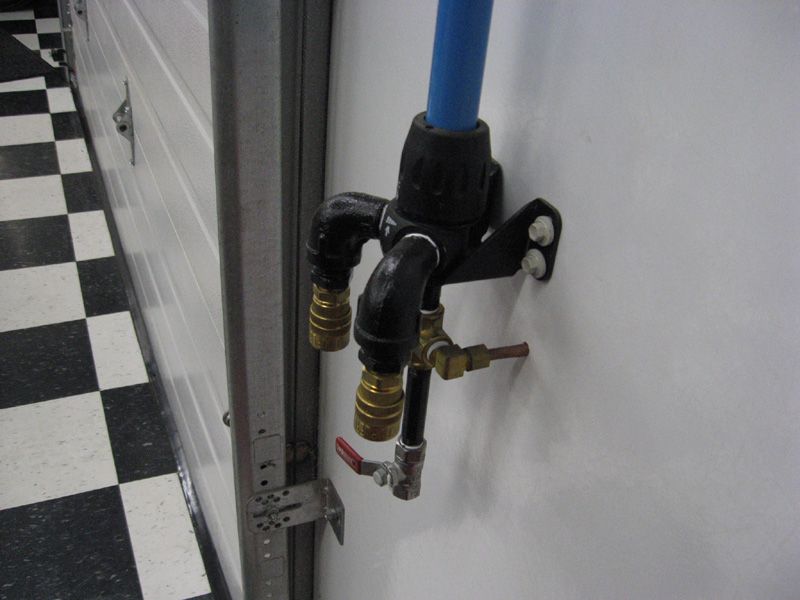
One feature of this air line system is that for the drops, it takes air from near the top of the horizontal line. Any water that might be in the line travels along the bottom of the horizontal line and doing it this way prevents water from going down the drop into your air tool. Nice.
On all the drops I used a double outlet. The increased cost was only fractionally more so why not?

Here is a close up of how I ran air through the wall to my outside wall mount 1953 ECO Air Meter. Since this is the end branch of a line I put a drain on it.
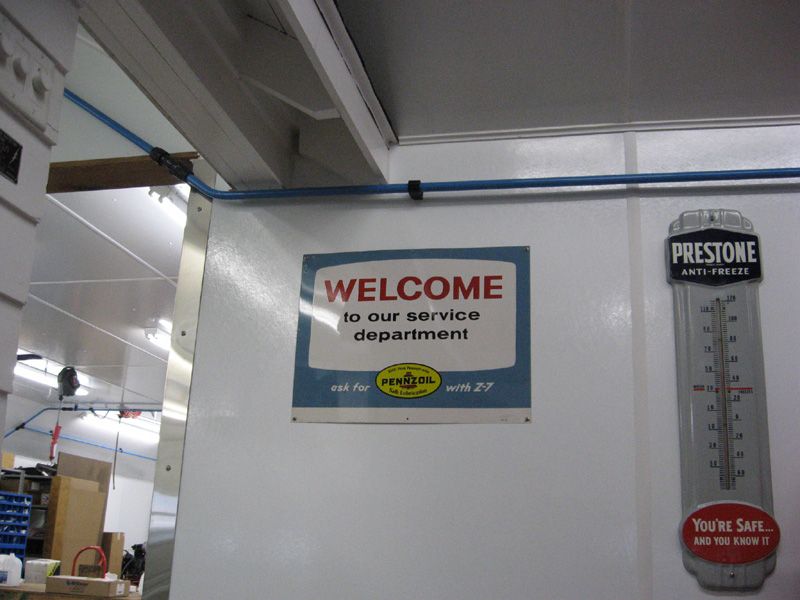
This is how it enters the lift room.
Look closely and you'll see polished, stainless steel acorn nuts holding the hose reel to the ceiling. Well why not?
The end of the line so I installed another drain line.
For better or worse, thread to be continued........
Thomas


 As a kid I never believed them but I sure do now. I would never have accomplished what I have if I'd watched it.
 I enjoy DIY shows, auto-related shows (Gearz, Trucks, Horsepower TV). Stacy David, who hosts Gearz (on Speed channel) is a great auto mechanic/fabricator who encourages his audience to get in the shop and build something... anything, because that is what it is all about!!
 Like you, I would rather be out in the shop or yard doing something rather than be stuck to the couch!