motorhead1977
Well-known member
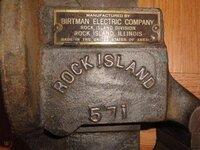
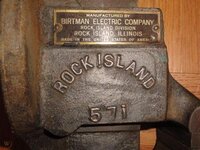
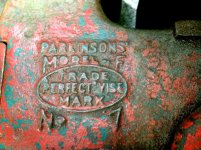
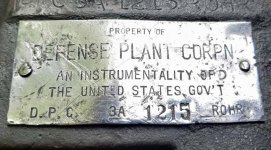
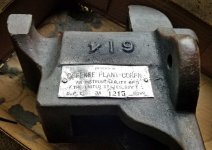
I think you might be right with Bertman. I think I can see it. I'm going to try and careful clean the tag without messing up the lettering.

Wood: your Great Grand dad's old vise looks like it's been to war and while it has some injuries if it works I'd say use it. that said do you have brazing skills or know a friend that does?

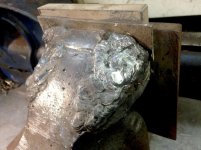
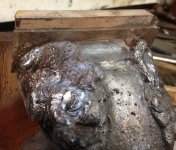
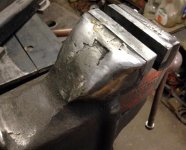
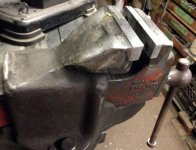
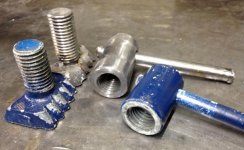
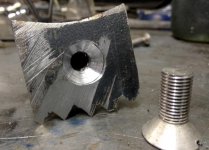
After I’d built up the broken off sections I removed my brass plate. Unfortunately I hadn’t pushed the rods in toward the brass plate enough to penetrate evenly up to the plate and there was a distinct line where my weld met the existing metal. Also a crack was revealed that I hadn’t seen earlier or..... <snip>
The casting process is never perfect, especially when dealing with large components. Instead of scrapping defective castings, they can often be repaired by welding. Naturally, the very high carbon concentration of typical cast irons causes difficulties by introducting brittle martensite in the heat-affected zone of the weld. It is therefore necessary to preheat to a temperature of about 450°C followed by slow cooling after welding, in order to avoid cracking. The materials used as fillers during welding usually contain large nickel concentrations so that the resulting austenitic weld metal is not sensitive to the pick-up of carbon from the cast iron. The deposits are soft and can be machined to provide the necessary shape and finish. Of course, nickel is expensive so when making large repairs, the weld gap is first covered ('buttered') with the nickel-rich filler and then the remaining gap is filled with less expensive mild-steel filler metals.
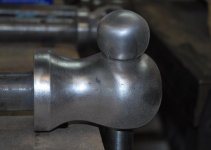
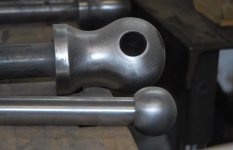

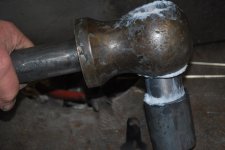
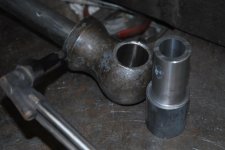
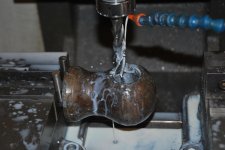

fantastic work Kevin. Where do you get your 4.5" scotchbites? The places Ive used for years no longer sell them

I had the brilliant idea to sandwich a brass plate across the jaw face so I could weld up to it and keep the track for the jaw insert flat so no machining would be necessary.

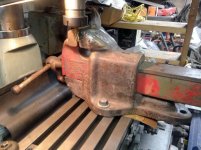
you mentioned heating in an oven do you have a shop oven or did you sneak inside your kitchen and use the family stove/oven or maybe you're single? also are you moving a 450 degree vise around with just welding gloves or did you move it another way?
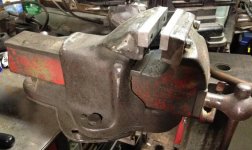
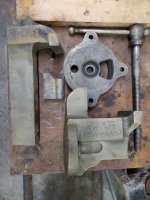
after all that welding and repair how do you like using your Parkinson and does the quick release work ok too?
There’s a vise repair vid on YouTube of a bloke doing the same thing using square copper stock
Works a treat
I believe the high carbon content forms martensite when cooled rapidly at the weld zone.
Yeah, just googled:
https://www.phase-trans.msm.cam.ac.uk/2001/adi/cast.iron.html
So that's the problem. It comes out like tool steel.


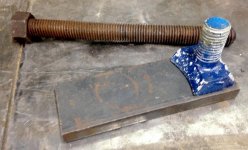
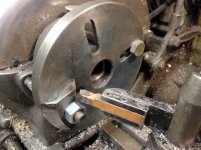
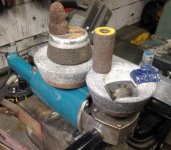

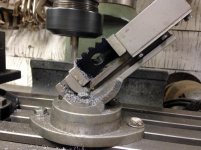
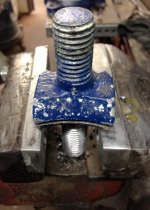
Sure, you could have bought the part from Reed, but where’s the fun in that?

JAVIE: your Athol looks great to me, but you had thoughts of making it as shiny as possible. is that still the goal?
Levi: cool badge. sorry I'm not the one to ask about removing badges and attaching them, but many members enjoy doing that so maybe one of them will show up to answer your questions.
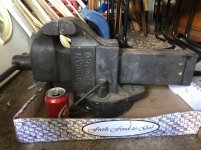 I bought this vise a few days ago and when I got it to the garage it was night time and I had to take it apart so I could get it out of the trunk. I got it to the garage and put it back together and snapped a picture. As I was looking at the picture today I noticed that somebody at some point may have added a swivel to this Morgan Chicago 6" vise. I'm not a vise expert, so any input would be appreciated, thanks in advance.

Thanks Mslund1, the reason I was confused was the part of the base under the dynamic jaw. All the swivel vises that I have seen where the stationary jaw sits on the swivel they are symmetrical. This vise the stationary jaw that meets the swivel is oval shaped and has what looks like a mounting hole. Did any other vise manufactures do this?Nope, that looks like a factory swivel base to me.
They’re made for either style, solid mount or swivel.
Awesome vise, I have its older cousin the 160
Sent from my iPhone using Tapatalk Pro
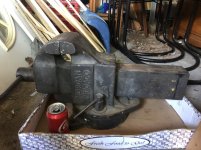 I should have attached the picture, still learning.
the above lewis no 10 vise. Here are. edit and after pictures.
Right after evaporust.
After one coat of black metal oil.
after the second coat of black metal oil. I tried my best to file/sand off any finish on the lettering after I let this dry for a few days.
I let it dry for about 5 days and then sprayed 2 coats if clear guard clear coat.
this is after it dried.