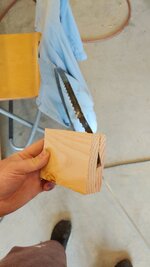
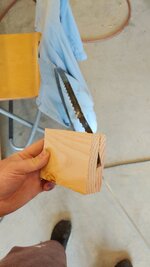
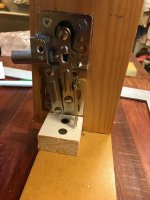
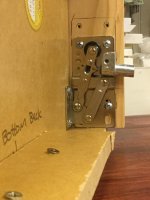
I built a test box for a hinged door...
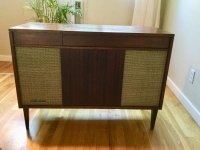
I had bought a mid century modern stereo console that didn't work, with the idea of using it my office to hold all my electronics. So I removed all the old electronics and modified the interior to suit my needs.
The front panel was never meant to come off but I needed regular, easy access. I found the panel was screwed in place to small blocks and taking those out meant the panel could be pulled out. It is a tight fit and not easy to do, so I wanted something easier. The panel is recessed, so it has to come forward first, then tilt out.
I came up with the idea to use hinges like the ones on those tilt out bathroom or kitchen drawers. The only problem is they are fairly difficult to install correctly. It's not so bad if you have rear access when to door is in place, but I don't have that, so I decided to build a test box and see where the pitfalls were.
It's a good thing I did as I learned a lot. At first I had the hinges mounted above the stop block, but found this moved the pivot point too high. When the door moved out then the top tilted out, the bottom tilted back too far and hit the stop block. So I know I'll have to cut the blocks out where I install the hinges. I also learned in the closed position the part of the hinge that attaches to the door isn't at a perfect 90 degree angle to the cabinet; it leans back. So I needed to mount the hinge a bit further back from the stop block, so that the door hits the stop block when the hinge is at 90 degrees (and isn't fully retracted).
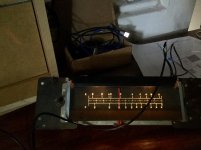
Anyway, got it figured out. Also had the old parts I removed and decided to see if I could power up the lights on the tuning dial. No idea what voltage it needed, so I started out low and cannibalized a USB cable. The tuning dial has 4 black, unmarked wires, so I just started trial and error with the hot and ground from the USB (low voltage, no danger). Finally got the right combo and it works! Not sure what to do with it...