To avoid these ads, REGISTER NOW!

Solar Swimming Pool Heat DIY with Hubitat / Webcore Automation

OP
D

Denwood

Well-known member
Joined
Sep 22, 2014
Messages
4,179
Location
Thunder Bay, Ontario, Canada
I know many of you were waiting on the edge of your seats to see how the six panels and new pump performed. Ha. Thanks to the cool data logging at hundredgraphs.com (being fed the SmarThings sensor temps), I can report that things worked almost exactly as predicted.

The ambient temperature today max'd at 70F at 2:30pm.
The roof sensor reported a max of 112F at 1:30pm
Max gain for pool temp over 1 hour today was 1.6 F between 1 and 2pm.

The difference in temps between solar supply and return hovered around 5 F which shows that our water flow is near optimal.

I had predicted a maximum of 90 000 BTU/hour from the new array with six collectors plumbed in paralel (240 square feet). Based on pool water temperature increase of 1.6F in 1 hour,(remember the pool is almost 100% shaded) it was actually 93 400 BTU. We made a lot of heat (410 000 BTU) despite a relatively cool day!

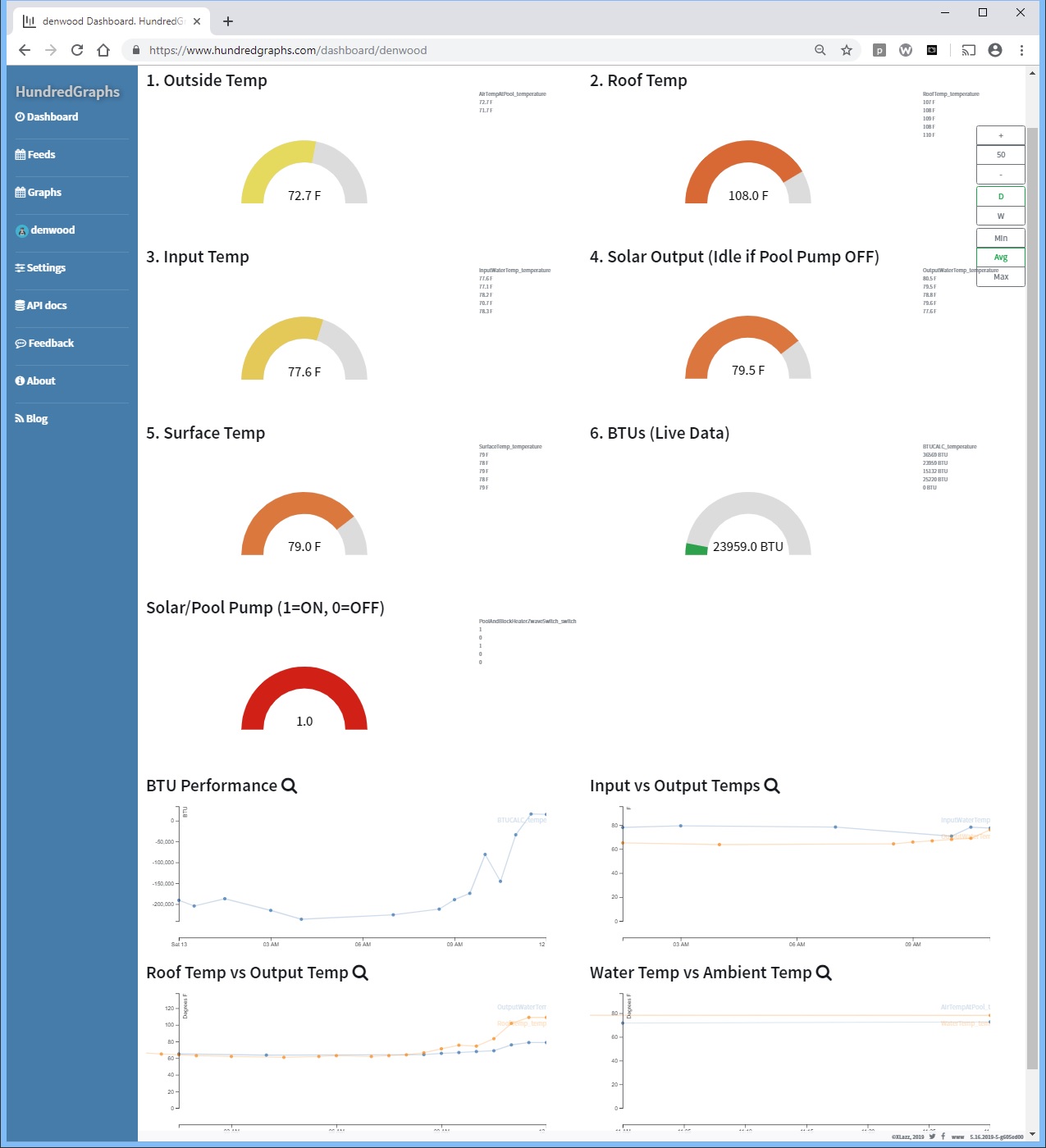
Hundredgraphs does a nice job of graphing the inputs, as well as a free real time dashboard to check in on things.

hundregraphs2.jpg
 
Last edited:
To avoid these ads, REGISTER NOW!
OP
D

Denwood

Well-known member
Joined
Sep 22, 2014
Messages
4,179
Location
Thunder Bay, Ontario, Canada
Just a few calcs to finish this thread. The new pump claims to be 1hp on high speed. It consumes 8 amps of power on high.

Through the six panels (with a max height of about 18 ft to the collectors) and filter, the pump pushes a solid 1548 GPH. I measured 2.15 gallons in 5 seconds. That works out to 4.3 gallons per minute to each of the six collectors which is a bit on the high side. It means we could use a lower HP pump and save some power to get flow close to 2 gallons/minute/panel.

Working from that measured flow number (1548 GPH), and a temp difference of 7F (from the chart above of input vs output temps), we're adding 90 372 BTU/hour. Working from the temp change in the pool (max of 1.4 F in an hour), we're at 87 570 BTU per hour. My prediction of 90 000 BTU for the six panel array was very close.

The National Research Council in Canada tested panel efficiency:
http://solarontario.com/index.php?page=a-real-world-comparison-of-solar-pool-heating-collectors

The best collector was 1014 BTU/square foot on an April day in Florida, so a 40 square foot collector would be good for 40 000 BTU in a day. Based on this test, we should be collecting somewhere around 240 000 BTU per day. We're in fact collecting closer to 400 000 BTU per day.

The only explanation I would have for this is that the black asphalt roof and attic heat must be adding into the equation. I suppose this might make a good argument for roof mounting your collectors!
 
Last edited:
OP
D

Denwood

Well-known member
Joined
Sep 22, 2014
Messages
4,179
Location
Thunder Bay, Ontario, Canada
Ok, so serious geek warning ahead..but I love this stuff :)

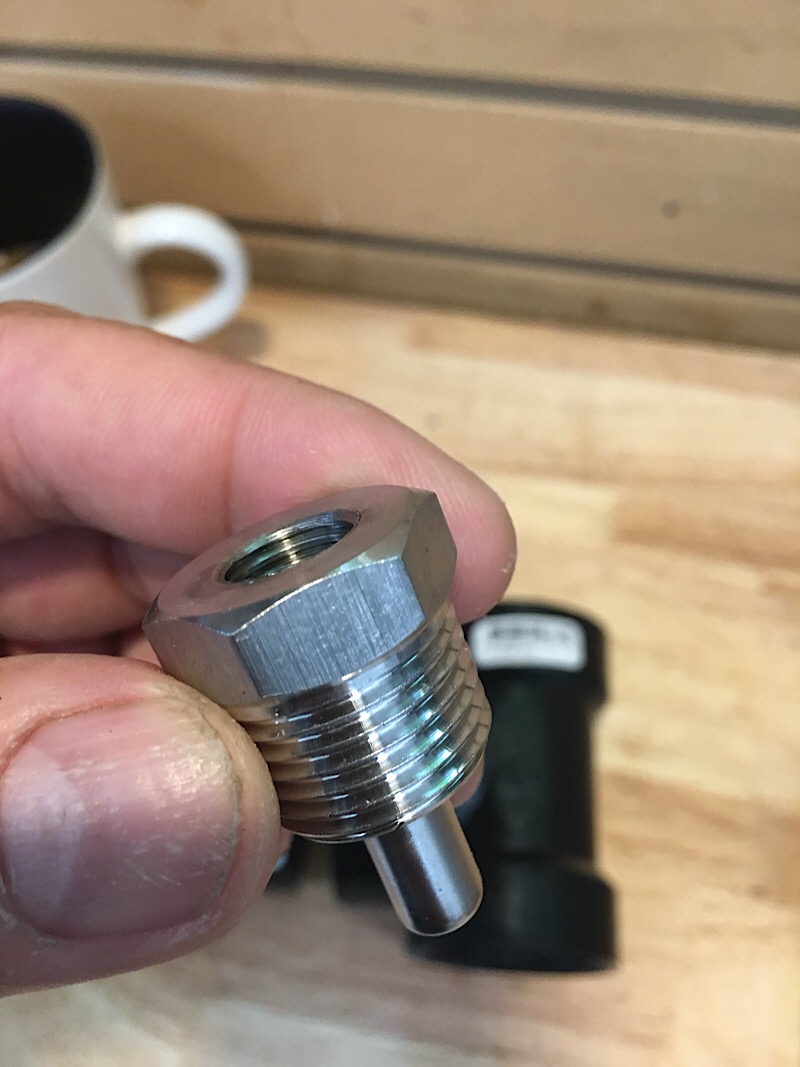
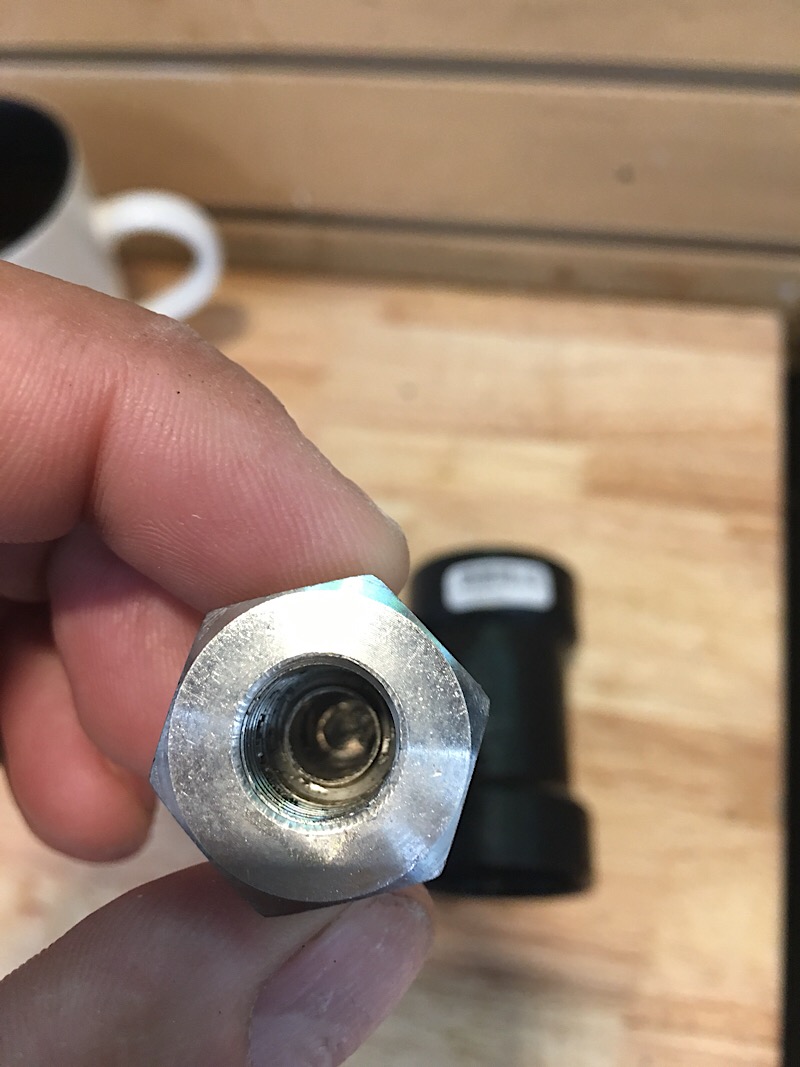
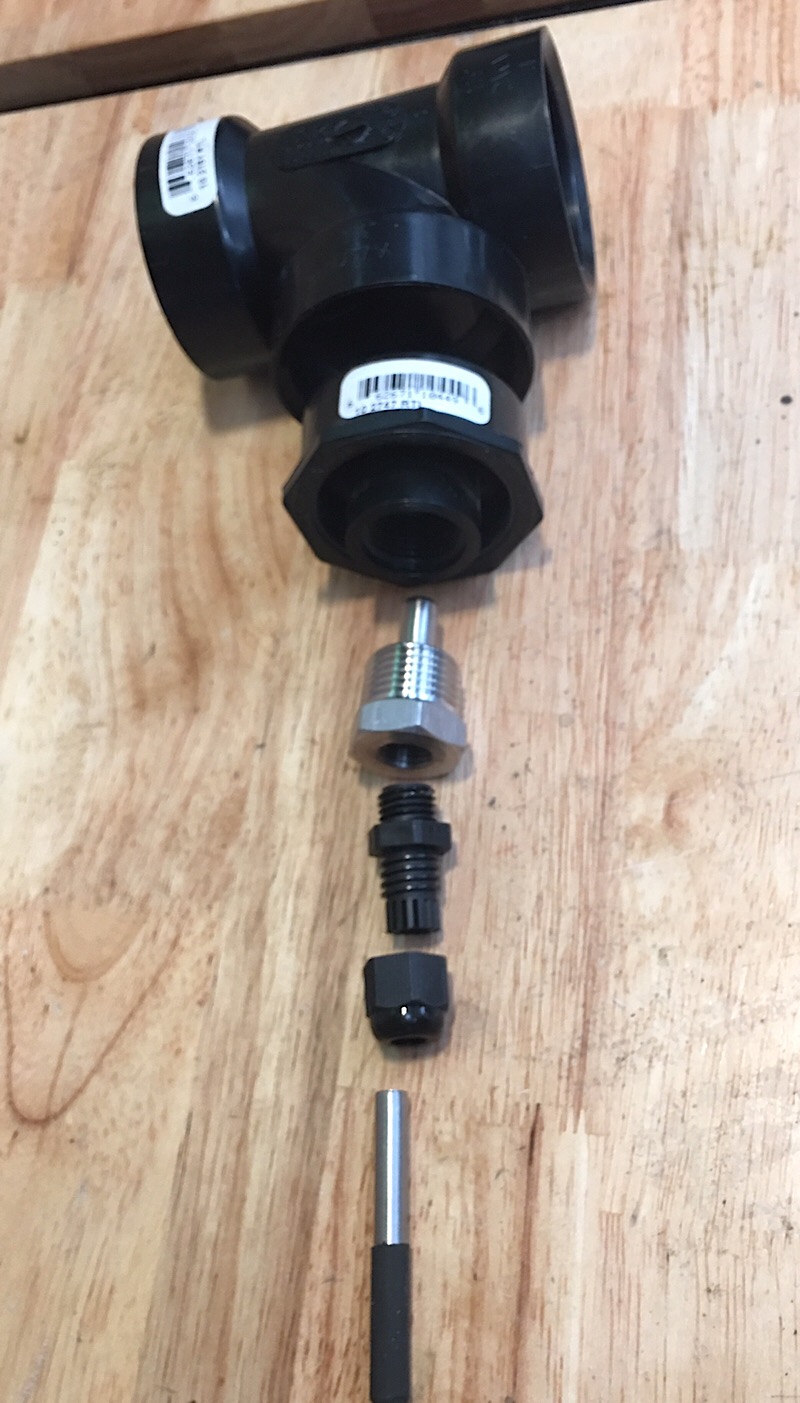
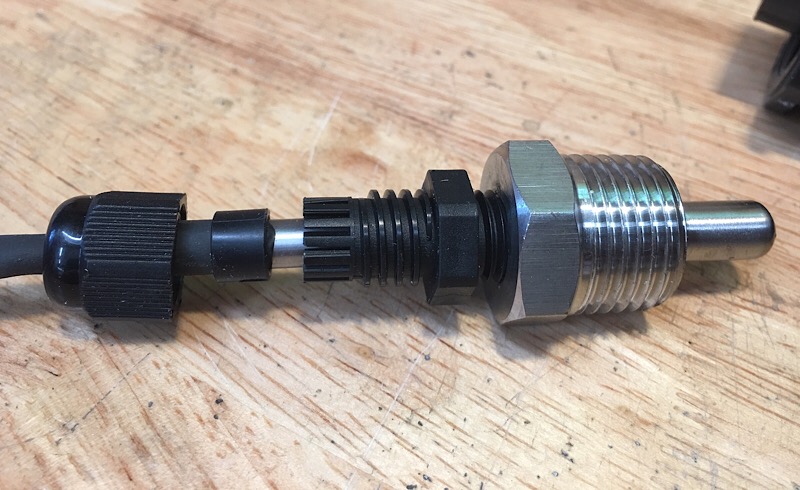
I was looking for a more accurate way to get fluid temps with a solution that protects the probes, does not cause a leak hazard, and is easily removable. Enter a solution from the world of beer brewing (and likely every lab worldwide...ha), the thermal well. The pics are self explanatory.

The very inexpensive (but quite accurate) DS18B20 waterproof external temperature probes I'm using are available all over amazon etc. They have a diameter of 6mm. It turns out that these thermal wells are designed for them :) I was unaware that a "thermal well" was a thing a week ago, so was very interested in checking them out.


thermalwell1.jpg


thermalwell2.jpg


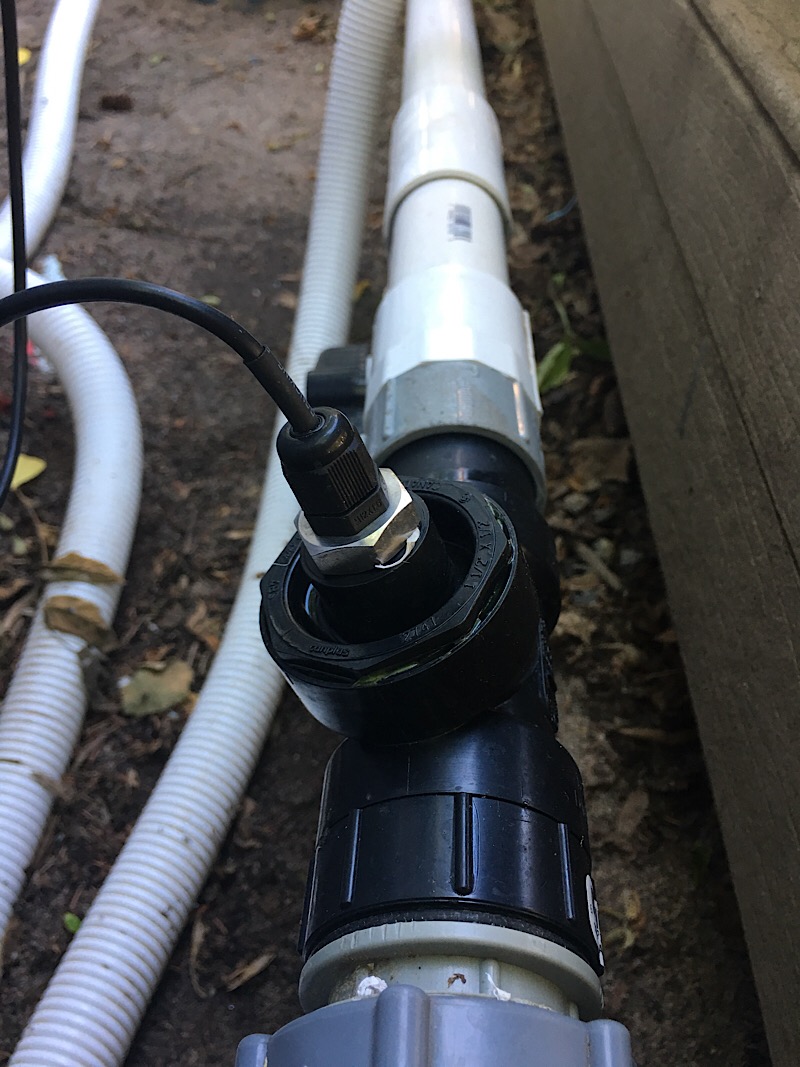
I used a 1 1/2" ABS T, and a 1 1/2" bushing with 1/2" thread to plumb in the thermal well:

thermalwell3.jpg


The thermal well ships with an insert, seal and top nut for a watertight installation:

thermalwell4.jpg


Here it is installed:

thermalwell5.jpg


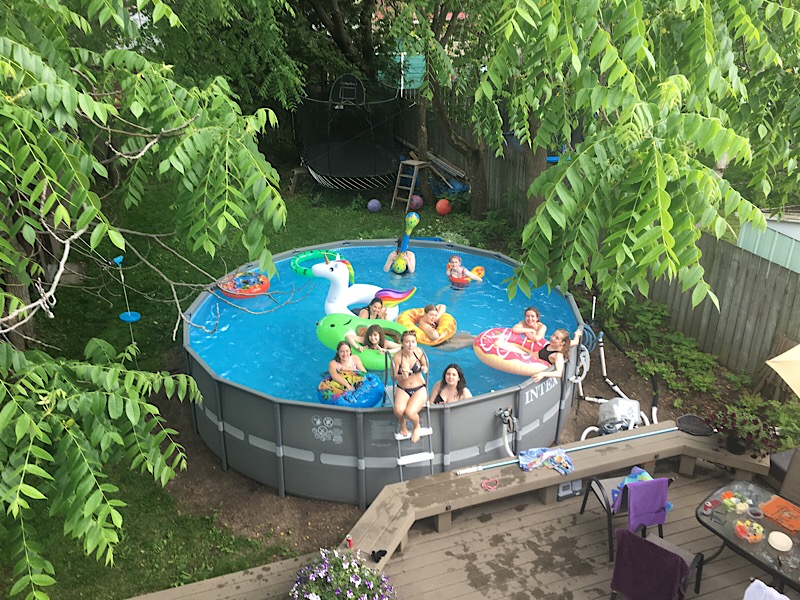
Water temps ranging from 78 to 82 make for some successful backyard parties!

thermalwell6.jpg


Here's the updated dashboard with "live" BTU calculations. Serious geek stuff here (click to visit the page). To calculate live BTU output, I created a simulated temperature sensor in SmartThings, but feed it a value calculated using the difference between input, output, and the measured output (GPH) of the system on solar. This in turn is spit out to hundredgraphs to display BTU output "live":


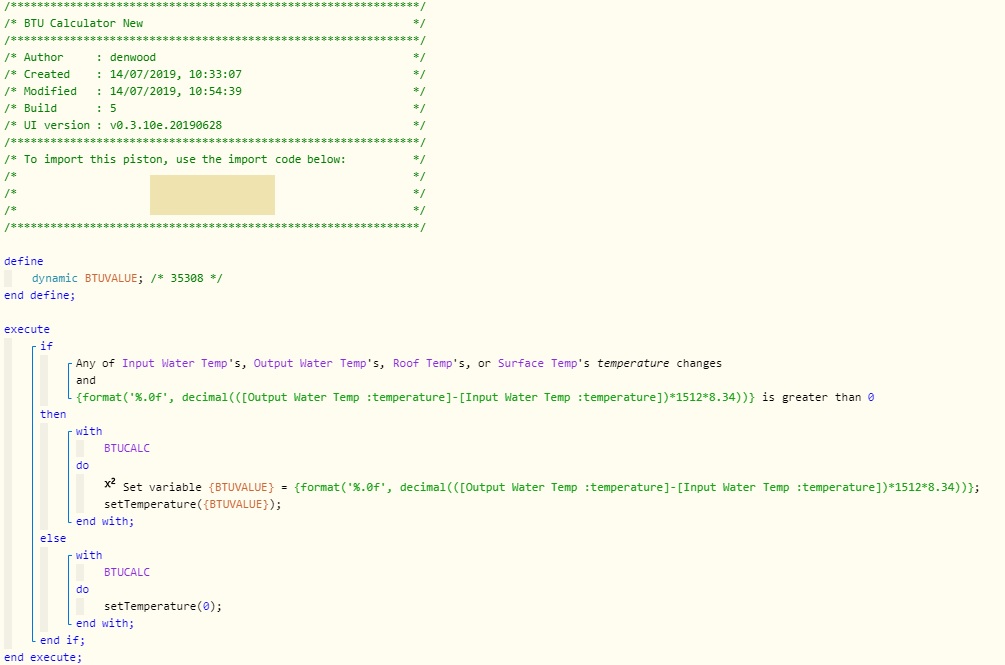
and just in case someone down the line is looking to recreate the live BTU calculation, here's the code:

webcorebtucalc.jpg
 
Last edited:
OP
D

Denwood

Well-known member
Joined
Sep 22, 2014
Messages
4,179
Location
Thunder Bay, Ontario, Canada
Here's the 2020 update on the system:

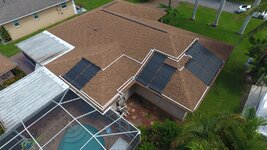
1. I've added 2 more 2'x20' solar collectors (last night) for a total of 320 sq/ft. That's about 80 square feet more than the pool surface area. Why? We're close to Lake Superior so our yard can be 10 degrees C cooler than 10 miles inland. Also the pool is shaded so does not get a lot of direct sun.

2. All equipment is now plumbed into a small shed.

3. I use the Intex pump (SF80110-1) in series with an inexpensive 2 speed pump (on low speed) which pumps 2 stories up and gets us about 1500 GPH at the pool outlet on solar heat. The combination uses about 5.4 amps.

4. My little solar/rechargeable battery hack worked 100% all the way through winter so I did not replace any expensive lithium cells on the wireless temperature sensors. This "hack" uses three AA rechargeable cells connected to a cheap amazon solar panel (5.0V). The three fibaro door sensors have the lithium cells removed and are directly wired to the AA battery back. These sensors change temps often, so will churn through the expensive lithium cells in 1-2 months. The sensors have not required any power, even idling through the winter at -35C low temps!. The sensors reported low battery at 1% all winter, but stayed running, and continue to run off their solar/cell system.

b48383a3ea709a79cb1865ab1ac6243019fa108a.jpeg


I'll post results of our first day with 8 collectors! It's going to be a sunny warm day so we should break some solar pool heating records today.
 
Last edited:
OP
D

Denwood

Well-known member
Joined
Sep 22, 2014
Messages
4,179
Location
Thunder Bay, Ontario, Canada
Nadogail, you're welcome.

Yesterday saw an 8.6 F degree rise in the pool water (7000 gallons) to about 74 F. This means the system generated 501 466 BTU over the day...not bad considering the max air temp at the pool was 77 F at around 3:30pm.

This is a snapshot of the data around 3:30pm:

solarjun172020.jpg


Today, it's another cool, partly cloudy day with air temps under 70 F, but it's looking like the pool water will reach 80 to 82 F.
 
Last edited:

poppakap

Well-known member
Joined
Jan 3, 2010
Messages
226
How much does the typical black plastic tubes used for solar pool heaters help reduce heat transfer through the roof? Anyone figured that out?
 
OP
D

Denwood

Well-known member
Joined
Sep 22, 2014
Messages
4,179
Location
Thunder Bay, Ontario, Canada
Pop, that’s an excellent question.

I see my roof sensor hitting 126F on a warmer day here. It would be logical to assume that attic temps are at least that. With water in the tubes not exceeding 88F it would be safe to assume the roof underneath those panels is also at 88F. I’m 100% positive that a roof that is basically liquid cooled would in turn reduce your AC costs in the home.

Chris, we have thicker blood here :). The pool has been at 82 to 85F every day now for a month, so the extra panels definitely helped. The kids are in there all day at 82F without anyone turning blue, ha.

Peak performance on the system has been 125 000 BTU hit at around 12:30pm. Temperature difference was 8F at a volume of ~1600GPH through the panels.
 
Last edited:

infinkc

Well-known member
Joined
Jan 19, 2012
Messages
862
I'm LOLing because at 80F we'd not even get in the thing. That's "freezing" in Texas.

Yea funny. I just added some solar panels this past weekend to our pool. 7 4x10 panels. Got the water to 92f, ambient around 100f.
 

Attachments

  • FAD67C25-1220-437F-AA3F-C779E18DDBE2.jpg
    FAD67C25-1220-437F-AA3F-C779E18DDBE2.jpg
    146.6 KB · Views: 77

Bretny

Well-known member
Joined
Jul 31, 2017
Messages
3,918
Location
Dutchess county NY
Geez Denwood you have this down to a science! At 80* it would almost be to hot here for NY.

I plan on doing some type of solar heater for our pool. Has anyone ever used sliding doors to make basically a low flat green house box with black poly in it? I also need to run black poly underground for about 100ft to get to my roof. Will this cool the water to much?
 
OP
D

Denwood

Well-known member
Joined
Sep 22, 2014
Messages
4,179
Location
Thunder Bay, Ontario, Canada
Infin, nice install there with I'm guessing zero shade. You're getting great output there. I love the idea of a separate rack like you have, but I have no space or sun exposure for it :-( The other thing I wonder about is how much BTU gain does one gain on a roof (via radiated attic heat) and how much does it reduce AC load by essentially water cooling a roof?? I have a few challenges in the system that required some overkill in square footage on the panels.

1. The roof is shaded until 11 am by tall trees.
2. The pool is completely shaded all day except for approx 5pm to 6pm.
3. Besides lower daytime ambient temps, we tend to have much lower night time temps, down to 50F typically. 2-4F is gone each night, even with a solar pool cover. This means we need to add about 175 000 BTU each day just to maintain temp in the 7000 gallons of salt water.

Bretny, the kids are quite happy at 80F. I was even in there for a bit at 84F it was pretty nice :) The most important thing you can do is calculate the square footage (and be generous) you will need. A pool in full shade will need at least its surface area in solar heating to stay warm. There are a few online calculators that you should use.

For pool heating, glazing is normally not recommended. The exception would be heating a hot tub in winter that would require a very different approach. What you need is square footage and decently high GPH flow. Target around 3-4 gallons per minute (120 GPH) per typical 2'x20' collector. Doing the coiled poly doesn't make sense when you factor surface area vs GPH. They will heat water quite hot, but at a very low flow rate. Therefore your BTU gains will be very low. I'd plumb in hard lines (black ABS is fine) in at least 1.5" diameter. If you're running 100 ft underground, I'd insulate the pipe.

Max efficiency is gained by taking a fairly large surface area (sunlight has a pretty predictable yield based on surface area) and taking BTUs out of that area with a pretty low water temp delta...like 4-5F. If you heat water (for a pool) beyond that, you'll end up just losing energy to ambient. Principles behind outdoor pool heating in summer are much different than typical domestic hot water, hot tubs in winter etc. practice.

If you have an idea of your pool size, your climate, and percentage shade, I can point you to some starting numbers to consider.
 
Last edited:
OP
D

Denwood

Well-known member
Joined
Sep 22, 2014
Messages
4,179
Location
Thunder Bay, Ontario, Canada
Zero concerns on weight. Each panel loaded with water is at most 60-70 lbs so even with eight spread out over 320 square feet we’re 1000s of lbs under what our snow load would be.
 
OP
D

Denwood

Well-known member
Joined
Sep 22, 2014
Messages
4,179
Location
Thunder Bay, Ontario, Canada
Year 4 on the system and despite a few leaks in the plumbing (the panels have survived four winters on the roof with temps as low as -35C) we are up and running. It's been a warm few days here so the pool temps are up over 80F, despite filling just 3 days ago. The water temps are pretty low (about 50F from the tap) however this year I filled the pool with the fresh water plumbed into the solar system, (preheating it) rather than directly from the hose into the pool. I also added a few new tricks, making the Smarthings wireless sensor using to monitor roof temps solar powered now, so I won't have to climb onto the roof to change the battery. I used the same setup on my garage door sensors so they now survive with no lithium battery changes required :)

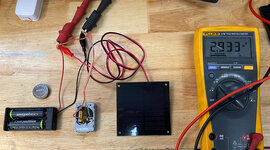
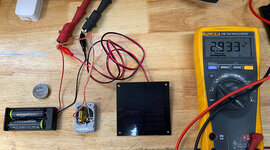
The SmartThings multifunction sensors (I think these are gen2) use a 3 Volt lithium cell (CR-2450), so I figured 2 x AA batteries would work fine. These sensors work with an external magnet to detect open/close events but they also integrate temperature sensors and accelerometers as well. The first test was trying the sensor with 2 AA cells in series (2.9 volts) which work perfectly. They also powered up fine directly from the 5 volt solar cell in full sunlight. Once you connect the AA cells and solar panel, the voltage is maintained pretty much at 2.9 volts as this panel is only .5 watts@5V.

The solar cell is a 5 Volt, 0.5 watt I found on Amazon.com. They have a blocking diode installed by the manufacturer, and claim to be waterproof. The older setup pictured above has been outside in the rain for 3 years.

I also ordered some holders for 2 AA cells, with an on/off switch on Amazon.

I'm just using Amazon Basics NIMH rechargeable AA batteries.

Bench testing the setup. Basically just connect up the + and - leads, and solder to the sensor. The sensor (with cover removed) is sitting between the AA batteries and solar cell.

solarsetup.jpeg

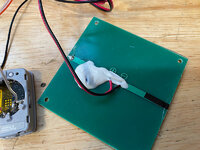
Back of the solar cell (as provided by the manufacturer) where the diode is sealed under some silicon. This keeps the solar cell from draining the AA cells at night.

paneldiode.jpeg

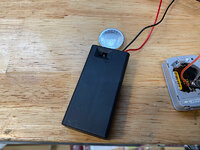
Battery holder (in series) with on/off

batteryholder.jpeg

Here's the panel spec.

panelspec.jpeg

A pretty cool way to have a wireless (temperature, contact, motion) sensor that never needs batteries and will reliably stay powered up even in very cold temps :) I'll post a few pics of the latest setup installed. Cost to do this for one sensor is about $8 with just a few solder connections to do.

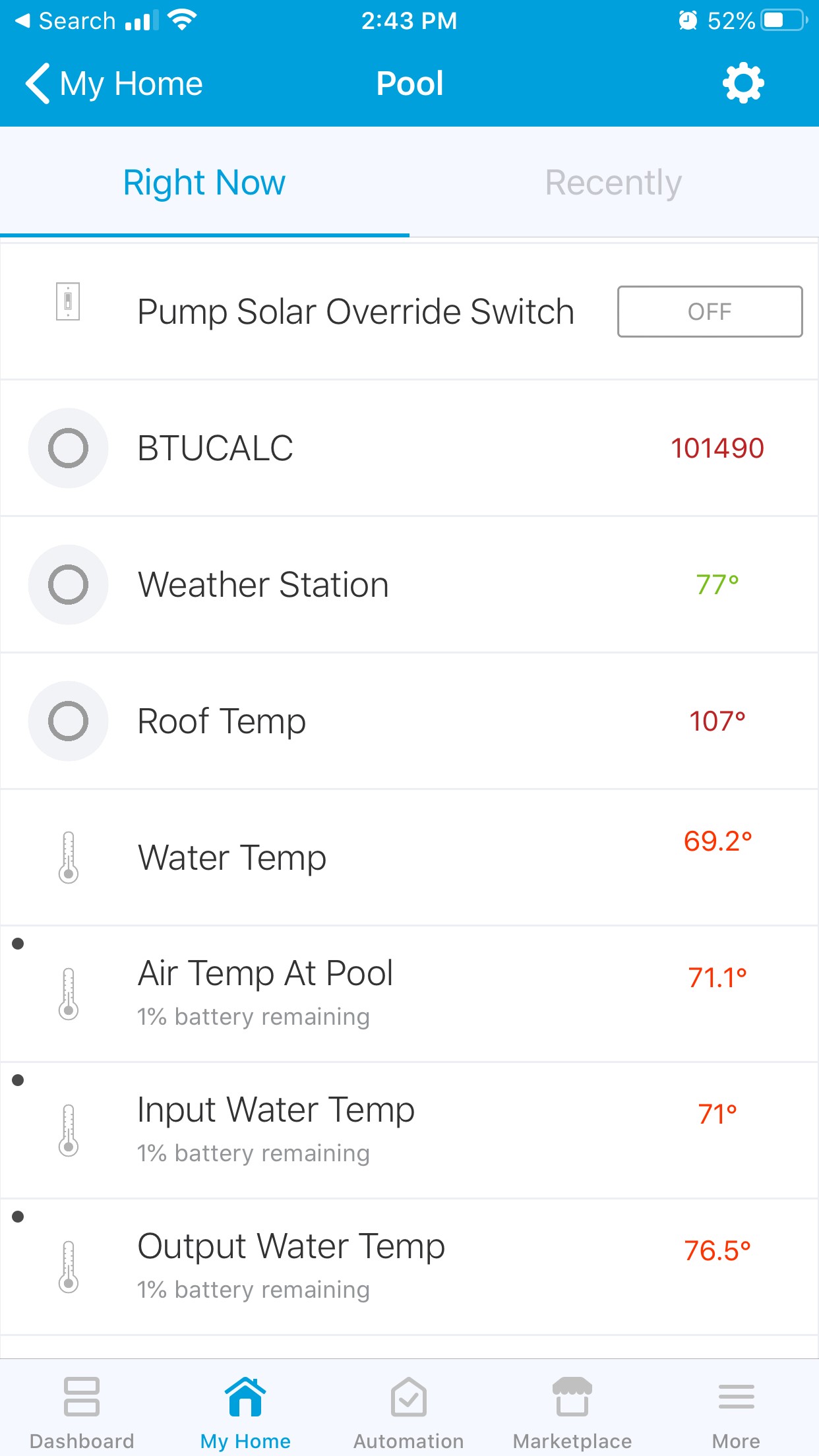
This setup is just placed in a waterproof plastic container and tucked under a heating panel ******** the roof. It works perfectly :) The automation system is pretty simple. If the roof temp is 12 degrees F warmer than the pool temps, then a GE outdoor zwave plug is turned on. This powers up the pool pumps and salt water chlorinater. If the temp difference is less, the system is shut off.

In about 4 days (including fill time), the solar system added 1 749 000 BTU to the system, warming 7000 gallons of water by 30F...quite impressive.
 
Last edited:
OP
D

Denwood

Well-known member
Joined
Sep 22, 2014
Messages
4,179
Location
Thunder Bay, Ontario, Canada
Thanks Goingto. The whole yearly setup/takedown is a lot of work, however the labour time gets a bit less each year. Once the kids are older, the pool will be gone, so there is no talk here of going permanent :) I'm thinking we'll re-task the heaters in a glazed system for winter use later on. The kids were in there for nearly four hours yesterday with water temps at 85F.
 
OP
D

Denwood

Well-known member
Joined
Sep 22, 2014
Messages
4,179
Location
Thunder Bay, Ontario, Canada
Smack, it never gets old to check in on the system and see how the BTUs stacked up during the day. It's been quite cold for days now with yesterday's low at 45F, and the high at 61F, so the water has cooled a lot. On the flip side, no one is interested in swimming in ambient temps that cold either!

For anyone with a tech bend and looking to automate, I generally steer them to Hubitat. I have a hub in play and with 100% local control, it makes more sense to me than SmartThings.
 

TJMtl

Well-known member
Joined
Nov 8, 2018
Messages
247
Location
Montreal
Nice work, how are the ABS fittings holding up? I thought ABS was not UV stable?

i used to have solar panels like yours on my last house. Had the Hayward solar controller setup, but yours is nice with the data logging.
 
To avoid these ads, REGISTER NOW!
OP
D

Denwood

Well-known member
Joined
Sep 22, 2014
Messages
4,179
Location
Thunder Bay, Ontario, Canada
TJ, I realise my reply is late...but zero issues with the ABS. The only leaks have been self induced by allowing the foot of an aluminum ladder to contact a collector. I managed to heat weld it with soldering iron set to 750F or so.

I'll be getting the system up and running in another six weeks or so after a rather brutal winter here...
 

nadogail

Well-known member
Joined
Jan 23, 2009
Messages
31,893
Location
Coronado, CA
Only 4 degrees of Delta T (TEMPERATURE DIFERENTAI) can make a Ginormus Steel Ship move across or through the water really fast.
 

no704

Well-known member
Joined
Apr 27, 2016
Messages
5,202
Neat project! You will want to paint the exposed PVC. It is not uv stable.
 

mdim

Well-known member
Joined
May 19, 2008
Messages
143
Pool solar is great. I flipped mine on way early this year for shits and grins. Water temp went from 58 to 75 within a few days (in March....). Usually turn it on in early May but California told Winter to simply not exist this year. Come summer time I have to set the thermostat or the water will get well above 90 degrees. This is for a maybe 30K gallon uncovered in-ground pool.

Also tends to keep the house cooler. Figure taking all that solar gain from the roof and intercepting it, pumping it into the pool can't hurt. Like a giant radiator.
 

BiaoBamosux

Member
Joined
May 3, 2022
Messages
12
Still, it's very nice to see when someone organizes such a detailed display of the work done. For those who are planning to install a pool, it's a great help. I would build a similar system, but I don't have to rely on the sun on. For heating the water and to extend the bathing season, I took, on the advice of a friend, inverter heat pump Sprsun. But in addition to all this, I had to insulate the pool's walls and construct a folding transparent cover to keep the water temperature. I think solar water heating is good in places where there are a lot of sunny days. It's a pity it's not everywhere.
 
Last edited:
OP
D

Denwood

Well-known member
Joined
Sep 22, 2014
Messages
4,179
Location
Thunder Bay, Ontario, Canada
Neat project! You will want to paint the exposed PVC. It is not uv stable.
@no704 , five years and counting..no issues. By the time the PVC is an issue for UV degradation, the kids will be done with the pool ...ha. The Sched 40 PVC pipe is also more expensive than ABS (my system has both) but the PVC is definitely more robust pipe.
Pool solar is great. I flipped mine on way early this year for shits and grins. Water temp went from 58 to 75 within a few days (in March....). Usually turn it on in early May but California told Winter to simply not exist this year. Come summer time I have to set the thermostat or the water will get well above 90 degrees. This is for a maybe 30K gallon uncovered in-ground pool.

Also tends to keep the house cooler. Figure taking all that solar gain from the roof and intercepting it, pumping it into the pool can't hurt. Like a giant radiator.
@mdim , it's not unusual for my 320 sq/ft solar array to add 500K BTU in a day to the pool. That is 500K BTU that would otherwise end up as attic heat, so your point on "cooling the roof" is a good one. It's not unusual for my roof surface temp sensor to see 125 F in the summer, however the panels themselves are running 35 to 55 F less than that. Roof solar with decent collectors will operate in the 80% efficiency range, so you could extrapolate the measured BTU values for my pool (500K BTU in a day) and estimate that with no pool solar, about 600K BTU of heat would otherwise be added to my attic. A cooler attic will for sure translate to less AC run time in the home which likely offsets your pool pump running costs. That would be an interesting study. All I could find were a few folks tracking attic temps and recording 110 to 115F (inside the attic) on a 90F day with no pool solar heating.

The shingles under the solar array never see UV, and that is very obvious if you inspect them.
Still, it's very nice to see when someone organizes such a detailed display of the work done. For those who are planning to install a pool, it's a great help. I would build a similar system, but I don't have to rely on the sun on. For heating the water and to extend the bathing season, I took, on the advice of a friend, inverter heat pump Sprsun. But in addition to all this, I had to insulate the pool's walls and construct a folding transparent cover to keep the water temperature. I think solar water heating is good in places where there are a lot of sunny days. It's a pity it's not everywhere.
@BiaoBamosux , a heat pump is the way to go for efficiency, and works great in combination with solar. As you mentioned though, the heat input is less, so you need to take more measures to keep the heat in the pool. What I've found over the five years of using the pool, is that no one wants to swim if it's cold outside (where heat loss from the pool is also large), so high gain solar days tend to match up with when folks actually want to swim.
Great write up. Thanks for taking the time to do it. I’ve learned a lot from this thread.
@Ak Jim , thanks. I figure updating the post each year will help too with folks looking to avoid my mistakes. I'm just getting the pool sorted now after simplifying the feed plumbing to the array. I'll post a few pics later once the system is up and running again.

I had one leak on the roof to address where water had sat in a previous panel repair. If you seal off any of the water channels (to repair a panel leak), you really need to do it at both ends of the panel. Water trapped in an isolated heat channel cannot drain and in this case froze over winter. It just took a few minutes with a soldering iron set to 700F to heat weld and repair the panel. I reduced the feed piping / connections a lot by modifying my four original panels for full parallel flow. Each intake had a restrictor 12 inches inside the intake pipe side of the panel. I just knocked that piece out which in turn allowed me to simplify the plumbing feeding those four panels. This in turn should provide better flow through the lower four of my eight 2x20ft collectors and again bump array efficiency.

If you are running panels on different parts of your roof, this is all you need to know about plumbing. You need to make sure all returns go the highest part of your system which in my case meant adding some pipe to the lower roof array to bring the return water all the way up to the upper roof array return...basically 1 story up. If you don't do this, the system will not flow properly...the upper array will see zero flow.


Not my roof but an example from the article link above:

Complex-Plumbing-with-Pipes-on-a-Solar-Pool-Heater.jpg
 
Last edited:
OP
D

Denwood

Well-known member
Joined
Sep 22, 2014
Messages
4,179
Location
Thunder Bay, Ontario, Canada
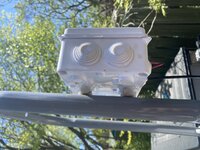
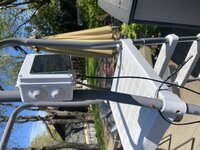
It's been 4 years now since I've started using the "solar" hack for my pool/garage sensors so that they have become more or less perpetual with no battery changes required (so far anyway). I'm updating the pool water temp and roof sensors to a more robust box. This waterproof box houses a Fibaro FGK-10x sensor , and a 3 AA cell holder with rechargeable NiMH batteries. The lithium cell in the sensor (3.6 Volt) is removed, and + - leads soldered to the battery connectors inside the FGK-10x. I found reference to the 1st generation Fibaro door/window sensor (zwave) that has a connection block to allow use of an external temperature probe (DSB1820), so this is why they are being used to [control my pool solar heating system. ](https://community.smartthings.com/t/smartthings-swimming-pool-solar-heat-automation-diy/131994)
[/quote] I've hot glued two rare earth magnets (square, powerful) to the backside of this box so it will just attach to a pool frame vertical brace. The pool is not up yet, hence the ladder used for demo purposes :) I have 4 Fibaro door sensors, and 3 Smarthings multipurpose sensors which have stayed powered up and happy through 4 winters (-35C and a lot of snow) using this solar setup.

IMG_7786.jpg

IMG_7788.jpg

This is an older pic, but describes the internals (using a Smarthings motion/temp sensor) just fine :) The Smarthings sensors use a 3V lithium, (replaced with 2 x AA NiMH) and the Fibaro sensors use a 3.6 V cell (replaced with 3 x AA NiMH). When the little 5V solar panel is connected, the AA cells regulate voltage and the sensors report pretty much the same battery voltage daily. I would not have though that this would work so well (with no charge controller) but the panel is pretty small..only .5 watts@5V (100mA)

solarsensor1.jpg
 
Last edited:
OP
D

Denwood

Well-known member
Joined
Sep 22, 2014
Messages
4,179
Location
Thunder Bay, Ontario, Canada
Here is a pile of 2022 data that should help the next guy put together an efficient and high performing system.

I've simplified the pool plumbing to the first four panels by removing the internal flow restrictions in each of the intake tubes on the four lower collectors, and removed basically a plumbed in manifold. The end result is much better flow to the lower four collectors which drape over the lower roof. We also set a new record last week raising the pool temperature 10 F in 1 day. That's 583K BTU in to raise 7000 US gallons by 10 F.

I have two pumps running in series (Intex OEM pump + 2 speed 1HP pool pump) to provide enough flow/pressure to supply the panel array/filter and ran a few tests of flow with the new plumbing setup into the current setup of 8 2’x20’ panels, 320 sq/ft.

Low Speed, both pumps 17.5s 5 US gallons (with solar) using 5.3 amps@120V :
1028 GPH total
= 17.14 GPM total
= 2.14 GPM/panel

High speed both pumps 10.5 seconds for 5 US gallons (with solar) at 11.4 amps@120V :
1714 GPH total
= 28.51 GPM total
= 3.57 GPM/panel

If you research ideal flow for this type of solar collector, most sources report 4 GPM (gallons per minute), per 40 sq/ft panel (0.1 GPM per sq/ft) is the most efficient balance between power use on the pumps, and energy gathering from the panels. I ran some tests on a sun/cloud type day, with air temps at about 72 F, around 2pm.

At 2.14 GPM/panel, the best we did was 75K BTU, with a 10 F difference between input/output temps.

At 3.57 GPM, output jumped to 100K BTU, although temperature rise (input vs output) dropped, as you'd expect with higher flow, to about 7F. This pretty much demonstrates the fact that you don't want high temps in the panels, as they lose a lot of efficiency when you exceed ambient temps (the panels start losing heat to radiation).

So the good news is the panels now output over 100K BTU, and we have yet to see a day with temps over 74 F. The theoretical max for this setup (capturing 100% of the sun's energy) is 136K BTU. I expect we will see 110 BTU on the system, which would work out to about 80% efficiency. Not bad at all!

The next tweak will be to try two Intex pumps in series to lower the power use of the pump combination. I've found that the Intex (pump that came with the pool) uses only 1.4 amps and is rated at 1600 GPH. I've tested it in the current system (solar panels off, but flowing through the sand filter) using 1.4 amps, but flowing 1200 GPH. Meanwhile the 2 speed pump is running at 4 amps at low speed, but only moving 750 GPH. I've ordered another Intex pump which I pieced together from the Intex site (replacement parts) which is rated at 2100 GPH (1600 when connected to filter) and uses 2.1 amps. The Intex pumps move a lot more water with far less power use than the 2 speed pool pump, so my hope is that we'll get down to 3.5 amps (vs 11.4 amps) of power use while moving close to 4 GPM for each panel.

These two parts will get you a working 2022 Intex pump rated at 2100 GPM:
https://intexcorp.com/uncategorized...r-12in-sand-filter-pump-26645-org-sp-12491eg/ ($ 105 USD)
https://intexcorp.com/replacement-p...mp/11826-pre-filter-assembly-for-28645-28646/ ($19)

Those bits get you a working pump for $125. If this experiment works, we should have the correct flow, but with power use more in line with a $1500 variable speed pool pump using two inexpensive Intex pumps in series.

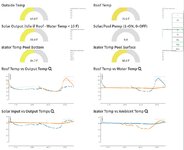
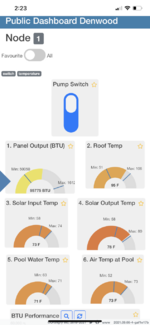
Here is a snapshot of data from June 10, 2022 from https://www.hundredgraphs.com/public/denwood

IMG_7814.png

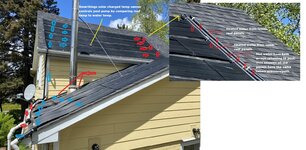
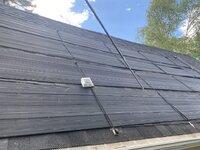
New solar charged SmartThings roof temp sensor

IMG_7813.jpg

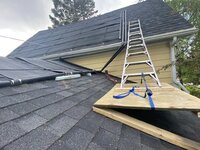
About an hour of prep setup, to address a bad connection on one of the ABS feed pipes:

IMG_7812.jpg

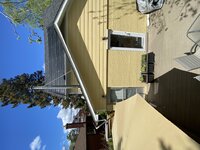
The current panel setup:

IMG_7785.jpg

Taken around 11 am so you can see just how shaded this pool is...

IMG_7793.jpg
 
Last edited:

mike93lx

ALLIANCE MEMBER
Joined
Dec 9, 2013
Messages
37,322
Location
Richmond, VA
Very interesting thread, thanks for sharing.

My folks heat their big inground in MA with those mats as well, as the propane heater is wildly expensive to run. With a solar cover, they consistently keep it at or above 80 all summer. When I was a kid, we had an array of eight 4x8 glazed solar collectors that worked well, but became a maintenence nightmare.

I have a pool going in now in VA that has a 120k btu heat pump. I have some roof that would be a great candidate for solar, but I think I will reserve it for PV as I don't think we will run the pool heat enough to justify stealing the square footage for water instead of electricity.
 
OP
D

Denwood

Well-known member
Joined
Sep 22, 2014
Messages
4,179
Location
Thunder Bay, Ontario, Canada
@BiaoBamosux, thanks.

@mike93lx, my guess is that PV will be the way to go given the gains during the off season for your application. I figure a 5kW PV array would take your 120K BTU heat pump costs effectively to zero..at least during the day, and you would have that 5kW system offsetting your power use all year as well. I believe you would need about 350 square feet to do that.

That said, I’ve done some more efficiency measurements with our solar array and found input as high as 119K BTU (or 35 kW) around 2:30 pm on one of our warmer (29C) days. The theoretical max for the system (given 320 sq/ft) at 100% efficiency is about 144K BTU, or 41 kW of heat energy. This means that on a warm day, the system is at 82% efficiency. This is far and above the 22.5% of a good EV panel in 2022....however heat pumps have a much higher COP (around 6) when it comes to watts used in electricity vs watts added to the pool with respect to heat. It's interesting in that the COP of a heat pump allows you to generate ~ 30kW of heat energy from about 5kW of electricity.

Tuesday June 7, the system recorded a 10 degree rise in water temp for a total of, 583K BTU added to the 7000 gallons of water. It looks like 100K BTU is where the system is averaging for a cooler, sunny day between 11:30am and 3:30 pm
 
OP
D

Denwood

Well-known member
Joined
Sep 22, 2014
Messages
4,179
Location
Thunder Bay, Ontario, Canada
I've been bugged a bit by how much power the solar pool system eats up with the 2 speed (10 amp@120V) pump in series with the OEM Intex pump (about 2 amps) and the 12" sand filter. That got us to about 1714 GPH (or 3.57 GPM per solar pool heating panel). I was intrigued by how little power the Intex 2100 GPH SF-80110-1 pump consumed and wondered if just putting two in series would get me similar flow, but with far less power use. Power use ramps up quite a bit with flow, and it's not a linear relationship.

Anyway, I ordered up a new pump from Intex using their replacement parts site:

https://intexcorp.com/uncategorized...r-12in-sand-filter-pump-26645-org-sp-12491eg/ ($ 105 USD)
https://intexcorp.com/replacement-p...mp/11826-pre-filter-assembly-for-28645-28646/ ($19)

The above two parts gets you a working pump 2100 GPH pump (SF-80110-2) for about $124. These newer Intex pumps have a digital timer and can also be set for continuous operation. More importantly the GFCI plug and pump will revert to a powered state after power is cut to them...in my case by my Zwave outdoor plug. This has not been the case for some of their older products, which was a real PITA to work around. The first unit arrived DOA, however Intex replaced it with no issues or cost to me.

I also ordered up a 21" Hayward sand filter to reduce system pressure. This is quite a bit larger than the 12" sand filter, (.7 sq/t filter surface) with a lot more filter surface area (about 2.7 sq/ft)...so it offers up less resistance than a smaller unit.

I won't post up all my test results, but here is the skinny.

The previous setup using a 2 speed pool pump (10amps@120V on high speed), in series with the Intex SF 80110-1 pump, (2 amps@120V) and 12" sand filter flowed a decent 1714 GPH through the system with solar panels in the loop. This works out to 3.57 GPM to each of the eight panels. It used about 12.8 amps (about 1500 watts) with the salt water chlorinator on.

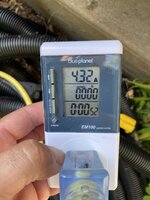
The new setup has one Intex pump before the 21" Hayward sand filter, and the 2nd Intex pump after the sand filter. They are plumbed essentially in series. Flow is now 1765 GPH, or 3.67 GPM per each of the eight solar panels. The big difference is that the system only uses 4.32 amps (about 494 watts) or 3.72 amps after the chlorinator completes it's 2 hour daily cycle. For anyone counting, that's 67% less power use during peak power rates in the afternoon! I also found an amazon sourced "intex" hose in the mix that was only 1" ID. The correct Intex hoses are 1.5" ID, so pulling that out of the mix, did make a small difference too. In any case, I'm pretty happy that we're close to the ideal flow rate/solar panel of 4 GPM, but with power use reduced 67%. Coolio!

At this flow rate, the pool is fully filtered (with solar panels in the loop) every four hours. On an average day, the system runs for 7-8 hours, so we're in good shape to keep the water clean and warm too :)

I would summarize the "hot tips" as follows:

1. Make sure all of your hoses and plumbing are 1.5" ID.
2. Use a larger sand filter. I bought a 21", but I suspect a 16" unit would have been fine too for my situation with a 7000 gallon pool.
3. If using two pumps in series as I am, plumb one in before the sand filter, and the other after it. This made a substantial difference in system flow.
4. Use the Game Intex 40mm to 1.5" plumbing adapters (for running hard pipe), and order 1.5" Intex hoses directly from Intex's site...they are much cheaper to buy this way.

Here's the latest setup:
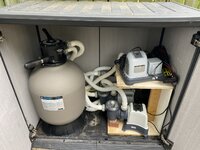
IMG_8127.jpg

System power use with the chlorinator off:
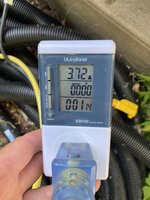
IMG_8131.jpg

And with chlorinator on:

IMG_8130.jpg

The current system is working extremely well, peaking over 100K BTU.
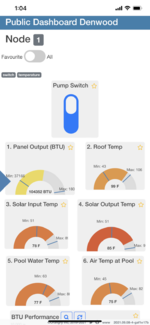
IMG_8047.png
 
Last edited:

250

Well-known member
Joined
Oct 16, 2014
Messages
537
Location
West of the Sierras
I love all the data you're pumping out. I was wondering what the GPM/sqft of solar heater you're running? Or are those pumps variable output so it doesn't matter as one can fine tune the system once its set up? Looking to calculate a smaller, test set up.
 

glentre

Well-known member
Joined
May 21, 2016
Messages
909
Location
Gloucester, Virginia
Had to turn off my solar attic heater today because the pool water hit 90 degrees. Been running for over ten years with no problems. Just a simple piping and automatic control arrangement.

Glen
 

mike93lx

ALLIANCE MEMBER
Joined
Dec 9, 2013
Messages
37,322
Location
Richmond, VA
Great data, thanks again for sharing.

My pool just got started up and you're almost making me feel guilty for heating with my heat pump. 32a @ 240v to run it, but it seems to be holding temp very well with our autocover, so it isn't running a ton. I need to get some automation setup for monitoring a few things and to control the light. Remotely monitoring pressure on the filter and cleaner lines would be awesome
 

66HertzClone

ALLIANCE MEMBER
Joined
Dec 6, 2006
Messages
4,029
Location
Long Valley, NJ
I'm LOLing because at 80F we'd not even get in the thing. That's "freezing" in Texas.
I lived in Tulsa OK for a while, neighbors that had a pool would purchase block ice late in the summer to cool things of a bit. Being a young kid we used to see how long one could hug their body to these cubes.
 

mike93lx

ALLIANCE MEMBER
Joined
Dec 9, 2013
Messages
37,322
Location
Richmond, VA
I lived in Tulsa OK for a while, neighbors that had a pool would purchase block ice late in the summer to cool things of a bit. Being a young kid we used to see how long one could hug their body to these cubes.
My heat pump has a chill mode built in. The water coming out of the pipes feels quite cold when it is on. Hoping I don't need to use it much, if at all
 
OP
D

Denwood

Well-known member
Joined
Sep 22, 2014
Messages
4,179
Location
Thunder Bay, Ontario, Canada
I love all the data you're pumping out. I was wondering what the GPM/sqft of solar heater you're running? Or are those pumps variable output so it doesn't matter as one can fine tune the system once its set up? Looking to calculate a smaller, test set up.
@250 , there are 320 square feet of collectors, 8 units, each 2'x20'. Those are el cheapo Intex pumps so just single speed, but they use under 2 amps@120V each. I've managed to improve efficiency to 1800 GPH now by replacing the Intex aerator (it's quite restrictive apparently) on the pool supply fitting with a standard 1.5" fitting that came with the Hayward above ground pool skimmer I installed. I'll post a few pics. With the larger 21" sand filter and one pump in front, one behind the filter, that all works to 3.75 GPM per panel. I measured almost 25% less efficiency at 2.5 GPM per panel, so getting closer to 4 GPM, definitely gets you better efficiency on the system. The Intex pumps are rated at about 1600 GPM in a sand filter system (2100 with no head). Running them in series with the eight 2'x20' collectors, 21" sand filter and a max of 23 ft of height (all plumbed in parallel...that's super important!!) is getting us 1800 GPH. I am quite happy with that volume of water moving while only using 3.7 amps@120V :) The latest setup has dropped the monthly pool cost to about $17 to operate and heat it. I only need to run the salt water chlorinator for 2 hrs per day and there are no chemicals to add...again keeping costs low.
Had to turn off my solar attic heater today because the pool water hit 90 degrees. Been running for over ten years with no problems. Just a simple piping and automatic control arrangement.

Glen

@glentre , We did hit 88F pool water for one day, but with nights dropping to 50F, it's not unusual for the pool to loose 5F (about 300K BTU) overnight to ambient...even with the "solar" pool cover. Add that the pool is pretty much 100% shaded, and then add that the panels only see full sun from 11:30 to 4:00 or so daily...So ya, too much heat is never an issue :) The attic heat thing makes a lot of sense to me. It won't be as efficient as panels, but in a hotter climate (and hotter days) it likely doesn't matter. Having a pool in sunlight makes a huge difference ... for me it would be like adding another 320 square feet of collector!

Great data, thanks again for sharing.

My pool just got started up and you're almost making me feel guilty for heating with my heat pump. 32a @ 240v to run it, but it seems to be holding temp very well with our autocover, so it isn't running a ton. I need to get some automation setup for monitoring a few things and to control the light. Remotely monitoring pressure on the filter and cleaner lines would be awesome
@mike93lx , I've been a bit amazed by how many watts of energy the system generates. On a mostly sunny day, with temps only at 72-73F (our typical summer day here) the system will peak at around 100K BTU. That would equate to 122 amps@240V of resistance heat, or with a heat pump with COPD of 5, about 24 amps@240V.
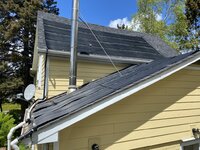
The issue is night...those 50F (typical nights) means there are 300K BTU to catch up on each day, before adding any heat. That said, the water has been staying 78-82 F quite consistently with peaks over if we get two days of sun etc. Getting to 88F is great, but of course the night delta ends up being large, so you just lose more at night.

My system pressure has also dropped to 5psi (at the filter) with the push/pull pump setup, so I just backflush for 2 minutes once a week...likely no need to monitor that pressure. The automation is kind of fun and I find myself checking it all the time on hot afternoons to see how many BTU's we're pumping in...ha.
My heat pump has a chill mode built in. The water coming out of the pipes feels quite cold when it is on. Hoping I don't need to use it much, if at all
Our chill mode is the largest fresh water lake in the world, with surface temps at 46F in summer :) It's about 1 km away so even on hot summer days, we'll be 15F cooler than just a few miles inland. You can send that extra heat our way if you have any :)
 
Last edited:
To avoid these ads, REGISTER NOW!
Top Bottom