To avoid these ads, REGISTER NOW!

Generator Reliability - Engine vs the Electrical

FMC1959

Well-known member
Joined
Feb 9, 2014
Messages
2,319
Location
Montreal, Canada / Upstate NY
Most people that have had issues with standby generators or even portable that are at least 8000 watts or higher, what is more likely to fail?

The engines being gasoline, LP/NG or diesel, or the generator electrics?
 
To avoid these ads, REGISTER NOW!

seber

Well-known member
Joined
May 31, 2016
Messages
4,207
Location
Deep East Tx.
Engine for sure. Usually fuel system will give the most trouble just because they mostly sit idle. Best practice is to dump the fuel and run it dry then drain the carburetor. Even then, the fuel pump will freeze up over time.
 

Bretny

Well-known member
Joined
Jul 31, 2017
Messages
3,918
Location
Dutchess county NY
Hes talking about propane, nat gas and diesel. None of those have a carb.

Who knows what will fail. Many different things can happen from a mouse nest in the wrong spot to a bad mixing valve. That's like asking what usualy goes wrong with a 4door car.
 
OP
F

FMC1959

Well-known member
Joined
Feb 9, 2014
Messages
2,319
Location
Montreal, Canada / Upstate NY
Hes talking about propane, nat gas and diesel. None of those have a carb.

Who knows what will fail. Many different things can happen from a mouse nest in the wrong spot to a bad mixing valve. That's like asking what usualy goes wrong with a 4door car.

I don't mean what will go wrong in particular, but looking at a generator as a 2 part system. One side being the electrical component that jas the alternator/dynamo, the electrical panel and connections...etc, and the other side is what drives it, the engine.

When a generator goes down and needs service, is it the engine component or the generator/electrical component that has problems.
 
OP
F

FMC1959

Well-known member
Joined
Feb 9, 2014
Messages
2,319
Location
Montreal, Canada / Upstate NY
Engine for sure. Usually fuel system will give the most trouble just because they mostly sit idle. Best practice is to dump the fuel and run it dry then drain the carburetor. Even then, the fuel pump will freeze up over time.

Thanks, I do not expect to have it sit idle. I plan to either have it programable to do weekly or bi monthly startups, or do it myself if it isn't computerized.
 

BiggityBen

Well-known member
Joined
May 1, 2018
Messages
93
Location
NJ
i find that diesels have problems with fuel system (main just need new fuel filters) as their tanks are never treated. and you can expect the occasional water pump, fuel lift pump, fuel filter housing, or the o-rings in the flare nuts of the fuel lines.

otherwise it tends to be the controller or voltage regulator on smaller resi units. many modern resi units have the voltage regulator integrated into the controller (as well as the battery tender). nat gas units once they're given the proper fuel pressure and speed setting will run fine with regular preventative maintenance (that includes the brushes) and exercise.
 
Last edited:

Den69rs96

Well-known member
Joined
May 25, 2012
Messages
1,512
Location
Central MA
I have a Briggs Elite 10000 watt portable. Only issue I have is with the idle control. It will not increase rpms when it senses a load. It will return to idle once there is no load, but not the other way around. I’ve replaced components and it still doesn’t work correctly. The only thing I haven’t replaced is the stepper motor. I have approximately 200-250 hours on mine in 15 years. Next time I change the oil, I’ll adjust the valves again and change the plugs.

I’ve had zero issues otherwise. If you get one, I’d recommend running it every month or two with a slight load on it to exercise it a bit. If you have regular gasoline, stabil is a must.
With gas the only issues you might run into on engine a carb related. I bet you will have electrical issues before major engine issues. No experience with Propane/natural gas or diesel.
 
OP
F

FMC1959

Well-known member
Joined
Feb 9, 2014
Messages
2,319
Location
Montreal, Canada / Upstate NY
i find that diesels have problems with fuel system (main just need new fuel filters) as their tanks are never treated. and you can expect the occasional water pump, fuel lift pump, fuel filter housing, or the o-rings in the flare nuts of the fuel lines.

otherwise it tends to be the controller or voltage regulator on smaller resi units. many modern resi units have the voltage regulator integrated into the controller (as well as the battery tender). nat gas units once they're given the proper fuel pressure and speed setting will run fine with regular preventative maintenance (that includes the brushes) and exercise.

Yes, I can see where NG/LP avoid issues that gasoline or diesel would have with dirty/gummed up lines or carbs
 
OP
F

FMC1959

Well-known member
Joined
Feb 9, 2014
Messages
2,319
Location
Montreal, Canada / Upstate NY
I have a Briggs Elite 10000 watt portable. Only issue I have is with the idle control. It will not increase rpms when it senses a load. It will return to idle once there is no load, but not the other way around. I’ve replaced components and it still doesn’t work correctly. The only thing I haven’t replaced is the stepper motor. I have approximately 200-250 hours on mine in 15 years. Next time I change the oil, I’ll adjust the valves again and change the plugs.

I’ve had zero issues otherwise. If you get one, I’d recommend running it every month or two with a slight load on it to exercise it a bit. If you have regular gasoline, stabil is a must.
With gas the only issues you might run into on engine a carb related. I bet you will have electrical issues before major engine issues. No experience with Propane/natural gas or diesel.

I am looking at all options, including a gasoline gen. Your 10000 watt Briggs, is it very loud? From inside the house can you constantly hear it? Or as another GJ member referred to his as a "screamer"...or not so bad?
 

Busted_Knuckles

Well-known member
Joined
Oct 9, 2009
Messages
2,613
Location
Northwest Illinois
This is what I do for a living ( generator repair ), if we are talking stand-bys, that run Nat Gas / LP / Diesel, machine controls will be the most likely failures, followed by the followed by the engine, and then the generator head ( mostly fine until overloaded/overheated ) Engine problems are mostly minor.

I replace batteries more than anything else, LOL !, suggesting that the machines are mostly reliable. I know nothing about Briggs branded gennie, but dont recall anything negative either. For lots of reasons, gasoline is really not a good choice for a stand by, portable that get used regularly, yes, but not stand-bys.

Stand-bys are either 1800rpm or 3600rpm ( your screamers )

If your looking at 10k, you will be buying a screamer, 1800rpm machines mostly dont start until you get to 15-16k-ish. I have a small unit for my house, its only 16k, but its an 1800 rpm Mitsubishi 1.5L 4 cylinder, with analog controls ( for several reasons ).

Boards, regulators, battery chargers, relays. Im a Factory Generac Dealer, certified in residential and commercial machines, I also repair out of warranty portables of all brands, which share all the ills of any gas powered piece of small equipment.
 
Last edited:

Den69rs96

Well-known member
Joined
May 25, 2012
Messages
1,512
Location
Central MA
I am looking at all options, including a gasoline gen. Your 10000 watt Briggs, is it very loud? From inside the house can you constantly hear it? Or as another GJ member referred to his as a "screamer"...or not so bad?

It’s fairly loud. It has a Briggs 18hp vanguard twin cylinder engine. It has a big muffler, but it’s not Honda quiet.
 

BiggityBen

Well-known member
Joined
May 1, 2018
Messages
93
Location
NJ
it's been my experience that the "screamers" are loud because they're 3600rpm and air cooled. the liquid cooled, though they have a fan pushing air, tend to have better enclosures for sound. i'm not sure if you can find any 1800rpm liquid cooled machines in as small a load size as your KW range would have. i'm not very familiar with nat gas Generac (though i work with the diesel Magnum generators) but they are the major, #1 player in the market for permanent standby machines. their parts are cheap and can be found anywhere. dealers also are literally everywhere. the smallest Kohler i'm aware of that is liquid cooled is a 24KW, at least for LP/NG. i have worked on two 20kw diesels from Kohler powered by Yanmar diesels, but they were from the 90's and i'm not sure they offer anything like that anymore.

i don't really know anything about Montreal if that's your location, but here during Hurricane Sandy everyone's gas pressure was so low due to overpopulation and therefore overuse of gas, that many people were having a hard time reaching the water column necessary to run their units. LP can be annoying to have a separate tank needing refilled but can be a saving grace in a major event.
 

Steve_P

Well-known member
Joined
Sep 15, 2010
Messages
5,188
Engine. I worked in a small engine shop for 6 yrs and I think we only had 2 generators that ran and no electricity. And hundreds with engine problems. These were gasoline, but I doubt it'll differ no matter the fuel source
 
OP
F

FMC1959

Well-known member
Joined
Feb 9, 2014
Messages
2,319
Location
Montreal, Canada / Upstate NY
It’s fairly loud. It has a Briggs 18hp vanguard twin cylinder engine. It has a big muffler, but it’s not Honda quiet.

I have always heard great things about Vanguards, including they are quiet. That's probably compared to similar motors in its class. like BiggityBen states below, I also believe that a liquid cooled engine will be designed differently and inherently will be quieter.
 
OP
F

FMC1959

Well-known member
Joined
Feb 9, 2014
Messages
2,319
Location
Montreal, Canada / Upstate NY
it's been my experience that the "screamers" are loud because they're 3600rpm and air cooled. the liquid cooled, though they have a fan pushing air, tend to have better enclosures for sound. i'm not sure if you can find any 1800rpm liquid cooled machines in as small a load size as your KW range would have. i'm not very familiar with nat gas Generac (though i work with the diesel Magnum generators) but they are the major, #1 player in the market for permanent standby machines. their parts are cheap and can be found anywhere. dealers also are literally everywhere. the smallest Kohler i'm aware of that is liquid cooled is a 24KW, at least for LP/NG. i have worked on two 20kw diesels from Kohler powered by Yanmar diesels, but they were from the 90's and i'm not sure they offer anything like that anymore.

i don't really know anything about Montreal if that's your location, but here during Hurricane Sandy everyone's gas pressure was so low due to overpopulation and therefore overuse of gas, that many people were having a hard time reaching the water column necessary to run their units. LP can be annoying to have a separate tank needing refilled but can be a saving grace in a major event.

Well for me, no NG in the area, I am looking at LP and if tank rental(s), delivered price make sense, I might go LP, otherwise, probably diesel.
 
OP
F

FMC1959

Well-known member
Joined
Feb 9, 2014
Messages
2,319
Location
Montreal, Canada / Upstate NY
Engine. I worked in a small engine shop for 6 yrs and I think we only had 2 generators that ran and no electricity. And hundreds with engine problems. These were gasoline, but I doubt it'll differ no matter the fuel source

I wasn't sure about this, but what I suspected.

Years ago,1970-2000 when there were mainly B&S, Honda, some Yamaha, Kawasaki, Wisconsin Robins and few other engine makers. Now there are many Chinese engine makers like Champion, DuraMax and others.

Is the electronics like pre 2000 where just about all the genarators were being made by a handful of NFR, like 2 or 3 making for everyone. Is that still the case or are there many more makers of the electronics panels, alternator/dynamo and the rest of the electrical on today's generators?
 

BiggityBen

Well-known member
Joined
May 1, 2018
Messages
93
Location
NJ
in my opinion, and i've been a generator technician for 8 years now, a small engine repair shop would only see engine problems on a generator because that's where you'd take one with engine problems. a back end issue you would more likely go to a place that does motor rewinding, like say if you wanted to try to salvage your car's DC alternator. it is easy enough to get the correct resistance specs of just about every small-time generator company's components online for any motor company to work with. specifically the ones you can find in big box stores.

for the last 4 years i've been exclusively an industrial technician so i'm pretty out of the loop on smaller scale units. but there's more than a few to go with in smaller, such as Generac, Kohler, Onan, Blue Star, etc, all with their own controls.
 

Steve_P

Well-known member
Joined
Sep 15, 2010
Messages
5,188
in my opinion, and i've been a generator technician for 8 years now, a small engine repair shop would only see engine problems on a generator because that's where you'd take one with engine problems. a back end issue you would more likely go to a place that does motor rewinding, like say if you wanted to try to salvage your car's DC alternator. it is easy enough to get the correct resistance specs of just about every small-time generator company's components online for any motor company to work with. specifically the ones you can find in big box stores.

for the last 4 years i've been exclusively an industrial technician so i'm pretty out of the loop on smaller scale units. but there's more than a few to go with in smaller, such as Generac, Kohler, Onan, Blue Star, etc, all with their own controls.

That's a good perspective- and I don't disagree with "you take engine problems to an engine shop". But which is more reliable, a gasoline engine, or an electric motor?

There is absolutely no way that the electrical portion of generators fail more often than the engine because the quantity of moving and wear parts. Even if you start the engine every few months, it will still statistically have problems before the engine. How often does an automotive alternator need to be changed before the spark plugs, water pump....some other type of engine service?
 

BiggityBen

Well-known member
Joined
May 1, 2018
Messages
93
Location
NJ
that was what i was saying with preventative maintenance. assuming he's going to go with propane, most generators ask for every year or 100 hours runtime to change the oil and spark plugs, and give the hour meter recommendations for air filter, valve lash adjustments, etc for "serviceable components". most also recommend synthetic oil. being that the smaller screamers are essentially just a larger lawn mower engine, no belt or anything pulley-turned, liquid cooled system with components, without many sensors like a mag pickup even (the controller knows the engine speed based on the AC frequency being generated), components there are less likely to fail with a regular preventative maintenance schedule. the starting battery is probably going to be the first thing to go.

it is likely controls will fail in some capacity first, especially in more extreme environments. constant high temperature and sunlight or constant freezing temperatures will eventually take their toll on a computer that is always powered up. the back end issues usually come from a factory issue with insulation that is exacerbated over time due to moisture and heat. i would not be surprised if it was planned obsolescence, really.
 
OP
F

FMC1959

Well-known member
Joined
Feb 9, 2014
Messages
2,319
Location
Montreal, Canada / Upstate NY
That's a good perspective- and I don't disagree with "you take engine problems to an engine shop". But which is more reliable, a gasoline engine, or an electric motor?

There is absolutely no way that the electrical portion of generators fail more often than the engine because the quantity of moving and wear parts. Even if you start the engine every few months, it will still statistically have problems before the engine. How often does an automotive alternator need to be changed before the spark plugs, water pump....some other type of engine service?

If I am getting this right, Steve_P you believe the motor (diesel, gasoline or LP/NG) would fail or have problems interrupting the usage of the genset before anything related to the producing the electricity side....

that was what i was saying with preventative maintenance. assuming he's going to go with propane, most generators ask for every year or 100 hours runtime to change the oil and spark plugs, and give the hour meter recommendations for air filter, valve lash adjustments, etc for "serviceable components". most also recommend synthetic oil. being that the smaller screamers are essentially just a larger lawn mower engine, no belt or anything pulley-turned, liquid cooled system with components, without many sensors like a mag pickup even (the controller knows the engine speed based on the AC frequency being generated), components there are less likely to fail with a regular preventative maintenance schedule. the starting battery is probably going to be the first thing to go.

it is likely controls will fail in some capacity first, especially in more extreme environments. constant high temperature and sunlight or constant freezing temperatures will eventually take their toll on a computer that is always powered up. the back end issues usually come from a factory issue with insulation that is exacerbated over time due to moisture and heat. i would not be surprised if it was planned obsolescence, really.

...and BiggityBen you are on the other side of the fence, believing the electricity producing components would fail (fail as in interrupt the use, not regular maintenance like changing oil...etc.) before the motor/engine side, correct?

I wasn't sure when I asked this question, which is why I asked it, but my thoughts, not backed by any data, would be the electrical components would be like most stuff, if it works in the first 30 days, then it will work forever (or close to forever).

Engines, be it crappy or high end like Honda gasoline, or Cummins or Kubota diesel, can go pretty long with good maintenance but will eventually all fall prey to carb, injector, fuel issues at the very least and of course anything can happen from a blown piston, head or other major work.

I still maintain (mainly from what a buddy from many years ago who had a rental shop told me), that a generator motor works as hard or harder than any other instance.

He would show me after outages, 1/2 a day to a full day power failure, the pile of generators that had come in for repair, many cheaper Homelite/B&S gens, but still. He would tell me, even a premium engine like a Honda, stick it in a lawnmower, snow blower, outboard boat, vibrating plate, water pump, or any other application, it will work hardest in a generator.
 
To avoid these ads, REGISTER NOW!

BiggityBen

Well-known member
Joined
May 1, 2018
Messages
93
Location
NJ
the vast majority of my repair work ends up being fuel system related on diesels, controllers/voltage regulators, and back ends. excitation components and stators mostly, i've actually only had to replace a rotor only twice in 8 years. but yes, all that amperage pumping out of a generator, mixed with not having a cool-down after load or having moisture get in, hurts the insulation of the windings. you end up with open or shorted coils and a generator with no output.

controller/vr will likely fail first, followed by back end component failure, followed by engine failure is my opinion. that is with routine preventative maintenance performed for its life and a regular exercise schedule.

i should clarify though that i work with industrial generators, all are three phase. maybe having the extra coils makes it more likely for back end failures.
 
Last edited:
OP
F

FMC1959

Well-known member
Joined
Feb 9, 2014
Messages
2,319
Location
Montreal, Canada / Upstate NY
the vast majority of my repair work ends up being fuel system related on diesels, controllers/voltage regulators, and back ends. excitation components and stators mostly, i've actually only had to replace a rotor only twice in 8 years. but yes, all that amperage pumping out of a generator, mixed with not having a cool-down after load or having moisture get in, hurts the insulation of the windings. you end up with open or shorted coils and a generator with no output.

controller/vr will likely fail first, followed by back end component failure, followed by engine failure is my opinion. that is with routine preventative maintenance performed for its life and a regular exercise schedule.

i should clarify though that i work with industrial generators, all are three phase. maybe having the extra coils makes it more likely for back end failures.

Well true industrial sized generators are their own category, and I do not mean the tow around Cat or MQ 50-100Kw gens. I had a customer who had 3 of these to back up their data center. I don't see one of these engines going down.

08-Gen Red.jpg
 

Busted_Knuckles

Well-known member
Joined
Oct 9, 2009
Messages
2,613
Location
Northwest Illinois
If I am getting this right, Steve_P you believe the motor (diesel, gasoline or LP/NG) would fail or have problems interrupting the usage of the genset before anything related to the producing the electricity side....


I wasn't sure when I asked this question, which is why I asked it, but my thoughts, not backed by any data, would be the electrical components would be like most stuff, if it works in the first 30 days, then it will work forever (or close to forever).

This thread lacks serious context, from the standpoint of your question was too wide, and the answers are lacking detail..

As a refreh of my earlier post, Im a stand by dealer/factory cert tech. So that is my world, but being an independent guy, I work on everything, including portable gennies, up to commercial standbys ( small diesels and automotive gas ). I might work on 2 portables a month, so its not my area of expertise,... or very little of what I do.

Related, but not on point, right now I have two large portables waiting for repair, commercial units, branded " Briggs and Stratton ", and both have 420cc Honda GX Clones on them, telling me that Briggs has given up on their own product line in an attempt to sell a " somewhat " reliable generator, that is too funny ! But plays into what your asking about, and what Steve may have commented on, that is some of these small engines cant handle the load over time. The standbys dont appear to have this problem.

Back to the question, and it needing to be more specific,,,..

Each class has its own problems. to exaggerate the point, a harbor freight 2 cycle 15amp machine is going to **** the bed almost immediately compared to a Honda product of the same size, you literally can not compare the two, but they are sold in the same application and market, lets just assume " camping ". 900watts from Hazard Fraught is $124, and Honda's smallest at 2.2kw, is $1000.

This disparity is carried through all the sizes and class, although the bigger you get, the gap closes somewhat.

To have meaningful conversation, lets break down what it is exactly you are wanting to know.. it might help you and others that come along later looking to learn something.

It sounds like your in the 10kw'ish camp, are you wanting a portable or a standby ? You can get diesel in this size range, like a Kohler with a Kubota, or on the other side you can get gasoline China no name junk ? Clearly what ails the Kohler will not be ailing the China Junk.

Propane machines are likely not going to have the engine problems associated with gas small engines to some degree.. which I would hope is obvious.

Then there is honda, and the rest,....

As mentioned previously, I do standby, the machines I work on dont have prime mover problems.. they do have control problems, and in the same breath, time kills these machines because they are hardly ever used where Im at. We have good weather and really good infrastructure, so they almost always have more exercise time than run time.

Guys running a portable 10hrs a day building houses, yeah I can see where they are going to move through engines,.. and everything is going to fail from heat cycles, running WOT/heavy load most of the time...in open weather, UV damage to parts, etc,..

I could anecdotally run on for hours..
 
OP
F

FMC1959

Well-known member
Joined
Feb 9, 2014
Messages
2,319
Location
Montreal, Canada / Upstate NY
This thread lacks serious context, from the standpoint of your question was too wide, and the answers are lacking detail..

As a refreh of my earlier post, Im a stand by dealer/factory cert tech. So that is my world, but being an independent guy, I work on everything, including portable gennies, up to commercial standbys ( small diesels and automotive gas ). I might work on 2 portables a month, so its not my area of expertise,... or very little of what I do.

Related, but not on point, right now I have two large portables waiting for repair, commercial units, branded " Briggs and Stratton ", and both have 420cc Honda GX Clones on them, telling me that Briggs has given up on their own product line in an attempt to sell a " somewhat " reliable generator, that is too funny ! But plays into what your asking about, and what Steve may have commented on, that is some of these small engines cant handle the load over time. The standbys dont appear to have this problem.

Back to the question, and it needing to be more specific,,,..

Each class has its own problems. to exaggerate the point, a harbor freight 2 cycle 15amp machine is going to **** the bed almost immediately compared to a Honda product of the same size, you literally can not compare the two, but they are sold in the same application and market, lets just assume " camping ". 900watts from Hazard Fraught is $124, and Honda's smallest at 2.2kw, is $1000.

This disparity is carried through all the sizes and class, although the bigger you get, the gap closes somewhat.

To have meaningful conversation, lets break down what it is exactly you are wanting to know.. it might help you and others that come along later looking to learn something.

It sounds like your in the 10kw'ish camp, are you wanting a portable or a standby ? You can get diesel in this size range, like a Kohler with a Kubota, or on the other side you can get gasoline China no name junk ? Clearly what ails the Kohler will not be ailing the China Junk.

Propane machines are likely not going to have the engine problems associated with gas small engines to some degree.. which I would hope is obvious.

Then there is honda, and the rest,....

As mentioned previously, I do standby, the machines I work on dont have prime mover problems.. they do have control problems, and in the same breath, time kills these machines because they are hardly ever used where Im at. We have good weather and really good infrastructure, so they almost always have more exercise time than run time.

Guys running a portable 10hrs a day building houses, yeah I can see where they are going to move through engines,.. and everything is going to fail from heat cycles, running WOT/heavy load most of the time...in open weather, UV damage to parts, etc,..

I could anecdotally run on for hours..

You do raise a good point. I had already asked other generator related questions on the general tool thread. All started because this past Feb I moved to a new area, rural, and we have 1-3 power outages /month, always 3 hours or more, and in winter it will be longer according to others living in the area.

I need something in the 10-20Kw size, this is not determined yet because I am having trouble determining how much is needed just for my 3 ton AC/Heat Pump (not heating coils, just a heat pump) which has a RLA just under 15 amps and an LRA of about 73 amps.

I have no NG in the area and not a fan of LP, had it at my previous house and find it expensive when the tank rental & delivery charges are added up, so I was hoping to find a decent diesel. Many thought diesel would have its own issues and LP is the way to go. Granted, I am sure they all have their issues, but for me in my situation, diesel seemed like the choice, but have not rules out LP, or even gas for that matter if I am able to get away with 10Kw or so. (You mention cheap Chinese ****, true there definitely are, but there are also some decent Chinese machines like Champion. They have made quite a name for themselves and ratings by users, be it on Amazon or elsewhere are always very high)

Getting back to the question, I was asking this because, looking at a generator as a 2 component system - the engine on 1 side and the electricity generating system on the other, I was always under the impression, engines were more prone to problems. Of course this being my limited experience with portables more than my zero experience with standby units.

If my suspicions were wrong, then what would I need to look for on the "generator" side, how different is one brand to the other (Like your example of Honda engines at 1 end of the spectrum or cheap Chinese & old B&S cast iron sleeve motors at the other end) when looking at the electronics or generator component. About 20 years ago I had done some research and the 10Kw and under portables, the consensus was that 2 or 3 companies were making the electronics, I believe Onan, Mitsubishi and 1 or 2 others for all generators on the market. Maybe that had changed today and maybe in the standby market each company (Generac, Kohler, Onan...etc) make their own...I don't know.

Seeing as you would be what I consider an expert, what is your advice in what to avoid and what to go for in the 10-20Kw, probably standby but a good portable could also be considered,

BTW, between Trane not responding, my contractor and other HVAC people I have spoken to, and articles such as this https://generators.smps.us/start.html and the section on "SIZING GENERATOR TO START A MOTOR" stating a formula of (LRA x .7) x 240 volts x .7) = required VA. One HVAC guy found the specs for me which is my exact model
Trane Specs.jpg

Based on these specs, the yellow highlight being mine, he stated I would need 14.75 continuous and 18 peek to start it....not sure how he came up with these numbers

So not counting other items I would need to run (2 sump pumps, 1 well pump + 1 fridge and a couple of other items), I have a low of 4500 watts to a high of 18,000 watts just for the AC/Heat pump....very difficult finding the right gen size just for the actual startup need.

Another frequent contributor on GJ has suggested adding a soft start would help quite a bit (like this https://www.microair.net/collection...or-115-and-230v-ac-motors?variant=29181662283 ) which I will probably get.

Add to all of this, I have recently come to the realization that my heat pump needs my furnace to be running (electric furnace 20Kw!!!) or it won't run. So I will need to have it added on the transfer switch panel, just not use the heating with the furnace.

I had one "tech" from the Trane contractor company (I have both the heat pump/AC + the furnace added about 2 months ago) state they don't give advice on how many staring watts/continuous watts are needed. These questions should be left to the generator experts.

My very first question/post is what people thought of a...A Used, less than 500 hour Honda EX12D 12Kw peak, 10Kw continuous, liquid cooled diesel, about $5200 USD, no tax, might be room for a little negotiation.

OR

A New Yamaha EDL11000SDE, similar to the Honda, 12Kw peak, 10Kw continuous, liquid cooled diesel - about $7200 USD tax in (no room for negotiation) which from what I can tell is a Kubota Lowboy GL1100 rebranded, and in my neck of the woods, cheaper to buy than the Kubota.

On about 80 posts, I think 1 person commented on the Yamaha being like the Kubota and another liked the Honda, about 78 posts were on I should go LP and storing diesel is bad....and so on.

If a 10-12Kw could work, I might even consider this unit
https://cdntoromontsites.azureedge....-443e-8aba-3a48560b45a1.pdf?sfvrsn=6b348ce3_2

Anyway, I hope this is enough context and if you have any advice (or anyone else) much appreciated.
 
Last edited:

BiggityBen

Well-known member
Joined
May 1, 2018
Messages
93
Location
NJ
This thread lacks serious context, from the standpoint of your question was too wide, and the answers are lacking detail..

As a refreh of my earlier post, Im a stand by dealer/factory cert tech. So that is my world, but being an independent guy, I work on everything, including portable gennies, up to commercial standbys ( small diesels and automotive gas ). I might work on 2 portables a month, so its not my area of expertise,... or very little of what I do.

Related, but not on point, right now I have two large portables waiting for repair, commercial units, branded " Briggs and Stratton ", and both have 420cc Honda GX Clones on them, telling me that Briggs has given up on their own product line in an attempt to sell a " somewhat " reliable generator, that is too funny ! But plays into what your asking about, and what Steve may have commented on, that is some of these small engines cant handle the load over time. The standbys dont appear to have this problem.

Back to the question, and it needing to be more specific,,,..

Each class has its own problems. to exaggerate the point, a harbor freight 2 cycle 15amp machine is going to **** the bed almost immediately compared to a Honda product of the same size, you literally can not compare the two, but they are sold in the same application and market, lets just assume " camping ". 900watts from Hazard Fraught is $124, and Honda's smallest at 2.2kw, is $1000.

This disparity is carried through all the sizes and class, although the bigger you get, the gap closes somewhat.

To have meaningful conversation, lets break down what it is exactly you are wanting to know.. it might help you and others that come along later looking to learn something.

It sounds like your in the 10kw'ish camp, are you wanting a portable or a standby ? You can get diesel in this size range, like a Kohler with a Kubota, or on the other side you can get gasoline China no name junk ? Clearly what ails the Kohler will not be ailing the China Junk.

Propane machines are likely not going to have the engine problems associated with gas small engines to some degree.. which I would hope is obvious.

Then there is honda, and the rest,....

As mentioned previously, I do standby, the machines I work on dont have prime mover problems.. they do have control problems, and in the same breath, time kills these machines because they are hardly ever used where Im at. We have good weather and really good infrastructure, so they almost always have more exercise time than run time.

Guys running a portable 10hrs a day building houses, yeah I can see where they are going to move through engines,.. and everything is going to fail from heat cycles, running WOT/heavy load most of the time...in open weather, UV damage to parts, etc,..

I could anecdotally run on for hours..

i too am factory certified, mine is in Kohler Industrial and Controls, Kohler Diesel engines, and also Volvo Penta but i forget what that cert was called.

i am in disbelief that none of the other posters expect back end component failures. the beginnings of all factory certs (we have guys who were certified with Generac and with Onan prior to working here) and it's the same everywhere. classes start with theory of operation and go right into troubleshooting. why would they waste all that time if it wasn't a common issue?

the classes service dealers take taught by distributors are also focused mainly on controls and back end troubleshooting, which implies to me that it is also very common for resi units.
 

theoldwizard1

Well-known member
Joined
Feb 22, 2011
Messages
43,301
Location
SE MI
we have 1-3 power outages /month, always 3 hours or more, and in winter it will be longer according to others living in the area.
.
.
.
I have no NG in the area and not a fan of LP, had it at my previous house and find it expensive when the tank rental & delivery charges are added up, so I was hoping to find a decent diesel.
.
.
.
Add to all of this, I have recently come to the realization that my heat pump needs my furnace to be running (electric furnace 20Kw!!!) or it won't run.
GET OVER YOUR PROBLEM WITH LP ! You must have some CRAZY CHEAP "hydro" rates ! (Live next door to Niagara Falls ?) You are going to spend a TON of money to have your own diesel powered electric generation when you could spend a lot less by using LP !

Buy a tank (or maybe even two, used). You can even find tanks that can be buried. Get rid of that electric furnace and replace it with one that uses LP.

With one furnace running, you probably don't need the heat pump even in the middle of winter. A couple of small electric heater would help cold rooms.

You are still going to need a pretty good size generator (10 kw ?) to run all of the other electric items in your house (2 sump pumps, well pump, cook stove, water heater, etc, etc). Personally, I would swithc most of my major electric appliance to LP as they wear out !
 
OP
F

FMC1959

Well-known member
Joined
Feb 9, 2014
Messages
2,319
Location
Montreal, Canada / Upstate NY
GET OVER YOUR PROBLEM WITH LP ! You must have some CRAZY CHEAP "hydro" rates ! (Live next door to Niagara Falls ?) You are going to spend a TON of money to have your own diesel powered electric generation when you could spend a lot less by using LP !

Buy a tank (or maybe even two, used). You can even find tanks that can be buried. Get rid of that electric furnace and replace it with one that uses LP.

With one furnace running, you probably don't need the heat pump even in the middle of winter. A couple of small electric heater would help cold rooms.

You are still going to need a pretty good size generator (10 kw ?) to run all of the other electric items in your house (2 sump pumps, well pump, cook stove, water heater, etc, etc). Personally, I would swithc most of my major electric appliance to LP as they wear out !

Not sure if it is how cheap our electricity is (the rate is 6.7 cents but with base rate + over so much per day, taxes and everything combined, it is about 9-10 cents /KwH, not many places cheaper) or how expensive propane is.

If you want a NG stove or dryer, you can find them relatively easy, most models from the big brand names carry a NG model. And NG is pretty cheap

LP, forget it, you might be able to find one, but not easily...definitely not in your standard appliance store. Probably through a Propane company. Offhand, I have never known anyone that has a propane appliance in the Montreal area in my 61 years of being alive. (I have known people that lived in Europe that had LP appliances, but that's because electricity is a fortune there)

NG, electric and home heating oil are all on the cheap side, depending on the, markets, from year to year, any one of the 3 can be the cheapest. Propane is easily the most expensive, 50% or more than the other 3. If you want a propane furnace, you will have 10 times more people persuade you to go with anything but propane, than the number of people trying to get me to go to propane on this thread... at least here where I live.

Our winters are long and cold which equal big heating bills. Electricity is the provinces big thing and they do everything do give it to us as cheap as possible. NG is a Canadian resource, again, they do whatever possible to give it to us cheap. Why home heating oil is competitive, not sure but it is on the environmental hit list and slowly being banned within certain cities.

Different markets...maybe in most US states LP is a viable option because electricity and NG are more expensive, or LP is so much cheaper, or both....but no here
 
OP
F

FMC1959

Well-known member
Joined
Feb 9, 2014
Messages
2,319
Location
Montreal, Canada / Upstate NY
GET OVER YOUR PROBLEM WITH LP ! You must have some CRAZY CHEAP "hydro" rates ! (Live next door to Niagara Falls ?) You are going to spend a TON of money to have your own diesel powered electric generation when you could spend a lot less by using LP !

Buy a tank (or maybe even two, used). You can even find tanks that can be buried. Get rid of that electric furnace and replace it with one that uses LP.

With one furnace running, you probably don't need the heat pump even in the middle of winter. A couple of small electric heater would help cold rooms.

You are still going to need a pretty good size generator (10 kw ?) to run all of the other electric items in your house (2 sump pumps, well pump, cook stove, water heater, etc, etc). Personally, I would swithc most of my major electric appliance to LP as they wear out !

I have contacted 2 LP places so far, they only rent tanks, and like I mentioned before, an LP furnace would be hard to find and exceedingly expensive. (I just bought the furnace and heat pump 3 months ago)
 
OP
F

FMC1959

Well-known member
Joined
Feb 9, 2014
Messages
2,319
Location
Montreal, Canada / Upstate NY
I did a quick exercise and went to https://www.electricgeneratorsdirect.com/

Grabbed a standard Generac (Model 70381) & Kohler (Model 20RCA) 20Kw LP/NG and then a Generac (Model RD02025ADAE) & Cummins (Model A063P961-C20D6-TANK) 20 Kw diesel.

I used consumption at 50% load because for the diesel, they do not list 100% load as they do for LP/NG. The consumption rate for the 2 diesels was .97 & 1.03 gal/hour. For the LP/NG it was 2.3 & 2.37 gal/hour.

Based on what I can get LP delivered, $2.22USD/US Gal. They would consume $5.11 & $5.26USD/hour to operate at 50%

Diesel at the pump I can get for $2.78USD/US Gal. They would consume $2.69USD & $2.86USD/hour to operate

If I get Ag diesel, the price drops down to $1.95USD/US Gal. The consumption cost would go down to $1.89USD & $2.01USD/hour

Granted, the diesel units cost close to 3 times the price. But just using rough numbers and calculating 25 hours a month as an average usage, easily attainable with the power outages here, in 8 years the difference is paid off.

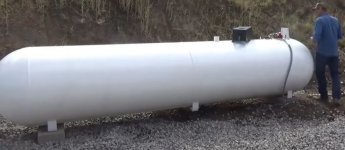
Probably the biggest thing is when I had LP, my wife gave me such a hard time about the tank, when I got rid of it, she was so happy. If I get one of those long sausage 500 or 1000 gal tanks, she'll kill me.

Bottom line, I have not ruled out LP, but overall for my situation, I would be happier with diesel than LP
 
OP
F

FMC1959

Well-known member
Joined
Feb 9, 2014
Messages
2,319
Location
Montreal, Canada / Upstate NY
i too am factory certified, mine is in Kohler Industrial and Controls, Kohler Diesel engines, and also Volvo Penta but i forget what that cert was called.

i am in disbelief that none of the other posters expect back end component failures. the beginnings of all factory certs (we have guys who were certified with Generac and with Onan prior to working here) and it's the same everywhere. classes start with theory of operation and go right into troubleshooting. why would they waste all that time if it wasn't a common issue?

the classes service dealers take taught by distributors are also focused mainly on controls and back end troubleshooting, which implies to me that it is also very common for resi units.

My guess is that most posters do not have many power failures in general (excluding a once in 20 year disaster) that taking away running them for maintenance, most do not get 10 hours a year on them.

Before moving to this rural area in Feb, I lived at my previous address in the burbs for 20 years, it was great, probably had less than 20 power failures in 20 years, and nothing over a couple of hours tops.
 
OP
F

FMC1959

Well-known member
Joined
Feb 9, 2014
Messages
2,319
Location
Montreal, Canada / Upstate NY
the vast majority of my repair work ends up being fuel system related on diesels, controllers/voltage regulators, and back ends. excitation components and stators mostly, i've actually only had to replace a rotor only twice in 8 years. but yes, all that amperage pumping out of a generator, mixed with not having a cool-down after load or having moisture get in, hurts the insulation of the windings. you end up with open or shorted coils and a generator with no output.

controller/vr will likely fail first, followed by back end component failure, followed by engine failure is my opinion. that is with routine preventative maintenance performed for its life and a regular exercise schedule.

i should clarify though that i work with industrial generators, all are three phase. maybe having the extra coils makes it more likely for back end failures.

BiggityBen, from what you are saying is outside of fuel system issues on diesels, the engine side of the generator has little to no problems. And even on the electrics, most standby units do pretty good. I think it was you in a previous post that stated that overall, standby generators are quite reliable.

For these fuel system related problem, is there certain routine maintenace that can be done to avoid these problems, or it is inherent to diesel systems and just deal with it when it happens?

I don't recall if it was you or Busted_Knuckles, but one of you is a certified Generac dealer or service provider. Excluding portables (under 10Kw), and excluding true industrial starting at 50Kw and up, I figure most residences will have a standby unit in the 10-50Kw, and of these probably a very high percentage would be in the 10 to 25Kw, as these are going to be air cooled LP/NG units which cost substantially less that diesels.

I would think these air cooled 10-25Kw are their own category. I don't see MFR's building them as robust as industrial units, not to say they are cheaply made like a $500 5000 watt portable, but the demographic is a residential customer. I am thinking very few of these units will reach 500 hours....I don't mean before they die, just that most residences won't get to put 500 hours on them.

Do you have any opinion or advice on these type of units?
 
OP
F

FMC1959

Well-known member
Joined
Feb 9, 2014
Messages
2,319
Location
Montreal, Canada / Upstate NY
GET OVER YOUR PROBLEM WITH LP ! You must have some CRAZY CHEAP "hydro" rates ! (Live next door to Niagara Falls ?) You are going to spend a TON of money to have your own diesel powered electric generation when you could spend a lot less by using LP !
!

I was going over some bills from the past year, just to confirm what I pay. (sorry, don't know how to save it bigger)
Electrical bill example.jpg

The rate is 60.8 cents for the first 40 KwH/day, then 93.8 cents for everything above that usage. Then there is a base rate plus taxes. All in for the year was $3133.09, divide that by 32,852 KwH used, and it comes to 95.37 cents.

I know there are states that pay 50% - 100% more than that. Combine that if LP is cheaper in your state than what I pay, ballpark $2.20/gal, then yes, LP can be an attractive option.

But in my neck of the woods, LP stoves, dryers and especially furnaces, are rare.
 

theoldwizard1

Well-known member
Joined
Feb 22, 2011
Messages
43,301
Location
SE MI
If you want a NG stove or dryer, you can find them relatively easy, most models from the big brand names carry a NG model. And NG is pretty cheap

LP, forget it, you might be able to find one, but not easily...definitely not in your standard appliance store.
Last time I checked, you could easily switch any NG appliance to LP by changing the orifice(s). Less than $20. Available from the manufacture or most (online) appliance repair place.

Propane is easily the most expensive, 50% or more than the other 3. If you want a propane furnace, you will have 10 times more people persuade you to go with anything but propane, than the number of people trying to get me to go to propane on this thread... at least here where I live.
  • A couple of reasons
  • Electricity is expensive, especially when using it a direct heat source.
  • Propane pricing varies with the season. If you need a delivery in January, it will cost more. But a bigger tank or buy a second tank and get them filled in August.

Why home heating oil is competitive, not sure but it is on the environmental hit list and slowly being banned within certain cities.
Have you heard about fracking ? They are get oil and gas out of dry wells and more oil and gas out of low producing wells.

Then there are the tar sands a bit west of you, Saskatchewan.

Your missing my point. LP is a good fuel to use AS A BACKUP when you have cheap electricity. Better than gaoline or diesel (how well does diesel flow at -20C ?) You can't get cheaper than solar (after the installation) but if you don't want to sit in the cold and dark during a 3 day winter storm, you have LP fuel for backup heat and electricity.

Whether you change your other household appliances is secondary.
 
Last edited:

theoldwizard1

Well-known member
Joined
Feb 22, 2011
Messages
43,301
Location
SE MI
Now I do think this guy is a bit nuts, but he lives off grid and wants his family to be "comfortable". He has solar for electricity and heats with wood. He uses propane for water heating, cooking and clothes drying AND for his backup generator.

He bought the biggest tank he could find 3 year supply of propane

Capture.JPG

He also installed an 8KW Kohler LP generator. I think that is also overkill because he is basically just running lights and refrigerators ! I am sure he can run the dishwasher and the washing machine at the same time with no problem.
 
OP
F

FMC1959

Well-known member
Joined
Feb 9, 2014
Messages
2,319
Location
Montreal, Canada / Upstate NY
Last time I checked, you could easily switch any NG appliance to LP by changing the orifice(s). Less than $20. Available from the manufacture or most (online) appliance repair place.


  • A couple of reasons
  • Electricity is expensive, especially when using it a direct heat source.
  • Propane pricing varies with the season. If you need a delivery in January, it will cost more. But a bigger tank or buy a second tank and get them filled in August.


Have you heard about fracking ? They are get oil and gas out of dry wells and more oil and gas out of low producing wells.

Then there are the tar sands a bit west of you, Saskatchewan.

Your missing my point. LP is a good fuel to use AS A BACKUP when you have cheap electricity. Better than gaoline or diesel (how well does diesel flow at -20C ?) You can't get cheaper than solar (after the installation) but if you don't want to sit in the cold and dark during a 3 day winter storm, you have LP fuel for backup heat and electricity.

Whether you change your other household appliances is secondary.

Last time I checked, you could easily switch any NG appliance to LP by changing the orifice(s). Less than $20. Available from the manufacture or most (online) appliance repair place.

The change the orifice thing, sure, I get that. The reason I am stating that finding appliance is hard and a furnace even harder is because there is no market, because LP is by far more expensive here in Quebec. To heat your home with an electric furnace vs LP, LP would be close to double in cost per year. Maybe where you live that is not the case, but here no one carries LP appliances or furnaces is because the other options are so much cheaper. (Cheaper = consumption, the actual appliance might be a couple of $$$ more, but not much)

  • A couple of reasons
  • Electricity is expensive, especially when using it a direct heat source.
  • Propane pricing varies with the season. If you need a delivery in January, it will cost more. But a bigger tank or buy a second tank and get them filled in August.

This may be the case where you live or in other parts of the US, here it is completely the opposite. LP will be close to twice what electricity will cost you.

Have you heard about fracking ? They are get oil and gas out of dry wells and more oil and gas out of low producing wells.

Then there are the tar sands a bit west of you, Saskatchewan.

Yes, I have heard of fracking, I haven't worked since 2015 but my biggest customer was in Texas. They are a 50 billion Fortune 100 company with the largest LP pipe network in the world. They are the ones that have 3 of those humungous generators I pictured in an earlier post and a 12,000 gallon diesel tank to feed them

They also got into fracking when it was becoming popular. They explained and showed me the whole process when I visited them.

The tar sands, I thought they were in Alberta, but I could be wrong, they may be in Saskatchewan.

The diesel in the winter is interesting. I never paid attention to it but I use my tractor more in the winter than in the summer, mainly for snow removal. Because our winters can be so cold, I am guessing the petroleum companies have anti gelling additives in the diesel because in 12 years, I have never had any issue with diesel gelling. There was only one time my tractor did not start in 12 years, bitter cold day, I plugged in the block heater and in 2-3 hours it started no problem. There are too many trucks and cars on the road with diesel, the petroleum companies have to do something to keep it usable for the masses with the cold winter months we have.

**** I understand where you are coming from and as mentioned, I am still considering LP.

It isn't even a price thing for me completely. If they were at the same price to use, I would prefer diesel.

I have diesel for my tractor, never have issues getting it, storing it, using it.

When I got rid of my LP tank, I was happy, my wife exstatic. The tanl bothered me, but more her, and the lines running everywhere...had it for 15-16 years and we did not like it.

So, it is possible in the end, that LP may be the way I go (it will take a humongous sales job on the wife), but right now I am definitely more in the diesel camp.
 
OP
F

FMC1959

Well-known member
Joined
Feb 9, 2014
Messages
2,319
Location
Montreal, Canada / Upstate NY
Now I do think this guy is a bit nuts, but he lives off grid and wants his family to be "comfortable". He has solar for electricity and heats with wood. He uses propane for water heating, cooking and clothes drying AND for his backup generator.

He bought the biggest tank he could find 3 year supply of propane

Capture.JPG

He also installed an 8KW Kohler LP generator. I think that is also overkill because he is basically just running lights and refrigerators ! I am sure he can run the dishwasher and the washing machine at the same time with no problem.

A 1000 gal tank would be good, lots of backup time during an extreme outage. So far I have not seen anyone that sells propane tanks; maybe I am looking in the wrong place or just might be that laws in our province prohibit owning this size of tank. Even the burying of the tank, never heard of that before, again, might be possible, or again, might be against the law. We have a frost line that is 5 feet by code for construction. Could be a buried tank and severe freezing don't go well together :dunno:...I'll need to "dig" into this further also.
 

danski0224

Well-known member
Joined
Jan 29, 2005
Messages
13,534
Location
Near Naperville, IL
LP, forget it, you might be able to find one, but not easily...definitely not in your standard appliance store. Probably through a Propane company. Offhand, I have never known anyone that has a propane appliance in the Montreal area in my 61 years of being alive. (I have known people that lived in Europe that had LP appliances, but that's because electricity is a fortune there)

This is a load of ****.

If one is starting with a natural gas appliance, I have yet to see one that CAN'T be converted over to LP.

Most of the time, it is a different spring in the gas valve. Other times, it also encompasses different burner orifices.

The kit would be offered by the manufacturer.

Appliance stores will NOT stock LP appliances, unless the location supports the sale of them. The obvious exceptions would be mobile appliances.

The LP supplier may need to do the conversion, or at least verify that it is functioning properly. This will vary by region/supplier.
 

BiggityBen

Well-known member
Joined
May 1, 2018
Messages
93
Location
NJ
BiggityBen, from what you are saying is outside of fuel system issues on diesels, the engine side of the generator has little to no problems. And even on the electrics, most standby units do pretty good. I think it was you in a previous post that stated that overall, standby generators are quite reliable.

For these fuel system related problem, is there certain routine maintenace that can be done to avoid these problems, or it is inherent to diesel systems and just deal with it when it happens?

I don't recall if it was you or Busted_Knuckles, but one of you is a certified Generac dealer or service provider. Excluding portables (under 10Kw), and excluding true industrial starting at 50Kw and up, I figure most residences will have a standby unit in the 10-50Kw, and of these probably a very high percentage would be in the 10 to 25Kw, as these are going to be air cooled LP/NG units which cost substantially less that diesels.

I would think these air cooled 10-25Kw are their own category. I don't see MFR's building them as robust as industrial units, not to say they are cheaply made like a $500 5000 watt portable, but the demographic is a residential customer. I am thinking very few of these units will reach 500 hours....I don't mean before they die, just that most residences won't get to put 500 hours on them.

Do you have any opinion or advice on these type of units?

sorry, there is a lot going on in this thread and i am by no means an engineer, just a service technician :lol:. i can diagnose and fix a generator and an ATS but most things beyond that is up to the electricians or project managers.

diesels pretty much need a load on them, meaning that when you do run it to exercise it you'll want it to do an actual "pull-the-plug" test, as in have the ATS transfer from normal (utility) to emergency (generator). modern diesels in generators want between 50-80% of engine load capacity on them to avoid wetstacking exhaust, and this is especially true in the smaller diesels that kind of "avoid" tier-4 emissions standards, as in no DEF system or needing regen cycles. because of this their wetstacking or at least, well, stinky exhaust is more noticeable.

but for fuel issues it is pretty difficult to avoid. things just tend to wear, i guess. all i can say is for any of the rubber o-rings on fuel lines i use 24c grease to lube them (cheap and its on hand on my service truck) and have never had an issue with the same engine again. it will take years for the o-rings to begin to fail, i think it's more of a time issue than an hour-meter one. rather than fuel leaking out anywhere i typically find the unit has just lost its prime and will crank but not run, and can take multiple crank cycles to actually reprime itself to run, trying to compensate for pulling in air through wherever the bad seal is. sometimes it'll just kill the battery and other times it'll go down on an overcrank or locked rotor fault and i'll get a call. when customers do that i think that definitely makes a negative impact, you don't want these pumps running dry and pulling a whole head of fuel, you would want to reprime the system yourself manually. sometimes it'll crank and turn but then shut down within 2 seconds as it already lost fuel pressure. typically, it'll display the low oil pressure fault when this happens :lol:

otherwise you're going to want to keep some spare fuel filters on hand, and never fill the filter yourself as a shortcut when changing. Put it on dry (except oil the mating seal obviously) and pull fuel through it to prime. these modern diesels do NOT like dirt getting in and it is not worth the risk of introducing any particulate. after priming to the fuel filter and sealing either the bleed screw or the fuel line back in place that you used to prime, there is usually either an electric pump or a little push pump to continue to force fuel up to the injector pump from there, and whatever little air is left isn't enough to hurt the pumps.

beyond that, fuel stabilization for anti-gelling in the cold and general anti-algae treatment and still expect to drain the tank and have it be refilled every couple of years to keep it fresh.

nothing about a fuel system in a diesel (up to the injector pump) is complicated and easy enough to figure out, especially with help from the internet. i'd consider all of that pretty much DIY for anyone interested in saving the money from calling a technician out.

otherwise you encounter the regular issues with any engine - oil pressure sender failure, EGR valve stuck, thermostat stuck, coolant or water pump leak, belts, you know, the normal "consumables". it is rare for a regularly loaded diesel to have any bigger issue until it gets pretty high in the hour meter count.


also, you wouldn't really have to worry about any of this with an LP unit. maybe a stuck regulator diaphragm is the worst issue you'll find, an easy fix.
 
Last edited:

danski0224

Well-known member
Joined
Jan 29, 2005
Messages
13,534
Location
Near Naperville, IL
A 1000 gal tank would be good, lots of backup time during an extreme outage. So far I have not seen anyone that sells propane tanks; maybe I am looking in the wrong place or just might be that laws in our province prohibit owning this size of tank. Even the burying of the tank, never heard of that before, again, might be possible, or again, might be against the law. We have a frost line that is 5 feet by code for construction. Could be a buried tank and severe freezing don't go well together :dunno:...I'll need to "dig" into this further also.

A 30 second internet search pulled this, a company that rents or sells LP tanks:

https://bryansfuel.on.ca/propane-tanks-for-sale/

In Canada, no less...

Local code for burial of a tank should be relatively easy to find on the website for your city/village. I'd be surprised if the top of the tank actually had to be buried more than 18" down... just call local code enforcement or a local fuel supplier for the details. Much easier than trying to get answers here.

If you have a high water table, or are in an area prone to flooding, your tank will need to be anchored to concrete footings so it doesn't float and pop out of the ground. Again, covered by local codes/practices.
 
OP
F

FMC1959

Well-known member
Joined
Feb 9, 2014
Messages
2,319
Location
Montreal, Canada / Upstate NY
This is a load of ****.

If one is starting with a natural gas appliance, I have yet to see one that CAN'T be converted over to LP.

Most of the time, it is a different spring in the gas valve. Other times, it also encompasses different burner orifices.

The kit would be offered by the manufacturer.

Appliance stores will NOT stock LP appliances, unless the location supports the sale of them. The obvious exceptions would be mobile appliances.

The LP supplier may need to do the conversion, or at least verify that it is functioning properly. This will vary by region/supplier.

You did not read it correctly. In the big appliance stores you will find all kinds of electric and NG units on the floor. A propane model would have to be ordered because they don't move. Yes you can convert most NG to LP, but that isn't what I was saying.

You go to any appliance store, or even more so an HVAC specialist and ask for a LP furnace. The first thing they will say is "why" or "are you sure it is LP you want"

I am sure there are exceptions, like someone with a cottage in the middle of nowhere. There is no NG line, no electric grid, LP might be the way to go, and even then, with today's tech, some might go solar or other option.

You absolutely want LP, sure you can get it, but nobody wants it for the price consumption
 
To avoid these ads, REGISTER NOW!
Top Bottom