

You are using an out of date browser. It may not display this or other websites correctly.
You should upgrade or use an alternative browser.
You should upgrade or use an alternative browser.
2020 Garage Sale Thread
- Thread starter LesserSon
- Start date
- Status
- Not open for further replies.

Outlawmws
Well-known member
That's a cool one! Needs posted in the Drill Indices thread
Hit up the local flea market looking for box head wrenches and ended up grabbing this craftsman tool box. The guy wanted 75 for it, but I ended up getting it for 50, just needs a good clean up and i'll put her in my shop
Looking a little closer and it looks like the model number is 10-91 and its a 12 drawer box

Looking a little closer and it looks like the model number is 10-91 and its a 12 drawer box
Outlawmws
Well-known member
That "Model Number" is actually the Month/Year it was made. Nice find!
racinfarmer
Well-known member
Found myself a rack of Hamm's at the booze mart and am proceeding to consume it in the garage whilst I clean and organize it.
Close enough?
Close enough?
Old Radar
Well-known member
Found myself a rack of Hamm's at the booze mart and am proceeding to consume it in the garage whilst I clean and organize it.
Close enough?
Close enough?? You eclipsed me!
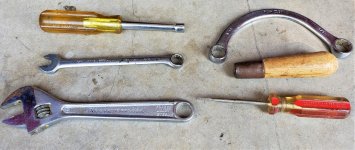
Spent just $1 at an estate sale in the last-minute-before-closing.
Proto 5/16 nut driver, 9210
Proto Challenger 7/16 combo, 6014
Proto 8" Adjustable, 708S
Giller half moon 9/16 & 5/8, 2518
No-Name file holder
Millers Falls screwdriver, 753-03
...and my wanna-be garage dog who likes to be, and therefore I call, Mr. Underfoot.

d42jeep
Well-known member
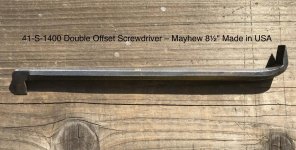
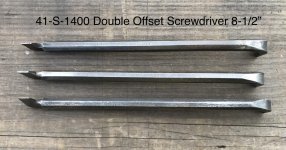
Steve,Friday estate sale results:
Octagonal offset screwdriver, 8.5" long (0.5” too long for WW2 standard).
8-1/2” is perfect. Great find! Put it right into your GMTK!
-Don
Attachments
Last edited:
My only purchase this weekend. Plomb 5485 1/2dr sliding tee. I don’t collect Plomb. I had stopped in two junk shops along the route to visit my parents, and it was the only thing that appeared to have any value. Seems to be bare steel, wth maybe a hint of cad plating.
Near it was a modern C’man 3/8dr speeder marked $3 and a matching C’man 1/4dr speeder. “Cool,” thought I, “I don’t have a 1/4dr speeder of any make.” $10. Ouch, no sale.
Near it was a modern C’man 3/8dr speeder marked $3 and a matching C’man 1/4dr speeder. “Cool,” thought I, “I don’t have a 1/4dr speeder of any make.” $10. Ouch, no sale.
Attachments


Last edited:
pelletman
Well-known member
More stuff from this weekend:
Old Park City Utah Bar pack of matches (was in box of tubes)
Power Products 2 cycle engine Model 1000 $5
Tray full of misc. was in Kennedy box with unbranded U.S. pliers
And the best pick, 1937 Pace 5 cent slot machine $50
You REALLY **** on that slot machine
BlueBomber
Well-known member
I'm back down at my parents' farm in Virginia, which will be the ex-farm come Monday at 1pm, to help Mom move 5 miles down the road to her new, smaller place. Yes, the same farm with the gully that produced the Great Coke Machine Graverobbing of 2018 will have new caretakers after tomorrow. We're moving lots of stuff and will be leaving behind lots of stuff, too. However, since Dad passed on last year and since Mom doesn't even know what half his stuff is, I will be loading up more than a truck load to haul back to Boston--some to keep, some to sell for Mom.
My brother was out yesterday and took home Dad's big 80-gallon air compressor and a bunch of pneumatics and handtools that I'm not sure he even knows what half of them are either. In truth, I kept pushing tools on him because I already have most of what Dad had and Mom won't need the vast majority of these tools at her new place.
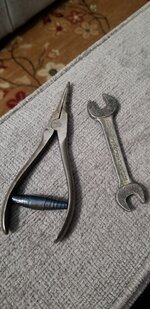
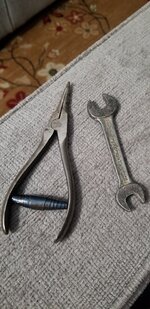
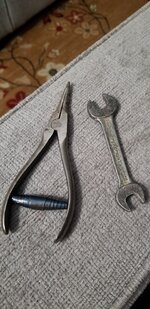
I'll have pictures later, but for now, here are two I found while clearing the upstairs of 31 years of stuff:
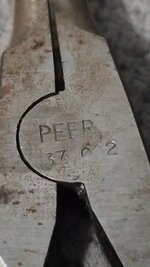
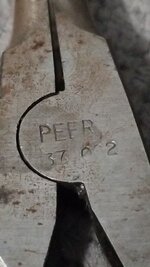
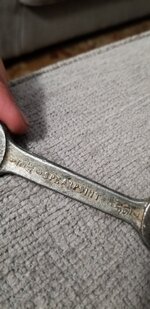
Peer 37-002 "watchmaker" pliers, according to Google, made in "W Germany"
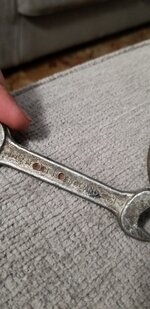
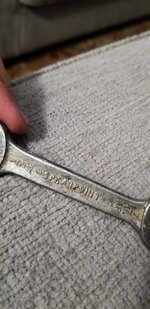
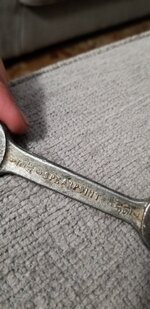
Spearpoint DOE, 1/2 AF x 7/16 AF, a bit mistreated on the shank, Made in England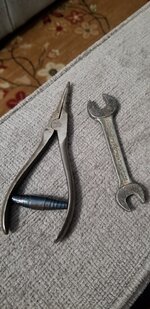


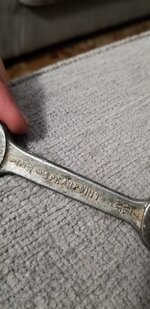

Sent from my SM-G950U using Tapatalk
My brother was out yesterday and took home Dad's big 80-gallon air compressor and a bunch of pneumatics and handtools that I'm not sure he even knows what half of them are either. In truth, I kept pushing tools on him because I already have most of what Dad had and Mom won't need the vast majority of these tools at her new place.
I'll have pictures later, but for now, here are two I found while clearing the upstairs of 31 years of stuff:
Peer 37-002 "watchmaker" pliers, according to Google, made in "W Germany"
Spearpoint DOE, 1/2 AF x 7/16 AF, a bit mistreated on the shank, Made in England
Sent from my SM-G950U using Tapatalk
Attachments

Last edited:
BlakeTheCarGuy
ALLIANCE MEMBER
I'm back down at my parents' farm in Virginia, which will be the ex-farm come Monday at 1pm, to help Mom move 5 miles down the road to her new, smaller place. Yes, the same farm with the gully that produced the Great Coke Machine Graverobbing of 2018 will have new caretakers after tomorrow. We're moving lots of stuff and will be leaving behind lots of stuff, too. However, since Dad passed on last year and since Mom doesn't even know what half his stuff is, I will be loading up more than a truck load to haul back to Boston--some to keep, some to sell for Mom.
My brother was out yesterday and took home Dad's big 80-gallon air compressor and a bunch of pneumatics and handtools that I'm not sure he even knows what half of them are either. In truth, I kept pushing tools on him because I already have most of what Dad had and Mom won't need the vast majority of these tools at her new place.
I'll have pictures later, but for now, here are two I found while clearing the upstairs of 31 years of stuff:
Peer 37-002 "watchmaker" pliers, according to Google, made in "W Germany"
Spearpoint DOE, 1/2 AF x 7/16 AF, a bit mistreated on the shank, Made in England
Sent from my SM-G950U using Tapatalk


What part of Virginia? Just wondering cause I live here and near a lot of farms. I’m in the Roanoke area very close to Bent Mountain.
Sent from my iPhone using Garage Journal
Attachments


BlueBomber
Well-known member
What part of Virginia? Just wondering cause I live here and near a lot of farms. I’m in the Roanoke area very close to Bent Mountain.
Sent from my iPhone using Garage Journal
Culpeper County, near Chancellorsville. Mom's moving from the Culpeper side of the Rapidan River to the Spotsylvania side, although her address will still be in Fredericksburg.
I'm a Va Tech grad, so I'm familiar with Roanoke, and Bent Mountain sounds familiar. Go HOKIES!
pelletman
Well-known member
Spent some time at a local flea market, a couple yard sales, and back for probably the last time to my little honey hole to pick up a couple things.
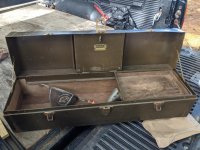
Kennedy Carpenter's toolbox which I thought was pretty cool $25
A neat oil can dispensing tool $1
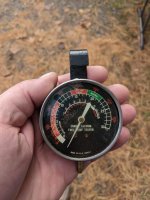
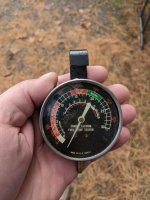
Vintage vacuum gauge $1
A commie flask $10
More to follow but this is all I have taken pictures of so far
Kennedy Carpenter's toolbox which I thought was pretty cool $25
A neat oil can dispensing tool $1
Vintage vacuum gauge $1
A commie flask $10
More to follow but this is all I have taken pictures of so far
Attachments



BlakeTheCarGuy
ALLIANCE MEMBER
Culpeper County, near Chancellorsville. Mom's moving from the Culpeper side of the Rapidan River to the Spotsylvania side, although her address will still be in Fredericksburg.
I'm a Va Tech grad, so I'm familiar with Roanoke, and Bent Mountain sounds familiar. Go HOKIES!
Heck yeah on the Hokies. I know where you are talking about I’ve been over there plenty of times before. It is a nice place I love the countryside and farms.
Sent from my iPhone using Garage Journal
pelletman
Well-known member
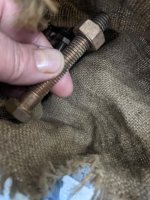
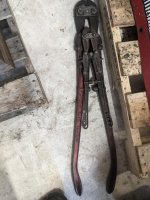
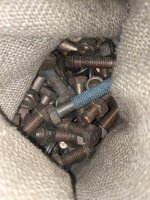
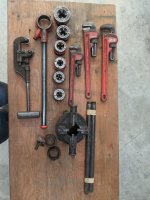
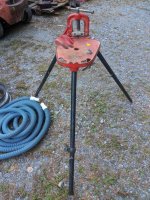
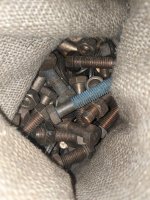
One of my dad's friends, probably in his 70's, brought this stuff for us. It was his grandfather's according to him. $200 for the pile, it will be two posts
Post 1
Rigid Pipe Stand
Pipe Dies and stock
Early Black & Decker drills, 1/4 and 1/2
Bolt cutters
a couple bags of 3/8 x 3" copper bolts and nuts
continued to post 2
Post 1
Rigid Pipe Stand
Pipe Dies and stock
Early Black & Decker drills, 1/4 and 1/2
Bolt cutters
a couple bags of 3/8 x 3" copper bolts and nuts
continued to post 2
Attachments
-
 PXL_20200923_191316309.jpg108.1 KB · Views: 64
 -
 PXL_20200923_163103927.jpg98.4 KB · Views: 56
 -
 PXL_20200923_191256443.jpg137.9 KB · Views: 63
 -
 PXL_20200923_191313846.jpg109.2 KB · Views: 67
 -
 PXL_20200923_163107965.jpg123.9 KB · Views: 65
 -
 PXL_20200923_191349823.jpg104.1 KB · Views: 66
 -
 PXL_20200930_213325517.jpg144.8 KB · Views: 60
pelletman
Well-known member
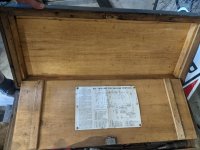
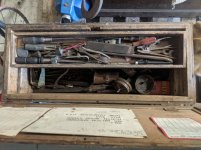
Post 2
Toolboxes with all kinds of vintage tools, I should have taken better pictures of the exteriors
A bunch of vintage pulleys
Toolboxes with all kinds of vintage tools, I should have taken better pictures of the exteriors
A bunch of vintage pulleys
Attachments
-
 PXL_20200923_163107965.jpg123.9 KB · Views: 68
 -
 PXL_20200923_191207689.jpg120 KB · Views: 78
 -
 PXL_20200923_191236358.jpg150.1 KB · Views: 81
 -
 PXL_20200923_162750502.jpg131.5 KB · Views: 100
 -
 PXL_20200923_191244617.jpg150.4 KB · Views: 89
 -
 PXL_20200923_191231552.jpg153.4 KB · Views: 87
 -
 PXL_20200923_191225949.jpg153.2 KB · Views: 92
Provincial
Well-known member
You will get hours of entertainment identifying all those items! I see some interesting stuff already. I'll bet the 4-way lug wrench has maker's marks on one side.
From the look of many of the items, the prior owner engaged in plumbing. Not just from the Rigid tools, but the antique hole saws and other items.
From the look of many of the items, the prior owner engaged in plumbing. Not just from the Rigid tools, but the antique hole saws and other items.
Where is the DELETE POST button???
A-ha, found my answer...
https://www.garagejournal.com/forum/showthread.php?t=367507
A-ha, found my answer...
https://www.garagejournal.com/forum/showthread.php?t=367507
Last edited:
d42jeep
Well-known member
Spent some time at a local flea market, a couple yard sales, and back for probably the last time to my little honey hole to pick up a couple things.
Vintage vacuum gauge $1
Although Lugz’ ****-o-meter is very cool, yours is the real thing. You definitely **** on that huge haul. Looks like hours of fun.
-Don
Attachments

pelletman
Well-known member
Although Lugz’ ****-o-meter is very cool, yours is the real thing. You definitely **** on that huge haul. Looks like hours of fun.
-Don
Hahaha! Thanks
Went to my first sale this year. (Long story) picked these up for 10 bucks.
10 bucks for any Green metal box full of SK tools deserves a USuck in my book!
I don't know OR. Hoping someone will tell me. :0)
I picked up a similar Wilton Bullet last month with Jaws stamped 101157 WF1, and 101158, dated 1994. I have read the number on the static jaw is the model. The number on the dynamic jaw a part number. Also, the modern equivalent model is 400s (for 4" jaw swivel).
And it would be hard to argue that there's ever been a stranger, more challenging year!
I can't get out today, but here are a few photos of my cleaned-up finds from yesterday morning. More on the Mega Vise thread, the DOE wrenches thread, and my PENENS kit thread.
That vise is cleaning up very nicely.
Does a piece of wood belong on the static jaw? I think so, I've been told so....... it's just that: 1. I've never seen vintage woodworking vises come with wood on/for the static jaw. 2. There are only two holes on the static jaw, unlike four on the dynamic jaw. 3. The two holes on the static jaw are tapered for a screw to fit below the jaw face.
I know the recommended setup is just to drive two long screws though the static jaw wood face, through the holes in the static jaw, and deep into your table.
Last edited:
WNYflyer
Well-known member
Big professionally run estate sale Saturday and Sunday featuring a huge amount of mechanic type hand tools as well as a large assortment of electrical and plumbing tools. I should have taken pictures, probably 50 brand new Channellocks, probably same number of new adjustable wrenches as well as new Vice-Grips. Most tools where Proto, Armstrong, Fluke, Greenlee, Ideal, Rigid, etc, minimal truck brands. Got the impression the owner had worked in skilled trades for General Motors.
Hit the sale Saturday probably 1.5 hours after opening and picked up some Wiha metric nut drivers a Hilti rotary hammer drill in excellent working condition and a Stahlwille extension, not too bad for $37.
Since there was so much stuff I went back Sunday on 1/2 off day and picked up the Bonney sae wrenches for $15 and the Hilti masonry drill bits for $5. When asking the price of the bits since they were unmarked the guy said I just want them gone ! Run into that quite often later at sales when they have so much miscellaneous stuff to get rid of.
View media item 107006
View media item 107004
View media item 107005
Hit the sale Saturday probably 1.5 hours after opening and picked up some Wiha metric nut drivers a Hilti rotary hammer drill in excellent working condition and a Stahlwille extension, not too bad for $37.
Since there was so much stuff I went back Sunday on 1/2 off day and picked up the Bonney sae wrenches for $15 and the Hilti masonry drill bits for $5. When asking the price of the bits since they were unmarked the guy said I just want them gone ! Run into that quite often later at sales when they have so much miscellaneous stuff to get rid of.
View media item 107006
View media item 107004
View media item 107005
pelletman
Well-known member
Not a bad couple days
Truck tool box 25 bucks
Genie lift 400 lb capacity 100 bucks
Hanging scale 50 bucks
Battery charger two bucks
Heat treat oven 30 bucks
Small block Chevy, allegedly intake manifold and carburetor 10 bucks
Honda 300 gas tanks 25 bucks for the pair
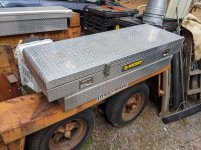
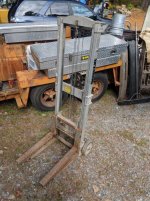
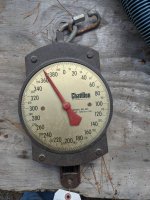

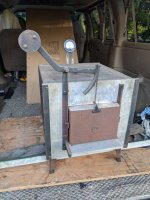
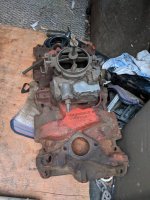
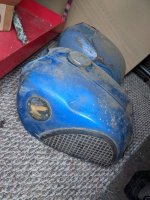
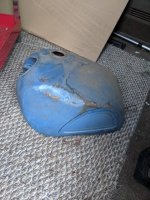
Sent from my Pixel 2 using The Garage Journal mobile app
Truck tool box 25 bucks
Genie lift 400 lb capacity 100 bucks
Hanging scale 50 bucks
Battery charger two bucks
Heat treat oven 30 bucks
Small block Chevy, allegedly intake manifold and carburetor 10 bucks
Honda 300 gas tanks 25 bucks for the pair
Sent from my Pixel 2 using The Garage Journal mobile app
pelletman
Well-known member
Mac tool cart 40 bucks
Whirligig 7 bucks
Wrenches were a buck a piece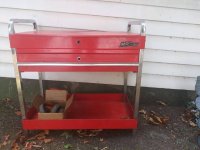
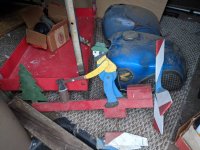
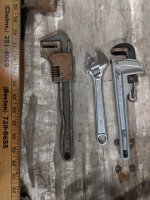
Sent from my Pixel 2 using The Garage Journal mobile app
Whirligig 7 bucks
Wrenches were a buck a piece
Sent from my Pixel 2 using The Garage Journal mobile app
alinc100
Well-known member
Big professionally run estate sale Saturday and Sunday featuring a huge amount of mechanic type hand tools as well as a large assortment of electrical and plumbing tools. I should have taken pictures, probably 50 brand new Channellocks, probably same number of new adjustable wrenches as well as new Vice-Grips. Most tools where Proto, Armstrong, Fluke, Greenlee, Ideal, Rigid, etc, minimal truck brands. Got the impression the owner had worked in skilled trades for General Motors.
Hit the sale Saturday probably 1.5 hours after opening and picked up some Wiha metric nut drivers a Hilti rotary hammer drill in excellent working condition and a Stahlwille extension, not too bad for $37.
Since there was so much stuff I went back Sunday on 1/2 off day and picked up the Bonney sae wrenches for $15 and the Hilti masonry drill bits for $5. When asking the price of the bits since they were unmarked the guy said I just want them gone ! Run into that quite often later at sales when they have so much miscellaneous stuff to get rid of.
View media item 107006
View media item 107004
View media item 107005
That's a You **** price on the Hilti!! well done.
Some nerves, more than a month and $40
You can read a story of the top box and see additional picture here:
https://www.garagejournal.com/forum/showthread.php?t=464264
You can read a story of the top box and see additional picture here:
https://www.garagejournal.com/forum/showthread.php?t=464264
Attachments


WNYflyer
Well-known member
That's a You **** price on the Hilti!! well done.
Thanks alinc100,
Got lucky since I got there later plus I spied it at the last minute before cashing out. Suppose most of the general population doesn't know the Hilti name relative to power tools unlike DeWalt and Milwaukee. Thing says it was made in Liechtenstein ?
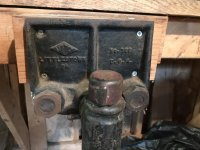
1. I've never seen vintage woodworking vises come with wood on/for the static jaw. 2. There are only two holes on the static jaw, unlike four on the dynamic jaw. 3. The two holes on the static jaw are tapered for a screw to fit below the jaw face.
I applaud your persistent skepticism. People all too easily believe something just because someone said so. Perhaps we can draw a response from someone more expert than I. In the meantime, I have some reasoning to offer.
#3 When I got my first one, my dad had repainted it as a gift. I was so convinced by the countersunk holes in the static that he had put it together wrong, that I backed out the rods with a pipewrench and assembed them on the other side. Of course, there is then no way to mount or use it in that configuration.
#2 I think the countersinks are there merely to guide the screwtips through the static without demanding precise tolerance. If, as at first seems reasonable, the countersinks were in the back of the static, you wouldn’t question their purpose to hold the wood pad, BUT you would have to add the pad before attaching the vise to the bench, making it awkward to replace. If the manufacturer simply did not countersink the holes at all, you would think they weren’t finished to match the dynamic. I think it is possible the countersinks are cast in simply to standardize where the holes are drilled subsequently in the manufacturing process.
The real mystery is, why are there more than 2 holes in the dynamic? The only function of screwing wood pads to the jaws is to prevent them from falling on the floor when you take the workpiece out of the vise. How do I know? Because I don’t have pads screwed into mine. I just put any convenient scrap in there when I want to avoid marring the workpiece. As a compromise, you could make or buy magnet-backed pads.
#1 You are wrong about not seeing it done if you saw the pic I eventually posted to our previous confab. It’s of my friend’s father’s vise (not mine). It hasn’t been touched in at least 25 years, probably closer to 40. The vise and the installation are vintage.
I wish I could summon the infallible authority of my 8th grade woodshop instructor, but he has gone the way of St Joseph. My woodworking books are temporarily packed away, but I’ll take a look tomorrow.
Addendum: I watched a blogger and a you-tuber install their vises. Each made different use of the holes. One re-countersunk them from the back and screwed his pad from the back (see my reason why not, above). The other guy decided he liked the removeable magnetic pads, but couldn’t leave those tempting countersunk holes unused, so he screwed through them to “belt & braces” the vise to the bench, which you proposed back when this first came up.
Here’s why you should not do that: Wood moves. It expands and contracts quite a lot differently than metal. The lag screws or bolts or whatever you secure the vise with from the underside define its position relative to the underside of the benchtop, but the top and side of the benchtop will move relative to the vise. If you also lag it to the side, the two sets of fasteners will work together to pull apart the benchtop as it shrinks and swells with humidity fluctuations. Eventually, something in the system must fail: the wood may crack (probable), the vise may crack (less probable), or the bolts may loosen/sheer.
Attachments

Last edited:
LesserSon
I applaud the completeness in your thoughts and reasoning.
Newer woodworking vises do come with 4-6 holes in the static jaw. Those definitely mean to have wood attached to them. I wonder with these vintage ones if one wood face was soft enough......OR....if something like a leather face was added to the static jaw.
You almost have to drill the holes in the wood going through the back of the static jaw first. Quicker and more precise that way for sure. I clamped the wood face to the static jaw and drilled in through the vise holes. Then turned to the wood face and countersunk the holes. The face did pull tight. Will it warp on the bottom? I dunno. Maybe good to always keep the vise snug.
Very interesting thoughts about screwing into multiple sides of the table. That is exactly what was recommended when I posted the question in my restore thread. Two bolts from the bottom and two long screws through the face. I believe you would put 4 bolts up from the bottom. My "base" is three 2x4s glued and screwed together. The lag bolts go up into the middle 2x4. The front screws are 4" and go almost completely through the first two 2x4s. I have not seen or heard about the tearing apart effect before. It's mounted now so I'll let you know if any of that happens!
I agree I wouldn't want to screw the static jaw wooden face from the back.
I applaud the completeness in your thoughts and reasoning.
Newer woodworking vises do come with 4-6 holes in the static jaw. Those definitely mean to have wood attached to them. I wonder with these vintage ones if one wood face was soft enough......OR....if something like a leather face was added to the static jaw.
You almost have to drill the holes in the wood going through the back of the static jaw first. Quicker and more precise that way for sure. I clamped the wood face to the static jaw and drilled in through the vise holes. Then turned to the wood face and countersunk the holes. The face did pull tight. Will it warp on the bottom? I dunno. Maybe good to always keep the vise snug.
Very interesting thoughts about screwing into multiple sides of the table. That is exactly what was recommended when I posted the question in my restore thread. Two bolts from the bottom and two long screws through the face. I believe you would put 4 bolts up from the bottom. My "base" is three 2x4s glued and screwed together. The lag bolts go up into the middle 2x4. The front screws are 4" and go almost completely through the first two 2x4s. I have not seen or heard about the tearing apart effect before. It's mounted now so I'll let you know if any of that happens!
I agree I wouldn't want to screw the static jaw wooden face from the back.
I have not seen or heard about the tearing apart effect before.
Perhaps in my enthusiasm I have exagerated the degree of damage. It’s not like the benchtop is going to cleave in twain and collapse. But I stand by the inevitability of subtle damage. The point of a vise is to provide a firm steady hold on the workpiece. In most people’s experience, that suggests putting as many screws into something as possible and snugging them all. They try to lock the wood up. But that just isn’t how wood works. It expands and contracts to different degrees in three directions. Every screw is a potential splitting wedge, and if it succeeds, the vise will not be firm or steady. If you take into consideration what the wood is going to do over time, you can avoid setting up the stresses that lead to failure.
Here’s a wood-knowledge litmus test: explain breadboard ends. Or better yet, make one.
Last edited:
dkroth
Well-known member

Outlawmws
Well-known member
Backing up LS's comments, I've learned that MY vises get abused from a push/pull/twist perspective, and while it a bench vise I've ripped my bench off the wall numerous times. Simple wood or deck screws wont do it. I had to pre-drill and use LOTS of lag bolts, not screws. I haven't busted it loose again since.
While I don't have a wood vise in place, I KNOW I'd do the same with one of those too.
On the topic of wood faces on both jaws, I've never seen a woodworking vise without a wood face on both. Not in use; and the ones I have are faced.
While I don't have a wood vise in place, I KNOW I'd do the same with one of those too.
On the topic of wood faces on both jaws, I've never seen a woodworking vise without a wood face on both. Not in use; and the ones I have are faced.
Private Lugnutz
Well-known member
Herr Host, b.well
I have no opinion on whether or not it was or still is common practice to install a woodworker's vise with a wood face to the static jaw, but I have never seen a period catalog or ad showing one installed that way. That might not mean much, because they don't generally seem to show a wood face on the dynamic jaw, either. But, I am able to say with 100% certainty the reason I never see a woodworker's vise for sale with a wood face on the static jaw. It's because the vise has been removed from the bench. (This is where you say, 'no sh*t, Sherlock'.)
I have no opinion on whether or not it was or still is common practice to install a woodworker's vise with a wood face to the static jaw, but I have never seen a period catalog or ad showing one installed that way. That might not mean much, because they don't generally seem to show a wood face on the dynamic jaw, either. But, I am able to say with 100% certainty the reason I never see a woodworker's vise for sale with a wood face on the static jaw. It's because the vise has been removed from the bench. (This is where you say, 'no sh*t, Sherlock'.)
Attachments


Outlaw, LOTS isn’t what I’m promoting. In your example, you’re spreading the anchor points over a wider interface between the bench and the wall. I’m focused on the relatively small interface available between the benchtop and the vise base, where adding LOTS there just displaces the wood.
Look, if the bench top is cheap to replace it can function sacrificially. Mine is a 4x24x49” torsion box of glued MDF - I pound on it, chisel and drill into it, and just glue sawdust into the worst spots. But if it’s a heritage-quality piece of shop furniture like laminated hard maple, treat it right (and I don’t mean gently) and it will be something to pass on. Treat it wrong, and it will be firewood.
Look, if the bench top is cheap to replace it can function sacrificially. Mine is a 4x24x49” torsion box of glued MDF - I pound on it, chisel and drill into it, and just glue sawdust into the worst spots. But if it’s a heritage-quality piece of shop furniture like laminated hard maple, treat it right (and I don’t mean gently) and it will be something to pass on. Treat it wrong, and it will be firewood.
Last edited:
It's because the vise has been removed from the bench. (This is where you say, 'no sh*t, Sherlock'.)
Elementary, Lugz!
More specifically, if the static jaw pad is installed as I have suggested, it must be removed to remove the vise from the bench. But the dynanic jaw pad would not have to be removed.
Further, if the pads are/were ugly abused scrap instead of exotic imported tropical hardwood affectations, they probably detract from the sale value if left on!
Last edited:
RTM
Well-known member
I have no opinion on whether or not it was or still is common practice to install a woodworker's vise with a wood face to the static jaw, but I have never seen a period catalog or ad showing one installed that way.
Interesting, none of the catalog cuts (you posted) show the static face flush with the apron either. I Need to poke into other vintage literature see what they say. Back later.
Ok, after turning up lots of dust from books that haven’t moved in a year, here is a quick summary of.... mostly nothing useful. The books started with real old workbenches with all wood vises, where the apron was the static jaw, then mostly jumped to vises floating in air. The 1st image Lugz showed was one of the few exceptions. The middle image, the Toles 25, is shown in a Rayls catalog, slightly larger, where it seems to at least sit flush. Jump ahead through decades of floating vises, and get to The Woodworker’s Bible, 1985, where he shows a fully enclosed static jaw, situated below the work surface, with wood on 3 sides.
Still have Moxon’s 1703 Doctrine of Handy-works, where I better not find anything metal vise like, and an 1880s book to flip through, but tomorrow starts early, and goes downhill from there.
Last edited:
That’s because they shouldn’t be flush (let in)!
No, I’m kidding. There are reasons to do it either way.
(Is there ever, really, only one right way to do anything?)
The reason to make it sit proud is if you work with anything that isn’t already milled perfecty straight, or that isn’t going to end up perfecty straight. Try clamping a rocking chair rocker or any piece with a curve to it into a flush-with-the apron vise. You wind up having to pad out the static jaw, which wastes throat capacity. It’s more versatile to pad the tail of the workpiece at the other end of the bench if you need it parallel, because then there’s no interference along the side of the bench (because of the gap).
I think I’m channelling Ian Kirby here. Have to check tomorrow.
Edit - nope: my own interpretation. Kirby does inlet his vise, relying on a 1-in-thick “wooden cheek” to afford the gap. “There are many times when you want that space,” he is quoted in Scott Landis’ Workbench Book 1987.
RTM - funny “reason for editing”!
No, I’m kidding. There are reasons to do it either way.
(Is there ever, really, only one right way to do anything?)
The reason to make it sit proud is if you work with anything that isn’t already milled perfecty straight, or that isn’t going to end up perfecty straight. Try clamping a rocking chair rocker or any piece with a curve to it into a flush-with-the apron vise. You wind up having to pad out the static jaw, which wastes throat capacity. It’s more versatile to pad the tail of the workpiece at the other end of the bench if you need it parallel, because then there’s no interference along the side of the bench (because of the gap).
I think I’m channelling Ian Kirby here. Have to check tomorrow.
Edit - nope: my own interpretation. Kirby does inlet his vise, relying on a 1-in-thick “wooden cheek” to afford the gap. “There are many times when you want that space,” he is quoted in Scott Landis’ Workbench Book 1987.
RTM - funny “reason for editing”!
Last edited:
mike_paxton
Well-known member
- Joined
- Dec 15, 2013
- Messages
- 905
Stopped at a yard sale on Thursday and while going through the tools, found a an old fire engine siren. Based on the badge, it looks like it is a Federal WLR model. Cleaned it up and it still works, which the neighbors can attest!!! It does have some missing parts, so not complete. Pics 1-5
Also at same sale and found in the tools, a speaker which came from a Drive In located not too far from me, but which has been closed for many years.Pics 6-7
Mike
Also at same sale and found in the tools, a speaker which came from a Drive In located not too far from me, but which has been closed for many years.Pics 6-7
Mike
Attachments
-
 20201004_110141 (2).jpg104.5 KB · Views: 43
 -
 20201004_105830 (2).jpg124.9 KB · Views: 42
 -
 20201004_105901 (2).jpg80.6 KB · Views: 39
 -
 20201004_105940 (2).jpg121.3 KB · Views: 38
 -
 20201004_105912 (2).jpg133.6 KB · Views: 38
 -
 20201004_105924 (2).jpg126.7 KB · Views: 39
 -
 20201004_110213 (2).jpg147.3 KB · Views: 43
Private Lugnutz
Well-known member
Two really neat finds that we have over the years come to expect from you and your picking habits and aesthetics every once in awhile, Mike!
And this...
...made me laugh out loud.
And this...
...and it still works, which the neighbors can attest!!!
...made me laugh out loud.
- Status
- Not open for further replies.