Denwood
Well-known member
One of my goals for my ongoing kitchen install (more in my garage thread on this) was to figure out a more effective exhaust. The typical hood exhaust fan does not do well with resistance (static pressure) and the new fan was not moving a lot of air by the time it got to my high efficiency 4" exhaust port. There is a foam ball in that hood that falls back to insulate the opening (we see -35C in winter) so you can visualise air flow by seeing how high the foam ball is riding in the hood. With the stock IKEA GENOMDRIVA exhaust hood fan on high speed, it was just barely lifting the foam ball. Now my ducting is not ideal, where the 6" pipe from the hood reduces to 5" in the attic, and then 4" right at the hood. There are 2 elbows and about 12 feet of duct length. With a short run and 6" ducting all the way, the stock hood would certainly exhaust more efficiently...but alas, that is not my setup.
The fan "hack" worked out very well indeed. I tried a few variations leaving the OEM fan in place, and then decided to remove it entirely as it didn't really increase flow a lot, but it did make a lot more noise at the high speed setting. The IKEA GENOMDRIVA stock exhaust hood is rated as follows:

 www.ikea.com
160 CFM (likely with zero static pressure, so no resistance)
Motor power: 240W. ( I believe this is incorrect as the fan is clearly labelled 38 watts and doesn't move a lot of air)
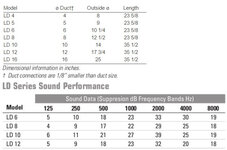
5.1 Sones (about 52db on low speed, high speed likely ~65db)
The Terrabloom 6" inline fan is a very nice unit for $100. Importantly, it has a metal case and temperature rated motor which makes it suitable for a kitchen exhaust where most code dictates metal ducting within the house envelope.
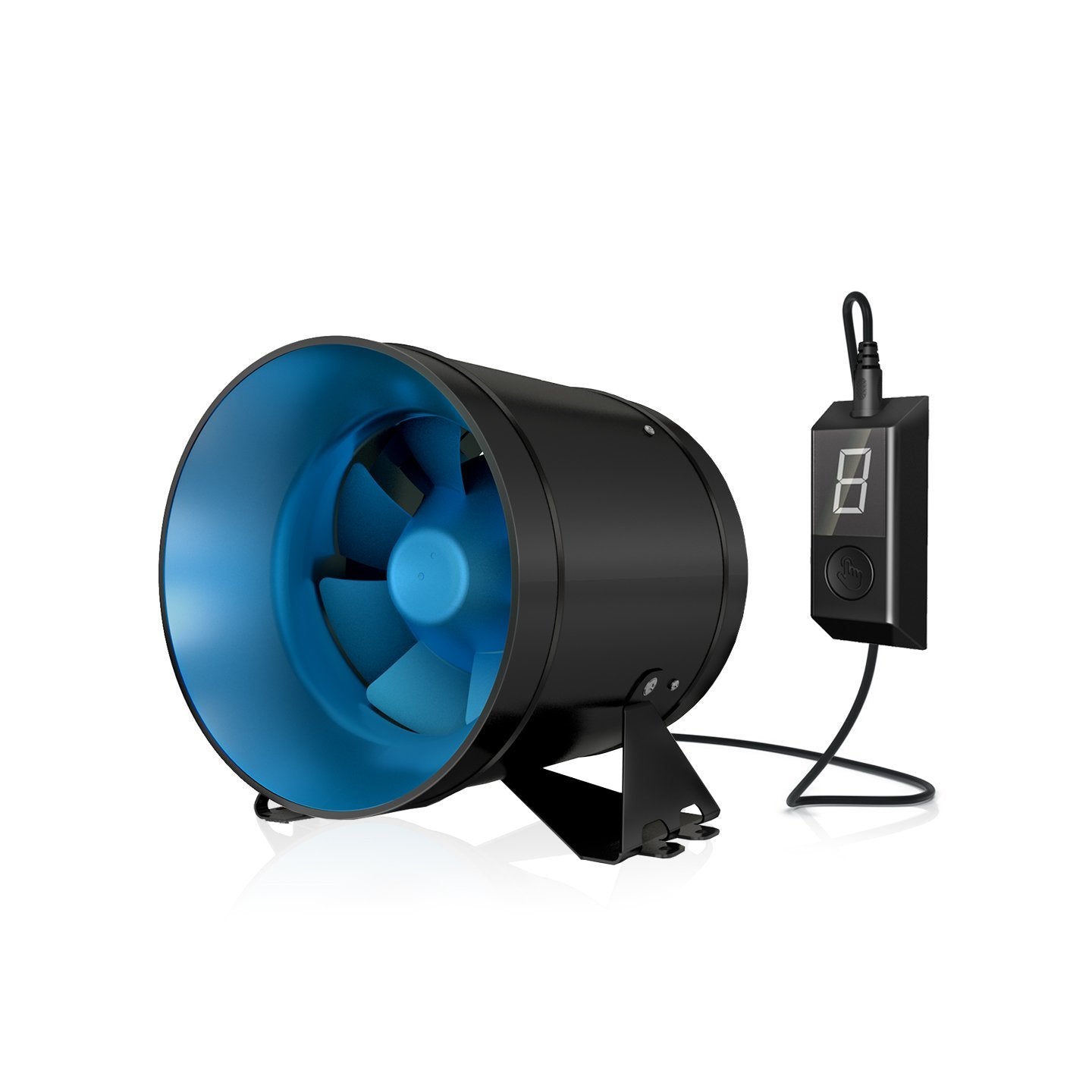
This is from their site, but if you visit, they also have videos showing the noise measurements for each unit.

I was impressed that the fan included two speed controllers and a DIY harness as well with instructions for wiring if you want to go that way. This means you could connect it a Zwave dimmer with 0-10V (they are out there) outputs to fully control this fan. That opens up a lot of uses for these fans in my book for automated heating/cooling etc.
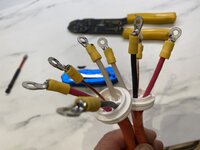
The fan is solidly built with a powder coated metal case, and the digital, rotary and DIY speed control bits are all included. A 120V power cord was included but I removed the plug and stripped back the ground/neutral/hot wires to connect the inline fan directly to the IKEA fan switch.
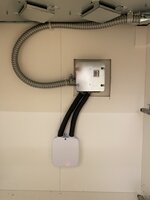
The power connection to these hoods are typically direct wired, so you'll likely have the AC power just running directly in. The connections are all behind a metal access plate accessed from under the hood.
Cutting power at the breaker, I removed the two bolts holding the 2 speed OEM fan in place and cut the three wires going to it to completely remove the OEM fan.
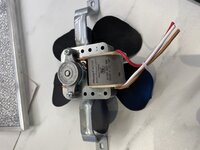

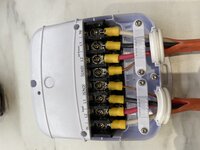
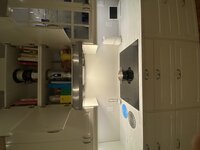
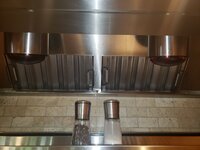
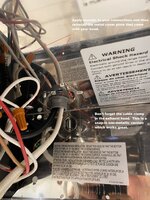
This is a pic looking underneath the range hood. Basically the range hood switch now powers up the inline fan the same whether you use the low or high speed settings on the range hood switch. Note that I wanted the OEM hood fan switch to just power up the Terrabloom inline fan to keep it simple for the family to use so wired it up as follows.


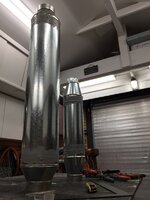
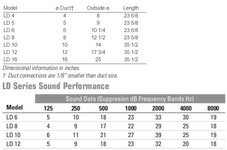
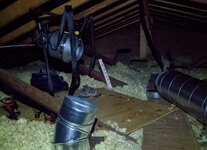
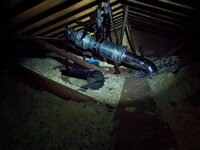
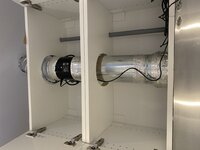
This is the fan in place. If you were willing to build a duct muffler and install this in your attic space, you could likely reduce noise even further. Terrabloom also sells these fans in a silenced version which is likely well worth a look!
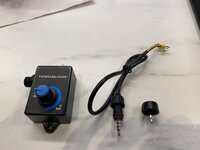
This is the rotary speed controller for the ECM inline fan motor and DIY harness that is also included. The controllers all plug with an 1/8" plug that has a 0-ringed connector and cap. This is a nice touch for humid environments.
Speed on the fan is controlled by one of three controllers, all included in the box.
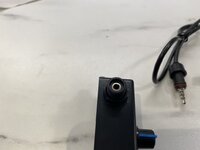
This digital controller could be mounted beside the hood to just ramp things up if required, however I found that 5 or 6 (of 8 speeds) on the digital controller is the best balance of flow vs sound. The ECM inline fan retains the last setting when powered off, so I'll likely just set the controller on 5 or 6 and leave it in the cabinet to keep it simple for the family.

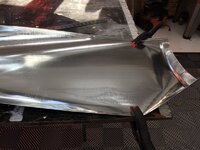
This little mod makes a significant sound difference. I have made duct mufflers before for my home theatre setup so I had some acoustic duct lining (lined fibreglass, non-flammable) and galvanised screen on hand. I lined the now empty range hood box (where the OEM fan used to be) with this duct liner and placed the screen there to hold it in place. This is the view looking up underneath the range hood. The grease filter covers this opening up in normal operation. Moving the inline fan to your attic with a proper 2-3 foot long duct muffler preceding it would make a huge difference in sound, likely less than 50 db at the hood, but I am happy with 60 db as all the bits are accessible from inside the room for servicing etc. The attic space over the new kitchen is spray foamed and then filled with R80 of blown in fibreglass so is not super convenient to access.
In any case, this mini muffler setup makes a very noticeable difference in sound at the cook top.
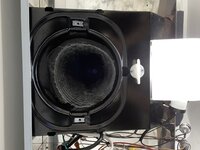
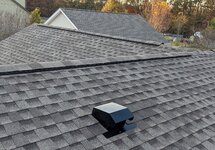
It's hard to see the foam ball floating in the external vent housing, but with the ECM inline fan at speed setting 5 on the digital controller (8 is max speed) the ball is "pinned" at the max height in the housing, and you can feel the jet of air standing below the duct which is about 10 feet off the ground. The range hood at high speed with the OEM hood fan just barely lifted the ball.

Once the upper area and cabinet duct are boxed in / sound insulated, I suspect the system will quiet further.
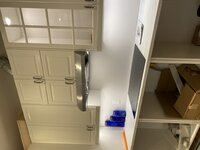
I measured the sound output of the setup about 3 feet away at 61 db (set at speed 6 on the digital controller). This is definitely quieter than the stock fan, and is moving easily 2-3 times the air. I ran a quick smoke test under the hood and 100% was captured using speed 6 (of 8) on the controller. The inline fan is much better at overcoming the static restrictions in the ducting and is therefore moving a lot more air than the stock fan. Having the exhaust fan inline also eliminates the blow back turbulence around the edges of the OEM hood fan where air is actually moving in the wrong direction. With the inline fan setup there is only suction at the grease filter so it absolutely does a better job of extraction.
The fan "hack" worked out very well indeed. I tried a few variations leaving the OEM fan in place, and then decided to remove it entirely as it didn't really increase flow a lot, but it did make a lot more noise at the high speed setting. The IKEA GENOMDRIVA stock exhaust hood is rated as follows:
GENOMDRIVA under cabinet range hood, Stainless steel - IKEA CA
GENOMDRIVA under cabinet range hood, Stainless steel A kitchen hood with LED lighting and all the basic functions you need. Coordinates with other stainless steel appliances and creates a uniform look in your kitchen since you mount it inside a wall cabinet.
www.ikea.com
160 CFM (likely with zero static pressure, so no resistance)
Motor power: 240W. ( I believe this is incorrect as the fan is clearly labelled 38 watts and doesn't move a lot of air)
5.1 Sones (about 52db on low speed, high speed likely ~65db)
The Terrabloom 6" inline fan is a very nice unit for $100. Importantly, it has a metal case and temperature rated motor which makes it suitable for a kitchen exhaust where most code dictates metal ducting within the house envelope.
TerraBloom 6" EC Inline Duct Fan with Variable Speed Controller, ECMF-150, 288 CFM, 36W
Quiet 6 inch EC fan made by TerraBloom. New updated version with 220V Support. Two year warranty. The fan delivers 288 CFM. Bonus — 2 speed controllers.
terra-bloom.com
This is from their site, but if you visit, they also have videos showing the noise measurements for each unit.
- MEET OUR NEW 2021 MODEL: Now featuring an 8-speed digital controller with numeric display. Added support for 110-220V power supply and switchable IEC socket power cord.
- INDEPENDENTLY TESTED SPECS: Independently lab-tested performance verified by the Home Ventilating Institute (HVI) and Energy-Star Most Efficient certification. See product documentation tab for more details.
- ENERGY SAVINGS: Built with a cutting edge brushless EC motor and dual jet type impeller, our new 6" ECMF series fans deliver 288 Cubic Feet per Minute (CFM) of Airflow using only 36 Watts.
- QUIET & FULLY ADJUSTABLE: Choose from 2 included speed controllers. Analog granular type or digital with 8-speed presets and numeric screen. Adjust the motor speed from 0%-100% without creating any additional hum or background noise. Wireless and programmable thermostat speed controller add-ons available.
- PWM, 0-10V CONTROLLER SUPPORT: Our EC fans support external speed controllers with popular PWM and 0-10V signal types. The fan can be connected to an external controller using a 3.5mm TRRS wire supplied with the fan.
- COLD ROLLED STEEL HOUSING: Resists accidental damage, harsh elements and reduces maintenance in demanding applications such as ventilation of grow tents, gardens, farms, crawl spaces, attics, etc.
- COMPACT: Only 7.25" (L) x 4.9" (W) x 6.95" (H). Ideal in applications with minimal clearance available. Mounting bracket, screws, and anchors included.
- ETL LISTED WITH A 2 YR WARRANTY: ECMF series fans are ETL listed and Conform to UL standard 507, Certified to CSA Standard C22.2 No 113. Covered by a 2-year warranty.
I was impressed that the fan included two speed controllers and a DIY harness as well with instructions for wiring if you want to go that way. This means you could connect it a Zwave dimmer with 0-10V (they are out there) outputs to fully control this fan. That opens up a lot of uses for these fans in my book for automated heating/cooling etc.
The fan is solidly built with a powder coated metal case, and the digital, rotary and DIY speed control bits are all included. A 120V power cord was included but I removed the plug and stripped back the ground/neutral/hot wires to connect the inline fan directly to the IKEA fan switch.
The power connection to these hoods are typically direct wired, so you'll likely have the AC power just running directly in. The connections are all behind a metal access plate accessed from under the hood.
Cutting power at the breaker, I removed the two bolts holding the 2 speed OEM fan in place and cut the three wires going to it to completely remove the OEM fan.
This is a pic looking underneath the range hood. Basically the range hood switch now powers up the inline fan the same whether you use the low or high speed settings on the range hood switch. Note that I wanted the OEM hood fan switch to just power up the Terrabloom inline fan to keep it simple for the family to use so wired it up as follows.
This is the fan in place. If you were willing to build a duct muffler and install this in your attic space, you could likely reduce noise even further. Terrabloom also sells these fans in a silenced version which is likely well worth a look!
This is the rotary speed controller for the ECM inline fan motor and DIY harness that is also included. The controllers all plug with an 1/8" plug that has a 0-ringed connector and cap. This is a nice touch for humid environments.
Speed on the fan is controlled by one of three controllers, all included in the box.
This digital controller could be mounted beside the hood to just ramp things up if required, however I found that 5 or 6 (of 8 speeds) on the digital controller is the best balance of flow vs sound. The ECM inline fan retains the last setting when powered off, so I'll likely just set the controller on 5 or 6 and leave it in the cabinet to keep it simple for the family.
This little mod makes a significant sound difference. I have made duct mufflers before for my home theatre setup so I had some acoustic duct lining (lined fibreglass, non-flammable) and galvanised screen on hand. I lined the now empty range hood box (where the OEM fan used to be) with this duct liner and placed the screen there to hold it in place. This is the view looking up underneath the range hood. The grease filter covers this opening up in normal operation. Moving the inline fan to your attic with a proper 2-3 foot long duct muffler preceding it would make a huge difference in sound, likely less than 50 db at the hood, but I am happy with 60 db as all the bits are accessible from inside the room for servicing etc. The attic space over the new kitchen is spray foamed and then filled with R80 of blown in fibreglass so is not super convenient to access.
In any case, this mini muffler setup makes a very noticeable difference in sound at the cook top.
It's hard to see the foam ball floating in the external vent housing, but with the ECM inline fan at speed setting 5 on the digital controller (8 is max speed) the ball is "pinned" at the max height in the housing, and you can feel the jet of air standing below the duct which is about 10 feet off the ground. The range hood at high speed with the OEM hood fan just barely lifted the ball.
Once the upper area and cabinet duct are boxed in / sound insulated, I suspect the system will quiet further.
I measured the sound output of the setup about 3 feet away at 61 db (set at speed 6 on the digital controller). This is definitely quieter than the stock fan, and is moving easily 2-3 times the air. I ran a quick smoke test under the hood and 100% was captured using speed 6 (of 8) on the controller. The inline fan is much better at overcoming the static restrictions in the ducting and is therefore moving a lot more air than the stock fan. Having the exhaust fan inline also eliminates the blow back turbulence around the edges of the OEM hood fan where air is actually moving in the wrong direction. With the inline fan setup there is only suction at the grease filter so it absolutely does a better job of extraction.