To avoid these ads, REGISTER NOW!

Rebuilding a monarch 10ee lathe

OP
G

Grant Gunderson

Well-known member
Joined
May 17, 2013
Messages
2,320
Location
Bellingham, WA
A bunch of the parts I ordered for the Generator finally arrived. Everything is a bit delayed up here right now after I5 was closed due to a land slide south of town after all of the rain we got last weekend.
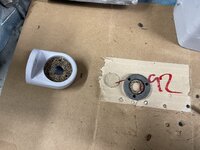
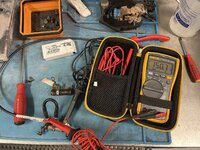
I ordered a new variable resistor. This is for the Exciter but its mounted on the generator unit. Its a Ohmite D25K50E and its rated fr 25W250Ohms. Out of the box it tests for 239Ω
IMG_3927.jpeg
There is a really good thread on PM that a guy named Cal started. It states that the variable resistor should be set to 150Ω. I ended up with 150.7Ω. I'm sure thats good enough.
IMG_3931.jpeg
Here is a shot of the new resistor after I got it fully packaged to be installed.
IMG_3933.jpeg

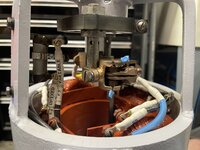
Before the resistor gets installed the brush unit needs to get put back first. I aligned it to the witness marks I made when I took it all apart.
IMG_3837.jpeg
And here is what it looks like with everything back in place.
IMG_3938.jpeg
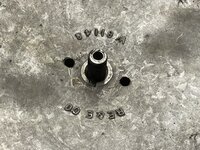
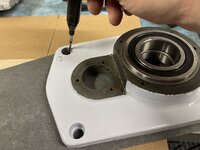
Next, I pressed the *** 6304-c-2hrs bearing into the rear end bell. I have chosen to go with fully sealed bearings after dealing with the grease mess this generator was.
IMG_3954.jpeg
I then installed the bearing retainer behind it.
IMG_3947.jpeg
And then I blued all of the machined mating surfaces. I could have painted these, but I was unsure how exacting the tolerances was, so figured blueing them was a safer bet. I then installed the bearing retainer with its two bolt and installed a pipe plug.
IMG_3948.jpeg
Next, I bolted the front legs on and then pressed in a SKF 6205 2RSJEM bearing.
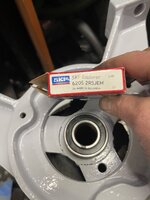
IMG_3952.jpeg
I then temporally installed the bearing caps to position the bearing exactly where it needs to be.
IMG_3943.jpeg
 
To avoid these ads, REGISTER NOW!
OP
G

Grant Gunderson

Well-known member
Joined
May 17, 2013
Messages
2,320
Location
Bellingham, WA
I then removed the bearing caps. The rear bearing cap gets slipped over the rotor.
IMG_3961.jpeg
Then the large washer gets pushed on next. Its a very tight fit!
IMG_3965.jpeg
And then the snap ring gets installed into the lower groove. No pics of this as my phone apparently was in video mode.

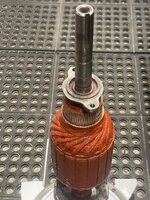
I then placed the generator unit on two 4x6 blocks, with a gap in the middle so the rotor shaft would clear. I then lowered the rotor in.
IMG_3958.jpeg
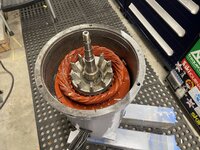
There rear ended bell then gets dropped on next, and bolted down with its 3 bolts.
IMG_3966.jpeg
I lubed the shafted then dropped the fan on to it. The key for the fan is tapered. So it slides in after you put the fan on.
IMG_3967.jpeg
The key then gets driven in flush.
IMG_3969.jpeg
I then replaced the original ½" lock nut with a new one and added a washer.
IMG_3970.jpeg
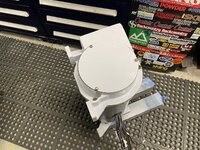
The rear cover then goes on next and gets secured with 3 screws.
IMG_3971.jpeg
Finally the front bearing retainer gets bolted down.
IMG_3974.jpeg
Then the brushes get installed.
IMG_3975.jpeg
They are H35 brushes and are Monarch part number R-1019
I then cleaned up the mounting holes for the exciter with a ⅝ tap.
The Generator is now ready to get reinstalled. I just need to talk my neighbor into giving me a hand as its heavy!
 
OP
G

Grant Gunderson

Well-known member
Joined
May 17, 2013
Messages
2,320
Location
Bellingham, WA
I used a tap to clean out the mounting holes for the Exciter.
IMG_3978.jpeg
I then re-attached the mounting brackets for the junction box. Al thats left is to re-attach the name plate on the motor, but Im waiting for the new drive screws I ordered to arrive. I can do that after the unit is back in the lathe. Here are a couple of pics of it ready to install.
IMG_3983.jpeg
IMG_3982.jpeg
And a couple of before pics
IMG_2877.jpeg
IMG_2914.jpeg
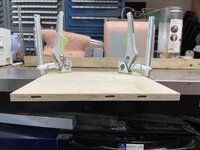
To re-install the generator unit, I am using a plywood sled cut out of some scrap baltic birch, Its sitting on top of two 4x6's for clearance.
IMG_3979.jpeg
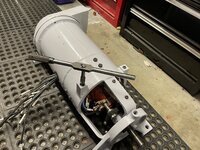
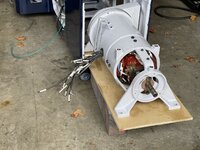
I then sat the generator unit on top of the ply.
IMG_3991.jpeg
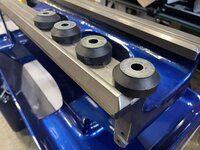
Here are the new vibration damping feet I ordered for the generator. They are rated for 100lbs each. The original rubber pads Monarch used are decomposing to the point they are not longer suitable.
IMG_3989.jpeg

I placed the feet over the mounting holes in the casting and slid the generator in using the plywood sheet aligning the back to mounting holes first. Once those bolts where loosely in, I pulled the sheet out and the generator dropped onto the front mounts perfectly. Except for one big problem, those mounts fully compressed under the weight of the generator. Which I am a bit surprised by. I ended up having to order new 200Lb rated mounts for it from McMaster. I am also waiting for a new larger junction box for the generator to arrive, so I will have room to house the capacitors for the conversion to single phase that I am doing. Once all of that is here, I will tidy up the wire leads and test it again with the Megger.
 
OP
G

Grant Gunderson

Well-known member
Joined
May 17, 2013
Messages
2,320
Location
Bellingham, WA
While waiting for parts for the generator, I started to work on putting the back gear box back together. Monarch wanted $70 for the front gasket alone. So I decided I will be making my own using gasket paper.

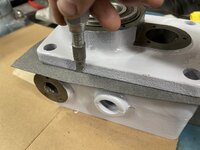
First I used a hollow hole punch to make a hole for one of the locating pins.
IMG_3868.jpeg
I then laid the paper over the front of the gear box, and used pressure to make an indent for where the other pin hole needs to be and then punched the pin hole.
IMG_3869.jpeg
I then laid the front back onto of the gear box, and used a long marking pen to locate the holes for the bolts.
IMG_3870.jpeg
Those then got punched and I assembled it all again and then used an exact to trim the sides.
IMG_3873.jpeg
And then did the same for the inside.
IMG_3874.jpeg
I used the same technique to do the gasket for the front bearring retainers as well.
IMG_3876.jpeg
IMG_3877.jpeg
IMG_3879.jpeg
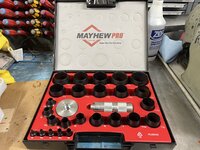
For making gaskets, I really like my Mayhew pro hollow punch set.
IMG_3915.jpeg
A big advantage that the Mayhew sets offer that the cheaper ones dont, is the ability to stack the cutters to make perfectly concentric rings. I used this ability to make the cork seals for the oil sight gauge. First a ⅝ cutter gets installed.
IMG_3888.jpeg
 
OP
G

Grant Gunderson

Well-known member
Joined
May 17, 2013
Messages
2,320
Location
Bellingham, WA
Then the 1-⅝ cutter gets stacked on top.
IMG_3883.jpeg
I have found the best ways to cut with the hollow punches is to use them in my arbor press. Here is me doing a test with scrap gasket material.
IMG_3880.jpeg
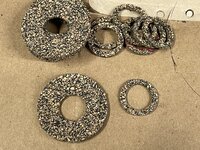
And here is a stack of the cork gaskets. I made enough to do all of the oil sights on the machine. Once set up it only took a couple of minutes if that.
IMG_3892.jpeg
The smaller cork rings used the ⅝ and ⅞ cutters. I used a small hollow punch to make the cut outs for the for mounting screws. Here is the first one installed.
IMG_3893.jpeg
I then screwed the outer cover to some scrap wood.
IMG_3898.jpeg
So I could polish it on my baldour buffer. The smaller cork ring gets installed on the inside of the outer cover and the glass gets dropped in to it.
IMG_3899.jpeg
The glass is 0.9360"dia.
IMG_3897.jpeg
I need to find a source for it. Monarch wants $55 for one!
Here is what the oil guage looks like installed back on the gear box. I made another gasket to go between it and the gear box.
IMG_3900.jpeg
The oil fill port onto of the gear box is a vented plug. That will get installed once its back on the motor and filled with oil.
IMG_3901.jpeg
I replaced the worn bottom drain plug with a new one from McMaster.
IMG_3902.jpeg
 
OP
G

Grant Gunderson

Well-known member
Joined
May 17, 2013
Messages
2,320
Location
Bellingham, WA
IMG_3903.jpeg
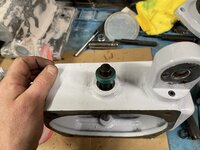
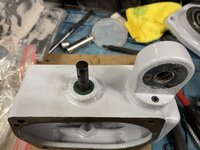
To install the oil seal on the side, I first dropped the selector shaft in, and slid the seal over it.
IMG_3909.jpeg
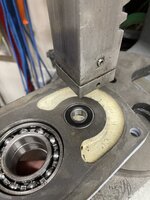
I then slipped the correct size seal driver over it and used a long socket as a drift to press it in.
IMG_3910.jpeg
IMG_3912.jpeg
The machined surfaces on the front get blued first, then I attached both of the front bearing retainer plates with new gaskets that I made.
IMG_3923.jpeg
There is a larger retaining washer that gets fitted over the lower bearing before its plate gets installed. Here is a shot of it all trimmed up.
IMG_4016.jpeg
Now, I just need to wait for the last two bearings to arrive before assembling the rest of it.
 
OP
G

Grant Gunderson

Well-known member
Joined
May 17, 2013
Messages
2,320
Location
Bellingham, WA
The bearings for the back gear finally arrived! Still waiting on the rest of my parts orders so hopefully all will be here by the end of the Thanksgiving break.

The smaller bearings for the back gear are SKS 6203-2RSJEM
IMG_4023.jpeg
They get pressed into the back of the back gear housing as well as the front with my arbor press.
IMG_4024.jpeg
The back gear drive gear then gets pressed onto its shaft.
IMG_4026.jpeg
Note the orientation of it with the proud side facing down to clear the back of the housing. It then gets pressed into the back gear housing.
IMG_4027.jpeg
Next, I laid out the lever arms for the back gear selector shaft. The narrow ends go up top.
IMG_4028.jpeg
Those get attached to the shaft with a combination of set screws as well as threaded taper pins. I dont really understand the reasoning of using both, and especially the use of the threaded taper pins for this use..... Regardless, they are a #2 pin that I cut down by a ¼" to match the length of the factory ones.
IMG_4029.jpeg
Here they are installed.
IMG_4031.jpeg
The external selector lever gets attached to the shaft with a taper pin as well as a dog point set screw. The taper pin is a #0x1" pin.
IMG_4032.jpeg
IMG_4033.jpeg
Once again I dont really understand the reasoning behind using both a taper pin and a dog point set screw, but it is what it is. BTW, I am using my Nepro's ⅜ Compact head ratchet here. I love that ratchet. If you are not familiar with them, they make my Snapon Dual 80's feel like Horror Freight cheapies.

I then slid the back gear clutch into the selector dogs to check the fit and tightened the dog point set screws on the interior selector arms.
IMG_4035.jpeg
 
OP
G

Grant Gunderson

Well-known member
Joined
May 17, 2013
Messages
2,320
Location
Bellingham, WA
I then tightened the plug into the hole on the opposite side of the selector shaft.
IMG_4036.jpeg
I then lubed the front output gear and its shaft and slid its spacer on it.
IMG_4041.jpeg
It then slides into the front housing of the back gear. The back gear is now ready to install on the DC motor.

To prep the DC motor for the back gear, the key for the shaft needs to get reinstalled using two small set screws.
IMG_4039.jpeg
And here is where I ran into a road block. That key apparently got bent when I removed it. Despite carefully tapping it back in and tightening it down, it won't allow the clutch to freely slide on it the entire length. While I could file it down, that would take away from the tolerance of the fit. I decided to order a new 1/4x1/4x2.5 key from McMaster. Once that arrives I will drill and tap it on the Bridgeport and I can then continue the install. Until then, time to take a brake to spend Thanksgiving with the family. I hope you have a great holiday weekend as well!
 

Steve from Socal

Well-known member
Joined
Jan 27, 2009
Messages
3,499
Location
Hutchinson Ks.
Making good progress,

The set screws and taper pins are how they were fitted at Monarch. The set screw was used to hold position while the pin was drilled. I pondered the same when taking my lathe apart. The later gear box has several levers with screws/pins that was where I concluded the assembly order. Fitting each machine is just different enough to make it a two step process.

I really like the gaskets and punch kit, don't know if I could con you out of a few of the corks for oil windows? I just got the tool I was waiting for to do my long bed. You are a bad influence, I have much more to do after seeing your effort.

Steve
 
OP
G

Grant Gunderson

Well-known member
Joined
May 17, 2013
Messages
2,320
Location
Bellingham, WA
Making good progress,

The set screws and taper pins are how they were fitted at Monarch. The set screw was used to hold position while the pin was drilled. I pondered the same when taking my lathe apart. The later gear box has several levers with screws/pins that was where I concluded the assembly order. Fitting each machine is just different enough to make it a two step process.

I really like the gaskets and punch kit, don't know if I could con you out of a few of the corks for oil windows? I just got the tool I was waiting for to do my long bed. You are a bad influence, I have much more to do after seeing your effort.

Steve
That makes sense on the taper screws. I'm just surprised with the thousands of ones that Monarch drilled, they didnt make a jig to do it instead to save the step with the set screw. The threaded taper ones also seem odd as a standard taper pin would have worked well in that use.... but I digress. I am sure Monarch had its reasons.


Happy to send you some of the cork ones. Want to DM me your address. Also I think you have a square dial correct. Can you verify they are the same dimensions?
 

DarrenF

Well-known member
Joined
Mar 11, 2008
Messages
291
Location
Thunder Bay, Ontario
Could you tell me how much of the red varnish you used on the AC motor? I plan to do the steelman method to convert my 10ee to single phase. Thanks
 
OP
G

Grant Gunderson

Well-known member
Joined
May 17, 2013
Messages
2,320
Location
Bellingham, WA
Could you tell me how much of the red varnish you used on the AC motor? I plan to do the steelman method to convert my 10ee to single phase. Thanks
I used this stuff for mine.
Red Insulating varnish
The 225ml container was more than enough to do the generator unit and the exciter. If you are just doing the AC side of the generator than the 55ml bottle is probably enough.
 
OP
G

Grant Gunderson

Well-known member
Joined
May 17, 2013
Messages
2,320
Location
Bellingham, WA
Thanks. I really wasnt sure how much i needed. Didn't wanna run short, or buy a quart just be sure.
Best of luck with the conversion. I found it wasn't that difficult to do and the heat gun really helped with softening the old varnish. I still haven't hooked mine back up as I am in my busy part of the year with work having me on the road for the next 4 months.
 
OP
G

Grant Gunderson

Well-known member
Joined
May 17, 2013
Messages
2,320
Location
Bellingham, WA
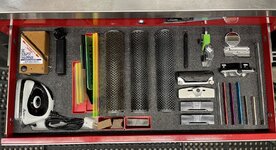
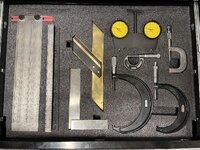
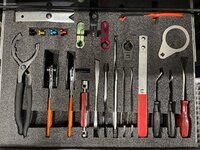
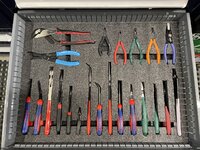
It's been a while since I've been able to work on the lathe. I just wrapped up ski season, so have been spending the last few days, switching the shop out of ski tuning mode, and into bike and machine work mode. While doing that I decided to re-do most of my tool box drawers to be better organized like my wrenches are sockets have been.

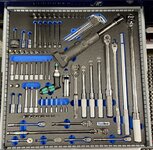
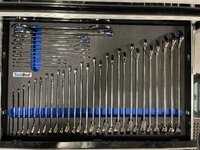
Here is what the wrenches and socket drawers looked like if you missed the post on them way back:
IMG_2439.jpeg

IMG_2444.jpeg
IMG_2447.jpeg
IMG_4745.jpeg
IMG_2455.jpeg
IMG_2454.jpeg
IMG_2452.jpeg
IMG_2451.jpeg
IMG_2449.jpeg
IMG_3703.jpeg
 
OP
G

Grant Gunderson

Well-known member
Joined
May 17, 2013
Messages
2,320
Location
Bellingham, WA
My day job has me working a lot on skis in the winter.

Here is the tuning drawer.
IMG_5285.jpeg
And this one is for mounting ski bindings
78AC8CF2-2365-472A-B4B4-A54BA0337D0A.jpg
The bike tooling is a bit more evolved. It seems like the MT. Bike industry likes to come out with a new "standard" every 6 months that then requires new specialized tooling.
A8A27F38-A86F-47AF-8281-2FC9B20FDF91.jpg
B0115518-7F2D-4F1A-8A80-9A6D517669FC.jpg
This drawer has all of my bearing tools in it. At least a lot of the drifts have pratcial cross over to working on other things besides bikes.
IMG_5270.jpeg
IMG_5272.jpeg
With the bike tools organized, I moved onto my various measuring and more precision drawers
IMG_5264.jpeg
IMG_5265.jpeg
IMG_5266.jpeg
And then my automotive drawer
IMG_5267.jpeg
 
OP
G

Grant Gunderson

Well-known member
Joined
May 17, 2013
Messages
2,320
Location
Bellingham, WA
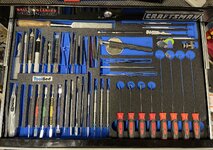
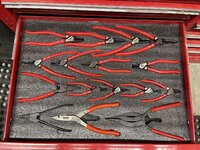
I had a bit of foam left over, so I decided to finish with my pliers and hammers
IMG_5273.jpeg
IMG_5284.jpeg
IMG_5274.jpeg
I also picked up a set of thread chasers, and am now storing them with their equivalent tap sizes. I think they will serve me well on the lathe project.
IMG_5153.jpeg

So now thats done. It should make working on the lathe and other projects a bit more efficient. All thats left for me to do before I get back to the lathe is to finish unpacking from this winter.

I have basically been traveling constantly since December, and have essentially been living out of this case.
IMG_5299.jpeg
The case is made by Zarges, and I have now used it for well over a decade and its been around the world more times than I can count. Which is pretty impressive when I was burning through multiple suitcases a year previously. Along with that case I got several duffle bags of product samples and ski bags to sort and then I'll be in full workshop mode. If all goes well, that will be tomorrow.... finally!
 

designer485

Well-known member
Joined
Jan 12, 2010
Messages
547
Location
Orange County, CA
The bike tooling is a bit more evolved. It seems like the MT. Bike industry likes to come out with a new "standard" every 6 months that then requires new specialized tooling.

It seems like the only standard in the MTB / Bike world is evolving standards...it's hard to keep up. Impressive collection of specialty bike tools however and I love all of the organization. Very nice.

I am itching to see what else you have in store for the lathe. It is looking fantastic and has been an inspiration for my drill press project.
 
To avoid these ads, REGISTER NOW!
OP
G

Grant Gunderson

Well-known member
Joined
May 17, 2013
Messages
2,320
Location
Bellingham, WA
My 10ee's MG is up and running on single phase:


seems to work good!
That’s awesome! That is next on the list. One question, and this shows my lack in electrical knowledge, but did you have to change any of the wiring (jumpers) in the main contactor panel when making the switch? Or just leave one of the phase wires off?
 
OP
G

Grant Gunderson

Well-known member
Joined
May 17, 2013
Messages
2,320
Location
Bellingham, WA
Ok, back to the lathe.

I last left off with the lathe with needing to finish the wiring for the MG unit and the conversion to single phase.

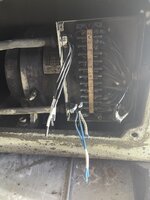
The factory terminal strip is nice in that it has a built in terminal label but that was in adequate in the factory configuration as several of the leads where terminated with an external splice in the cabinet. See the black tape covered mess bellow.
IMG_0758.jpeg
The factory terminal block also had a bit of damaged to it, so figured nows the time to replace it. The closest that I have found to the original is terminal blocks by Penn Union. They are rated for 75A, 600V DC, so more than adequate for this usage.
IMG_5399.jpeg
But that doesn't solve the issue with not having enough terminals, and I will need even more with the conversion, so I ordered another terminal block with 4 sets of connections. I think that will be enough.

I also need to figure out the layout for the new junction box on the MG unit.
IMG_5400.jpeg
The original factory box is on the left. Its way to small to fit the additional electronics the conversion requires. Before I left for work for the winter, I had purchases a larger box on the right that would have been ideal. However, it doesn't have enough clearance for the front panel of the machine. So I ordered the box in the middle. I made the cut outs for the conduit with a Klien knockout set.
IMG_5403.jpeg
That knockout set is something I rarely use, but for the certain jobs its by far the best tool. It makes perfect smooth cuts in sheet metal and plastic. For those applications its way better than using a hole saw.

I'm going to wait till the last set of terminal blocks arrives, before I tackle the problem of the box layout.

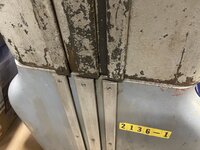
When I bought the lathe, it was missing both the upper and lower factory covers for the head stock end of the lathe. In its place it had a large single piece shop fab cover. The cover was well made and works well, but doesn't have those **** Art Deco lines the factory covers had. Last fall, I found a factory upper cover, and then a week or so ago I found a factory lower cover that a guy on PM was selling.

The guy did a great job of crating it.
IMG_5374.jpeg
Whatever nails he used, did a great job of making sure the UPS monkeys didnt destroy, it but it was a ***** to get open even with a couple of crow bars.

I cleaned up the cover with a bunch of degreaser, and its in great shape.
IMG_5392.jpeg
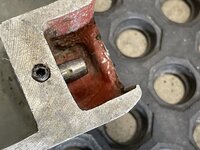
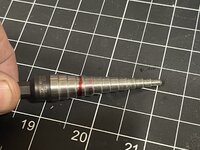
The cover has three tapered pins that allow you to align the cover vertically to the lathe.
IMG_5386.jpeg
Raise or lower each taper pin to fine tune the fitment.

I removed the set screws holding the pins in.
IMG_5382.jpeg
I then had to use a hammer and pin punch to tap them out. They where pretty stuck in there. So I cleaned each of the pins up with some scotch bright, and then cleaned out the holes on the panel with a reamer.

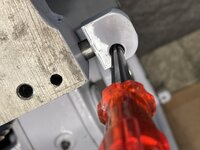
The dogs that receive the pins on the lathe are held in by set screws. This allows you to adjust the fitment of the cover horizontally to ensure it fits flush with the lathe casting.
IMG_5380.jpeg

With the set screws loose, I pulled the dogs out, so they I could easily use a tapered reamer to clean out the pin holes.
IMG_5390.jpeg
 
OP
G

Grant Gunderson

Well-known member
Joined
May 17, 2013
Messages
2,320
Location
Bellingham, WA
Next, I set the covers pins into the lathe dogs. Awesome, everything lines up and it looks like the cover will fit perfectly. I then pushed the cover in flush with the lathe casting, and then removed the cover so that I could tighten the set screws on the dogs.

When I went to tighten each of the set screws I noticed the dogs where getting pushed further out. ****.

Removing the set screws I could see the tail end of the shaft for the dogs was right at the edge of the setscrew. The dogs are too short!
IMG_5391.jpeg
On my lathe the shafts on the dogs measure .720" I'm going to need some that are at least 1" long. Hopefully I can find some on PM, or Ebay.

IF I cant sort them, I am going to have to make something. There isn't enough room to simply drill another set of holes further out to receive the pins, and the distance from the center of the pin holes to the center of the round shaft is critical. So I think worse case I will get some ⅜ dowel pins and drill and tap them and the dog's shafts and use a piece of ¼-20 threaded rod to connect them to make extentions.

Being stumped on the lathe, I figured I would change gears and tackle another shop project. My wire storage has become a bit of a **** show.
IMG_5156.jpeg
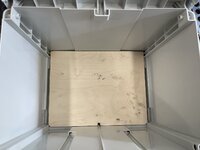
It was so unorganized I would waist money buying wire for specific projects, when I already had adequate wire on hand. So time to organize it. Almost all of my power tools, and misc shop tools are stored in Festool Systainers. I really like the system, as it keeps everything organized, and they are easy to stack / transport to a project. So I figured the ideal situation would be to store the wire in a systainer as well.

The systainers come in a variety of sizes, all with the same floor print, but different heights. I bought a #3 for this project as its a bit taller than the standard ones to fit more spools in it. I could have even gone with a #4 but figured fully loaded that would be pretty damn heavy.

I needed to make a spool holder to fit inside of the systainer. Problem is I cant access my cabinet saw with the lathe in the way, and there isn't room to get the breakdown cutting table I made out with the lathe in the middle of the garage.

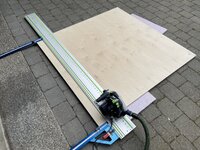
So I laid some foam insulation on the drive way, and used my track saw to rip some ½" baltic birch ply to size. This worked well as the track saw is more accurate than the cabinet saw anyways.
IMG_5306.jpeg
If you are not familiar with Baltic Birch, its way higher quality than the ply you get at the typical box store. It has more plies making it more stable, has less voids, and is just really nice to work with.

Once the base was fitted
IMG_5308.jpeg
I then cut the sides to size and used my Domino machine to make the holes for the dominos.
IMG_5309.jpeg
Of all of my Festool's the Domino is by far the best thing they make in my mind. It's kinda like a biscuit cutter, but instead it uses rectangular tenons that better align the pieces, and are extremely strong when glued up.

I then drilled holes for the ⅜" all thread rod that I am using to hold the spools and then inserted metal threaded inserts into the holes.
Finally I assembled it all.
IMG_5396.jpeg
Less than an hour of work, I have an organized box of wire spools. To keep the spools from inadvertently unwinding, I drilled a set f two holes for each of the spools in the top cross member and pulled the wire up through it and tucked the loose end into the second hole.

I am really glad I went with the size 3 systainer box, as its pretty heavy fully loaded.
 
Last edited:
OP
G

Grant Gunderson

Well-known member
Joined
May 17, 2013
Messages
2,320
Location
Bellingham, WA
I am converting the lathe from 3Phase to single phase 240V using the Steelman method. As part of the conversion, I need to house a start and run capacitor. While one of the capacitors has built in mounting point the other one didnt, so I needed to fab up a way of installing it into the junction box. This is also the perfect project to get my mind back in a machining place after shooting photos all winter.

First step. I loosely drew out the rough idea on some AL bar stock I had laying around.
IMG_5415.jpeg
I do not have a horizontal bandsaw, or a vertical metal one. I do have a wood bandsaw that I installed a bi-metal blade in, and it actually does a ok job with cutting aluminum. Not ideal, but its what I got.

IMG_5416.jpeg
That cut is a bit rough, but thats too be expected. It would also help if I had the miter attachment for the bandsaw, but I dont.
IMG_5418.jpeg
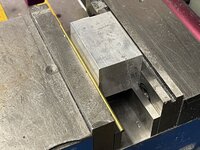
I put it in the mill vice and used a piece of brass rod on one side to clamp it.
IMG_5419.jpeg
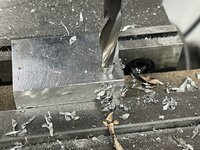
I then used my large 3" carbide face mill to square the block up
IMG_5420.jpeg
All 6 sides nice and square.
IMG_5421.jpeg
I then drilled
IMG_5425.jpeg
Counterbored
IMG_5426.jpeg
The two mounting holes, and the two clamping holes then got taped.
IMG_5431.jpeg
I then flipped the block 90 degrees and drilled a large hole with one of my Silver Deming drill bits to fit the capacitor. Finally I used a slitting saw in the mill to make the clamp.
 

Attachments

  • IMG_5433.jpeg
    IMG_5433.jpeg
    368.6 KB · Views: 21
OP
G

Grant Gunderson

Well-known member
Joined
May 17, 2013
Messages
2,320
Location
Bellingham, WA
IMG_5433.jpeg
Thats the first time I have ever used a sliding saw, and it worked pretty damn well. Thats also where I screwed up the order of operations. I was so focused on the slitting saw, I forgot to use the ⅛ radius cutter to cut the edge profiles first.
IMG_5441.jpeg
I put the screws In the clamp and, it actually wasn't that bad to cut the edge radius's. While its far from perfect, it will do the job I need it to perfectly.

With that done, I am now able to work on the layout of the junction box.

IMG_5444.jpeg
I think thats the layout I am probably going to end up with, but I am going to think about it overnight before committing to it. Once I finalize it, I will mount the various components using rivitnuts.
 
OP
G

Grant Gunderson

Well-known member
Joined
May 17, 2013
Messages
2,320
Location
Bellingham, WA
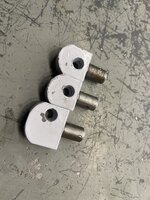
I received a small order from McMaster today and in it where the ½" pull out down pins I ordered. Not wanting to leave the lower panel hanging out on the shop floor while I am away for work this weekend (pretty sure my 4 year will think its a bike jump) I decided to modify the dog tabs that I have to fit. Only problem Is I thought I had ordered 3 pins, but turns out I only ordered 2, So I'm 1 short...argh.
IMG_5459.jpeg
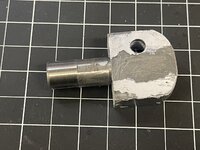
First step is to mill the exiting pin flat.
IMG_5461.jpeg
I then found the pin center using my mill's DRO and a starrett edge finder and used a spot drill to center drill the pin.
IMG_5464.jpeg
I then drilled it with a #7 drill bit, and then tapped the hole.
IMG_5467.jpeg
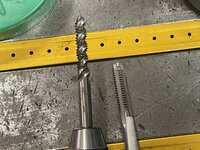
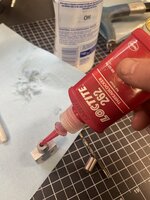
I am become a really big fan of spiral taps. I first tapped the hole with it, then used a bottom tap to finish... that reminds me, I really should order some spiral bottom taps in the sizes I use most. I then added some lock tight and inserted a short length of all thread.
IMG_5471.jpeg
IMG_5470.jpeg
The smallest these pullout pins come is .75 Which creates too long of an overall length to fit the bore on the lathe. So I had to machine .250 off of it with a end mill. I then used a small center drill to remove the bur from the hole.
IMG_5473.jpeg
I then used a thread chaser to clean up the threads.
IMG_5475.jpeg
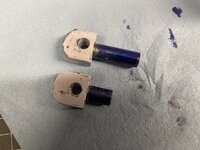
All done. If it wasn't for how chowder up the existing pin was you would have a hard time telling I extended it.
IMG_5477.jpeg
You can also see where I scraped the paint off trying to figure out if these dogs where made with a tapper pin holding in the pin shaft... no luck. Here is the extended version version the original.
IMG_5486.jpeg
I covered the pins with dykem, so I can see where they are connecting with the set screws. It will also allow me to scribe a line once I get everything dialed in with the rear cover, so when I remove to paint, I'll know exactly how far to reinsert them.
 
OP
G

Grant Gunderson

Well-known member
Joined
May 17, 2013
Messages
2,320
Location
Bellingham, WA
Lower cover is on. The alignment to the lathe casting is damn perfect in the front, and very close with the exception of one section on the back. I can live with that. I still need a new pin for the lower front.
IMG_5487.jpeg
Ok, lets see how it looks with the upper cover that I found last fall.
IMG_5490.jpeg
It's amazing how much more the upper cover weighs... I'm guessing its 3x the bottom cover!

****, they dont line up.
IMG_5495.jpeg
I'm curious if this lower cover which is off of a newer machine, is built to slightly different depth dimensions than the original cover.
IMG_5496.jpeg
I might be able to make a few modifications to get the top cover to line up, but I won't know for sure until I get the head stock and gear box back on. The trim pieces are also out of alignment.
IMG_5492.jpeg
At least those will be easier to modify to line up. 1 step forward. 2 steps back. classic.
 
OP
G

Grant Gunderson

Well-known member
Joined
May 17, 2013
Messages
2,320
Location
Bellingham, WA
Ok, now to tackle the new electrical panel.
I changed my layout a bit. Hopefully it works, but I won't know for sure until I start hooking up the wires.

First step is to add some dykem where each component is going to go.
IMG_5500.jpeg
I then used a set of transfer punches to precisely find the correct hole position.
IMG_5499.jpeg
IMG_5501.jpeg
For sheet metal, I have found step drill bits seem to work best. One trick I have found is I use a sharpie to mark the next largest step then what I intend to drill. This really helps to prevent from drilling the holes too large.

IMG_5508.jpeg
With the holes drilled I could then install the rivetnuts. These work just like regular rivets except they use threaded mandrills.
IMG_5502.jpeg
All of the rivet nuts installed.
IMG_5510.jpeg
These allow me to use standard screws to install all of the components and if anything ever needs to get swapped out, it will be easy.

I was a bit concerned about the longevity of using printed labels for the terminal blocks. So I used a carbide scribe and etched each label. I then rub dykem on it, and then immediately ripped clean with alcohol. This left an etched and dyed surface that I won't have to worry about the label text wiping off or the labels falling off.
IMG_5518.jpeg
Not wanting to stare at my chicken scratches I then covered them with labels.
IMG_5521.jpeg
And its ready to get installed in the lathe. Time for a beer or 3.
 
Last edited:
OP
G

Grant Gunderson

Well-known member
Joined
May 17, 2013
Messages
2,320
Location
Bellingham, WA
The last few weeks have been busy. I got sent down to Mammoth to do one last shoot for the winter with skiing icon Glen Plake. If you saw any ski movies from the 90's you will recognize the hair cut.
592A9DE4-3571-4399-BEA0-98ED0369016D.jpg
When I got back home, I got a call that my new Transition Repeater Ebike was finally in. This thing is pretty sweet, all carbon, and it actually handles and rides like a true bike, unlike any of the other E-bikes I have been on. Of course I had to do some upgrades to it, right away.
IMG_5611.jpeg
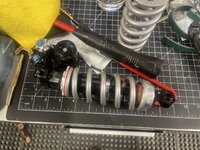
It's truly amazing what that little motor can do. I can easily get 25 miles and 4K of vert out of a charge with it, and I am pretty sure if I switch to the detuned settings 6K of climbing in a ride is doable. With the motor out, I removed the cables for the seat post and the rear derailleur and set the bike up with a wireless seat post and wireless shifting. I also removed the stock shock and replaced it with a custom tuned coil system by Push out of Colorado.
67409844270__4EE458D2-AA9E-4F4F-BE0B-AF655B01015C.jpeg

IMG_5642.jpeg
I am still waiting for the fork upgrades to come in, but its already riding really well!

With the new bike setup, its time to get back to the lathe. First thing I needed to do was to solder some leads onto the starting capcitor for the single phase conversions. I picked up this little soldering iron from a recommendation here on Garage Journal a few years ago, and I am pretty impressed with it and like it better than my old Weller ones.
IMG_5668.jpeg
I first tinned the leads of the capcitor
IMG_5670.jpeg
And then used a third hand soldering tool to tin the wire leads.
IMG_5678.jpeg
I could then use the third hand tool to hold the wire to the capcitor and then solder them together.
IMG_5680.jpeg
That worked pretty well, but I had more than my fair share of coffee in the am, and had a hard time holding my hand steady. You can see where I accidentally touched the top of the capacitor. Not ideal, but it should be ok.
I then added heat shrink labels to cover the connections.
IMG_5685.jpeg
 
OP
G

Grant Gunderson

Well-known member
Joined
May 17, 2013
Messages
2,320
Location
Bellingham, WA
The box then needs to get installed in the machine. Since I am using a wider box than the original, I need to cut the conduit to length.
IMG_5698.jpeg
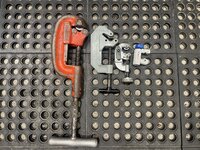
Once I determined the proper length, I used this little Lenox pipe cutter.
IMG_5700.jpeg
I have a whole range of pipe cutters, including some absolutely massive ones, but this little guy tends to get used the most, as it fits into spaces others won't and it seems lately any time I need to fix any plumbing thats the case. With the conduit trimmed to length I could install the box for a test fit.
IMG_5723.jpeg
And this is where I ran into some problems. When I was determining the layout for the electronics mounts, I was off by just a bit and the rivet nuts are hitting the protrusions on the Motor Generator. ****! I marked the location where causing the interference and removed the box.
IMG_5724.jpeg
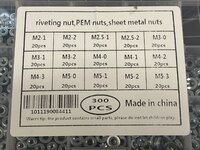
I did some research and found out about these special sheet metal fasteners called PEM nuts or self clenching SWAG nuts. Not wanting to place an order with McMaster for just a handful of fasteners, I ordered an assortment off of amazon, for less than the cost of shipping at McMaster.
IMG_5719.jpeg
100% pure grade chinesium. I especially like the Warm Tip. Especially after I opened up the package and found out that a child was obviously the one sorting them.
IMG_5720.jpeg
That was that, and I re-learned a lesson I learned years ago, never buy cheap fasteners off of amazon. So those got sent back. When I was down at our local mom and pop hardware store looking for a better grommet for the box, I found that they actually stocked some of these fasteners in the exact SAE sizes I needed, and they where made in the USA as well.

Here is a comparison shot showing the difference in thickness between these and the rivet nuts. Exactly what I needed.
IMG_5729.jpeg
Luckily they used the same size hole as the rivet nuts. Typically you would use a special threaded punch and die to install these (the rivet nut gun I have won't do it). Since I am only installing a few of them, I used my arbor press and bench block to press them in.
IMG_5727.jpeg
That worked super well. I wouldn't want to do 100 of them that way, but for this few it worked great!

For the grommet, I ended up picking up some groove grommeting. (the local hardware store is like a mom and pop version of McMaster, they pretty much have just about everything you could imagine!)
IMG_5746.jpeg
That worked perfectly for the hole and is much thinner giving me more room for the wires.
IMG_5747.jpeg
I gotta do some touch up painting on the interior of the lathe from installing the Motor Generator in the am. Once thats dry I will install the junction box finally.
 
Last edited:
OP
G

Grant Gunderson

Well-known member
Joined
May 17, 2013
Messages
2,320
Location
Bellingham, WA
Nice to see that Glen Plake is still ripping it up! You have an awesome job 😃
I think I won the lottery when it comes to day jobs. If skiing had a gospel, Glen Plake would be it’s prophet. The guy still just loves to ski. He’s also a bit of a motor head and would fit right in with Garage Journal. He was also the host of Truck Night in America for a few seasons.
 

MBfreak

MEMBER EMERITUS
Joined
Dec 10, 2010
Messages
2,301
Location
Linkoping , Sweden
Great work, keep it up.
My take on flat gaskets and making them right size with holes where needed:
Take a gasket paper of the right thickness and put it over the part it is going to seal up. Use a steel ball placed over one bolt hole in the part and hit it with a hammer. Produces a nice round hole,. Fix the gasket material with a rod that fits exaxtly in that hole. Make next hole, as fara away as possible, repeat. Gasket is now fixed in place. Make rets of the holes.
Then use a small hammer and go over the outside where the gasket sticks out over the part. Do not hammer very hard, just walk around . Gasket protruding over the part will fall off. If any large holes inside the gasket over the part, repeat.
Easy, and gasket is as good as factory cut ones.
Overhauled a Soviet made 1973 Profila 1 K 62 lathe and did all the gaskets like this. This lathe was the best I have ever used. Toolroom accuracy and the feed gearbox was a work of art. From 0,04 mm ( 0,0015 ") feed per turn to 157 mm ( 6") .
The 157 mm was for turning drill bit blanks! Speed from 12 rpm to 2600 rpm. Weight : 2600 kg. 12 kW drive motor.

Ola
 
OP
G

Grant Gunderson

Well-known member
Joined
May 17, 2013
Messages
2,320
Location
Bellingham, WA
Great work, keep it up.
My take on flat gaskets and making them right size with holes where needed:
Take a gasket paper of the right thickness and put it over the part it is going to seal up. Use a steel ball placed over one bolt hole in the part and hit it with a hammer. Produces a nice round hole,. Fix the gasket material with a rod that fits exaxtly in that hole. Make next hole, as fara away as possible, repeat. Gasket is now fixed in place. Make rets of the holes.
Then use a small hammer and go over the outside where the gasket sticks out over the part. Do not hammer very hard, just walk around . Gasket protruding over the part will fall off. If any large holes inside the gasket over the part, repeat.
Easy, and gasket is as good as factory cut ones.
Overhauled a Soviet made 1973 Profila 1 K 62 lathe and did all the gaskets like this. This lathe was the best I have ever used. Toolroom accuracy and the feed gearbox was a work of art. From 0,04 mm ( 0,0015 ") feed per turn to 157 mm ( 6") .
The 157 mm was for turning drill bit blanks! Speed from 12 rpm to 2600 rpm. Weight : 2600 kg. 12 kW drive motor.

Ola
Thanks. Great tips on doing gaskets as well. That Soviet Lathe sounds like a beast. Those two lathes probably spent most of their working careers countering what the other was doing.
 
To avoid these ads, REGISTER NOW!
Top Bottom