Maybe you missed the post that said I turned off all power including low voltage and it still didn't work with a laptop on the garage end. The issue isn't noise pickup.Just doing a quick scan of this thread, I agree with those that said paralleling power, in close proximity, over a long distance could cause issues. Shielding would help, if one end is properly grounded.

You are using an out of date browser. It may not display this or other websites correctly.
You should upgrade or use an alternative browser.
You should upgrade or use an alternative browser.
Very slow connection with CAT6 connection between buildings
- Thread starter Innovate1
- Start date
kaffine
Well-known member
Shielding needs to be properly connected to return at both ends. Otherwise it's an antenna
Never connect the shield at both ends. That is how you end up with ground loops and interference issues.
Yep. Look at Henry Ott for more info than you ever wanted to know….Never connect the shield at both ends. That is how you end up with ground loops and interference issues.
Noise Reduction Techniques in Electronic Systems, Ott, Henry W., eBook - Amazon.com
Noise Reduction Techniques in Electronic Systems - Kindle edition by Ott, Henry W.. Download it once and read it on your Kindle device, PC, phones or tablets. Use features like bookmarks, note taking and highlighting while reading Noise Reduction Techniques in Electronic Systems.
www.amazon.com
HeadsUp
Well-known member
Never connect the shield at both ends. That is how you end up with ground loops and interference issues.
I suggest you check the ends of a shielded CAT6 cable. In fact I recommend you to check the ends of any shielded cable. You will find the shields connected. I stand by my previous statement.
HeadsUp
Well-known member
Deleted. Dup
Not to derail the thread, but I was always taught to only connect one end of the shield too (for the reasons mentioned above). This was back in the RS232 dummy terminal + serial printer days though. It always worked for me.I suggest you check the ends of a shielded CAT6 cable. In fact I recommend you to check the ends of any shielded cable. You will find the shields connected. I stand by my previous statement.
Yes, best to ground only one end. If the connection is unidirectional (receiver on one end and transmitter on the other) then grounding at the receiving end is preferred but in these cases it is bidirectional so there is no preferred end.Not to derail the thread, but I was always taught to only connect one end of the shield too (for the reasons mentioned above). This was back in the RS232 dummy terminal + serial printer days though. It always worked for me.
HeadsUp
Well-known member
Like CoogarXR said I don't want to derail the thread but have you checked if the shielded endpoints of a cable is connected? The point is moot in this instance since the OP is using an UNSHIELDED cable.
I've designed and used many 10/100/1000BaseT interfaces. The 802.3 spec is 100m. Many times I've seen designs from reputable manufacturers go 120m. Since the OP has re-terminated the UNSHIELDED cable, verified the connections and turned off the other items in the area the issue is the design quality of the end point devices.
As mentioned in post #68 the OP has a spool CAT6. Curious if this was tested and the results.
I've designed and used many 10/100/1000BaseT interfaces. The 802.3 spec is 100m. Many times I've seen designs from reputable manufacturers go 120m. Since the OP has re-terminated the UNSHIELDED cable, verified the connections and turned off the other items in the area the issue is the design quality of the end point devices.
As mentioned in post #68 the OP has a spool CAT6. Curious if this was tested and the results.
I haven't tried with the CAT6. It would be interesting to try that but I have other things to do so not sure I will get to it. I also though about looking at the waveforms with a scope. I did pull one of the runs out to get an accurate length measurement for fiber and the cable was a little wet about halfway through the pull. Shouldn't be an issue with gel tape cable but perhaps...
HeadsUp
Well-known member
Speaking from experience you'll need access to an adequate oscilloscope and probes. Not something the average homeowner has in their possession. Unless you are interested in looking at the link pulses you will need to open the cable to access the differential pairs. If you've gone that far you are pretty deep into the analysis. That much farther than most non-engineers are willing to go.
I don't have any experience with network stuff but I design power electronics (switching power converters) so high bandwidth scope, isolated probes, etc is no problem. The issue is more interpreting what I might find.Speaking from experience you'll need access to an adequate oscilloscope and probes. Not something the average homeowner has in their possession. Unless you are interested in looking at the link pulses you will need to open the cable to access the differential pairs. If you've gone that far you are pretty deep into the analysis. That much farther than most non-engineers are willing to go.
HeadsUp
Well-known member
Link for reference
10BASE-T, 100BASE-TX, 1000BASE-T Ethernet Application
Get more visibility into your Ethernet designs with 10BASE-T, 100BASE-TX, and 1000BASE-T physical layer measurement and analysis on the DPO/MSO70000C/DX/SX, DPO7000C, and DPO/MSO5000 Series
www.tek.com
dcg9381
Well-known member
Oscillioscopes are very available, small, and cheap these days. I wouldn't have a clue on how to chase it with an o-scope. There are likely better testing tools that you can connect to both ends and get diagnosis of speed, packet drops, etc, but they look to be very "not cheap".Speaking from experience you'll need access to an adequate oscilloscope and probes. Not something the average homeowner has in their possession. Unless you are interested in looking at the link pulses you will need to open the cable to access the differential pairs. If you've gone that far you are pretty deep into the analysis. That much farther than most non-engineers are willing to go.
wyliesdiesels
Well-known member
I do low volt for a living. The only time we use shielded cable and connect the shield at both ends is for microwave radios for EMF grounding. This is what the manufacturers call for... Shielded cable- foil jacket with drain wire and shielded RJ45 modular plugs. The radios plug into grounded power injectors or metal patch panel.
HeadsUp
Well-known member
I agree there are some oscilloscope that are cheap and very capable. For conformance testing of 1000BaseT Ethernet interfaces you'll need a scope with 2Gsps or better. On average these scopes start at $25K not including probes.Oscillioscopes are very available, small, and cheap these days. I wouldn't have a clue on how to chase it with an o-scope. There are likely better testing tools that you can connect to both ends and get diagnosis of speed, packet drops, etc, but they look to be very "not cheap".
Also agree there are other network tools that can be used to verify the auto-negotiation process, errored packets, etc. Again not something the average homeowner has in their posession.
HeadsUp
Well-known member
Also do low voltage for a living. Can't count the number of times working on EMC issues and it turns out to be cables. Among the issues are location of cables next to noise sources, lack of proper number of returns, improper shielding and signal integrity. Recently had a week long refresher course taught by Lee Hill. He emphasized proper shielding of cables at both ends.I do low volt for a living. The only time we use shielded cable and connect the shield at both ends is for microwave radios for EMF grounding. This is what the manufacturers call for... Shielded cable- foil jacket with drain wire and shielded RJ45 modular plugs. The radios plug into grounded power injectors or metal patch panel.
If any Garage Journal member has trouble falling asleep at night try Googling "EMC radiated emissions and immunity".
again, the only solution is to replace the cable.
remember dont risk it. min replacement would be something like:

wyliesdiesels
Well-known member
umm thats tight-buffered fiber. not rated for undergroundremember dont risk it. min replacement would be something like:


umm thats tight-buffered fiber. not rated for underground
dang it. you're right. I did see this old pic of you putting a cable in for a camera on the shed out back. got any extra for him?


I do low volt for a living. The only time we use shielded cable and connect the shield at both ends is for microwave radios for EMF grounding. This is what the manufacturers call for... Shielded cable- foil jacket with drain wire and shielded RJ45 modular plugs. The radios plug into grounded power injectors or metal patch panel.
Haven't heard (or thought of) "drain wire" in years.
If I had a dollar for every DB-9 or DB-15 or DB-25 null-modem or RS-232 cable for Wyse serial monitors I built in years past.... I'd have retired many years sooner.
wyliesdiesels
Well-known member
Haven't heard (or thought of) "drain wire" in years.
If I had a dollar for every DB-9 or DB-15 or DB-25 null-modem or RS-232 cable for Wyse serial monitors I built in years past.... I'd have retired many years sooner.
Last edited:
Hello all, I have thoughts. you're welcome to suffer them.
Here, this isn't exactly it but it's close. this is "UTP":
we didn't buy any more of those jacks.
@Innovate1, this is where beg/borrow/stealing a proper cable tester (I'm thinking of something from Fluke, it's all I've ever used) is more useful to you here than a 4 light tester or whatever you have.
here's an example of what you could see:
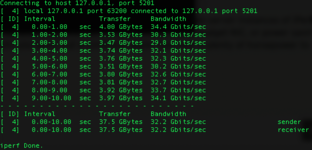
assuming this is running gig, running gig TO SPEC requires auto-negotiation.Are your ports set to auto-negotiate? Back in the day (from what I remember), that seemed to slow a network down. I always set the port config manually instead of auto...
(It's been a lot of years though!
YMMV...
+1 for iPerf. ALSO: you need to test your test gear FIRST. I have seen many laptops that for one reason or another WILL NOT pass 1000Mb/s. why? idk. but it's true. pick two laptops/desktops or whatever and test them FIRST, going both ways.The "basic" level of negotiated port speed is only that, what the port can do. Transferring data over the wire will reveal the true speed of the point to point link. You can have GB port speeds and still have a <GB data transfer speed. Use a tool such as iPerf to check actual transfer speeds.
just say no to hubs. I've personally never seen a gigabit hub. 10/100, yes. 10/100 "concentrators" with gigE uplinks? yes.Please elaborate on the difference it would make. Just interested in the details as I am not a networking guru...
you laugh but I was on a job and we got called back for fiber that didn't work. OTDR showed about where the break was. went and looked, and we found WIRE NUTS ON THE SEVERED FIBER and a self-tapper through the jacket. yeah... didn't eat that service call!what its fineeeeee. jk
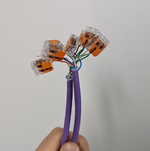
I may have missed it, but what gear exactly are you using on the ends? what NIC in the PC, not just the PC brand please.No built in cable tests that I know of. Just consumer switches and routers. I do have ddwrt on the routers so might be some way to do cable tests with that. I do have a $50 cable tester that gives length of each pair and it gives length of each pair. It shows 95.4 meters for all pairs which is high. The most it actually is about 260 feet which is about 15% error, maybe due to velocity factor?
I may try the scope on the signals just to see what I can see. Interested in the details but also tired of fighting and looking at going to fiber.
There are some 'shielded' structured cabling options that have non-continuous shielding. I forget who makes it but I think it's Panduit. I also recommend against running shielded cable between buildings that have separate electrical services.Never connect the shield at both ends. That is how you end up with ground loops and interference issues.
Here, this isn't exactly it but it's close. this is "UTP":
I had a cheap boss who bought DOLLAR keystone jacks to see if we could use them (to save money). they were the WORST things I've ever had to terminate. I threw them on a nearly gone spool of cable (maybe 100' left) to Fluke them, and the test FAILED, -1dB margin. name brand cat5e cable. everyone gave me ****. so they reterminated. FAILED AGAIN! We unrolled the spool. PASS! +0.5 dB!Like CoogarXR said I don't want to derail the thread but have you checked if the shielded endpoints of a cable is connected? The point is moot in this instance since the OP is using an UNSHIELDED cable.
I've designed and used many 10/100/1000BaseT interfaces. The 802.3 spec is 100m. Many times I've seen designs from reputable manufacturers go 120m. Since the OP has re-terminated the UNSHIELDED cable, verified the connections and turned off the other items in the area the issue is the design quality of the end point devices.
As mentioned in post #68 the OP has a spool CAT6. Curious if this was tested and the results.
we didn't buy any more of those jacks.
until you replace the cable and... still have the problem. or go fiber, and still have the problem, because the problem is one of the end devices, or a patch cord, or, or, or.again, the only solution is to replace the cable.
@Innovate1, this is where beg/borrow/stealing a proper cable tester (I'm thinking of something from Fluke, it's all I've ever used) is more useful to you here than a 4 light tester or whatever you have.
if you're getting the link speed you should, you need to load test with data. I'd suggest you put two known good PCs on the end of this, and do two server instances of iPerf (one on each side), and see what you get. any decent NIC should be able to do near full link bandwidth. some budget NIC, or power saving features (laptop on a battery?) may cause you to not get the results you want, but a core2duo apple macbook is plenty of horsepower to do this.The router has 1G ports and is the same equipment I am connecting to with a short patch cable for comparison. I am not testing by putting data through but just using what a windows PC reports that status of the port at. So any bottlenecks in the router don't come into play in that status (but would of course in actual operation, possibly making the connection slower than the reported status speed if the status speed was where it should be).
here's an example of what you could see:
Last edited:
I believe he has already tested the link using a shorter patch cable between a device and the switch/router, bypassing the bad cable.Hello all, I have thoughts. you're welcome to suffer them.
assuming this is running gig, running gig TO SPEC requires auto-negotiation.
+1 for iPerf. ALSO: you need to test your test gear FIRST. I have seen many laptops that for one reason or another WILL NOT pass 1000Mb/s. why? idk. but it's true. pick two laptops/desktops or whatever and test them FIRST, going both ways.
just say no to hubs. I've personally never seen a gigabit hub. 10/100, yes. 10/100 "concentrators" with gigE uplinks? yes.
you laugh but I was on a job and we got called back for fiber that didn't work. OTDR showed about where the break was. went and looked, and we found WIRE NUTS ON THE SEVERED FIBER and a self-tapper through the jacket. yeah... didn't eat that service call!
I may have missed it, but what gear exactly are you using on the ends? what NIC in the PC, not just the PC brand please.
There are some 'shielded' structured cabling options that have non-continuous shielding. I forget who makes it but I think it's Panduit. I also recommend against running shielded cable between buildings that have separate electrical services.
Here, this isn't exactly it but it's close. this is "UTP":
I had a cheap boss who bought DOLLAR keystone jacks to see if we could use them (to save money). they were the WORST things I've ever had to terminate. I threw them on a nearly gone spool of cable (maybe 100' left) to Fluke them, and the test FAILED, -1dB margin. name brand cat5e cable. everyone gave me ****. so they reterminated. FAILED AGAIN! We unrolled the spool. PASS! +0.5 dB!
we didn't buy any more of those jacks.
until you replace the cable and... still have the problem. or go fiber, and still have the problem, because the problem is one of the end devices, or a patch cord, or, or, or.
@Innovate1, this is where beg/borrow/stealing a proper cable tester (I'm thinking of something from Fluke, it's all I've ever used) is more useful to you here than a 4 light tester or whatever you have.
if you're getting the link speed you should, you need to load test with data. I'd suggest you put two known good PCs on the end of this, and do two server instances of iPerf (one on each side), and see what you get. any decent NIC should be able to do near full link bandwidth. some budget NIC, or power saving features (laptop on a battery?) may cause you to not get the results you want, but a core2duo apple macbook is plenty of horsepower to do this.
here's an example of what you could see:
That link doesn't work for me. It goes to amazon but just the main page. I am guessing the point is some places still use the term drain wire. Some places use that term for shield. It's really the same thing. Often a foil shield with a bare conductor for end connection.
that's not quite what I'm getting at.I believe he has already tested the link using a shorter patch cable between a device and the switch/router, bypassing the bad cable.
wyliesdiesels
Well-known member
thats strange... i updated the link to the manufacturers spec sheet on the wireThat link doesn't work for me. It goes to amazon but just the main page. I am guessing the point is some places still use the term drain wire. Some places use that term for shield. It's really the same thing. Often a foil shield with a bare conductor for end connection.
its not the same thing. theres the foil shield AND a separate copper drain wire.
blunn
Well-known member
Maybe test the cable with a Fluke meter ? I use one at work that has head and tails units , the head tests several parameters of the cable end to end .
HeadsUp
Well-known member
Innovate1 was curious how you were making out.
I gave up on the wire connection and ordered optical fiber. Should have done that originally. 4 strands of OS2 so I have a couple spares. Seems like it should work at that distance as there is nothing wrong with the wire that I can find with multiple tests but perhaps it is my consumer grade end equipment that makes it marginal. Since its custom length from China it has about a 3 week delivery time. Don't have a firm date but guessing I should have it in about another week.