 THIRD WAVE Cont'd (Petit)
Peugeot Freres, or the Peugeot Brothers, is an interesting story.
@Outlawmws is a fan, and maybe we can get back into his good graces after that
Helleracious false start by telling it.
The name refers to Jean-Pierre and Jean-Frederic Peugeot, who in 1810 converted the family flour mill to a steel mill. They began making all kinds of products, from coffee grinders to clock mechanisms, including tools. In 1847, due to severe disputes between several cousins who ended up with control of the company, Peugeot Freres split into a few different business entities, making different products, including the automobile and tools, which the other entities were prevented from making. (If anyone else is picturing men with classic handlebar moustaches histrionically shouting French epithets at each other across a big oak table set up with fine French food and wine, you’re not alone!) They were reunited again as Peugeot Freres in 1910. (Now they’re older and all smiles and shaking hands across the same table!)
“Surpans” is from two words,
sur pans, which translates quite literally in English as “on flanks.”

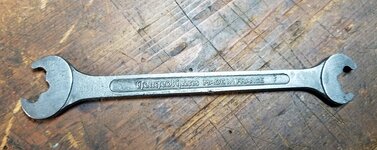
The “Bte.” on the shank of the Peugeot Freres wrench is an abbreviation for “Brevetes”, the French word for patented.


Unfortunately, no indisputable evidence of which patent it refers to is readily available in the public domain as far as we know.
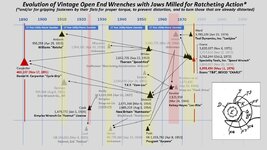
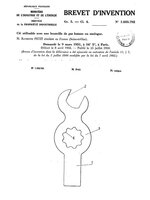
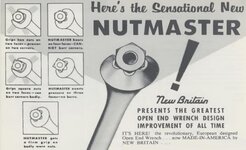
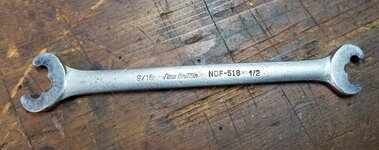
There are some good clues, however. In 1954, Fritz Diebold (New Britain and Blackhawk “Nutmaster” wrenches) cited Henot. In 1964, Alfred Kavalar (Kelsey-Hayes, including Utica, Herbrand, and Bonney “Loc-Rite” wrenches) cited a later French patent (1,033,792 / Raymond Petit). It’s very likely that the Surpans patent is one of those. Which one has been an open question.
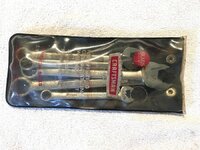
Neither patent uses the words “sur pans” verbatim. The Petit patent does not cite the Henot patent. As others have noticed, the “VANA” in “VANA-LION” undoubtedly refers to vanadium. Many tool makers were using vanadium in alloy steel in the 1930’s, so it’s possible the wrenches date to the 1930’s. According to car collectors, however, the wrenches were part of the kit put in the trunks of the Peugeot 203 and other cars made in the 1950’s.
Another clue comes from Surpans wrenches made in England, ostensibly under license. The “BNT” on them refers to Brades, Nash, and Tyzack, which did not even form as a company until 1951. See the purloined photos below.

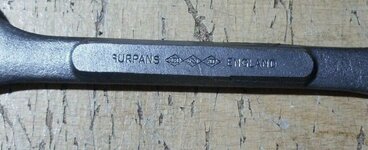




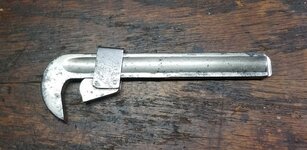






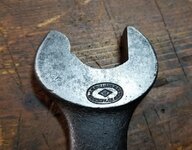
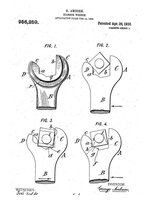

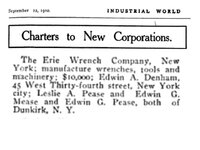
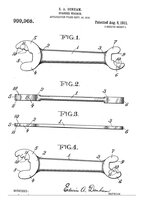
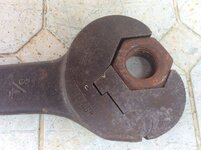

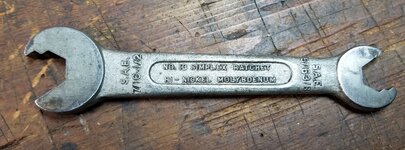


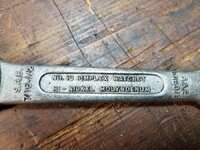
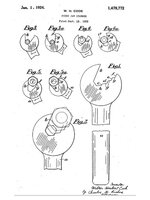




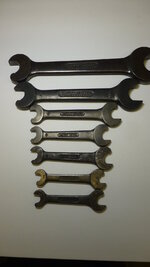
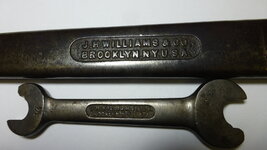


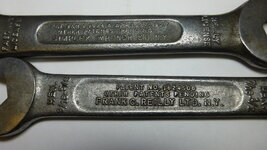










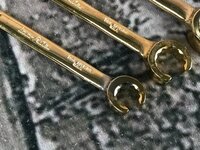
 (Why, yes, we most certainly can be paid off!)