To avoid these ads, REGISTER NOW!

44 Bikes Frame Shop

OP
F

fortyfour

Well-known member
Joined
May 9, 2011
Messages
537
Location
Lyndeborough, NH
Question: what amperage do you use to weld the thin wall tubing and how do you keep the heat concentrated in such a small area?

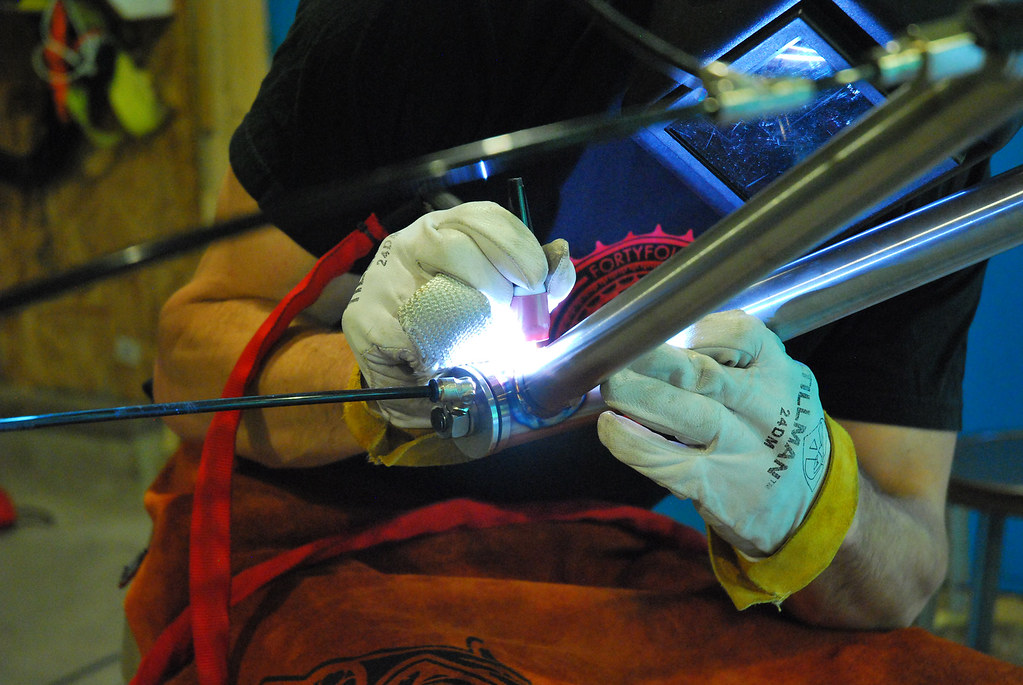
First I'm welding with a TIG Welder (Miller Dynasty 200 DX specifically). Just want to make that clear to everyone. TIG allows for a lot of control, and especially machines that have pulse with separate settings for Peak Amperage, Pulses Per Second (PPS) and Background. Having control of those 3 factors can really make a difference especially with heat control because the pulse is, well pulsing or rather it ramps up to the peak amperage, then goes down to a preset lower amperage, then back up, then back down and so on. So you're basically able to put half the heat into the weld. It also really helps with your pace, timing and heat input naturally.

Amperage depends on where I am located while welding a frame be it tube to tube or tube to head tube, tube to dropout, tube to bottom bracket, etc. where there is a dramatic thickness difference between the two parts being joined. The wall thickness of the tubing can be anywhere from .035" wall thickness down to .02" wall thickness and sometimes even thinner.

So for example, for tube to tube of .035" wall thickness Chromoly tubing, I'm anywhere from 47 amps up to 50 amps. Most times I set it around 48 amps, but pulse is ON with these settings (on my Miller, the pulse settings are set in %'s):

48 Amps @ 1.2 PPS / Peak @ 60% / Background @ 20%

Anything more than 1 or 1.5 PPS and it makes my head hurt. I like a nice, heavy pulse to set up my timing and be able to adjust as I slowly add filler.

Tube to Bottom Bracket, I'm generally in the 53-56 amp setting with the same Pulse settings above. If the build is using a tapered, 44mm head tube where the wall thickness of that part is pretty thick in comparison to the tube, I'll also be in the 55-58 amp range. Only time I go up into the 60+ amp range is dropout to Disk Brake ISO mount. That's basically 1/4" plate to 1/4" plate and I need the extra amps. Tube to tube I start my arc between both tubes. Tube to say bottom bracket or Head tube, I strike my arc just a bit more biased to the thicker part.

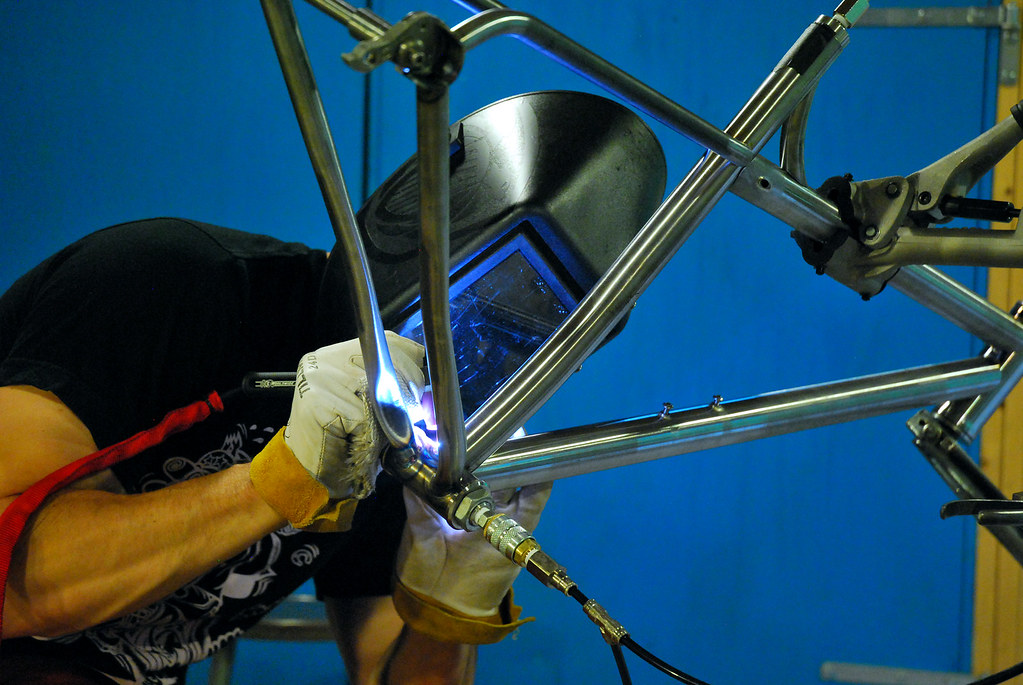
In all cases, I generally use heat syncs I've made that are precision turned on a lathe for specific tube I.D.'s. Here's some examples:

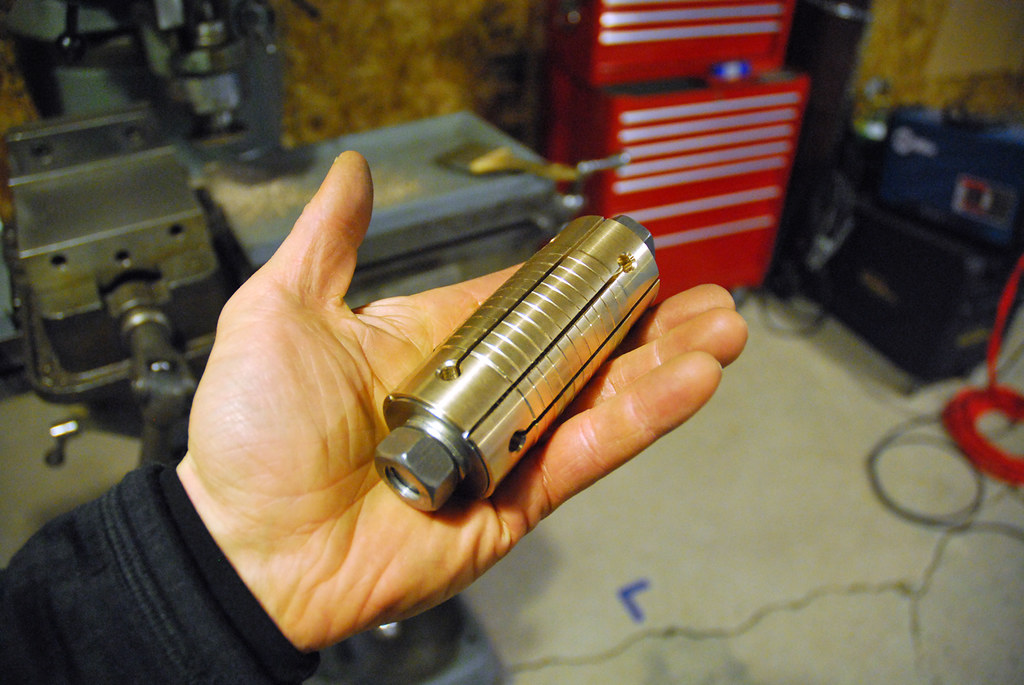


Here's the whole kit actually:


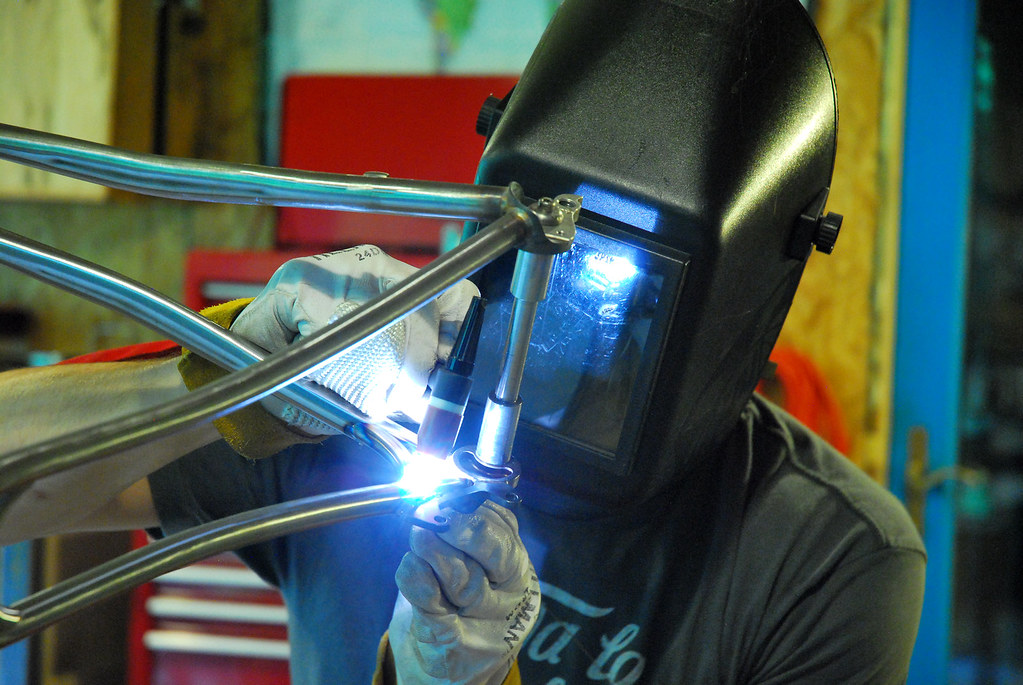
And in action:
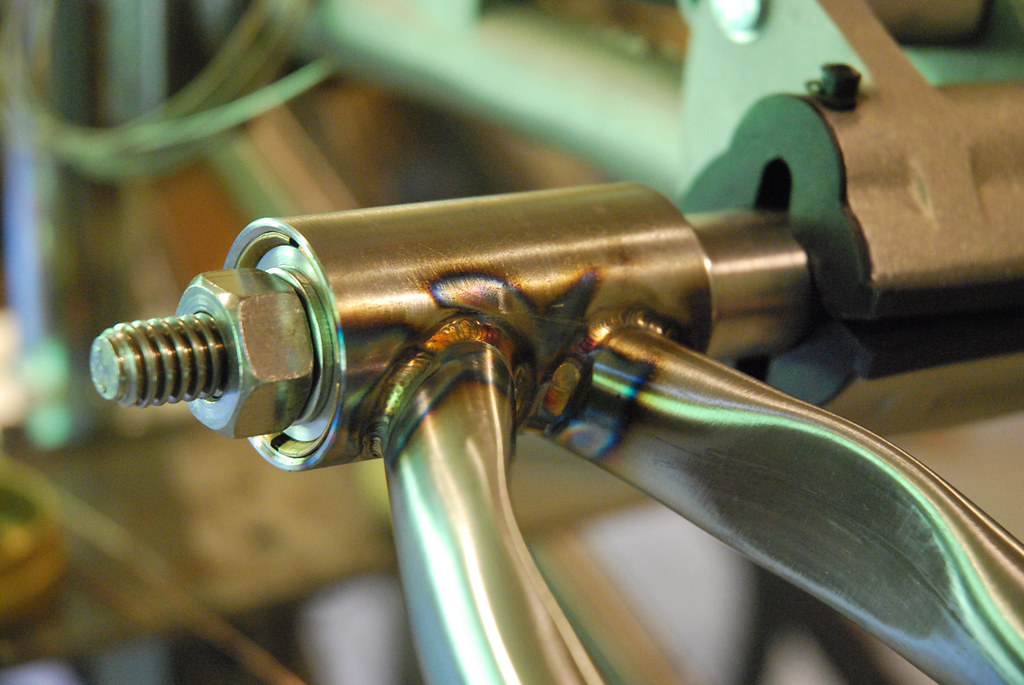


You can see the stub of the seat tube heat sync sticking out in this shot:


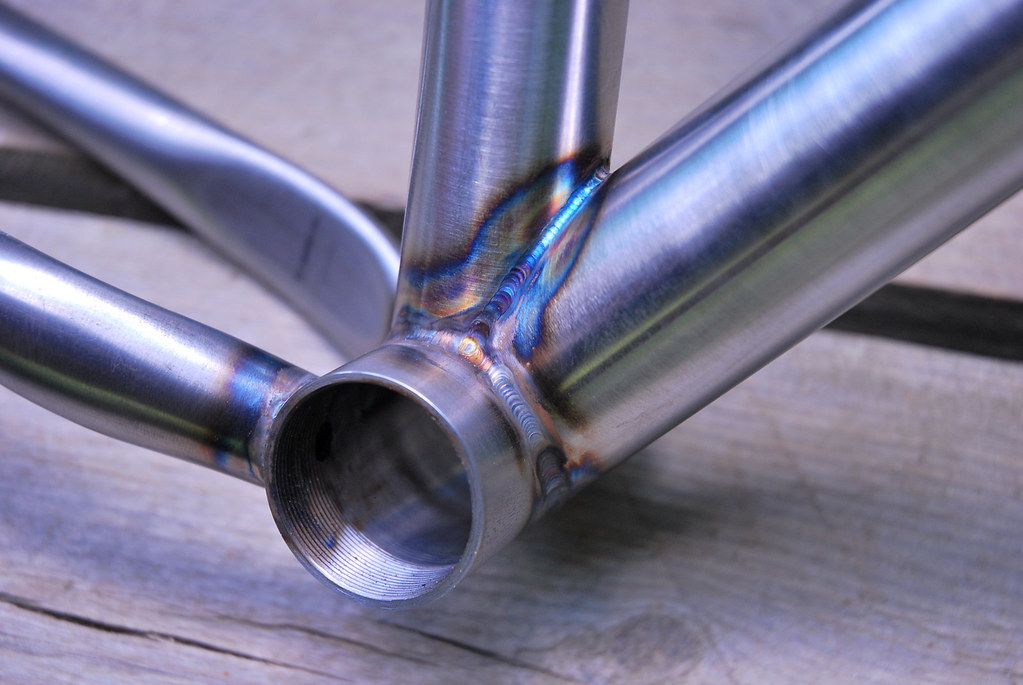
I've heard them called "backing bars" too. Basically they're bronze expanding mandrels. These help to draw heat away from the tubes as you're welding and act as a heat sync to reduce the HAZ (heat effect zone). The other thing is pace. If you're too slow, you're going to cook the weld. It will look kind of dull and flat. Timing good, along with good gas coverage and you'll have little to no blueing (Blue, silver, goldish colors are good) and the welds will appear shiny. That's a good thing. If it looks good, it most likely is good!

Another great recommendation is to use a gas lens. I use a No. 8 Stubby Alumina Cup with 1/16" gas lens and matching 1/16" Lanthanated Tungsten (Gold tip and not radioactive). Another thing that can effect weld quality, is tungsten prep. But a great piece of advice is to use a gas lens if you are not. This increases gas coverage, cuts down on turbulence from the flow of argon and helps to stabilize the arc and prevent arc wandering. You can also pull the tungsten tip out up to .75-1" with this setup to get into tight spots.

Here's some tips I picked up from some welders who really knew their sh!t:

1. Cleanliness is next to nothing. Clean the parts inside and out, remove all oils, and mill finishes. Wash the parts with warm water/soap, then use a denatured alcohol final wipe down.

2. Always start with a weld by clipping off the tip of your filler. Start fresh.

3. Tap the pedal to begin post flow of argon BUT do not strike a arc. Let the post flow run it's course. Now you absolutely have a clean weld site. Flip the lid and start your arc.

4. I know a lot of people dip, but I use a technique where you just "lay" the filler in. So constant pressure at the weld site, kind of in and down. Geometry of filler to weld site and geometry of tungsten tip to weldsite is critical for good stacks of dimes. Time yourself to the pulse so you're advancing with the pulse, and watching everything between the pulses to make subtle adjustments of filler, torch, and your body. There's a flow getting set up naturally and you need to be "in it" and be relaxed.

5. If you need to stop to reposition yourself or the work, do not remove the filler. Leave it in at the last weld pool. But wait for the post flow to stop. You now have a clean weld site where you can pick back up again. If you remove the filler when you are done, that's ok too but let the post flow do it's thing. If you remove the filler, cut a clean tip.

Here's a shot of that cup size:


Heat input though from my knowledge has a lot to do with your timing. If you're really cooking the weld, try and speed up and reduce your amperage a bit or use a pulse and set your timing to that too. I know it's really helped me.

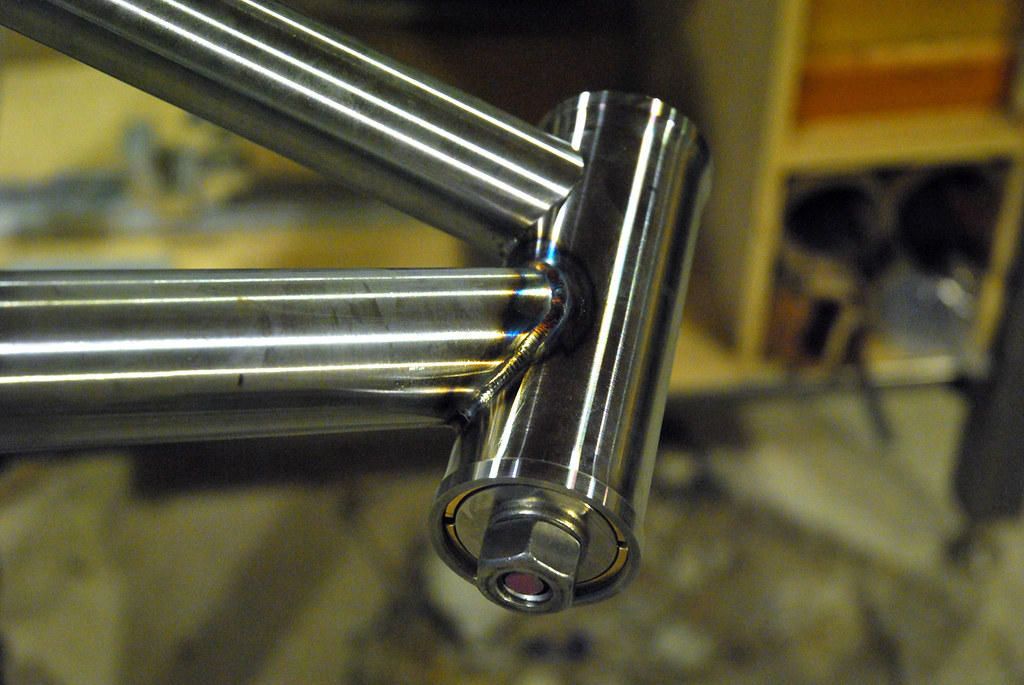
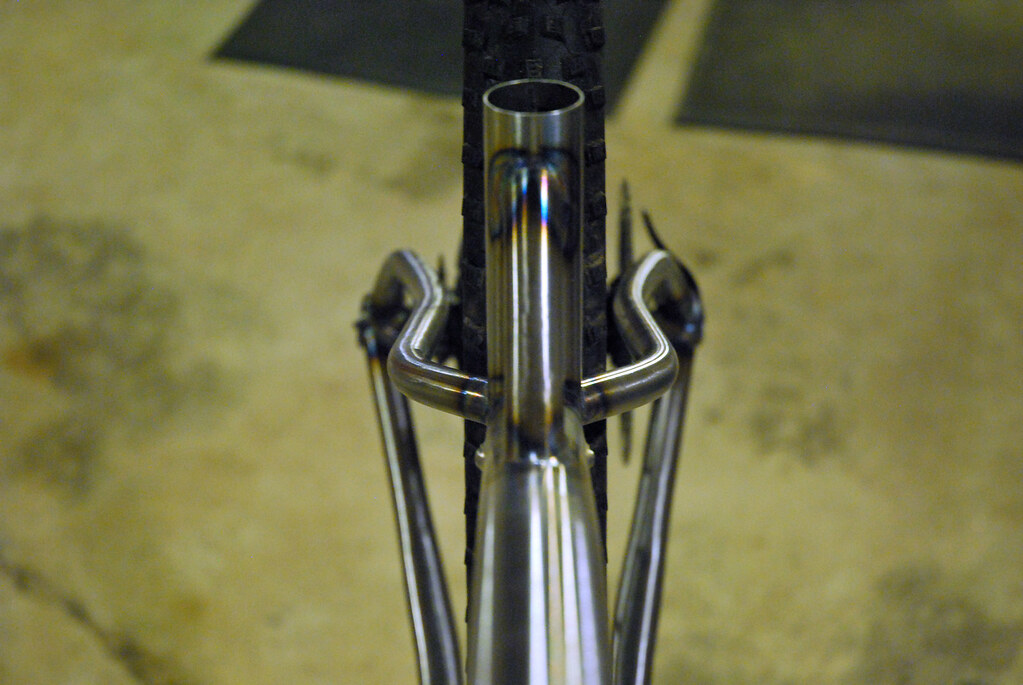
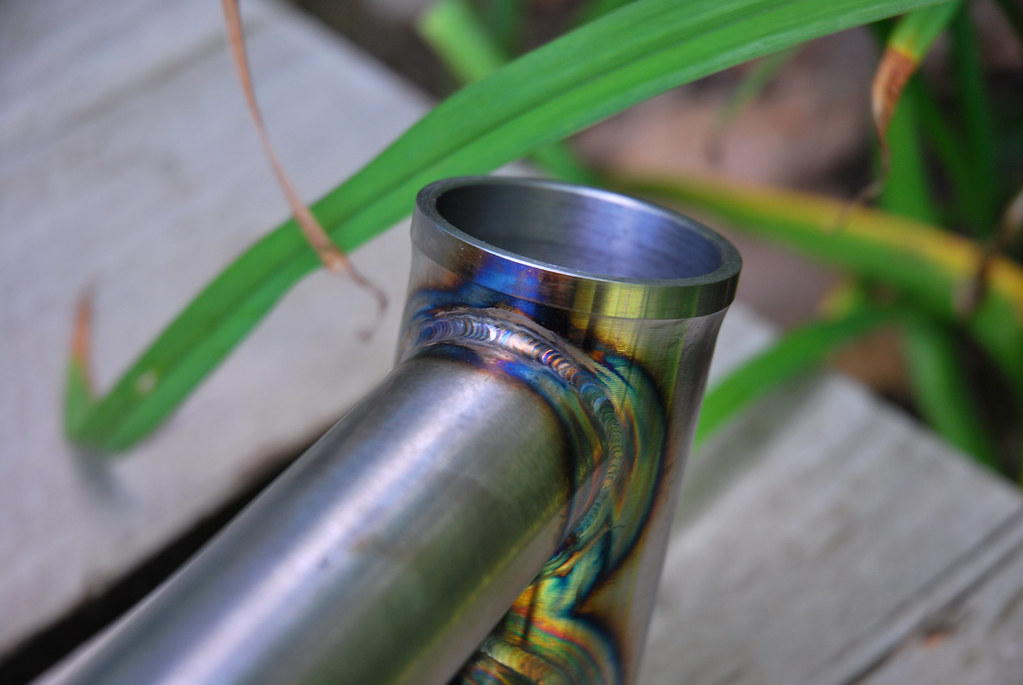
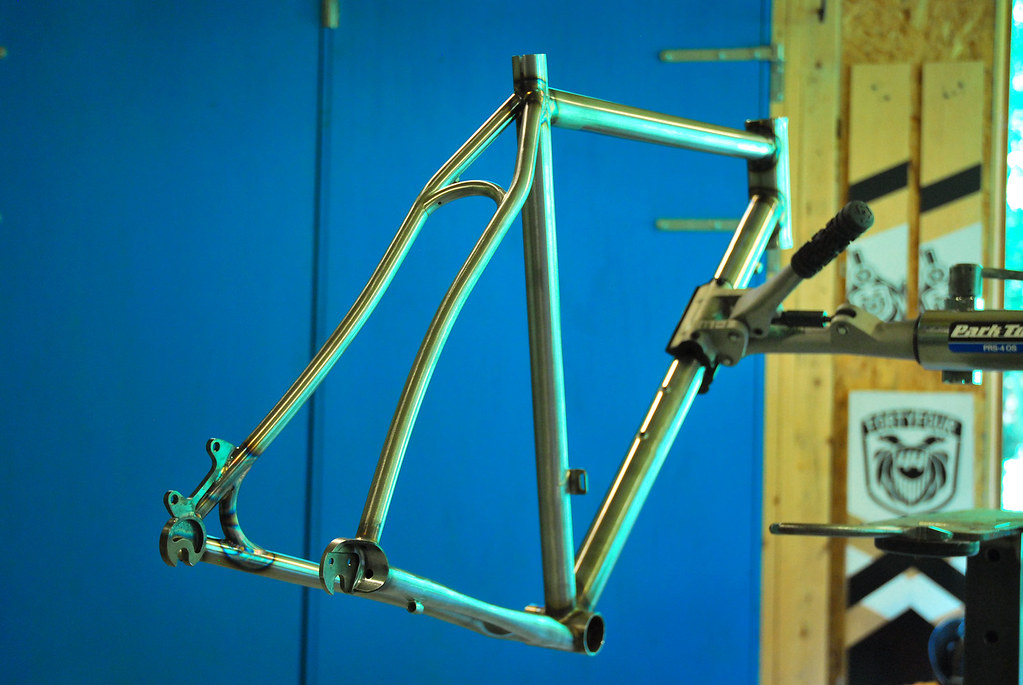
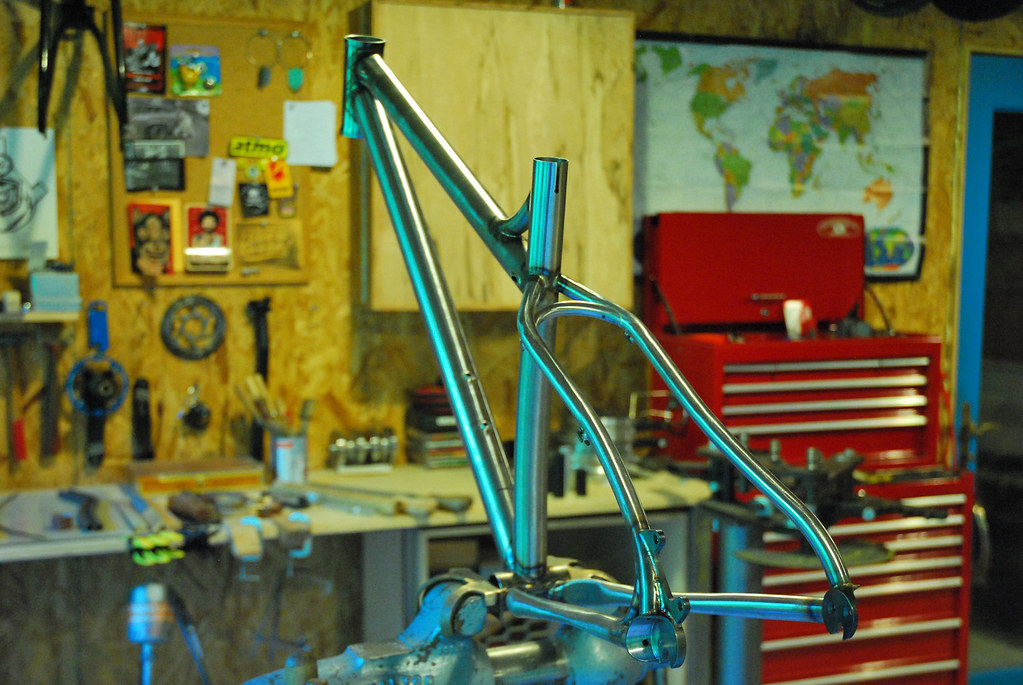
Hope all of this helps. It's a lot of practice to do welds on tubes to get to this:
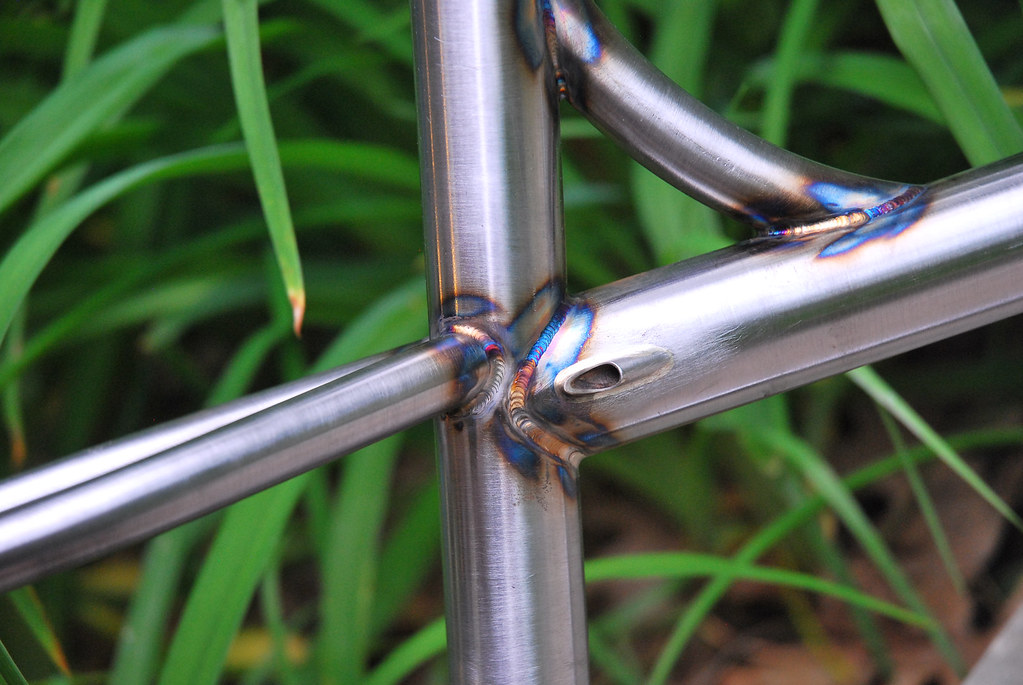


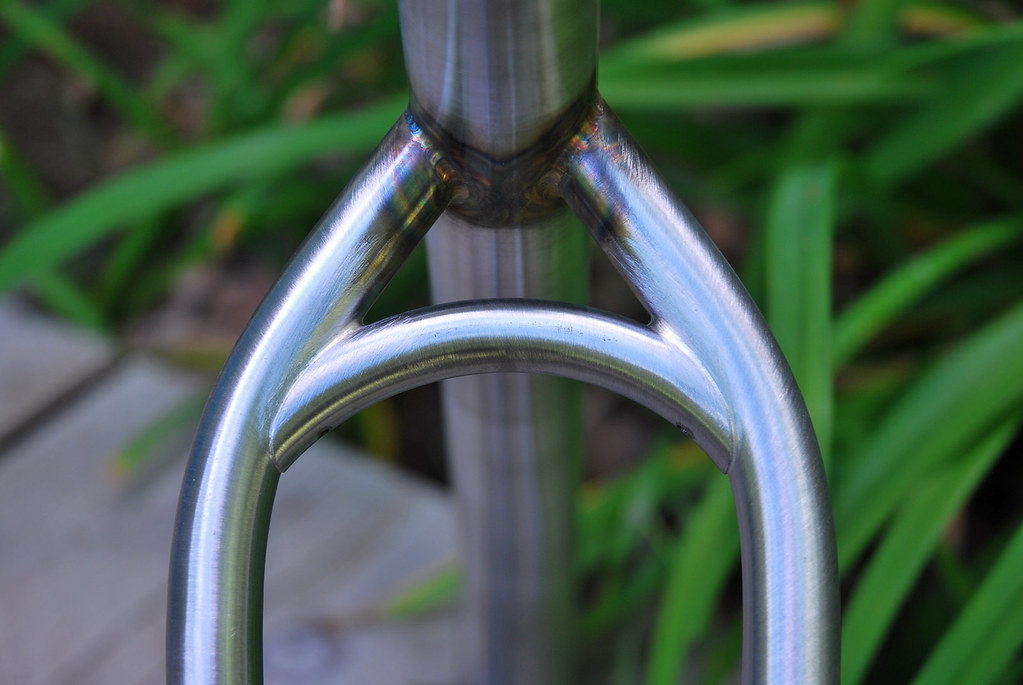
Or this:
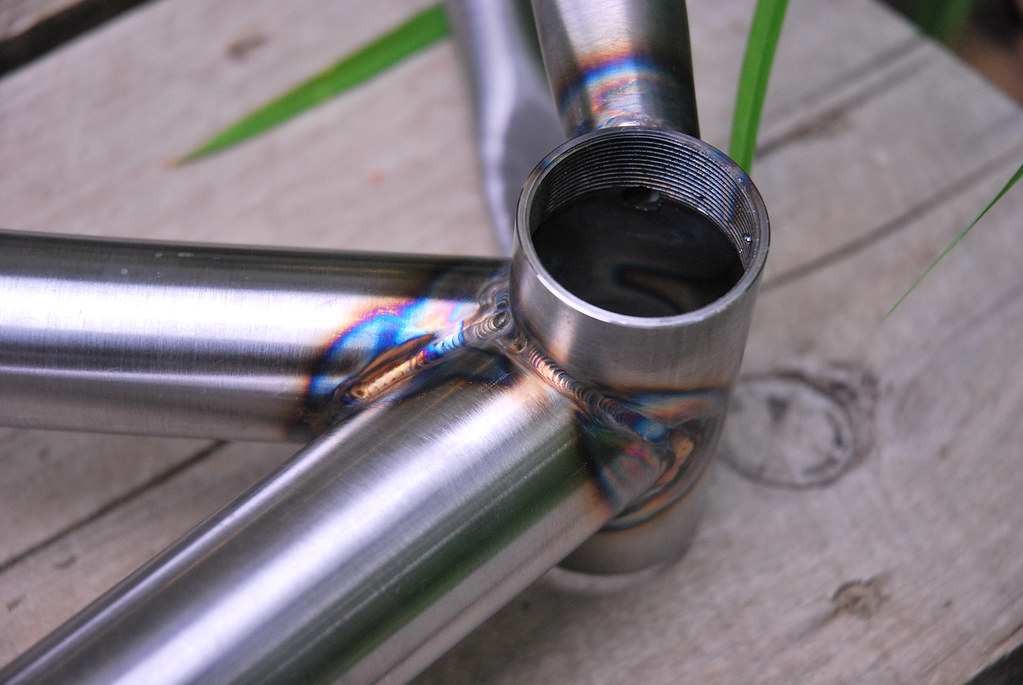


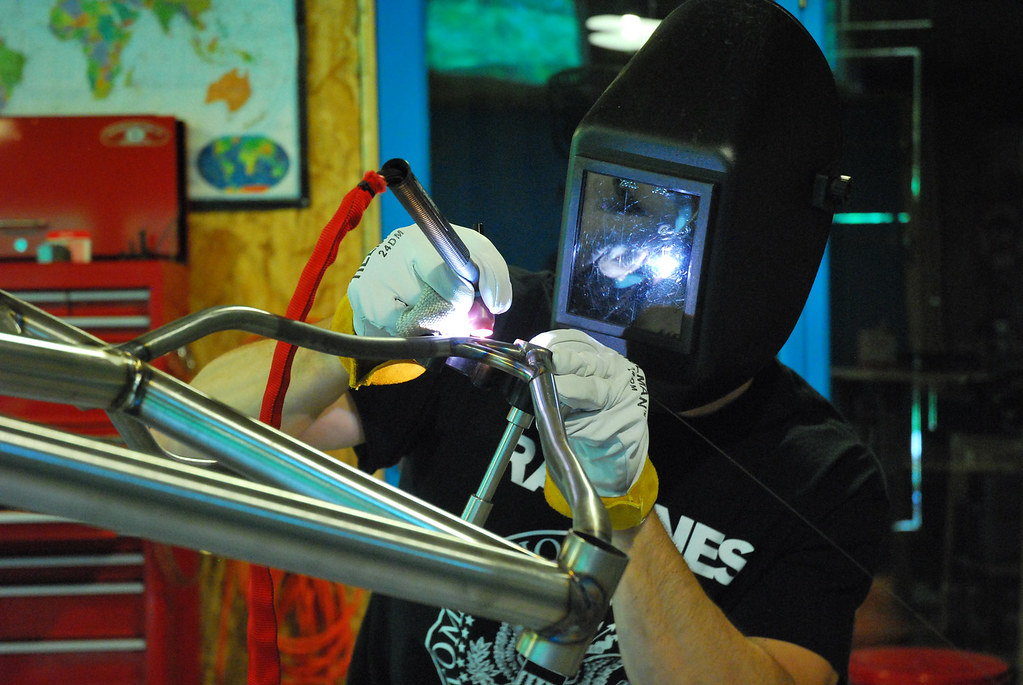
And I still have a ways to go IMO! But practice makes perfect as they say (above 2 weld examples were from this week building this bike):

 
To avoid these ads, REGISTER NOW!

moto367

Well-known member
Joined
Sep 14, 2010
Messages
125
Location
Ohio
Thanks for the tips. I will definitely give them a try. I'm ashamed to say I don't know what welder we have at work. It is a Miller, just not sure of the model. The thing is a monster. One day I was playing around and maxed out the amps. Struck an arc on a 2" thick piece of 1018 and it damn near burnt it in half. Scared the day lights out of me!! Again, thanks for the tips and inspiration.
 

Allgonquin

Well-known member
Joined
May 5, 2012
Messages
59
Location
MD
Looks like a tig finger I see there as well. Your combination of design, fabrication, welding skill, and the graphic artistry are what I'd call vertical integration. Soon you'll be making your own tubing or castings.... Carry on sir!
 
OP
F

fortyfour

Well-known member
Joined
May 9, 2011
Messages
537
Location
Lyndeborough, NH
Thanks for the tips. I will definitely give them a try. I'm ashamed to say I don't know what welder we have at work. It is a Miller, just not sure of the model. The thing is a monster. One day I was playing around and maxed out the amps. Struck an arc on a 2" thick piece of 1018 and it damn near burnt it in half. Scared the day lights out of me!! Again, thanks for the tips and inspiration.

Sounds like it's time to read up on what equipment you have :) I've found the Miller literature/manuals pretty well put together and instructive. I know when I was figuring out the Pulse settings on mine, it was really helpful to decipher what is responsible for what.

And of course my tungsten size, lens types/cup types, settings etc. are material thickness and type specific. If you're working on really heavy stuff, you'll have to adjust accordingly. But I do highly recommend a gas lens. That alone will help a bunch in terms of gas coverage, weld quality and arc stability among other things. There's formulas I think on the miller site for determining tungsten and amperage? But if you're welding stainless, another benefit would be to back purge to prevent "sugaring" and improve weld quality.

The other tip I forgot to mention is your CFH coming from your tank. Too high and you'll actually just blow away the argon and that can effect weld quality. I typically run my argon via a flowmeter at 10-15 CFH. When I say flowmeter, this is the regulator I'm speaking of (or type of regulator):


Example of a larger gas lens and two alumina cup sizes with insulator:


And my torch (forget the pyrex cups/gas saver stuff - it provides good coverage but the pyrex cup does not have any texture to it, so it's slippery and you wind up over gripping the thing - but the pyrex does not get as hot as the alumina cups so I wonder if they can just mold a pyrex cup like they would an alumina one and add texture. That would be the hot setup):

 
OP
F

fortyfour

Well-known member
Joined
May 9, 2011
Messages
537
Location
Lyndeborough, NH
Looks like a tig finger I see there as well. Your combination of design, fabrication, welding skill, and the graphic artistry are what I'd call vertical integration. Soon you'll be making your own tubing or castings.... Carry on sir!

Thanks - indeed a Tig Finger in action. Took a bit of getting used to how it's a bit slippery up against the steel, but it's a finger saver in terms of heat prevention.
 

Marco71

New member
Joined
Jul 3, 2013
Messages
1
Location
Italy
Hello every one.
Congratulations 44 for your work, fantastic frames and welds magnificent!!!! I wondered what the welds would look if you don't pulse 1.2/1.5 PPM and you use a costant amp with a dabbing motion? Have you got a pic to share?
Still great compliments!
 

crawler07

Well-known member
Joined
Jan 25, 2012
Messages
140
Man it is so awesome that you share all this knowledge with the community!I know i appreciate it and im going to try to use all these tips your giving..I tried the pyrex cups, but i ended up breaking both of them:mad: sometimes i move to fast and end up gettin in my own way :lol_hitti
 
OP
F

fortyfour

Well-known member
Joined
May 9, 2011
Messages
537
Location
Lyndeborough, NH
I wondered what the welds would look if you don't pulse 1.2/1.5 PPM and you use a costant amp with a dabbing motion? Have you got a pic to share?

I don't believe I do have a pic. I can do a sample of both perhaps if I have a minute to spare

Part of the reason for the pulse is also to help control heat input at the weld site to minimize the HAZ (heat effected zone) or at least that is the theory / mind set to use it. Also helps me with timing, pace and coordination. On a flat surface, pulse for me is less important but on a tube, it really helps as that flat surface is now wrapping around two objects in a complex curve/motion which requires a lot of adjustment with your hand/wrist as you are constantly having to move and adjust the torch's angle to the work.
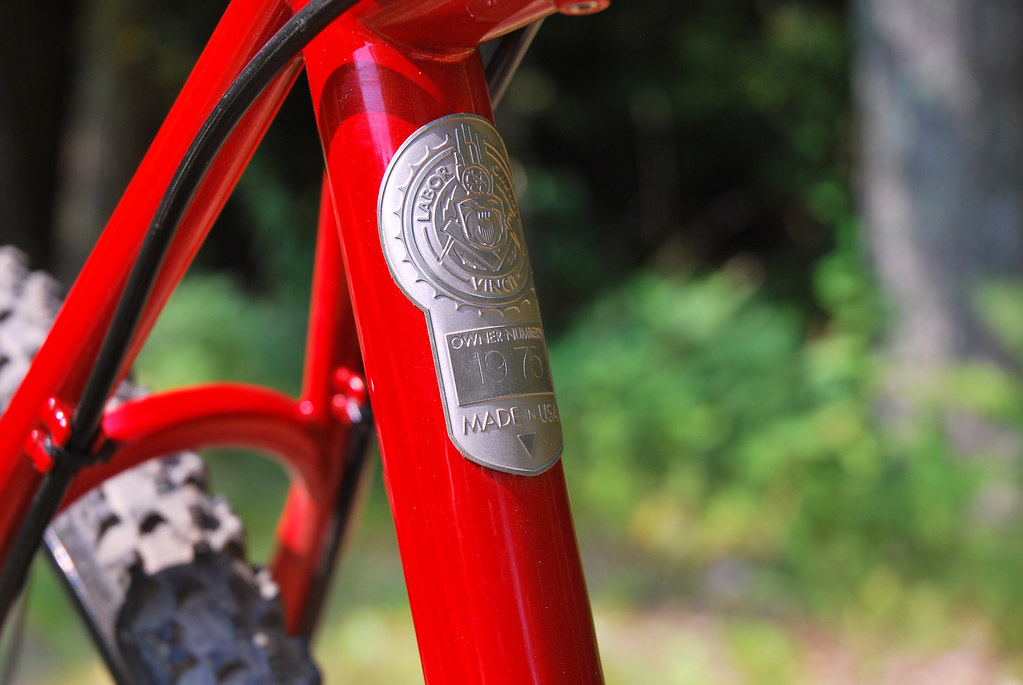
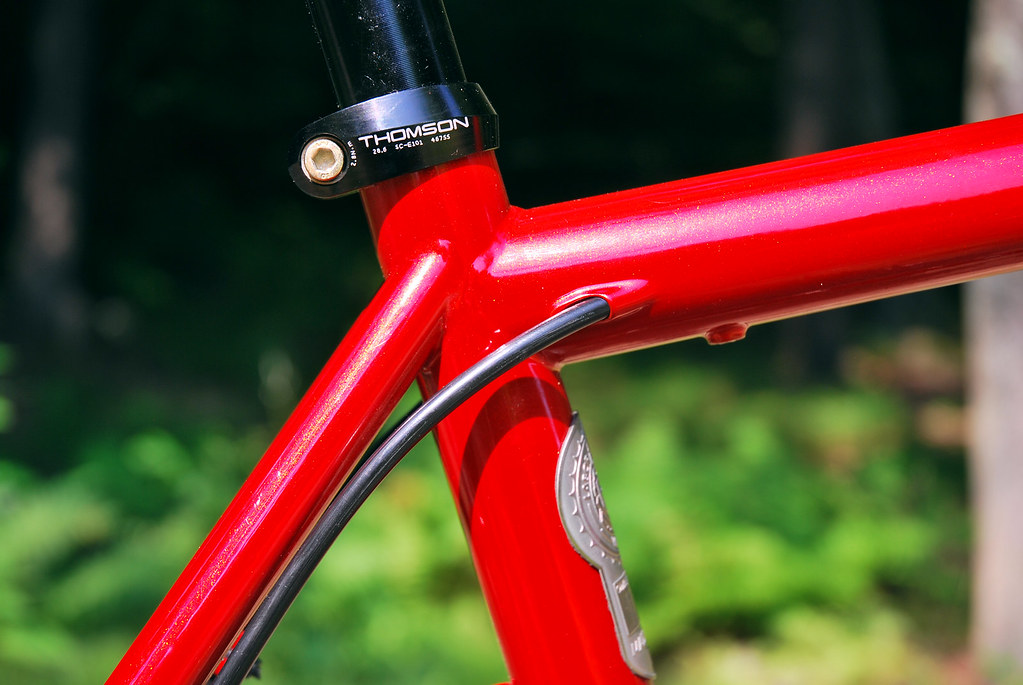
The other thing I've read and heard about dipping/dabbing is you are bringing the filler potentially in and out of the argon shield so you have a chance to introduce contaminants. I can't prove that obviously but that's what I was told by someone else using a similar technique. It's tough enough as it is. Pulse definitely helps me. Not necessarily a crutch but definitely an aid.
 
OP
F

fortyfour

Well-known member
Joined
May 9, 2011
Messages
537
Location
Lyndeborough, NH
The specific clog is the Sievi Riff SBAE

Took a bit of time to track them down vs when I first saw them (classmate while in school who was not from the U.S.), but a client did a search for me and pulled up a british online safety retailer here.
 

uke73

Member
Joined
Apr 2, 2012
Messages
11
Location
Worthing, UK
The specific clog is the Sievi Riff SBAE

Took a bit of time to track them down vs when I first saw them (classmate while in school who was not from the U.S.), but a client did a search for me and pulled up a british online safety retailer here.

You can get them a little cheaper here in the UK. Clogs are great as work boots, very popular in much of Europe (although not so much in the UK where I live). I got a pair made by a traditional clog maker here in the UK. Not cheap but always good to support real craftsmen and women!

Neil

ps I wish I could weld half as good as you!
 
Last edited:
OP
F

fortyfour

Well-known member
Joined
May 9, 2011
Messages
537
Location
Lyndeborough, NH
You can get them a little cheaper here in the UK. Clogs are great as work boots, very popular in much of Europe...

I discovered that one after I had put through my order but thanks for the reminder. Perhaps 15 years ago, I was standing all day for work and was coming home with legs/feet that felt totally shot to pieces. My mom has always sworn by clogs and suggested I try them out. I did and I have not looked back. These are no exception. I can be on my feet all day on concrete and have no leg, shin or foot pain/aches even after a long 16 hour day. Granted I may be tired, but not like what I was feeling without them. They are a life saver. I love mine - the added steel toe is great too especially in a metal shop.

And regarding the welds: thank you. Just takes time and lot's of practice. "You too can master such a technique!"
 

Control

Member
Joined
Feb 7, 2008
Messages
10
A Welder myself, Nice welds. great articulation on your processes. Been following you "Journey" since seeing your shop on here. Actually have your page marked as a reference for some of my own businesses, not related, but I like the way you reference the actual work, and by hand, it gives it a historical and authentic feel. As someone that truly believes in the motto "Built, not Bought". Nice job and keep up the good work.
 

HellaFab

Well-known member
Joined
Feb 10, 2013
Messages
210
Location
Kingston, Ontario
I have a question...

In the picture showing your routing of the cable through the top tube.... how do you get the small cable housing into the hole to weld it?

I would assume that its a long drawn out process of putting it in and seeing if it can work and then adjusting until it works.

I just bought a road bike that I would like to tuck the rear brake cables on and that way is the best looking I have seen!
 
OP
F

fortyfour

Well-known member
Joined
May 9, 2011
Messages
537
Location
Lyndeborough, NH
A Welder myself, Nice welds. great articulation on your processes. Been following you "Journey" since seeing your shop on here. Actually have your page marked as a reference for some of my own businesses, not related, but I like the way you reference the actual work, and by hand, it gives it a historical and authentic feel. As someone that truly believes in the motto "Built, not Bought". Nice job and keep up the good work.

Thanks and it's nice to hear I've aided in your inspiration.

This one turned out nice yesterday afternoon. Funny how some welds just make you "more" happy when you're finished:

 
OP
F

fortyfour

Well-known member
Joined
May 9, 2011
Messages
537
Location
Lyndeborough, NH
I have a question...

In the picture showing your routing of the cable through the top tube.... how do you get the small cable housing into the hole to weld it?

I would assume that its a long drawn out process of putting it in and seeing if it can work and then adjusting until it works.

I'd be happy to. I get this question asked a lot as there are a few methods out there. Personally, I don't like fiddling so the internal routing is actually a continuous stainless tube that runs the length of the inside of the top tube (which is where I typically put them). I limit myself to only 2 however as it gets quite crowded in there with just two and I try and not put too many holes in the tubes... Here's a look at the first step. I was initially slotting them however what I do now is merely drill .25" holes (that's the O.D. of the stainless tube) in the pre determined places of the top tube:

7370258966_b6b60f3c20_c.jpg

Next step is to tune the holes so that they are ovals at an angle. Basically matching the fit in cross section of the .25" O.D. stainless tube exiting the frames tube:

8618151272_a9affd9c90_c.jpg

Here you can see it fitted at the Seat Tube end of things:

8635245241_b122a43df4_c.jpg

Next I mark and bend the stainless tubes and depending on which guide they are, need bends in opposite directions:

8269976262_a48d0e219b_c.jpg

Once the tubes are bent, I test the fits each separately. This is the tricky part as I insert the length of the internal guide INTO the I.D. of the top tube and fish it out the exit point, but it needs to go past a bit where it will end up nesting. Often times I have to pull it through with a set of needle nose pliers, the just pop it into that entrance hole and lightly tap the fat end with a mallet as I'm feeding it back through the entrance hole. It needs to be tight so you can imagine you don't want to go too far it the bend or fit isn't just quite right. Once everything is correct, I insert and tap everything into place one guide at a time:

8617043231_08db8e3192_c.jpg

Once everything is fitted, then I silver braze them into place. Cut the excess off, and hand finish each one. Here's a few showing how they end up:

8570332594_6e2904fed8_c.jpg

7376219162_0cabd149ca_c.jpg

Here's a good one showing the 3 basic steps from fitting, fluxed up and brazed/finished:

8098293586_77147d4956_c.jpg

But the key to the whole equation is to do this before the tubes are tacked/welded. This way I can make adjustments, it's easier to work with just a tube vs a whole frame for a lot of reasons and if a mistake is made, it's just a tube... Hopefully.
 
To avoid these ads, REGISTER NOW!
OP
F

fortyfour

Well-known member
Joined
May 9, 2011
Messages
537
Location
Lyndeborough, NH
Beautiful work!

Do you bend the SS guide tubes by hand or have you created a precision bending jig/fixture for accurate 'production' work?

I have some small maple dies I made myself but they are bent by hand over the dies. The stainless tubing's I.D. is sized just right for derailleur housing/hydro lines. I source these stainless tubes in 36" lengths from McMaster.
 

Panel Dan

Well-known member
Joined
Apr 21, 2013
Messages
77
Location
Melbourne, The live music capital of Australia
Besides the knack you have for welding and bicycle design, your workshop is awesome.
I love the way it's set up, and I'm looking forward to the day you get a lathe to go with that Bridgeport. Following from here on in.

(your welding and bicycle design is brilliant, I just wanted to clarify because I should probably have said "As well as" rather than "Besides" but whatever...)
 
Last edited:
OP
F

fortyfour

Well-known member
Joined
May 9, 2011
Messages
537
Location
Lyndeborough, NH
Thanks Panel Dan. I'm looking forward to that day when there's a lathe in the shop too. Right now there are some other things I'm focusing funds on regarding the shop but those are more to do with making the bikes better. Lathe will come when the timing is right.

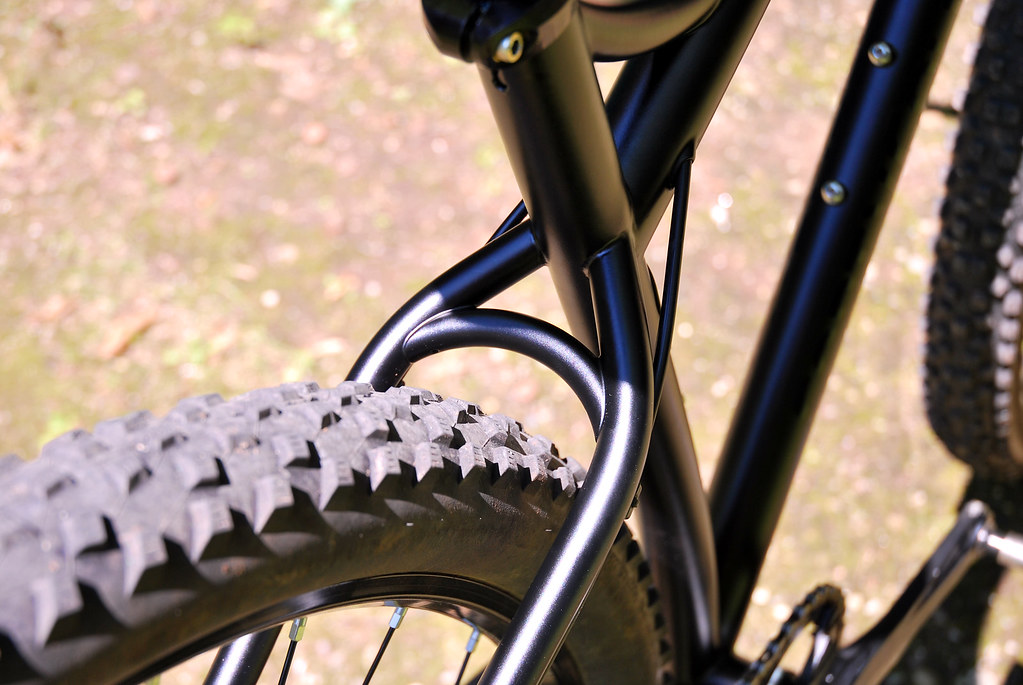
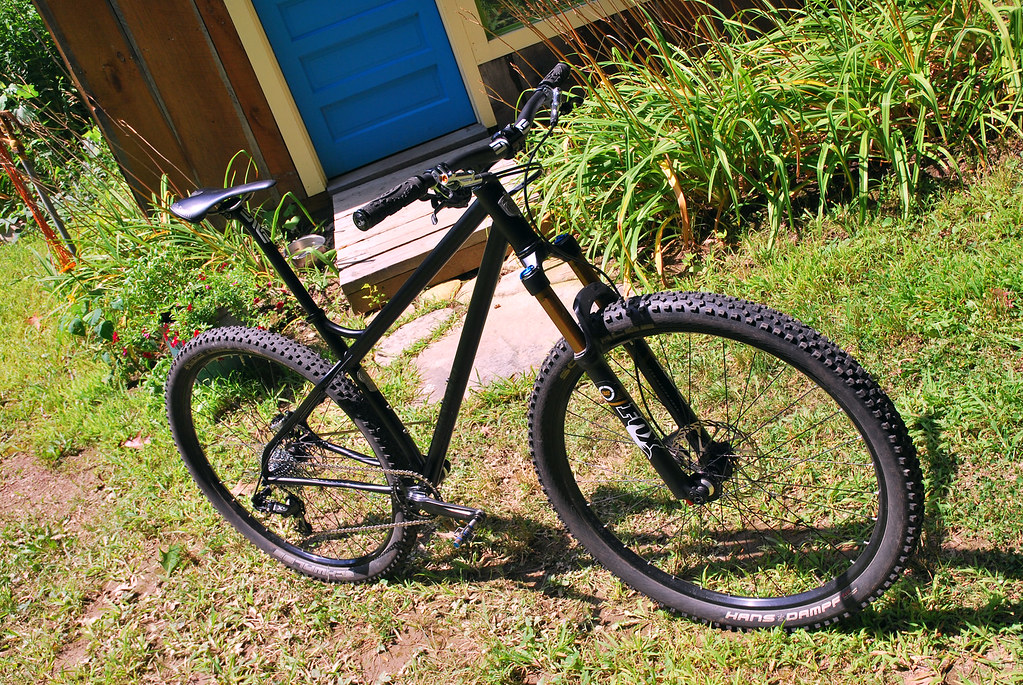
Here's some recent work for all to enjoy.

650b


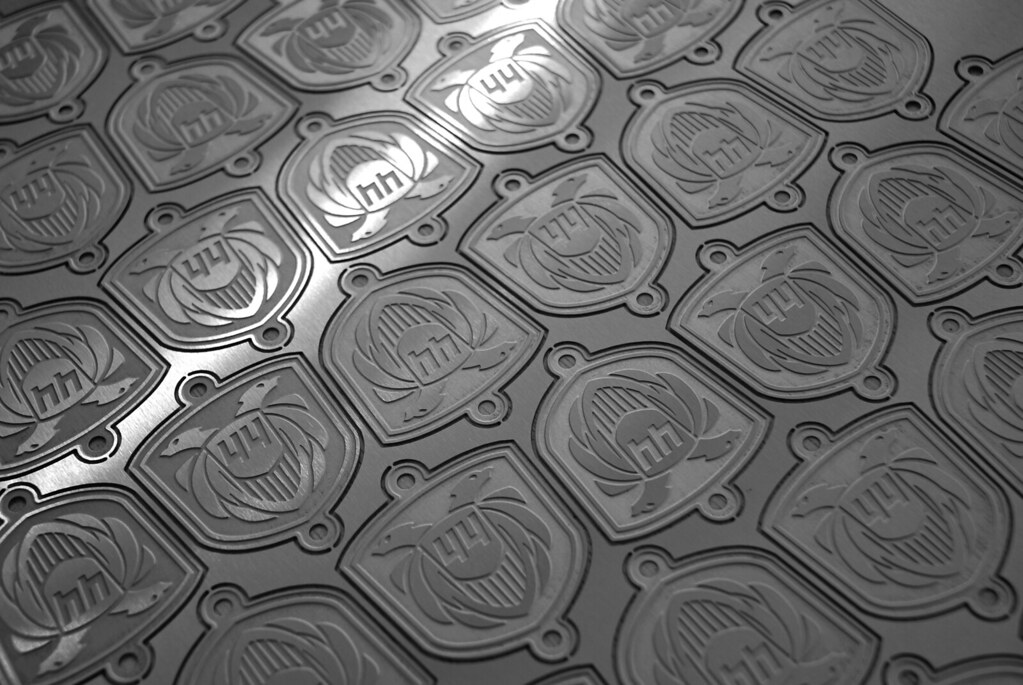
New Batch of 44 Head Tube badges. These are Photochemically Etched on stainless steel sheet.


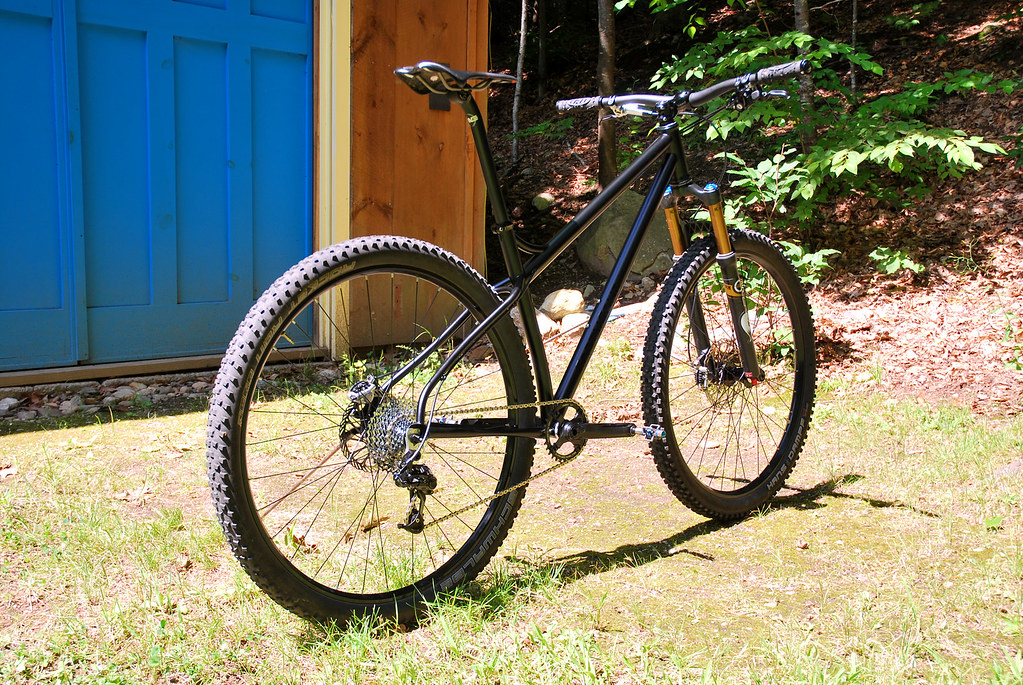
29er :


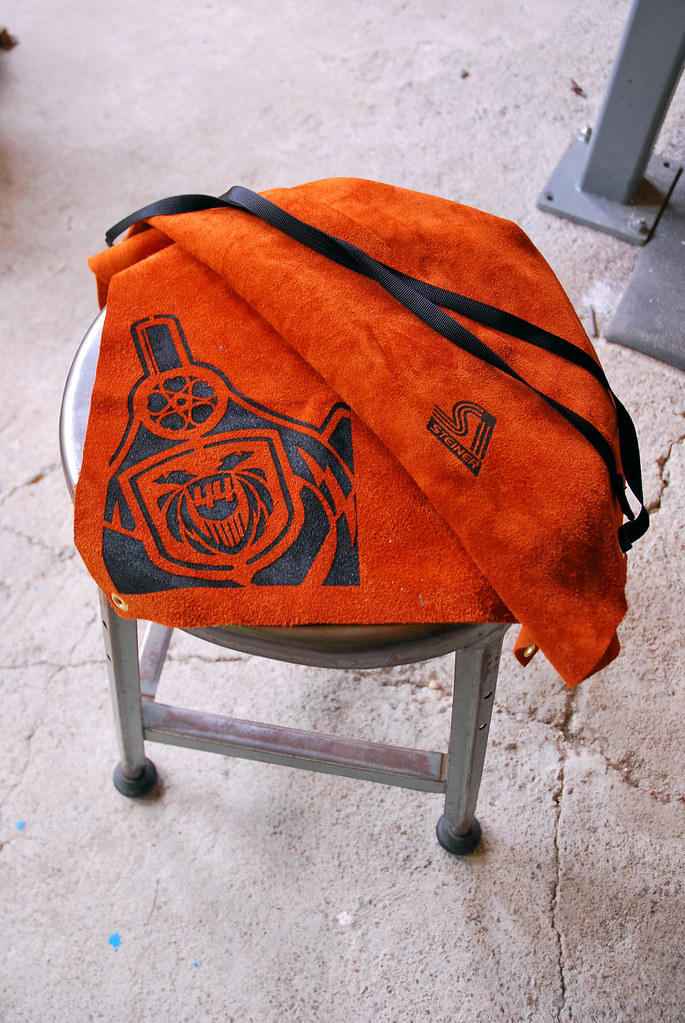
New leather welding apron for when the goin' gets too hot. Can't just leave it as is naturally. Customized with the Deluxe Trim...


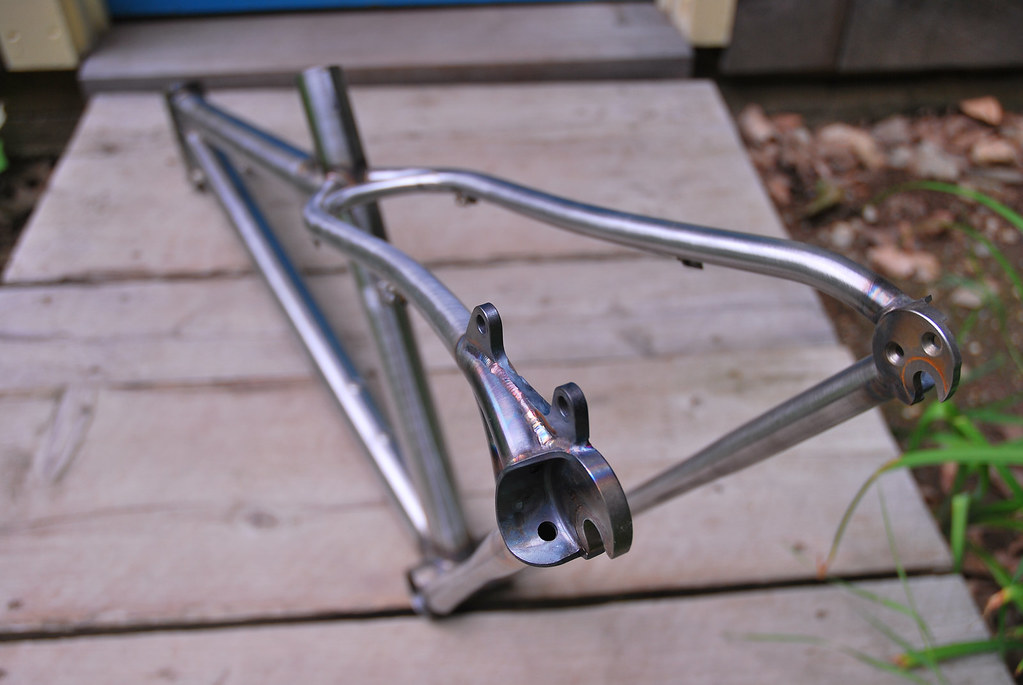
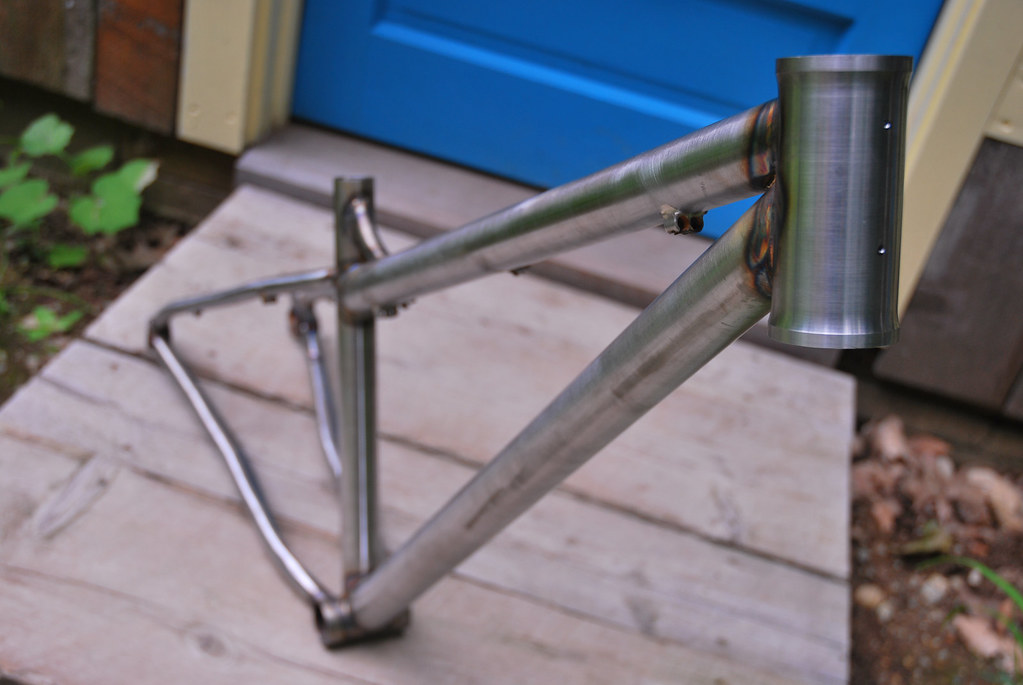
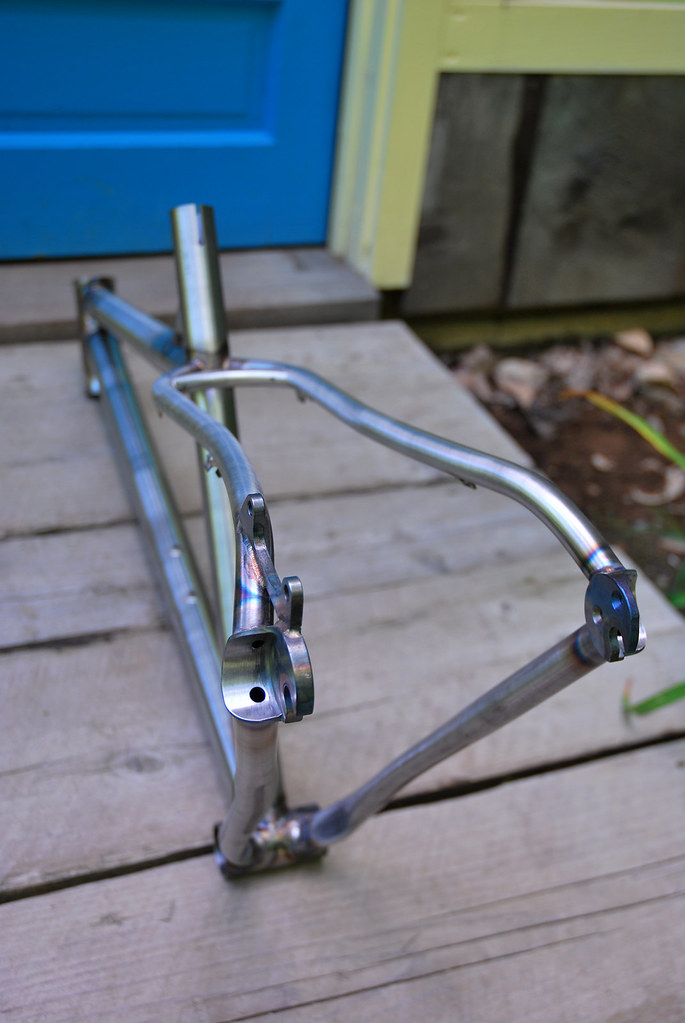
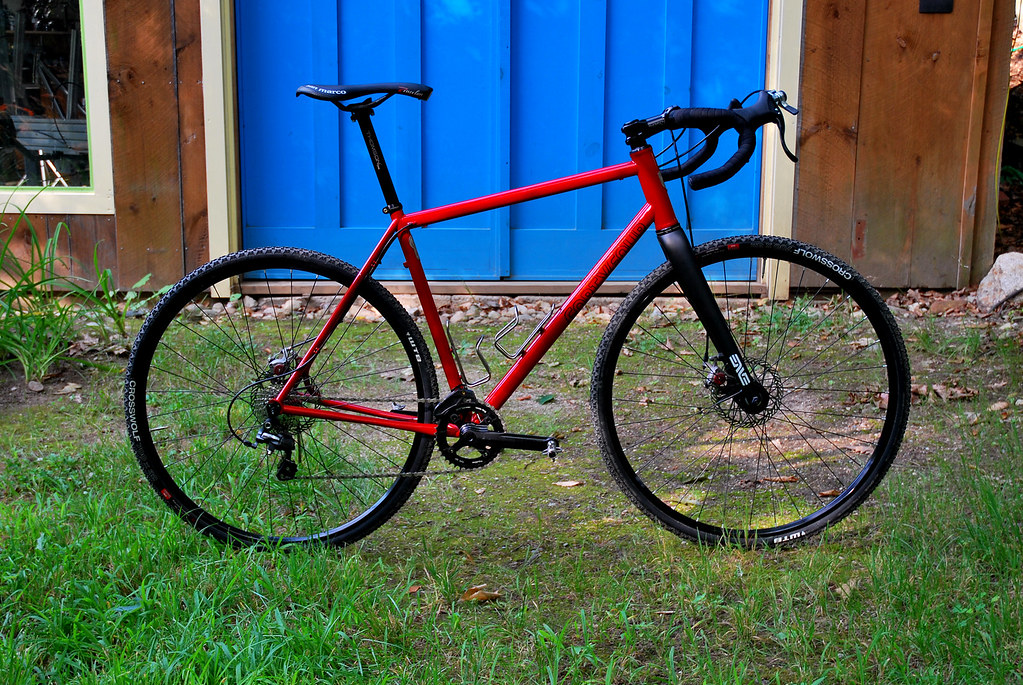
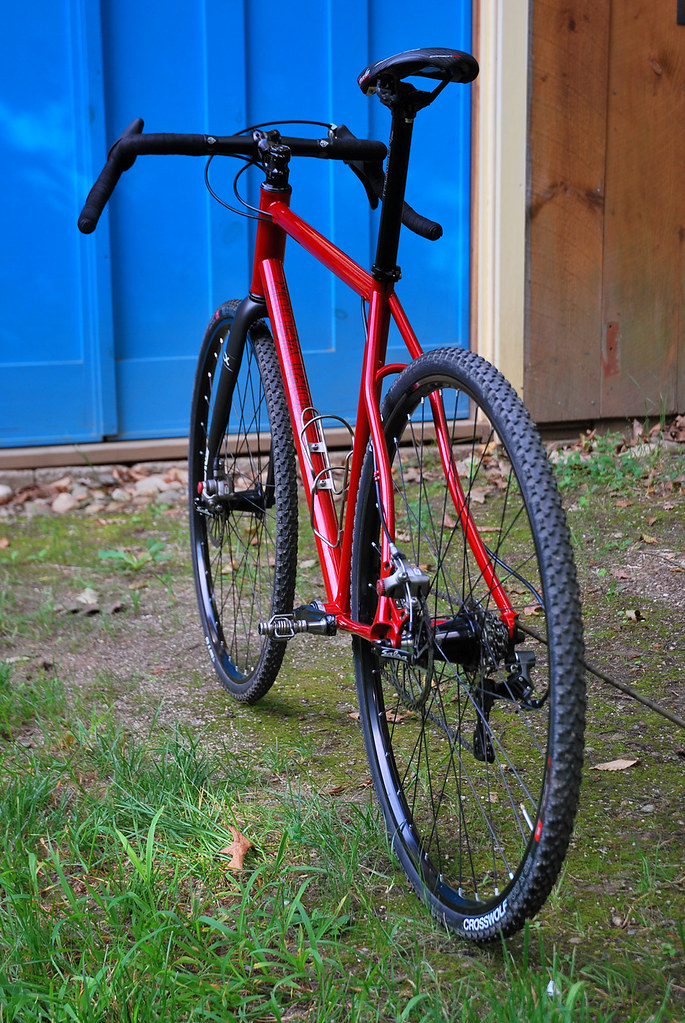
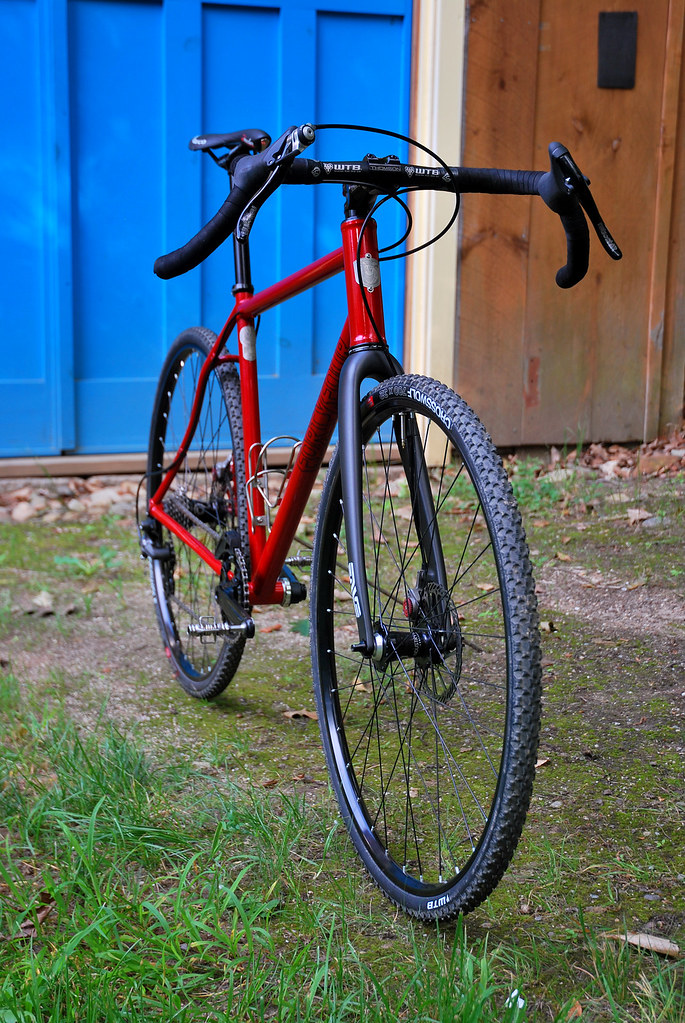
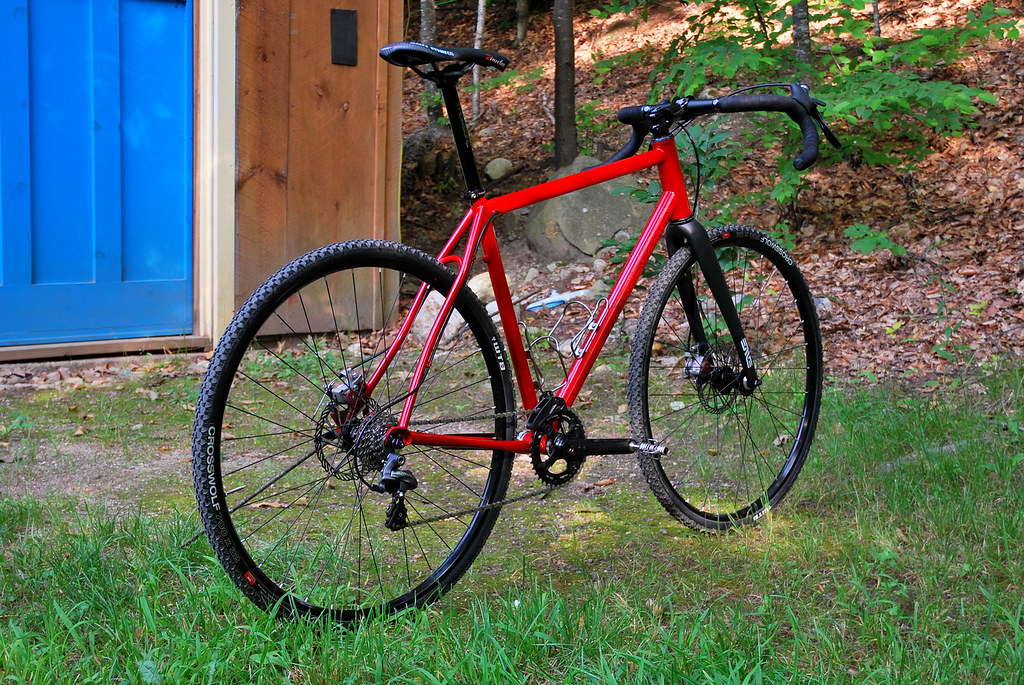
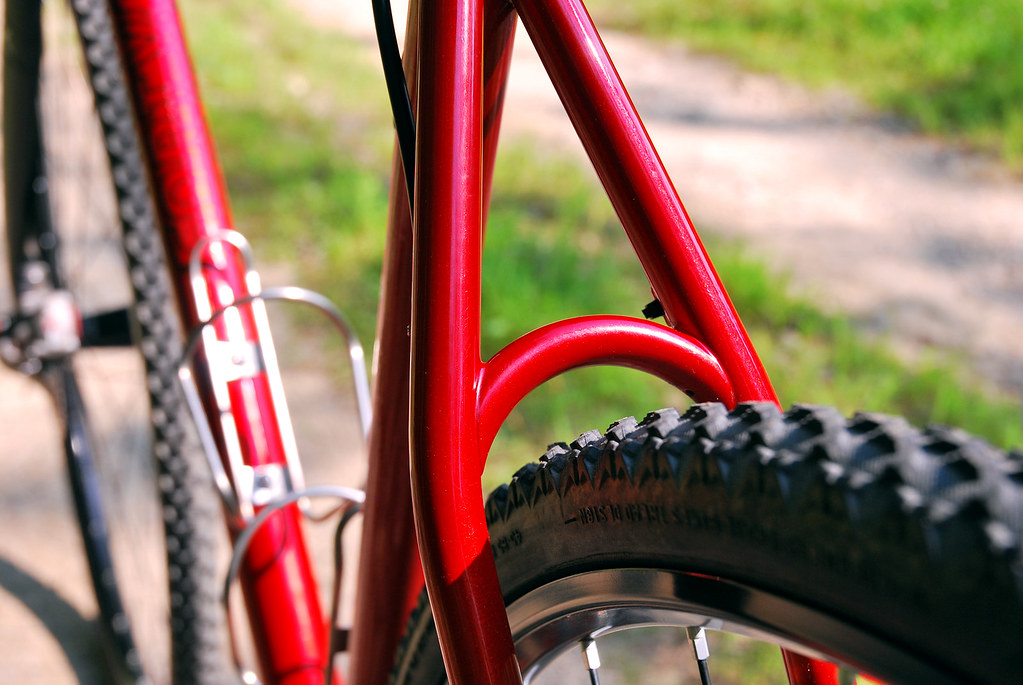
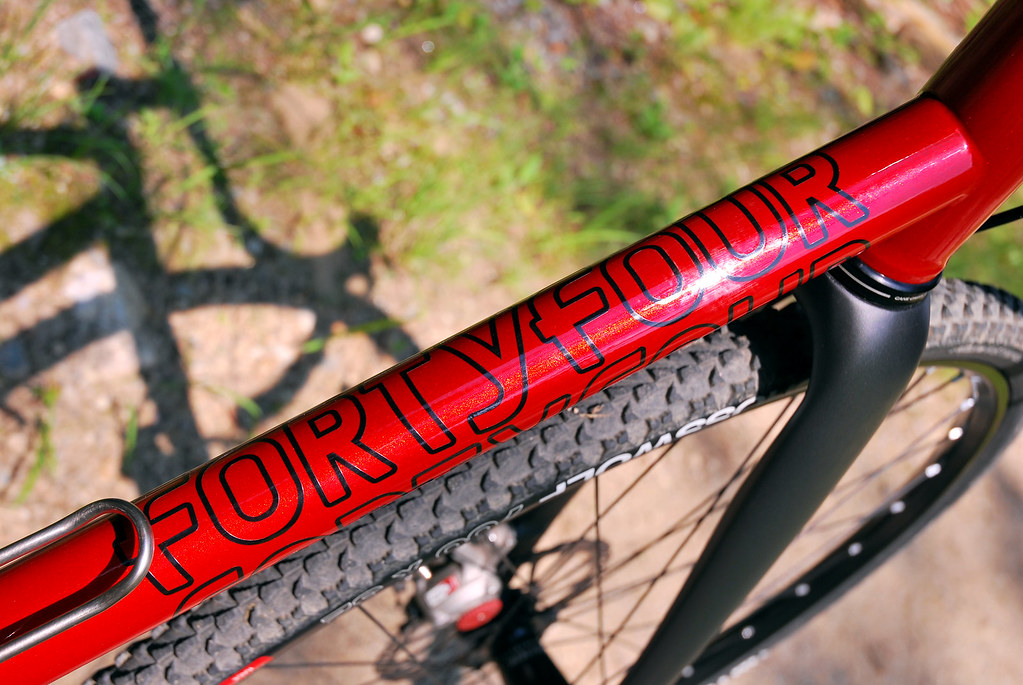
And a new CX / Gravel bike for myself. I slot in personal builds months in advance. Pretty cool to look at the list and see that "Hey! My build happens next week!" I keep things fair. But what's cool for the client is that everything I build, I first try things on myself and if all checks out, it gets passed on to future builds. There's a few procedural differences with this one that has to do with the way in which I build and a few small details regarding the chainstays (subtle but important).


zkling

Well-known member
Joined
Jan 23, 2007
Messages
16,939
Beautiful work :drool: You are a true craftsman meets artist. :beer:

What welding helmet do you use? Is that a fixed shade?
 

moto367

Well-known member
Joined
Sep 14, 2010
Messages
125
Location
Ohio
SWEEET gravel grinder! Great color choice. It's exciting to see more 650 builds going on in the industry.
 
OP
F

fortyfour

Well-known member
Joined
May 9, 2011
Messages
537
Location
Lyndeborough, NH
What welding helmet do you use? Is that a fixed shade?

It's a Jackson W10 900 Series Passive welding helmet. I like the simplicity of it, it's really affordable, the lens fully comes apart and the whole thing can be cleaned along with the padded head gear. My respirator fits really nicely inside as well. I know that the auto darkening helmets are nice but they are expensive or at least the ones I've looked at that I would be interested in. The full face is really nice too - I can see what I'm doing! Shade is fixed, but you can get different lens types.
 

zkling

Well-known member
Joined
Jan 23, 2007
Messages
16,939
I like the simplicity of it, it's really affordable, the lens fully comes apart and the whole thing can be cleaned along with the padded head gear.

Looks very similar to mine that is why I was curious. I completely agree about the fixed vs auto dark helmet. My jackson was ~$30 a few years ago. Been quite a few places, thrown in the trunk and the like, yet still works fine. :thumbup:

The large screen and "warmer" color I find make it much ease to see what you are doing. If you really want clarity, try to get a gold lenses for it. Makes it seem like you are welding in daylight without a hood on. :beer:

As a master welder & CWI co-worker once told me. "Real weldors use fixed shade hoods" :lol_hitti
 

Omphaloskeptic

Well-known member
Joined
Oct 11, 2008
Messages
2,346
Location
Ultima Ratio, Wa.
Exquisite weld appearance and great photography of your work!

Does TIG require a positive pressure inside the tubing or is it just a 'free-flow' at a low feed setting on the regulator?

Now, what I would like to know is if you can deduct the full cost of your personal bikes on your taxes as R&D expenditures? lol
 

jaywood

New member
Joined
Jul 27, 2013
Messages
4
Exquisite weld appearance and great photography of your work!

Does TIG require a positive pressure inside the tubing or is it just a 'free-flow' at a low feed setting on the regulator?

I agree w/ the photography part. Very nice photos!

It is a technique known as "back-purging." It prevents oxidization on the inside of the weld, also known as "sugaring."
 

madoc1

Well-known member
Joined
Dec 11, 2012
Messages
1,242
Location
spicewood, tx


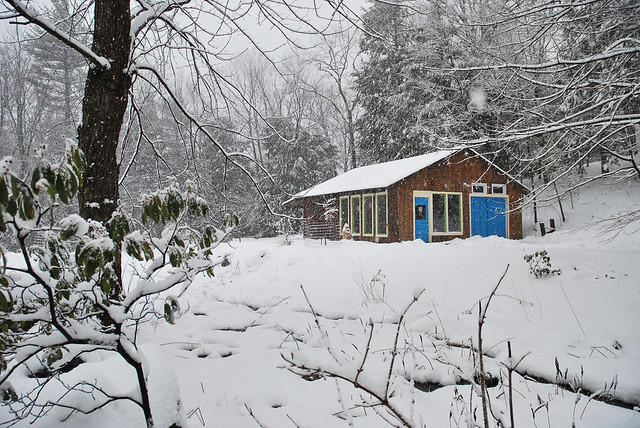
Wow, just breathtaking! It probably looks colder than it really is right? :beer:

Love those "Unofficail Shop Rules".

Sorry to say, but it's sunny and 73 degrees here in Glendale, CA right now. I'll be taking the ZRX1200R out tomorrow for a ride up Angeles Crest Highway with some friends. Beauty is in the eye of the beholder!

just love that snow pic!:)
 

M-technik-3

Well-known member
Joined
Feb 16, 2008
Messages
1,785
Location
Western Mass
Hey we are a New England based lemons team. Wondering if you want to send US a sticker of your team to give you some free advertisement. We are running the Halloween Hooptiefest at NHMS. There are alot of guys that mountain bike/fixie riders that race.
 
OP
F

fortyfour

Well-known member
Joined
May 9, 2011
Messages
537
Location
Lyndeborough, NH
Hey we are a New England based lemons team. Wondering if you want to send US a sticker of your team to give you some free advertisement. We are running the Halloween Hooptiefest at NHMS. There are alot of guys that mountain bike/fixie riders that race.

PM me your address and I'd be happy to send you some Schwag...
 

polexican23

Banned
Joined
Jun 11, 2013
Messages
2,168
Location
burbs-Illinois
I am pretty sure most of your bikes are junk. But just to be sure, you should send me a 29er, a snow bike yes also in 29er, a single speed and while you are at it a real jazzy 29er Tandem snow bike. I will let you know if I change my mind about your bikes after long term testing them.
 
To avoid these ads, REGISTER NOW!
Top Bottom