To avoid these ads, REGISTER NOW!

Air Exchanger help

ollie76

Well-known member
Joined
Apr 22, 2012
Messages
694
Location
Nova Scotia
Afternoon all! I would like some help with my air exchanger. I have to admit, the operation of this thing makes me feel kinda dumb.

So here's the details of my home:
- Nova Scotia, Canada
- ~2000 sq ft
- Built 2002
- Oil fired forced air furnace
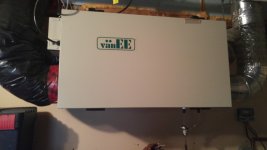
- VanEE HRV 90H air exchanger connected to my furnace ductwork.
- 2 x 12,000 BTU mini-splits (LG Smart Inverter) installed last year. One on the main level, the other downstairs.

In the fall and winter, I barely run the furnace. Usually, only when the temps get down around 5 deg F. The two mini-splits are more than capable of heating the home. I think the location of the mini splits and the open layout of the home contributes to this.

My question is about the use of the air exchanger. I have the original setup manual and it almost seems like mine isn't installed correctly or something. By that, I mean the controller seems wrong.

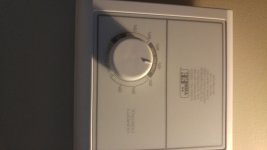
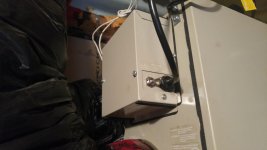
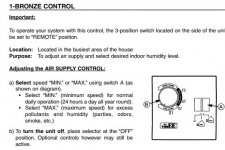
In each bathroom, there is an on/off switch (see pics) and the main level has a controller that only has humidity settings. In the manual, it looks as though the main controller should have a rotary dial with corresponding outside temps on it with a low/high speed switch next to it.

Anyway, the switch on the air exchanger itself has 3 settings: high, low, and remote. I thought that it should be set to remote and I set the humidistat to control things but I'm starting to doubt myself. Like, maybe that's only when you have the rotary dial with the temps on it and high/low switch. Should I just set it to min and adjust the dial to the correct humidity setting?

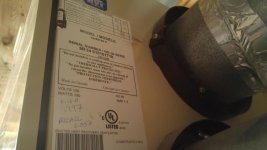
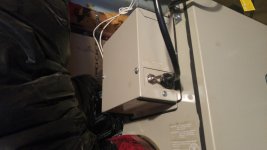
See my pics for detail.
 

Attachments

  • 20171201_112858 (Medium).jpg
    20171201_112858 (Medium).jpg
    146.1 KB · Views: 52
  • 20171201_122844 (Medium).jpg
    20171201_122844 (Medium).jpg
    130.9 KB · Views: 49
  • 20171201_122830 (Medium).jpg
    20171201_122830 (Medium).jpg
    136.8 KB · Views: 55
  • 20171201_112935 (Medium).jpg
    20171201_112935 (Medium).jpg
    76.5 KB · Views: 53
  • 20171201_112927 (Medium).jpg
    20171201_112927 (Medium).jpg
    87.6 KB · Views: 52
  • 20171201_112913 (Medium).jpg
    20171201_112913 (Medium).jpg
    68.5 KB · Views: 48
  • 20171201_112909 (Medium).jpg
    20171201_112909 (Medium).jpg
    67.9 KB · Views: 51
To avoid these ads, REGISTER NOW!
OP
O

ollie76

Well-known member
Joined
Apr 22, 2012
Messages
694
Location
Nova Scotia
These are snapshots of the manual. As I stated above, mine does not have the rotary controller with the 2 speed switch, for some reason. Only the third pic with the dehumidistat......that's the only control I have of the system.
 

Attachments

  • 1.JPG
    1.JPG
    45.9 KB · Views: 30
  • 2.JPG
    2.JPG
    43.2 KB · Views: 28
  • 3.JPG
    3.JPG
    41.8 KB · Views: 27
Last edited:

bobbyjean

Well-known member
Joined
Aug 25, 2017
Messages
319
Location
hudson valley n.y.
hmmm...so it is piped to oil fired unit only? i get the switches in the bathrooms...so in remote ...do the switches or humidistat turn it on?..should be a small fan in there...you can run it in low and just leave it...not a big electric draw...clean filters for sure though
i like the sticker-who is that buzz lightyear-:)
 

yeldogt

Well-known member
Joined
Jan 2, 2012
Messages
18,184
Many ways to set this up -- if the fresh air distribution is through the furnace there should be some connection to the furnace to have it's blower come on? Otherwise the "fresh" air is not being properly distributed to the house.

Is this unit the only exhaust form the bathrooms?

I never use HRV's as the bath exhaust -- even when they have the "boost button" they don't work IMO -- and they are always taking heat from the bathroom in the winter. Without the constant fan circulation set on the heater -- the fresh air is really not going where you want it.

The dial wall controller is acting as a max/ min to keep the unit on if the humidity is high ... but it can only affect humidity in very cold dry air. HRV/ERV are really not for humidity control. That controller should be in the place of highest humidity -- like one of the bathrooms if you have the exhausts in there.

These units typically have a program set up -- something must be doing that or running a program (or should be). Otherwise they run on low all the time .. except on boost mode.

The remote function is to remove control from the unit ..... some still allow the boost function if the unit is not on remote. It's hard to tell how yours is wired.

If you are not going to run the furnace -- I would get dedicated returns for the unit. If you have other exhausts in the baths -- would change the whole thing.

Like radiant heat .. these ventilators are not understood. How tight is you house?
 
Last edited:
OP
O

ollie76

Well-known member
Joined
Apr 22, 2012
Messages
694
Location
Nova Scotia
Thanks for the replies!

The air exchanger is piped to the return air to the furnace. There's no way to turn the furnace blower on remotely so the fresh air to the house has nowhere to go except out the return ducts in the floor (when the furnace isn't running that is). There are three return ducts, pretty well located (I think). I think with the layout of our house, this is probably adequate fresh air.

I did some experimenting this morning. I have the switch on the unit set to Low.......it seems to run on low continuously until you either 1. hit the button in the bathrooms or 2. turn the dial down to a lower humidity setting. In both cases it then kicks into high speed.

Yes, this unit is the only exhaust from the bathrooms. The rotary controller is placed right outside the master bathroom, right where our furnace controls are located.
 

yeldogt

Well-known member
Joined
Jan 2, 2012
Messages
18,184
Unless the house needs continuous flow -- it's more then likely running too much.

The rotary controller when placed in a bathroom is designed to sense the higher humidity and turn the fan to high (boost). The boost button is for odor control and when you don't have the rotary for auto sensing of a shower.

When you turn down the rotary -- it thinks you want lower humidity (as if a shower is on).... this type of control is not designed to maintain humidity ... it's designed to react to a bath/shower situation when used as an exhaust fan.

I only did one 24/7 -- very small 80cfm -- using 4 and 5 inch pipes. I prefer the units that run on a cycle or have manual mode when lots of people are in the house .. tied into a real dehumidifier
 

justinjoyal

Well-known member
Joined
Apr 30, 2015
Messages
888
Location
Quebec
Many ways to set this up -- if the fresh air distribution is through the furnace there should be some connection to the furnace to have it's blower come on? Otherwise the "fresh" air is not being properly distributed to the house.

No offense but... how would you know ?

You don't need an enormous amount of fresh air. A calculation should be done to know the amount of fresh air needed in the house and then the HRV should be sized accordingly.

HRV's are standalone and don't make the blower come on.

Is this unit the only exhaust form the bathrooms?

I never use HRV's as the bath exhaust -- even when they have the "boost button" they don't work IMO -- and they are always taking heat from the bathroom in the winter. Without the constant fan circulation set on the heater -- the fresh air is really not going where you want it.

A properly sized/adjusted HRV exhaust works great... I've had one for 5 years and everything is great, plus it's silent, unlike regular exhaust fans.

They are common practice.

That controller should be in the place of highest humidity -- like one of the bathrooms if you have the exhausts in there.

The HRV will hepl maintain a proper RH% and the main controller should be in the living area.

I have never seen it done differently as it makes no sense at all.


OP:

Do yourself a favor and get one of these (sorry only the French version of the page works.)

http://www.vanee.ca/fr/accessoire/3-commande-murale-platinum.html

Put it in SMART mode and let it control everything for you. It will maintain the proper RH according to indoor/outdoor temperatures.

The switch on the unit should be set to REMOTE.

Now I can't tell if the ducting is properly done and if everything is correctly adjusted though...
 
Last edited:
OP
O

ollie76

Well-known member
Joined
Apr 22, 2012
Messages
694
Location
Nova Scotia
Ok so normally I keep the thing set to the comfort zone setting......which is likely running too often. What do you recommend I do in this case? It seems to me that there's no way to get it to run less as it's always running in low.
 

justinjoyal

Well-known member
Joined
Apr 30, 2015
Messages
888
Location
Quebec
Ok so normally I keep the thing set to the comfort zone setting......which is likely running too often. What do you recommend I do in this case? It seems to me that there's no way to get it to run less as it's always running in low.

These basic controllers ****... They only rely on RH to kick in/out.

What's the temperature and RH% in your house ?
 

Showkey

"MEMBER EMERITUS"
Joined
Aug 9, 2014
Messages
8,638
Location
Wausau WI
I am with Justin in that the exchanger can stand alone ..........my setup the Air exchanger is connected to the cold air return but the furnace does not have to run for the system to function and circulate the air. I do find the we use the exchange to “freshen the air” and do not use the humidity setting as in winter the air is usually dry enough with being to dry.

I have manual override timers throughout the home and we frequently use them to run the system for a hour when needed.

The system was here when I moved in.
The home also has a whole house humidifier on the furnace which I never use. It not needed and I would rather be a little too dry and have excessive moisture when the temps drop below zero.
 
Last edited:

yeldogt

Well-known member
Joined
Jan 2, 2012
Messages
18,184
No offense but... how would you know ?

You don't need an enormous amount of fresh air. A calculation should be done to know the amount of fresh air needed in the house and then the HRV should be sized accordingly.

HRV's are standalone and don't make the blower come on.


A properly sized/adjusted HRV exhaust works great... I've had one for 5 years and everything is great, plus it's silent, unlike regular exhaust fans.

They are common practice.


The HRV will hepl maintain a proper RH% and the main controller should be in the living area.

I have never seen it done differently as it makes no sense at all.


OP:

Do yourself a favor and get one of these (sorry only the French version of the page works.)

http://www.vanee.ca/fr/accessoire/3-commande-murale-platinum.html

Put it in SMART mode and let it control everything for you. It will maintain the proper RH according to indoor/outdoor temperatures.

The switch on the unit should be set to REMOTE.

Now I can't tell if the ducting is properly done and if everything is correctly adjusted though...

Justin -- I read the instructions for his unit. His unit is installed ... he can't "size" anything ... he has had it installed for the past 15 years?

The directions (for his unit) show the proper way to connect it into a HVAC system is to wire so the blower of the HVAC comes on. His is not stand alone -- his is connected to the HVAC system -- oil

They can only control humidity with outside air -- and that only works if the level is low enough ... in many part of the country (when green grass is growing) they can't control humidity because it's too humid outside.

I would never connect on to an HVAC.

Just because they are common practice -- does not = they are doing what people say they are .. and doing it efficiently.

The amount of "fresh" air depends on people and leakage.
 
Last edited:

justinjoyal

Well-known member
Joined
Apr 30, 2015
Messages
888
Location
Quebec
Justin -- I read the instructions for his unit. His unit is installed ... he can't "size" anything ... he has had it installed for the past 15 years?

The directions (for his unit) show the proper way to connect it into a HVAC system is to wire so the blower of the HVAC comes on. His is not stand alone -- his is connected to the HVAC system -- oil

They can only control humidity with outside air -- and that only works if the level is low enough ... in many part of the country (when green grass is growing) they can't control humidity because it's too humid outside.

I would never connect on to an HVAC.

Just because they are common practice -- does not = they are doing what people say they are .. and doing it efficiently.

The amount of "fresh" air depends on people and leakage.


You would have to show me the instructions you are referring to because what I'm seeing is a regular HRV, which has its own blower.

Yes it has limited capability depending on outside temp/humidity, and yes the amount of fresh air does depend on people and leakage. That's logic.

HRVs are always connected to HVAC when a forced air system is in place...

FYI:

http://vanee.edenenergy.com/literature-v2/user-guides/90H_190H-user-2011-10-07.pdf
 
Last edited:

yeldogt

Well-known member
Joined
Jan 2, 2012
Messages
18,184
You would have to show me the instructions you are referring to because what I'm seeing is a regular HRV, which has its own blower.

Yes it has limited capability depending on outside temp/humidity, and yes the amount of fresh air does depend on people and leakage. That's logic.

HRVs are always connected to HVAC when a forced air system is in place...

FYI:

http://vanee.edenenergy.com/literature-v2/user-guides/90H_190H-user-2011-10-07.pdf

They have a more advanced set of instructions showing the HVAC interface ... in real word testing the HRVs don't really have enough push to send the air throughout a home using the HVAC system.

It's best to have a dedicated return /returns for the HRV and use regular exhaust fans for the bathrooms. Most homes leak enough that a simple intake will slightly pressurize
 

Denwood

Well-known member
Joined
Sep 22, 2014
Messages
4,184
Location
Thunder Bay, Ontario, Canada
So the HRV return is likely just the two exhaust ports in your bathrooms, correct?

Running the HRV constantly is a pretty big waste of BTUs, particularly if you're not home. I've also found on windy days, even our hyper efficient business building does not need HRV at all. This is based on CO2 level logging for a few weeks using a laptop and USB connected CO2 sensor.

I've switched our commercial HRV over to CO2 sensing, which works great. It only runs when the occupancy load of the building raises CO2 levels to over 800ppm. It's pretty simple to do: https://www.garagejournal.com/forum/showthread.php?t=319342

Using one of these sensors (just dry contacts with 24v power) can cycle your HRV and furnace fan together if wired appropriately. These are the units I am using:

co2_1.jpg


Like you, I'm in Canada..although our climate here is colder than NS.
 

justinjoyal

Well-known member
Joined
Apr 30, 2015
Messages
888
Location
Quebec
They have a more advanced set of instructions showing the HVAC interface ... in real word testing the HRVs don't really have enough push to send the air throughout a home using the HVAC system.

It's best to have a dedicated return /returns for the HRV and use regular exhaust fans for the bathrooms. Most homes leak enough that a simple intake will slightly pressurize

If the ducting is well made and air flow is balanced (and if the HRV is properly sized, of course), it is not a problem. Now that's something we can't tell in this case because we don't know the condition and layout of the duct work.

I totally agree with the dedicated return for the HRV going to the bathrooms if you're gonna use your HRV as an exhaust. That's the only effective way to do it. In such case you do not use a separate exhaust fan.

Now if OP doesnt have a dedicated return duct (4, 5 or 6" depending) and pulls air from the bathroom directly from the HVAC return ducts, then yeah, it's probably not doing much.

If OP has sufficient MS Paint skills, he could draw a schematic of his duct work so we can tell if his setup is good. :D
 

justinjoyal

Well-known member
Joined
Apr 30, 2015
Messages
888
Location
Quebec
So the HRV return is likely just the two exhaust ports in your bathrooms, correct?

Running the HRV constantly is a pretty big waste of BTUs, particularly if you're not home. I've also found on windy days, even our hyper efficient business building does not need HRV at all. This is based on CO2 level logging for a few weeks using a laptop and USB connected CO2 sensor.

I've switched our commercial HRV over to CO2 sensing, which works great. It only runs when the occupancy load of the building raises CO2 levels to over 800ppm. It's pretty simple to do: https://www.garagejournal.com/forum/showthread.php?t=319342

Using one of these sensors (just dry contacts with 24v power) can cycle your HRV and furnace fan together if wired appropriately. These are the units I am using:

co2_1.jpg


Like you, I'm in Canada..although our climate here is colder than NS.

Well done.

A HRV setup should be balanced/adjusted to provide just enough air for proper air changes, but too much runtime is definitely not good!
 

bobbyjean

Well-known member
Joined
Aug 25, 2017
Messages
319
Location
hudson valley n.y.
dunnno... i have a laundry room with a air enforcer installed for many years-its a beautifully simple unit-1 fan motor that takes both outdoor and indoor air and mixes thru a blower wheel that is larger on the indoor side...it runs on a timer to maintain fresh air..i can also set it to run contstant..made by tjerlund-if you could set your unit to run less furnace blower fan it would still force fresh air into home-imho... a good thing
 

yeldogt

Well-known member
Joined
Jan 2, 2012
Messages
18,184
dunnno... i have a laundry room with a air enforcer installed for many years-its a beautifully simple unit-1 fan motor that takes both outdoor and indoor air and mixes thru a blower wheel that is larger on the indoor side...it runs on a timer to maintain fresh air..i can also set it to run contstant..made by tjerlund-if you could set your unit to run less furnace blower fan it would still force fresh air into home-imho... a good thing

So it's running .. great. The question is .. what's it doing for the house?
 
To avoid these ads, REGISTER NOW!

yeldogt

Well-known member
Joined
Jan 2, 2012
Messages
18,184
If the ducting is well made and air flow is balanced (and if the HRV is properly sized, of course), it is not a problem. Now that's something we can't tell in this case because we don't know the condition and layout of the duct work.

I totally agree with the dedicated return for the HRV going to the bathrooms if you're gonna use your HRV as an exhaust. That's the only effective way to do it. In such case you do not use a separate exhaust fan.

Now if OP doesnt have a dedicated return duct (4, 5 or 6" depending) and pulls air from the bathroom directly from the HVAC return ducts, then yeah, it's probably not doing much.

If OP has sufficient MS Paint skills, he could draw a schematic of his duct work so we can tell if his setup is good. :D

You are missing my points:

1. Most HRV/ERV don't have big enough blowers to be able to push the air through return ducts --- they can't push air through the equipment and out the other side to the vents into the house.

2. Using an HRV/ERV for the exhaust in a bathroom is a bad idea IMO when in an area needing heat many months of the year. You are always taking heat from the room you normally want to be the warmest -- and even on boost they don't work as well as a dedicated exhaust fan The air also has too much humidity in the summer.

3. If you do install and HRV/ERV it should be a dedicated system -- stand alone ... ductwork is cheap. And they don't need to be large for most houses.

4. I do spray foam houses and blower door tests -- Even tight houses still leak. The question is how much fresh air is needed.

5. In many areas it's just as easy to have a simple intake system -- I like using a dedicated dehumidifier with a timed controller. A super tight house is going to need some humidity control -- if you don't ... you are getting a change of air. Slight positive is also needed if in an area with radon. 80cfm is about the smallest ... and it's still a lot of air 24/7. Most are 4x that .. running 24/7 at under 80% .. they waste lots of conditioned air.

6. Like anything else HRV/ERV are being "sold" they have a cost that has to be justified ...
 

yeldogt

Well-known member
Joined
Jan 2, 2012
Messages
18,184
So the HRV return is likely just the two exhaust ports in your bathrooms, correct?

Running the HRV constantly is a pretty big waste of BTUs, particularly if you're not home. I've also found on windy days, even our hyper efficient business building does not need HRV at all. This is based on CO2 level logging for a few weeks using a laptop and USB connected CO2 sensor.

I've switched our commercial HRV over to CO2 sensing, which works great. It only runs when the occupancy load of the building raises CO2 levels to over 800ppm. It's pretty simple to do: https://www.garagejournal.com/forum/showthread.php?t=319342

Using one of these sensors (just dry contacts with 24v power) can cycle your HRV and furnace fan together if wired appropriately. These are the units I am using:

co2_1.jpg


Like you, I'm in Canada..although our climate here is colder than NS.


Most people don't ever do testing after the building is in operation -- actually, most people never even know if they need an HRV/HRV because they never test the building to begin with.

People like you (and me) are the exception.

As buildings get better and tighter -- they need fresh air. But how to do that and exhaust pollutants can be accomplished in various ways. Tight (really tight) building also need some type of mechanical humidity control if in green grass areas.

HRV/ERV are sold as the solution .. when they only do one thing well. I was in a house with a huge one recently -- with pipes to almost every room??
 

justinjoyal

Well-known member
Joined
Apr 30, 2015
Messages
888
Location
Quebec
You are missing my points:

1. Most HRV/ERV don't have big enough blowers to be able to push the air through return ducts --- they can't push air through the equipment and out the other side to the vents into the house.

This is why you need to size it properly. Plain and simple. If it is, it will be sufficient to move the small amount of air needed in a "standard" house, once again considering proper, tight ductwork.

2. Using an HRV/ERV for the exhaust in a bathroom is a bad idea IMO when in an area needing heat many months of the year. You are always taking heat from the room you normally want to be the warmest -- and even on boost they don't work as well as a dedicated exhaust fan The air also has too much humidity in the summer.

And the exhaust fan does the same ? It takes heat from the inside and throws it right outside.

It is even code mandatory (in new houses) to use the HRV for the exhaust here! (Quebec, Canada)

You remind me of people who've had ****** setups done by the cheapest bidder: they don't work well at all. But that's not because they can't work, it's because of poor installation...

3. If you do install and HRV/ERV it should be a dedicated system -- stand alone ... ductwork is cheap. And they don't need to be large for most houses.

It would be ridiculous to run a second set of ducts in a house with central forced air in place and I have never seen it done. :dunno:

4. I do spray foam houses and blower door tests -- Even tight houses still leak. The question is how much fresh air is needed.


Indeed.

5. In many areas it's just as easy to have a simple intake system -- I like using a dedicated dehumidifier with a timed controller. A super tight house is going to need some humidity control -- if you don't ... you are getting a change of air. Slight positive is also needed if in an area with radon. 80cfm is about the smallest ... and it's still a lot of air 24/7. Most are 4x that .. running 24/7 at under 80% .. they waste lots of conditioned air.

A super tight house without A/C definitely needs humidity control to avoid possible problems. However air conditionning is found in most of newer homes now and properly done it will maintain a proper RH% most of the time.

6. Like anything else HRV/ERV are being "sold" they have a cost that has to be justified ...

Yes, of course. But a properly installed HRV in a house that needs one really improves IAQ.

----

I don't know how it's done elsewhere, but just FYI, here in Quebec new homes have to have a HRV setup with supply vents in each room and return/exhaust vents in bathrooms.

A good installer will use only rigid ducting and will balance the system. However, some hacks still use flex and couldn't care less about balancing, and then people say HRVs are a waste of money and don't work. :headshake
 

yeldogt

Well-known member
Joined
Jan 2, 2012
Messages
18,184
This is why you need to size it properly. Plain and simple. If it is, it will be sufficient to move the small amount of air needed in a "standard" house, once again considering proper, tight ductwork.


And the exhaust fan does the same ? It takes heat from the inside and throws it right outside.

It is even code mandatory (in new houses) to use the HRV for the exhaust here! (Quebec, Canada)

You remind me of people who've had ****** setups done by the cheapest bidder: they don't work well at all. But that's not because they can't work, it's because of poor installation...


It would be ridiculous to run a second set of ducts in a house with central forced air in place and I have never seen it done. :dunno:


Indeed.


A super tight house without A/C definitely needs humidity control to avoid possible problems. However air conditionning is found in most of newer homes now and properly done it will maintain a proper RH% most of the time.


Yes, of course. But a properly installed HRV in a house that needs one really improves IAQ.

----

I don't know how it's done elsewhere, but just FYI, here in Quebec new homes have to have a HRV setup with supply vents in each room and return/exhaust vents in bathrooms.

A good installer will use only rigid ducting and will balance the system. However, some hacks still use flex and couldn't care less about balancing, and then people say HRVs are a waste of money and don't work. :headshake


The point of an exhaust fan -- is to exhaust. Be it in bathroom or a stove. Why send high humidity through a series of ducts (especially with an ERV) when it should just be eliminated. A good fantech exhaust fan -- will eliminate both humid air and odors within minutes vs what an HRV/ERV can do running much longer and wasting more energy.

You assume because someone does not agree with you -- they are wrong or have done things on the cheap. Initially -- HRV/ERV's were never intended for exhaust in bathrooms ... this came about because of the cost of the HRV/ERV and a way to justify the overall cost .. put in an HRV/ERV and save money on the exhaust fans. Problem is -- they don't move enough air for the majority of bathrooms. And in a cold climate they can make the bathrooms cold because they are always taking air out of what is often a room with additional heat (floor or heated towel) .. they can waste energy.

Even GBA has changed ... Like they always do.

Having dedicated duct work for a proper sized HRV/ERV is not very expensive -- it can normally be done with simple 4" rigid ducts and some "Y"s -- simple round 4" vents that blend in.

Sorry -- with the HVAC system off -- a tiny fan in the HRV/ERV is not going to push air to a second floor hall.

In the mid-atlantic -- very tight house ... even with VS equipment (sized properly) there is still a need for dehumidification ... not much ... but still wise ... and that system can take care of the fresh air.

HRV/ERV have a place in some climates -- most are simply too big with little controls and testing.


I'm not against them .. I have one at one property and am running and exhaust vent just in case I do need one on my new build (it's an odd design). I prefer the timed systems with controlled override going through a dehumidifier (that will run if necessary).

Proper venting should be mandated -- not one solution. A bigger problem in most houses is improper venting (exhaust).
 
Last edited:

justinjoyal

Well-known member
Joined
Apr 30, 2015
Messages
888
Location
Quebec
The point of an exhaust fan -- is to exhaust. Be it in bathroom or a stove. Why send high humidity through a series of ducts (especially with an ERV) when it should just be eliminated. A good fantech exhaust fan -- will eliminate both humid air and odors within minutes vs what an HRV/ERV can do running much longer and wasting more energy.

When the HRV is turned on from the bathroom control the humidity goes straight to it, then straight outside/to drain. I don't see anything wrong with that? :dunno:

A "true" exhaust fan will work great there's no doubt, but it's noisy and ***** out a lot of heat as well! (Plus most are ugly and look out of place.)

You assume because someone does not agree with you -- they are wrong or have done things on the cheap. Initially -- HRV/ERV's were never intended for exhaust in bathrooms ... this came about because of the cost of the HRV/ERV and a way to justify the overall cost .. put in an HRV/ERV and save money on the exhaust fans. Problem is -- they don't move enough air for the majority of bathrooms. And in a cold climate they can make the bathrooms cold because they are always taking air out of what is often a room with additional heat (floor or heated towel) .. they can waste energy.

I am not assuming anything. I agree that an exhaust fan will work great. But I disagree that a proper HRV installation doesn't work great.

My bathrooms are relatively large and I have no humidity/smell control problems. I can take 15 mins hot showers and still see myself clearly in the mirrors. :)

The HRV (when not exhausting outside) is taking air out of the bathroom and circulating it throughout the house. Unless someone maintains a higher temperature in the bathroom than in the rest of the floor, there is no problem with that. The temperature in the bathroom remains the same as the other rooms around it.

If someone, for example, wants the main living area at 71F but the bathroom at 75F, then yes, there would be a waste of energy. Can't disagree with that!

Having dedicated duct work for a proper sized HRV/ERV is not very expensive -- it can normally be done with simple 4" rigid ducts and some "Y"s -- simple round 4" vents that blend in.

There's no way I would want a second set of 5" rigid ducts running throughout my house! There's enough ducting, electrical, plumbing, networking, etc. in place already! Plus more vents/registers sticking out on top of the HVAC ones, no thanks!


Sorry -- with the HVAC system off -- a tiny fan in the HRV/ERV is not going to push air to a second floor hall.

Sizing, sizing, sizing, and duct tightness. Of course if the house is very large you have to take that into account and build the system accordingly.

In the mid-atlantic -- very tight house ... even with VS equipment (sized properly) there is still a need for dehumidification ... not much ... but still wise ... and that system can take care of the fresh air.

I can't speak from experience when it comes to other climates as I only work in Quebec, but I know there are different needs for different places.
 
Last edited:
OP
O

ollie76

Well-known member
Joined
Apr 22, 2012
Messages
694
Location
Nova Scotia
Well, let's not argue about the optimum installation. I've got what I got......it's been this way for 15 years or so with no air quality issues. Apart from maybe replacing the AE, I won't be changing anything.

My problem is the most effective way to run my system as it's really not clear on how to operate it. I guess the only problem I have, for the most part, is when the AE is running at this time of year the incoming air is pretty cool. Is it running too much?
 

yeldogt

Well-known member
Joined
Jan 2, 2012
Messages
18,184
When the HRV is turned on from the bathroom control the humidity goes straight to it, then straight outside/to drain. I don't see anything wrong with that? :dunno:

A "true" exhaust fan will work great there's no doubt, but it's noisy and ***** out a lot of heat as well! (Plus most are ugly and look out of place.)


I am not assuming anything. I agree that an exhaust fan will work great. But I disagree that a proper HRV installation doesn't work great.

My bathrooms are relatively large and I have no humidity/smell control problems. I can take 15 mins hot showers and still see myself clearly in the mirrors. :)

The HRV (when not exhausting outside) is taking air out of the bathroom and circulating it throughout the house. Unless someone maintains a higher temperature in the bathroom than in the rest of the floor, there is no problem with that. The temperature in the bathroom remains the same as the other rooms around it.

If someone, for example, wants the main living area at 71F but the bathroom at 75F, then yes, there would be a waste of energy. Can't disagree with that!


There's no way I would want a second set of 5" rigid ducts running throughout my house! There's enough ducting, electrical, plumbing, networking, etc. in place already! Plus more vents/registers sticking out on top of the HVAC ones, no thanks!


Sizing, sizing, sizing, and duct tightness. Of course if the house is very large you have to take that into account and build the system accordingly.


I can't speak from experience when it comes to other climates as I only work in Quebec, but I know there are different needs for different places.

What do you have stopping the HRV from exhausting to the outside? and why would you want to recirculate air from the bathrooms to the rest of the house?

Look at Fantech bathroom fans .. I always use the external mount -- use a "y" to two 4" round vents -- one in shower and the other by the toilet. totally silent -- connect to a Leviton electronic timer with 5/10/15/30 settings.

Must HRV/ERV only need a couple of ducts ...
 

yeldogt

Well-known member
Joined
Jan 2, 2012
Messages
18,184
Ollie76: Here is the deal -- HRV/ERV are not free to operate -- both in electricity and lost conditioned air .... 80% efficiency brings in cold air when it's cold out ... you can feel that. That's why they are typically tied to the HVAC system. The cold incoming fresh air is tempered when the HVAC fan is running and conditioned when the AC or Heater is also running.

When the HVAC system is not running -- the HRV/ERV will load the ductwork up with cold air in the winter. The company that makes your unit also has controls to turn the HVAC fan on when the HRV/ERV is on .. or on boost ... I don't think your unit has that capability standard.

This issue is why when these units first came out they were pipe as dedicated systems -- small dusts to a couple of locations to temper the air. Because they are expensive -- to make the system cheaper and easier to install-- they started to recomened connecting to the HVAC system. The manufacturers were also trying to sell them to the retrofit market

Many houses -- don't even need them. So when you say .. running fine with no air issues. The only issues that they cause when running is wasted energy .. and possible cold spots. Brining in outside air is not a problem. The same house with 8 people will need more at times vs one with only two.

As I said in a prior post ....the humidity control should technically be installed in the bathroom -- this way it turns on automatically (in theory) when the shower is used. The boost is needed because it sounds like you only have the ERV for exhaust in the bathroom .. the humidity control can't sense odors. Push the boost for odor or have them in additional bathrooms where you can't do another humidity control.

The question is do you need the fresh air .. and if you do how much? Once you figure out what you need then you control the unit you have in a way to get that refresh rate.

My new build is a converted church -- so it has a lot more volume than is typical for the SF .. it's 4500sf and some rooms have 28' ceilings. All spray foamed ... even with all that volume -- I don't need an HRV/ERV running all the time.

I would call the technical department and ask what other controls they make. But -- you first need to figure out what CFM you need to do the refresh in your house. Use that to figure out how much your unit needs to run. Maybe get a timed controller to run it throughout the day.
 

justinjoyal

Well-known member
Joined
Apr 30, 2015
Messages
888
Location
Quebec
Well, let's not argue about the optimum installation. I've got what I got......it's been this way for 15 years or so with no air quality issues. Apart from maybe replacing the AE, I won't be changing anything.

My problem is the most effective way to run my system as it's really not clear on how to operate it. I guess the only problem I have, for the most part, is when the AE is running at this time of year the incoming air is pretty cool. Is it running too much?

We can't tell if it's running too much because we don't have any data.

I really suggest you get a better controller. Check if your HRV is supported by the Platinum controller from VanEe. That would be your best bet, but it might not be.

What do you have stopping the HRV from exhausting to the outside? and why would you want to recirculate air from the bathrooms to the rest of the house?

Look at Fantech bathroom fans .. I always use the external mount -- use a "y" to two 4" round vents -- one in shower and the other by the toilet. totally silent -- connect to a Leviton electronic timer with 5/10/15/30 settings.

Must HRV/ERV only need a couple of ducts ...

Well, a couple of ducts... One per bathroom and one per room. Adds up to a lot of ducts in an entire house!

In recirculation mode, the HRV pulls air from the bathrooms and distributes via the hvac return.

In exchange mode, the HRV pulls (smelly or humid) air from the bathrooms, throws it outside through and pulls in fresh air.

Here's my attempt @ MS Paint:

hrv_hvac.jpg


Ollie76: Here is the deal -- HRV/ERV are not free to operate -- both in electricity and lost conditioned air .... 80% efficiency brings in cold air when it's cold out ... you can feel that.

HRVs are not 100% efficient, but even at -5F when my HRV is running the air coming from it really is not cold...

My HRV costs roughly 1.5¢ an hour to run, so I would not make a big deal out of it if it ran a little too long. :beer:

You have to find the balance between indoor RH, temperature and clean air while being the most efficient. :thumbup:
 

flyt100

Well-known member
Joined
Dec 1, 2015
Messages
109
Location
Minnesota
Does anyone know if the Venmar Altitude (40445) and Broan VT8W are the same thing as the Vanee Platinum (40465) discussed above?
 
Last edited:

yeldogt

Well-known member
Joined
Jan 2, 2012
Messages
18,184
Did someone ever tell you what an HRV does?:lol_hitti:

Tommy

The point is to refresh the air -- once that is done -- there is no point in running. that's why the very low CFM with occupancy override work well.
 

yeldogt

Well-known member
Joined
Jan 2, 2012
Messages
18,184
We can't tell if it's running too much because we don't have any data.

I really suggest you get a better controller. Check if your HRV is supported by the Platinum controller from VanEe. That would be your best bet, but it might not be.


Well, a couple of ducts... One per bathroom and one per room. Adds up to a lot of ducts in an entire house!

In recirculation mode, the HRV pulls air from the bathrooms and distributes via the hvac return.

In exchange mode, the HRV pulls (smelly or humid) air from the bathrooms, throws it outside through and pulls in fresh air.

Here's my attempt @ MS Paint:

hrv_hvac.jpg


HRVs are not 100% efficient, but even at -5F when my HRV is running the air coming from it really is not cold...

My HRV costs roughly 1.5¢ an hour to run, so I would not make a big deal out of it if it ran a little too long. :beer:

You have to find the balance between indoor RH, temperature and clean air while being the most efficient. :thumbup:

I'm trying to understand why you would ever want to run the unit w/o the exhaust in operation ... especially when it's pulling from the bathrooms.

KISS: Nice silent Fantech exhaust for each of the baths and simple stand alone HRV/ERV if you need one. A case can be made for a HVAC connection with the new VS equipment since most run a very low fan all the time
 

justinjoyal

Well-known member
Joined
Apr 30, 2015
Messages
888
Location
Quebec
I'm trying to understand why you would ever want to run the unit w/o the exhaust in operation ... especially when it's pulling from the bathrooms.


KISS: Nice silent Fantech exhaust for each of the baths and simple stand alone HRV/ERV if you need one. A case can be made for a HVAC connection with the new VS equipment since most run a very low fan all the time

What’s wrong with pulling from the bathrooms? Air is no different in there than any other room in the house...

Recirculation helps keep more even temps/humidy across the house, plus it offers some filtration. This mode is not necessary but it can be useful in some cases.
 
OP
O

ollie76

Well-known member
Joined
Apr 22, 2012
Messages
694
Location
Nova Scotia
Odd,

I've been doing a bit of experimenting and I noticed something which I don't understand. Right now, the switch on the unit is set to LOW. The humidistat is turned all the way to the "Off" position. The air exchanger itself is still running on low speed. What's going on here??

This thing does my head in!
 

justinjoyal

Well-known member
Joined
Apr 30, 2015
Messages
888
Location
Quebec
Odd,

I've been doing a bit of experimenting and I noticed something which I don't understand. Right now, the switch on the unit is set to LOW. The humidistat is turned all the way to the "Off" position. The air exchanger itself is still running on low speed. What's going on here??

This thing does my head in!

The switch on the unit needs to be set to REM otherwise it is controlled directly by the switch, either on LOW or HIGH fan speed (air exchange).
 

yeldogt

Well-known member
Joined
Jan 2, 2012
Messages
18,184
What’s wrong with pulling from the bathrooms? Air is no different in there than any other room in the house...

Recirculation helps keep more even temps/humidy across the house, plus it offers some filtration. This mode is not necessary but it can be useful in some cases.

Bathroom have odors and higher humidity -- you can't control the odors and the system will be distributing them to other parts of the house. You are also pulling air into the bathroom from the rest of the house -- typically in a cold climate you provide a bit more CFM to the bathroom to keep it warmer ... with continuous venting from the bathroom you are making it colder. It's a major complaint of the HRV/ERV use as bathroom vents. Does the same thing in the summer with AC. They are also marginal humidity controllers in many parts of the country -- the can only blend with what's outside .. this causes them to run longer. Liek i said a couple of times -- Fantech makes the best exhaust -- they run for 6-8 min and it's over.

The new HVAC systems eliminate most of the need --
 

Denwood

Well-known member
Joined
Sep 22, 2014
Messages
4,184
Location
Thunder Bay, Ontario, Canada
Did someone ever tell you what an HRV does?:lol_hitti:

Tommy

My business is one of the only net zero envelopes in this part of the country, so yes, i’m intimately familiar with what ERV and HRV do :). None of them are 100% efficient, most are far less...and they all use power. Our commercial units are 220V.

I’d encourage you to read the write up at co2meters.com on our building as to why we’re controlling two commercial HRVs by Co2 / occupancy sensing, vs humidity.

https://www.co2meter.com/blogs/news/128721927-co2-meter-helps-lower-heating-costs-for-business

This is the review I wrote on the Panasonic “spot” ERV:

https://www.garagejournal.com/forum/showthread.php?t=322725

Code in Ontario would only require dedicated ERV/HRV plumbing with radiant heat (no AC) or units making use of mini-splits for heating cooling. These are instances where HVAC would not be in place to each room, otherwise.

I track our HVAC usage at the business site with nine Ecobee3 stats (each does real-time web logging) as well as an automation system that manages our 5 air handlers and 4 radiant zones based on occupancy, security system status, and user behavior.. As mentioned previous, i’ve also logged Co2 levels at both home and business, based on occupancy, outside ambient temps, and wind speed, correlating these to HRV and ERV performance. On windy days, the home ERV is shut down by the automation system as stack loads/differential building pressure manage 600ppm Co2 quite nicely. This would be one example where HRV use is a waste both of power and BTUs. At the business sit, a user opening a window on a nice day shuts down both HVAC and HRV functions in that zone as we designed in passive convective cooling/ventilation.

So, Tommy, I guess you might say I have a decent understanding of building performance, ERV/HRV and HVAC :). Efficiency based on data gathering and user/building response is a passion of mine. The last kick was automation over the last 2-3 yrs, with a 40% consumption drop at home, and 23% at the business. Low hanging fruit, and just a small example of how wasteful we tend to be on this side of the pond. There are huge efficiencies out there for the taking.

At the home site, my assumption that a 40CFM ERV would manage our home ventilation worked out to be true. See the link above. We’re talking a 100yr old house but with extensive retrofits related to envelope efficiency. Initial tests showed Co2 levels as high as 1500ppm, definitely too high. Post install (remember the ERV has no HVAC tie in!) dropped levels from 600-800ppm...and it only runs when our automation hub sees occupancy. We do have a new high efficiency furnace so have set the system to 400CFM constant during occupancy. Home is about 2500 sq/ft conditioned space, four occupants. Looking at cold weather performance of this ERV, (when not in recirc/defrost mode!!) temp delta is 8-10C at -25C ambient. That’s a lot of BTUs at 40CFM..so why use it when not needed?
 
Last edited:

yeldogt

Well-known member
Joined
Jan 2, 2012
Messages
18,184
Denwood:

Nice info --- When I did my place in the city -- 4 story 1810 brick federal 4600sf I used a 80cfm unit and it was oversized. Whole placed spray foamed. I see people installing 300-400 cfm units is small houses.

How much dedicated venting are you required to do when no ducted systems?
 
To avoid these ads, REGISTER NOW!
Top Bottom