To avoid these ads, REGISTER NOW!

Anti-seize opinions.

To avoid these ads, REGISTER NOW!

BajaScout

Well-known member
Joined
May 1, 2011
Messages
4,608
Location
San Diego, CA
Found this web site on spark plugs and anti-seize.

https://ricksfreeautorepairadvice.com/anti-seize-spark-plug-threads/


I am installing AC Delco spark plugs in my daughters 2012 Chevy Equinox and it states:

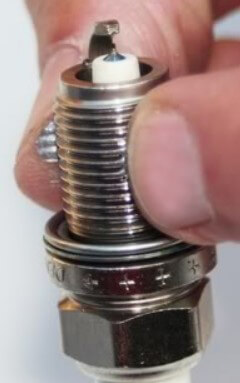
"AC spark plugs should be installed dry. Do NOT use any type of anti-seize lubricant on spark plug threads. Anti-seize lubricants decrease the amount of friction between the threads, resulting in over tightening. That can cause the spark plug to move too far into the combustion chamber (in crush washer applications). Over-tightening can also distort the spark plug shell, causing a leak which would allow blowby to pass through the gasket seal between the shell and insulator. Over-tightening also results in extremely difficult removal."

anti-seize-on-spark-plug-threads.jpg
 

Dh3256

Well-known member
Joined
Mar 19, 2018
Messages
1,142
AC spark plugs should be installed dry.


It's not just AC, no spark plugs should be install with anti-seize.


Anti-seize affects torque and "wet" torque specs are used when anti-seize is applied.


If you use the dry torque specs with anti-seize, you are likely to over tighten the fastener or spark plug.


Using anti-seize on spark plugs often causes stuck plugs and stripped threads, the very issues people are trying to avoid.
 

Jeepster04

Well-known member
Joined
Jun 25, 2013
Messages
3,098
All depends on what I'm working with. I'll use very little on the threads of lugs but make sure not to get it on the head of the lug.
 

BajaScout

Well-known member
Joined
May 1, 2011
Messages
4,608
Location
San Diego, CA
I just took a set of AC Delco plugs out of my daughter's 2012 Equinox. It has over 100K miles. Old plugs actually looked decent. No issues taking them out either. As stated above, I think the anti-seize may cause more harm than good.
 

Falcon67

Well-known member
Joined
Jun 11, 2009
Messages
18,371
Location
Merkel, TX
Using anti-seize on spark plugs often causes stuck plugs and stripped threads, the very issues people are trying to avoid.

I use copper ante-sieze on the plugs in aluminum heads on my dragster. Zero issues with any of the above mentioned issues. Same on the stainless exhaust bolts. I use a light drop of oil on the intake bolts. Those don't heat cycle near as much. Sorry, in my experience I'm not threading anything dry into an aluminum race head.
 

yhprum

Well-known member
Joined
Jul 27, 2006
Messages
1,390
Location
Brisbane Australia
I use copper anti seize on wheel lug nuts sparingly and on acorn style lug nuts I put a few drops of motor oil inside before I install them. Works fine last ten years on the daily driver.
 

zmotorsports

ALLIANCE MEMBER
Joined
Oct 20, 2009
Messages
21,396
Location
Northern Utah
I know the article states not to and they are engineers but 30+ years of experience has taught me otherwise. I apply a small amount of anti-seize to all spark plugs but down a couple of threads to keep it out of the combustion chamber and torque to the lower side of the specs for the purpose of preserving the threads. Never had a single experience with an anti-seized spark plug but plenty of less than ideal outcomes with those plugs without anti-seize.

Even on our race engines in snowmobiles, ATV's, sandrails, motorcycles and never an issue. I can see why some say not to apply any because some people don't understand moderation or what a "small" amount is so it's just easier to say none applied at all. Don't think I'll be changing my habits any time soon.
 

LS6 Tommy

Well-known member
Joined
Dec 27, 2013
Messages
26,162
Location
Northern NJ
My $.02. NEVER on lug nuts or wheel studs. Any properly trained ASE tech or automotive engineer can tell you that. Most companies that make anti seize say not to right in the instructions. Also, always use it on Stainless Steel.

Tommy
 
Last edited:

Falcon67

Well-known member
Joined
Jun 11, 2009
Messages
18,371
Location
Merkel, TX
>My $.02. NEVER on lug nuts or wheel studs.
100% agree. If anything, a light touch of oil. As in a squirt of oil on a rag and a wipe with the rag - not hosing the stud with the oil can.
 

pbon

Well-known member
Joined
May 14, 2017
Messages
3,498
I use anti seize on wheel studs and spark plugs. I live in an area where stuff corrodes, not in an engineer’s laboratory.
 

zmotorsports

ALLIANCE MEMBER
Joined
Oct 20, 2009
Messages
21,396
Location
Northern Utah
I think a lot of it also depends on the brand. When I first started in the industrial maintenance field back in 1988 the shop was using one that was absolute junk. It hardened up prematurely, separated severely and worst very easily wiped off which told me it wouldn't stay where applied very well.

We also had a few guys that thought if a little is good a lot must be great. I use it and have used it a lot in my 30+ year career in both my day job as well as my automotive business and the key is to use your head when using it. That means sparingly, not slathering it on everything, and even then where exactly to apply it on the fasteners matters. Living in northern Utah with snow and weather I insist on using it and in our industrial environment it absolutely gets used.
 

QwikKotaTx

Well-known member
Joined
Aug 10, 2013
Messages
967
Location
Seabrook, TX
I've never used any antisieze on wheels or brakes or anything before and have never had any issues removing lugs or bolts. I guess South Louisiana and Texas doesn't really have weather where it makes a difference?

I use it anyway and never had anything fall off by accident. Just aim for the low end torque spec on lug nuts and you will be fine. I am only a mile from saltwater and definitely notice more surface rust than living more inland in the past. I put a small amount on spark plugs especially when going in to aluminum heads.
 

kelpaso1

MEMBER EMERITUS
Joined
Sep 28, 2009
Messages
3,962
Location
New Brunswick
As a side question, looking on Amazon there are several different types etc copper, nickel, silver, aluminum. Where and why do you use the different types.
 

QwikKotaTx

Well-known member
Joined
Aug 10, 2013
Messages
967
Location
Seabrook, TX
This answer is restricted to MB engines from the sixties.
4 and 6 cyl, cast iron block, aluminium head and lots of different metals in the cooling circuit.
The exhaust( and intake) manifold sat on M10 and M8 studs in the aluminium head.
The manifold nuts were heavily copperplated. I have removed many manifolds that had not been removed until I did so after 20-30 years. The nuts came off with no problems and the studs stayed in the cylinder head.
Another not so happy situation was to replace the thermostat that sat in an aluminium external casting. The cover was secured with 4 off M6* 30 mm galvanized screws. After having broken a number that were hopelessly seized I learned to drill them out before even trying to screw out. Cleaned up the thread and used teflon tape over the threads when putting back. The teflon taped screws came out easy even after many years.

Ola

That is odd they galled so badly as aluminum and zinc are right next to each other on the galvanic corrosion chart. One place I worked they used stainless screws in aluminum a lot and had many stripped fasteners heads trying to get things apart after being out in the elements so long.
 

coljar

Well-known member
Joined
Sep 26, 2010
Messages
6,243
Location
Belpre, Ohio
That's why it makes a great anti-theft device too. Anybody that has used it, knows how it makes a mess and they will avoid touching anything with anti-seize on it.

We use to slip down to the coal pile once in a while at work and put it on the Cat 6 dozer knobs. The coal man would have that **** on him from head to toe.
 

laser3kw

Well-known member
Joined
Nov 17, 2012
Messages
7,276
Location
northen IL
My $.02. NEVER on lug nuts or wheel studs. Any properly trained ASE tech or automotive engineer can tell you that. Most companies that make anti seize say not to right in the instructions. Also, always use it on Stainless Steel.

Tommy

what about stainless steel lug nuts? :headscrat :lol_hitti
 

Hilltopmasonry

Well-known member
Joined
Oct 12, 2015
Messages
2,167
+1

Without Never-Sieze I typically need my dead blow sledge to release the wheels on my BMW. I would hate to be in a situation on the road where I couldn't change a flat.


I was there On the side of the highway with a blowout on my work truck, I was literally wailing on the tire and rim with a full on sledgehammer to get the damn thing off


Sent from my iPhone using Tapatalk
 
To avoid these ads, REGISTER NOW!

NETexas

Well-known member
Joined
Aug 20, 2015
Messages
96
Location
Attached
I work where a food grade lube is required. For anti-seize application they use Partsmaster AS-201 FG. The nice thing about it, it’s thick and white, and a lot less messy than other brands. IMHO.
 

NETexas

Well-known member
Joined
Aug 20, 2015
Messages
96
Location
Attached
Product Description

AS-201 anti-seize compound eliminates frozen threads, which may cause twisted off and ruined bolts, cap screws, studs, and other threaded fittings. It is ideal for threads that lock up on molds, dies, heat manifolds, steam lines, outside light bulbs, and other high temperature applications. AS-201 compound resists corrosion, extreme pressure, dirt,
and galvanic action. It won’t harden, melt, separate, or evaporate. AS-201 compound will not harm gaskets.

Prevents metal to metal scraping
Guards against frozen threads which cause twisted off fasteners and fittings
Resist corrosion, extreme pressure, dirt and galvanic action
Covers metal with a protective coating that acts as barrier that withstands extreme heat to 2,000ºF
Will not harm gaskets and o-rings
Contains no lead
 

Attachments

  • 4F95DC72-CF9E-4E45-BFC9-5EB0001471E1.jpg
    4F95DC72-CF9E-4E45-BFC9-5EB0001471E1.jpg
    5 KB · Views: 34

harleyhaynes

New member
Joined
May 22, 2014
Messages
1
When I started wrenching on FJ40's many years ago, I learned to use anti-seize on just about everything (automotive that is). Just a little extra insurance that parts would come off easy in the future. I'm guessing it's graphite suspended in a oil therefore lubricating and preventing components from rusting where they meet.

The only place I've seen a downside is in the lugnuts on my truck. The anti-seize has kind of become a thick paste that almost takes more effort to overcome. I'm guessing that's from attracting dirt and a thourgh cleaning would correct that.

My brother recently had to take some training on torque techniques and learned that no modifiers should be applied to the wheel studs or hub. I know critical engine components should be torqued dry except fasteners with factory specified additives. I'll acknowledge that lugnuts would fall under critical fasteners. I was just wondering what opinions or knowledge is on GJ in reference to anti-seize.
Old thread but caught my attention.

The use of lubricants including anti-seize greatly affects the amount of clamping force the fasteners will exert on the joint with the same given input torque. For example- you set the torque wrench to 71 ft/lbs on a dry 1/2 stud and you will apply 6,563 lbs of load on the joint (this is material dependent btw). Lubricate the same fastener with a decent quality anti-seize and apply the same 71 ft/lbs and you apply 11,375 lbs of load on the joint. It is not uncommon to exceed the bolt materials' tensile strength and break the bolts from the improper use of lubricants and anti-size compounds without adjusting the torque requirements. The torque wrench will still click at 71 ft/lbs but you will essentially have double the clamping force. So be careful to follow the manufacturer's guidelines on the use of lubricants, anti-seize, thread lockers etc. Especially on critical joint applications.

Anti-seize compounds primarily do 2 things. Lubricate with the grease or oil carrier and help prevent galling during disassembly from the leftover mineral (graphite, copper, Moly, nickel ect) When used in hot applications (think exhaust manifolds) the oil or grease will be cooked off at about 450 degrees F. leaving the mineral in the threads to aid in disassembly. Do not pay attention to the marketing BS on the side of the can that says it can withstand 1600 to 2400 degrees! (this is referring to the mineral, not the oil or grease carrier)

It is important to use an ant-size that is compatible with the other metal components in the joint.

Hope this helps if anyone still reads this;
 

Zeke

Well-known member
Joined
Aug 13, 2009
Messages
17,176
Location
Long Beach CA, the sewer by the sea.
Old thread but caught my attention.

The use of lubricants including anti-seize greatly affects the amount of clamping force the fasteners will exert on the joint with the same given input torque. For example- you set the torque wrench to 71 ft/lbs on a dry 1/2 stud and you will apply 6,563 lbs of load on the joint (this is material dependent btw). Lubricate the same fastener with a decent quality anti-seize and apply the same 71 ft/lbs and you apply 11,375 lbs of load on the joint. It is not uncommon to exceed the bolt materials' tensile strength and break the bolts from the improper use of lubricants and anti-size compounds without adjusting the torque requirements. The torque wrench will still click at 71 ft/lbs but you will essentially have double the clamping force. So be careful to follow the manufacturer's guidelines on the use of lubricants, anti-seize, thread lockers etc. Especially on critical joint applications.

Anti-seize compounds primarily do 2 things. Lubricate with the grease or oil carrier and help prevent galling during disassembly from the leftover mineral (graphite, copper, Moly, nickel ect) When used in hot applications (think exhaust manifolds) the oil or grease will be cooked off at about 450 degrees F. leaving the mineral in the threads to aid in disassembly. Do not pay attention to the marketing BS on the side of the can that says it can withstand 1600 to 2400 degrees! (this is referring to the mineral, not the oil or grease carrier)

It is important to use an ant-size that is compatible with the other metal components in the joint.

Hope this helps if anyone still reads this;
Let's see if my question gets answered: can you explain the bold type a little better? What alternate method of determining clamping force beyond an mathematic estimate based on a set of figures in general w/o knowing the job specifics?
 

Mooky

Well-known member
Joined
Jul 6, 2014
Messages
257
Location
PA
From one of the other rambling threads about anti seize, there is actual engineering behind the clamping force, torque and the effects of thread lubricants.

Torque number with Anti-seize:
The torque required for a bolted joint design comes from a long string of calculations, but boils down to a simple linear equation.

T = Wp x K x dn
Where T=torque; Wp=fastener preload; K=torque coeff; dn=diameter

The factor that changes with dry vs lubricated fasteners is the "torque coefficient" and is published for a variety of cases. These are taken from a DuPont Engineering Specification (10 pages of calcs). Examples:

- Dry steel fasteners: K=0.20
- Lightly oiled steel: K=0.15
- Cad Plated: K=0.14
- Anti Seize on steel: K=0.13 (as published by Bostik for their Never Seez products)
- Graphite & mineral oil: K=0.10

Fastener preload is the value held constant. Solving for the reduced torque reduces to the ratio of the lubricated fastener’s k value to that of the unlubricated, 0.13 / 0.20 = 0.65.

Never Seize versus dry uncoated steel, multiply the specified torque by 0.65.
 

no704

Well-known member
Joined
Apr 27, 2016
Messages
5,217
When I lived in MI I would use copious amounts of Antisiese on most things automotive. Now living in AZ I use dry graphite powder on most things.
 

Mister68

Well-known member
Joined
Apr 13, 2012
Messages
51
I use Anderol Royce 44 anti-seize compound in gas turbine maintenance with good results. I also use it on my personal projects as well. The only issue is that this stuff makes the tin man look like Mr. Clean😁.
 

Pexto

Well-known member
Joined
May 5, 2018
Messages
638
I just wanted to see if the bot would come back.

Anyway, does that .065 jibe with his numbers?

If we use "his" numbers, we get 6563/11375 = .577, which is in the same ballpark as .65.

But the anti-seize torque coefficient should be compared to the 'lightly oiled' number rather than the 'dry steel' number, since torque specs for bolted joints are normally developed for lightly oiled threads. So a more realistic scenario for a joint with anti-seize is to torque to .13/.15 = 87% of the normal torque spec.
 

like2wheel

Well-known member
Joined
Oct 29, 2014
Messages
1,693
Location
On an as needed basis
Could it still be a bot if his join date was almost 10 years ago?
Honest question as I happen to notice some long time members making a 1st post recently.
 

Steve_P

Well-known member
Joined
Sep 15, 2010
Messages
5,185
From one of the other rambling threads about anti seize, there is actual engineering behind the clamping force, torque and the effects of thread lubricants.

Torque number with Anti-seize:
The torque required for a bolted joint design comes from a long string of calculations, but boils down to a simple linear equation.

T = Wp x K x dn
Where T=torque; Wp=fastener preload; K=torque coeff; dn=diameter

The factor that changes with dry vs lubricated fasteners is the "torque coefficient" and is published for a variety of cases. These are taken from a DuPont Engineering Specification (10 pages of calcs). Examples:

- Dry steel fasteners: K=0.20
- Lightly oiled steel: K=0.15
- Cad Plated: K=0.14
- Anti Seize on steel: K=0.13 (as published by Bostik for their Never Seez products)
- Graphite & mineral oil: K=0.10

Fastener preload is the value held constant. Solving for the reduced torque reduces to the ratio of the lubricated fastener’s k value to that of the unlubricated, 0.13 / 0.20 = 0.65.

Never Seize versus dry uncoated steel, multiply the specified torque by 0.65.

No. It is not that simple. The vast majority of friction comes from the head of the fastener; this should make sense since it's at a further distance from the CL of the bolt than the threads. Head friction is estimated at ~64% of the total fastener friction; that means only 36% of the friction comes from the threads.

So......don't apply anti-seize to the underside of the head; just apply it to threads; like a normal human. If you only apply it to threads, it equates to an ~85% torque value with a K=.13. So multiply by .85 if you use nickel anti-seize on threads. Different products have different K values. But it doesn't matter IMO, because 85% is close enough that I just use the standard torque and have never had an issue. But feel free to multiply the max by .85, which should get you to the min.

edit- this doesn't apply to moly lubes which have a much lower K value.
 

MacMcMacmac

Well-known member
Joined
Oct 21, 2014
Messages
1,584
Location
canada
When I was researching this years ago, the required torque to produce the requisite clamping force on a 1" stud went from over 700 lb/ft dry to just over 200 lb/ft with the latest whiz-bang synthetic stuff Henkel was selling at the time.
 
To avoid these ads, REGISTER NOW!
Top Bottom