BarryWells
Well-known member
Loctite has a few variety’s including copper which is the only thing I use on brake pad backing plates.
https://www.amazon.com/dp/B002NGLJJK/?tag=atomicindus08-20
Same....


Loctite has a few variety’s including copper which is the only thing I use on brake pad backing plates.
https://www.amazon.com/dp/B002NGLJJK/?tag=atomicindus08-20
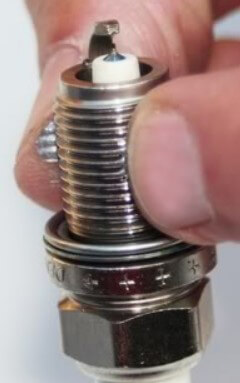
AC spark plugs should be installed dry.
Using anti-seize on spark plugs often causes stuck plugs and stripped threads, the very issues people are trying to avoid.
I never use it. Can't stand the mess. I use bearing grease instead.
Same here. It also doesn't harden up like anti-seize. Even on exhaust bolts.
.
I've never used any antisieze on wheels or brakes or anything before and have never had any issues removing lugs or bolts. I guess South Louisiana and Texas doesn't really have weather where it makes a difference?
This answer is restricted to MB engines from the sixties.
4 and 6 cyl, cast iron block, aluminium head and lots of different metals in the cooling circuit.
The exhaust( and intake) manifold sat on M10 and M8 studs in the aluminium head.
The manifold nuts were heavily copperplated. I have removed many manifolds that had not been removed until I did so after 20-30 years. The nuts came off with no problems and the studs stayed in the cylinder head.
Another not so happy situation was to replace the thermostat that sat in an aluminium external casting. The cover was secured with 4 off M6* 30 mm galvanized screws. After having broken a number that were hopelessly seized I learned to drill them out before even trying to screw out. Cleaned up the thread and used teflon tape over the threads when putting back. The teflon taped screws came out easy even after many years.
Ola
That's why it makes a great anti-theft device too. Anybody that has used it, knows how it makes a mess and they will avoid touching anything with anti-seize on it.
My $.02. NEVER on lug nuts or wheel studs. Any properly trained ASE tech or automotive engineer can tell you that. Most companies that make anti seize say not to right in the instructions. Also, always use it on Stainless Steel.
Tommy


+1
Without Never-Sieze I typically need my dead blow sledge to release the wheels on my BMW. I would hate to be in a situation on the road where I couldn't change a flat.
what about stainless steel lug nuts?
You shouldn't even be using them. Stainless will always gall when used with other metals.
Tommy

But... but...but
Summit sells them.... they have to be gooood....
Old thread but caught my attention.When I started wrenching on FJ40's many years ago, I learned to use anti-seize on just about everything (automotive that is). Just a little extra insurance that parts would come off easy in the future. I'm guessing it's graphite suspended in a oil therefore lubricating and preventing components from rusting where they meet.
The only place I've seen a downside is in the lugnuts on my truck. The anti-seize has kind of become a thick paste that almost takes more effort to overcome. I'm guessing that's from attracting dirt and a thourgh cleaning would correct that.
My brother recently had to take some training on torque techniques and learned that no modifiers should be applied to the wheel studs or hub. I know critical engine components should be torqued dry except fasteners with factory specified additives. I'll acknowledge that lugnuts would fall under critical fasteners. I was just wondering what opinions or knowledge is on GJ in reference to anti-seize.
Let's see if my question gets answered: can you explain the bold type a little better? What alternate method of determining clamping force beyond an mathematic estimate based on a set of figures in general w/o knowing the job specifics?Old thread but caught my attention.
The use of lubricants including anti-seize greatly affects the amount of clamping force the fasteners will exert on the joint with the same given input torque. For example- you set the torque wrench to 71 ft/lbs on a dry 1/2 stud and you will apply 6,563 lbs of load on the joint (this is material dependent btw). Lubricate the same fastener with a decent quality anti-seize and apply the same 71 ft/lbs and you apply 11,375 lbs of load on the joint. It is not uncommon to exceed the bolt materials' tensile strength and break the bolts from the improper use of lubricants and anti-size compounds without adjusting the torque requirements. The torque wrench will still click at 71 ft/lbs but you will essentially have double the clamping force. So be careful to follow the manufacturer's guidelines on the use of lubricants, anti-seize, thread lockers etc. Especially on critical joint applications.
Anti-seize compounds primarily do 2 things. Lubricate with the grease or oil carrier and help prevent galling during disassembly from the leftover mineral (graphite, copper, Moly, nickel ect) When used in hot applications (think exhaust manifolds) the oil or grease will be cooked off at about 450 degrees F. leaving the mineral in the threads to aid in disassembly. Do not pay attention to the marketing BS on the side of the can that says it can withstand 1600 to 2400 degrees! (this is referring to the mineral, not the oil or grease carrier)
It is important to use an ant-size that is compatible with the other metal components in the joint.
Hope this helps if anyone still reads this;
I just wanted to see if the bot would come back.
Anyway, does that .065 jibe with his numbers?
No need for anti seize on bots.I just wanted to see if the bot would come back.
From one of the other rambling threads about anti seize, there is actual engineering behind the clamping force, torque and the effects of thread lubricants.
Torque number with Anti-seize:
The torque required for a bolted joint design comes from a long string of calculations, but boils down to a simple linear equation.
T = Wp x K x dn
Where T=torque; Wp=fastener preload; K=torque coeff; dn=diameter
The factor that changes with dry vs lubricated fasteners is the "torque coefficient" and is published for a variety of cases. These are taken from a DuPont Engineering Specification (10 pages of calcs). Examples:
- Dry steel fasteners: K=0.20
- Lightly oiled steel: K=0.15
- Cad Plated: K=0.14
- Anti Seize on steel: K=0.13 (as published by Bostik for their Never Seez products)
- Graphite & mineral oil: K=0.10
Fastener preload is the value held constant. Solving for the reduced torque reduces to the ratio of the lubricated fastener’s k value to that of the unlubricated, 0.13 / 0.20 = 0.65.
Never Seize versus dry uncoated steel, multiply the specified torque by 0.65.
Firmware update.Could it still be a bot if his join date was almost 10 years ago?
 .
.