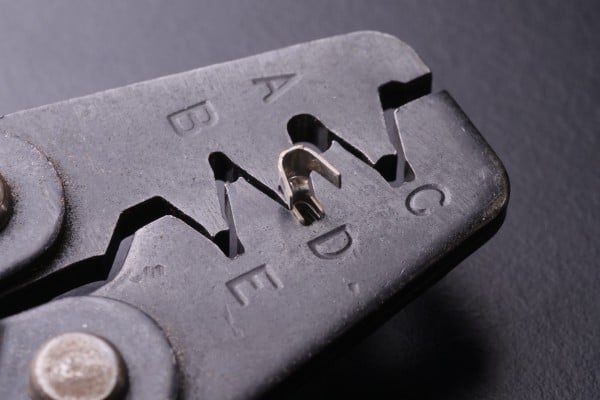
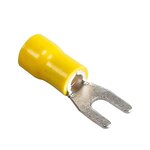
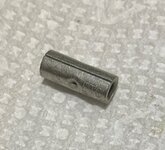
In the past, I've employed non-insulated parallel connectors and solder - that I would cover with polyolefin heat shrink (after the soldering is completed) - for extending and/or connecting to small wires (12 AWG to 18 AWG).
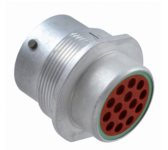
At the moment, I'm trying to come up with a "modern" method for extending the wiring on a skidsteer loader to accept a prewired bulkhead connector that will stay in place on one of its loader arms. The bulkhead connector I'm referring to is a round aluminum Deutsch HD34-18-14PN connector, which is shown (in its raw/empty form) below.
Deutsch HD30-Series Bulkhead Conn
As I mentioned earlier, the connector we're trying to install is already wired up, so there's no need, in this case, to crimp wires into pins and insert them into the bulkhead connector. The question is how are folks making a simple connection between two separate wires these days?
I've seen video showing rings covered in clear heat shrink that accept wires from each end and, after crimping, a heat gun is used to shrink the insulation and to melt some pre-applied/tinned solder. My old method seems antiquated compared to what I saw in the video, but I'm asking questions here to see what actually works for people.
At the moment, I'm trying to come up with a "modern" method for extending the wiring on a skidsteer loader to accept a prewired bulkhead connector that will stay in place on one of its loader arms. The bulkhead connector I'm referring to is a round aluminum Deutsch HD34-18-14PN connector, which is shown (in its raw/empty form) below.
Deutsch HD30-Series Bulkhead Conn
As I mentioned earlier, the connector we're trying to install is already wired up, so there's no need, in this case, to crimp wires into pins and insert them into the bulkhead connector. The question is how are folks making a simple connection between two separate wires these days?
I've seen video showing rings covered in clear heat shrink that accept wires from each end and, after crimping, a heat gun is used to shrink the insulation and to melt some pre-applied/tinned solder. My old method seems antiquated compared to what I saw in the video, but I'm asking questions here to see what actually works for people.
Last edited: