Oldtuleguy
Well-known member
- Joined
- Nov 4, 2017
- Messages
- 10,486


A lot of US interwar/prewar equipment landed up in the inventory for WWII, J. The GMTK that the US Army was issuing until 1942 was specified in 1938. Until the US Treasury Dept updated Federal Specifications in 1943, most of the tools were acquired based on 1934 specs that were rubberstamped again as is in the late 1930's. Prewar tools have been found in unmolested Army surplus boxes with 1953 re-pack dates, and some of them have been very early (late 20's/early 30's). It stayed in the inventory and was issued when supply couldn't keep up with demand during the buildup. A colleague in the UK tells me it was pretty much the same in the British Army. Having said all that, I have to admit, 1923 seems almost impossibly early for that explanation. And what I don't understand is how a set of US tools from the mid 1920's ended up with the British Army, let alone the British Army in Mandatory Palestine during the postwar fighting (White Paper, King David Hotel, Haganah, Transjordan, Civil War, etc).Were these sets an Army issue even when they were 25 years old?
Those sets were popular with car owners. Perhaps it made it's way there with an old car.
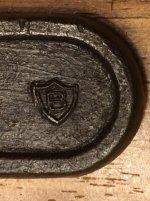
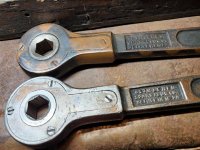
I just took a good hard look at the image of the “third” (unidentified) manufacturer, and it looks like a Bonney B-shield, accidentally struck twice. Further, the raised edge of the handle of the mystery ratchet appears narrower at the ****, as the metal seems to have been flattened into the depression as from a second strike shifted approximately 1/16” toward the ****.
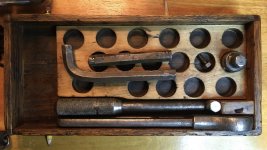
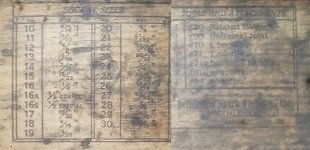
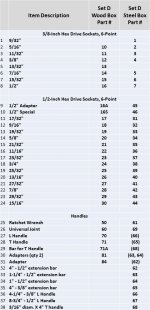
Already noticed, addressed, and discussed in some detail in the posts I cited. Edit: I still think post #130, pic 3, is your best view of the handles list on wood box sets, as I recommended above.What I am seeing is there are some differences from the steel sets, particularly in the numbering scheme,
looks like a Bonney B-shield, accidentally struck twice. Further, the raised edge of the handle of the mystery ratchet appears narrower at the ****, as the metal seems to have been flattened into the depression as from a second strike shifted approximately 1/16” toward the ****.
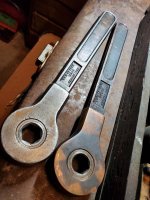
Are there other examples of these ratchets? Or an image that shows the rest of the ratchet, to compare it to the known Bonneys?
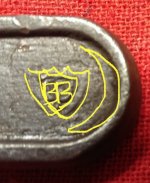


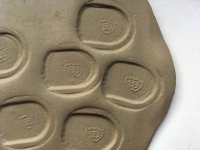
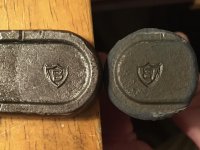


This post…When/where did that ratchet begin to seen as evidence for a third forge?
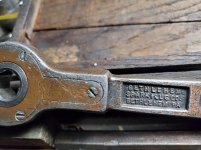
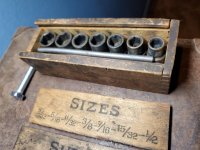
Anyone ever seen this before? Can't seem to dig it up anywhere. It's a real mystery. Same ratchet, same brand (Bethlehem Spark Plug Company), 3 different Forge marks so far; Bonney, Herbrand and this one.


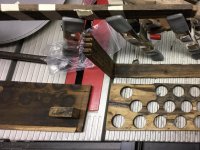

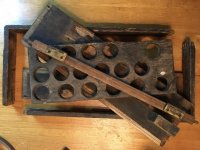
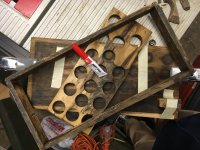
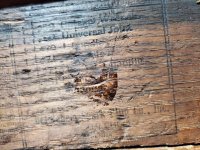
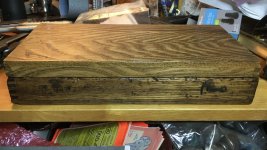
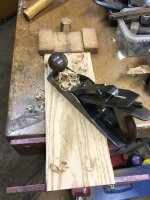
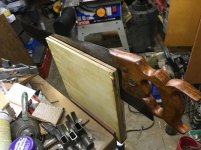
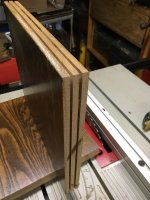
I started down that road. After waiting fruitlessly for the universe to deliver a piece of 1/4” chestnut, I broke down and re-sawed a 1-1/2” slab I had. The grain pattern is more wild than the original, but it’s not like chestnut wood grows on trees (anymore). First piece I cut 1/8” too short, because my thrifty side didn’t want the waste to be less than 36”. Dumb! so a second piece, and now I had the right length. Even so, I cut the finger joints a tad too deep, making the entire lid an equal tad smaller than the base. Final error was trimming the lid exactly square, whereas the base was actually just out of square. So the fit is imperfect, but okay. As is the color match. Clear shellac, a little distillate of dissolved 78rpm records, and rubbed-out BLO. I have a brown toner, but it interacts with chestnut to turn pink. No thanks....you can make or adapt a lid from something else - and then put a facsimile decal on it!


 )
)