OP
old_smokey
Well-known member
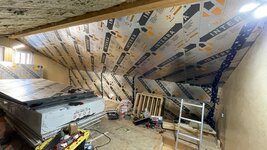
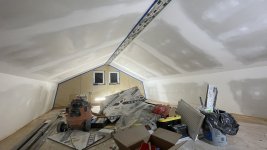
It’s been two weeks since my last post. I’ve been working a ton, but it doesn’t look like I’ve made a ton of progress — mostly because insulating the ceiling turned into a much bigger job than expected.
My goal over the past two weeks was to get the shop insulated and ready for heat before the cold really sets in. But, of course, I overcomplicated things.
The main time sink was building custom rafter baffles. I looked at store-bought ones but they were so flimsy. I was sure they’d collapse under the pressure of installing Rockwool batts, closing off my ventilation gap — a big problem with a cathedral ceiling. I decided to make my own. How hard could it be!
I decided I needed my baffles to do a couple things -
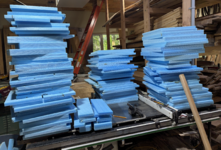
I used leftover foam scraps to establish a 1.5" vent gap. These were just glued to the underside of the roof deck.

Here you can see me looking up the vent channel. I also needed to add a thin strip of foam along the centre of most rafter bays, so the baffles are supported at both edges and in the middle. The XPS was very brittle, but this added support kept it from snapping during installation.
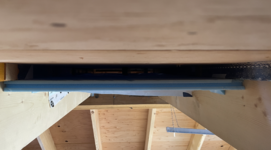
At the base of the rafter bays, there is a 2x6 bottom plate covered with 2" scrap XPS, fit tightly and glued in place, and later sealed to the rafters and the baffles with spray foam. You can see the first pieces going in here, along with some vent spacers.

1” XPS is about 1.1 perms. So it’s vapour open, but only a little bit. To increase the drying capacity, I had the idea to add ventilation slots to the upper panels. These were made on a router table. However, this means they aren’t air-tight anymore.
To solve that, I wrapped the vented baffles in leftover Tyvek before installing. The Tyvek was secured tightly along the rafters and the ridge beam with wood cleats, then sealed with spray foam. I held the upper foam baffle back 3” from the ridge beam as well, extending only the house wrap, giving the top of the rafter bays a perm rating of around 50 — very vapour-open while staying airtight and rigid.
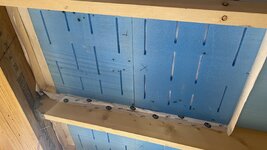
This all took ages to finish. Every piece had to be custom-fit because the rafters aren’t perfectly spaced and some have a slight twist. I'm not sure I would do it this way again!
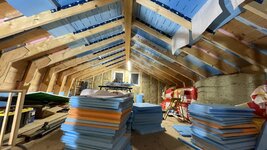
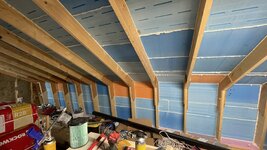
It took about a week to finish the baffles and another couple of days for the Rockwool. I bought six bags from Marketplace, all of which seemed just a smidge undersized. They kept falling out of the ceiling, so I had to hold them in place by stapling strings across. Very irritating.
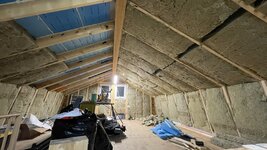
But the difference is immediate — the shop is noticeably warmer and quieter, even without the heat turned on. I was in a T-shirt while working inside, even though it was below freezing outside. Most importantly, despite this feeling like possibly the most absurd thing I've done in some time, I'm confident I’ve got a robust roof assembly that should stay warm and dry for years.
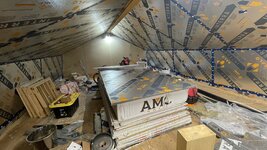
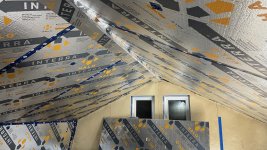
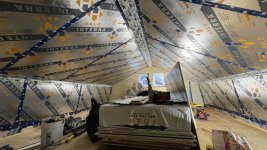
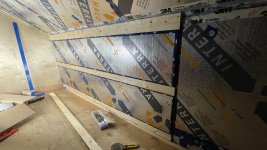
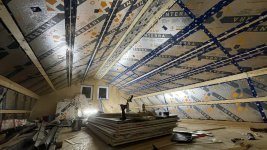
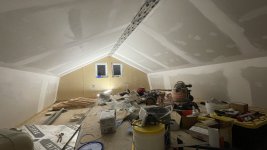
The last step will be to add two layers of 1” foil-faced EPS under the rafters, taped and offset, followed by 3/4” plywood strapping and drywall. The foam will be detailed as my air and vapour barrier. Between the EPS, Rockwool, and 1” XPS baffles, I will have a total roof R-value of around R41-42, above code for cathedral ceilings in my area. And no thermal bridging at the rafters. The gable walls will get the same plywood as downstairs.
In other news, I finished the main-floor plywood last night, which went pretty smoothly. I still need to finish screwing it down, add cover plates, and do window trim and door thresholds, but it’s nearly wrapped up.
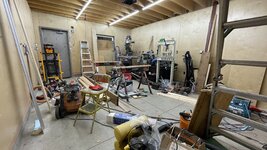
T-minus 10 days until move-in. Let’s go!
My goal over the past two weeks was to get the shop insulated and ready for heat before the cold really sets in. But, of course, I overcomplicated things.
The main time sink was building custom rafter baffles. I looked at store-bought ones but they were so flimsy. I was sure they’d collapse under the pressure of installing Rockwool batts, closing off my ventilation gap — a big problem with a cathedral ceiling. I decided to make my own. How hard could it be!
I decided I needed my baffles to do a couple things -
- Maintain a consistent 1.5” vent gap from soffit to ridge cap
- Be rigid enough to hold their shape against compressed insulation (I’m using R28 Rockwool, which is 7.25” thick. But with baffles, I only had 6.75” of rafter space, so I need to compress them just a touch).
- Be airtight to prevent wind-washing. This is to maximize the insulation performance. Cold air blowing through the batts via the ventilation channel is like wearing a winter jacket with the zipper open.
- Be vapour-open so any moisture that finds its way into the rafters can make its way through the baffles and dry via the vent space.
- Be cheap
I used leftover foam scraps to establish a 1.5" vent gap. These were just glued to the underside of the roof deck.
Here you can see me looking up the vent channel. I also needed to add a thin strip of foam along the centre of most rafter bays, so the baffles are supported at both edges and in the middle. The XPS was very brittle, but this added support kept it from snapping during installation.
At the base of the rafter bays, there is a 2x6 bottom plate covered with 2" scrap XPS, fit tightly and glued in place, and later sealed to the rafters and the baffles with spray foam. You can see the first pieces going in here, along with some vent spacers.
1” XPS is about 1.1 perms. So it’s vapour open, but only a little bit. To increase the drying capacity, I had the idea to add ventilation slots to the upper panels. These were made on a router table. However, this means they aren’t air-tight anymore.
To solve that, I wrapped the vented baffles in leftover Tyvek before installing. The Tyvek was secured tightly along the rafters and the ridge beam with wood cleats, then sealed with spray foam. I held the upper foam baffle back 3” from the ridge beam as well, extending only the house wrap, giving the top of the rafter bays a perm rating of around 50 — very vapour-open while staying airtight and rigid.
This all took ages to finish. Every piece had to be custom-fit because the rafters aren’t perfectly spaced and some have a slight twist. I'm not sure I would do it this way again!
It took about a week to finish the baffles and another couple of days for the Rockwool. I bought six bags from Marketplace, all of which seemed just a smidge undersized. They kept falling out of the ceiling, so I had to hold them in place by stapling strings across. Very irritating.
But the difference is immediate — the shop is noticeably warmer and quieter, even without the heat turned on. I was in a T-shirt while working inside, even though it was below freezing outside. Most importantly, despite this feeling like possibly the most absurd thing I've done in some time, I'm confident I’ve got a robust roof assembly that should stay warm and dry for years.
The last step will be to add two layers of 1” foil-faced EPS under the rafters, taped and offset, followed by 3/4” plywood strapping and drywall. The foam will be detailed as my air and vapour barrier. Between the EPS, Rockwool, and 1” XPS baffles, I will have a total roof R-value of around R41-42, above code for cathedral ceilings in my area. And no thermal bridging at the rafters. The gable walls will get the same plywood as downstairs.
In other news, I finished the main-floor plywood last night, which went pretty smoothly. I still need to finish screwing it down, add cover plates, and do window trim and door thresholds, but it’s nearly wrapped up.
T-minus 10 days until move-in. Let’s go!
Last edited: