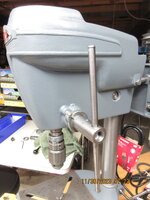
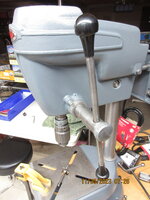
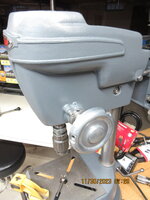
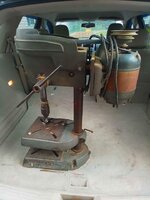
I finished the Dunlap this morning and think it turned out very ok. There are 752 photos, and counting, of the refurb in the link in the quote above.
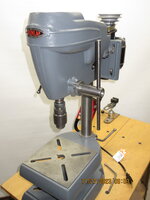
I was very pleased with how this drill press DP#137 cleaned up, but there were two things that bothered me.
First was the feed return. It would stick and be sluggish half-way up. I finally determined that the spring was pressing the pinion shaft against the pinion retaining screw. There was enough spring tension to return the quill half-way up, but then stop due to the pressure of the pinion against the dog point of the retaining screw.
I've had several severely worn retaining screws across all three sizes of these early Craftsman drill presses. So, a similar fix may apply to the larger machines.

When tensioning the spring CCW, the spring increases in length by the diameter of the spring wire for each full rotation of the tension knob. That is generally two revolutions of the tension knob for a properly tensioned spring. In addition, during quill feed, another one to two revolutions are added. That will increase the length of the spring by at least 1/4".
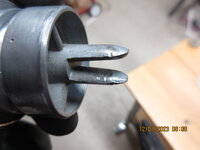
There are probably six versions of tension knob. Most of the time on any machine with the version of knob pictured, the tangs on the end of the springs make indentations on the prongs. Once spring tension is started, the tang stays put in the indentation. This forces the spring away from the knob toward the pinion retaining screw on every revolution of the knob. This is what was causing my issue.
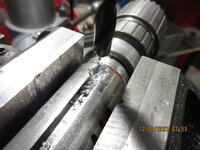
On the 12-1/4" drill press, the spring is secured to the pinion shaft with a 3/16" roll pin.

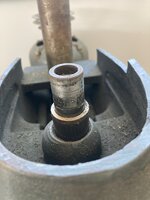
The loop of the spring is much larger than the roll pin. I believe that, at rest, the loop is centered over the roll pin; below left. Ideally, the spring should be against the roll pin to move as far left as possible in the prongs of the knob.
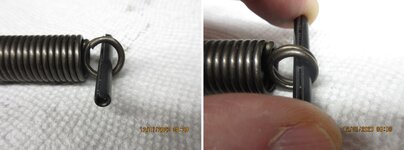
How I addressed this...
The fix was actually quite simple. The roll pin also acts as an anchor for the rod tension parts.
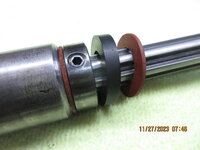
The photo below left is how I initially assembled the parts. The circumference of the rod spring was pressing on the roll pin.
The photo below right is how I rearranged the parts so the rod spring is pressing against the washer and the washer is now pressing on the return spring loop. This pushes the return spring to the left further into the knob prongs. You can see new smaller indentations to the left of the original indentations on the prongs in the photo above.
This was enough to correct the sluggish quill return.

: I replaced the original rod tension spring with a shorter, but firmer spring. The washers act as spacers to make up the difference in spring length.




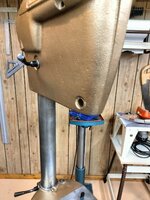


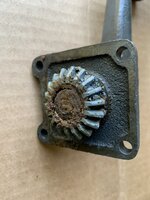


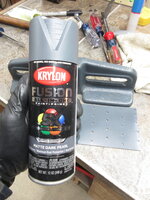





 ) site, I believe there is a misconception regarding the spindle thrust nut vs. the chuck safety collar.