To avoid these ads, REGISTER NOW!

Craftsman Socket Evolution 1948-2024

BlakeTheCarGuy

ALLIANCE MEMBER
Joined
Oct 10, 2018
Messages
9,298
Location
Roanoke Virginia
I would skip Easco G series as the chrome on some seems to peel more frequently on those and some have very thick walls as well. I would skip the long C craftsman stuff just because they are very old and not common (at least in my area). V and VV are good with their thin walls, although you will occasionally come across some very late V series with thick walls. Modern sockets, Danaher G series onward, are good because they do have flank drive, but a downside to some people is that G1 and later have double detents. If you want flank drive but not the double detents, G series and early GK series is the way to go. The easiest way to tell an Easco G series from a Danaher upright G is to look at the detents in the drive end. Easco will have a vertical slot, while Danaher will have oval detents.


I agree on the Easco and Danaher difference the Danaher is by far better in my opinion chrome wise.


Sent from my iPhone using Garage Journal
 
To avoid these ads, REGISTER NOW!
OP
L

Lesserstore

Well-known member
Joined
Mar 18, 2020
Messages
863
Location
Texas
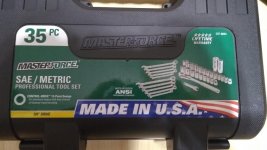
Another difference between Easco and Danaher is that Easco used Chrome Molybdenum, while Danaher used Chrome Vanadium, as evidenced by the packaging of Masterforce tools back when they were USA. The first picture is my set that has a copyright date of 2015, so made at the Sumter plant. The other 2 I pulled from eBay with a copyright date of 2010, so those were made at either the Dallas or the Gastonia plant.
 

Attachments

  • IMG_20201010_012958751~2.jpg
    IMG_20201010_012958751~2.jpg
    123.2 KB · Views: 28
  • Screenshot_20201010-012741.jpg
    Screenshot_20201010-012741.jpg
    20.7 KB · Views: 21
  • Screenshot_20201010-012631.jpg
    Screenshot_20201010-012631.jpg
    20.5 KB · Views: 21

BlakeTheCarGuy

ALLIANCE MEMBER
Joined
Oct 10, 2018
Messages
9,298
Location
Roanoke Virginia
Another difference between Easco and Danaher is that Easco used Chrome Molybdenum, while Danaher used Chrome Vanadium, as evidenced by the packaging of Masterforce tools back when they were USA. The first picture is my set that has a copyright date of 2015, so made at the Sumter plant. The other 2 I pulled from eBay with a copyright date of 2010, so those were made at either the Dallas or the Gastonia plant.


Interesting I didn’t know that. I’ve never used MasterForce so I wasn’t aware they were made by the same people who made Craftsman. Also wasn’t aware of the different metals used.


Sent from my iPhone using Garage Journal
 
OP
L

Lesserstore

Well-known member
Joined
Mar 18, 2020
Messages
863
Location
Texas
Interesting I didn’t know that. I’ve never used MasterForce so I wasn’t aware they were made by the same people who made Craftsman. Also wasn’t aware of the different metals used.


Sent from my iPhone using Garage Journal

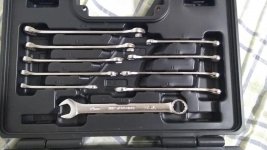
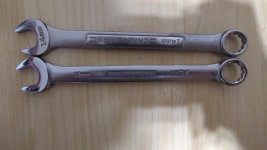
I never heard of Masterforce either, since I live in Texas and there aren't any Menards here, until I saw the name and googled it. They discontinued USA sockets and ratchets in 2017 when Allen/Armstrong shut down. They still have some sets available online. I picked up a 35 piece 3/8 SAE/metric socket and combo wrench set for $25 a few months ago and they're still in stock, they have a lot of open stock stuff, 1/4 SAE metric shallow and deep set and a 3/4 socket set. Unfortunately on some sockets there were minor defects on the chrome, and one socket had "tears" in the bottom of the broach. My guess is low employee morale since they were going to be fired.
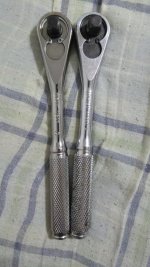
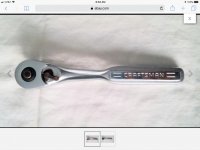
The picture of the ratchets has the Masterforce on the left and an Allen ratchet on the right the only mechanical difference is that the Masterforce uses a 3 tooth pawl while the Allen has a 2 tooth pawl. It also shows the difference between hexavalent and trivalent chrome, with the Allen having hexavalent which has a white color to it.

Sorry for turning this into a review, just started typing and this is where I wound up.
 

Attachments

  • IMG_20201010_185412451.jpg
    IMG_20201010_185412451.jpg
    143.6 KB · Views: 30
  • IMG_20201010_185325529.jpg
    IMG_20201010_185325529.jpg
    135.5 KB · Views: 28
  • IMG_20201010_185329070.jpg
    IMG_20201010_185329070.jpg
    128.7 KB · Views: 27
  • IMG_20201010_185605183.jpg
    IMG_20201010_185605183.jpg
    94.7 KB · Views: 28
  • IMG_20201010_190809395.jpg
    IMG_20201010_190809395.jpg
    97.5 KB · Views: 28
  • IMG_20201010_191100023.jpg
    IMG_20201010_191100023.jpg
    75.2 KB · Views: 24

BlakeTheCarGuy

ALLIANCE MEMBER
Joined
Oct 10, 2018
Messages
9,298
Location
Roanoke Virginia
I never heard of Masterforce either, since I live in Texas and there aren't any Menards here, until I saw the name and googled it. They discontinued USA sockets and ratchets in 2017 when Allen/Armstrong shut down. They still have some sets available online. I picked up a 35 piece 3/8 SAE/metric socket and combo wrench set for $25 a few months ago and they're still in stock, they have a lot of open stock stuff, 1/4 SAE metric shallow and deep set and a 3/4 socket set. Unfortunately on some sockets there were minor defects on the chrome, and one socket had "tears" in the bottom of the broach. My guess is low employee morale since they were going to be fired.
The picture of the ratchets has the Masterforce on the left and an Allen ratchet on the right the only mechanical difference is that the Masterforce uses a 3 tooth pawl while the Allen has a 2 tooth pawl. It also shows the difference between hexavalent and trivalent chrome, with the Allen having hexavalent which has a white color to it.

Sorry for turning this into a review, just started typing and this is where I wound up.


Definitely a resemblance. I also don’t have a Menards in my area because I’m in Virginia we have Rural King they sell Dewalt and Tekton for name brands and their store brand used to be Tool Shed now its Crimson which are ehh. Not sure who makes them over in China but they aren’t that great. I had thought about ordering some MasterForce but I have over 800 sockets already lol so I won’t be buying sockets as I’m out of room for all of them. I want to try a wrench or two maybe or something.


Sent from my iPhone using Garage Journal
 
OP
L

Lesserstore

Well-known member
Joined
Mar 18, 2020
Messages
863
Location
Texas
I forgot to mention that my friend bought a set after I told him about it, and when he opened it up, he found an Armstrong socket in there.:lol:
 
OP
L

Lesserstore

Well-known member
Joined
Mar 18, 2020
Messages
863
Location
Texas

DadsTools

Well-known member
Joined
Jul 27, 2017
Messages
1,852
The source that had the date of the plant's closure also has the date of when it was opened.

https://www.arkansasonline.com/news/2014/aug/07/apex-tool-group-closing-springdale-plant/

"The 200,000-square-foot plant at 1690 N. Old Missouri Road was established in 1969, according to the company's website."
That's what we need! I found a copy of a 1990 court document stating the Easco operated a tool plant there "for over 20 years." The article also indicates Easco was indeed making hand tools there.

I would say that, along with the double-line =VV= examples with flat-A and the dating for this provided by the patent info on the RHFT ratchets and its production numbers, this so far offers the best theory for the purpose of the VV code. This part of the Craftsman Dating Lottery may finally be solved.
 
Last edited:
OP
L

Lesserstore

Well-known member
Joined
Mar 18, 2020
Messages
863
Location
Texas
That's what we need! I found a copy of a 1990 court document stating the Easco operated a tool plant there "for over 20 years." The article also indicates Easco was indeed making hand tools there.

I would say that, along with the double-line =VV= examples with flat-A and the dating for this provided by the patent info on the RHFT ratchets and its production numbers, this so far offers the best theory for the purpose of the VV code. This part of the Craftsman Dating Lottery may finally be solved.

Do you have the link to that court document?
 

406Rich

Well-known member
Joined
Nov 4, 2014
Messages
289
Location
Elk Grove, Calif
Picked up 26 metric sockets today at several garage sales..most all 3/8 drive, couple 1/2 inch drive, 13 being six point, 13 being deep sockets couple V`s VV`s, G, G1, G2, G2D, one EE, and one lazer etched but no letter code just part number, many of the G`s can't hardly read the size and the knurling so faint can't see them, some knurling at the top some at the bottom....no consistency...
 
OP
L

Lesserstore

Well-known member
Joined
Mar 18, 2020
Messages
863
Location
Texas
When I was looking up when the different factories closed, the original MDF site that made V series closed in '05, but V series ended around '86, so what did that factory make? Ratchets? Wrenches? Or did they use it for other Danaher brands?
 

BlakeTheCarGuy

ALLIANCE MEMBER
Joined
Oct 10, 2018
Messages
9,298
Location
Roanoke Virginia
Re: Part III ADDED Craftsman Socket Evolution 1948-2011

That’s a good question because I believe MDF was shut down long before that as well and they used the factory for stuff. I’m wondering as well.


Sent from my iPhone using Garage Journal
 

DadsTools

Well-known member
Joined
Jul 27, 2017
Messages
1,852
When I was looking up when the different factories closed, the original MDF site that made V series closed in '05, but V series ended around '86, so what did that factory make? Ratchets? Wrenches? Or did they use it for other Danaher brands?
The single-character V code ended 85-86. But the V code continued as a double character "V_". I don't know if anyone has done a study on the second character, but I know at least for a few years they appear to be sequential. Might be a year code, but I don't know. In any event, there's every indication that the same factory continued making the same tools using the V_ code for some time.
 

BlakeTheCarGuy

ALLIANCE MEMBER
Joined
Oct 10, 2018
Messages
9,298
Location
Roanoke Virginia
Re: Part III ADDED Craftsman Socket Evolution 1948-2011

Yeah DadsTools is right on the ratchets and stuff they did use codes that started with V and had a different second letter I have one that I think is VM and other stuff


Sent from my iPhone using Garage Journal
 
OP
L

Lesserstore

Well-known member
Joined
Mar 18, 2020
Messages
863
Location
Texas
Thanks guys! If the V(x) codes are date codes here's what I've worked up using the code list and the teardrop ratchet study: there are 16 codes excluding A, B, C, D, I, O, X, Y, Z, and V because V was already in use. Theories numbers 1 and 2 rely on the assumption that V continued past 1986 at least in ratchets.
Theory 1: VE started in 1990, the QR gen 3 ratchets were actually out of production at the end of 1992 and were sold into '93 so Danaher and Sears could get rid of current stock and Danaher could focus production of the gen 4 ratchets in '93 so they would be ready for 1994. The letter codes would then continue until 2005.
Theory 2: VE started in 1991 and gen 3 ratchets were out of production in 1993. The letter codes would continue until 2005, but the VW code would correlate to 2006 because they planned for next year, so they produced some 2006 coded ratchets in 2005.
Theory 3: They aren't date codes and they are production run codes.
 
Last edited:

BlakeTheCarGuy

ALLIANCE MEMBER
Joined
Oct 10, 2018
Messages
9,298
Location
Roanoke Virginia
Re: Part III ADDED Craftsman Socket Evolution 1948-2011

Good info I sure wish their was more info out there for us to go by to determine. But those are good theories my guess would be date codes probably. Tomorrow I’ll see what my ratchets say for the code I have a couple.


Sent from my iPhone using Garage Journal
 

DadsTools

Well-known member
Joined
Jul 27, 2017
Messages
1,852
Thanks guys! If the V(x) codes are date codes here's what I've worked up using the code list and the teardrop ratchet study: there are 16 codes excluding A, B, C, D, I, O, X, Y, Z, and V because V was already in use. Theories numbers 1 and 2 rely on the assumption that V continued past 1986 at least in ratchets.
Theory 1: VE started in 1990, the QR gen 3 ratchets were actually out of production at the end of 1992 and were sold into '93 so Danaher and Sears could get rid of current stock and Danaher could focus production of the gen 4 ratchets in '93 so they would be ready for 1994. The letter codes would then continue until 2005.
Theory 2: VE started in 1991 and gen 3 ratchets were out of production in 1993. The letter codes would continue until 2005, but the VW code would correlate to 2006 because they planned for next year, so they produced some 2006 coded ratchets in 2005.
Theory 3: They aren't date codes and they are production run codes.
Based on what I found in my RHFT ratchet and Jim C.' teardrop ratchet research, the Vx code began about 1985-1986 with VE, so this predates 1990. The second letters are indeed sequential, and appear to change in rapid progression which hinted at being a year code. Todd F has an extensive collection of both RHFT and TD rats, and was able to help establish this sequence. We also found a few other notable changes that took place when Easco came under new ownership circa 1985-86 (such as FINALLY removing the oil port on the TD 1/4" to conform with its removal on the 3/8 and 1/2 years before), so this also ties in well with the code changes, especially since we can also see the two-character code commencing with this oil port's removal.

I didn't spend much time dwelling on this because my primary goal was to establish the various historical RHFT Types, but Vx certainly suggested a date code. My initial thought were they started with E instead of A for perhaps one of two reasons:

#1. Some of the letter combinations starting with A may have been too publicly established as to their meaning:
VA-Veteran's Administration (could also be why they introduced an inverted V for a second character instead of an A, since they used actual letters for all others)
VB- Visual Basic programming language (or simply skipped over as being bracketed by the others)
VC- Viet Cong
VD- venereal disease

I believe that VA, VC and VD all had a strong enough established public connotation to justify their omission. So VE might have been seen as the safest place to start.

I also surmised that "I" was skipped over because it would look too much like a number 1. O could have been skipped because of it looking too much like a zero (or Seagram's VO!). X, Y, and Z could have been eliminated simply because the number of years did not extend long enough to include them in a date coding system.

#2. it is a date code that theoretically starts back to 1981:
A-81
B-82
C-83
D-84
E-85 (first use?)
This seems weak at first because the evidence appears to point to 1986 as the start date for Vx. They may have started a date code system with E simply because of reason #1. However, the actual start date for Vx may indeed be 1985, and any single-V for 1986 might be NOS. If 1985 is the true start date for Vx, this system would work.

Going on Lesserstore's analysis that there are 16 total letter codes coupled with a V after the ones he mentioned are eliminated, and if we count 1985 as the first year of the Easco ownership change where the second letter may have been added late in that same year, we would have:

1985-VE
1986-VF
1987-VG
And so on through the 16th assignment (VW), which would be 2010. 2010 is the year that Danaher merged Easco with Cooper to form the Apex Tool Group, and shut down the Gastonia plant, and so may also represent the end of the Vx code.

This is all speculative, but I still believe there is some substance to reason #1, and the synchronicity between 16 unique secondary code letters and the 16 years of Easco changing hands to the beginning of Apex Tool as per #2 is too close to dismiss out of hand.
 
Last edited:
To avoid these ads, REGISTER NOW!
OP
L

Lesserstore

Well-known member
Joined
Mar 18, 2020
Messages
863
Location
Texas
I'm a bit confused. Are you saying that codes were used for multiple years? If you add 16 to 1985 you get 2001, and if the original plant closed in '05 why did they continue the V(x) codes until 2010?
 

BlakeTheCarGuy

ALLIANCE MEMBER
Joined
Oct 10, 2018
Messages
9,298
Location
Roanoke Virginia
Re: Part III ADDED Craftsman Socket Evolution 1948-2011

IMG_4369.jpg
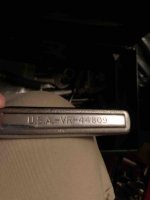
Here is one of mine it is VR I have several more I will have to find to see the codes I want to know a date of when it could be made hopefully we can determine something.


Sent from my iPhone using Garage Journal
 

DadsTools

Well-known member
Joined
Jul 27, 2017
Messages
1,852
I'm a bit confused. Are you saying that codes were used for multiple years? If you add 16 to 1985 you get 2001, and if the original plant closed in '05 why did they continue the V(x) codes until 2010?
85 86 87 88 89 90 91 92 93 94 95 96 97 98 99 2010 = 16 years (you count them like dollars--the first one is 1)

E F G H J K L M N P Q R S T U W = 16 characters

Coincidence?

From what I've seen with the earliest Vx codes, they were used sequentially, and so it's a strong indication for date codes.

From wikipedia Easco Hand Tools entry:
In 1985, Easco Corporation was acquired via a hostile takeover by Equity Group Holdings, controlled by the investment brothers Steven Rales and Mitchell Rales and taken private. The hand tools division of the company was taken public, and the other divisions were sold to an investment group including Citicorp Venture Capital.[3]

In 1990, the hand tool company was acquired by the brothers' Danaher Corporation. My Note: this appears to be a 'paper shuffle' acquisition, since Equity Group and Danaher were run by the same two brothers.

[4] This acquisition made the tools division the largest part of Danaher.[5] In 1991, Sears selected Danaher to be the exclusive supplier of Craftsman mechanic's tools.[6]

In 2010, Danaher merged its tools division with Cooper Tools to form Apex Tool Group. The same year, Apex closed the Gastonia, North Carolina plant where Easco manufactured sockets since 1978


As I mentioned before, a few changes in Craftsman were noted around the 1985 takeover, indicating changes to management strategies and procedures. Its fairly certain that the single-V code ended around 1985-86 and was replaced at that very time with the Vx code starting with VE, then VF, VG, VH, VJ, etc in fairly rapid succession. If there were a total of 16 different secondary letter codes known to appear with the primary V as you have reported, this all lines up quite nicely as date codes representing the 16 years from 1985 through 2010, the Vx presumably ending with the creation of Apex and the closing of Easco's Gastonia factory.

One test would be to poll for Vx codes on TD ratchets after they changed to the plastic selector switch, which according to Jim C. happened around 1993. If the metal switches with Vx codes are VE through about VM or VN, and those with the plastic switch are found starting at these letters down to VW, that's a strong hit.
 
Last edited:

Jim C.

Well-known member
Joined
Jan 8, 2010
Messages
2,598
Based on my observations only, the last TD ratchet with the metal alloy selector lever ended with the -VG- code. I have SEEN the next generation of Craftsman ratchets, those with the plastic selector, also with the -VG- code. (See photos below.) There was definitely some overlap with the -VG- code, suggesting that DadsTools is right about each year of production being assigned a letter code. Based on that premise, it would seem that the mental alloy selector ratchets were discontinued and the first plastic lever selector models were produced in the same year. That was right around 1993. That’s my assessment after reviewing the catalogs. But that doesn’t line up with the one letter for each year of production theory. If it is correct however, then the metal alloy selector lever ratchets were discontinued in the late 1980s versus my thinking that they went out of production in the early 1990s. Now, as we’ve seen though DadsTools’s research, the catalogs aren’t always correct. The plastic selector lever may have been in production prior to its appearance in the 1993 catalog. It’s entirely possible that plastic selector lever ratchets were for sale as early as 1992, and possibly bearing a -VF- code.
Jim C.
 

Attachments

  • 47B4CC5E-37E0-479A-8DFE-93739D33F464.jpg
    47B4CC5E-37E0-479A-8DFE-93739D33F464.jpg
    101 KB · Views: 23
  • 9FEAEBE5-8750-4882-8E32-AC68F8C84337.jpg
    9FEAEBE5-8750-4882-8E32-AC68F8C84337.jpg
    97.3 KB · Views: 27
Last edited:

DadsTools

Well-known member
Joined
Jul 27, 2017
Messages
1,852
Based on my observations only, the last TD ratchet with the metal alloy selector lever ended with the -VG- code. I have SEEN the next generation of Craftsman ratchets, those with the plastic selector, also with the -VG- code. (See photos below.) There was definitely some overlap with the -VG- code, suggesting that DadsTools is right about each year of production being assigned a letter code. Based on that premise, it would seem that the mental alloy selector ratchets were discontinued and the first plastic lever selector models were produced in the same year. That was right around 1993. That’s my assessment after reviewing the catalogs. But that doesn’t line up with the one letter for each year of production theory. If it is correct however, then the metal alloy selector lever ratchets were discontinued in the late 1980s versus my thinking that they went out of production in the early 1990s. Now, as we’ve seen though DadsTools’s research, the catalogs aren’t always correct. The plastic selector lever may have been in production prior to its appearance in the 1993 catalog. It’s entirely possible that plastic selector lever ratchets were for sale as early as 1992, and possibly bearing a -VF- code.
Jim C.
Hey Jim! I'm so glad you popped in on this post. Now we have a more complete knowledge base to work with what's being tossed around so far.

And yes, we've both seen where the catalogs are highly inaccurate when it comes to determining a year when a particular tool or even design feature was introduced. As you may have seen earlier in this thread, I feel Lesserstore and myself have been able to work out a viable theory for the start of the VV code being for the new Arkansas plant circa 1969. I think it's the best theory to date.

Einstein once said that to test any theory, you must first accept its elements as true and then working on disproving them, rather than starting with the mindset that the theory cannot be true. For the moment then, setting the catalog (i.e.,the Sears Catalog Carnival) aside, let's see if the premise of a sequential lettering system for each of the 16 years holds up to the physical artifact evidence. One of these 'milestones' would be the introduction of the plastic lever. If we find all metal levers up to a certain letter, then a mix of metal and plastic for a certain letter, then the subsequent letters are all plastic levers while the letters before are all metal, then we have a strong piece of evidence for a sequential date code system. This would be the easiest test to start with. We have to watch for rebuild kits, of course, although I'm not sure if the metal kits fit the plastic and vice versa.
 
OP
L

Lesserstore

Well-known member
Joined
Mar 18, 2020
Messages
863
Location
Texas
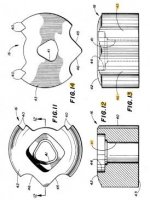
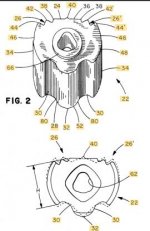
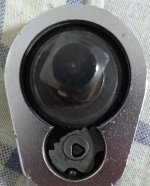
Another change, besides the change from metal to plastic selectors and buttons, during the production of the 4th gen ratchets was a change in the pawl design. In the original patent (filed 1991, granted 1993) for them, the pawl had 2 tooth engagement, while a later patent (filed 1999, granted 2000) had a 3 tooth engagement pawl. I have a VT code 1/2" ratchet with a 3 tooth engagement pawl.
The first pic is the original patent, the second is the later patent.
 

Attachments

  • Screenshot_20201017-122837.jpg
    Screenshot_20201017-122837.jpg
    20.9 KB · Views: 16
  • Screenshot_20201017-123045.jpg
    Screenshot_20201017-123045.jpg
    21 KB · Views: 15
  • IMG_20201017_125049216~2.jpg
    IMG_20201017_125049216~2.jpg
    55.3 KB · Views: 14
  • IMG_20201017_125112317~2.jpg
    IMG_20201017_125112317~2.jpg
    97.3 KB · Views: 23

DadsTools

Well-known member
Joined
Jul 27, 2017
Messages
1,852
But what about the years 2000-09?
That's correct! This is what happens when you get old. I apologize for the gross oversight. As I mentioned before, I did not spend any time in researching these double-letter codes when researching the RHFT.

Still, the secondary letters do seem to be chronologically sequential, so that once a certain letter is succeeded it is not used again. That must mean something.
 
OP
L

Lesserstore

Well-known member
Joined
Mar 18, 2020
Messages
863
Location
Texas
That's correct! This is what happens when you get old. I apologize for the gross oversight. As I mentioned before, I did not spend any time in researching these double-letter codes when researching the RHFT.

Still, the secondary letters do seem to be chronologically sequential, so that once a certain letter is succeeded it is not used again. That must mean something.

If they aren't date codes, they could be production runs. There was probably a sheet in some corporate office that said something like: VT= 3/28/02-5/10/03, VU= 5/11/03-1/25/05, etc.
 

Jim C.

Well-known member
Joined
Jan 8, 2010
Messages
2,598
DadsTools,

I’m not trying to add any confusion to the conversation, but earlier I mentioned that the last metal alloy directional selector Cman ratchets which are the subject of the Teardrop Ratchet Type Study, ended with the -VG- code. I provided an example of the next generation ratchets also stamped with a -VG- code. Well, after I posted that information, I went through the Type Study and found photos of next generation ratchets in all three drive sizes each bearing the -VF- code. (See page 6, reply #76, of the Type Study.) So, that means there was at least a two code overlap between the last ratchets featured in the Teardrop Type Study and the next generation ratchets. I don’t know if any of this helps or disproves the letter/production year theory. It certainly lends support to the fact that catalog inaccuracies do exist.

Jim C.
 
OP
L

Lesserstore

Well-known member
Joined
Mar 18, 2020
Messages
863
Location
Texas
DadsTools,

I’m not trying to add any confusion to the conversation, but earlier I mentioned that the last metal alloy directional selector Cman ratchets which are the subject of the Teardrop Ratchet Type Study, ended with the -VG- code. I provided an example of the next generation ratchets also stamped with a -VG- code. Well, after I posted that information, I went through the Type Study and found photos of next generation ratchets in all three drive sizes each bearing the -VF- code. (See page 6, reply #76, of the Type Study.) So, that means there was at least a two code overlap between the last ratchets featured in the Teardrop Type Study and the next generation ratchets. I don’t know if any of this helps or disproves the letter/production year theory. It certainly lends support to the fact that catalog inaccuracies do exist.

Jim C.

The early next generation ratchets did have metal selectors and buttons and then a mix of plastic and metal, then all plastic. Gear Wolf had a video where he had some with metal buttons/selectors.
 

Jim C.

Well-known member
Joined
Jan 8, 2010
Messages
2,598
The early next generation ratchets did have metal selectors and buttons and then a mix of plastic and metal, then all plastic. Gear Wolf had a video where he had some with metal buttons/selectors.

Okay, I’m pretty sure you know what I’m talking about. I also qualified my comments by saying the ratchets “which are the subject of the Teardrop Ratchet Type Study....” You’ve seen the type study so I’m sure you know which ratchets are covered and which ones fall outside of its scope. If you go back to post #185 above, I provided two photos that clearly show the ratchet family that I’m referring to as the next generation or those that fall outside the scope of the type study. Do you need more clarification? I’m trying to help you determine if DadsTools‘s letter code/production year theory is correct or not, and you wanna pick fly sh*t out of pepper.

Jim C.
 
Last edited:

DadsTools

Well-known member
Joined
Jul 27, 2017
Messages
1,852
DadsTools,

I’m not trying to add any confusion to the conversation, but earlier I mentioned that the last metal alloy directional selector Cman ratchets which are the subject of the Teardrop Ratchet Type Study, ended with the -VG- code. I provided an example of the next generation ratchets also stamped with a -VG- code. Well, after I posted that information, I went through the Type Study and found photos of next generation ratchets in all three drive sizes each bearing the -VF- code. (See page 6, reply #76, of the Type Study.) So, that means there was at least a two code overlap between the last ratchets featured in the Teardrop Type Study and the next generation ratchets. I don’t know if any of this helps or disproves the letter/production year theory. It certainly lends support to the fact that catalog inaccuracies do exist.

Jim C.
You are not adding confusion to the conversation, my friend, but additional important information. I for one value your insights and input. I am happy you joined in. You've studied the chrome off these things! Your knowledge of the TD ratchets is very comprehensive, and perhaps at this stage of the game, unequaled.

The ratchets are perhaps to me the 'flagship' for studying any of these Craftsman hardline tools. They display more striking differences between types and are easier to date than sockets or wrenches that more frequently just have marking changes. Plus the ratchets are the ones bearing patent information where the dating is easily confirmed by USPTO info. It's this patent info on the ratchets that has helped finally nail down the dating of certain variations like the change to the flat-A and the appearance of model numbers on the tools. They have also helped to correct certain errors and omissions found in earlier sources like Lauver and some collector videos. Studying the ratchets are a vital aspect of any vintage Craftsman hardline tool analysis.

I hope that we can collectively hash out the most likely answers to the Vx code dilemma. Sears did nothing frivolously with its designs or markings--these codes definitely have a specific purpose and meaning.

My suggestion that they are some form of date code certainly needs to be explored. They may not be date codes, but may be production run codes. In either case, we would need to establish whether they are chronologically sequential as I surmised.

The changeover from metal to plastic levers seems to me a critical focus of study. This is a blatant change that must have a specific dating when it took place. The patented change to the pawl is also an important milestone, especially if it has marked patent info on the tool--that is hard information that can be dated with certainty.

One aspect of this changeover to plastic levers that needs to be explored is whether the new mechanism is interchangeable with old metal lever mechanism. Since I don't have examples of these myself, I can't confirm this. However, if they are interchangeable, then it's possible that we're still dealing with some sort of production run or date coding, since the handles would be identical for both. That could indicate that the code is based on the handle, not the lever, which would explain why both metal and plastic might have the same code.
 

Jim C.

Well-known member
Joined
Jan 8, 2010
Messages
2,598
Hey DadsTools,

Many thanks! The accuracy of the TD study would be greatly diminished without your input. If I can help with your letter date code theory I’m happy to do what I can. I don’t know if the guts of the TD ratchets covered in the type Study are interchangeable with the guts of the following generation of ratchets (those that fall outside of the scope of the type study.) That’s definitely worth looking into. I’m going to take a look at that. It’s interesting that the -VF- and -VG- codes (at least) are common to both families of ratchets. It makes me think that the secondary letters represent production years versus production runs. I don’t know how that works. Because one family of ratchets is undergoing another production run, does that mean the other automatically goes though one too?

What is apparent seems to be the introduction time of the next generation of ratchets, or those immediately following the TD Type Study. If you’re right about the secondary letter representing a production year, then the next generation ratchets were on the market way before they made it into the catalogs. I wonder if that has an impact on the ending date of the last TD ratchets covered by the Type Study. Unfortunately I relied on the catalogs for the 1993 end date. As we both know, that could be wrong.

Jim C.
 
Last edited:

DadsTools

Well-known member
Joined
Jul 27, 2017
Messages
1,852
Hey DadsTools,

Many thanks! The accuracy of the TD study would be greatly diminished without your input. If I can help with your letter date code theory I’m happy to do what I can. I don’t know if the guts of the TD ratchets covered in the type Study are interchangeable with the guts of the following generation of ratchets (those that fall outside of the scope of the type study.) That’s definitely worth looking into. I’m going to take a look at that. It’s interesting that the -VF- and -VG- codes (at least) are common to both families of ratchets. It makes me think that the secondary letters represent production years versus production runs. I don’t know how that works. Because one family of ratchets is undergoing another production run, does that mean the other automatically goes though one too?

What is apparent seems to be the introduction time of the next generation of ratchets, or those immediately following the TD Type Study. If you’re right about the secondary letter representing a production year, then the next generation ratchets were on the market way before they made it into the catalogs. I wonder if that has an impact on the ending date of the last TD ratchets covered by the Type Study. Unfortunately I relied on the catalogs for the 1993 end date. As we both know, that could be wrong.

Jim C.
One of the caveats of the catalogs is the reuse of existing photos and artwork, sometimes for years. If 1993 represents a changeover in the artwork of the catalog, you might try looking at the immediate previous years' issues to see if they were reusing the photos. If you find a series of years where the same photos were being used, then it's quite possible that the design change occured perhaps years before they shot new photos.
 

MuddyTaco

Active member
Joined
Jul 29, 2020
Messages
36
Location
Oregon
Sorry about bumping up this thread. But, I didn't want to start a new one since this topic has probably already been covered. I just can't seem to to find it.. :(

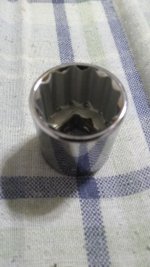
I was going through a box of junk out in my garage and found an older Craftsman socket laying in it. It's a deep 14MM (44431) with a upside down G on it. It also has this cool, almost deep grey color to the chrome, which surprisingly isn't peeling.

When were these made?

I am trying to figure out if it was one of my Dad's sockets, or my Grandfather. Thanks!

Edit: I just saw the thread talking about these. Production appears to have started in 1979, and were produced throughout the early 80's. Which is awesome because it means that this was a socket that my Grandfather would have purchased. Since my parents were broke back then, and my Dad would just go to his Father's house to work on all of their chainsaws and vehicles that needed repaired... 😎
 
Last edited:

d42jeep

Well-known member
Joined
Oct 22, 2014
Messages
16,480
Location
Northern California
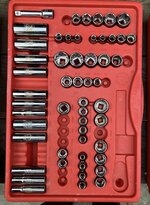
I know very little about the US made Craftsman sockets with the large size markings. I found this partial set at a yard sale on Saturday. Virtually all of the sockets had the large markings except for a very few Sears branded sockets. Does anyone know when these were offered and who made them?IMG_7444.jpegIMG_7452.pngIMG_0788.jpegIMG_0789.jpegIMG_0790.jpegIMG_0849.jpeg
-Don
 

four.cycle

Well-known member
Joined
Oct 19, 2015
Messages
28,457
Location
Tacoma, Washington
Not a clue, Don... I have three late-production US made Craftsman sockets I bought over at Sears (when they were still open) in the early 2000s - sorry can't recall exactly what year. The 3/4" is marked with a production code of (upside-down) G2D. The 1/2" and 9/16" have no production codes. The marking is different than yours. Yours for some reason look later than mine.
Is there a little "clock" thingie molded into the blow-mold box that might give an indication of date?

Sorry about the crappy photo - there's a storm raging and the light is terrible.
 

Attachments

  • 3 Craftsman sockets early 2000s.jpg
    3 Craftsman sockets early 2000s.jpg
    169.6 KB · Views: 6
To avoid these ads, REGISTER NOW!
Top Bottom