Interesting tidbit about plating, rust resistance and physical chemistry vs analytical chemistry:
The tendency for a metal to corrode is in general measured by its electrode potential. The more negative the potential, the less resistant to corrosion it is compared to other metals. Here's a chart of electrode potentials.
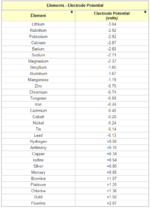
It's odd to note that nickel is only slightly less resistant to corrosion than iron, and chromium is actually less resistant than iron. In other words, to be technical, chromium has more negative electrode potential than iron, and nickel has less electrode potential. That's analytical chemistry.
However, here's where physical chemistry comes into play. The electrode potential states which metal will react most easily but it doesn't predict the rate the reaction will take place at. In physical reality, chromium has a much slower reaction rate than nickel, and nickel has a reaction rate about 100 times slower than steel. So, both can be used as a protective coating for steel, by plating them onto it. The plating tends to exclude oxygen and water from the steel, and protect it from corrosion. Once it pinholes, though, the steel underneath oxidizes readily, and quickly. That's why you get a rust bloom scattered all over chrome parts, and when you clean off that rust bloom, it almost disappears. The pinholes are tiny, and the rust produced is a very small defect in the chrome. If it's removed quickly enough and then protected by clear coat or wax, rust freckling on chrome, once removed, is almost invisible.
Another anomaly is aluminum, which is very negative, and thus quite reactive. Aluminum oxidizes almost instantly in air, but the aluminum oxide formed is very durable and tends to protect the underlying aluminum from oxidizing. Thus, aluminum turns slightly whitish from the pure silver color of unoxidized, and then doesn't oxidize further very fast.

 ) the speed range levers, etc.
 .
.