
You are using an out of date browser. It may not display this or other websites correctly.
You should upgrade or use an alternative browser.
You should upgrade or use an alternative browser.
DIY- Powder Coating
- Thread starter 427HISS
- Start date
michel
Well-known member
I seen guys powder coat small parts with one of those.
https://www.walmart.com/ip/Smoke-Hollow-30-Electric-Smoker-with-Window/49527308
https://www.walmart.com/ip/Smoke-Hollow-30-Electric-Smoker-with-Window/49527308
Tarl
Member
I have used the Harbor Freight one for a few years, as long as you keep the water out of it, it works good.
I seen guys powder coat small parts with one of those.
https://www.walmart.com/ip/Smoke-Hollow-30-Electric-Smoker-with-Window/49527308
With a smoker ?
michel
Well-known member
yes, I was surprised too , go at 8:20 in this video
I have used the Harbor Freight one for a few years, as long as you keep the water out of it, it works good.
I'm surprised that HF works, but also surprised that it doesn't by some users.
They have a lot of lower priced products that actually are real good tools, and some not. I recall in Hot Rod or Car Craft that they tested three clicker T/Q wrenches, and shocked HF placed ahead of DnapOn. BUT, we'll see how long HF's last?
What are you guys using for heat ?
RPH
Well-known member
We just got Eastwood’s dual voltage unit. Son has been using it for a few weeks now and is impressed. He has access at work with a professional system but states for the garage it works great. The higher voltage (25 kV) allows you to work the powder into smaller, tighter area’s.
Wow, for $130 that's a nice unit. What about heat ?
Being a home tool and not using it everyday shop, I'm impressed so far.
https://www.eastwood.com/dual-voltage-hotcoat-powder-gun.html
Being a home tool and not using it everyday shop, I'm impressed so far.
https://www.eastwood.com/dual-voltage-hotcoat-powder-gun.html
Last edited:
michel
Well-known member
I've had that Eastwood kit for a couples of years now, works very well.
michel
Well-known member
I use an old kitchen oven I have in the basement.
Works good.
But for space in the garage? that smoker is intriguing lol
Works good.
But for space in the garage? that smoker is intriguing lol
RPH
Well-known member
Same with the son. Old electric oven that cost $50. Works great, he has been doing his truck wheels in it. One at a time.
CudaChick1968
Member Emeritus
We just got Eastwood’s dual voltage unit. Son has been using it for a few weeks now and is impressed. He has access at work with a professional system but states for the garage it works great. The higher voltage (25 kV) allows you to work the powder into smaller, tighter area’s.
Most powders flow best at 45 kilovolts for the first coat. Adjustable voltage doesn't really have any scientific impact on Farriday Cage / inside corner areas.
david3921
Well-known member
I use a smoker to bake out the PC when I spray. It can go up to 400 out of the box. When I got it, I removed all the inner panels (drilled out the rivets), put in water heater wrap insulation, the reinstalled. Next, I installed a hook in the middle of the top to hang parts from. The sides have holders made to hold the racks of meat. I took the side framing out and cut off the bottom rows just leaving the top. This allows me to either use the hook for a single part or install the top rack for muliple. I also have a toaster oven for smaller parts.
Last edited:
CudaChick1968
Member Emeritus
I use a smoker to bake out the PC when I spray. It can go up to 400 out of the box. When I got it, I removed all the inner panels (drilled out the rivets), put in water heater wrap insulation, the reinstalled. Next, I installed a hook in the middle of the top to hang parts from. The sides have holders made to hold the racks of meat. I took the side framing out and cut off the bottom rows just leaving the top. This allows me to either use the hook for a single part or install the top rack for muliple. I also have a toaster oven for smaller parts.
Going up to 400 degrees is fine for most powders but keep in mind that any previously used metal subjected to oil or grease (and all cast aluminum new or used) will need to be outgassed first for best results. 400 degrees isn't high enough to pull the trapped impurities or air out of the metal so chances are good you'll end up with an uneven finish and bumpy parts.
Thirdyfivepickup
Well-known member
Going up to 400 degrees is fine for most powders but keep in mind that any previously used metal subjected to oil or grease (and all cast aluminum new or used) will need to be outgassed first for best results. 400 degrees isn't high enough to pull the trapped impurities or air out of the metal so chances are good you'll end up with an uneven finish and bumpy parts.
I'm reading along because I'd like to try this one day... but let me say thanks for giving some advice. It's nice to see a pro helping out the DIY people.

CudaChick1968
Member Emeritus
I'm reading along because I'd like to try this one day... but let me say thanks for giving some advice. It's nice to see a pro helping out the DIY people.
You're welcome!
Truth be told though as always, I only do it here on GJ. The so-called powder coating groups online are more often manned by rookies giving out such lame advice it's like the blind leading the blind! I could spend my entire day trying to teach the world to sing but I have work to do.
BassProCamaro97
Well-known member
You're welcome!
Truth be told though as always, I only do it here on GJ. The so-called powder coating groups online are more often manned by rookies giving out such lame advice it's like the blind leading the blind! I could spend my entire day trying to teach the world to sing but I have work to do.
Any advice for us noobs who have never tried it? Things that you have found out by experience?
few questions, any issues encountered when doing aluminum? Best way to prep aluminum, plastic, and steel.
Any brands of powder you prefer or that are junk?
Always wanted to do my own parts rather than paint everything.
Thanks,
~Jim~
Since my first post here, I decided to give my parts to a professional for my coatings. I've always loved DIY's as it's rewarding, until things go amuck...
I still want to try it myself, but only for parts I won't see as a focal point. lol
Cudachick is one of those professionals, so listen to her and others.
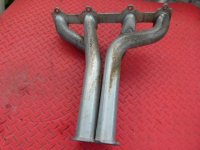
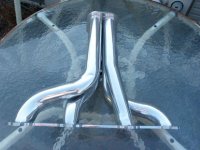
So, I sent my 427 Cobra headers to Jet-Hot and could not be happier. I started a Group Buy for any of us wanting them to powder and ceramic coat any parts you have. But I will keep this thread open for us, so please let's continue the decisions.
Kevin
https://www.garagejournal.com/forum/showthread.php?p=8388981#post8388981
I still want to try it myself, but only for parts I won't see as a focal point. lol
Cudachick is one of those professionals, so listen to her and others.
So, I sent my 427 Cobra headers to Jet-Hot and could not be happier. I started a Group Buy for any of us wanting them to powder and ceramic coat any parts you have. But I will keep this thread open for us, so please let's continue the decisions.
Kevin
https://www.garagejournal.com/forum/showthread.php?p=8388981#post8388981
Attachments
Last edited:
CudaChick1968
Member Emeritus
Any advice for us noobs who have never tried it? Things that you have found out by experience?
few questions, any issues encountered when doing aluminum? Best way to prep aluminum, plastic, and steel.
Any brands of powder you prefer or that are junk?
Always wanted to do my own parts rather than paint everything.
Thanks,
~Jim~
Hey Jim, I'm happy to help if I can but I have no experience with the low-temp powders used to coat plastic.
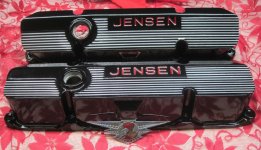
I won't come out and say that Eastwood's powders are junk but it's pretty widely known in the restoration industry that everything they sell can be found under its real manufacturer at 40-60% less than they sell it for. Watch out for really cheap pricing (it's probably recycled), and try not to buy anything from overseas. I use a few different suppliers -- Prismatic is my favorite due to the amazing selection (over 6,500 colors, textures and finishes), and IFS has the best gloss black I've ever shot.
Tiger Drylac, Sherwin Williams and Azco Nobel have also been around for a long time and have devoted followings.
Prep is 97% of a job done right. It's basically the same for all metals but some coaters rely on phosphate treatments or powder primer for rust / corrosion protection on steel or stuff that will be living outside all the time (such as cast iron lawn furniture).
I typically do the majority of the needed bodywork first because it's easier to see then than after it's been blasted. Post-blasting bodywork touch ups are common too -- but I try to get the metal as close to perfect as possible before any powder starts flying.
If the part is bare metal, I will then outgas it at 500 degrees for anywhere from 3-8 hours depending on the composition (steel / aluminum), the level of grunge and metal thickness. Any part subjected to oil, fuel or silicone (Armor All or tire wet) can surprise you with bubbling (the noun version of outgassing addressed next), an uneven powder finish or adhesion issues so the cleaner it is the better.
Outgassing can be either a noun or a verb depending on the context. Its purpose is to heat the part to a higher temperature and cook it for longer than you would to cure the powder so it pulls any trapped impurities and air pockets in the metal when it was formed to the surface where it can be blasted away. This is absolutely CRUCIAL when working with aluminum which is a very porous metal -- especially brand new CNC stuff that may have machine oil on bosses and old used aluminum like an intake manifold. Keep in mind a V8 intake will require at least an hour to get to 500 degrees and the longer you let it stay at that temp, the better the overall results will be.
I outgas stuff at night after 7:00 p.m. when the electric rates go down. What I don't spend running the shop can be passed down to customers and lets me stay at $40 an hour instead of the $175+ for single color work some shops charge.
The only time I outgas after blasting is when the part is already painted (some paints get harder to remove after they've been heated). Some are so thick from the factory that I use chemical stripper first to avoid hours at the blast cabinet later.
After outgassing it goes into my blast cabinet and gets a total white blast.
Every part is then lovingly hand washed (truly! lol) with an industrial etching cleaner and completely rinsed. That is the last time I will be touching the metal with my skin rather than by a hook, wire or a glove. It is sprayed with denatured alcohol to remove any lingering oils / fingerprints and Total Dissolved Solids in your water, blown dry with compressed air and either hung up on my spray rack or placed on a jig.
To make sure it's completely dry, I let it sit and clean my gun and spray area (about 24 mins.), gather any silicone plugs for threaded holes and, on jobs with several parts to coat, mock up my oven hanging layout while it's still cold to assure myself I can get the stuff in it without touching anything or rubbing against other coated parts nearby. If you want a bunch of parts to match it's best to coat and cure them at the same time due to differences in barometric pressure and humidity which can make a bigger impact than you might realize. Some powders love it humid and others do not so you'll have to play with that some and keep notes.
Pull your masking tape and remove any silicone plugs before you put parts in the oven with a little twisting/pull motion. The opening will turn out cleaner and you won't have a big funky ridge of cured powder to shave off with a razor blade later.
Most powders like a hot oven at the outset but some others (wrinkles, textures, veins, rivers, etc.) like to ramp up slowly.
Recommended mil thicknesses, cure times, UV stability and particulars about that powder will vary (check the MSDS). Do not start your timer until the PART reaches the optimum temperature, not the oven. Get an infrared temp gun if you don't have one yet -- without it you will merely be guessing and hoping for the best.
I'm not keen on getting into how to do multi-color custom work here because it's how I'm able to keep food on my table. I hope you understand. There are places that can do a decent job on two colors but very few like me who venture way beyond that. Maybe when I get closer to retirement I'll write a technical guide because the ones out there now are more of "The Blind Leading The Blind" from what I've seen of them. Even though I've been at this for 20 years this year, I will STILL never call myself an expert because there is always something new to learn. Keep an open mind and don't be afraid to think outside the box.
If anything comes up in your coating efforts that you have a question about, just call me. I work really late into the night and don't get up early but you can catch me pretty much every day after 10:00 a.m. Central time, even on weekends.
I hope this helps! I hadn't intended to write a novel today but there's no such thing as too much info about a subject that interests you.
Last edited:
BassProCamaro97
Well-known member
That was amazing and way better than I was expecting. Thank you!
I think I've decided it's easier to send you parts.
~Jim~
I think I've decided it's easier to send you parts.
~Jim~
Hey Jim, I'm happy to help if I can but I have no experience with the low-temp powders used to coat plastic.
I won't come out and say that Eastwood's powders are junk but it's pretty widely known in the restoration industry that everything they sell can be found under its real manufacturer at 40-60% less than they sell it for. Watch out for really cheap pricing (it's probably recycled), and try not to buy anything from overseas. I use a few different suppliers -- Prismatic is my favorite due to the amazing selection (over 6,500 colors, textures and finishes), and IFS has the best gloss black I've ever shot.
Tiger Drylac, Sherwin Williams and Azco Nobel have also been around for a long time and have devoted followings.
Prep is 97% of a job done right. It's basically the same for all metals but some coaters rely on phosphate treatments or powder primer for rust / corrosion protection on steel or stuff that will be living outside all the time (such as cast iron lawn furniture).
I typically do the majority of the needed bodywork first because it's easier to see then than after it's been blasted. Post-blasting bodywork touch ups are common too -- but I try to get the metal as close to perfect as possible before any powder starts flying.
If the part is bare metal, I will then outgas it at 500 degrees for anywhere from 3-8 hours depending on the composition (steel / aluminum), the level of grunge and metal thickness. Any part subjected to oil, fuel or silicone (Armor All or tire wet) can surprise you with bubbling (the noun version of outgassing addressed next), an uneven powder finish or adhesion issues so the cleaner it is the better.
Outgassing can be either a noun or a verb depending on the context. Its purpose is to heat the part to a higher temperature and cook it for longer than you would to cure the powder so it pulls any trapped impurities and air pockets in the metal when it was formed to the surface where it can be blasted away. This is absolutely CRUCIAL when working with aluminum which is a very porous metal -- especially brand new CNC stuff that may have machine oil on bosses and old used aluminum like an intake manifold. Keep in mind a V8 intake will require at least an hour to get to 500 degrees and the longer you let it stay at that temp, the better the overall results will be.
I outgas stuff at night after 7:00 p.m. when the electric rates go down. What I don't spend running the shop can be passed down to customers and lets me stay at $40 an hour instead of the $175+ for single color work some shops charge.
The only time I outgas after blasting is when the part is already painted (some paints get harder to remove after they've been heated). Some are so thick from the factory that I use chemical stripper first to avoid hours at the blast cabinet later.
After outgassing it goes into my blast cabinet and gets a total white blast.
Every part is then lovingly hand washed (truly! lol) with an industrial etching cleaner and completely rinsed. That is the last time I will be touching the metal with my skin rather than by a hook, wire or a glove. It is sprayed with denatured alcohol to remove any lingering oils / fingerprints and Total Dissolved Solids in your water, blown dry with compressed air and either hung up on my spray rack or placed on a jig.
To make sure it's completely dry, I let it sit and clean my gun and spray area (about 24 mins.), gather any silicone plugs for threaded holes and, on jobs with several parts to coat, mock up my oven hanging layout while it's still cold to assure myself I can get the stuff in it without touching anything or rubbing against other coated parts nearby. If you want a bunch of parts to match it's best to coat and cure them at the same time due to differences in barometric pressure and humidity which can make a bigger impact than you might realize. Some powders love it humid and others do not so you'll have to play with that some and keep notes.
Pull your masking tape and remove any silicone plugs before you put parts in the oven with a little twisting/pull motion. The opening will turn out cleaner and you won't have a big funky ridge of cured powder to shave off with a razor blade later.
Most powders like a hot oven at the outset but some others (wrinkles, textures, veins, rivers, etc.) like to ramp up slowly.
Recommended mil thicknesses, cure times, UV stability and particulars about that powder will vary (check the MSDS). Do not start your timer until the PART reaches the optimum temperature, not the oven. Get an infrared temp gun if you don't have one yet -- without it you will merely be guessing and hoping for the best.
I'm not keen on getting into how to do multi-color custom work here because it's how I'm able to keep food on my table. I hope you understand. There are places that can do a decent job on two colors but very few like me who venture way beyond that. Maybe when I get closer to retirement I'll write a technical guide because the ones out there now are more of "The Blind Leading The Blind" from what I've seen of them. Even though I've been at this for 20 years this year, I will STILL never call myself an expert because there is always something new to learn. Keep an open mind and don't be afraid to think outside the box.
If anything comes up in your coating efforts that you have a question about, just call me. I work really late into the night and don't get up early but you can catch me pretty much every day after 10:00 a.m. Central time, even on weekends.
I hope this helps! I hadn't intended to write a novel today but there's no such thing as too much info about a subject that interests you.
I love them black valve covers. If I were going to use the popular "murder out" theme, that would be cool.
Oh, also, you said, "I hadn't intended to write a novel today but there's no such thing as too much info about a subject that interests you",...
When I feel well, I'm that way too ! Talk,...talk,...talk....

Last edited:
CudaChick1968
Member Emeritus
You're welcome!
It's not exactly common knowledge but before Hurricane Katrina forced a relocation to the boonies of Tennessee and changed my direction in life, I was a certified paralegal for over 20 years in California and Louisiana. I hunt and peck on my phone but a real keyboard allows me to tell a story at 130 words a minute LOL!!!!!!!! Sometimes I miss it (mostly the money, much more lucrative than what I do now) but I still get to help people and be the artist I always was without having to get dressed to the 9s every day.
I appreciate the compliment about just sending your stuff out. If you do, keep in mind that all GJ members enjoy a 5% labor discount and if you're a Veteran, enlisted/retired military, law enforcement or a first responder, it bumps up to 12%.
It's not exactly common knowledge but before Hurricane Katrina forced a relocation to the boonies of Tennessee and changed my direction in life, I was a certified paralegal for over 20 years in California and Louisiana. I hunt and peck on my phone but a real keyboard allows me to tell a story at 130 words a minute LOL!!!!!!!! Sometimes I miss it (mostly the money, much more lucrative than what I do now) but I still get to help people and be the artist I always was without having to get dressed to the 9s every day.
I appreciate the compliment about just sending your stuff out. If you do, keep in mind that all GJ members enjoy a 5% labor discount and if you're a Veteran, enlisted/retired military, law enforcement or a first responder, it bumps up to 12%.
Bigblue&Goldie
Well-known member
I appreciate the information, and I have no interest in doing my own powder coating. I'm pretty positive the guys I use don't put anywhere near the effort into the parts I drop off. Granted, I'm not coating anything I expect a show job on.
Dumber than lumber
Well-known member
- Joined
- Dec 19, 2015
- Messages
- 2,038
There is some real good powdercoating info in this thread.
Thanks to all.
Thanks to all.
"I was a certified paralegal for over 20 years''
My father was an attorney, and I wish he was still here.
Two years ago, on my birthday, I was driving my truck at 30 mph getting up to speed on our highway, then a Lady hit me going 60 mph in a 40 mph zone. My neck hurt badly and my left arm jerked off the steering wheel and into the dash. It was so hard, that my two frame rails bent down 5" and actually tore both rails all across the bottom. My hitch is 3" off the ground. It is a 2000 Dodge Dakota Quad Cab, but only has 58,000 miles, no rust, but it's now junk. I only got 4k for it, so what replacement can I get for that ? !!!
She admitted she was speeding on the highway, bald tires, in the rain.
Well, she and her boyfriend took off to Florida. Her insurance was up on the first of June, the accident happened on June 25th.
I went through 8 weeks of physical therapy, but she said I had the worst whiplash she had seen in her 8 years of owning the business. So, I went to pain clinic and had 20 nerves removed in my neck in three months, plus a lot of work on my shoulder and arm. Two months ago I had surgery to install a Spinalcord Stimulator from Boston Scientific. It's supposed to interpret the nerve signal to the brain. I have a remote control to lessen or increase the amount of signal. I have two programs of 10 that I can change the areas to control and types. It's not a fix all. The company says the control can aid between 35%-75%. So far, I'll say around 40%.
Anyway, I hired a attorney to go after her or my insurance company.
I have good car insurance company that I have $100,000 in bodily injury, but the cost of only the Stimiuator is 50k, plus,.... the Doctor, Surgery Hospital, medications, physically therapy etc. I suspect that we won't get anything from the ***** that hit me.
If I turn my neck wrong. the pain brings me down to my knees. I have three torn rotator's on my shoulder, so them and my neck, my Doctor says I can only lift up to 30 lbs.
My father was an attorney, and I wish he was still here.
Two years ago, on my birthday, I was driving my truck at 30 mph getting up to speed on our highway, then a Lady hit me going 60 mph in a 40 mph zone. My neck hurt badly and my left arm jerked off the steering wheel and into the dash. It was so hard, that my two frame rails bent down 5" and actually tore both rails all across the bottom. My hitch is 3" off the ground. It is a 2000 Dodge Dakota Quad Cab, but only has 58,000 miles, no rust, but it's now junk. I only got 4k for it, so what replacement can I get for that ? !!!
She admitted she was speeding on the highway, bald tires, in the rain.
Well, she and her boyfriend took off to Florida. Her insurance was up on the first of June, the accident happened on June 25th.
I went through 8 weeks of physical therapy, but she said I had the worst whiplash she had seen in her 8 years of owning the business. So, I went to pain clinic and had 20 nerves removed in my neck in three months, plus a lot of work on my shoulder and arm. Two months ago I had surgery to install a Spinalcord Stimulator from Boston Scientific. It's supposed to interpret the nerve signal to the brain. I have a remote control to lessen or increase the amount of signal. I have two programs of 10 that I can change the areas to control and types. It's not a fix all. The company says the control can aid between 35%-75%. So far, I'll say around 40%.
Anyway, I hired a attorney to go after her or my insurance company.
I have good car insurance company that I have $100,000 in bodily injury, but the cost of only the Stimiuator is 50k, plus,.... the Doctor, Surgery Hospital, medications, physically therapy etc. I suspect that we won't get anything from the ***** that hit me.
If I turn my neck wrong. the pain brings me down to my knees. I have three torn rotator's on my shoulder, so them and my neck, my Doctor says I can only lift up to 30 lbs.
CudaChick1968
Member Emeritus
I appreciate the information, and I have no interest in doing my own powder coating. I'm pretty positive the guys I use don't put anywhere near the effort into the parts I drop off. Granted, I'm not coating anything I expect a show job on.
Sadly a lot of places don't pay attention to thorough prep and it shows in longevity more than anything else. You pay good money for metal finishing and when it starts chipping, peeling or coming off in sheets in a few months or weeks, would you be inclined to get anything else done?
Shops that merely blow the parts off after blasting are simply trapping a bunch of dust and debris in between the metal and powder.
THEY DO IT ALL THE TIME, trust me (I see it on countless industry boards and cringe every time). Experiment yourself; wash one once and see the sludge in the bottom of the sink! And then realize how many prior pieces that were done without washing and didn't last for long without some form of delamination.
Whether it's for your lawn mower or a World of Wheels contender, my approach is still the same. Dad taught me that if you're going to do it AT ALL, try to do it right. If I wouldn't put my finished work on my own ride, I would never ask you to put it on yours either.
A market saturation of so-called "powder coaters" -- now seemingly on every corner in metro areas -- is a result of the ready availability of cheap equipment, YouTube videos (mostly made by clueless rookies spreading bad info) and marketing strategies convincing people that it's an easy way to make money. Granted, pretty much anyone can physically do it but doing it well takes a shitload of practice, trial and lots of error to get that way.
The guys who set up with a hobby gun, coat two brackets and decide to open a business are the real culprits, churning out substandard work while learning and practicing on paying customers' parts which lasts a couple months ... and when the rework and bad reviews outnumber the happy customers they sell off the equipment and probably go beg their old boss for their job back six months later.
Meanwhile all that shoddy work gives my entire industry a black eye. That, apart from being raised with a high work ethic that includes trying to help others, is WHY I am doing it here. I want to see you guys succeed and be proud of the parts you coat, and still be proud of them in 15 or 30 years when all that great prep work you learned really pays off.
I accidentally left out what's probably my best advice for newcomers. Don't spend a fortune on equipment at the start; get a little hobby gun and a used oven off of Craigs List and just see if you enjoy it first.
If it pulls you in and you see the untapped potential in EVERY piece of metal, you're hooked and ready to move up to more challenging or bigger projects. If it doesn't inspire you at the start, chances are good you won't be getting the results you hoped for. Passion and inspiration have to come from within and cannot be jump-started by a message board thread or taught at a PowderX class.
There is some real good powdercoating info in this thread.
Thanks to all.
Happy to help you too!!
CudaChick1968
Member Emeritus
I saved a few screen shots to illustrate a few earlier points.
ALL OF THEM had the wrong answer.


After another guy with ethics and I added our thoughts, the entire thread disappeared. Unfortunately these are the rule most often rather than the exception. Do it as fast and cheap as possible and get it out the door. Don't be them.
ALL OF THEM had the wrong answer.
After another guy with ethics and I added our thoughts, the entire thread disappeared. Unfortunately these are the rule most often rather than the exception. Do it as fast and cheap as possible and get it out the door. Don't be them.
CudaChick1968
Member Emeritus
Mr. Hiss, your experience sounds absolutely horrific! People ****. If the statute of limitations hasn't run yet, your own UM/UIM and Medical Payments coverages might help offset some of it if you had it on your policy.
I don't know the particulars of the shoulder stimulator but you should double check with your doctor before powder coating. I know it adversely affects pacemakers. You've been through enough without 100,000 kilovolts zappin' ya too.
I don't know the particulars of the shoulder stimulator but you should double check with your doctor before powder coating. I know it adversely affects pacemakers. You've been through enough without 100,000 kilovolts zappin' ya too.
Mr. Hiss, your experience sounds absolutely horrific! People ****. If the statute of limitations hasn't run yet, your own UM/UIM and Medical Payments coverages might help offset some of it if you had it on your policy.
I don't know the particulars of the shoulder stimulator but you should double check with your doctor before powder coating. I know it adversely affects pacemakers. You've been through enough without 100,000 kilovolts zappin' ya too.
Lol,...don't want anymore zaps. When they wanted a cat scan it had to be the correct type, as one would ruin my 50k stimulator. Just as a clarification, it's not a ''shoulder'' stimulator, it's for my neck, shoulder and arm.
CudaChick1968
Member Emeritus
This older thread has lots of good info in it too.
https://www.garagejournal.com/forum/showthread.php?t=440099
https://www.garagejournal.com/forum/showthread.php?t=440099
david3921
Well-known member
Something I read elsewhere that has really helped out. Don't use the grounding clip. Instead, make your own ground. First, think about what the clip is there for. It's to complete the circuit between the charged powder (+) with a ground (-). The wire on these are small and the clip can get corroded. It's better to have a dedicated ground with thicker wire. I have a strap of 1/8" steel flat stock hanging in my garage. It is connected to thick steel grounding wire. The wire goes outside and is connected to an 8' copper grounding for driven into the ground. To coat, I use various lengths of dog lead chain to hang the parts. I hang them over a empty trash barrel to catch powder that falls. This is for small parts, mostly brackets. If I coat anything larger, I'll use the same set up but put a filtered box fan, pulling the excess powder. It all works pretty but I'm not attempting to do high quality work.
Milzo
Well-known member
I used to powder coat but moved so I haven't set it all back up. I have a caswell coating variable voltage powder coating gun they are around $200. I use an old shower stall as a booth. I had a 4 gauge ground wire strapped to my copper water line and the other end strapped to a metal rod that I hung the parts from above the shower stall. I extended my standard oven with sheet metal and rock wool known as "the pregnant oven". I always outgas parts before coating. Use a good compact LED flashlight after coating to find thin spots. You need a good infrared thermometer to check part temperature. Curing/Baking time doesn't start until the part reaches the desired temperature unlike baking a cake. I was buying all powder from powder by the pound with good results.
dcs13
Well-known member
CudaChick posted all great info, she knows her stuff
I got a burr under my saddle when my favorite powdercoater started a $60 minimum. ( I understand he was overwhelmed)..
That said. I bought a "consumer" grade gun (The EZ50). Then I found a nice cheap electric stove on craigslist. The rest is history. It's addicting. I will be building a bigger oven soon. Here's a few pics.. Im still learning a lot. Just ike any coating, prep work is THE key.


I got a burr under my saddle when my favorite powdercoater started a $60 minimum. ( I understand he was overwhelmed)..
That said. I bought a "consumer" grade gun (The EZ50). Then I found a nice cheap electric stove on craigslist. The rest is history. It's addicting. I will be building a bigger oven soon. Here's a few pics.. Im still learning a lot. Just ike any coating, prep work is THE key.
Last edited:
dcs13
Well-known member
Which brand is the EZ50 ?
Don't see pics ?
Redline EZ50.
Sorry, images were working fine earlier. I check their sizing and not too big. Not sure what happened.
Amazon link
https://www.amazon.com/dp/B00WYACEJO/?tag=atomicindus08-20
techieman33
Well-known member
Redline EZ50.
Sorry, images were working fine earlier. I check their sizing and not too big. Not sure what happened.
Amazon link
https://www.amazon.com/dp/B00WYACEJO/?tag=atomicindus08-20
To fix the images remove the "S" from https
To fix the images remove the "S" from https
Good one techieman.
http://i.imgur.com/DvEI2uk.jpg
http://i.imgur.com/BSuvqZB.jpg?1
http://i.imgur.com/fMNTZRP.jpg
CudaChick1968
Member Emeritus
@dcs13, thanks for the compliment!
I don't know about that EZ gun but it looks like its fittings' openings are plastic. That also looks like a lot of weight hanging on the end of that gun. Perhaps try putting the filter and regulator on your main air input line rather than over-burdening the plastic opening? You might get more years out of it in the long run.
I don't know about that EZ gun but it looks like its fittings' openings are plastic. That also looks like a lot of weight hanging on the end of that gun. Perhaps try putting the filter and regulator on your main air input line rather than over-burdening the plastic opening? You might get more years out of it in the long run.