Split point drill geometry is nice, I sometimes hand grind them for easier starting. A split point does have a thinned web, making the tip a bit more fragile and susceptible to chip/shatter under heavy pressure. Nothing to be excessively worried about, just don't lean on the drill so much. The video posted by The Cobbler was good (thanks for posting it) but have doubts about how well this would work on thin wall tubing, seems like the wall is unsupported because it's a hollow tube and partly susceptible to the same ragged hole conditions. Having a hard wood backing below like the video also makes a difference in addition to the cloth above. Somebody should try it and report back.
Per the topic: I don't see a split point being a good solution for the OP on drilling tubing. It should start easier but the problem the OP has/had is when the tip of the drill pierces through the material. Even with flat material the problem will exist with a split point. Making clean holes in tubing without deforming the tube, or having heavy burrs needs a particular solution. The annular cutter would work like an end mill, similar geometry, but they're a bit expensive and may require a particular holder/machine to use them. The least expensive, readily useable cutter is a twist drill that's been ground for thin material.
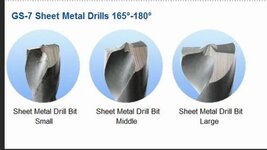
Annular cutters are available (so are end mills), ready to use, but a bit expensive (not easy to find in 1/4") for the task. End mills are widely available, a wide variety of shapes, fairly inexpensive (HSS or carbide are $20 or less) but aren't for use in a drill chuck. Twist drills are cheap, made to use in a drill chuck, but require the 180° grind (with center nib) to work well in thin material.
For a one time project, use whatever is available. I've got a lot of experience and I try NOT to drill thin material with a hand drill because I know it likely will make a ragged hole with standard twist drill tip geometry. For a tube that goes on a product I sell, the customer will think I'm a hack if the hole looks ragged. All that's really required here is a motor and a controlled down feed. A mag-drill is expensive, so are most drill presses. One of the cheap Chinese mini-milling machines (buy used) will do a much better job and likely be less expensive than a mag-drill or drill press. A mill also opens up the possibilities for joining where/how tubes intersect, lessening the need to hand fit them. I hate to advocate crappy, cheaply made, Chinese machinery but I can't think of a better solution per cost. This is all just my opinion and your particular situation may direct a different solution. Hope this helped somebody.




 . Get back to us we have more to share. Harry