

You are using an out of date browser. It may not display this or other websites correctly.
You should upgrade or use an alternative browser.
You should upgrade or use an alternative browser.
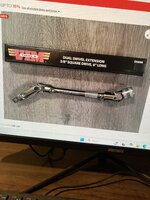
Dual Universal Extension…A Gimmick?
- Thread starter impactims
- Start date
seber
Well-known member
If I ever found a piece of equipment that needed that, I'd scrap it.
scooby074
Well-known member
Gimmick to me. Might be a 1:1000000 chance youd need it
cvairwerks
Well-known member
I've had times where we needed two universals to get past some obstruction to access some hardware, but never on that short of an extension.
mike93lx
ALLIANCE MEMBER
That looks like an "aw, **** it. Bet ya we'll sell 10 within 6 months"
Hannahranga
Well-known member
- Joined
- Mar 8, 2023
- Messages
- 219
Yeah that my opinion too, the appropriate tool instead of this is an oxy cutterIf I ever found a piece of equipment that needed that, I'd scrap it.
eejack
Well-known member
That actually looks like it would be perfect for the light pole base nuts I struggled with last year. Small hand hole in the pole down to 4 nuts in the flared bases. We ended up using wobbles extensions and universals, some duct tape and a lot of four letter words.
Well, except we would need the 1/2" drive version...
Well, except we would need the 1/2" drive version...
rlitman
Well-known member
Who thought up that monstrosity?
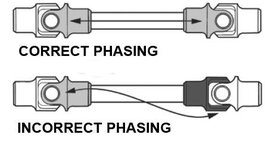
Kinda wish I owned a dozen universal socket swivel adapters and could chain them together and take a pic as a joke but I’m sure someone here doesThe extension length in the middle being a fixed length means it's tailored for only perfect scenarios

rust in the eye
Well-known member
Perfect for use with this
Beerhippie
Well-known member
I was going to point the same thing out. It'll get bound up.Who thought up that monstrosity?
bwringer
Well-known member
Well, if you're building a tiny pickup and you need a driveshaft...
Joemctag
Well-known member
Many times, I’ve removed an obstructing part, so I could get at a fastener, but not sure in how many instances this tool would be better.I have used a universal with an extension with a universal socket… which does the same thing.
I can’t imagine buying that tool, unless I needed it often. You wouldn’t be able to change the length of it.
Beerhippie
Well-known member
^See above.Well, if you're building a tiny pickup and you need a driveshaft...
Beerhippie
Well-known member
That's where the cutting torch comes in.Many times, I’ve removed an obstructing part, so I could get at a fastener, but not sure in how many instances this tool would be better.
Hannahranga
Well-known member
- Joined
- Mar 8, 2023
- Messages
- 219
Got to admit I'm surprised it doesn't come with a recommendation for the specific use case, ie on 27 to 28 ford tundras bottom left turbo encabulator nut without pulling the engine
mike93lx
ALLIANCE MEMBER
Even VIM couldn't come up with oneGot to admit I'm surprised it doesn't come with a recommendation for the specific use case, ie on 27 to 28 ford tundras bottom left turbo encabulator nut without pulling the engine
Modern Garage
Well-known member
I hadn't noticed that. I wonder if there's an actual reason it's made that way? Something to do with the forging or assembly order that makes it cheaper or quicker if it's out of phase?Who thought up that monstrosity?
Or just some draftsman that's never seen an actual driveshaft more likely.
Joe
Firebrick43
Well-known member
I as well, always been on 24 or 36" extensions. Once two 36" together.I've had times where we needed two universals to get past some obstruction to access some hardware, but never on that short of an extension.
Firebrick43
Well-known member
Why would phasing matter?
First they are sort of double cardan joints on each end, not a single cross/cardon joint like on a typical driveshaft. The problem with out of phase universals is speed changes causing vibration on a driveshaft is a problem of single cardan joints. Phasing on two single cardan joints cancels the speed changes out. A double cardan joint does this in itself, it doesn't need the other end to do so.
last, for a handle tool seeing a few rpm, it wouldn't matter.
I sure hope someone isn't hooking up their impact and driving it at 900 rpm
First they are sort of double cardan joints on each end, not a single cross/cardon joint like on a typical driveshaft. The problem with out of phase universals is speed changes causing vibration on a driveshaft is a problem of single cardan joints. Phasing on two single cardan joints cancels the speed changes out. A double cardan joint does this in itself, it doesn't need the other end to do so.
last, for a handle tool seeing a few rpm, it wouldn't matter.
I sure hope someone isn't hooking up their impact and driving it at 900 rpm
Last edited:
rlitman
Well-known member
First, OCD. Second, no, that's not remotely what a double cardan joint looks like, and if it was, there wouldn't be a phase issue....First they are sort of double cardan joints on each end, not a single cross/cardon joint like on a typical driveshaft...
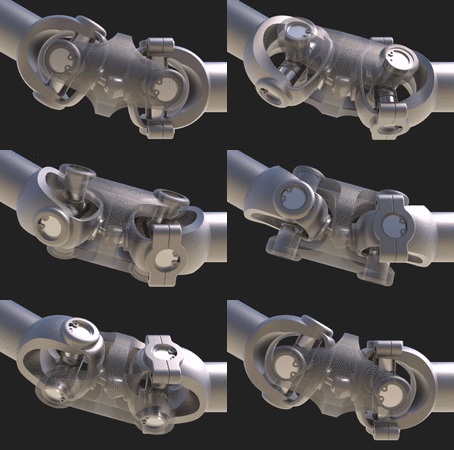
Universal socket extensions get used at much larger angles than driveshafts (which in reality see angles more like we'd expect from wobble extensions), and as the angles increase, the issues with that phasing become more apparent. My issue here isn't with constant velocity, but with the shaft wobbling. With every turn, one universal is going to take more of the angle and then the other, rocking the shaft up and back. There's going to be a point (probably before 45 degrees), where the fight between one universal and the other will drive so hard to one side that the joint that loses is going to lock up. You can test this yourself with two universal socket adapters connected in line, if your universals happen to align the ears with the square drive.
Then again, this is a tool in search of a problem, so why not let it create some problems of its own.
Firebrick43
Well-known member
That is why I used the phrase "sort of"First, OCD. Second, no, that's not remotely what a double cardan joint looks like, and if it was, there wouldn't be a phase issue.
Universal socket extensions get used at much larger angles than driveshafts (which in reality see angles more like we'd expect from wobble extensions), and as the angles increase, the issues with that phasing become more apparent. My issue here isn't with constant velocity, but with the shaft wobbling. With every turn, one universal is going to take more of the angle and then the other, rocking the shaft up and back. There's going to be a point (probably before 45 degrees), where the fight between one universal and the other will drive so hard to one side that the joint that loses is going to lock up. You can test this yourself with two universal socket adapters connected in line, if your universals happen to align the ears with the square drive.
Then again, this is a tool in search of a problem, so why not let it create some problems of its own.
As its isn't a single cardan joint either since there are two very much offset pivots.
Most tool universal joints are not true cardan joints as the pivots are not crosses
Private Lugnutz
Well-known member
Setting aside the frequency of its utility, I don't understand why it would ever sell if the same exact tool can be assembled with two knuckle joints and an extension of any length you want. I mean, that's the whole point of interchangeability, and the whole reason the industry moved away from fixed socket wrenches, circa 1902-1919. Am I missing something?
EDIT: Disregard. I see that @cvairwerks and @ecotec already made the same point.
EDIT: Disregard. I see that @cvairwerks and @ecotec already made the same point.
Yes, you are missing something.Setting aside the frequency of its utility, I don't understand why it would ever sell if the same exact tool can be assembled with two knuckle joints and an extension of any length you want. I mean, that's the whole point of interchangeability, and the whole reason the industry moved away from fixed socket wrenches, circa 1902-1919. Am I missing something?
If you take an extension and the put stand-alone universal joints on it, you end up with an assembly that is bigger, taller than it an extension with a universal joint that is built-in. And it will have more slop in it since the built-in universal is more solid than the universal that you put onto the extension.
Whether or not these are issues, depends of course on the situation.
Private Lugnutz
Well-known member
I wouldn't be overly concerned with the connections, and I don't think the profile advantage would be enough to make me, personally, see a need, especially when it would imply buying several of them in different OAL's to achieve the same potential functionality I can achieve with tools I already have, but okay, yeah, those are valid differences between the tool in question and doing the same thing with two uni joints and extensions.
Beerhippie
Well-known member
The only time I recall using two uni joints on an extension, both were at the socket end--and I did need them.
I have been in situations where a universal joint on an extension with a socket ended up being too tall and nothing else would work other than an extension with a single built-in universal joint. Not an everyday occurrence of course.I wouldn't be overly concerned with the connections, and I don't think the profile advantage would be enough to make me, personally, see a need, especially when it would imply buying several of them in different OAL's to achieve the same potential functionality I can achieve with tools I already have, but okay, yeah, those are valid differences between the tool in question and doing the same thing with two uni joints and extensions.
With that said, I do have a small collection of extensions with a single universal joint on one end. When I ran into the need, I decided to get a few. Less height, less slop relative to the extension + universal joint.
Now the dual universal joint extension is an oddity, I don't have one nor do I intend to buy one. But they did catch my curiosity.
And to your original question, "...the same exact tool can be assembled with two knuckle joints and an extension of any length you want..."...it's important to note that the extension and universal joints do not yield the same exact tool. Similar, yes, but not exact. Even an extension with a single universal does not get the same exact tool as an extension with a built-in extension.
who makes those and what length extensions do you like for itI have been in situations where a universal joint on an extension with a socket ended up being too tall and nothing else would work other than an extension with a single built-in universal joint. Not an everyday occurrence of course.
dnschmidt
Well-known member
VIM makes a lot of stuff that's great and quite a few things that ****. I think they buy whatever they see at the latest Taiwanese tool exhibition that happens to be going on at the time. Picking out the winners from the gimmicks seems to be a problem for them.
Private Lugnutz
Well-known member
I'm not really following you with respect to "height" (or "too tall"), which is an odd dimension to use in this case. The VIM tool has a sleeker profile in the sense that the male and female universal joints permanently pinned to the extension are the same diameter as the extension. Yes, building the equivalent tool with detachable parts, the universal joint attached to the male side of the extension is going to be wider than the extension. That could, I suppose, create obstruction issues, in some unforseen use cases. I can't imagine what they might be, but yes, as I said above, it's bulkier than the VIM tool on that end.Less height, less slop relative to the extension + universal joint.
As for slop, most of my drive tools have secure connections, with friction balls, for a very tight fit. I might even trust it more than those pins.
But to each his own. If you're happy with what you have, that's all that matters. I'm not trying dissuade you. By the same token, I remain unpersuaded.
who makes those and what length extensions do you like for it

joel63
Well-known member
That looks handy. Where can I get one in 1/4, and 3/8 dr.Perfect for use with this
rust in the eye
Well-known member
Seriously?That looks handy. Where can I get one in 1/4, and 3/8 dr.
I too once looked at this and thought, hmmm, I'll bet that could come in handy so paid the $15 or so at Harbor freight for it. I tried conjuring up scenarios for using it but always failed. Gave it away a while ago otherwise you could have had mine.
joel63
Well-known member
I thought if I liked it enough, I'd get it in 1/2 and 3/4 dr. That would complete my sets.Seriously?
I too once looked at this and thought, hmmm, I'll bet that could come in handy so paid the $15 or so at Harbor freight for it. I tried conjuring up scenarios for using it but always failed. Gave it away a while ago otherwise you could have had mine.
rust in the eye
Well-known member
God bless you then, here you go;
Another that might interest you as well:
Another that might interest you as well:
Don’t forget 1 inch driveI thought if I liked it enough, I'd get it in 1/2 and 3/4 dr. That would complete my sets.