To avoid these ads, REGISTER NOW!

E-tek Restorations: PROJECT THREAD

OP
E

e-tek

Well-known member
Joined
Dec 19, 2007
Messages
10,690
Location
Saskatoon, SK
E tek
Over the last 3 days I have read all 64 pages of of this thread You Sir are an amazing inspiration:D :bowdown::bowdown: I am now going outside to cut a rusty panel from my inner fender and fit the patch panel I purchased for it. I have been staring at it for over a week. Inner fender is for my 71 Buick GS. I know the concept just have never done it. This thread has got me ready to tackle it. Thanks for the way you explain and document what you do. I look forward to checking out your blog next. Keep up the good work.

Tim

Hey Tim - Thanks a lot for the kind words. There is always a first time - even for the pro's - and there will always be guys much better than I, or that are doing things I haven't yet - but that doesn't mean I won't try - and if I screw up, I'l do it again until I get it right.

Good luck on the GS - and I hope you post some pics for us to enjoy!
 
To avoid these ads, REGISTER NOW!

Kevin54

MEMBER EMERITUS
Joined
Jan 12, 2005
Messages
29,341
Location
Urbana, Ohio
E-Tek.......Question.....You use a lot of Tiger Hair or Kitty Hair. Have you ever used it to repair a broken fiberglass part? I have a friend that uses it to half-*** some things so I figured I would ask someone that is knowledgeable. I don't have a pic right at the moment but I can get one here when I make it out to the garage.

What it is, is my fiberglass canopy that goes on by Cub Utility Tractor, I hit a tree with the corner of it and chipped the corner plus put a split in it maybe a foot long. I was thinking that if I grind the paint off of both sides of the split, plus inside and outside of the canopy, that it might hold. I want to hear your opinion on it though.

I'm also thinking about making an overhead console to put a stereo in. I can mount that with no problem by drilling down through the top and countersinking the heads of the screw some, then cover them up with some bondo. I'll use stainless screws. The only way to hold the console would be to do it that way unless I use a stainless button head with a washer underneath. Just kicking that around right now though.

But if you think the Tiger Hair would work for the repair, I'll head over to the store here in a little bit.

BTW.....I only have used it one other time for a repair on metal and that wasn't using very much. My buddy though used it to mount a lower rear quarter on a '67 Impala. He tacked it with a few spot welds, then coated the inside and outside with Tiger Hair. The rear quarter was overlapped at the bodyline by about 6". :scared::scared: And this was for a customer :lol: The sad thing is, he has done a few cars that he has won first place with in shows, but yet do something like that. :eyecrazy:
 
OP
E

e-tek

Well-known member
Joined
Dec 19, 2007
Messages
10,690
Location
Saskatoon, SK
E-Tek.......Question.....You use a lot of Tiger Hair or Kitty Hair. Have you ever used it to repair a broken fiberglass part? I have a friend that uses it to half-*** some things so I figured I would ask someone that is knowledgeable. I don't have a pic right at the moment but I can get one here when I make it out to the garage.

But if you think the Tiger Hair would work for the repair, I'll head over to the store here in a little bit.

It should work very we in that application. Of course the more you can grind/sand the original glass back (and "V" the spit) the better the adhesion and structural integrity will be. It's VERY strong stuff......

Which brings us to this....

BTW.....I only have used it one other time for a repair on metal and that wasn't using very much. My buddy though used it to mount a lower rear quarter on a '67 Impala. He tacked it with a few spot welds, then coated the inside and outside with Tiger Hair. The rear quarter was overlapped at the bodyline by about 6". :scared::scared: And this was for a customer :lol: The sad thing is, he has done a few cars that he has won first place with in shows, but yet do something like that. :eyecrazy:

Although that sounds like a real hack-ish repair method, the current method of attaching rear quarters - and even some structural pieces - on newer cars, is with body-panel adhesives. One "could" argue what you described isn't far off that - assuming it adhered all the way around and was water/moisture sealed. Of course I've never seen a restorer do it that way and I still solid weld my panels. I'd be interested to see those repairs 5 years down the road and see how they are holding up.

Take care!
 

Kevin54

MEMBER EMERITUS
Joined
Jan 12, 2005
Messages
29,341
Location
Urbana, Ohio
It should work very we in that application. Of course the more you can grind/sand the original glass back (and "V" the spit) the better the adhesion and structural integrity will be. It's VERY strong stuff......

Which brings us to this....


Although that sounds like a real hack-ish repair method, the current method of attaching rear quarters - and even some structural pieces - on newer cars, is with body-panel adhesives. One "could" argue what you described isn't far off that - assuming it adhered all the way around and was water/moisture sealed. Of course I've never seen a restorer do it that way and I still solid weld my panels. I'd be interested to see those repairs 5 years down the road and see how they are holding up.

Take care!

Believe me when I tell you, it was a hack job. I know you are familiar with the '67 Impala's. Now just imagine that you are cutting off the lower portion of the quarter a few inches below the body line. The new panel was a few inches ABOVE the body line. So after the original is cut off, you don't trim it back to match anywhere, you just slap the lower half over the top half lining up the body line. Throw a couple weld tacks on the door jamb, throw about 7 or 8 tacks at the top of the panel, a couple of tacks at the back and bottom to hold it, then go through better than a half gallon of Tiger Hair. Inside the trunk and out. And this was going to be done on both rear quarters to the tune of $3500 to get the car ready to prime. After priming, it was going to someone else. The car already had replacement doors on it, and new front fenders. The hood, roof, and trunk needed to be sanded for primer.

I never have saw the car around but the guy lives outside of town somewhere. I'd be real interested to see how it turned out, if it did turn out :lol:

Anyways, thanks for the info. I'll make it to the store tomorrow and pic some up. I have some other things I need to do today like dig the canopy out of the shed. I'll post up some pics of it when I get it out and in the garage.
 
OP
E

e-tek

Well-known member
Joined
Dec 19, 2007
Messages
10,690
Location
Saskatoon, SK
Here's what I got done today....

Put together this 12Ton Press I got on-sale last month. Though I haven't actualy needed it, it's better than tripping over the boxes it was in.

IMG-20130214-00250.jpg


Removed more items from the 40Ford for paint -

IMG-20130214-00249.jpg


IMG-20130214-00247.jpg


Painted the parts I sand basted last week -

IMG-20130214-00248.jpg


IMG-20130214-00256.jpg


Removed the intake from the 5.0L. I'll have to ask the owner if he wants it painted as original. I think it'd look great painted the same color as the car (Black-Purple)!

IMG-20130214-00255.jpg


IMG-20130214-00254.jpg


Then I switched gears and finished up the welding on the 240's quarter and put some kitty-hair over the welds -

IMG-20130214-00251.jpg


As well as the left side floor. All that's left for metal-work is the right quarter and rocker.

IMG-20130214-00252.jpg


This car is my "Dupli-Color Paint Crew" Project, so I'll be painting it here, with Dupli-Color's Lacquer-based paint.
 
Last edited:
OP
E

e-tek

Well-known member
Joined
Dec 19, 2007
Messages
10,690
Location
Saskatoon, SK
Got started on the Right (and final!) quarter on the 240Z yesterday by first stripping the rest of the interior -

113_3827.JPG


...and quarter glass....

113_3825.JPG


113_3824.JPG


113_3828.JPG


Al this cutting and grinding is being done right next to my paint bench, but with everything either in a secure metal cabinet, or behind a fire-draping, I felt pretty safe.

113_3829.JPG


113_3830.JPG


Best thing about having several projects in the shop is that I never get bored! When I get tired of one type of work, I can switch to something completely different.

These are the original SS side mouldings for the 40Ford. Although in reasonable shape, there's lots of dents and dings that need to be worked out before polishing them.

113_3837.JPG


113_3835.JPG


Some of the tools of this trade -

113_3838.JPG


113_3839.JPG


But usually, ya just have to make what you need, as you need it, like this bevel I ground into a piece of scrap steel to back up the moulding edge -

113_3845.JPG


Before -

113_3836.JPG


After a bit of work -

113_3841.JPG


Then lots more work...

113_3842.JPG


Almost ready to polish -

113_3843.JPG
 
Last edited:
OP
E

e-tek

Well-known member
Joined
Dec 19, 2007
Messages
10,690
Location
Saskatoon, SK
Lots of fitting and welding of stuff no-one will ever see!

This is the inner dog leg area on the Datsun. It joins the rocker to the quarter panel and is also the tie-in for the seat belt bolt. When I bought a set of foors, quarters and inners from a member on ClassicZ.com, he also gave me a couple of these sections that where cut from a donor vehicle. I definitely needed this piece here!

113_3846.JPG


113_3848.JPG


113_3849.JPG


113_3864.JPG


With the backing piece in place, I added a piece to the rocker...

113_3865.JPG


Behind the wheel well was also rusted out (surprise, surprise...)...

113_3855.JPG


So I made this piece to repace the rusted bits -

113_3858.JPG


113_3861.JPG


And after a few hours of welding, grinding, prep, paint and sealer..... it all gets completely covered by the quarter panel.

113_3867.JPG


Tomorrow being a holiday (February never used to have a holiday, so they made one up, called "Family Day") I'll be able to get more shop-time in!!! LOL!
 

E.rodz

Well-known member
Joined
Nov 11, 2009
Messages
2,434
Location
st.paul MN.
nice job on the rustoration don't envy you on this one I hate rust repair ! just explaining how much work that this is going to take to anyone and seeing the look on there face is hard enough then when they say ok it gets even worse.:(
 

Omphaloskeptic

Well-known member
Joined
Oct 11, 2008
Messages
2,346
Location
Ultima Ratio, Wa.
E-Tek, pretty amazing how you brought that trim back to its old glory; very cool.

"But usually, ya just have to make what you need, as you need it, like this bevel I ground into a piece of scrap steel to back up the moulding edge -"

This may be way off base for the application, but do think it would be possible to make various 'press dies' for many shapes/operations and use that brand new press to speed metal mending, or would it increase the amount of deformation/distortion/shrinking/stretching? :dunno:
 
OP
E

e-tek

Well-known member
Joined
Dec 19, 2007
Messages
10,690
Location
Saskatoon, SK
Ed, nice job on the stainless trim!

Thanks Robert - I'm sure you know the process!

nice job on the rustoration don't envy you on this one I hate rust repair ! just explaining how much work that this is going to take to anyone and seeing the look on there face is hard enough then when they say ok it gets even worse.:(

Other than the dirt, I actually enjoy doing rust-repair. I like almost everything from cutting out the "cancer", cleaning up the adjoining areas, making new peices and bringing stuff back to life. There's a lot of "thought-full fabrication" that goes into it, plus it's a skill few people have, so I can always hep someone out. I know - I'm weird.

This may be way off base for the application, but do think it would be possible to make various 'press dies' for many shapes/operations and use that brand new press to speed metal mending, or would it increase the amount of deformation/distortion/shrinking/stretching? :dunno:

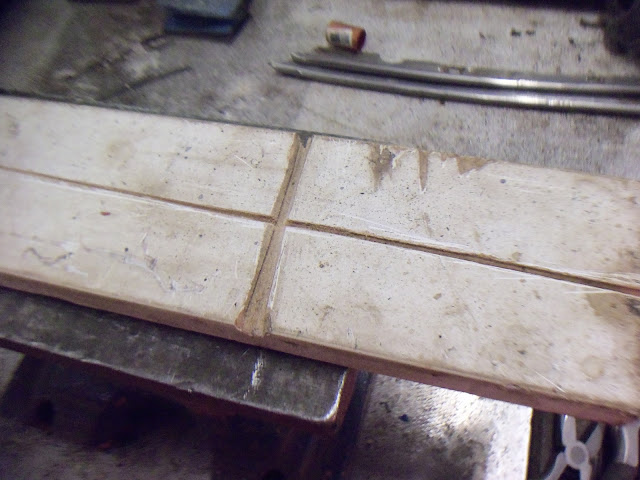
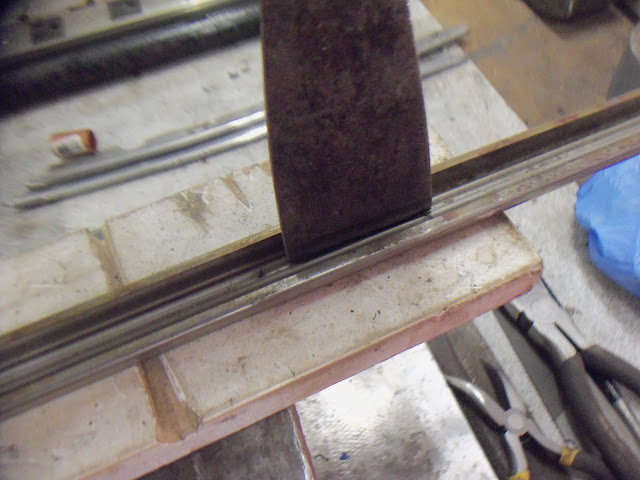
As per making dies - definitely - but I think the press would be overkill for this. The key is to go slow and not over-do or stretch it, as the metal is very soft. But I have used my drill-press in that way - making a die and using it to press the piece gently. These particular pieces had very little damage and it was all channelled, so much of the process went like this:

113_3875.JPG


113_3876.JPG


113_3877.JPG


Cheers all - and thanks for the feedback! :rocker:
 
OP
E

e-tek

Well-known member
Joined
Dec 19, 2007
Messages
10,690
Location
Saskatoon, SK
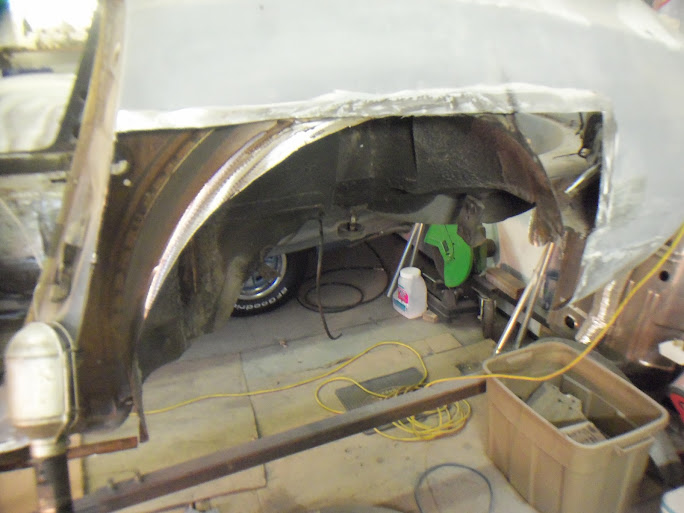
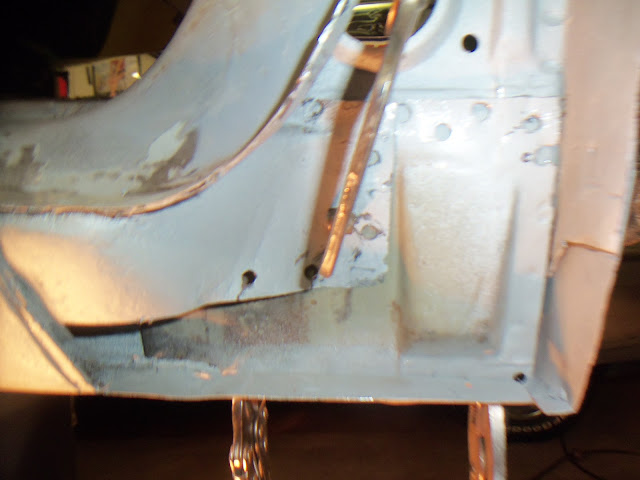
Fitting and trimming inner fender.

113_3884.JPG


113_3886.JPG


113_3887.JPG


113_3888.JPG


Perfect **** weld gap.

113_3897.JPG


113_3898.JPG


113_3899.JPG


Tools.

113_3901.JPG


Dash is perfect, so I'm trying to keep it that way.

113_3902.JPG
 
Last edited:

Kevin54

MEMBER EMERITUS
Joined
Jan 12, 2005
Messages
29,341
Location
Urbana, Ohio
113_3884.JPG


Hows come in Canada when you buy a panel it's made Made in the U.S.A. ? If we buy a panel in the U.S.A. it's Made in China :lol:
 
Last edited:

akdiesel

Well-known member
Joined
Aug 8, 2008
Messages
2,617
Location
Wasilla, AK
e-tek

It's been awhile since I've seen thread. Great work on your projects.
How's the Challenger been holding up? I really liked that project.
 
OP
E

e-tek

Well-known member
Joined
Dec 19, 2007
Messages
10,690
Location
Saskatoon, SK
e-tek

It's been awhile since I've seen thread. Great work on your projects.
How's the Challenger been holding up? I really liked that project.

The Challenger was sold to a young fella couple years back and I still miss it!! It's just another reminder not to sell something you poured your heart into - which is why I now have to buy rental houses with garages to store my ever-growing car collection!
 

Al Bundy

Well-known member
Joined
Aug 1, 2011
Messages
2,026
Location
Upstate NY
Fitting and trimming inner fender.

113_3899.JPG

Question for you. Is there a body line on the quarter where you patched it on the top that I can't see? Have you ever had a problem with a seam like that showing when a car is out in the hot sun all day?
 
OP
E

e-tek

Well-known member
Joined
Dec 19, 2007
Messages
10,690
Location
Saskatoon, SK
Question for you. Is there a body line on the quarter where you patched it on the top that I can't see? Have you ever had a problem with a seam like that showing when a car is out in the hot sun all day?

There is a "soft" body line on the lower part of the seam I made there. Have never had any body work show after I'm done - but then I learned in professional shops. For example, I don't believe in putting filler over primer (some do) and always use sealer prior to paint.
 
Last edited:

Al Bundy

Well-known member
Joined
Aug 1, 2011
Messages
2,026
Location
Upstate NY
There is a "soft" body line on the lower part of the seam I made there. Have never had any body work show after I'm done - but then I learned in professional shops. For example, I don't believe in putting filler over primer (some do) and always use sealer prior to paint.

I'm trying to learn from someone who is obviously professional, that's why I asked. I'm new to body work but I plan on getting my feet wet on my own projects. That was one thing that I heard could be an issue is a seam in the wrong place. The explanation I heard was the weld expanding at a different rate than the sheet metal especially in the hot sun. And of course bright sunlight always shows more than shop lighting. Thanks for the response.
 
OP
E

e-tek

Well-known member
Joined
Dec 19, 2007
Messages
10,690
Location
Saskatoon, SK
I'm trying to learn from someone who is obviously professional, that's why I asked. I'm new to body work but I plan on getting my feet wet on my own projects. That was one thing that I heard could be an issue is a seam in the wrong place. The explanation I heard was the weld expanding at a different rate than the sheet metal especially in the hot sun. And of course bright sunlight always shows more than shop lighting. Thanks for the response.

Interesting premise - my science side suggests that maybe it could happen, but I've never seen it, nor heard of anyone complaining about it, so I don't think it's much of an issue.

Let me know when you post some of your project. Cheers!
 
To avoid these ads, REGISTER NOW!
OP
E

e-tek

Well-known member
Joined
Dec 19, 2007
Messages
10,690
Location
Saskatoon, SK
I had pulled the fenders off the 40 Ford to make removing the engine easy but now remembered I was supposed to mount the hood shocks before paint. So today I started re-assembling the front end - which was a damn good thing - because there's still a few things that needed to get cleaned up prior to paint and this will increase the ease of re-assembly once everything is painted.

106_3907.JPG


The inner fenders needed clearance near the front suspension points. I marked it to fit and will clean it up off the car -

106_3908.JPG


Once off I also strengthened a couple mounting points -

106_3905.JPG


Then I re-mounted them again. Tomorrow I'l mount the hood, set up the hood shocks and fabricate mounting points.

Yesterday I pulled the front suspension for the rod into the shop, again using the electric puller. I love this thing!

electric_cable_pulling_tool_3.jpg


This thing REALLY comes in handy to pull stuff in and out of the shop, especially when there's snow on the ground! I attached to the the axle, tied it down to a nearby tree and then puled the axle assembly across the driveway and next to the shop door. Then put the axle on skates to move it in the shop -

106_3909.JPG


I doused it with penetrating liquid and left it overnight -

106_3910.JPG


That's a whack of leaves! When I take some out I'll be able to make some spoons for metalworking.

106_3911.JPG


This thing is incredibly original.

106_3912.JPG
 

DynoDave

Well-known member
Joined
Mar 25, 2005
Messages
1,685
Location
Michigan
Yesterday I pulled the front suspension for the rod into the shop, again using the electric puller. I love this thing!

electric_cable_pulling_tool_3.jpg


This thing REALLY comes in handy to pull stuff in and out of the shop, especially when there's snow on the ground! I attached to the the axle, tied it down to a nearby tree and then puled the axle assembly across the driveway and next to the shop door. Then put the axle on skates to move it in the shop -

E....what do you anchor that to when pulling car in and out of the shop? Or am I picturing how you use this wrong?
 
OP
E

e-tek

Well-known member
Joined
Dec 19, 2007
Messages
10,690
Location
Saskatoon, SK
Continuing on from yesterday - I got the front end of the 40Ford back together -

106_3913.JPG


Then started looking for places to mount the hood shocks...

106_3914.JPG


But with there being only one spot to mount to the hood - and the upper firewall somewhat limiting the travel of the lower end -

I'd have to either bracket the lower end on the firewall edge -

106_3917.JPG


or, I could put a tab on the inner fender - which really isn't an option at alll...

106_3921.JPG


So with these limited options I decided it needed a re-think and went on to something else....

Like trying to remove the seriously rusted bolts from the perch pins on my 32 front end -

106_3922.JPG


106_3925.JPG


But they wouldn't budge - so now I'm 2 for 2.... time to turn my attention to my third project of the day....repairing the front wheel on the kids Xmas ornament...

106_3926.JPG
 
OP
E

e-tek

Well-known member
Joined
Dec 19, 2007
Messages
10,690
Location
Saskatoon, SK
E....what do you anchor that to when pulling car in and out of the shop? Or am I picturing how you use this wrong?

I anchor it to the lift, but I'd really like to sink a couple receptacles into the cement floor - one at each end of the shop....
 

MoonRise

Well-known member
Joined
Nov 5, 2010
Messages
4,027
Location
NJ
I'm trying to learn from someone who is obviously professional, that's why I asked. I'm new to body work but I plan on getting my feet wet on my own projects. That was one thing that I heard could be an issue is a seam in the wrong place. The explanation I heard was the weld expanding at a different rate than the sheet metal especially in the hot sun. And of course bright sunlight always shows more than shop lighting. Thanks for the response.

Steel weld on a steel panel is not going to expand/contract any different than the steel panel itself. It's all just steel.

The filler (Bondo) may, if glopped on.

The panel may (Hah!) have been distorted from the welding and not tapped/slapped/hammered back into a mostly non-distorted shape/condition before primer/filler/paint were applied.

Not grinding and smoothing out the weld beads well will certainly leave a visible 'line' that might telegraph through and be visible, but that is more of an issue of the panel not being hammered/slapped/blocked back into the desired contour.

Welding sheetmetal is an exercise in distortion-control, as well as making sure you have enough fusion/penetration into the sheetmetal while not blowing a hole right through the panel(s). It's not always an easy dance to do. :spit:

But the steel itself is just steel.
 
OP
E

e-tek

Well-known member
Joined
Dec 19, 2007
Messages
10,690
Location
Saskatoon, SK
Steel weld on a steel panel is not going to expand/contract any different than the steel panel itself. It's all just steel.

But the steel itself is just steel.

Just for the conversation.... ;)

I agree in most everything you wrote of course, except for that last line: "Steel is Steel", which is generally not the case - especially when choosing a MIG wire. Of course all steel is of varying composition, but MIG wire is especially variable - as evidenced by the performance of different welding wires. If you've ever used a HF or PA Branded wire, vs a Lincoln/Miller Branded wire, you'll know what I mean!

106_2039.JPG


I use ESAB-6 (ER70S-6) for body work as this wire incorporates a deoxidizer. ER70S-6 is said to be better for creating a smooth transition from the weld to the base metal, also known as wash-in, good in applications subject to fatigue and can provide better wetting (transition) at the weld toe when compared to an ER70S-3 wire.

So, as wires are alloys, having differing amounts of manganese, carbon, and even deoxidizers as above, one could make an argument that this 'could' contribute to varying expansion rates....

...but they would be so slight as to make little difference - and even if it did take place, the other factors you mentioned (working it even, filling it evenly, etc.), should negate any differences that could occur.

I "could" see it happening in a case where a HEAVY weld bead, of cheap, dirty-alloy wire was used, where it heat-hardened some of the surrounding metal and perhaps was insufficiently worked down so that it sat high, closer to the paint layer than the rest of the metal around it - maybe.

Of course even before suspecting the weld itself, I would consider also the composition of the patch panel itself, whereby if of sufficiently different alloy, could also contribute to a differing rate of expansion and contraction.....

:eyecrazy: :bounce:
 
Last edited:

MoonRise

Well-known member
Joined
Nov 5, 2010
Messages
4,027
Location
NJ
Just for the conversation.... ;)

I agree in most everything you wrote of course, except for that last line: "Steel is Steel", which is generally not the case - especially when choosing a MIG wire. Of course all steel is of varying composition, but MIG wire is especially variable - as evidenced by the performance of different welding wires. If you've ever used a HF or PA Branded wire, vs a Lincoln/Miller Branded wire, you'll know what I mean!

Yup, steel is steel, as far as thermal expansion is concerned.

The strength and hardness and 'welding behaviour' of steel MIG wire can vary. Often by a lot.

I'm not a good enough welder to use crappy wire or sticks. :) I'll use a 'name' brand electrode every time. General-use GMW filler for me is an ER70S-6 wire (Lincoln usually).

But as far as thermal expansion is concerned, steel is steel. :beer:

Stainless steel does expand more than plain low-carbon steel, but even there you're not really going to see much of a difference over a maybe 100F temp change. 1010 Coefficient-of-Thermal-Expansion is about 6.78 micro-inch/inch F from 32-212F, 1020 CTE is 6.5 over the same temp range, 304 stainless is 9.6 over the same temp range (~50% greater than the plain mild steel CTE).

Welding sheetmetal is all about distortion control and getting 'enough' fusion/penetration without blowing a hole through the sheet.

I've warped some sheetmetal pretty badly when I welded it. :spit: I've warped non-sheetmetal too. ;)
 

MP&C

Well-known member
Joined
Oct 21, 2009
Messages
4,396
Location
Leonardtown, MD
I'm new to body work but I plan on getting my feet wet on my own projects. That was one thing that I heard could be an issue is a seam in the wrong place. The explanation I heard was the weld expanding at a different rate than the sheet metal especially in the hot sun. And of course bright sunlight always shows more than shop lighting. Thanks for the response.


This somewhat describes the same scenario that occurs when a lap joint is welded. Two thicknesses on one side of the weld, one on the other. The single thickness of metal when exposed to sunlight should expand more quickly than the side with two panel thicknesses. This in many cases produces a ghost line in the paint finish as a result of this difference of expansion rates working in such close proximity to each other.

By the same token, I think what you are descibing is a **** welded seam, and all things being equal, there should be no difference in expansion rates. All things being equal would mean that the weld, and any proud on either the front and back side, would be ground to flush with the panel. In other words, the weld becomes the same thickness as the panel and essentially has the same properties as the panel. If however, the weld has a bit of blowout and blobs protruding through, and lack of access or abundance of laziness leaves the blobs in that state, then yes, I could see that extra "mass" taking longer to heat up as compared to the single thickness of sheet metal panel on either side of it. This scenario could very likely produce the same ghost line effect. Disclaimer, I'm not an engineer or metallurgist, but I believe Moonrise does fall into one or both of those categories, so perhaps he could elaborate on my ramblings to see if they have any merit.
 
Last edited:

welder4956

Well-known member
Joined
Apr 8, 2010
Messages
3,057
Location
Birmingham, AL USA
Just for the conversation.... ;)
I use ESAB-6 (ER70S-6) for body work as this wire incorporates a deoxidizer. ER70S-6 is said to be better for creating a smooth transition from the weld to the base metal, also known as wash-in, good in applications subject to fatigue and can provide better wetting (transition) at the weld toe when compared to an ER70S-3 wire.

E-tek, Just wondering if you have tried any of the ER70S-7 wire yet (AKA EZ Grind)? I haven't tried it myself, but have heard good things about it. Such as, lower weld hardness with MIG and easier to planish than ER70S-6.

http://www.esabna.com/esab/dbReplacement/pdf/1343153494_swr-10015a_-_spoolarc_87hp_mig.pdf
 
OP
E

e-tek

Well-known member
Joined
Dec 19, 2007
Messages
10,690
Location
Saskatoon, SK
E-tek, Just wondering if you have tried any of the ER70S-7 wire yet (AKA EZ Grind)? I haven't tried it myself, but have heard good things about it. Such as, lower weld hardness with MIG and easier to planish than ER70S-6.

http://www.esabna.com/esab/dbReplacement/pdf/1343153494_swr-10015a_-_spoolarc_87hp_mig.pdf

I bought a roll of it a while back and liked it. It was somewhat easier to grind - and also took a little less heat to do so, but the difference isn't huge (IMO). It was quite a bit more expensive too (like twice). I also had a roll of the ESAB-6 in stock and now I'm still on that roll.
 

MoonRise

Well-known member
Joined
Nov 5, 2010
Messages
4,027
Location
NJ
E-tek, Just wondering if you have tried any of the ER70S-7 wire yet (AKA EZ Grind)? I haven't tried it myself, but have heard good things about it. Such as, lower weld hardness with MIG and easier to planish than ER70S-6.

http://www.esabna.com/esab/dbReplacement/pdf/1343153494_swr-10015a_-_spoolarc_87hp_mig.pdf


Slight correction/clarification.

ESAB makes a wire called "Spoolarc 87 HP", which is an AWS ER70S-7 wire. As per the above referenced PDF from the ESAB site.

ESAB also makes a wire called "Spoolarc Easy Grind", which does not meet any AWS class. It is not an ER70S-anything wire, although it does list a yield strength greater than 70 ksi using C25 gas (which would generally mean it would fall into the ER70S class of filler/wire, but it either doesn't meet certain other AWS specs or wasn't 'certified' or tested per the AWS specs.)

btw, the ESAB Spoolarc 86 wire has the highest listed deoxidizer level of the ESAB MIG wires (in accordance with its ER70S-6 class). It has the most manganese and silicon in the filler, and thus should give a nice fluid puddle with good wet-in as well as good deoxidizing properties. Next would be the Spoolarc 83 (ER80S-D2), and then in third would be the Spoolarc 87 HP (ER70S-7). Lowest deoxidizer level of the ESAB MIG wires (plain carbon and low alloy) is the Spoolarc 29S (ER70-S3).

From the ESAB solid wire catalog (lousy formatting in the forum, but hopefully you get the idea):

The following table shows the relative deoxidizer level for
Spoolarc plain carbon steel and alloy steel MIG wires:


Wires % Mn % Si Deoxidizer Level

Spoolarc 86 1.46 0.85 highest
Spoolarc 83 1.37 0.65
Spoolarc 87 HP 1.55 0.55
Spoolarc 85 1.20 0.70
Spoolarc 65* 1.10 0.50
Spoolarc 82 1.20 0.60
Spoolarc 29S 1.15 0.55 lowest

*Contains .08 Al, .052 Zr, .08 Ti.
Note: Mn and Si values are based on CO2 Shielding.
 

DynoDave

Well-known member
Joined
Mar 25, 2005
Messages
1,685
Location
Michigan
I anchor it to the lift, but I'd really like to sink a couple receptacles into the cement floor - one at each end of the shop....

Thanks. I thought about adding some floor anchors when my slab was poured, but since I was not absolutely sure of the floor plan, I didn't do it.
 
OP
E

e-tek

Well-known member
Joined
Dec 19, 2007
Messages
10,690
Location
Saskatoon, SK
Thanks. I thought about adding some floor anchors when my slab was poured, but since I was not absolutely sure of the floor plan, I didn't do it.

Ya me too. Of course I thought - I could always do that - but haven't yet....It's just been easier to tie down to the lift vs drilling a 3" hole and cementing in a reciever-hitch. Maybe this summer!
 

welder4956

Well-known member
Joined
Apr 8, 2010
Messages
3,057
Location
Birmingham, AL USA
Slight correction/clarification.

ESAB makes a wire called "Spoolarc 87 HP", which is an AWS ER70S-7 wire. As per the above referenced PDF from the ESAB site.

ESAB also makes a wire called "Spoolarc Easy Grind", which does not meet any AWS class. It is not an ER70S-anything wire, although it does list a yield strength greater than 70 ksi using C25 gas (which would generally mean it would fall into the ER70S class of filler/wire, but it either doesn't meet certain other AWS specs or wasn't 'certified' or tested per the AWS specs.)

btw, the ESAB Spoolarc 86 wire has the highest listed deoxidizer level of the ESAB MIG wires (in accordance with its ER70S-6 class). It has the most manganese and silicon in the filler, and thus should give a nice fluid puddle with good wet-in as well as good deoxidizing properties. Next would be the Spoolarc 83 (ER80S-D2), and then in third would be the Spoolarc 87 HP (ER70S-7). Lowest deoxidizer level of the ESAB MIG wires (plain carbon and low alloy) is the Spoolarc 29S (ER70-S3).

From the ESAB solid wire catalog (lousy formatting in the forum, but hopefully you get the idea):

The problem I have always been concerned with using ER70S-6 is the higher manganese level compared to other ER70S wires. In addition to deoxidation, manganese increases strength and hardenability. This combined with the rapid cooling rate of MIG (vs. TIG) makes for harder welds and difficult planishing. A triple deoxidized wire like ER70S-2 would seem to be a better choice for body work. But it's harder to find ER70S-2 on spools at the local welding supply houses. We have used it quite a bit on 4" spools for mechanized GTAW in piping welds, but not enough demand for it on the larger spools for GMAW and in the 0.024" or 0.030" diameters.
 

1971gsfan

Well-known member
Joined
Dec 19, 2009
Messages
84
Location
Wilmington NC
Ya me too. Of course I thought - I could always do that - but haven't yet....It's just been easier to tie down to the lift vs drilling a 3" hole and cementing in a reciever-hitch. Maybe this summer!

We used to bury chains in the concrete when building to pull from. But for already poured slabs you could drill a 1" hole with a recess at the top of the hole for a clevis to be attached and use a rod or eye bolt held in by epoxy. I personally watched basement machine elevator machines bolted down with threaded rods using this you method. 3M guaranteed it would pull up the slab before the epoxy would fail. It was way above my pay grade, I didn't like being anywhere near the things. That was about 14 years ago and the elevs. are still running flawlessly, so the epoxy of today is the stuff.
Also I bought a Thermal Arc 181i today to weld in the patches I mentioned to you in previous posts. I'll post some pics when I get started. Keep up you posts I enjoy the instructions:D
 
OP
E

e-tek

Well-known member
Joined
Dec 19, 2007
Messages
10,690
Location
Saskatoon, SK
We used to bury chains in the concrete when building to pull from. But for already poured slabs you could drill a 1" hole with a recess at the top of the hole for a clevis to be attached and use a rod or eye bolt held in by epoxy. I personally watched basement machine elevator machines bolted down with threaded rods using this you method. 3M guaranteed it would pull up the slab before the epoxy would fail. It was way above my pay grade, I didn't like being anywhere near the things. That was about 14 years ago and the elevs. are still running flawlessly, so the epoxy of today is the stuff.
Also I bought a Thermal Arc 181i today to weld in the patches I mentioned to you in previous posts. I'll post some pics when I get started. Keep up you posts I enjoy the instructions:D

That's a good idea too - I remember my Dads shop had something similar to anchor cars and pullers.
 

1971gsfan

Well-known member
Joined
Dec 19, 2009
Messages
84
Location
Wilmington NC
That's a good idea too - I remember my Dads shop had something similar to anchor cars and pullers.

Watched Dad pull many a frame with a home made I-beam puller with a car tied to chains in the floor and to the I-beam portion of the puller under the car. amazing what Dad could do with his genious ingenuity! I remember being in awe on more than one occasion. back to the post My next shop will have tie down points in the flr for sure. The new welder is working out good. I'll post pics of my welding cart soon, had to pause and work on the yard today so now welding
 
OP
E

e-tek

Well-known member
Joined
Dec 19, 2007
Messages
10,690
Location
Saskatoon, SK
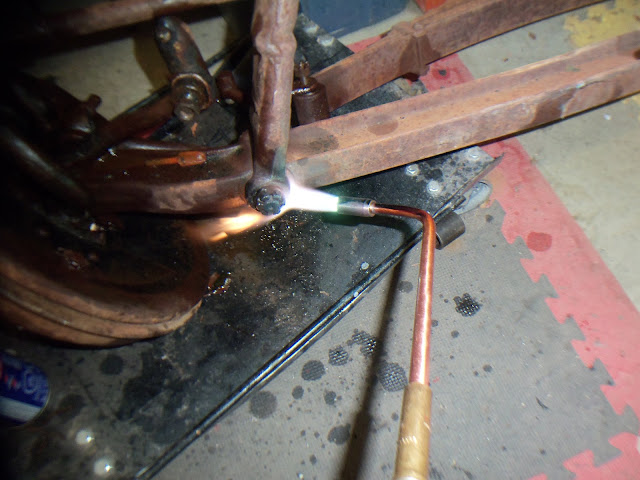
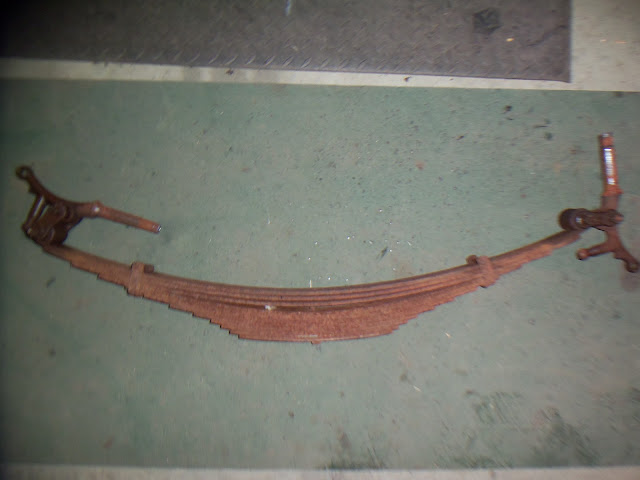
Tore the 32 front end down today - lots of heat used, as well as this tie rod tool, which made short work of the joints -

images


106_3928.JPG


106_3930.JPG


106_3932.JPG


106_3933.JPG


Everything was in good shape, including the brakes and backing plates - the shoes even have about 80% pad left on them!

106_3942.JPG


106_3943.JPG


Also finished cleaning up all the engine parts -

106_3936.JPG


Next week I'm going to start to build a frame table on wheels so I can build the project at standing height and be able to: (a) move it when needed and (b) store other stuff, like the engines and other parts, under it. Even with a 25 x 40 shop, space quickly becomes an issue!
 
To avoid these ads, REGISTER NOW!
Top Bottom