
You are using an out of date browser. It may not display this or other websites correctly.
You should upgrade or use an alternative browser.
You should upgrade or use an alternative browser.
Above 1200 Sq/FT Eastern Washington Workshop
- Thread starter slodat
- Start date
Wokspaces above 1200 squarefeet.
lilscorpion
Well-known member
Uh...what?!? Should be possible to put it on some kind of switch. Still, to your point, that's super ghetto.The drill unit VFD has no power diconnect. They suggest unplugging when not in use. This is a very expensive machine. Unplugging is just ********.
Last edited:
lilscorpion
Well-known member
youre taking me back...and I recognize that you didn't ask for feedback but...The Powermax 85 will machine pierce 5/8" according to their specs. Guys are doing much thicker. It will definitely edge cut 1". I'll do a little bit of 1" stuff for the shop here and there. I wanted to be able to run 1/2" plate without issue. This should do the trick. My bigger issue with thicker plate is material handling. I'll need a pallet stacker and probably a forklift. For the heavy stuff I'll most likely stick to working with 4x4 chunks.
My .02 on the plasma cutter...go big, way big. Here's why: There's 2 ratings a machine has. (1) is pierce thickness and(2) is cutting from the edge/sever. For CNC, sever isn't a rating you can leverage. The stream will struggle to get through the material. What you'll see is the entry point on top will be way ahead of the exit point at the bottom. Effectively, the stream is bent or trailing. As a result, corners, arcs, and holes will all be out of square. Same goes for the pierce but just a bit different. The pierce is the effort the machine makes getting through the material. On the way though, a weaker machine will have a stream that's actually fighting it's way through adn sometimes it won't exit exactly below the entry point (effectively bending as well). The harder it is to pierce, the longer you'll need to set the move delay and the more difficult it will be to remove the dross...
Get the biggest machine you can buy. If you wanna cut 1", you need something much bigger. I cut 1/4 most frequently and if I had to do it all over again, I'd get a machine that could pierce 1" bare min and maybe even upgrade to 1 1/4.
also...you will always find a reason to cut something larger than you plan. If you plan 1", you'll find a reason to cut 1 1/4. I do think the $5k more is probably worth the upgrade in this case. Though it doesn't seem like it, the plasma is the heart of the machine.
Last edited:
Ghetto is exactly what I thought when I discovered the oversight. I will be installing a main power disconnect that switches the 120v and 240v (spindle) circuits, like it should have been from the factory. These sort of details.. so easy to get it right.Uh...what?!? Should be possible to put it on some kind of switch. Still, to your point, that's super ghetto.
Your numbers are a little different than what I found feasible when I bought my machine. The 85 is the largest power source Hypertherm offers that will run on single phase supply. The 105, 125 and up require 3 phase power. I went with double.. ie: the 85 is rated to pierce 5/8 and I'll be doing most of my stuff at 5/16 and thinner. I do see guys getting amazing cut quality on thick steels with edge starting and going quite slow. I believe this is because of some aspect of Hypertherms modern tech in the power source. To pierce 1.25" you are in their high definition systems and are spending six figures. This was the most machine I could get, in the class I was hitting in.youre taking me back...and I recognize that you didn't ask for feedback but...
My .02 on the plasma cutter...go big, way big. Here's why: There's 2 ratings a machine has. (1) is pierce thickness and(2) is cutting from the edge/sever. For CNC, sever isn't a rating you can leverage. The stream will struggle to get through the material. What you'll see is the entry point on top will be way ahead of the exit point at the bottom. Effectively, the stream is bent or trailing. As a result, corners, arcs, and holes will all be out of square. Same goes for the pierce but just a bit different. The pierce is the effort the machine makes getting through the material. On the way though, a weaker machine will have a stream that's actually fighting it's way through adn sometimes it won't exit exactly below the entry point (effectively bending as well). The harder it is to pierce, the longer you'll need to set the move delay and the more difficult it will be to remove the dross...
Get the biggest machine you can buy. If you wanna cut 1", you need something much bigger. I cut 1/4 most frequently and if I had to do it all over again, I'd get a machine that could pierce 1" bare min and maybe even upgrade to 1 1/4.
also...you will always find a reason to cut something larger than you plan. If you plan 1", you'll find a reason to cut 1 1/4. I do think the $5k more is probably worth the upgrade in this case. Though it doesn't seem like it, the plasma is the heart of the machine.
I really appreciate you sharing your thoughts, advice, and experience. Thank you!
lilscorpion
Well-known member
I’m certain my knowledge of cutting systems is outdated. It’s been years. I may also be on size machine off too. At the time I coding afford the bigger machines, life constraints and all. To show how dated my first-hand experience is, I had (and still have) a Hypertherm Powermax 800. Mine could pierce 1/2" all day long and not poorly. It could edge cut thicker. Yes, while going very slow, it could make very nice cuts in those thicker materials. The caveat however, is that the slower it moves, the more challenging the dross can be to remove. I thought there was 2 models larger than mine but you're right, they didn't have the capacity I'm remembering. There was a 5/8" and then one bigger which I'm now guessing was more like 7/8"...so yeah, no 1 1/4. Now there's a 125...probably is 3 phase. Guess I was really saying, "Get 3 Phase".Your numbers are a little different than what I found feasible when I bought my machine. The 85 is the largest power source Hypertherm offers that will run on single phase supply. The 105, 125 and up require 3 phase power. I went with double.. ie: the 85 is rated to pierce 5/8 and I'll be doing most of my stuff at 5/16 and thinner. I do see guys getting amazing cut quality on thick steels with edge starting and going quite slow. I believe this is because of some aspect of Hypertherms modern tech in the power source. To pierce 1.25" you are in their high definition systems and are spending six figures. This was the most machine I could get, in the class I was hitting in.
I really appreciate you sharing your thoughts, advice, and experience. Thank you!
Hopefully the new technology they offer minimizes dross and consumable wear is optimized. Dross that's difficult to remove consumes a lot of man hours. In hind sight, that's what I'd spend my money on. The right machine that cuts as close to dross free as I can get for the budget. Maybe it's no longer about power.
I was thinking along the same lines when I bought this machine.. I picked up some scrap steel, aluminum, and stainless today to do some test cuts on when I get temp power ran and the table watered up. 
I've looked far into getting three phase service at the shop. The deal breaker for me is they won't do 3 phase 240, even though my last shop in town had exactly that. They only offer 208 Y. That *****. Your conductors all go up a size. At some point, I will either pull in a second service at 400a single phase, or I'll up my existing to 400a.
I've looked far into getting three phase service at the shop. The deal breaker for me is they won't do 3 phase 240, even though my last shop in town had exactly that. They only offer 208 Y. That *****. Your conductors all go up a size. At some point, I will either pull in a second service at 400a single phase, or I'll up my existing to 400a.
lilscorpion
Well-known member
I forgot about you not having 3Phase. I did have it in my shop but mine was 440 (or whatever the big *** voltage it was). At the time I felt silly because running the bigger boy machines was totally possible in my shop but my budget prevented it. Still did some nice stuff with that 800. It still is a good machine. Could hook it up as is today if I had a table.I was thinking along the same lines when I bought this machine.. I picked up some scrap steel, aluminum, and stainless today to do some test cuts on when I get temp power ran and the table watered up.
I've looked far into getting three phase service at the shop. The deal breaker for me is they won't do 3 phase 240, even though my last shop in town had exactly that. They only offer 208 Y. That *****. Your conductors all go up a size. At some point, I will either pull in a second service at 400a single phase, or I'll up my existing to 400a.
cycle61
Well-known member
Obviously you need 13.8kv delta
Finished the water table air bladder today.
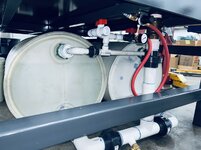
First time doing this much PVC pipe fitting. Only screwed up on two 3/4 joints thankfully. I switched to a 2” brass ball valve from the PVC for the table isolation after reading of guys having them cause problems down the road.
This piece is what ties it all together.

Looks like I’m never getting more than 3psi or so in the barrels. This is the max pressure against a closed isolation valve.

The regulator manufacturer makes a 0-20 pound spring for the regulator. I’m going to see if I can get one.
Functional testing of the system went well without incident or leak. I filled and drained the table a half dozen times with a big grin the whole time. Couldn’t be happier with this setup.
On to the next!
First time doing this much PVC pipe fitting. Only screwed up on two 3/4 joints thankfully. I switched to a 2” brass ball valve from the PVC for the table isolation after reading of guys having them cause problems down the road.
This piece is what ties it all together.
Looks like I’m never getting more than 3psi or so in the barrels. This is the max pressure against a closed isolation valve.
The regulator manufacturer makes a 0-20 pound spring for the regulator. I’m going to see if I can get one.
Functional testing of the system went well without incident or leak. I filled and drained the table a half dozen times with a big grin the whole time. Couldn’t be happier with this setup.
On to the next!
Finallygotit
ALLIANCE MEMBER
Listening to a transformer hum is pure torture to me. If I was a spy and you put me in a room with a humming transformer, I would tell you anything you wanted to know. UGH!I don’t have room for GIS switchgear and I don’t want to listen to a transformer hum because it doesn’t know the words!

Slodat - I’d suggest renegotiating with your POCO
Our local POCO is the same way, if you ask all they’ll offer is 208 even though they can and DO install 230 3 phase. If you stand fast they then put in the 230. My friend who’s an electrical contractor always has to fight with them about it but almost always gets the 230 installed
Ron
Our local POCO is the same way, if you ask all they’ll offer is 208 even though they can and DO install 230 3 phase. If you stand fast they then put in the 230. My friend who’s an electrical contractor always has to fight with them about it but almost always gets the 230 installed
Ron
Let’s see if this works… video of the table level system.
I got the plasma table plumbed with air. I still need ti run a proper drop from the header. There’s a lot of air on the table though: scribe, drill, bladder, plasma power source, and a blow gun. Ran a test cut once that was done. Power is temped in. I need to run some conduit once I have locations sorted out and such.
Test part shows some issues. I’ve got some stuff to learn on the CAD/CAM side for this machine. Speeds are handled differently than machines with spindles. And, I don’t know what CAD or CAM I want to settle on. I have a few options.
Still pretty exciting t see it cutting!


Very little dross. Need to sort out some stuff in the CAM.

Test part shows some issues. I’ve got some stuff to learn on the CAD/CAM side for this machine. Speeds are handled differently than machines with spindles. And, I don’t know what CAD or CAM I want to settle on. I have a few options.
Still pretty exciting t see it cutting!
Very little dross. Need to sort out some stuff in the CAM.
Last edited:



lilscorpion
Well-known member
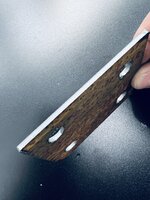
I made some progress yesterday and an email from tech support may have me dialed in on cutting arcs holes.
Did they give you a cheat code?!?
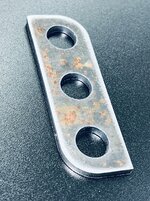
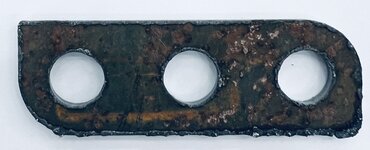
Getting somewhere with the plasma. Much happier with the cut tonight. And, I’m getting Fusion sorted out which is what I want to use for CAD and CAM. Have somewhat minimal dross. Looks like I can dial in hole sizes and cut quality is pretty good considering I’m just getting started.



Finallygotit
ALLIANCE MEMBER
I'd say baby steps but this is much faster than that. I'm sure you will be getting this to the point where you'll be teaching it, right? 
MadeByMiller
Well-known member
Looking great! Just a few notes:
Reading your cut edges can help to decipher whether or not what you're experiencing is low or high speed dross (a perfect cut speed will have more vertical lag lines with minimal to no dross, I'd argue your cut speed looks a bit fast on this example, can see lag lines trailing from top to bottom of cut);
As a rule of thumb, hole cutting speed should be about 60% of the external perimeter cut speed;
Lead ins should start as close to the center of the hole as possible(your lead ins on this example are very close to the perimeter and can potentially deform the hole), and a lot of people ditch the lead out on small holes;
Fusion CAM is great, but it can also be very frustrating and time consuming for cnc plasma work - I recommend looking into SheetCAM before getting super deep into Fusion. As you progress and try to dial in your cut quality as best as possible, you want more and more control of the variables I mentioned above. This is sometimes possible in Fusion, but it's quite time consuming, you have to make many different cut profiles in order to alter things like cut speed and lead in/out variations. The programming almost always took me much longer than the actual cut time of the parts. In SheetCAM, you can set rules that will automatically program into your cut profile (such as the 60% cut speed on interior holes, etc). The UI in SheetCAM makes it feel like you're using a Windows 98 program, and there is more complexity to learn, but I think in the long run it's a much better CAM program for cnc plasma tables.
I know this was unsolicited advice, but it can be really tough to navigate and understand the information on cnc plasma cutting. I am far from an expert on the matter, but I have gone through much of what you're currently undertaking and thought it might be helpful to pass on what I can. Feel free to DM me on Instagram at any time too, I'm more available there than I am on here and I'll do my best to help.
On a side note, seek out forum/blog posts from Jim Colt. It is widely known that he is one of the most knowledgeable and experienced men on the planet when it comes to this stuff.
Reading your cut edges can help to decipher whether or not what you're experiencing is low or high speed dross (a perfect cut speed will have more vertical lag lines with minimal to no dross, I'd argue your cut speed looks a bit fast on this example, can see lag lines trailing from top to bottom of cut);
As a rule of thumb, hole cutting speed should be about 60% of the external perimeter cut speed;
Lead ins should start as close to the center of the hole as possible(your lead ins on this example are very close to the perimeter and can potentially deform the hole), and a lot of people ditch the lead out on small holes;
Fusion CAM is great, but it can also be very frustrating and time consuming for cnc plasma work - I recommend looking into SheetCAM before getting super deep into Fusion. As you progress and try to dial in your cut quality as best as possible, you want more and more control of the variables I mentioned above. This is sometimes possible in Fusion, but it's quite time consuming, you have to make many different cut profiles in order to alter things like cut speed and lead in/out variations. The programming almost always took me much longer than the actual cut time of the parts. In SheetCAM, you can set rules that will automatically program into your cut profile (such as the 60% cut speed on interior holes, etc). The UI in SheetCAM makes it feel like you're using a Windows 98 program, and there is more complexity to learn, but I think in the long run it's a much better CAM program for cnc plasma tables.
I know this was unsolicited advice, but it can be really tough to navigate and understand the information on cnc plasma cutting. I am far from an expert on the matter, but I have gone through much of what you're currently undertaking and thought it might be helpful to pass on what I can. Feel free to DM me on Instagram at any time too, I'm more available there than I am on here and I'll do my best to help.
On a side note, seek out forum/blog posts from Jim Colt. It is widely known that he is one of the most knowledgeable and experienced men on the planet when it comes to this stuff.
lilscorpion
Well-known member
When I ran my table for years I realized that the smaller holes wouldn't have the lead-in because the arc was too large and the software would eliminate it as a result.Lead ins should start as close to the center of the hole as possible(your lead ins on this example are very close to the perimeter and can potentially deform the hole), and a lot of people ditch the lead out on small holes;
The arc of the lead in is what allows the cut to naturally roll into the interior or exterior of the part without creating a disruptive entry which is also important.
MadeByMiller
Well-known member
I agree, it can be good to have a lead in arc that is close to tangent when it comes in contact with the profile of the hole. I'm not sure what software you used to program, but in Fusion the lead in length, arc radius, and angle is adjustable so you can really fine tune where the pierce begins. In my experience, having a pierce and lead in beginning so close to the cut profile can blow out the profile and/or overheat the hole (diameter dependent) so that by the time the cut profile is closed, there is a defect from the material being so hot.When I ran my table for years I realized that the smaller holes wouldn't have the lead-in because the arc was too large and the software would eliminate it as a result.
The arc of the lead in is what allows the cut to naturally roll into the interior or exterior of the part without creating a disruptive entry which is also important.
lilscorpion
Well-known member
the software I used (it's been years ago) also made those parameters configurable. I never had and/or observed an issue of work hardening by the plasma cutting process. The precision of bolt-sized holes wasn't acceptable and we shifted to punching everything.I agree, it can be good to have a lead in arc that is close to tangent when it comes in contact with the profile of the hole. I'm not sure what software you used to program, but in Fusion the lead in length, arc radius, and angle is adjustable so you can really fine tune where the pierce begins. In my experience, having a pierce and lead in beginning so close to the cut profile can blow out the profile and/or overheat the hole (diameter dependent) so that by the time the cut profile is closed, there is a defect from the material being so hot.
MadeByMiller
Well-known member
Sorry, by overheating producing a defect I didn't mean metallurgically, I meant it can produce an irregularity in the hole profile. Sorry for hijacking the thread a little bit here!the software I used (it's been years ago) also made those parameters configurable. I never had and/or observed an issue of work hardening by the plasma cutting process. The precision of bolt-sized holes wasn't acceptable and we shifted to punching everything.
lilscorpion
Well-known member
Ah, that makes more sense!Sorry, by overheating producing a defect I didn't mean metallurgically, I meant it can produce an irregularity in the hole profile. Sorry for hijacking the thread a little bit here!
ODIS
Well-known member
All very interesting and a fun read! Thanks!
Starting to get things dialed in cutting. This is 1/4". Minimal dross and I'm happy with it, for this little test part.
In my sorting out the machine I wanted a sharpie holder. Found this guy online, printed, and good to go! So cool.
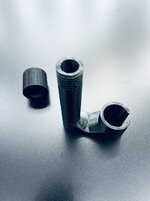
Slips over torch. Worked well.

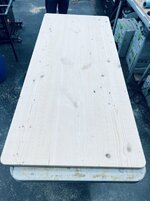
Good buddy had a honey do with some interesting "requirements". Table top for his wife to mount some hairpin legs to, made out of construction grade 2x12's. Got it glued up and filled some holes and knots with black CA glue.

CNC router makes this sort of thing fun and rather easy.

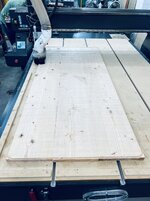
Final thickness was 1.225. Not bad considering it cupped a little. He said she will love it. That's what matters.
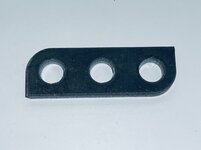
I've been working with an amazing and helpful Autodesk employee on modifying my post processor to work with the drill unit and plate marker. Did a little test part to see how it worked.

I'm using some rather rusty 10ga x 4" flat bar that I got at the local recycler for $0.50/lb. Material is stupid expensive right now, so I'll save the good stuff for real parts. Test part went well. Drilled holes, engraved lettering, plasma cut outside profile. Essentially zero dross and clean 1/8" holes. Works for me!

Another test with the air scribe.

In my sorting out the machine I wanted a sharpie holder. Found this guy online, printed, and good to go! So cool.
Slips over torch. Worked well.
Good buddy had a honey do with some interesting "requirements". Table top for his wife to mount some hairpin legs to, made out of construction grade 2x12's. Got it glued up and filled some holes and knots with black CA glue.
CNC router makes this sort of thing fun and rather easy.
Final thickness was 1.225. Not bad considering it cupped a little. He said she will love it. That's what matters.
I've been working with an amazing and helpful Autodesk employee on modifying my post processor to work with the drill unit and plate marker. Did a little test part to see how it worked.
I'm using some rather rusty 10ga x 4" flat bar that I got at the local recycler for $0.50/lb. Material is stupid expensive right now, so I'll save the good stuff for real parts. Test part went well. Drilled holes, engraved lettering, plasma cut outside profile. Essentially zero dross and clean 1/8" holes. Works for me!
Another test with the air scribe.
Last edited:
Finallygotit
ALLIANCE MEMBER
Good! Keep posting and we'll keep reading.Thanks for stopping by again! I'm glad you guys enjoy it. I enjoy posting this stuff here.
I enjoy reading your posts.
Jayman17
Well-known member
You’ve really upped your game with the recent shop acquisitions! That table turned out nice!
Jay
Jay
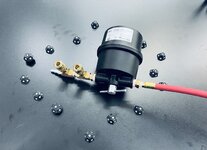

I ran a similar filter if not the same filter on an Arclight plasma cutter table. It makes a noticeable difference in cut quality. I had just put in new consumables and was still getting not optimal cuts and it was just needing a new filter. I learned to keep a couple on hand. Also for perspective, this was on a system with auto water drains, a chiller, dryers, and in a dry climate. Dry air makes more of a difference than you would ever expect.Another piece of the puzzle.

Congratulations, on the new machine. It seems like you are making some progress.
I saw your post about the sharpie holder and I think you would appreciate this if you haven't come across it yet.
Making a bracket to mount the Motorguard filter.

Layed out a line for the plate marker so I know where the bends are supposed to be once the part is in hand.

Again with the rusty material from the recycler. It's steel under there

Not much dross. If I would have changed the 65a consumables to 45a I probably would have had less.

Quick hit with the RO sander.

Plate marker lines worked well.

And what matters...

Here's the part that blows my mind and makes it all worthwhile:

4.75" is exactly what was drawn!

Color me tickled pink!
Layed out a line for the plate marker so I know where the bends are supposed to be once the part is in hand.
Again with the rusty material from the recycler. It's steel under there
Not much dross. If I would have changed the 65a consumables to 45a I probably would have had less.
Quick hit with the RO sander.
Plate marker lines worked well.
And what matters...
Here's the part that blows my mind and makes it all worthwhile:
4.75" is exactly what was drawn!
Color me tickled pink!
It's so satisfying to have take an idea and create it. The robots and tech sure make it a lot nicer looking and the process even more enjoyable.

Tapped the holes in the bracket. Installed, up and out of the way. Still completely servicable. The other two quick connects go to the air bladder and a blow gun.

I have more of the Tekton leader hoses on the way. That will take up the slack that's on the floor. Everything is easily disconnected without breaking loose any fittings.

Air supply on the other side of the table with a main shutoff valve.
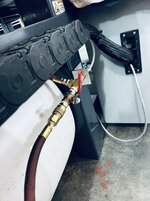
I still need to run a proper drop from the air header.
Tapped the holes in the bracket. Installed, up and out of the way. Still completely servicable. The other two quick connects go to the air bladder and a blow gun.
I have more of the Tekton leader hoses on the way. That will take up the slack that's on the floor. Everything is easily disconnected without breaking loose any fittings.
Air supply on the other side of the table with a main shutoff valve.
I still need to run a proper drop from the air header.
I ran a similar filter if not the same filter on an Arclight plasma cutter table. It makes a noticeable difference in cut quality. I had just put in new consumables and was still getting not optimal cuts and it was just needing a new filter. I learned to keep a couple on hand. Also for perspective, this was on a system with auto water drains, a chiller, dryers, and in a dry climate. Dry air makes more of a difference than you would ever expect.
Congratulations, on the new machine. It seems like you are making some progress.
I saw your post about the sharpie holder and I think you would appreciate this if you haven't come across it yet.
Thank you! I have the Motor Guard filters on the laser and in my finish room. They are a great final element. The air supply is as dry as I'm going to be able to achieve - two coalescing filters, refrigerated dryer, and desiccant upstream of the Motor Guard.
That's a slick sharpie mount! I believe Shop Sabre's pen mount is similar. I couldn't add it with the scribe and drill. They said too wide of a Z axis for the table width. The plate marker fills as similar role to his pen.
I'm having fun with the machine and feeling like I'm getting somewhere. Being able to post gcode from Fusion for all three processes in one file makes all the difference.
Thanks again for checking out my shop and taking the time to comment.
How does posting work out of Fusion? I understand how it works for a traditional mill, but the plasma is a different animal especially with the additional heads and the fact that the plasma may have a different tip set up. I assume the different tools just have a positional offset, but I am curious how they are triggered.Thank you! I have the Motor Guard filters on the laser and in my finish room. They are a great final element. The air supply is as dry as I'm going to be able to achieve - two coalescing filters, refrigerated dryer, and desiccant upstream of the Motor Guard.
That's a slick sharpie mount! I believe Shop Sabre's pen mount is similar. I couldn't add it with the scribe and drill. They said too wide of a Z axis for the table width. The plate marker fills as similar role to his pen.
I'm having fun with the machine and feeling like I'm getting somewhere. Being able to post gcode from Fusion for all three processes in one file makes all the difference.
Thanks again for checking out my shop and taking the time to comment.
Also I am guessing this machine has a Hypertherm plasma cutter running the torch? McMaster carries those consumables, which is handy if you run out all of a sudden. Also in the Hypertherm manual it should go over how to measure the wear on the electrode to determine if it is still in spec or not. I found that helpful especially while learning how to run a plasma otherwise I felt like I was consumables all the time to eliminate variables.
I have a customized Fusion post processor. The drill and scribe are setup via that post. It’s pretty straight forward in the CAM (manufacture) workspace.
This is the CAM for the part shown above. The way Shop Sabre setup the three processes is a bit weird to me, but it works well. G54 is plasma, G55 is plate marker, and G56 is the drill. The WCS is a macro that handles everything automagically. The post puts out these for each of the operations.

Yes, I have a Powermax 85. I have spare consumables on hand. There’s nothing close to me with this stuff.
This is the CAM for the part shown above. The way Shop Sabre setup the three processes is a bit weird to me, but it works well. G54 is plasma, G55 is plate marker, and G56 is the drill. The WCS is a macro that handles everything automagically. The post puts out these for each of the operations.
Yes, I have a Powermax 85. I have spare consumables on hand. There’s nothing close to me with this stuff.
Klokwerk
Well-known member
Looks like the new toys are coming right along!
Thanks, Jay! He said she was happy with it. Shop has evolved quite a lot. I’m enjoying the process. Thank you for following my journey.You’ve really upped your game with the recent shop acquisitions! That table turned out nice!
Jay
It’s a process for sure. I’m happy to have the plasma making a usable part. Thank you for stopping by!Looks like the new toys are coming right along!