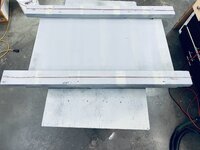
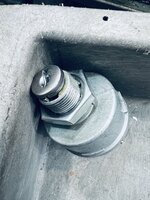
It has been a busy couple of weeks in the shop working on this sheet metal project. End point is in sight. I have a few parts to paint today, and get them wrapped up and shipped out.
One of the biggest challenges/time ***** has been the paint. (I do plan to switch to powder coat at some point in the future.) I’m using an industrial acrylic. It’s water borne, very low VOC, and is supposed to be a very durable finish. This is, of course, dependent on proper application. I spent untold hours and numerous trips to paint shops trying to get it sorted out. The challenge has been it is a very thick paint. I’ve settled out on a temporary solution to get the project finished- I’m using a cordless Graco pump type sprayer with their “fine finish” tip. It’s unwieldy to say the very least. It is getting the mill thickness and the finish is durable from what I have been able to tell on test parts. In general I’m a big fan of 3M’s modular Accuspray setup.

The tip is removable, replaceable, and disposable. No fluid flows through the gun. The paint is in their PPS cup with a disposable lid (with filter) and liner. This makes changeovers and cleanup truly effortless. I’ve had this setup for a long time and I’ve grown to really appreciate how much it simplifies spraying paint. It turns out even with the filter removed, a 2.0mm tip, and reduced paint it doesn’t flow this paint well enough to keep up. Figuring this out kicked my *** and took a LOT of time. It does appear they have a solution.

Their HGP gun has a pressurized cup that puts pressure on the PPS liner to force the paint into the tip. This will be here next week. I’ll use the Graco setup until then. The Graco setup creates an overwhelming amount of overspray, it’s nearly uncontrollable, and let’s just say I’m having to live with finish quality issues I wouldn’t normally be okay with. Luckily this is not a show car!
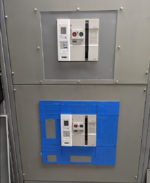
A little about the parts themselves. This is a low voltage (480v) electrical switchboard:

The end user wants those breakers removed and two larger breakers installed in their place. We measured just about every aspect of this section, the engineers designed the parts, I made the parts per their drawings,
@cycle61 and team are handling the installation.
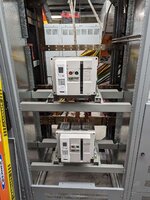
Both breakers installed.

Unfortunately the design was off and the field team had to make the insert in the door that trims out the breaker, in the field. They did a great job.
I switched over the tumbler to ceramic to try tumbling parts of the CNC plasma. It did a great job.
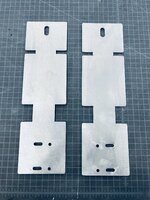
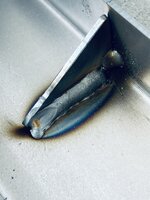
This was a huge timesaver. These parts get formed and then have two small gussets welded in.

Those gussets are a bit of a challenge to get welded in correctly. The Fireball tool magnetic 123 blocks were a lifesaver! They turned out nice in the end.
Some of the freshly painted parts..


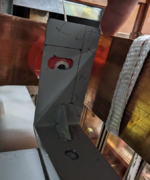
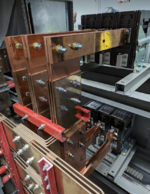
Lastly this is an example of the testing tools I make in use:
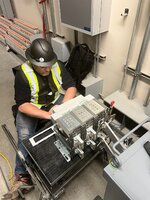
They are temporary conductors for high current primary injection testing of the new breakers. They are tested with real current (at a very low voltage) to ensure all functions work when called upon prior to being put into service.



 The nice thing about this setup is there's no trial and error getting the tab slot sorted, and it goes really fast.