To avoid these ads, REGISTER NOW!

Etching decorative pattern into steel?

To avoid these ads, REGISTER NOW!

driz

Well-known member
Joined
May 22, 2008
Messages
701
Location
Northern NY
Anyone done this before and if so, what is the process?


I once spruced up Some aluminum for my boat console once and it worked quite well. All I used was a 1 inch roll lock in a high-speed drill in slightly overlapping each circle. I am not sure how it would work on steel but you can give it a shot on some scrap and see if it gives you a decent effect. It takes about zero skill level to pull this off Giving it the rotary effect. I am sure your find examples of that and the net because that’s where I discovered it


Sent from my iPad using Tapatalk
 

matt_i

Well-known member
Joined
Mar 14, 2008
Messages
10,730
Location
SE Michigan
Depending on detail, it could be done with a steel mask and some aggressive blasting media to take out a couple of thousandths of material.
 

rsanter

Well-known member
Joined
Dec 22, 2007
Messages
18,521
Location
visalia ca
There are several ways to do that depending on what you want.

Engraving
Acid etch
Media blasting
 

fnieto

Well-known member
Joined
Aug 27, 2013
Messages
1,401
Location
Tucson,Arizona
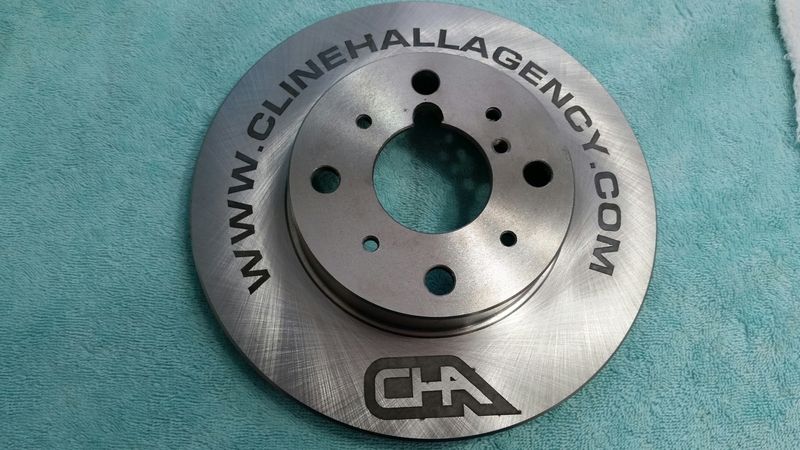
Im a fan if engine turning.

some of my knives and guns have it. Its not just for looks on a rifle bolt either, The fine grooves provided by E turning hold oil.

attachment.php


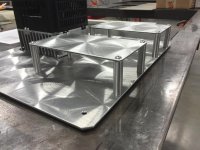
This was a VFD enclosure for the shop lathe. Done on the mill using a velcro pad and 180 grit.

attachment.php


attachment.php


This was done on the mill using a turning tool and a rotary head.

attachment.php


Just a couple of examples of E turning. The other methods already mentioned are more involved.
 

Attachments

  • DyRAkSmwTb+zi%9zIKxJOw.jpg
    DyRAkSmwTb+zi%9zIKxJOw.jpg
    120.1 KB · Views: 414
  • IMG_1301.jpg
    IMG_1301.jpg
    147.7 KB · Views: 418
  • IMG_1381.jpg
    IMG_1381.jpg
    117.4 KB · Views: 418
  • IMG_0819.jpg
    IMG_0819.jpg
    145.8 KB · Views: 415

bushmechanic

Well-known member
Joined
Mar 17, 2014
Messages
4,820
Find a pattern you like on the computer, and print it on adhesive paper; available at any office supply store.

Apply it to the metal already covered with electrical tape, and cut the pattern out with a cheap razor knife. Peel off what you like, then simply apply the acid and wait. You can get it as deep as you want.

You can also use a laser printer and a normal iron (you're melting the toner onto the metal, as laser printers essentially powder coat a page), certain markers, melted crayon, wax, transfer paper... Any number of ways. In this case, whatever you've just melted or transferred onto the metal will be what's blocking the acid.

Just make sure that metal is spotless. Clean the hell out of it and use gloves to touch it after you've done so. This is such an easy process because it doesn't take much to block the acid; even one fingerprint can be enough.

Basically, either get a stencil on there, or get the pattern into something you've melted on there and carefully cut it out. Transfer paper may require permanent marker, but you've got to be sure it's going to work, so test a few.

You can honestly get extremely beautiful results with very little practice. Most of that time will be spent messing around and deciding the easiest way to get what you want.

Last time I did it I used muriatic acid. It depends on what you want, as well as what sort of steel you're using, and concentrations required will vary. It pretty much just effects the time required to get your depth. You want it to take a while, so you can carefully keep track of it all.

After one or two tries, you'll be pulling pretty damned professional results. I've done a few saber blades in the past, for others; as well as a number of computer parts.

Blasting is an entirely different process, but it can be used in tandem if you've used tape to mask things off, because you can get in there and texture the etched areas. They end up with a different sheen anyway, but that really drives the look home, if you like it.

Acid etching is about the easiest way to do it, though. It's genuinely not something with hidden complications. Safety precautions apply, and do it outside with protection, but it's not like the fumes are going to eat a hole in the universe.

You can use incredibly weak stuff like lemons, but it'll take a long time and you may have trouble with uniformity. Electronic supply places sell acid that works well, too. There's a lot of art involved. Everything reacts a bit differently.
 
To avoid these ads, REGISTER NOW!
OP
T

Tunajoe

Well-known member
Joined
Jun 10, 2013
Messages
359
Location
Ventura County
Find a pattern you like on the computer, and print it on adhesive paper; available at any office supply store.

Apply it to the metal already covered with electrical tape, and cut the pattern out with a cheap razor knife. Peel off what you like, then simply apply the acid and wait. You can get it as deep as you want.

You can also use a laser printer and a normal iron (you're melting the toner onto the metal, as laser printers essentially powder coat a page), certain markers, melted crayon, wax, transfer paper... Any number of ways. In this case, whatever you've just melted or transferred onto the metal will be what's blocking the acid.

Just make sure that metal is spotless. Clean the hell out of it and use gloves to touch it after you've done so. This is such an easy process because it doesn't take much to block the acid; even one fingerprint can be enough.

Basically, either get a stencil on there, or get the pattern into something you've melted on there and carefully cut it out. Transfer paper may require permanent marker, but you've got to be sure it's going to work, so test a few.

You can honestly get extremely beautiful results with very little practice. Most of that time will be spent messing around and deciding the easiest way to get what you want.

Last time I did it I used muriatic acid. It depends on what you want, as well as what sort of steel you're using, and concentrations required will vary. It pretty much just effects the time required to get your depth. You want it to take a while, so you can carefully keep track of it all.

After one or two tries, you'll be pulling pretty damned professional results. I've done a few saber blades in the past, for others; as well as a number of computer parts.

Blasting is an entirely different process, but it can be used in tandem if you've used tape to mask things off, because you can get in there and texture the etched areas. They end up with a different sheen anyway, but that really drives the look home, if you like it.

Acid etching is about the easiest way to do it, though. It's genuinely not something with hidden complications. Safety precautions apply, and do it outside with protection, but it's not like the fumes are going to eat a hole in the universe.

You can use incredibly weak stuff like lemons, but it'll take a long time and you may have trouble with uniformity. Electronic supply places sell acid that works well, too. There's a lot of art involved. Everything reacts a bit differently.

Thanks everyone,
I'm looking to acid etch steel like Bushmechanic outlined.
I'm getting ready to make an entryway table and wanted to do something different with the steel legs
 

bushmechanic

Well-known member
Joined
Mar 17, 2014
Messages
4,820
Thanks everyone,
I'm looking to acid etch steel like Bushmechanic outlined.
I'm getting ready to make an entryway table and wanted to do something different with the steel legs

You're going to have a lot of fun. :thumbup:
 

jeepinerdeep

Well-known member
Joined
Dec 28, 2013
Messages
2,099
Location
South Central PA
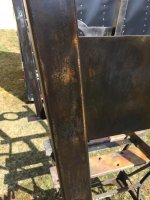
You want a pattern or a patina? Patina is not too hard.
 

Attachments

  • IMG_1951.jpg
    IMG_1951.jpg
    98.4 KB · Views: 48
  • IMG_0799.jpg
    IMG_0799.jpg
    158.2 KB · Views: 49
  • FullSizeRender.jpg
    FullSizeRender.jpg
    148.8 KB · Views: 49
  • IMG_0750.jpg
    IMG_0750.jpg
    152.2 KB · Views: 43
To avoid these ads, REGISTER NOW!
Top Bottom