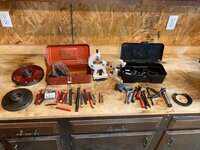
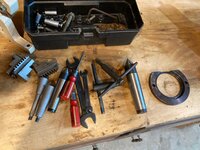
First off, congratulations on your first machinery purchase. Hate to sound this way but my first suggestion is to learn how to be safe with this. Lathe safety may seem to be obvious but it's not. A lathe is regarded by many as one of the potentially dangerous machines in the shop. Making the workpiece secured in the chuck, getting clothing caught in the rotating chuck, chips curled around your fingers are razor blades, a chip thrown into your eye, the workpiece getting hurled from the chuck while cutting it, etc. The list of potential hazards is long and it happens very fast. I've been a machinist for over 40 years and seen a lot of industrial accidents, they were all ****** and often life changing. I don't know of anybody that hasn't had an incident. It's not a matter of "if" it's a matter of "when" and the severity of the accident. Learn safe habits, like not standing in the line of rotation of the chuck, not grabbing chip curls with your fingers, NOT wearing gloves or long sleeves while operating the lathe, etc. Learn to look for the danger before you even turn the lathe on.
Ok, that's been said (and should be repeated) What do you have in mind to do with the lathe? Your work will often dictate what tooling you'll want/need. Show some photos of what you do have. Do you have any measuring instruments? You'll want/need some. The stand you want to build is a good idea but special care must be considered. If the mounting surface is not flat/planer then it will twist the bed of the lathe and can/will greatly affect the accuracy, especially with longer work like making a shaft. Locate the nearest scrap metal yard that will sell to the public. Very often you'll be doing projects where NEW metal isn't important enough to spend the money that could be better used for tooling and instruments. Besides, it's all new material underneath the rust anyway. There will be some differing opinions about cutting tools but I'd suggest resisting the urge to use carbide. Carbide cutting tools are brittle, chip/shatter in many applications, and cannot be sharpened without special grinding wheels. I'd favor high speed steel (HSS) that can be easily sharpened, not prone to chip/shatter, and can be ground to whatever shape/geometry you wish. Carbide is mostly for production where speed is the target, you're more interested in good results than how long it took. Buy good quality drills made from HSS, cheaply made cutting tools will disappoint.
Cutting speed is critical to whatever you'll be doing and the type of material as well as size dictates what speed/feed to operate at. There are hundreds of other tips/practices to learn, I suggest finding all the videos you can and keeping a small notebook to write things down in you can easily refer to. There's too much to remember in the beginning. Post up questions here, there are several members here with long experience. Your FIL will be a good source for info if he's willing. Good luck.