
You are using an out of date browser. It may not display this or other websites correctly.
You should upgrade or use an alternative browser.
You should upgrade or use an alternative browser.
Generator Selection and Install
- Thread starter Rick_Br
- Start date
dave*99
Well-known member
It's important to understand WHY folks are asking about this.Yes - all the breakers that I didn't intentionally turn off.
Your panel has L1 and L2.
We want to know if ALL the breakers on L1 behave a certain way and ALL the breakers on L2 behave a certain way.
Now understand that L1 and L2 alternate down the left and also the right side of the panel.
When you add the qualifier that some are on and some are off and some are left and some are right, well we don't know what's up.
Consider the alternating pattern and tell us how L1 and L2 are performing.
wyliesdiesels
Well-known member
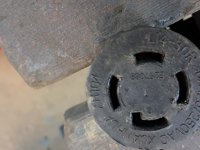
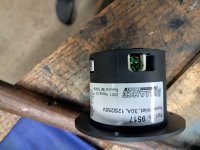
need to see pics of the plugs and inlets so we can figure out whats wrong. kinda hard to do so blind....
dave*99
Well-known member
Since you may be in the open panel with generator connected and the safety interlock no longer on the panel since the cover is off…..
Make damn sure you don’t close the main and generator breakers at the same time.
Make damn sure you don’t close the main and generator breakers at the same time.
Here is what I have so far - let me know if there is something else. I tried to put the male side of the inlet into the female side of the power plug again. It goes in and I can hear it kind of snap into place. when I try to turn it I can feel a very minor movement. It doesn't actually lock as I can pull it apart at that point.need to see pics of the plugs and inlets so we can figure out whats wrong. kinda hard to do so blind.
Edit - sorry I apparently forgot the pictures


Last edited:
JohnX14
Well-known member
Can you provide the specific text that requires this? This technical document (random search) doesn't support your analysis. https://lightning.org/wp-content/uploads/2014/12/Tech_Letter-NFPA_54_to_Include_Bonding_8-08.pdfBonding of the gas lines is an NFPA 54 requirement, with a #6 wire. All states have adopted some form of NFPA 54 as code and there is no “likely to be energized” quote like there is in the NEC/NFPA 70 that Mike Holt is an expert on.
I only referenced Mike Holt as he has a number of well accepted illustrations explaining requirements.
Where does NFPA 54 state to bond the gas piping with a #6? This is probably the fundamental question. I'm not aware of it. I do have a copy of NFPA 54 at the office, and I'll look it up. If I'm mistaken, I'll gladly acknowledge.
If the NEC and local electrical codes do not require the bond to a gas piping system that is not likely to become energized, who is required to install the #6 bond in your analysis? What is it bonded to, as specified in the fuel gas code?
You realize that the gas pipe can't be used as part of the grounding electrode system?
You realize that the equipment grounding conductor of the supply to a gas-fired appliance bonds the gas pipe? It doesn't need to be a #6?
JohnX14
Well-known member
It's prettty much not possible that one side vertically works and the other doesn't, as others have said. As someone else said, switch the pattern. it's almost possible that you somehow in a lottery jackpot type of way, have all L1 circuits off on one side, and the L2 isn't getting power from the gen. Or vice versa.
NFPA 54 2024..............It requires #6 for csst but not for pipe or simple tubing systems. Is the OPs HW heater the only LPG device?Can you provide the specific text that requires this? This technical document (random search) doesn't support your analysis. https://lightning.org/wp-content/uploads/2014/12/Tech_Letter-NFPA_54_to_Include_Bonding_8-08.pdf
I only referenced Mike Holt as he has a number of well accepted illustrations explaining requirements.
Where does NFPA 54 state to bond the gas piping with a #6? This is probably the fundamental question. I'm not aware of it. I do have a copy of NFPA 54 at the office, and I'll look it up. If I'm mistaken, I'll gladly acknowledge.
If the NEC and local electrical codes do not require the bond to a gas piping system that is not likely to become energized, who is required to install the #6 bond in your analysis? What is it bonded to, as specified in the fuel gas code?
You realize that the gas pipe can't be used as part of the grounding electrode system?
You realize that the equipment grounding conductor of the supply to a gas-fired appliance bonds the gas pipe? It doesn't need to be a #6?


Today's testing - I put the reliance inlet stuff back together. In the process of connecting the wires I discovered a broken ground. This device has a ground from the male outlet to the enclosure box. The ground from the main panel connects at that same point. It was the ground from the enclosure back to the main panel that was broken (broke off at the ring terminal). I replaced that ring terminal and got all the wires reconnected. Plugged the power cord in - tight going in, lots of effort to get it fully seated and very little twist. I did notice that I could no longer remove the female power line from the inlet box.
First thing I did was start the generator and checked the incoming voltage at the generator breaker in the main panel. L1 to L2 - 240, L1 to N - 120, L2 to N - 120, That was an improvement - yesterday L1 to L2 was around 180. I left all the circuits on, turned off the panel main and turned on the generator breaker. Everything in the whole house worked! Then I went back and shut off the circuits I would typically not want to run in an outage - they no longer worked and the desired circuits did work.
At this point I am declaring success. I do wonder what the problem was yesterday
1. Could the broken ground have caused the issue?
2. I still don't like the way the female power cord end connects to the inlet male. It feels like it takes way too much effort to get it connected and partially locked. From what I can find the locking feature is not required for the connection to work. Maybe the effort required is because the power cord is basically new/barely used and it needs to "wear" a bit?
I purchased a new reliance inlet box - that will be going back. I also purchased a new female cord end for the power cord. I may keep that in case of an emergency.
Comments are welcome
First thing I did was start the generator and checked the incoming voltage at the generator breaker in the main panel. L1 to L2 - 240, L1 to N - 120, L2 to N - 120, That was an improvement - yesterday L1 to L2 was around 180. I left all the circuits on, turned off the panel main and turned on the generator breaker. Everything in the whole house worked! Then I went back and shut off the circuits I would typically not want to run in an outage - they no longer worked and the desired circuits did work.
At this point I am declaring success. I do wonder what the problem was yesterday
1. Could the broken ground have caused the issue?
2. I still don't like the way the female power cord end connects to the inlet male. It feels like it takes way too much effort to get it connected and partially locked. From what I can find the locking feature is not required for the connection to work. Maybe the effort required is because the power cord is basically new/barely used and it needs to "wear" a bit?
I purchased a new reliance inlet box - that will be going back. I also purchased a new female cord end for the power cord. I may keep that in case of an emergency.
Comments are welcome
dave*99
Well-known member
Seems you applied the entire load of the house to the running generator with the throw of the inlet breaker in the main panel?
I'd get the genny running and connected. Check the output voltmeter, warm the engine etc.
Turn off every branch breaker.
Use interlock to open main and close genny breaker
Turn on desired circuits one by one.
Less transients this way compared to banging the generator with the whole house at once.
I'd get the genny running and connected. Check the output voltmeter, warm the engine etc.
Turn off every branch breaker.
Use interlock to open main and close genny breaker
Turn on desired circuits one by one.
Less transients this way compared to banging the generator with the whole house at once.
Last edited:
I hear what you are saying Dave but let me clarify - generator was running and warmed up before switching generator breaker ON. This generator does not have a volt meter - one of the reasons I checked that at the circuit breaker before turning it on. I had control of the loads - only load were overheads and receptacles. I agree your one at a time method is better. Interlock was used.
Any thoughts on why things worked today? It seems a broken groundwould not disrupt circuit functionality?
Any thoughts on why things worked today? It seems a broken groundwould not disrupt circuit functionality?
mike93lx
ALLIANCE MEMBER
You need to get the plug to lock on or it may fall out at some point, and/or arc the connectors.Today's testing - I put the reliance inlet stuff back together. In the process of connecting the wires I discovered a broken ground. This device has a ground from the male outlet to the enclosure box. The ground from the main panel connects at that same point. It was the ground from the enclosure back to the main panel that was broken (broke off at the ring terminal). I replaced that ring terminal and got all the wires reconnected. Plugged the power cord in - tight going in, lots of effort to get it fully seated and very little twist. I did notice that I could no longer remove the female power line from the inlet box.
First thing I did was start the generator and checked the incoming voltage at the generator breaker in the main panel. L1 to L2 - 240, L1 to N - 120, L2 to N - 120, That was an improvement - yesterday L1 to L2 was around 180. I left all the circuits on, turned off the panel main and turned on the generator breaker. Everything in the whole house worked! Then I went back and shut off the circuits I would typically not want to run in an outage - they no longer worked and the desired circuits did work.
At this point I am declaring success. I do wonder what the problem was yesterday
1. Could the broken ground have caused the issue?
2. I still don't like the way the female power cord end connects to the inlet male. It feels like it takes way too much effort to get it connected and partially locked. From what I can find the locking feature is not required for the connection to work. Maybe the effort required is because the power cord is basically new/barely used and it needs to "wear" a bit?
I purchased a new reliance inlet box - that will be going back. I also purchased a new female cord end for the power cord. I may keep that in case of an emergency.
Comments are welcome
It will lock. Get someone else to try
dave*99
Well-known member
This is a long shot - but is there any chance the material in this plug has gotten hard or taken a set interfering with mating?
Again - long shot.

Again - long shot.
ripperd
Well-known member
It shouldn't. Did messing with/fixing the ground jostle a loose connection into working properly?
wyliesdiesels
Well-known member
It seems a broken ground would not disrupt circuit functionality?
not possible for a broken ground in a j box to cause interference with a twist lock.
As said above it is locking but very marginally - i am not at all comfortable with it.You need to get the plug to lock on or it may fall out at some point, and/or arc the connectors.
It will lock. Get someone else to try
Certainly possible although I didn't notice any loose connectionsIt shouldn't. Did messing with/fixing the ground jostle a loose connection into working properly?
I'm leaning more and more to your long shot Dave. A new female twist lock goes on very smoothly and has a very positive lock. The problem one takes a lot of effort to just get it seated and barely turns to lock. I believe it is marginally locked but it still concerns me.This is a long shot - but is there any chance the material in this plug has gotten hard or taken a set interfering with mating?
Again - long shot.
I have this
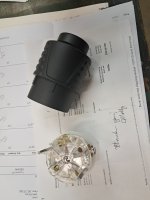

I'm thinking I could cut off the old receptacle and install this on the the power cord. Upside - the new one works; i.e. it inserts and has a positive lock. Down side the old one is a molded plug - the new one is obviously not molded and I have a bit of concern about outdoor use
Rick
dave*99
Well-known member
There is a seal on the new molded plug shell. My generator inlet is vertical so the cord hangs down rather than horizontalAs said above it is locking but very marginally - i am not at all comfortable with it.
Certainly possible although I didn't notice any loose connections
I'm leaning more and more to your long shot Dave. A new female twist lock goes on very smoothly and has a very positive lock. The problem one takes a lot of effort to just get it seated and barely turns to lock. I believe it is marginally locked but it still concerns me.
I have this
I'm thinking I could cut off the old receptacle and install this on the the power cord. Upside - the new one works; i.e. it inserts and has a positive lock. Down side the old one is a molded plug - the new one is obviously not molded and I have a bit of concern about outdoor use
Rick
Last edited:
dave*99
Well-known member
Yes, I edited it to add the shell is molded.New plug isn't molded dave but you probably didn't mean molded
dave*99
Well-known member

JohnX14
Well-known member
@Firebrick43NFPA 54 2024..............It requires #6 for csst but not for pipe or simple tubing systems. Is the OPs HW heater the only LPG device?
The first citation, 7.12.1.1 states "likely to become energized". "likely to become energized" is if the appliance or equipment has power to it. As far as CSST, the black coated and their fittings are rated as bonding, the yellow is not. At least as of a few years ago. A natural vent gas water heater is not likely to become energized. But if one wants to bond such, as someone suggest is a good practice, then by all means.
Last edited:
JohnX14
Well-known member
Glad OP figured out things. I wouldn't hesitate to use a field connected cord cap. The have weather proof ones, as Dave said. But how long is the generator cord? The 25' 30 Amp molded cords are not that expensive. I bought a fairly cheap, no-name one, on Amazon recently. (This was for a construction site, not to get me through a 5 day outage, I'd probably look for a Relianced molded cord)
Your reply should be directed to @Firebrick43. I simply pulled the relavent code for you both.The first citation, 7.12.1.1 states "likely to become energized". "likely to become energized" is if the appliance or equipment has power to it. As far as CSST, the black coated and their fittings are rated as bonding, the yellow is not. At least as of a few years ago. A natural vent gas water heater is not likely to become energized. But if one wants to bond such, as someone suggest is a good practice, then by all means.
Imo, likely to be energized is subjective and an AHJ could easily require it. Also, it does appear in NFPA 54 just like in 70.
JohnX14
Well-known member
Thank you, I didn't realize he hadn't posted the reference, I need to read more thoroughly. I appreciate the posting, the language is consistent between the 2 standards.Your reply should be directed to @Firebrick43. I simply pulled the relavent code for you both.
Imo, likely to be energized is subjective and an AHJ could easily require it. Also, it does appear in NFPA 54 just like in 70.
edit: fixed the post you referenced, and this Mike Holt video should clear up the points that both Firebrick and I were making, if anyone is interested.
Last edited:
If you exercise your generator quarterly, I'd go ahead and run your house on it for a couple of hours each time. Any load is fine for the genny, but a little repetition on the steps to switch everything over to the generator can be a good thing. Makes it less likely you'll make a mistake if you are under pressure to get the power back on in an emergency. You will also find any issues or loads that may not be generator compatible and come up with a solution for that before it's an emergency. Your checklist is a great way to keep it straight but practice and repetition are good.
That is so true - at least with me. Repetition is a required stepIf you exercise your generator quarterly, I'd go ahead and run your house on it for a couple of hours each time. Any load is fine for the genny, but a little repetition on the steps to switch everything over to the generator can be a good thing. Makes it less likely you'll make a mistake if you are under pressure to get the power back on in an emergency. You will also find any issues or loads that may not be generator compatible and come up with a solution for that before it's an emergency. Your checklist is a great way to keep it straight but practice and repetition are good.
.I think I'm going to cut off the female side of the power cord and replace it with the field installed connector. Buying a new 25' cord will be plan B.
A couple of questions now that things are operational -
1. Storage - I will be draining the carb, cleaning the sediment cup and draining the fuel tank. Storage will be inside my basement shop - somewhat of a controlled climate. Should I be adding anything to the fuel tank to prevent future starting problems?
2. This should "generate" some discussion - The standard recommendation is to not run the generator in an active rain/snow storm. It is somewhat likely that an outage will occur during a storm. What are you folks doing in that situation - waiting out the rain/snow, ignoring the recommendations and just running the generator, investing in a generator tent, other? My first thought was to run it from a detached shed but that is also frowned upon?
Rick
mike93lx
ALLIANCE MEMBER
I run mine in any weather. I have the generator to get power when I need it, not just when the weather is niceThat is so true - at least with me. Repetition is a required step
I think I'm going to cut off the female side of the power cord and replace it with the field installed connector. Buying a new 25' cord will be plan B.
A couple of questions now that things are operational -
1. Storage - I will be draining the carb, cleaning the sediment cup and draining the fuel tank. Storage will be inside my basement shop - somewhat of a controlled climate. Should I be adding anything to the fuel tank to prevent future starting problems?
2. This should "generate" some discussion - The standard recommendation is to not run the generator in an active rain/snow storm. It is somewhat likely that an outage will occur during a storm. What are you folks doing in that situation - waiting out the rain/snow, ignoring the recommendations and just running the generator, investing in a generator tent, other? My first thought was to run it from a detached shed but that is also frowned upon?
Rick
Firebrick43
Well-known member
Do you have a gas stove with an electric clock/ignition/oven controls? A furnace in the house?, A dryer, or even wires that run parallel to the gas piping for a couple of feet or more and create low voltage current via induction which can cause electrolysis of the under ground piping and severe corrosion in a manner of months.@Firebrick43
The first citation, 7.12.1.1 states "likely to become energized". "likely to become energized" is if the appliance or equipment has power to it. As far as CSST, the black coated and their fittings are rated as bonding, the yellow is not. At least as of a few years ago. A natural vent gas water heater is not likely to become energized. But if one wants to bond such, as someone suggest is a good practice, then by all means.
I haven't seen a house yet that the only gas appliance is a natural vent water heater? Only thing I have seen exempt is a simple out building/shed with a pilot light ventless heater.
Hell I was shocked last year touching a gas water heater during a safety inspection due to an undersink POU 110V mini water heater element shorting out and making the pipe to the water heater in the basement hot. My multimeter confirmed. The safety ground wasn't hooked up correctly so the breaker failed to trip. Obviously neither were the pipes nor the gas line bonded back to the service entrance either. The faucet was not live due to the nylon tubing connecting it to the water heater. Most of the rest of the house had been recently replumbed in PEX and I wonder if it started leaking everywhere due to the current leakage.
wyliesdiesels
Well-known member
Do you have a gas stove with an electric clock/ignition/oven controls? A furnace in the house?, A dryer, or even wires that run parallel to the gas piping for a couple of feet or more and create low voltage current via induction which can cause electrolysis of the under ground piping and severe corrosion in a manner of months.
I haven't seen a house yet that the only gas appliance is a natural vent water heater? Only thing I have seen exempt is a simple out building/shed with a pilot light ventless heater.
Hell I was shocked last year touching a gas water heater during a safety inspection due to an undersink POU 110V mini water heater element shorting out and making the pipe to the water heater in the basement hot. My multimeter confirmed. The safety ground wasn't hooked up correctly so the breaker failed to trip. Obviously neither were the pipes nor the gas line bonded back to the service entrance either. The faucet was not live due to the nylon tubing connecting it to the water heater. Most of the rest of the house had been recently replumbed in PEX and I wonder if it started leaking everywhere due to the current leakage.
this is why i advocate bonding all metal piping regardless of an EGC on an appliance possibly bonding the piping.
OK - time to circle back to the water heater install. Based on the comments I am concerned. Just to summarize - unit in question

Comments from above
odd place for the regulator. good way to put too much weight on the valve box and bend it especially considering the vertical pipe is not supported AT ALL and they switched to black iron pipe.
should be copper (or black iron) pipe > regulator > drip leg on bottom of tee, shut off valve on side of tee > flex line to valve box to allow for movement..... also that copper line is not allowed in many jurisdictions... definitely get a plumber in there to fix that mess
Bonding was also an ongoing discussion
Can we discuss specific details aimed at the uninitiated (me)
Rick
Comments from above
odd place for the regulator. good way to put too much weight on the valve box and bend it especially considering the vertical pipe is not supported AT ALL and they switched to black iron pipe.
should be copper (or black iron) pipe > regulator > drip leg on bottom of tee, shut off valve on side of tee > flex line to valve box to allow for movement..... also that copper line is not allowed in many jurisdictions... definitely get a plumber in there to fix that mess
Bonding was also an ongoing discussion
Can we discuss specific details aimed at the uninitiated (me
)Rick
mike93lx
ALLIANCE MEMBER
The expansion tank is oriented incorrectly. The inlet/outlet should be pointed downOK - time to circle back to the water heater install. Based on the comments I am concerned. Just to summarize - unit in question
Comments from above
odd place for the regulator. good way to put too much weight on the valve box and bend it especially considering the vertical pipe is not supported AT ALL and they switched to black iron pipe.
should be copper (or black iron) pipe > regulator > drip leg on bottom of tee, shut off valve on side of tee > flex line to valve box to allow for movement..... also that copper line is not allowed in many jurisdictions... definitely get a plumber in there to fix that mess
Bonding was also an ongoing discussion
Can we discuss specific details aimed at the uninitiated (me
Rick
mike93lx
ALLIANCE MEMBER
I have needed mine very little, thankfully.Mike - Uncovered? Have you seen any weather related effects on the generator?
wyliesdiesels
Well-known member
OK - time to circle back to the water heater install. Based on the comments I am concerned. Just to summarize - unit in question
Comments from above
odd place for the regulator. good way to put too much weight on the valve box and bend it especially considering the vertical pipe is not supported AT ALL and they switched to black iron pipe.
should be copper (or black iron) pipe > regulator > drip leg on bottom of tee, shut off valve on side of tee > flex line to valve box to allow for movement..... also that copper line is not allowed in many jurisdictions... definitely get a plumber in there to fix that mess
Bonding was also an ongoing discussion
Can we discuss specific details aimed at the uninitiated (me
Rick
I would just get a plumber in there since you probably dont have any experience working on gas lines
Oh i don't have any plans of working on this myself. I'm just looking for some education so when I discuss with a plumber I can at least appear to know something! Basically a bullet list of what's wrong and what the impact is. For example
1. Expansion tank oriented incorrectly - what is the operational impact?
2.
3.
Rick
1. Expansion tank oriented incorrectly - what is the operational impact?
2.
3.
Rick
wyliesdiesels
Well-known member
expansion tank is to prevent water hammer and stabilize the pressures
if its horizontal like that, the ability for it to do either is very limited since the flow will hit the elbow not the tank volume
i explained the issues with the gas line for the most part
if its horizontal like that, the ability for it to do either is very limited since the flow will hit the elbow not the tank volume
i explained the issues with the gas line for the most part
Doug1
Well-known member
As part of the house purchase, we had the contractor agree to to install a kohler water 26k cooled generator, though I had preferred a Cummings. I like that extra quiet exhaust pipe mentioned above. I was getting a liquid cooled for the extra run time and the fact they were a bit more quiet. We live in hurricane country so we could be out for weeks if a strong one hits.
Is that exhaust pipe something most dealers can get?
Is that exhaust pipe something most dealers can get?
Doug1
Well-known member
A good friend of mine had their mult-million dollar house burn down last year after a major storm system took out their power for 2 days. It was because the generator was located improperly in relation to the house and when the generator overheated it took the house with it. No need to skimp on that area. Keep it away from the main structure. They were home but it was at night and they were sleeping when it started. They were fortunate to survive.I don't see the fuel source affecting that. Guessing that is to prevent exhaust fumes from entering windows. Nothing magic about 20 feet IMHO although maybe they are worried about the generator catching fire. Aim the exhaust away from the house or anything it might affect and avoid placing it near open windows/doors. Basic common sense.
I have another friend who’s beach house had a hookup underneath for a massive Cummings diesel that was on a trailer and could be brought in. That always made me nervous because the diesel tanks and connectors were under the house, since parking was at a premium and the generator had to remain out of sight. Very sketchy design cause by local codes back in the day.