
You are using an out of date browser. It may not display this or other websites correctly.
You should upgrade or use an alternative browser.
You should upgrade or use an alternative browser.
Generator Selection and Install
- Thread starter Rick_Br
- Start date
dave*99
Well-known member
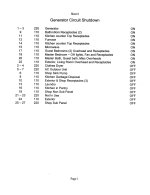
I suggest you mark the breakers themselves. Perhaps green or red dots on the breakers. Or on the cover next to each breaker.
Do this after you confirm operations.
You can also expect to be reminded that US voltages are 120 and 240.
Do this after you confirm operations.
You can also expect to be reminded that US voltages are 120 and 240.
Thanks Dave - that was my plan after final testingI suggest you mark the breakers themselves. Perhaps green or red dots on the breakers. Or on the cover next to each breaker.
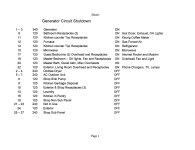
Why can't I ever get that right - file has been updated. I also added a column for primary intended loadsYou can also expect to be reminded that US voltages are 120 and 240.
I thought I missed a load - gas hot water heater- but itm doesn't appear there is any power going to it? That surprised me.
Rick
dave*99
Well-known member
It won't need 120V power unless it is power vented or tankless. There would be a blower sitting on top if it was power vented.I thought I missed a load - gas hot water heater- but itm doesn't appear there is any power going to it? That surprised me.
larry4406
Well-known member
And it would have a corded plug into a receptacle.....It won't need 120V power unless it is power vented or tankless. There would be a blower sitting on top if it was power vented.
wyliesdiesels
Well-known member
I thought I missed a load - gas hot water heater- but it doesn't appear there is any power going to it? That surprised me.
Is there a cord coming off the water heater?
dave*99
Well-known member
And if there is, add the associated receptacle to your generator supplied list. It won't draw much at all.Is there a cord coming off the water heater?
larry4406
Well-known member
At the top you likely also have a metal flue with a “hat” like rim on legs holding it up around 2”.No cord to the water heater - looks like some small control wires but they all seem to be internal to the heater
If so, you have an old style water heater with a pilot light. Google thermocouple (not thermocoupler) to see how it works without external applied power.
wyliesdiesels
Well-known member
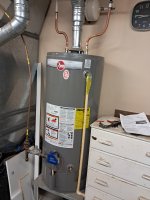
yeah no AC electricity needed for that
amazing someone actually installed the drip-leg correctly but.....
odd place for the regulator. good way to put too much weight on the valve box and bend it especially considering the vertical pipe is not supported AT ALL and they switched to black iron pipe.
should be copper (or black iron) pipe > regulator > drip leg on bottom of tee, shut off valve on side of tee > flex line to valve box to allow for movement..... also that copper line is not allowed in many jurisdictions... definitely get a plumber in there to fix that mess
EDIT: no bonding jumper on gas and water lines.... this looks like a recent install judging by how bright and clean everything is.... did you just have this done?
amazing someone actually installed the drip-leg correctly but.....
odd place for the regulator. good way to put too much weight on the valve box and bend it especially considering the vertical pipe is not supported AT ALL and they switched to black iron pipe.
should be copper (or black iron) pipe > regulator > drip leg on bottom of tee, shut off valve on side of tee > flex line to valve box to allow for movement..... also that copper line is not allowed in many jurisdictions... definitely get a plumber in there to fix that mess
EDIT: no bonding jumper on gas and water lines.... this looks like a recent install judging by how bright and clean everything is.... did you just have this done?
Last edited:
dave*99
Well-known member
The water lines connect to PEX at the top of the photo. How should this water heater be bonded? Directly to gas line? Or might that be closer to the supply?yeah no AC electricity needed for that
amazing someone actually installed the drip-leg correctly but.....
odd place for the regulator. good way to put too much weight on the valve box and bend it especially considering the vertical pipe is not supported AT ALL and they switched to black iron pipe.
should be copper (or black iron) pipe > regulator > drip leg on bottom of tee, shut off valve on side of tee > flex line to regulator to allow for movement..... also that copper line is not allowed in many jurisdictions... definitely get a plumber in there to fix that mess
EDIT: no bonding jumper on gas and water lines.... this looks like a recent install judging by how bright and clean everything is.... did you just have this one?
Last edited:
wyliesdiesels
Well-known member
i missed the pex... WH still needs to be bonded however....
JohnX14
Well-known member
I have a pair of Honda EU220i's that I can parallel, and backfeed the subpanel that has all the circuits I'd want/ need in an outage. It's as simple as you posted. I put a blue dot with a sharpie on all the circuits I may want to turn on. So I can identify them in an outage. (yes i'm only getting 120V, not 120/ 240V, but I jump the legs together on the interlock)I suggest you mark the breakers themselves. Perhaps green or red dots on the breakers. Or on the cover next to each breaker.
Do this after you confirm operations.
You can also expect to be reminded that US voltages are 120 and 240.
And as for the 120/ 240 vs 110/ 220 reminder, yes that is the nominal voltage these days, and those are the values used on test questions, etc......but I guess I'm old enough and learned from a guy that is old enough to still call it 110/ 220. (my father)
I will say that I am in an area that rarely loses power. I'm in an area of town in which I'm told is on the "hospital loop" that brings power to the local hospital. And that there is a redundant loop in case there is an outage. I have the contacts to look closer into this anecdotal story, but haven't bothered. We haven't lost power more than 3-4 times in my 14 years at this house, and never for more than an hour except for an incident in which at least half the town lost power due to a fire in a substation, on a calm July morning. And that was only about a 4 hour outage. I've sold and installed Generac home standby generators for the last 10 years or so, and just can't justify even installing or maintaining one.
mike93lx
ALLIANCE MEMBER
Expansion tank isn't installed correctly either. Needs to be vertical and ideally with the fitting facing downyeah no AC electricity needed for that
amazing someone actually installed the drip-leg correctly but.....
odd place for the regulator. good way to put too much weight on the valve box and bend it especially considering the vertical pipe is not supported AT ALL and they switched to black iron pipe.
should be copper (or black iron) pipe > regulator > drip leg on bottom of tee, shut off valve on side of tee > flex line to regulator to allow for movement..... also that copper line is not allowed in many jurisdictions... definitely get a plumber in there to fix that mess
EDIT: no bonding jumper on gas and water lines.... this looks like a recent install judging by how bright and clean everything is.... did you just have this one?
dave*99
Well-known member
Even those have trouble getting good help these days.I would say within the last 5 years by a very reputable company
wyliesdiesels
Well-known member
Expansion tank isn't installed correctly either. Needs to be vertical and ideally with the fitting facing down
whoops, i did notice that and thought it may be wrong but didnt look it up
wyliesdiesels
Well-known member
I would say within the last 5 years by a very reputable company
yikes... call a plumber
JohnX14
Well-known member
I agree with pretty much all of your previous reply, but what are you saying needs to be bonded on this water heater? With no power being supplied, this doesn't fall into the likely to become energized consideration.i missed the pex... WH still needs to be bonded however....
wyliesdiesels
Well-known member
I agree with pretty much all of your previous reply, but what are you saying needs to be bonded on this water heater? With no power being supplied, this doesn't fall into the likely to become energized consideration.
the water can be a pathway for electricity from an isolated energized piece of metal pipe that then can cause the water heater to become energized. this is why all metal piping needs to be bonded.
JohnX14
Well-known member
I don't think so. The key phrase is "likely to become energized". If it's a water heater with a power source, it falls in this category. If it is the naturally vented gas water heater, it doesn't fall into that category. I recently saw a nice Mike Holt illustration of this point. (not that Mike Holt is the authority, but is highly recognized in the industry, as I'm sure you know) Of course I can't find it now. I also don't have my code book open.the water can be a pathway for electricity from an isolated energized piece of metal pipe that then can cause the water heater to become energized. this is why all metal piping needs to be bonded.
I read here far more than I post, and I find nearly all of your posts to be spot on. This one just caught my attention. You've contributed more here than I can recount. I'm just a drop-in guy.
wyliesdiesels
Well-known member
I have seen some weird **** including stuff that was energized that was NOT "likely to become energized."
best to bond all metal piping
best to bond all metal piping
I'm not ignoring the water heater comments but I'd like to get through the generator testing first and then circle back to the WH.
While I'm waiting for better weather I decided to put together a start up and shut down procedure. The generator will be stored in my basement shop so every time it runs I am going to drain the gas.
Up thread it was brought up that the generator should be periodically "test run". My expectation is that we will have very limited power outages - the generator may not run in an actual outage for years. However. I believe it is recommended that it be tested to be sure everything is OK. Couple of questions:
1. How often should the test runs be done - once a month, once a quarter, ???
2. Should the generator just be started up and run for 15 to 30 minutes and voltage output checked or should ZI actually simulate an outage and test completely?
Rick

While I'm waiting for better weather I decided to put together a start up and shut down procedure. The generator will be stored in my basement shop so every time it runs I am going to drain the gas.
Up thread it was brought up that the generator should be periodically "test run". My expectation is that we will have very limited power outages - the generator may not run in an actual outage for years. However. I believe it is recommended that it be tested to be sure everything is OK. Couple of questions:
1. How often should the test runs be done - once a month, once a quarter, ???
2. Should the generator just be started up and run for 15 to 30 minutes and voltage output checked or should ZI actually simulate an outage and test completely?
Rick
dcg9381
Well-known member
If it helps anyone else, I made this "mistake" too, assuming that "parallel kit" generators put out 240V. They don't. They're in-phase, so you get more amps, but AC voltage stays the same.... Big "whoops" in terms of a purchase on my part.I have a pair of Honda EU220i's that I can parallel, and backfeed the subpanel that has all the circuits I'd want/ need in an outage. It's as simple as you posted. I put a blue dot with a sharpie on all the circuits I may want to turn on. So I can identify them in an outage. (yes i'm only getting 120V, not 120/ 240V, but I jump the legs together on the interlock)
I change the oil on the 20k every 1-2 years. It's been really easy. What I like about it is the auto-start. Critical stuff like security, network, my office is on a UPS so I really don't even notice if the power goes out until I hear the generator spin up... I bought a "used" 20k, got a steal on it and installed it myself. I think they run about $15-17k here installed turn key, which is a pretty good chunk of change.I've sold and installed Generac home standby generators for the last 10 years or so, and just can't justify even installing or maintaining one.
mike93lx
ALLIANCE MEMBER
You have to put a load on it... A spacer heater works well for this.I'm not ignoring the water heater comments but I'd like to get through the generator testing first and then circle back to the WH.
While I'm waiting for better weather I decided to put together a start up and shut down procedure. The generator will be stored in my basement shop so every time it runs I am going to drain the gas.
Up thread it was brought up that the generator should be periodically "test run". My expectation is that we will have very limited power outages - the generator may not run in an actual outage for years. However. I believe it is recommended that it be tested to be sure everything is OK. Couple of questions:
1. How often should the test runs be done - once a month, once a quarter, ???
2. Should the generator just be started up and run for 15 to 30 minutes and voltage output checked or should ZI actually simulate an outage and test completely?
Rick
I would do it at least annually
dave*99
Well-known member
Agreed, run the portable generator to a space heater or hair dryer. No need to power the house with it. With a portable genny and interlock, there are very few components between the inlet and the panel, so failures are unlikely.
You will see MANY different recommendations on how often you need to exercise the generator...... Let the games begin.
You will see MANY different recommendations on how often you need to exercise the generator...... Let the games begin.
dave*99
Well-known member
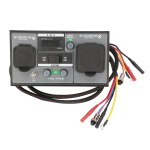
Agreed - but Genmax does make a series/parallel kit for their generators that can make 240V from two generators.If it helps anyone else, I made this "mistake" too, assuming that "parallel kit" generators put out 240V. They don't. They're in-phase, so you get more amps, but AC voltage stays the same.... Big "whoops" in terms of a purchase on my part.
JohnX14
Well-known member
No arguments here.I have seen some weird **** including stuff that was energized that was NOT "likely to become energized."
best to bond all metal piping
JohnX14
Well-known member
I can totally see someone who is only casually aware buying 2 of these generators and assuming the parallel output is 240V.If it helps anyone else, I made this "mistake" too, assuming that "parallel kit" generators put out 240V. They don't. They're in-phase, so you get more amps, but AC voltage stays the same.... Big "whoops" in terms of a purchase on my part.
I change the oil on the 20k every 1-2 years. It's been really easy. What I like about it is the auto-start. Critical stuff like security, network, my office is on a UPS so I really don't even notice if the power goes out until I hear the generator spin up... I bought a "used" 20k, got a steal on it and installed it myself. I think they run about $15-17k here installed turn key, which is a pretty good chunk of change.
$15K-$17K is a good ballpark for a fully installed 20K generator. Probably upwards of $20K, depending on whether the fuel supply is already on site. (NG or propane)
Well not much in this thread so far but an internet search yield exercise cycles of once a week for30 minutes to a few tomes a year. I think I am going to go middle of the road- once a quarter for 30 minutes with a heat gun as a load.You will see MANY different recommendations on how often you need to exercise the generator...... Let the games begin.
Rick
I was planning on wrapping this generator project today. Started up the generator in a stand alone condition - it ran fine. Frequency was good, 120 volt receptacle was working as expected and the 120/240 volt receptacle was outputting 240+ volts. Checked volts through the power cable - 240.
Plugged in the power cable to the generator and the panel inlet receptacle. Turned off main panel breaker and turned on the generator breaker. turned off non needed circuits AND A DISMAL FAILURE.
When I checked the circuits I found quite a few not working and some working. Further investigation showed all the non working circuits were on one side of the panel (left side). Uh Oh - sounds like a serious wiring issue.
As noted above volts through the generator and power cord were OK. Volts at the generator panel breaker were low - maybe 180? All connections looked good. the one thing I did notice is that the inlet receptacle / plug are L14-30 which is supposed to be a locking plug. When I insert the plug into the receptacle I can't feel a "locking tunr" like I can on the generator side.
OK - trouble shooting?
Rick
Plugged in the power cable to the generator and the panel inlet receptacle. Turned off main panel breaker and turned on the generator breaker. turned off non needed circuits AND A DISMAL FAILURE.
When I checked the circuits I found quite a few not working and some working. Further investigation showed all the non working circuits were on one side of the panel (left side). Uh Oh - sounds like a serious wiring issue.
As noted above volts through the generator and power cord were OK. Volts at the generator panel breaker were low - maybe 180? All connections looked good. the one thing I did notice is that the inlet receptacle / plug are L14-30 which is supposed to be a locking plug. When I insert the plug into the receptacle I can't feel a "locking tunr" like I can on the generator side.
OK - trouble shooting?
Rick
All left side of panel not working is impossible if some/all of right side is working.
Panel buss bars alternate A-B-A-B.....vertically.
Check the connections at the PIB receptacle.
You should be able to feel it lock. Could be PIB receceptacle is bad.
Panel buss bars alternate A-B-A-B.....vertically.
Check the connections at the PIB receptacle.
You should be able to feel it lock. Could be PIB receceptacle is bad.
Firebrick43
Well-known member
Bonding of the gas lines is an NFPA 54 requirement, with a #6 wire. All states have adopted some form of NFPA 54 as code and there is no “likely to be energized” quote like there is in the NEC/NFPA 70 that Mike Holt is an expert on.I don't think so. The key phrase is "likely to become energized". If it's a water heater with a power source, it falls in this category. If it is the naturally vented gas water heater, it doesn't fall into that category. I recently saw a nice Mike Holt illustration of this point. (not that Mike Holt is the authority, but is highly recognized in the industry, as I'm sure you know) Of course I can't find it now. I also don't have my code book open.
I read here far more than I post, and I find nearly all of your posts to be spot on. This one just caught my attention. You've contributed more here than I can recount. I'm just a drop-in guy.
Some more investigation - The male end of the power cord inserted into the generator has a noticeable twist lock. The two ends pf the power cord inserted into each other have a noticeable twist lock. I took the inlet apart and just the male section inserted into the generator has a noticeable twist lock. The male end of the inlet and female end of the cord when inserted together has no noticeable twist lock.All left side of panel not working is impossible if some/all of right side is working.
Panel buss bars alternate A-B-A-B.....vertically.
Check the connections at the PIB receptacle.
You should be able to feel it lock. Could be PIB receceptacle is bad.
So where is the problem? Cord female and male - OK, cord male into generator - OK, Inlet male into generator - OK, Inlet male into cord female - NOT OK.
wyliesdiesels
Well-known member
can you post some pics?
wyliesdiesels
Well-known member
When I checked the circuits I found quite a few not working and some working. Further investigation showed all the non working circuits were on one side of the panel (left side). Uh Oh - sounds like a serious wiring issue.
you sure its ALL of the breakers on one side of the panel?
Yes - all the breakers that I didn't intentionally turn off.you sure its ALL of the breakers on one side of the panel?
Glad to - what are you looking to see?can you post some pics?
So I went to Home Depot and bought a new Reliance PB30 inlet - same problem. The cord end is hard to insert and does not lock. Then I went to the electrical Supply store and bought a new RPP L14-30 female cord end and tried it on the Reliance male inlet - worked perfect. They went together very easily and there was a very obvious twist to lock.
I don't understand the problem - is it possible that the original male end on the power cord is just not compatible with the Reliance male end?
Rick
mike93lx
ALLIANCE MEMBER
it will lock, just takes some effort. confirming that the plug and cord are both locking is easy with a quick visual checkYes - all the breakers that I didn't intentionally turn off.
Glad to - what are you looking to see?
So I went to Home Depot and bought a new Reliance PB30 inlet - same problem. The cord end is hard to insert and does not lock. Then I went to the electrical Supply store and bought a new RPP L14-30 female cord end and tried it on the Reliance male inlet - worked perfect. They went together very easily and there was a very obvious twist to lock.
I don't understand the problem - is it possible that the original male end on the power cord is just not compatible with the Reliance male end?
Rick
The PB30 is absolutely a locking plug. I've installed several and have one on my house right now
Oh I believe the PB30 is locking - it works fine with the new female cord end. It does not work with the cord end that came on the power cord I have. Believe me - I have tried using all the strength I have and cannot get it to lock.it will lock, just takes some effort. confirming that the plug and cord are both locking is easy with a quick visual check
The PB30 is absolutely a locking plug. I've installed several and have one on my house right now