To avoid these ads, REGISTER NOW!

Hex key deep dive

Kuma601

Well-known member
Joined
Dec 24, 2020
Messages
960
Location
Cali
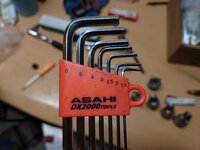
You owe it to yourself to try Asahi AQS0910 Hex Keys. The fitment on bolt heads is phenomenal. They're one of my most used tools on motorcycles and whatever coating they use, it's barely showing any wear. And the holder is perfect - just enough friction to hold them in place but still easy to remove, and it's showed no signs of loosening.

Better than Bondhus and Eklind in my opinion.
Glad you mentioned these, I brought a set when over...I really like these keys.

The Bondhus are the frequent fliers and they get a touch to the grinder after about every 20-25 torqued fasteners. The keys may be in spec but the fasteners are another scenario. It is good to have other makers keys to test fit before torquing up.
 
To avoid these ads, REGISTER NOW!

teagueo

Well-known member
Joined
Mar 7, 2017
Messages
464
Glad you mentioned these, I brought a set when over...I really like these keys.

The Bondhus are the frequent fliers and they get a touch to the grinder after about every 20-25 torqued fasteners. The keys may be in spec but the fasteners are another scenario. It is good to have other makers keys to test fit before torquing up.

They're just one of those tools that you really look forward to using. Can't exactly put my finger on it, but they feel awesome to use.

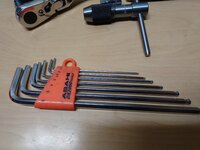
These have put in a lot of work:

DSC_3141.JPG

DSC_3145.JPG

DSC_3146.JPG
 

F-22

Well-known member
Joined
Jan 23, 2022
Messages
1,830
One thing I think people forget to mention about the Wera - the ends are machined from a round bar, but the round portion remains. This makes them a bit thicker and a lot more rigid. What often bothers me with standard all-hex keys is that damn flex. Even the PB Swiss 5mm hex key will flex quite a bit if you really put some serious torque through. The Wera won't, I think you'll sooner snap off the head before it has any bend. And it never seemed to cause a clearance issue for me (still smaller than the allen head diameter), so I take that as a major advantage for Wera.

I am certainly not a fan of their screwdrivers (IMO bad handle shape and easy to get dirty with no hard handle version...) or wrenches or even the ratchets (sockets are pretty good taiwan quality, love the color coding and knurling but hate that they don't stamp the sizes on! laser etching fades away over time!). But they really do good allen keys. I have nothing to fault them for. Hex-plus is basically exactly like an inverted flank-drive, which is the standard for nearly all modern sockets.
 

Dave455

Well-known member
Joined
Mar 19, 2013
Messages
5,829
Location
Sussex, England
One thing I think people forget to mention about the Wera - the ends are machined from a round bar, but the round portion remains. This makes them a bit thicker and a lot more rigid. What often bothers me with standard all-hex keys is that damn flex. Even the PB Swiss 5mm hex key will flex quite a bit if you really put some serious torque through. The Wera won't, I think you'll sooner snap off the head before it has any bend. And it never seemed to cause a clearance issue for me (still smaller than the allen head diameter), so I take that as a major advantage for Wera.

I am certainly not a fan of their screwdrivers (IMO bad handle shape and easy to get dirty with no hard handle version...) or wrenches or even the ratchets (sockets are pretty good taiwan quality, love the color coding and knurling but hate that they don't stamp the sizes on! laser etching fades away over time!). But they really do good allen keys. I have nothing to fault them for. Hex-plus is basically exactly like an inverted flank-drive, which is the standard for nearly all modern sockets.
This is 100% correct!

The only thing I would add in respect of the PB Swiss, is that although they flex, they do so elastically and return to straight, rather than taking a permanent bend. I once spoke to Max Baumann who runs PB and he explained all this!

I should also point out that PB Swiss offer round shank hex keys too!
A2EE90BE-6FFE-47B6-A256-4E27A675EEEA.jpeg

Although I’m a fan of the PB Swiss (and I still think they are the most accurately made - certainly my first choice when I need a good fit and don’t want to damage a fastener) I like the Wera too. I’d never really thought about why, but I think you’re right, it’s the stiffness - they’re a really good tool for automotive use. It’s not just the shape though, they seem to be made of very decent steel too, and I like the colour coding.

The Wera Torx keys are also superb. They’re one of the few firms to offer a ball ended Torx, and I absolutely love these. Have really needed them on a couple of occasions and no complaints.

I also like the selection that Wera offer - hex or Torx, Inch or metric, short or long, coloured sleeves or not, then repeat all the options in Stainless.

The best solution, and I know this is a real “Garage Journal” answer, is to have both!

Agreed with regard to Wera screwdrivers. Love the blades, but the handles don’t work well in most of the environments I work in. I use the stainless ones for woodworking.
 
Last edited:

jblnut

ALLIANCE MEMBER
Joined
Jan 17, 2015
Messages
7,121
Location
In the Middle of MN
I don't have technical information or smart guy stuff to add in here but I can tell you the Husky L-Key and the Bondhus T-Handle sets I purchased in 2012 have seen HEAVY use on Lely Milking equipment and have been abused to no end with no failures. The Bondhus 4mm ball end T-Handle has had a vise grip on it many many times to free a stubborn SS faster from a SS nut of sorts. Never busted a ball off. Always only hand tighten with the T-Handles. Over tightening a SS fastener turns into a job for a die grinder for the next guy.

I have others at home and rarely use them on the farm other than on the occasional bearing or pulley.
 

RoninB4

Well-known member
Joined
Jul 22, 2020
Messages
3,599
Location
Under My House
had a vise grip on it many many times to free a stubborn SS faster from a SS nut of sorts. Never busted a ball off. Always only hand tighten with the T-Handles. Over tightening a SS fastener turns into a job for a die grinder for the next guy.
-SS fasteners are notorious for galling themselves into a unified assembly. Perhaps some anti-seize on the threads (if allowed by FDA) would help. If FDA says anti-size is verboten try some Phillips Milk Of Magnesia on the threads instead. That's what I had to use when we ran out of anti-seize. Phillips MOM was used by USAF flight line mechanics decades ago to combat frozen/galled fasteners, that's where I got it from. It's not as good as real anti-seize but it does work.
 

jblnut

ALLIANCE MEMBER
Joined
Jan 17, 2015
Messages
7,121
Location
In the Middle of MN
-SS fasteners are notorious for galling themselves into a unified assembly. Perhaps some anti-seize on the threads (if allowed by FDA) would help. If FDA says anti-size is verboten try some Phillips Milk Of Magnesia on the threads instead. That's what I had to use when we ran out of anti-seize. Phillips MOM was used by USAF flight line mechanics decades ago to combat frozen/galled fasteners, that's where I got it from. It's not as good as real anti-seize but it does work.
There is such a thing as food grade anti-seize but it almost seemed to make things worse .... plus it tasts horrible lol

We'd use good ol' Irish Spring bar soap most times. Rub the fastener on the soap and install. Milk of Magnesia is an interesting thing to use .... I bet that'd work !!! We told the new guys "I don't care what you put on that fastener before you drive it in as long as you put something on it, heck even manure is better than nothing" :lol_hitti
 

Kuma601

Well-known member
Joined
Dec 24, 2020
Messages
960
Location
Cali
I don't recall who made these keys, they were moderately priced at about $12 compared to the Asahi keys. Only marking is CR-V on the side with the size. They've been quite good as well. For precise torque values the Proto 1/4" hex bit sockets on the torque wrench.


hex-keys-January 09, 2023-8757 - Copy.jpg
 

F-22

Well-known member
Joined
Jan 23, 2022
Messages
1,830
This is 100% correct!

The only thing I would add in respect of the PB Swiss, is that although they flex, they do so elastically and return to straight, rather than taking a permanent bend. I once spoke to Max Baumann who runs PB and he explained all this!

I should also point out that PB Swiss offer round shank hex keys too!
A2EE90BE-6FFE-47B6-A256-4E27A675EEEA.jpeg

Although I’m a fan of the PB Swiss (and I still think they are the most accurately made - certainly my first choice when I need a good fit and don’t want to damage a fastener) I like the Wera too. I’d never really thought about why, but I think you’re right, it’s the stiffness - they’re a really good tool for automotive use. It’s not just the shape though, they seem to be made of very decent steel too, and I like the colour coding.

The Wera Torx keys are also superb. They’re one of the few firms to offer a ball ended Torx, and I absolutely love these. Have really needed them on a couple of occasions and no complaints.

I also like the selection that Wera offer - hex or Torx, Inch or metric, short or long, coloured sleeves or not, then repeat all the options in Stainless.

The best solution, and I know this is a real “Garage Journal” answer, is to have both!

Agreed with regard to Wera screwdrivers. Love the blades, but the handles don’t work well in most of the environments I work in. I use the stainless ones for woodworking.
Those PB keys are really cool! I have too many allen keys, but it seems that maybe still not enough?

I have an old "Weralit Wuppertal" screwdriver (it's actually a hex/allen screw driver), wish they still made the classic acetate handle (it didn't have the wera handle shape either, just a classic screwdriver... at some point I know they made acetate handles too, and I think they're still sold in South Africa:
schraubendreher-weralit-33-17125.jpg

But to each their own, I'm sure lots of people love the Wera handles too. Just feel like the brand shouldn't be too attached to it and offer some alternative shapes too. At least a hard one so it can be kept clean!

Feels like they tried to promote that handle shape way too much, pushed into all their branding, but in the end it's not really that great. Swiss Grip from PB is certainly more comfortable, but then they also have the classics or the multicraft. Vessels power grip is awesome, as is the megadora and the classics. Hazet and Gedore use the Oplast "Kraftgrip", Stahlwille I think uses the Witte screwdrivers... Those are all much nicer to use for me.
 

RoninB4

Well-known member
Joined
Jul 22, 2020
Messages
3,599
Location
Under My House
I have an old "Weralit Wuppertal" screwdriver

Feels like they tried to promote that handle shape way too much, pushed into all their branding, but in the end it's not really that great.
-My first encounter with that shaped handle was in 1995 while on assignment in Wuppertal. I made a complimentary remark about the unique shape and was told by the German engineer that it had come from a contest. The contest was to create something new/innovative and all the German tool companies were competitors. Supposedly, an engineer at Wera was searching for a more ergonomic handle shape and started with a lump of modeling clay. Gripping the clay squished that shape, which went on to win a prize at the national competition. Perhaps that's why they tried to promote the handle shape so much. I don't have one any more (lost in air travel) but like it just because it's unique. For torque I like getting a wrench to assist like Snap-on had/has on some of theirs. Just passing on info that may not be known otherwise.
 

Steve_P

Well-known member
Joined
Sep 15, 2010
Messages
5,185
One thing I think people forget to mention about the Wera - the ends are machined from a round bar, but the round portion remains. This makes them a bit thicker and a lot more rigid......

I'm sure you know, but not all Wera hex keys are machined from a round bar- they also sell the typical "all hex" model that's much more common.
 

Blind1

Well-known member
Joined
Mar 8, 2018
Messages
355
I bought a set of the wera keys and they are a changer for All the “assembly required” furniture and assorted accoutrements young kids bring. The 4mm is getting a workout.
 

F-22

Well-known member
Joined
Jan 23, 2022
Messages
1,830
I'm sure you know, but not all Wera hex keys are machined from a round bar- they also sell the typical "all hex" model that's much more common.
Yes I know, and I never thought about it but I wonder how different the fit is. Those that are "all hex" are probably forged to the shape, not machined, cause machining something that long is no easy task. Maybe final grinding but I really doubt it cause they're the cheap models?

I mean, the hex-plus feel a bit sloppy due to the shape. Those all-hex are probably even more sloppy just due to the different production tolerances for that shape.
 

dutchgray

Well-known member
Joined
Sep 28, 2014
Messages
6,468
Location
Dorset. England.
Yes I know, and I never thought about it but I wonder how different the fit is. Those that are "all hex" are probably forged to the shape, not machined, cause machining something that long is no easy task. Maybe final grinding but I really doubt it cause they're the cheap models?

I mean, the hex-plus feel a bit sloppy due to the shape. Those all-hex are probably even more sloppy just due to the different production tolerances for that shape.
Normal hex keys are made from pre sized Hex stock, bent, sheared to length, machine the ends if ball, heat treatment, plating processes etc.
The only thing that can make a big difference provided they are using the correct steel grade and all but the worst should be is the heat treatment processes.
 

RoninB4

Well-known member
Joined
Jul 22, 2020
Messages
3,599
Location
Under My House
Those that are "all hex" are probably forged to the shape, not machined, cause machining something that long is no easy task. Maybe final grinding but I really doubt it cause they're the cheap models?
-Can't speak for every maker but I really doubt any of them are forged due to time involved for forging plus the fact that there's a much faster process for making the ball drivers. I was involved in the ball driver project for Eklind Tool and have made a few posts on GJ describing the machining process that Bondhaus used (indexed broaching) as well as the faster process (profilator) developed by/for Eklind Tool. Evidence from other makers products strongly suggests that almost all other makers are now using the profilator method for making ball drivers.

Dutchgray is correct about starting with a coil of hex stock fed into a stamping die where the "L" keys are fed, bent, and cut to length in one stroke of the press. I made and repaired the dies for Eklind Tool and doubt there is a better method for "L" keys. The keys for the fold-up sets were made in a similar manner. The older "T" keys were made on a 4-slide if they were all metal. The round stock with a hex on the end were likely made with a profilator. I seriously doubt any are made with an abrasive/grinding process due to the usual limitations associated with grinding.

Dutchgray is also correct in stating the type of steel and the heat treating are critical to how good the hex key is.

"Those all-hex are probably even more sloppy just due to the different production tolerances for that shape."
-The production tolerance for hex stock is specified by the company buying the stock. There are several reasons for perceived fitment to a SHCS, I've posted a couple of explanations in previous posts. It's not always the key that makes for a sloppy fit.
 

MarcSeattle

Well-known member
Joined
Mar 25, 2010
Messages
575
Location
Seattle
What does the Garage Journal Brain Trust recommend for the nut-holding versions of hex (Allen) screwdrivers and bit sockets? I saw the Koken bit sockets (Koken RS3015M) and wondered if they were worth the money and whether there is a better alternative.
 

bwringer

Well-known member
Joined
Jan 1, 2013
Messages
10,318
Location
Indianapolis
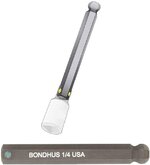
The Bondhus Prohold tools have been very good to me; these have a simple wee nubbin of flexible plastic on one face of a ball end hex.

So far, I haven't managed to wear one out in "busy amateur" use, not even the 4mm. Some button head fasteners have a somewhat shallow hex that has trouble engaging with the nubbin, but these are often too shallow to work well with ball end tools anyway.
 

Samuel D

Well-known member
Joined
Apr 9, 2019
Messages
638
Nice write up. However, there are other practical considerations such as how corrosion resistant the finish is. High humidity is an issue where I live. My Bondhus keys have little to do no rust while my Wera keys are covered in rust spots. This could even out any advantages derived from precision manufacturing.
Same experience here: the Wera keys rust more easily than almost anything else in my toolbox.

Often there is a trade-off between corrosion resistance and strength (e.g. stainless steel). Perhaps this rust reflects that?

I rate these Allen keys better than the alternatives because the Hex-Plus feature works and, being still under patent protection, is not available elsewhere. You can think of Hex-Plus as the male version of Flank Drive.

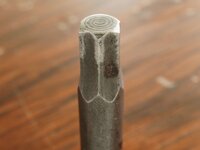
Here are some photos of one of my Wera Hex-Plus keys, a 4 mm key to match the photos by the original poster. It’s interesting that the machining is a bit different from the OP’s key, especially on the tip face. Mine are probably ten years old.

The photos show the interesting design features – long round shank, visibly modified hexagon tip shape, labelled sleeve – and their effect.

Note that the Hex-Plus shape is not applied to the ball end, which is nonetheless better made than most ball ends. The ball end of my key below has never seen more torque than can be spun in my finger tips. I cringe when I see people put 5 Nm into the ball end of a 4 or 5 mm key. That’s not what they are for.

I take uncommonly good care of my tools, wiping them down with an oily rag regularly, using them carefully and correctly, and storing them in a dry location. And yet you can see several rust spots on the metal and the fading labels on the sleeve.

yZq1on.jpg

QI7euc.jpg

iC8M1j.jpg

uI3DPO.jpg

Note the beautifully wide wear marks on the faces of the modified hex. That’s what Hex-Plus does: it presents a subtly convex shape to the nominally flat faces of the inside of the fastener head. When you crank on the tool, this slightly convex shape deforms elastically (as does the flat of the fastener) to produce a broad contact patch (times six, of course). The risk of plastic deformation (damage) to tool and fastener is therefore reduced.

The marketing material for Hex-Plus is misleading. The promotional pictures show pointy star-shaped tips with concave ‘flats’. As you can see from my photo of the tip end-on, the reality is that the shape bulges outward just before the corner of the hex, to produce the convex shape just off-corner that I mentioned in the previous paragraph. This is the essential feature of the design. But since even professional mechanics don’t always seem to understand that steel is elastic and half of the mechanical world relies on that elasticity to function (e.g. fasteners in the first place), I guess Wera thought the reality would be too hard to explain to your average Amazon shopper. Or maybe their marketing agency didn’t understand the physics of the design.

One key benefit of this arrangement, as with Flank Drive sockets, is that it greatly reduces the downside of a sloppy fit between tool and fastener. And indeed the Wera Hex-Plus keys have a pretty sloppy fit compared to other expensive Allen keys. Don’t mistake that for poor quality. It makes for faster insertion of tool into fastener without much of a downside.

Does anyone know if Wera makes Hex-Plus bit sockets WITHOUT the stupid spring-loaded ball bearing that causes failures? I would love to buy some Hex-Plus bit sockets that don’t have that ball bearing.
 
To avoid these ads, REGISTER NOW!
OP
A

aggiegrads

Well-known member
Joined
Jan 14, 2019
Messages
61
Location
Oregon
Does anyone know if Wera makes Hex-Plus bit sockets WITHOUT the stupid spring-loaded ball bearing that causes failures? I would love to buy some Hex-Plus bit sockets that don’t have that ball bearing.

You want the one that are not designated “with holding function”. The holding function adds about 40% to the price, so this should work great. KC Tool has them about 30% off right now.

These are the ones with the holding function:
 

Samuel D

Well-known member
Joined
Apr 9, 2019
Messages
638
Thanks, aggiegrads, but I’m looking for a way to use the Hex-Plus shape with a torque wrench. So 1/4″-drive bit sockets, ideally.
 

rockettauto

Well-known member
Joined
May 12, 2023
Messages
745
Interesting subject and some good observations. I'm sure OP is well aware one aspect doesn't tell the whole story but just for fun. Facetiously.


TIL my Pittsburgh Allen keys are quite a bit better than my snap on Allen socket bits or my bondhus keys.
 

Steve_P

Well-known member
Joined
Sep 15, 2010
Messages
5,185
Same experience here: the Wera keys rust more easily than almost anything else in my toolbox.

Often there is a trade-off between corrosion resistance and strength (e.g. stainless steel). Perhaps this rust reflects that?

I rate these Allen keys better than the alternatives because the Hex-Plus feature works and, being still under patent protection, is not available elsewhere. You can think of Hex-Plus as the male version of Flank Drive.

Here are some photos of one of my Wera Hex-Plus keys, a 4 mm key to match the photos by the original poster. It’s interesting that the machining is a bit different from the OP’s key, especially on the tip face. Mine are probably ten years old.

The photos show the interesting design features – long round shank, visibly modified hexagon tip shape, labelled sleeve – and their effect.

Note that the Hex-Plus shape is not applied to the ball end, which is nonetheless better made than most ball ends. The ball end of my key below has never seen more torque than can be spun in my finger tips. I cringe when I see people put 5 Nm into the ball end of a 4 or 5 mm key. That’s not what they are for.

I take uncommonly good care of my tools, wiping them down with an oily rag regularly, using them carefully and correctly, and storing them in a dry location. And yet you can see several rust spots on the metal and the fading labels on the sleeve.

yZq1on.jpg

QI7euc.jpg

iC8M1j.jpg

uI3DPO.jpg

Note the beautifully wide wear marks on the faces of the modified hex. That’s what Hex-Plus does: it presents a subtly convex shape to the nominally flat faces of the inside of the fastener head. When you crank on the tool, this slightly convex shape deforms elastically (as does the flat of the fastener) to produce a broad contact patch (times six, of course). The risk of plastic deformation (damage) to tool and fastener is therefore reduced.

The marketing material for Hex-Plus is misleading. The promotional pictures show pointy star-shaped tips with concave ‘flats’. As you can see from my photo of the tip end-on, the reality is that the shape bulges outward just before the corner of the hex, to produce the convex shape just off-corner that I mentioned in the previous paragraph. This is the essential feature of the design. But since even professional mechanics don’t always seem to understand that steel is elastic and half of the mechanical world relies on that elasticity to function (e.g. fasteners in the first place), I guess Wera thought the reality would be too hard to explain to your average Amazon shopper. Or maybe their marketing agency didn’t understand the physics of the design.

One key benefit of this arrangement, as with Flank Drive sockets, is that it greatly reduces the downside of a sloppy fit between tool and fastener. And indeed the Wera Hex-Plus keys have a pretty sloppy fit compared to other expensive Allen keys. Don’t mistake that for poor quality. It makes for faster insertion of tool into fastener without much of a downside.

Does anyone know if Wera makes Hex-Plus bit sockets WITHOUT the stupid spring-loaded ball bearing that causes failures? I would love to buy some Hex-Plus bit sockets that don’t have that ball bearing.


Those look to just be bare sandblasted metal, which is strange; typically hex keys are at least phosphated.

You can treat the metal with a cold phosphate treatment to give it rust resistance. See the thread below. This stuff is now called Metal Prep. I don't use those hex keys, but they still look like they do in the pictures in this thread


F-22

Well-known member
Joined
Jan 23, 2022
Messages
1,830
You want the one that are not designated “with holding function”. The holding function adds about 40% to the price, so this should work great. KC Tool has them about 30% off right now.

These are the ones with the holding function:
Interesting, the ones with the holding function don't seem to use the hex-plus shape on either end at all.

Didn't have the issue of my Wera keys rusting, though I wonder why they don't offer a chromed set, kind of like that top end PB Swiss set.
 

LS1-IROC

Well-known member
Joined
Aug 6, 2011
Messages
178
Location
Grand Rapids MI
I work for a capital equipment machine manufacturer where we use SHCS almost exclusively. Bondhus is the gold standard at our shop. My T handles are almost 30 years old. My hex keys are at least 10 years old. I've only broken the balls off 1/8" and under. My hex key set is used so much almost all of the keys have a polished finish but hey started out with a black oxide finish.
 

Steve_P

Well-known member
Joined
Sep 15, 2010
Messages
5,185
I work for a capital equipment machine manufacturer where we use SHCS almost exclusively. Bondhus is the gold standard at our shop. My T handles are almost 30 years old. My hex keys are at least 10 years old. I've only broken the balls off 1/8" and under. My hex key set is used so much almost all of the keys have a polished finish but hey started out with a black oxide finish.

I started my engineering career in automotive parts mfg and would joke that a few of us could walk into the plant on a Sunday and take 95% of it apart with just a set of hex keys in our pockets. It's all SHCS until you get to larger sizes, typically above 12mm, which are very uncommon.
 

Samuel D

Well-known member
Joined
Apr 9, 2019
Messages
638
I started my engineering career in automotive parts mfg and would joke that a few of us could walk into the plant on a Sunday and take 95% of it apart with just a set of hex keys in our pockets. It's all SHCS until you get to larger sizes, typically above 12mm, which are very uncommon.
I’ve never figured out why that is. I once took a tour of a poultry-processing plant that had those SHCSs everywhere. Half of them were clogged with chicken viscera. The fitters were constantly digging that **** out of the heads to give their tools reasonable purchase.

This reminds me of modern bicycles that are also full of fasteners that need Allen keys. They probably make sense in a lab or California, where these things are often designed. Meanwhile a European winter renders them unusable before you attack them with a pick. Old European bicycles were designed for weather, starting with regular hex heads and slotted heads on the bolts and screws (slotted heads being easy to clear with the screwdriver, unlike Phillips heads. Torx is as bad).
 

RoninB4

Well-known member
Joined
Jul 22, 2020
Messages
3,599
Location
Under My House
I’ve never figured out why that is. Half of them were clogged with chicken viscera. The fitters were constantly digging that **** out of the heads to give their tools reasonable purchase.

Meanwhile a European winter renders them unusable before you attack them with a pick. Old European bicycles were designed for weather, starting with regular hex heads and slotted heads on the bolts and screws (slotted heads being easy to clear with the screwdriver, unlike Phillips heads. Torx is as bad).
-Not to denigrate your opinion but I can think of several reasons for using SHCS instead of HHCS.
1) Head takes up less space
2) Viscera will only fill/affect the socket vs. mounding around the external hex. Less viscera needs to be removed to access drive.
3) SHCS can be sunk below the surface without needing an oversize c'bore for the HHCS tool (socket)
4) The internal hex can be filled with grease or cover caps to prevent/minimize the socket filling with ****
5) Smaller tool used for installation/removal
6) There's a variety of head shapes for SHCS, not so for HHCS
7) Some of us think the SHCS looks better (OK that's subjective)
8) No sharp external corners to cut the unwary (yes this is a real thing in product design)

Not all SHCS are rendered useless by a European or a Midwest Winter. SHCS have come in SS for decades. I used to ride my bicycle several miles commuting to work through Chicago Winters, never had a problem.

Slotted and Phillips drive fasteners are passable for home appliances but flatly **** for industrial applications. I'm not fond of Torx either but give grudging acknowledgment to the cutting insert holders they're always used on. Torx for automotive applications are the work of idiotic engineers that can't/don't repair their own designs.

This post is just an opinion, most machine tool industries seem to agree with some/all of it.
 

NoahG

Well-known member
Joined
Feb 24, 2013
Messages
1,065
Location
Detroit, MI
Recently I needed some 3/8DR long shaft hex bit sockets. Did a bit of searching and was surprised that there didn't seem to be a single economy set with constant width bits. Every set in the $30-40 dollar range had 1/4" bits necked down at the very tip, which won't do.

I settled on a Tekton set, still under $100, but a consistent width (except for the 9/32"), and a known name.
 

F-22

Well-known member
Joined
Jan 23, 2022
Messages
1,830
-Not to denigrate your opinion but I can think of several reasons for using SHCS instead of HHCS.
1) Head takes up less space
2) Viscera will only fill/affect the socket vs. mounding around the external hex. Less viscera needs to be removed to access drive.
3) SHCS can be sunk below the surface without needing an oversize c'bore for the HHCS tool (socket)
4) The internal hex can be filled with grease or cover caps to prevent/minimize the socket filling with ****
5) Smaller tool used for installation/removal
6) There's a variety of head shapes for SHCS, not so for HHCS
7) Some of us think the SHCS looks better (OK that's subjective)
8) No sharp external corners to cut the unwary (yes this is a real thing in product design)

Not all SHCS are rendered useless by a European or a Midwest Winter. SHCS have come in SS for decades. I used to ride my bicycle several miles commuting to work through Chicago Winters, never had a problem.

Slotted and Phillips drive fasteners are passable for home appliances but flatly **** for industrial applications. I'm not fond of Torx either but give grudging acknowledgment to the cutting insert holders they're always used on. Torx for automotive applications are the work of idiotic engineers that can't/don't repair their own designs.

This post is just an opinion, most machine tool industries seem to agree with some/all of it.
Definitely loads and loads of pros and cons, that's why there's so many standards.

I'd say the differences become most apparent in small fasteners (size M6 and smaller) and low grade bolts (under 8.8 grade). Those small allen heads love to slip, sometimes I'd even rather have a good phillips (JIS) instead (for M4 and smaller screws). Torx is better than either of those but still iffy. I think the external hex will always transmit the most torque. Big advantage of the external hex is that you can also use it from the side witohut top clearance.

When you go into larger higher grade steel screws, they don't round off anyway (even allen head designs), unless something is very wrong.
 

Samuel D

Well-known member
Joined
Apr 9, 2019
Messages
638
Just a few years ago, Shimano changed from old-fashioned slotted to socket-head screws for bicycle derailleur adjustment screws (the ones that set the high and low limits of travel).

The problem is that the upright socket heads of the limit screws for the front derailleur are excellent collectors of road dirt from the rear tyre in wet weather.

Combined with grime in the screw thread and derailleur works, and people’s lack of knowledge to unload the spring, cable tension, and pivot stiction before turning these screws, you get rounded heads.

Cleaning crud from the old slotted heads was the work of a moment with the corner of the flat-head screwdriver you were about to use anyway. It’s not so easy to clean the absurdly small socket (2 mm Allen) on the new screws. And you need another tool (e.g. a pick) you probably don’t have fifty miles from home.
 

Steve_P

Well-known member
Joined
Sep 15, 2010
Messages
5,185
Slotted and phillips screws are the worst- which is why they're rarely used on automobiles today. The last time I saw a slotted screw on a new car was on the carburetor of a 1982 Buick LOL. And it's rare to see a phillips screw today outside of an interior part.

SHCS are the standard in industrial automation equipment. They just are. Look at a THK catalog and their linear bearings- all set up for SHCS. This follows thru with things like air cylinders, etc. Well, if you're going to use SHCS on half of your design, you may as well just use them everywhere else- so the mechanic doesn't have to keep switching around. Dunno, I was shocked at first and then 110% adopted it; SHCS all the way on my designs LOL!
 

NoahG

Well-known member
Joined
Feb 24, 2013
Messages
1,065
Location
Detroit, MI
@RoninB4 whats the story on these Eklind T handles. I got these from a clearance bin at an old ACE in Detroit.
 

Attachments

  • 2ADE6485-F0A3-48D0-BE01-9CC3B263AC1F.jpeg
    2ADE6485-F0A3-48D0-BE01-9CC3B263AC1F.jpeg
    744.6 KB · Views: 34

RoninB4

Well-known member
Joined
Jul 22, 2020
Messages
3,599
Location
Under My House
@RoninB4 whats the story on these Eklind T handles. I got these from a clearance bin at an old ACE in Detroit.
-What would you want to know? Straight cut off in the stamping die with the bending components removed. Insertion into the round stock (back then) handles and dipped in plastic polymer. That was in the mid 90's, I quit Eklind in 96/97 (before they moved to Chicago suburb) and have no idea what they've done since. Material and Rc (hardness) may/may not have changed. I don't get a Christmas card anymore....
 

oldschoolcraft

Well-known member
Joined
Dec 31, 2017
Messages
1,829
Location
Bay Area, California
The Bondhus Prohold tools have been very good to me; these have a simple wee nubbin of flexible plastic on one face of a ball end hex.
I picked up a set of these, they seem like a great idea for my needs, but the plastic nubbin was too big to seat in my proto sockets.

So I used a soft rubber mallet to hammer on, which caused the nubbin to compress in a bit. The hex now does fit into the socket but it’s still too tight to remove without using a (brass) punch in the rear to knock the hex piece out. I tried alternating hammering on and punching off, and most are still too tight to do by hand.

I do have a microfile, a few light passes didn’t help and I haven’t had the motivation to spend the time to file it down.
 

bwringer

Well-known member
Joined
Jan 1, 2013
Messages
10,318
Location
Indianapolis
I picked up a set of these, they seem like a great idea for my needs, but the plastic nubbin was too big to seat in my proto sockets.

So I used a soft rubber mallet to hammer on, which caused the nubbin to compress in a bit. The hex now does fit into the socket but it’s still too tight to remove without using a (brass) punch in the rear to knock the hex piece out. I tried alternating hammering on and punching off, and most are still too tight to do by hand.

I do have a microfile, a few light passes didn’t help and I haven’t had the motivation to spend the time to file it down.
Huh? The nubbin is for fasteners, not sockets.
 

bwringer

Well-known member
Joined
Jan 1, 2013
Messages
10,318
Location
Indianapolis
They make some with it on the drive end too.
1690024697740.jpeg

Ah. Didn't know that. It would make sense, then, for the socket end to be a pretty damn tight fit that you'd have to tap in and out. That would be a feature, not a bug.

The nubbin I was talking about is on the ball end; very, very handy for inserting fasteners in tight spaces.
 
To avoid these ads, REGISTER NOW!
Top Bottom