Lift install detail. This is my third 2 post lift install. First install, about 15yrs ago, used mechanical expansion anchors commonly included with most 2 post lifts. A couple of these anchors eventually would not hold torque. Ended up driving them through the slab and replacing with Wej-It Power-Sert epoxy anchors. Not bashing expansion anchors, but I believe modern epoxy anchoring systems, if installed correctly, are a better solution. Second lift install I used the Power-Serts again entirely, with Red Head G5 twin dispenser epoxy. No issues at all, although the female threaded design (below) caused me some concern. If, for example, the upper lip of the anchor was installed at grade, the lip could contact the post baseplate and compromise torque readings. Spoke to Wej-It about this. They recommended a 1/8" below grade install. I installed with this offset, but that lingering concern remained.

For this third install researched alternatives to the Wej-It design. Came across a Hilti epoxy anchoring system that seemed promising, with specs equal or often greater than corresponding mechanical anchors. Hilti has a public service where you can talk directly to one of their engineers. Spent an hour with one talking 2 post lift anchoring. His recommendation was their HIT HY-200 V3 adhesive system with their HIT-Z anchor rod (below). He said this is their typical "extreme" condition solution, often used in overhead conveyor systems and large robotic systems. Their HY-200 V3 system does not require the hole cleaning needed for previous adhesive systems. Decided to go with this solution. Downside: the HY-200 2 part epoxy requires a matching dispenser. Best option, find a used one on ebay.


Basically two anchor install options, one without the baseplate, one with baseplate in position. Selected no baseplate approach mostly to keep epoxy from running under baseplate, which could complicate leveling the posts later. Without baseplate is much cleaner install as you can clean up overfill. This approach requires the means to lift the posts onto the fasteners (more on this later). Placed posts in exact positions, then used baseplate holes as a drill template. Drilled with 7/8 SDS hammer drill bit to depth of 2-3in, then moved post/baseplate and drilled to final depth of 7.5in. HIT-Z rod I used is their longest, 9 3/4in. I cleaned the holes anyway until no dust at 100psi air pressure.
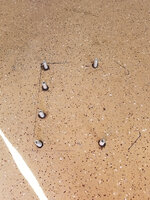
Hilti recommended 2/3rds fill on holes, approx 2.5in from grade in my case. Counted the number of grip pulls on the dispenser during first fill to reach 2/3rds mark. Ended up with overfill, so decreased number of pulls. After a couple of holes had the number of pulls nailed down for minimum overflow. When I originally sized the number of epoxy packs needed based on number of holes (12), hole diameter/depth, and rod, came out to slightly more than 2 packs. Bought two hoping it would suffice. It did, barely. The HY-200 R version sets in about 15min, so there is some time to adjust the rod if necessary. Full cure in about 2hrs. They make an A version which sets/cures much faster. Here are the two baseplate areas finished. Stay tuned for the final install.




 She looks like her mom