Hey
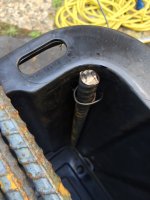
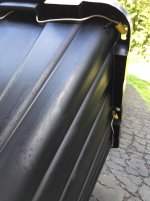
Drives, no problem. Here is the setup and I also posted it in the Vise Repair 101 thread as you requested.
What I did is:
- cut the end that went to the computer
- stripped about 8" of the insulation from the outside cable
- stripped about 3" of the insulation from the inside cables
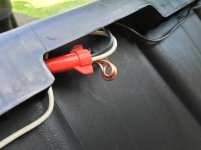
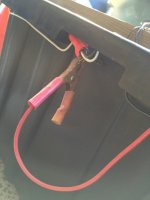
- soldered alligator clips to the inside stripped cables
- covered the cable-to-clip connections with heat shrink tubing
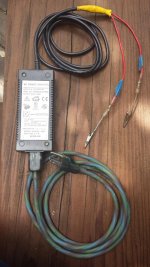
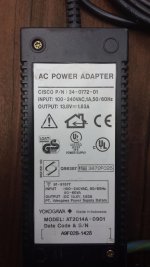
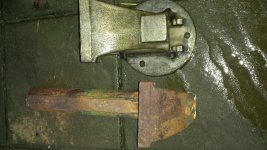
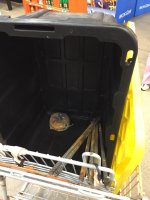
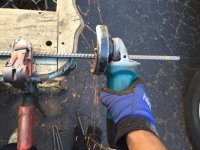
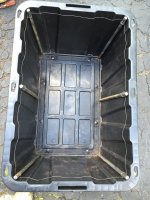
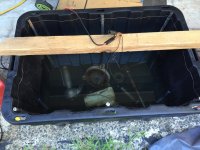
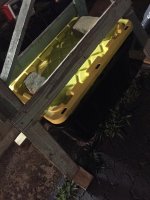
The alligator clips don't go in the water themselves, the positive is connected to a wire that I have looping around rebar attached to the sides of the tank (sacrificial anodes) and the negative gets clipped to gate wire that I have attached to the piece(s) to be de-gunked.
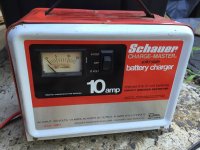
I had originally tried electrolysis with an old military batter charger I purchased specifically for the task but, even though it's really old, the charger is "smart" and knows when there is not anything to charge (i.e., when the battery to which it is connected reaches a full charge) and then turns off - it was happening within seconds of being turned on. It would have been neat if it did work because there is three separate chargers in the one unit and all of them have adjustable voltage and amperage. After it failed (for electrolysis) I looked into other solutions because I didn't want to buy another battery charger and that's when I stumbled upon the computer power source.
Really, you can use any type of transformer plug that transforms 110/120VAC 20A wall power. In my research I found 12VDC and 1A amperage is ideal (even though it takes longer than with higher voltage and especially with higher amperage) so I just looked through my e-waste pile and found something close. The ideal volts/amperage had something to do with keeping the microscopic structure of the iron intact/properly aligned, but that's all a bit beyond me, I just looked for people who knew what they were talking about and used those figures. Once complete, I
REALLY monitored the first "cook" closely as I had no prior experience with electrolysis and especially because I was not using the typical battery charger method, but everything went swimmingly and now I let things cook for a week or more without a second thought. Much to my wife's chagrin, the "rust bucket" is up and running nearly all the time, I use it on vises and so much more.
I'm sure this is noted earlier in this thread, but make sure to: (a) do outdoors and (b) only use GFCI protected outlets.
Let me know if you have any questions and anyone else feel free to do the same.
***Use this method at your own risk, I am not responsible for any bodily, property or environmental harm that should befall you or others if attempting this method - it's simply something that's worked for me.***