
You are using an out of date browser. It may not display this or other websites correctly.
You should upgrade or use an alternative browser.
You should upgrade or use an alternative browser.
Jp danielson
- Thread starter Teenager with old tools
- Start date
Private Lugnutz
Well-known member
No worries. Are yours all regular font (1942 and later)? What is the smallest wrench you have there? The 13/32" x 5/16"? Because I have an extra one of those for you, too. As soon as I find the sewing tin where I keep all my 723's (7/16" x 3/8"), I am pretty sure I have a better specimen to send you than this one.


Mintgrun
Well-known member
I bought a couple of Controlled Steel DOEs recently. I love the look and feel of the hollowed out shanks, yet I left them in the wrench bin the first time I saw them, telling myself, "I don't collect those." Well, they found their way to the cash register on a subsequent visit, so now I do. Although, I only have two. I'd been wanting to share them, so I'll go ahead and do that now, since this thread is fresh.


Since the topic of wrench holders came up, I'll add this one too. It is probably out of place in this thread, but I don't know who made this one... so maybe it does fit!?
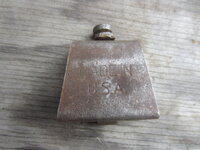
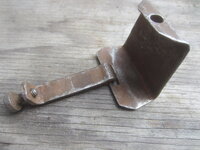
Tom
Since the topic of wrench holders came up, I'll add this one too. It is probably out of place in this thread, but I don't know who made this one... so maybe it does fit!?
Tom
four.cycle
Well-known member
Mintgrun - I have never seen that wrench holder. Rather unique design, for sure.
Lugz…I suppose you mean some specific method of causing rapid, controllable surface oxidation on steel, using highly toxic chemicals was invented in 1942. But I assure you that black oxide (magnetite) has been forming (unfortunately mixed with rusty hematite) quite naturally since the elements of oxygen and iron first interacted in the universe. The I would be curious to see a side-by-side photo of one of those Danielson S-wrenches with the Kraeuter S-wrench we traded. When found, it was a red rusty mess. I carefully scraped it down to the base layer of magnetite, then hand brushed the red dust from it, and wiped a dilute coat of BLO to achieve the dark finish. This is the method used in the 1800s (and I see no reason to doubt, since more ancient times) to achieve what most people refer to as a blued finish.
Private Lugnutz
Well-known member
Agreed, although a "blued" finish in my experience is usually achieved by Parkerizing, which is not the same as early, crude, black rust-proofing.
I posted the 1942 Black Oxide formula and process, invented by E.F. Houghton, of Pittsburgh, in response to WWII plating restrictions elsewhere before several times. Most recently probably here. It involves a high alkali solution and consistent high heat. Unlike earlier black rust-proofing methods, it has greater penetration. Some of the methods that early tool manufacturers were using (e.g., Mossberg, Chicago Manufacturing and Distribution, etc) is superficial, chalky, and wears very easily. Whatever J.P. Danielson was using in the late 1930's on these "S" wrenches was terrific, though.
I posted the 1942 Black Oxide formula and process, invented by E.F. Houghton, of Pittsburgh, in response to WWII plating restrictions elsewhere before several times. Most recently probably here. It involves a high alkali solution and consistent high heat. Unlike earlier black rust-proofing methods, it has greater penetration. Some of the methods that early tool manufacturers were using (e.g., Mossberg, Chicago Manufacturing and Distribution, etc) is superficial, chalky, and wears very easily. Whatever J.P. Danielson was using in the late 1930's on these "S" wrenches was terrific, though.
We are talking past each other, I think. The general term for a surface treatment to reduce vulnerability of steel to environmental damage is passivation. Rust-bluing is the only process I mean to describe. All that is required is oxygen and time…plus diligence in carding away the red rust that forms simultaneously. I reject the adjective “crude,” preferring “elegant,” but will compromise on “primitive” if you will.
Salts, boiling, etc, are means of expediting the effect, and some deposit elements on the steel, perhaps also “penetrating” as you say. A Parkerizied finish I think deposits a phosphate? I think that is a passivation methid distinct from bluing, and not synonymous with it. Arguments about which type of passivation is best, improved, or superior are common, but these disagreements depend on unspoken differences in what specific properties are desired or expected by the participants.
I wonder if the dusty, inferior finish you mentioned may be simply boiled rust, which would be a very quick and inexpensive “finish” that might satisfy some specifications, though clearly not you nor I.
Salts, boiling, etc, are means of expediting the effect, and some deposit elements on the steel, perhaps also “penetrating” as you say. A Parkerizied finish I think deposits a phosphate? I think that is a passivation methid distinct from bluing, and not synonymous with it. Arguments about which type of passivation is best, improved, or superior are common, but these disagreements depend on unspoken differences in what specific properties are desired or expected by the participants.
I wonder if the dusty, inferior finish you mentioned may be simply boiled rust, which would be a very quick and inexpensive “finish” that might satisfy some specifications, though clearly not you nor I.
Private Lugnutz
Well-known member
I don't know if we are or not. But I will clarify if it helps.
The J.P. Danielson "S" wrenches - and every other example of a tool I have in my collection that was made before 1942 that has an obviously and intentionally blackened finish (Mossberg pressed steel sockets are a great example because they are common) that is NOT japanned, were actively treated, as the final stage of a production process, with something that mfgrs used various terms to describe in their advertising and marketing, all of them usually including some form of the term "rust-proofing." I don't know what it was. Mfgrs may have experimented with various forumulas. NONE of them were ever described as "black oxide," however, as far as I can recall.
The term "black oxide", as it pertains to tool finishes, as used in technical literature (catalogs, etc) is typically associated with the 295* F alkali treatment first invented by E.F. Houghton in 1941 and used in many military and industrial applications ever since to this day. (I realize that red, yellow and other oxides have been around a long time with respect to paint and pigment, etc.)
While I admire all the earlier "black rust-proofing" finishes that preceded it for their appearance on my antique tools, some of thm smoother than others, some of them chalkier, none of them can really compete with the wartime and modern black ox for lasting durability, in my experience. Most of them can be rubbed off if you try hard enough. You cannot rub off a real black oxide treatment.
Having said all that, my only point in bringing this up to begin with was to commend whatever J.P. Danielson was using on these 1930's "S" wrenches. Because these might could give later Black Oxide finish some competition.
The J.P. Danielson "S" wrenches - and every other example of a tool I have in my collection that was made before 1942 that has an obviously and intentionally blackened finish (Mossberg pressed steel sockets are a great example because they are common) that is NOT japanned, were actively treated, as the final stage of a production process, with something that mfgrs used various terms to describe in their advertising and marketing, all of them usually including some form of the term "rust-proofing." I don't know what it was. Mfgrs may have experimented with various forumulas. NONE of them were ever described as "black oxide," however, as far as I can recall.
The term "black oxide", as it pertains to tool finishes, as used in technical literature (catalogs, etc) is typically associated with the 295* F alkali treatment first invented by E.F. Houghton in 1941 and used in many military and industrial applications ever since to this day. (I realize that red, yellow and other oxides have been around a long time with respect to paint and pigment, etc.)
While I admire all the earlier "black rust-proofing" finishes that preceded it for their appearance on my antique tools, some of thm smoother than others, some of them chalkier, none of them can really compete with the wartime and modern black ox for lasting durability, in my experience. Most of them can be rubbed off if you try hard enough. You cannot rub off a real black oxide treatment.
Having said all that, my only point in bringing this up to begin with was to commend whatever J.P. Danielson was using on these 1930's "S" wrenches. Because these might could give later Black Oxide finish some competition.
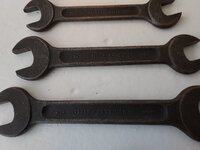
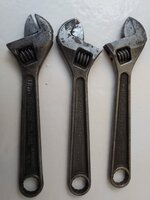
Four are "fancy" font, the two copper-colored ones are "black" font.
The sizes and forge numbers are:
13/32x5/16 (3.5G), 9/16x1/2 (5.5K), 11/16x5/8 (5.7.2), and 7/8x25/32 (8.5D) are the fancy script.
11/16x5/8 (L-6-8.) and 3/4x5/8 (S.6.6.) are block script
I did find several of the 1X15/16 on ebay. But that would have to be a heavy wrench seeing how my 7/8 is.
The sizes and forge numbers are:
13/32x5/16 (3.5G), 9/16x1/2 (5.5K), 11/16x5/8 (5.7.2), and 7/8x25/32 (8.5D) are the fancy script.
11/16x5/8 (L-6-8.) and 3/4x5/8 (S.6.6.) are block script
I did find several of the 1X15/16 on ebay. But that would have to be a heavy wrench seeing how my 7/8 is.

Private Lugnutz
Well-known member
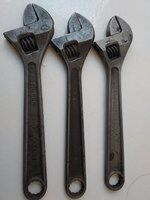
Wow! Nice. And blacker than the inside of a coal mine.Knew I had a wrench set around here,
Maybe he found them inside an old coal mine!Wow! Nice. And blacker than the inside of a coal mine.

Private Lugnutz
Well-known member
LesserSon and I have been trading some PM's back and forth so as not to detract from the thread. I have suggested he start a thread onl the subject of finishes, in general. To include older black rust-proofing methods, the "black oxide" that starts to get referred to in publications postwar, but also any other finishes including paint, japanning, plating, etc. It would be interesting.
Provincial
Well-known member
I found some information on the chemical process of converting hematite to magnetite which I can share when LS gets that thread going. It jibes with what I have heard in casual conversations.
four.cycle
Well-known member
^ I think the only thing I've got that's Japanned is a little set of "Dunlap" DOE's in a little clip. I do have a Danielson "Auto Kit 100" that has a black finish. I thought it rather odd when I received it. I'll keep an eye out for it.
Private Lugnutz
Well-known member
@bonneyman
I finally found my sewing tin of 723's and as I expected an extra CONTROLLED STEEL 7/16" x 3/8" in much better condition. PM me if you want it.


I finally found my sewing tin of 723's and as I expected an extra CONTROLLED STEEL 7/16" x 3/8" in much better condition. PM me if you want it.
RubiconJK
Well-known member
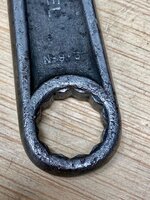
This 1945 8" JPD adjustable stared up at me from the bottom of a box full of rust today at the flea. I rescued it and after a bath and scrub it revealed some pitting, but (almost) any adjustable with a broached hanger hole has a home with me.
Attachments


d42jeep
Well-known member
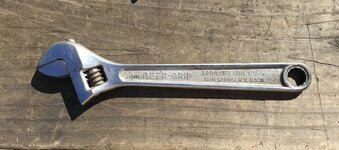
I feel the same way. This chrome 1941 model needed disassembly and cleaning.
-Don


-Don
Trying to use your table - no luck. Just picked up 8” JPD and it has “M-8-3”I am attempting to reinvigorate this thread, hoping it will become the repository of discussion of the JP Danielson company, tools, etc, during the time before it was absorbed into the Proto Empire.
Here's my first contribution: a table showing six phases (by color) of the adjustable wrench, from the early 1930s to the early 1960s. The design changes (hard borders) of four features narrow the production date down to approximate decades. Once done, the three-digit date code, Letter-Number-Number (LNN) can be used to determine specific year of production. The rightmost number is the last digit of the year. The central number is believed to represent the month, because it apparently runs from 1 to 12. The letter probably represents the day of production. All known examples run from A to Y, so 25 characters. I have some ideas about this, which I will share in a separate post.
As you can see, sometimes using a single design feature - like the broached hole on these two wrenches - the single digit year can be understood; in the first case, 1940. However, you have to see that the letter form of the second one is sans serif (plain) to distinguish it as 1944, from 1934, which would have a slab serif (typewriter) letterform. The third one is...
That’s right, 1952, because the round hole has no reinforcement.
The fourth case shows the reinforced hole, so...1964.
MFG year is ?
Attachments


Oldtuleguy
Well-known member
- Joined
- Nov 4, 2017
- Messages
- 10,476
Maybe 43? I think at that time no alloys allowed, so just "forged steel"
Thank you very much.Maybe 43? I think at that time no alloys allowed, so just "forged steel"
I have another JTD coming so up until now I’ve just been reading (and re-reading) the histories of the many brands of adjustable wrenches… hate to say it, but it has been a pleasure doing so.
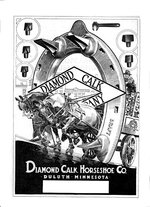
As I understand it, JTD was purchased by Plomb, which became PROTO (the brand I grew up), in addition to Snap-On/Blue Point, and CRESCENT. I go to know and learn about DIAMOND a bit and really love their tools now. Turns out my Grandfather passed down a 24” DIAMOND that is nice.
Great logo
Attachments
Stillgottimefor1
Well-known member
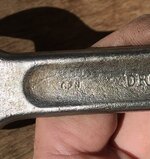
Date code doesn’t make sense?

Private Lugnutz
Well-known member
It's the length of the wrench, believe it or not. The letters change though, so some kind of die/forge code with the OAL embedded.Date code doesn’t make sense?
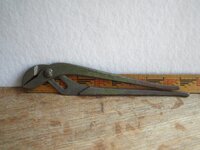
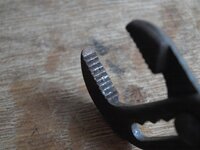
Here's our J.P. Danielson Controlled Steel Waterpump Pliers C-12-2 & U-9-2
Attachments



d42jeep
Well-known member
Here are the ones in my WW2 keeper sets. The top pair is 1944 and the lower pair is 1942, just like MisterEd’s.
-Don
-Don
Uh huh, but yours are prettier.just like MisterEd’s.
Very nice. How long have you been doing tool collecting?Uh huh, but yours are prettier.
Since I met a woman, now my Significant Other, who appreciates old, rusty things. That might be my appeal to her, too?? How long . . . 'bout 4 years.Very nice. How long have you been doing tool collecting?
We are more gatherers than collectors, though we often keep things long enough to look like part of a collection. Stuff comes and goes -- eventually.
She has a remarkable eye for quality beneath the rust and grease. 'Course, she also is attracted to frog gigs, clevises, C clamps and Uranium glass.
About her??m Yep.4 years, and you know all this detail…
About tools? I post something, say something dumb or ill informed and the Private or D42 or Wrench correct, inform or redirect me. Then, of course, there's the Private's Sticky in the heading of Vintage Tools.
I think I’ll pass on asking what the heck a “Private’s Sticky” is…About her??m Yep.
About tools? I post something, say something dumb or ill informed and the Private or D42 or Wrench correct, inform or redirect me. Then, of course, there's the Private's Sticky in the heading of Vintage Tools.
Not A Private's Sticky, THE . . . If you click on Forums then on Vintage you find a listing of Postings and at the top is a VERY useful organization of much of the stuff Posted by categories, manufacturers and such. Hell, he'd be able to categorize according to color if it mattered.
Last edited:
Maybe 43? I think at that time no alloys allowed, so just "forged steel"
Thanks. On the ‘43 I noticed an “A” near the adjustment screw. I cannot tell if it is a forge mark or private stamp.
I also got another JPD 8” wrench - with B*11*5 on it. Is it a 1944? Better condition than the 1943. Also has “C Mellinger” ID
Please advise what the L—N-N codes mean?
I also got another JPD 8” wrench - with B*11*5 on it. Is it a 1944? Better condition than the 1943. Also has “C Mellinger” ID
Please advise what the L—N-N codes mean?
Attachments
-
 1A5DDAD2-6AB2-4052-A355-35A9A582FDC0.jpeg537.2 KB · Views: 13
 -
 63BF681C-F1F0-4E64-8565-812594D7E437.jpeg272.8 KB · Views: 11
 -
 2017C7C3-E1DA-431C-9052-B790E47F18C1.jpeg470.4 KB · Views: 11
 -
 74D5AB47-9EEE-4056-BC9D-433BBA876C9B.jpeg417.4 KB · Views: 10
 -
 A5E8B3DC-D3FB-4F8D-999F-D4D589D9FF79.jpeg285.2 KB · Views: 13
Oldtuleguy
Well-known member
- Joined
- Nov 4, 2017
- Messages
- 10,476
The A looks like an owners mark. Not sure about LNN. Do you have a pic?
Private Lugnutz
Well-known member
L-N-N is Unknown-Month-Year.
Oops! I meant B*11*5Thanks. On the ‘43 I noticed an “A” near the adjustment screw. I cannot tell if it is a forge mark or private stamp.
I also got another JPD 8” wrench - with B*11*5 on it. Is it a 1944? Better condition than the 1943. Also has “C Mellinger” ID
Please advise what the L—N-N codes mean?
Oops! I meant B*11*5
Thanks for reply. I knew there was some question about the letter. I guessed correctly that first number was the month. I think I knew second number was year.The A looks like an owners mark. Not sure about LNN. Do you have a pic?
Private Lugnutz
Well-known member
Not sure why you keep identifying this as a 1944 wrench. It was made in November of 1945....the 1944 (B*11*5)