There were two types. The old Kerosun vent free unit and the Monitor type DV units.
There are way more than two types.
Kerosun was an example of a reflecting wick heater. Aladdin and Perfection made omni-directional wick heaters. These smell mostly when the wick burns out. Newer generation ones use a catalytic system to increase efficiency and make the exhaust cleaner. These generally require no electricity to run, but run silently (and the omni style can heat a kettle on the top too).
Then there's the torpedo/salamander heater. Lots of smell when starting, lots of smell when stopping, some smell when running. Lots of either CO or NOx in the exhaust (you'll get one, or the other, or both, depending on the fuel ratio). Either way, you're breathing not so great exhaust (technically the same as above, but with more heat comes more exhaust, and these do not burn as clean as a wick either, especially because there is no catalytic stage). These require electricity to run the blower and the pump, and spray a mist of fuel that is burned in the tube. They're also pretty loud.
Then there are the newest type heaters, which are catalytic radiant. They work unvented, but burn extremely cleanly. They're kind of a love child of the above two types. They use electricity to run a blower and a pump, and have no wick, but burn atomized fuel on a catalytic grid. They still smell at startup and shutdown, but during operation they burn much more cleanly than the torpedo option above, even though they have such high heat outputs. Also not as loud or large as a torpedo.
Finally, there is the monitor type. This is essentially a direct vent ductless hot air furnace. That's what I have in my shop. No smell inside. Just a little smell outdoors when it starts up. No louder than a quiet table top fan. Only 93% efficient, but absolutely no exhaust gases are released indoors.
As for why kerosene?
It ONLY makes sense if you can find a gas station pump source. At the ludicrous markup that hardware stores get per gallon, using kerosene is nuts, and costs more than propane.
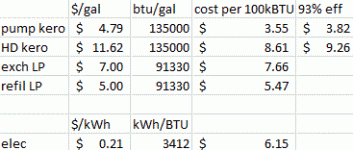
I've worked out a spreadsheet of comparative heat sources.
First, an overestimate for the price of kerosene at the pump (last winter was closer to $4/gal). Second, the stupid price of a gallon of kerosene at HD (with sales tax). Third, the stupid price I pay to exchange a propane tank around here (assuming I get 4 gallons in a BBQ tank, which is a little optimistic). Fourth, the cost of a BBQ tank refill at the cheapest place I can find. Last, electricity at my average local rate (which is WAY above the national average).
Not included are natural gas (which would by FAR, be the cheapest source), and propane from a larger tank. What I found was that propane from a BBQ tank is a nice portable source of heat when you have no electricity available, but otherwise, an electric heater doesn't look so bad cost wise if you're only running it for a few minutes to warm your fingers.