I think there's a lot of correct and incorrect information being mixed together in this thread. There are nuances in the designs of different wheel hubs (I am not familiar with trucks/heavy equipment) but, in general, the primary mechanism for force transfer in passenger cars is static friction between the assembly stack (Hub, rotor, wheel) when properly tightened.
At first glance, my opinion is that the concerns over a thin coating of anti-seize on the hub faces is wildly overblown and I use it on all of my vehicles. Other factors like the stiffness of the overall joint, hardness of the materials being clamped, surface finishes of interfaces, tolerances, and the clamping force will all be more consequential than the use or omission of anti-seize. Yes, conical lug nuts help center the wheel, but they also increase the bearing area to allow increased clamping force by reducing bearing stress to reduce deformation/creep in order to maintain pre-load to ensure the wheel remains secure. I have not personally calculated it, however I'm fairly certain that established designs have a very healthy safety margin in order to account for the real-world variability outlined above that the joint will encounter when in service. If this was not the case, you'd likely see significant deformation in bolt hole as the wheel slammed into the studs under acceleration and deceleration, making them oblong.
To help convince you the friction from the clamping interface is what carries the load, imagine the axle, hub, and brake rotor is welded completely solid, and let's focus on the brake rotor hat to the wheel interface. The wheel system is represented by the picture I found online, below. Imagine this interface is a nut and a bolt, and the lug nut bolt circle is you with a short wrench on one side and the wheel is you holding the head of the bolt with a socket on a long breaker bar. In practice, you know that it takes a lot more force on the short wrench to counteract relatively little force on the breaker bar, right? We have the same scenario going on in a car. The frictional force of the small diameter wheel to hub interface needs to be significantly higher than the force generated between the tire and the pavement because of the shorter moment arm.
Let's simplify the system down to just the basics and make some generous assumptions to illustrate the point. Assume:
- Static friction coefficient of the tire to asphalt is 0.72, and the rotor to aluminum wheel coefficient is .45, per this table
- 3000lb car with 50/50 static weight distribution, so 750 lbs normal load "Fz"(represented as the purple arrow in the image below) per tire. During braking, let's assume weight transfer doubles this to 1500lbs per front wheel.
- 6" Diameter lug nut circle (Green arrow, ignore the "2F rotor" label and pretend this is the bolt circle) and the clamping force exists only along this bolt circle
- 1/2" Threaded lug nuts torqued to 100 ft*lb
- Using this calculator, assuming 1200 lb-in (100 lb-ft *12 in/foot), .5" stud diameter, 0.2 thread friction coefficient, that connection produces 12,000 lbs of clamping force.
- 13" Rolling Radius (the distance between the center of the axle and the contact patch when the tire is compressed under load) 10" radius on a 20" rim, and another 3" of rubber sidewall. Sound reasonable?
- The wheel is infinitely stiff, and the number of lug nuts is sufficient to get even clamping force all around the wheel to hub interface.
- Clamping force does not result in bearing stress that causes meaningful yielding/deformation.
In this case, the max friction force trying to rotate the tire before the tire starts sliding under heavy braking is Fz * Mu (greek letter, coefficient of friction) so we get 1500lbs * 0.72 = 1,080lbF (Pink Arrow in the diagram). This is just longitudinal force, so we multiply it by the rolling radius of 13" to get 14,040 lb*ft of torque that needs to get reacted under heavy braking at the interface of the wheel and the hub face.
In our example, the interface needs to provide 14,040 lb*ft of reactive torque in order to not slip and cause the studs to take up load. Let's assume the frictional force of the clamp acts tangential to the bolt circle at the bolt circle (green arrow). Working backwards, our moments need to balance, so 14,040lb*ft / 3" radius (one half the 6" bolt circle" means the clamp interface needs to provide 4,680 lbs of reaction force. If we assume the wheel to steel interface has a Mu of 0.45, that means we need 10,400 lbf of clamping force between the rotor hat and the back of the wheel to balance the forces.
Going back to the above assumptions, we see that the 0.5" stud with 0.2 kf torqued to 100lb-ft gets us 12,000 lbf of clamping force. So, the friction from the clamping interface provides enough torque to counter the force from the wheel. This is obviously a simplified example that negates them impact of combined and dynamic loading from cornering, bumps, potholes, compliance in the rims, etc. We also assume that the clamping force acts as a point load at the bolt circle diameter, but some of the clamping force is at a larger radius, Also, in reality, one single wheel stud isn't enough because the rotor/hub system isn't infinitely stiff, surfaces aren't perfectly flat and/or parallel, not all studs are evenly torqued, etc, so you need multiple studs to ensure clamping force is maintained and the bolts remain sufficiently preloaded to prevent fatigue.
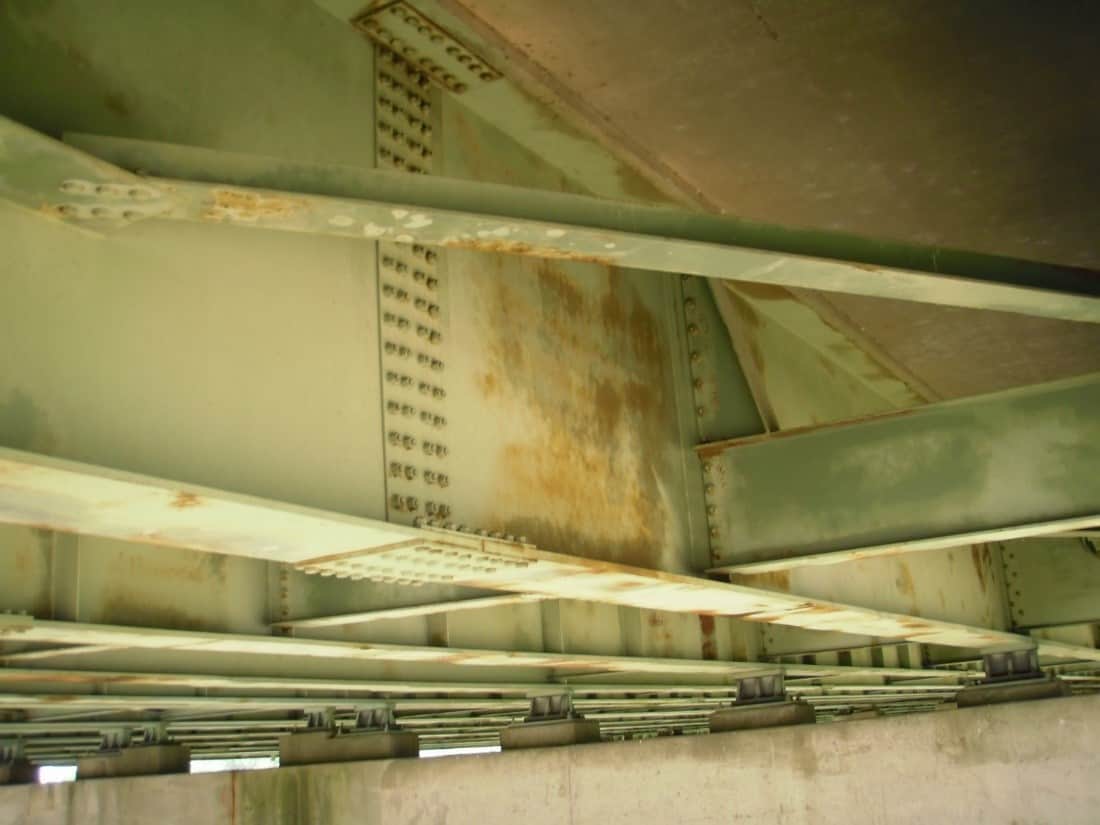
Keep in mind, bolted connections aren't always designed this way for bridges and buildings and other applications. Many do take into account additional shear loading of the fasteners, because the tolerances are difficult to control, interfaces aren't sufficiently stiff, etc. In these cases, you'd approach the calculations differently and calculate the combined load on the bolt pattern from shear etc. Threaded bolts aren't typically used for these types of loads either, as you have a big stress riser from the threads.

Its an expensive one, definitely look for it used.