trbomax
Well-known member
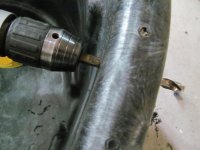
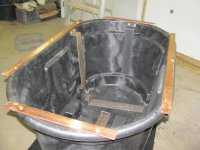
There seems to be so much talk on here about de-rusting and the various means of doing it,I have decided to take all the "mystery" out of electrolytic derusting by running a thread on the build of my new,industrial grade unit. I have built components (tanks and washers) before with a friend who had at the time,a Redi-Strip franchise.This was in the 70's and he now does metal cleaning on a much larger scale than we did then.We could just barely get a car body in the original tanks,he now can run 2 at a time.Anyway,enough talk,lets get to work.
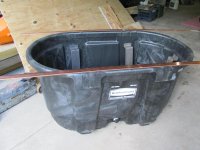
Obviously,you must decide what the largest part is that you will want to clean. Once you decide,you must go about sizeing the tank and the power supply. In my case,Ive never needed a deruster untill we relocated up here in the hills,because when we lived in toledo I could just take my stuff over to my friends place and run it.Now its a 300 mile drive one way. Engine parts (blocks and heads) would be about the largest parts I would clean.For something like an axle houseing,I could do what is called "double ending", placeing the part on the edge of the tank,cleaning it,then reverseing it. I selected a 100gal capacity Rubber Maid nylon stock watering tank.These are cheap,strong, and redily available. A large V-8 block and both heads will fit just fine.We will need a cart of sorts to move it around,and a cover,since the solution is caustic and there is high current involved in this large of a tank.I used 2 funiture dollys from TSC and one sheet of t&g subflooring. One 8' 2 x 4 was used to make the retaining lip around the cart. After assembly I gave all the exposed wood a heavy coat of alcohol based sealer,and then a good coat of black gloss rustoleum. This will make it somewhat waterproof,good enough for what I am doing.
If the paint is dry enough tomorrow,I will assemble the tank to the cart,put the handles on the lid and start building the anodes.
Obviously,you must decide what the largest part is that you will want to clean. Once you decide,you must go about sizeing the tank and the power supply. In my case,Ive never needed a deruster untill we relocated up here in the hills,because when we lived in toledo I could just take my stuff over to my friends place and run it.Now its a 300 mile drive one way. Engine parts (blocks and heads) would be about the largest parts I would clean.For something like an axle houseing,I could do what is called "double ending", placeing the part on the edge of the tank,cleaning it,then reverseing it. I selected a 100gal capacity Rubber Maid nylon stock watering tank.These are cheap,strong, and redily available. A large V-8 block and both heads will fit just fine.We will need a cart of sorts to move it around,and a cover,since the solution is caustic and there is high current involved in this large of a tank.I used 2 funiture dollys from TSC and one sheet of t&g subflooring. One 8' 2 x 4 was used to make the retaining lip around the cart. After assembly I gave all the exposed wood a heavy coat of alcohol based sealer,and then a good coat of black gloss rustoleum. This will make it somewhat waterproof,good enough for what I am doing.
If the paint is dry enough tomorrow,I will assemble the tank to the cart,put the handles on the lid and start building the anodes.


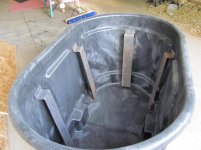
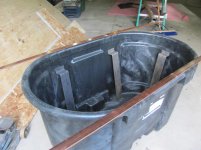


 ) I have been leaning towards going the direction of media due to the amount of space it takes to operate a successful derusting process. Maybe smaller tank for me could be a 'sibling' to a blasting operation. Thanks for sharing your info!