I disagree... I think the thread has merit.
Obviously, it's not as cost effective as running tubes... But, for a guy like me that really wants to run something other than tubes for aesthetic reasons the CFLs seems to be a really great option.
Well, also obviously, if/when you bring subjective factors like one's personal taste in "decor" into consideration, that skews the equation. If you're willing to pay a premium just because you like the way something looks, that's fine -- as long as you make that decision on a fully-informed basis, and really do know what you're trading off in return for those aesthetics.
The primary problem I have with that "Veno" thread is that throughout its long run, folks repeatedly made off-base blanket pronouncements about such things as "brightness" and costs, with no real objective basis for the conclusions reached (and repeated, ad nauseum, until they began to get treated as gospel for no good reason).
And it's not like a guy like me is going to have these lights on 12 hours a day. With wife, kids, job, etc... most of my garage time is relegated to late nights and the occasional weekend day. It's gonna take me a lot of time to rack up 10,000 hours.
So cut that arbitrary figure in half, or even in half yet again; then multiply by the number of tubes/bulbs it will take to light up your shop. No matter how you slice it, the CFLs will come out being MUCH more expensive; and it WON'T take several years to feel that in your wallet.
Ryan
I am glad that you are looking at VENO's thread with an open eye and not listening to the to what the cfl negative army has to say.
I do not trust the numbers put out by them because they refuse to accept the fact that they bulbs can be bought for HALF the price as the numbers they are using.
I daresay, you "do not trust the numbers" because you don't WANT to trust (i.e., believe) the numbers. But they are what they are; and at the end of the day, there's just no getting around that.
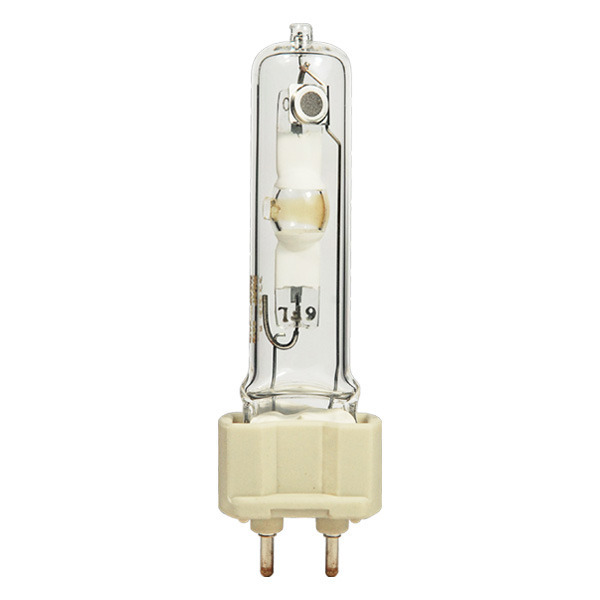
I paid in the area of $13.00 per bulb for 105 watt / 400 watt equivalent bulbs.
So what? The big issue is NOT the initial purchase price. That much was already more-or-less conceded (perhaps even moreso than is really justified, in light of the need to install and wire a separate fixture for each and every CFL). The part you just can't deny is that, even ignoring the replacement cost issue, the CFLs cost nearly half-again as much to operate, every hour, every day, forever. And as energy costs continue to rise, that difference will only become still more overwhelming. Then, when the CFLs do come to the end of their significantly shorter life, the 8- to 10-fold higher replacement cost just rubs salt in an already open wound.
Couple that with the simplicity of design and ease of installation they are hard to beat, and cheaper that the long tube style florescent.
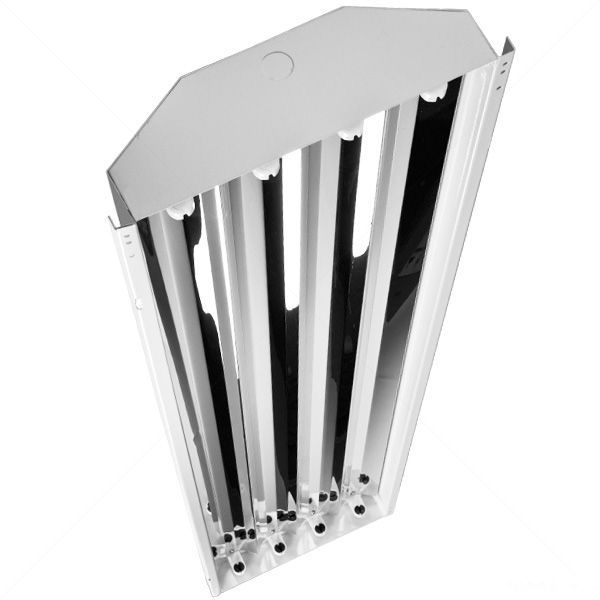
"...simplicity of design and ease of installation..."?!? Are you kidding?!? As Charles pointed out, you need to install and wire a separate fixture for each and every CFL in the shop, as opposed to using typical 4-6 tube fixtures such as
http://www.1000bulbs.com/product/93811/BSS-HB4T5.html
http://www.homedepot.com/p/Lithonia...put-Fluorescent-High-Bay-IBC-454-MV/202838871
https://www.platt.com/platt-electri...nia-Lighting/IBZ-654/Product.aspx?zpid=867522
I actually put up 10 - 105/400 watt bulbs with fixture, conduit, boxes, switches and wire for a shade less than $200.00, How many long tube fixtures can be bought and installed for that money?
It doesn't matter. The operating costs will SWAMP those "savings" in relatively short order. Are you really so short-sighted that you cannot see past the initial purchase price?
I had rapid start long tube 1 inch commercial fixtures in my old shop and I actually hated the flickering and the constant humming.
You are comparing apples to oranges, AND painting with far too wide a brush. Those old-school fluorescents (which, given the "flickering and humming" comment, I'd wager were T12s at 1.5" diameter, not 1.0 inch, and probably running off old magnetic ballasts) are nothing like truly
modern T8/T5 equipment.
I also believe that the CFL's actually put out more light.
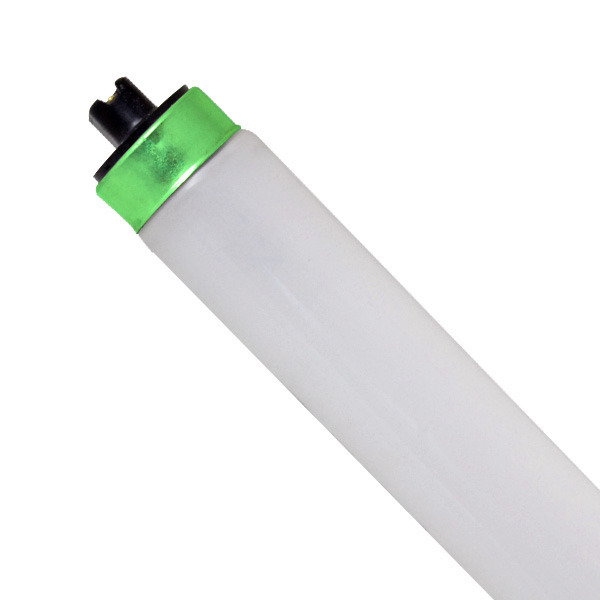
Well that's just self-delusion in action. The numbers don't lie. Four typical F54T5HO tubes in a fixture such as those cited above will put out ca, 18-20,000 lumens. That 105 watt CFL does 7,000. Even using two CFLs to bring things into approximate "power parity", you still come up shy at 14,000 lumens. Part of what is probably confusing you (and skewing your perceptions) is that the CFLs are point sources; so all their output is concentrated into one relatively small physical area. That can make them SEEM "brighter" than they really are (particularly when looking directly at them), because their INTENSITY (per square inch of radiating area) is higher. But they definitely
DO NOT "put out more light".
I doubt that most of the negative crowd has ever been in a shop with the large cfl's, if they had, they would not be quite as negative about them. I have a good friend that is an electrical contractor and even he told me that there was no way to get more light for the money.
Then your friend the electrical contractor is also either short-sighted, or math-challenged, or both.
It's just lighting. Nothing to have a closed mind about and certainly nothing to argue over. Different strokes for different folks.
As long as those "strokes" are made based on valid information, fine. But it was comments very similar to those by "jlckmj" to which I was referring above, when I bemoaned the glut of "off-base blanket pronouncements" made with no real objective basis.
Each CFL will require its own fixture. The problem is, the original fixture Ryan showed, generally in 400 watt metal halide, puts out about 40,000 lumens initially degrading to about 25,000 lumens near the end of life.
Which, notably, is a helluva drop-off.
It takes an 8 bulb T5HO fixture to equal that number of lumens, and the current draw is virtually the same, 4 amps.
Comparing INITIAL lumens, that is more-or-less correct. But as you just noted, the MHs fare very poorly in comparison to modern fluorescents in terms of MEAN lumens. A typical F54T5HO tube will lose, at most, 5-10% of its initial brightness by the time it nears EOL. And if/when that does ever become an issue, they are so cheap to replace (by comparison to either CFL or MH), that it's no big deal to just go ahead and "refresh" them before they have actually failed.
Using the 105 watt CFL's would require at least 5 and probably 6 of them to equal one 400w MH or an 8 bulb T5HO.
In the case of the T5HOs, that ratio is about right (tho' in most cases, I'd probably frame it in terms of three separate CFL fixtures vs. one 4-tube T5HO). But in the case of the MHs, the situation is a bit more complex due to the severe output fall-off you noted above. The CFLs are also somewhat more prone to this Achilles Heel than linear fluorescents, but not to anything like the degree that MHs degrade.
You could end up with a ceiling full of fixtures and a bunch of wiring. Some nice looking fluorescent strips have rather simple wiring in comparison.
Indeed. And because they're point-sources, you'd probably NEED all those separate fixtures in order to maintain even coverage at working height.
I would eventually like to convert to T5HO fixtures, but unless someone gives me a bunch, it won't happen soon. Its a hobby, and I cannot justify the expense when I have something that works well.
The "inertia effect" is quite understandable. But it's worth pointing out (especially for the Peanut Gallery) that, at least as I read you, the "Bottom Line" here is that if you did have it to do over again, AND the costs were comparable, you'd go with T5HOs, not MHs (or Gawd-forbid, CFLs).