About a month ago I ordered a new hotend and replacement print fan for my Prusa mk3s+ 3D printer. I had a job come up that would make good use of a larger diameter nozzle, and so I reached out to my good friend (
@davemoneysign on IG) to ask him about his e3d Revo Six hotend kit he had installed some time back. It's really a neat system, the nozzles utilize their RapidChange tech, and thread in and out by hand for super quick nozzle changes. I placed my order through MatterHackers and after some delay I received everything I had ordered.
I figured that since I would be doing some disassembly of the extruder assembly to replace the hotend, and due to the fact that the machine had well over 43 print days, I should also take this time to clean out and re-pack all 10 linear bearings, clean the linear rods, and perform the "nylock mod" to flatten my print bed. All of this work required about a 60% disassembly of the printer. First, I set all of the bearings into a sealed glass bowl of IPA to dissolve and clean out the old grease:

The following day I did some quick scrubbing with cotton buds on some of the more stubborn remaining grease, and blew them out with compressed air. After letting them air dry for some time to be sure the alcohol had evaporated, I re-packed the bearings with a tube Super Lube and an adapter that I found
HERE and printed prior to disassembly. It worked better than I expected it to.

It was then time to start reassembly, so I did so following the original build instructions on the Prusa website. I took my time and even corrected a couple of issues I found from when I had assembled the printer initially. I watched a good
YouTube video that helped me with the installation of the e3d hotend, and with those items wrapped up it was time to perform the nylock mod.

I opted to setup OctoPrint on my old laptop, as I felt that the Prusa Bed Leveling plugin was the best thing out there for ease of accuracy. For those interested and unaware of what the nylock mod is, I followed
this video but there are a lot of sources out there. Here was the result of the first mesh bed leveling
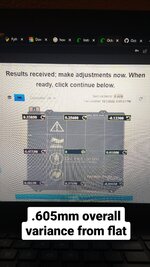
After the first round of adjustment:

The OctoPrint plugin can be set to show you how many degrees of rotation each screw needs to be turned to achieve flatness. I didn't have a protractor handy, so I used my calibrated eyeball here with the allen wrench. The following pictures show the progression of each round of adjustment:


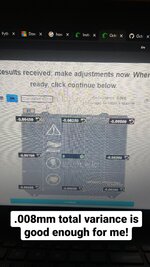
Now, not to toot my own horn, but .008mm total variance is better than I had seen reported by anyone doing this mod, and is
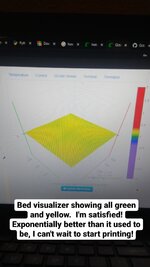
plenty flat. Here's what it looks like on OctoPrint's Mesh Bed Visualizer plugin. All green would be a perfectly flat bed.
With the bed leveling done, I calibrated the Super PINDA and got some filament loaded up to set the initial Z height. It was straightforward and went well, and I then printed
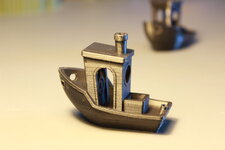
THIS to test that the bed was in fact as flat as OctoPrint had showed. The resulting print was quite impressive, and miles better than I would have achieved prior to the mod. Also, with the bearings freshly re-packed and the noisy print fan replaced, the printer is now quieter than ever!





























 . Those first couple summer utility bills almost gave me a heartache. Now we are up by Cave Creek in a more rural area.