As of
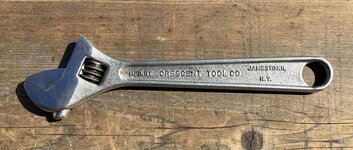
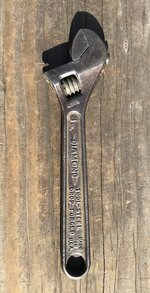
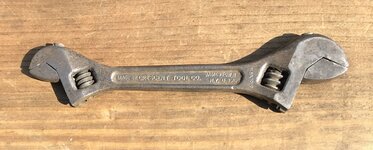
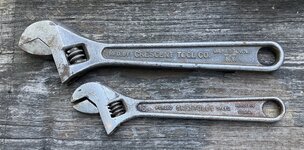
at least 1922, adjustable wrench codes were A(finish)(length), so a black 10" adjustable would be A310, a polished 4" would be A14.
As of '31 the wrenches were listed as "Polished. Also furnished in nickel plate.", but they kept the A1(length) code for regulars, and Crestoloy wrenches were AC1(length). That continued to '57.
As of the '61 catalog, the adjustables were all coded AT1(length), and were black finish with the sides of the head polished. Crestoloy were either AC1(length) or ACL1(length) for the locking models.
In this '73 ad, a 10-inch chrome wrench is AC1(length).
In this '77 ad, an 8-inch chrome wrench is AC1(length)V.
Looking at the '82 catalog from the Cooper Group, "V" indicates that it's packaged on a card. (Currently - as in, on their website - the VS suffix seems to indicate "carded" and the BK suffix is for "boxed". So I'm guessing that's probably what it meant in '77, as well.)


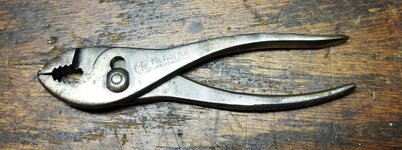
As for H: in 1914 that was for linesman's pliers (Harmon, Henry, Hosea), and by 1922 it was for the CeeTeeCo slipjoint plier, which was only offered in nickel (H2-) plate. That continued until '61, and has not changed by the 1982 Cooper catalog (except that it's called the Cee Tee Co.(R), with spacing).
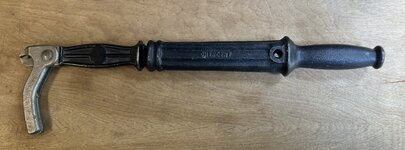
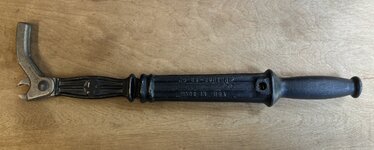
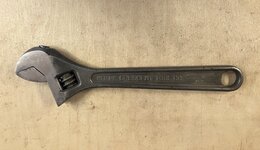
Also: by the '61 catalog, the regular wrenches are pictured with the open handle style - the indent running all the way up to the nut. The chrome wrenches seemed to keep the older style for a while (this ad from '65 shows both styles, but I think the Nut Bar in it is illustrated, rather than photographed), but by '73 they also have the open handle.