To avoid these ads, REGISTER NOW!

MP&C Shop Projects

OP
M

MP&C

Well-known member
Joined
Oct 21, 2009
Messages
4,396
Location
Leonardtown, MD
Nah, we're low rent on Carnival. We were no parts of the Royal Cleansing.. :monkey_po


Hopefully not on Royal Caribbean.

What is the purpose of planishing prior grinding?


If you were to take two straight cut panels as shown in that picture above, and tack from one end to the other without planishing, you will see the panels start to overlap each other from the shrinking that takes place. Planishing after each weld helps to stretch them back out, and doing them one at a time better isolates the operation of planishing to concentrate the force on each area of shrinking (weld dot) for more effective planishing/stretching. You can wait until the end, then grind and planish, but I feel this isolated method is more effective at insuring each shrinking point is stretched back out for a better metal finished panel with less need to pile on the bondo..
 
Last edited:
To avoid these ads, REGISTER NOW!

BigMike782

Well-known member
Joined
Dec 19, 2008
Messages
1,833
Location
49120
Royal cleansing?:lol:

Ahhh, I see said the blind man as he picked up his hammer and saw.
Have you ever thought of doing a video of a repair from beginning to end, I know I would find it fascinating and I am sure others would too.
 
OP
M

MP&C

Well-known member
Joined
Oct 21, 2009
Messages
4,396
Location
Leonardtown, MD
The forthcoming welding tutorial (in my spare time :spit:) will focus on panel fitment as well, so I think what we're discussing here will be covered. :thumbup:
 
OP
M

MP&C

Well-known member
Joined
Oct 21, 2009
Messages
4,396
Location
Leonardtown, MD
Well Big Mike, I had a request on a couple other forums for a planishing tutorial as it relates to Mig "dot" welding, so here's the rough draft, hope it helps out.


I'll preface this by saying that this "test subject" serves as a guideline only, and is intended to help you see the effects of shrinking and how the planishing counteracts those effects, more so than establishing a hard and fast measured amount. It is not intended to be the end all-be all of how much, but it should get you in the ballpark of a measured amount to keep the panel in relatively good shape with minimal warping effects during the initial planishing efforts.

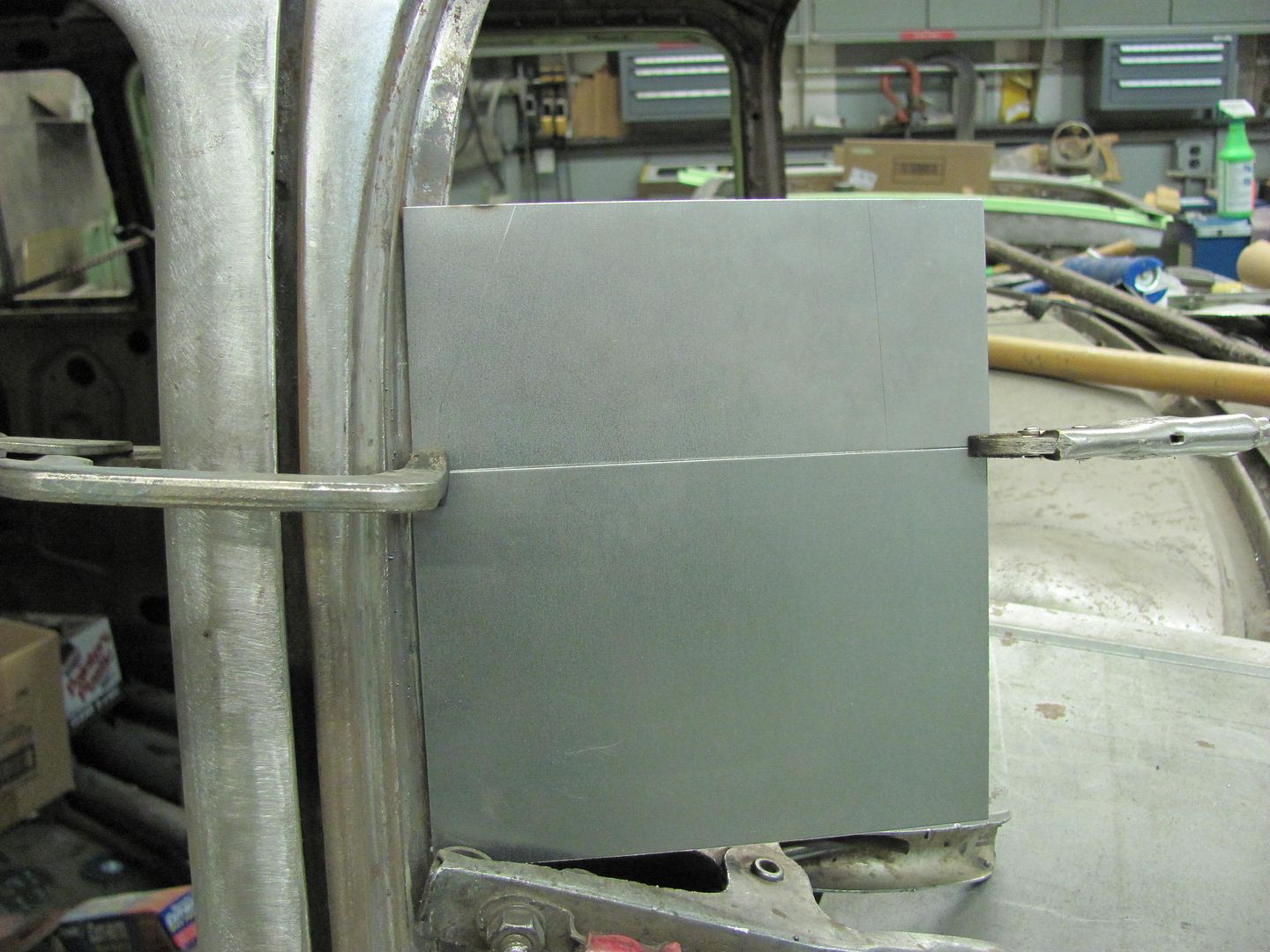
For your planishing test subject, you need two sheet metal strips about 1-1/2" wide by about 15" long. These will be tacked together on the long edge, and works best if you have a shear, as you can cut a piece 3" x 15 and then shear it through the middle for a perfect seam. For you to see the effects of the shrinking and then the planishing, it needs to be a perfect cut through the middle for best results. So if you have one or can find someone with a shear to help you out, it will help tremendously.

Next, the process and specifically amount of planishing needed is going to be directly related to weld dot size and/or wire type/softness, etc.

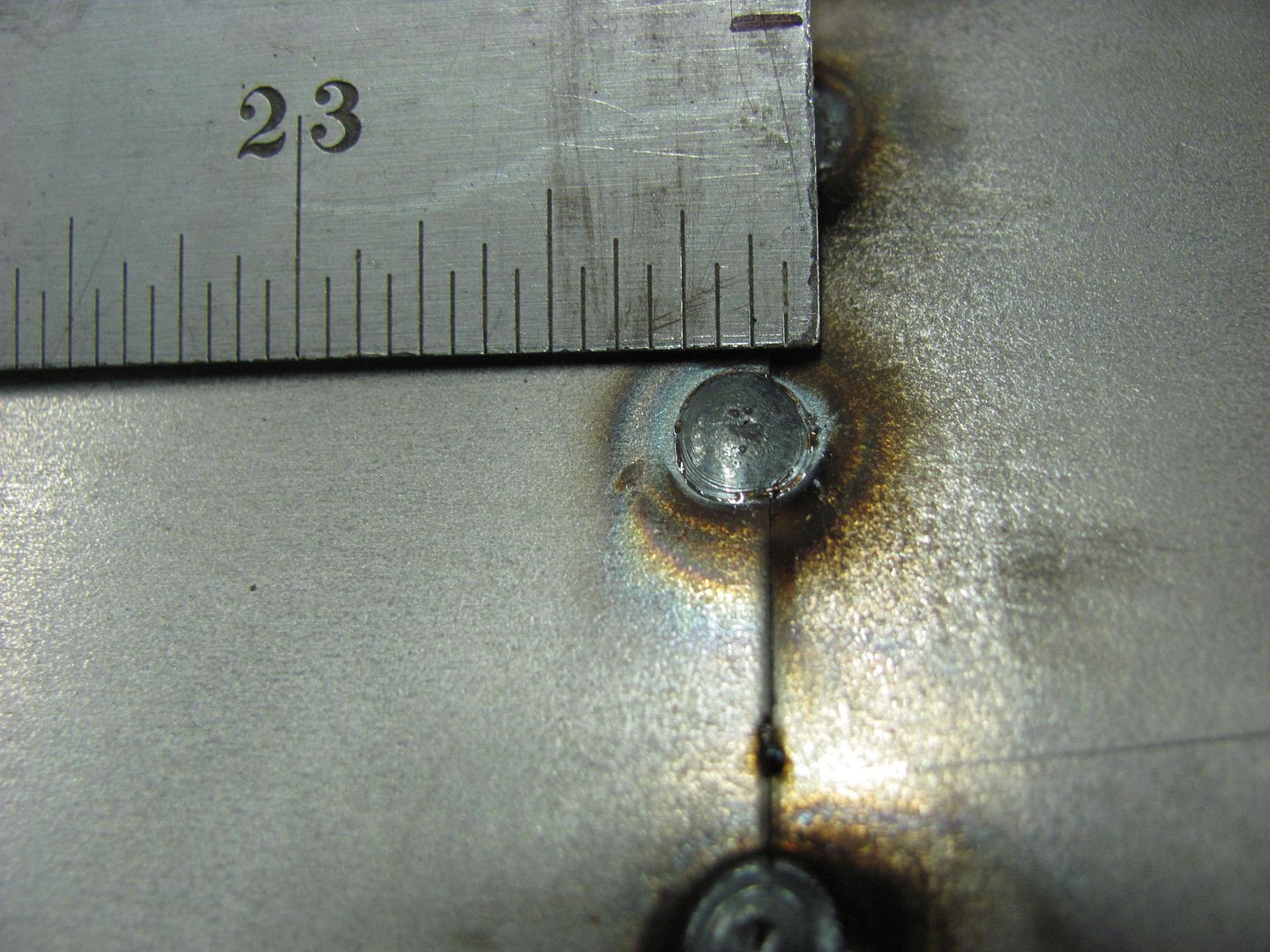
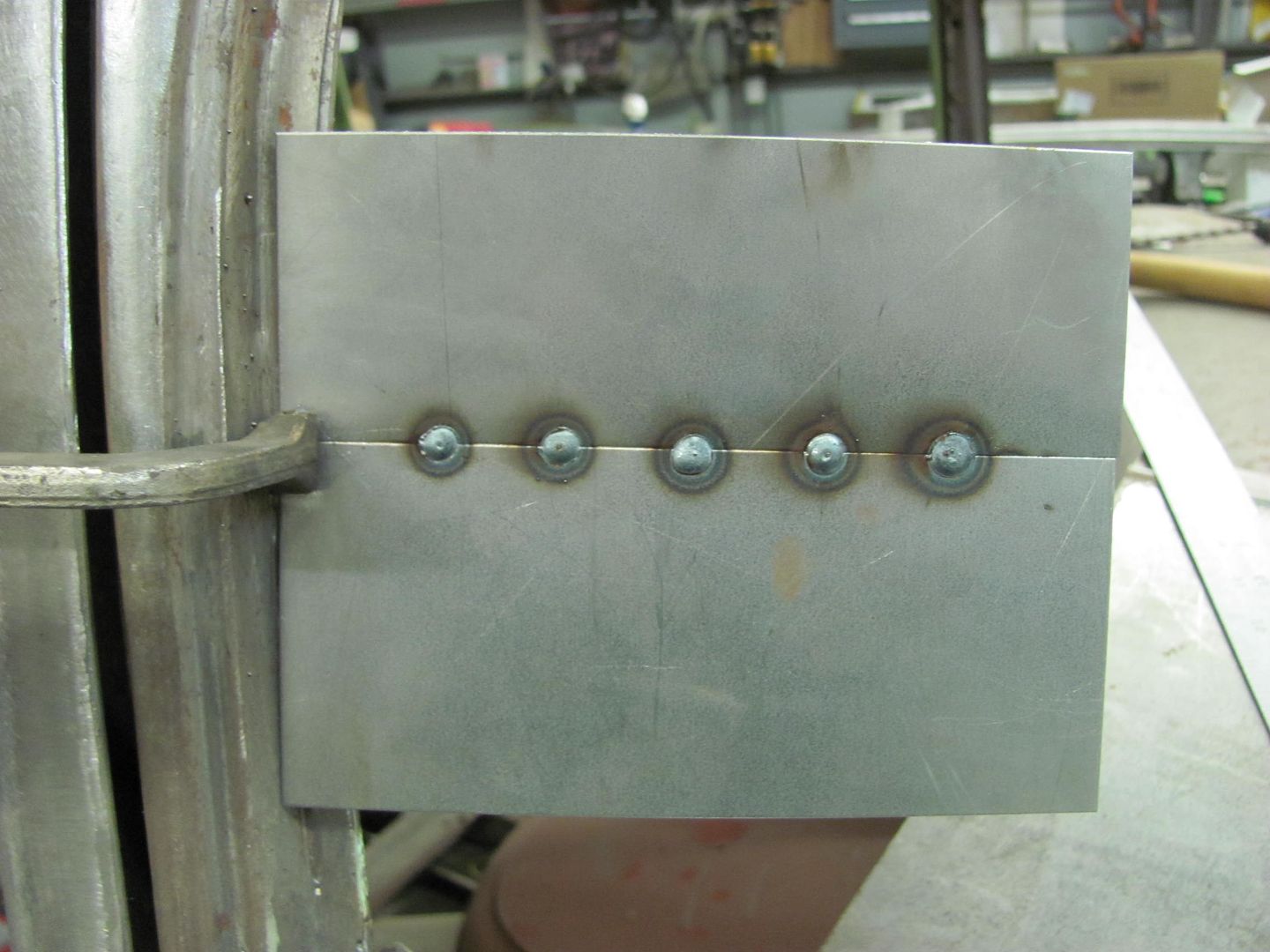
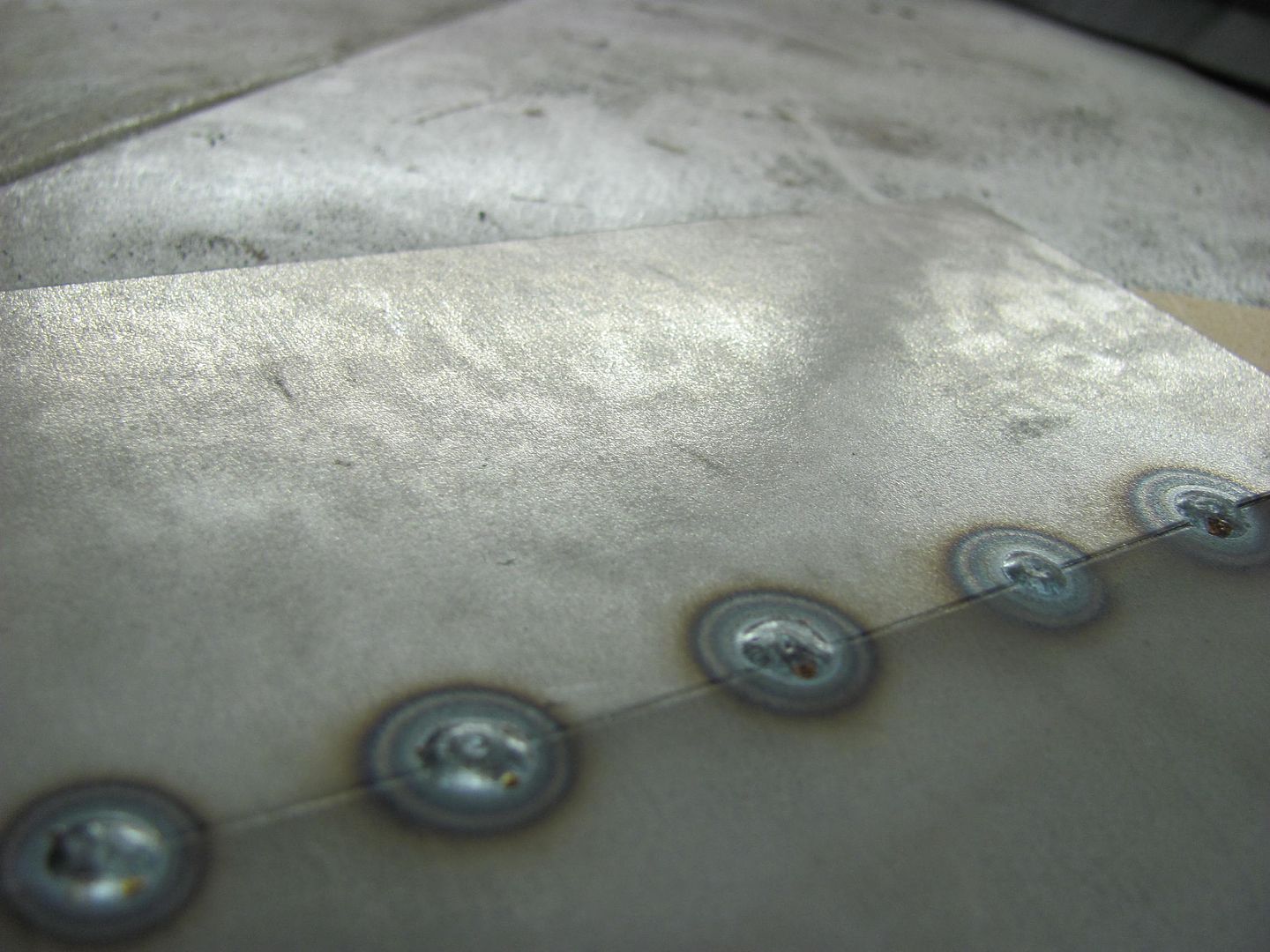
Now that you have a fresh cut test piece, take your two pieces and align together TIGHTLY along the long sheared cuts and tack the seam at about one inch in from one end.

Picture102-1.jpg


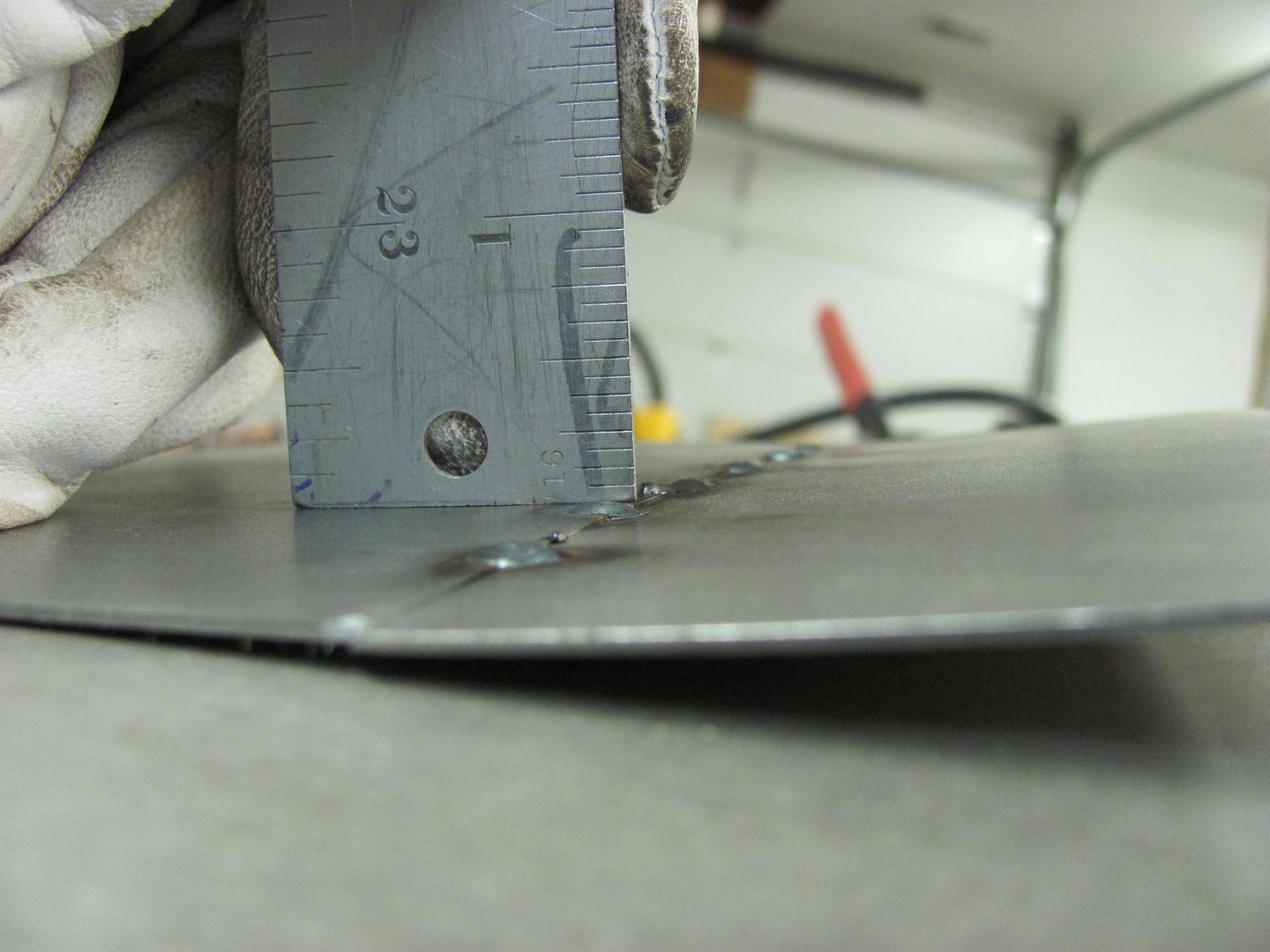
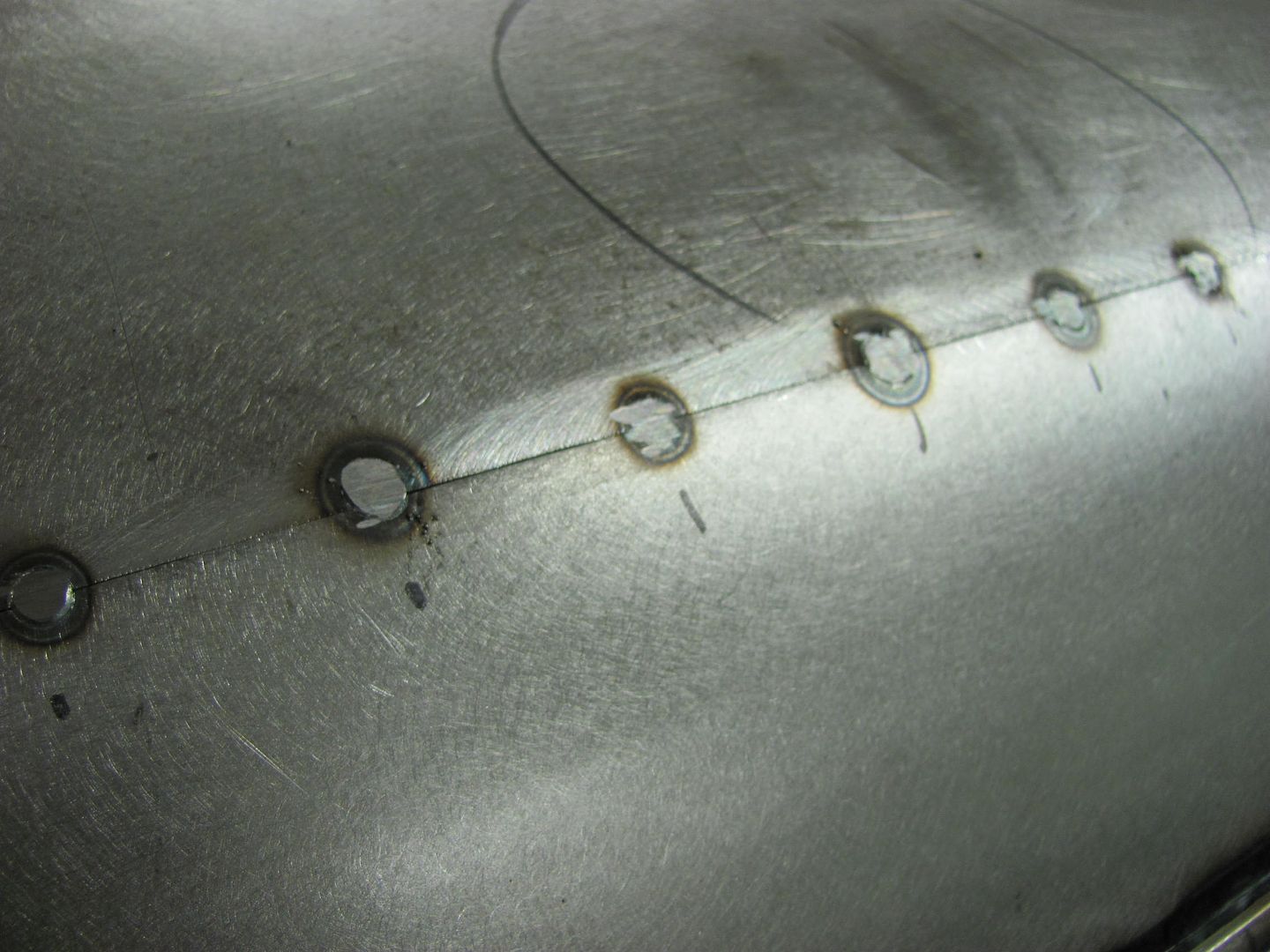
DO NOT PLANISH at this point. Go another 3/4" and add another tack. Is there any change in panels positioning? Go another 3/4" and add another tack. What we are trying to do with this process is to monitor how much shrink is occurring. The first tack should "anchor" the two panels together at the end. With the panels tight together, each subsequent tack, and the shrinking effects realized once cooling takes place, will start to pull the panels even closer together where they try to overlap each other. So If you haven't seen this happen, keep welding dots at 3/4" spacing until it does happen.

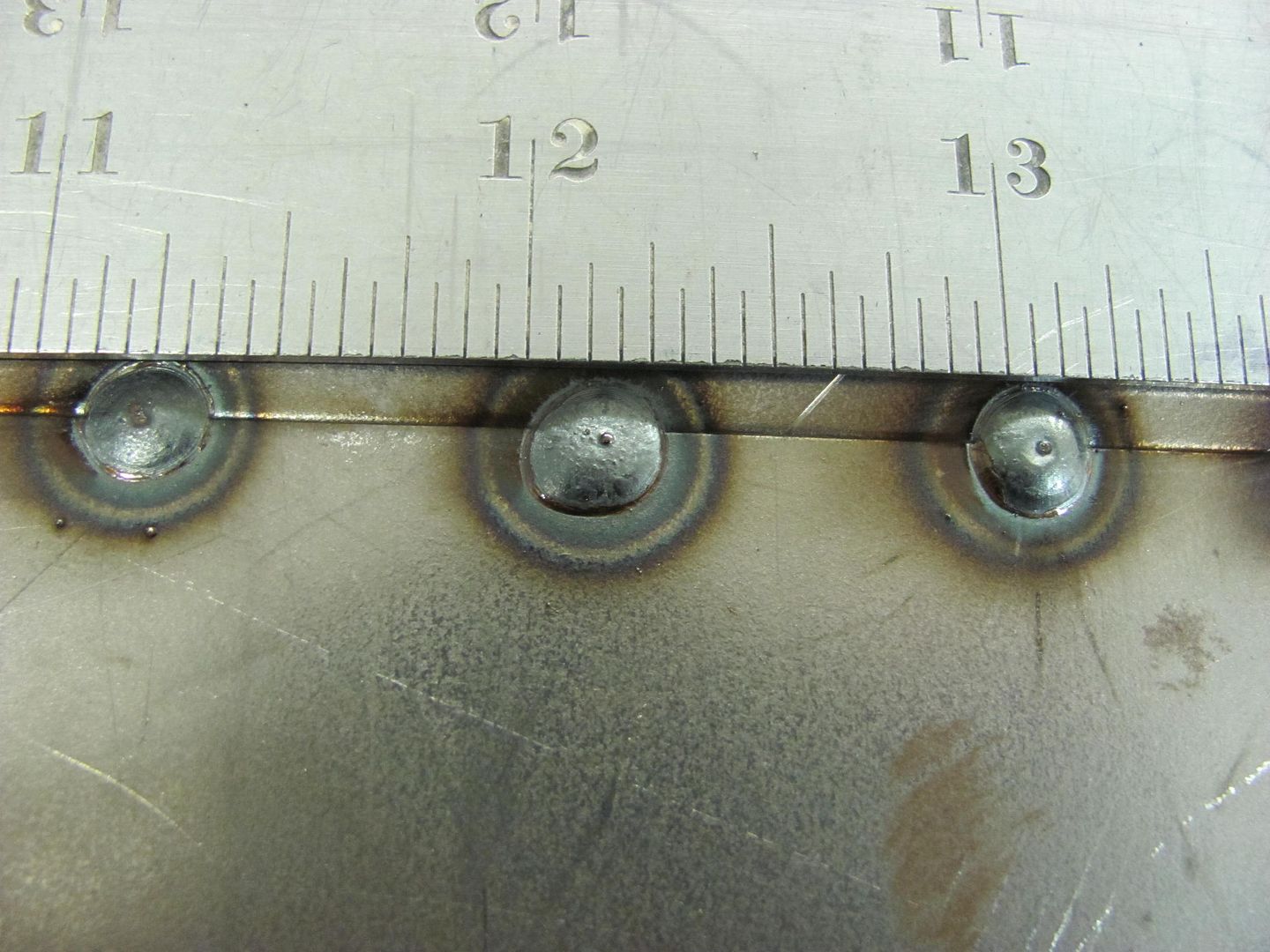
Now that you see these panels overlapping, the next phase is to see how much planishing it takes to "undo" the overlap. Start at your anchor tack, and hammer and dolly once.
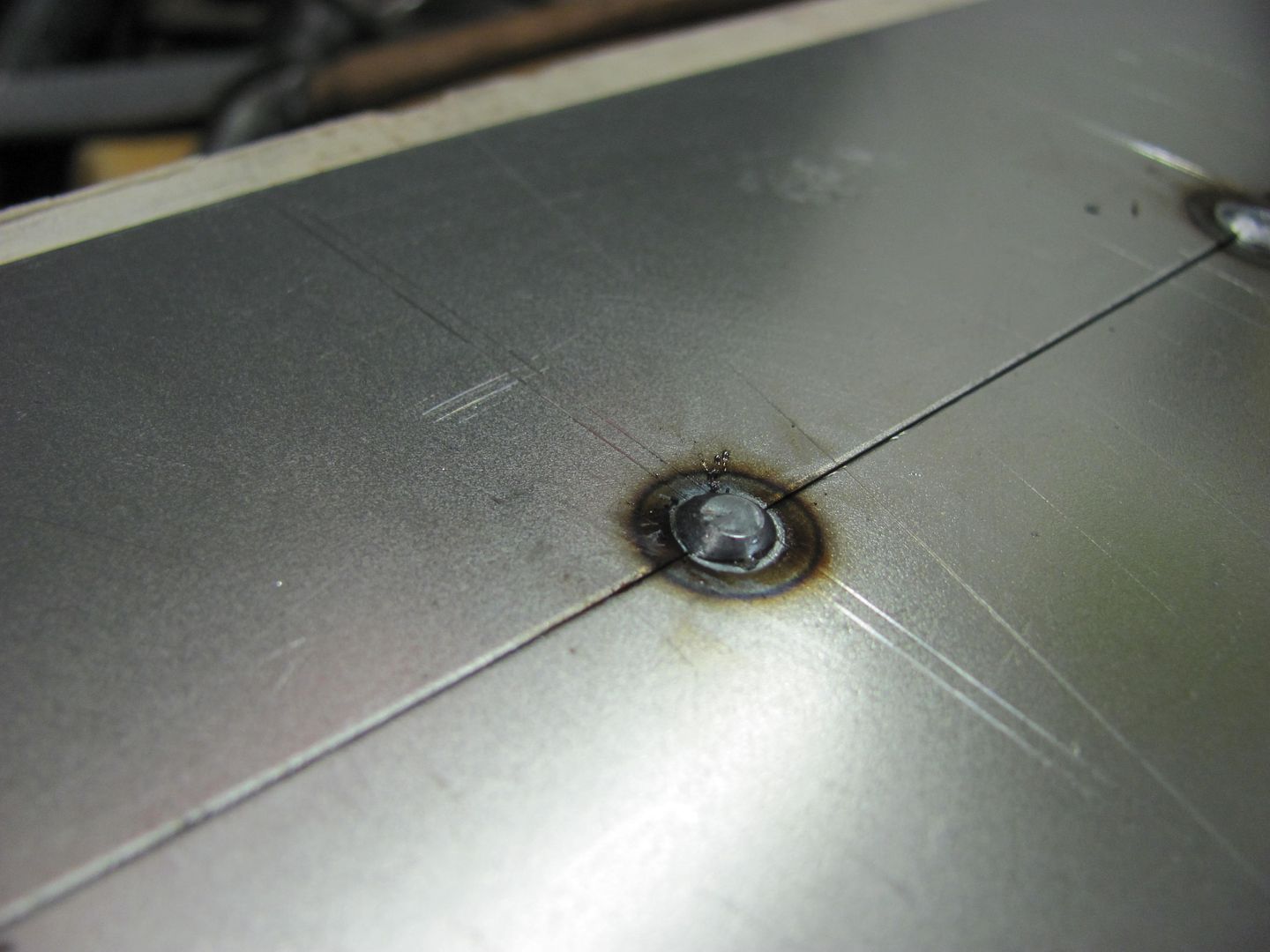
Picture105-1.jpg


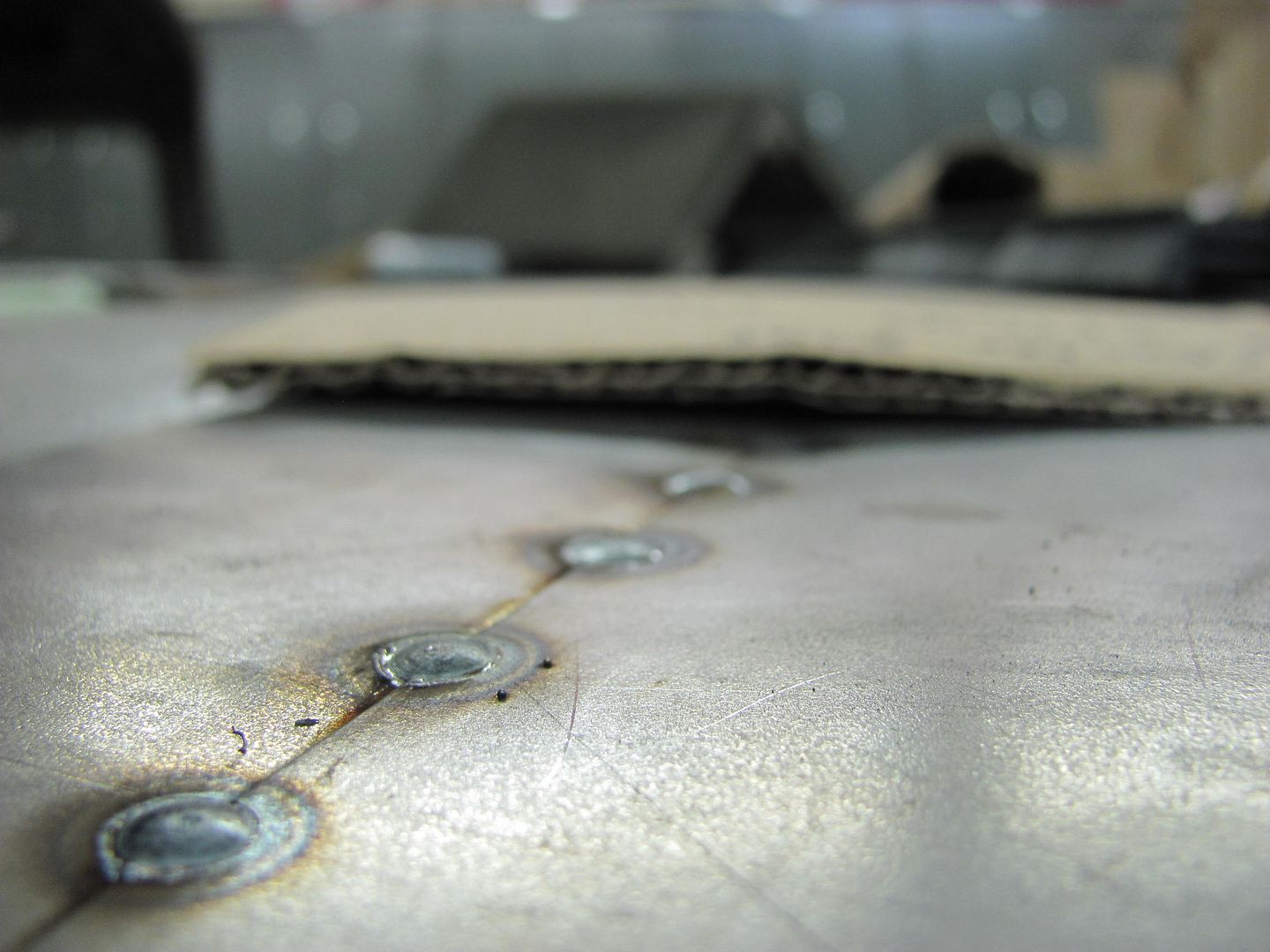
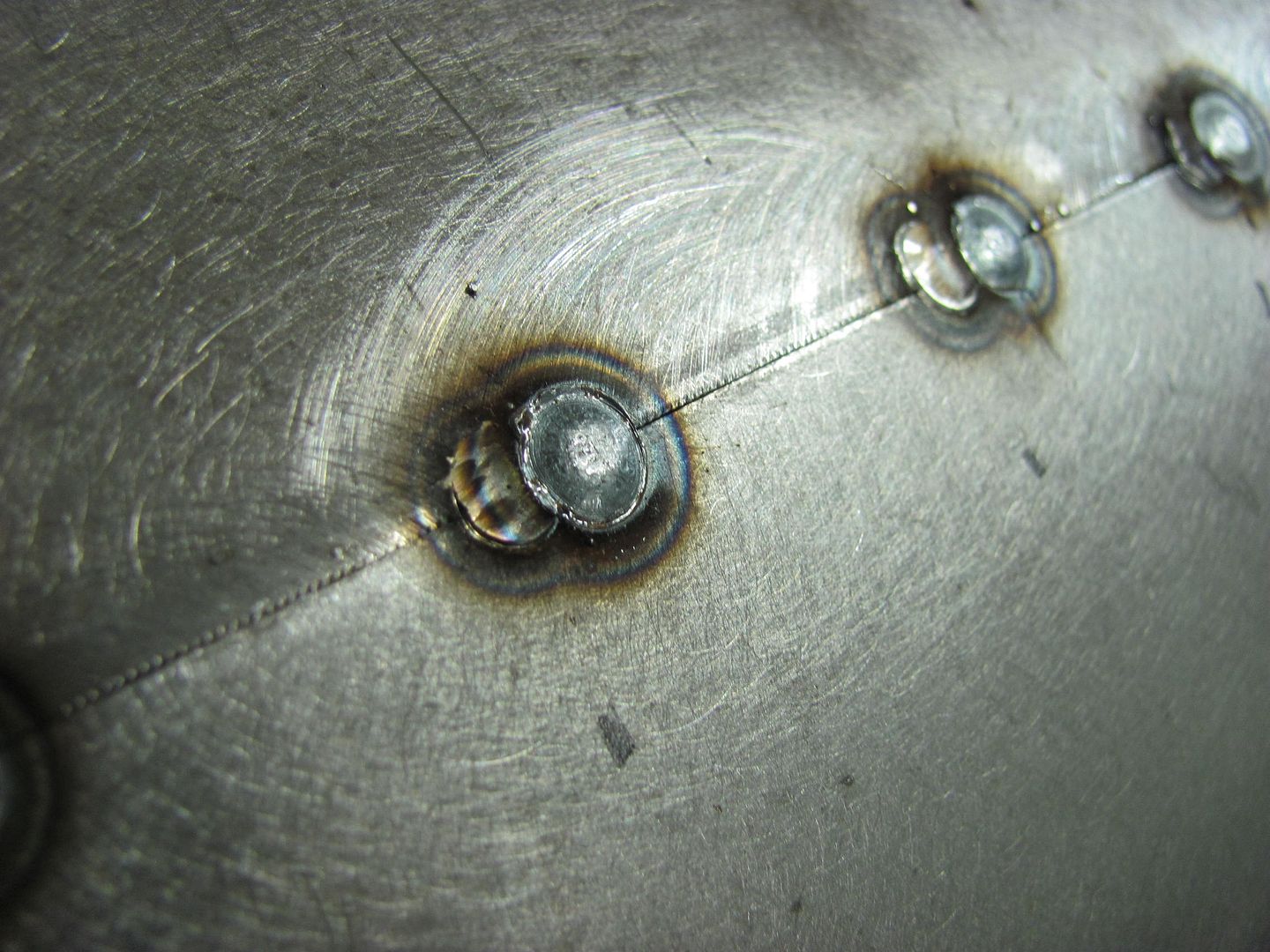
Go to each subsequent dot and apply the same hammer and dolly in the same approximate force. The flat should be similar in size, but I'd gauge your effort more on hammer force than size of the flats. When you get to the end, check the overlap to see if it still interferes with adjacent panel fitment at the un-tacked end. If so, start at the beginning, repeating one dot at a time, monitoring overlap. When your panel overlap issue has been resolved, your weld dot planishing effort will be the number of hammer strikes as it took to resolve the overlap, using approximately same striking force. This assumes your weld dots don't mysteriously grow in size to add the need for more planishing, so again the importance of OCD consistency. This planishing effort will not be the end of the metal bumping to your panel ie: once you get welding in your patch panel/hood scoop/etc. It is the minimum needed to relieve the shrinking effects so the differing forces will relax a bit. So when you get to a this process on the "real" panel, the planishing will go ahead at the number of ** hammer strikes to get it done, then move to the next weld dot. What we're doing here in striking one dot once and then the next is only for test purposes to identify the number of strikes you need. After this initial planishing, any remaining planishing needed will be based on what the panel looks and feels like, high spots, low spots, etc after welding, initial planishing, weld dot grinding, and panel reading is completed.


Now that you have completed this, just for the heck of it, go to the first anchor dot, and start planishing it and it alone. Keep repeating until you see the adjacent ends start to separate as the weld dot is being stretched. Look at how wide the gap is. This approximates the amount of extra effort needed to overcome the shrinking and panel movement that happens when you leave a gap that size in the panel. It also demonstrates the differing planishing efforts that will be needed for inaccurate and inconsistent gaps. Keeping track of what, where, and how much is the tricky part, and again stresses the importance of consistency in all the processes, starting with tight gaps at fit up. Everything that you can do to keep consistency throughout all the processes only makes the planishing efforts more consistent throughout, lessening the need to keep track of the errant what, where, and how much.
 

jfdestree

Well-known member
Joined
Jun 15, 2012
Messages
105
Location
Belgium, Europe.
Thanks to take time to teach us about panels fitment and planishing.
I'm restoring a '76 VW van, and those huge flat panels are really hard to get straight. It's the first time I tackle a full resto job, and I'm learning by trial and errors. Let's say I've learned a lot on this project...
Reading and observing of what people like you accomplish is the biggest help and teaching I found! Thanks!
Being able to get straight panels and a good fitment of all parts is the basis of a good resto job. Fabrication and metal shapping is another level I'll dream of achieving...
 
Last edited:

BigMike782

Well-known member
Joined
Dec 19, 2008
Messages
1,833
Location
49120
Robert, that is a great write up! Thank you for taking the time and effort to put this entire thread together.
I'm glad(for you:lol:) that we live so far apart or I would be hanging around your shop leaching info allllll the time.
I find it very interesting to see the work highly skilled crafstman do but it is also interesting to watch the process. I have a friend that has fabbed open wheel suspension parts for better than 40 yrs and watching him work is like poetry in motion........plus he is such a cool guy!
 

FarmerSid

Well-known member
Joined
Dec 12, 2005
Messages
145
Location
Ontario, Canada
Thanks Robert. I'm about 80% following you. So you planish the welds before grinding them down almost flush with the metal? Isn't that hard on the hammer and dolly. You are using the hammer "ON" method right? Any chance you have a picture of the hammer and dolly you use on the welds?

Cheers!

Sid
 
OP
M

MP&C

Well-known member
Joined
Oct 21, 2009
Messages
4,396
Location
Leonardtown, MD
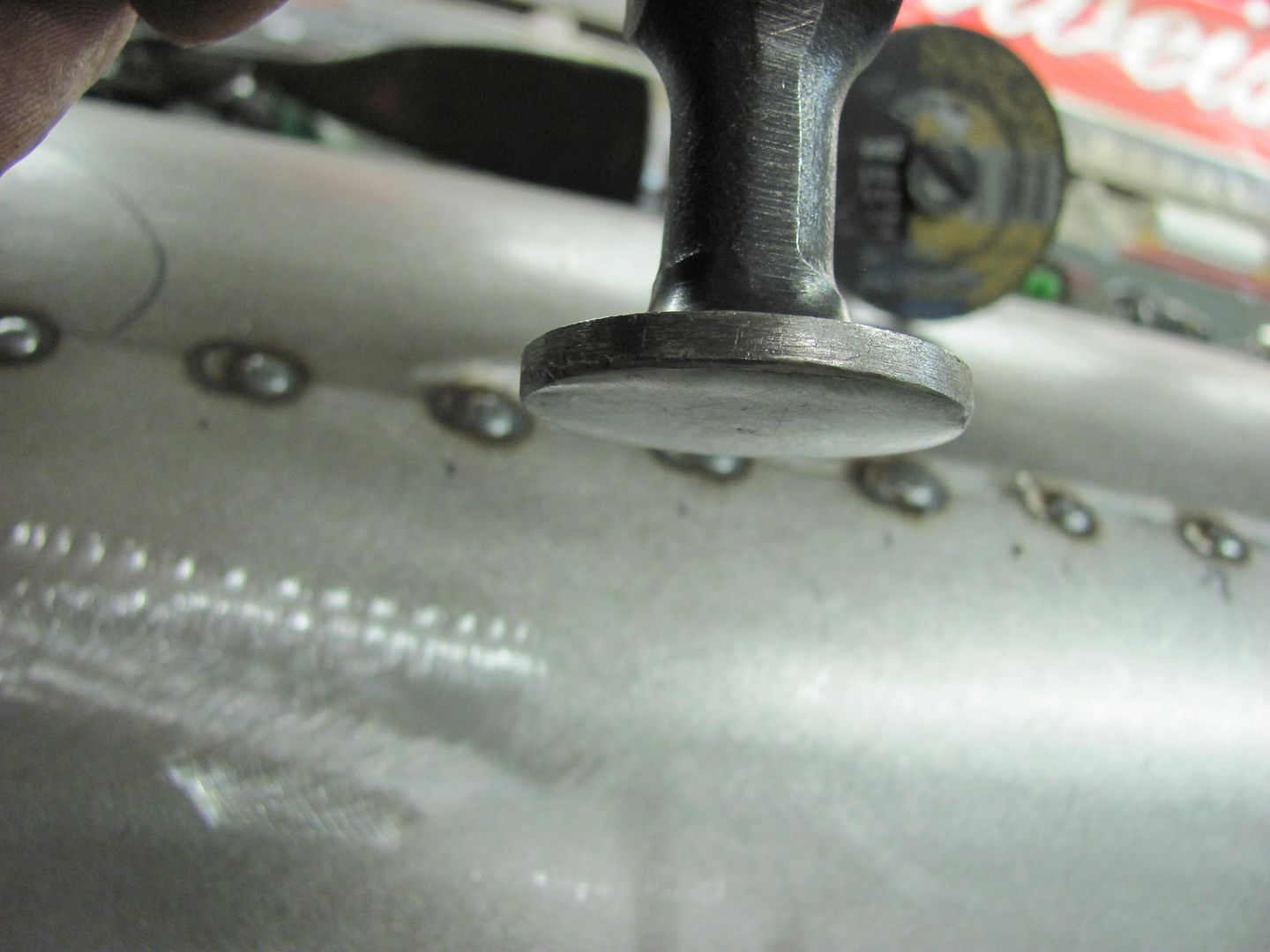
Sid, because of the single Mig welded dot's predisposition to shrink and pull from all directions, these shrinking effects can most effectively be addressed by planishing the weld dots isolated one at a time to stretch them back out. Yes, typically just use a body hammer and dolly "on-dolly", but these are fairly high quality items that you shouldn't need to worry about damage to the tools. But by addressing them one at a time, you also have the advantage of mass of the tooling on your side. Once planishing has taken place, I typically grind the weld dots down to just above panel surface and leave the final cleanup to the very end with an 60 or 80 grit 3" sanding disc. If we were to sand down each and every time, you run more risk of inadvertently hitting the parent metal to the sides of the weld dots, each and every time, for more risk of thinning the metal. Grinding down to just above panel surface also gets the weld dots out of the way so that after welding the next set of dots in, likely overlapping the last set, there should be no interference for planishing that next set of dots in the same isolated fashion.

Grinding method: Grinding Mig Weld Dots


.
 
Last edited:

K13

Well-known member
Joined
Oct 24, 2007
Messages
2,221
Location
St. Albert, AB Canada
I assume you don't buy into the theory that MIG welds crack when you planish them (even microscopically)? There is so much contradictory information out there that it is hard to know. I have seen guys say they have x rayed and there are micro cracks that can't be seen by the eye but I always have to take that kind of info with a grain of salt. Seem like there have been enough planished MIG welded panel out there that haven't had issues that it is a moot point but just wondering your thoughts.
 
OP
M

MP&C

Well-known member
Joined
Oct 21, 2009
Messages
4,396
Location
Leonardtown, MD
Disclaimer first, I'm no metallurgist. But I think the extreme cases that you describe may come into play when someone welds bead upon bead without planishing in between and one dot at a time. This may present the opportunity for a slightly harder weld to affect another slightly hard weld that was next to/underneath of it. The other thing that comes to mind is that if someone did not achieve a full penetration weld, perhaps these cold weld joints as they "co-mingled" is where the cracks occurred. I have heard similar stories as you mention for many years but never understood it's merits as it did not appear to match my results.
I personally have not had any issue with ER70S-6 when I was using it, in planishing one dot at a time, that I could detect. When I switched to ER70S-7, it was noticeably softer when planishing, almost to the consistency one would expect with a TIG weld, so I would not think that alloy to be of any concern whatsoever. While I haven't sent anything out for microscopic testing, I have used the services of a local lab to magnaflux some pieces that I welded up, with good results.
 
Last edited:
OP
M

MP&C

Well-known member
Joined
Oct 21, 2009
Messages
4,396
Location
Leonardtown, MD
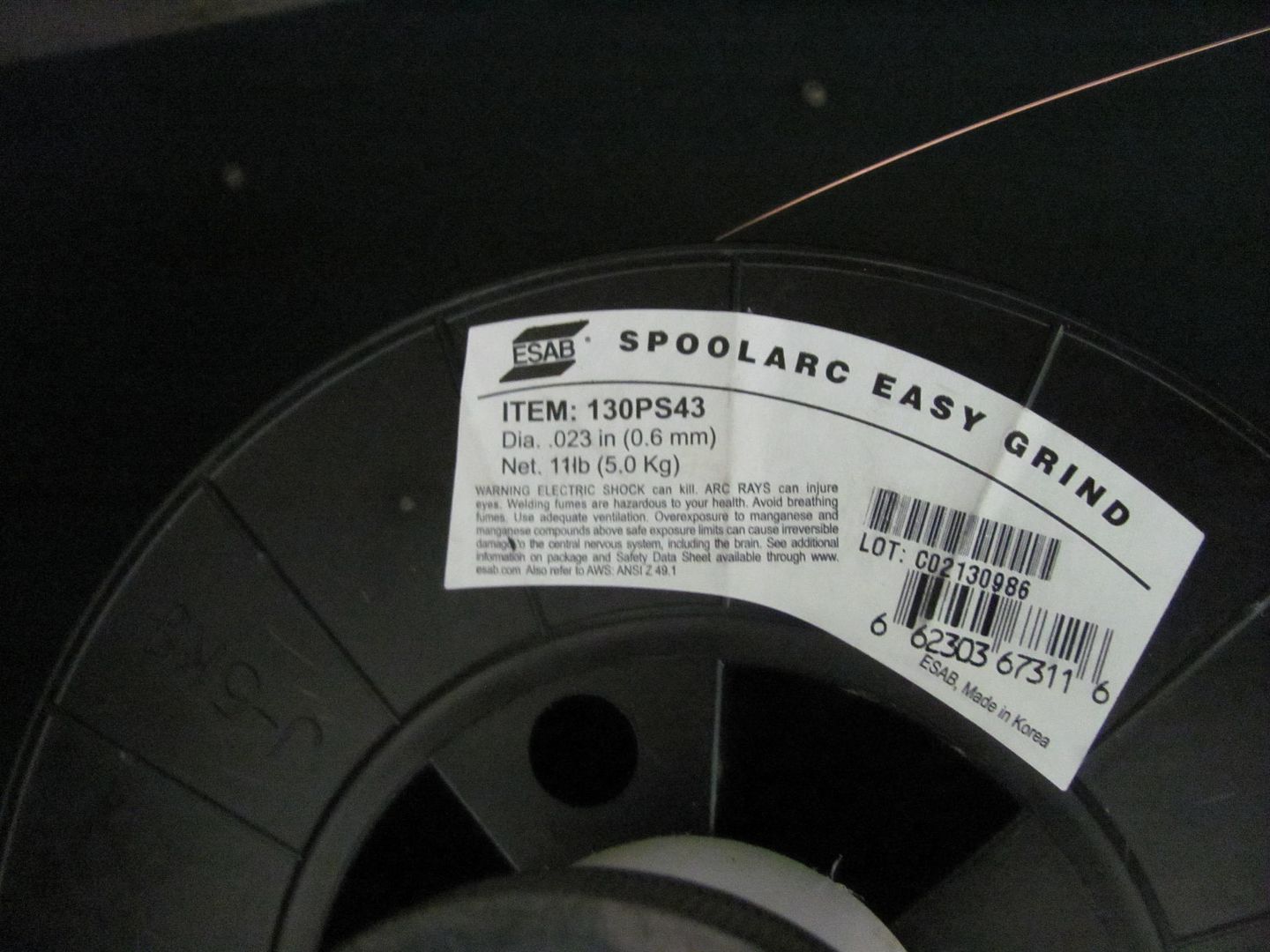
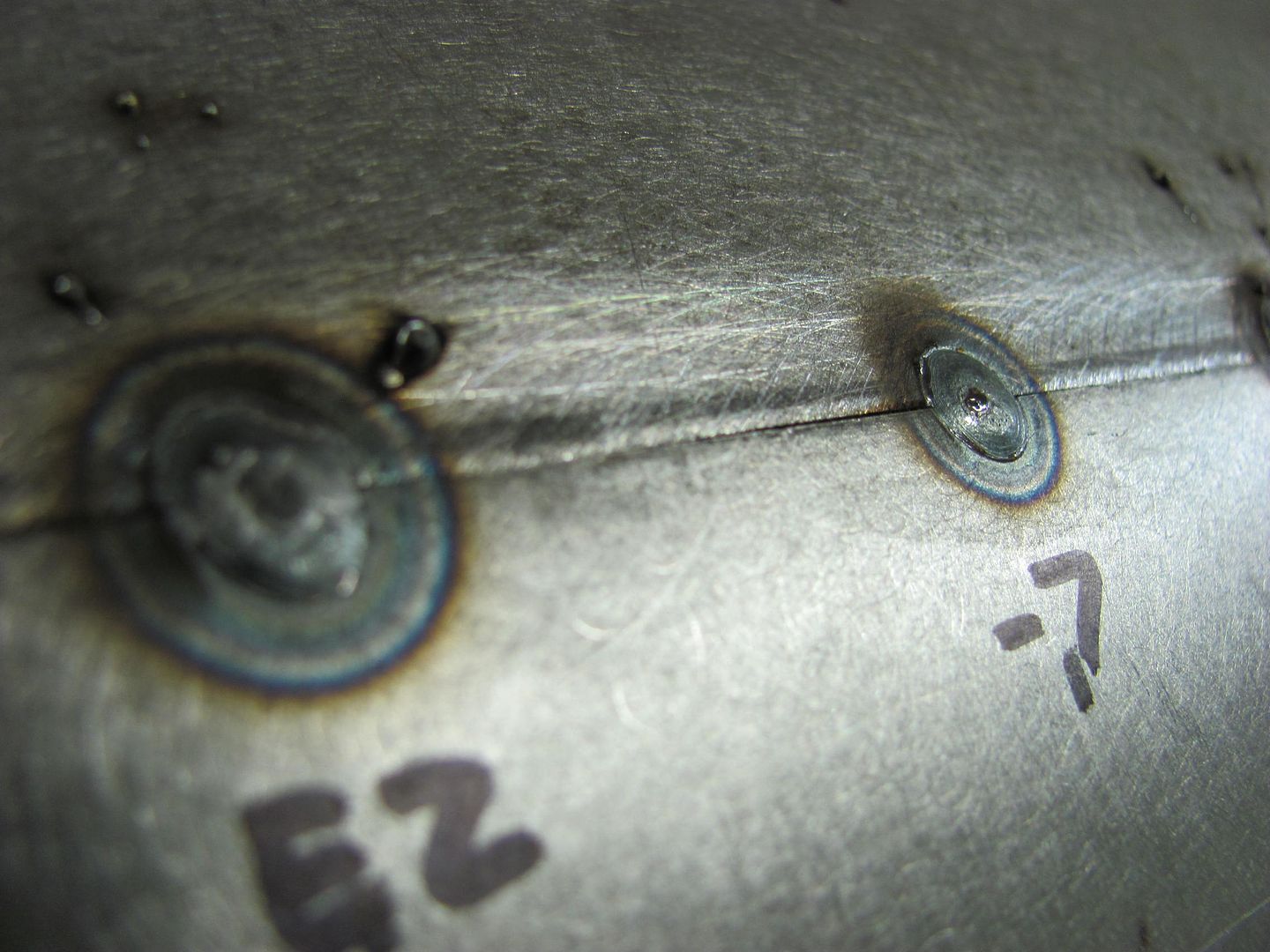
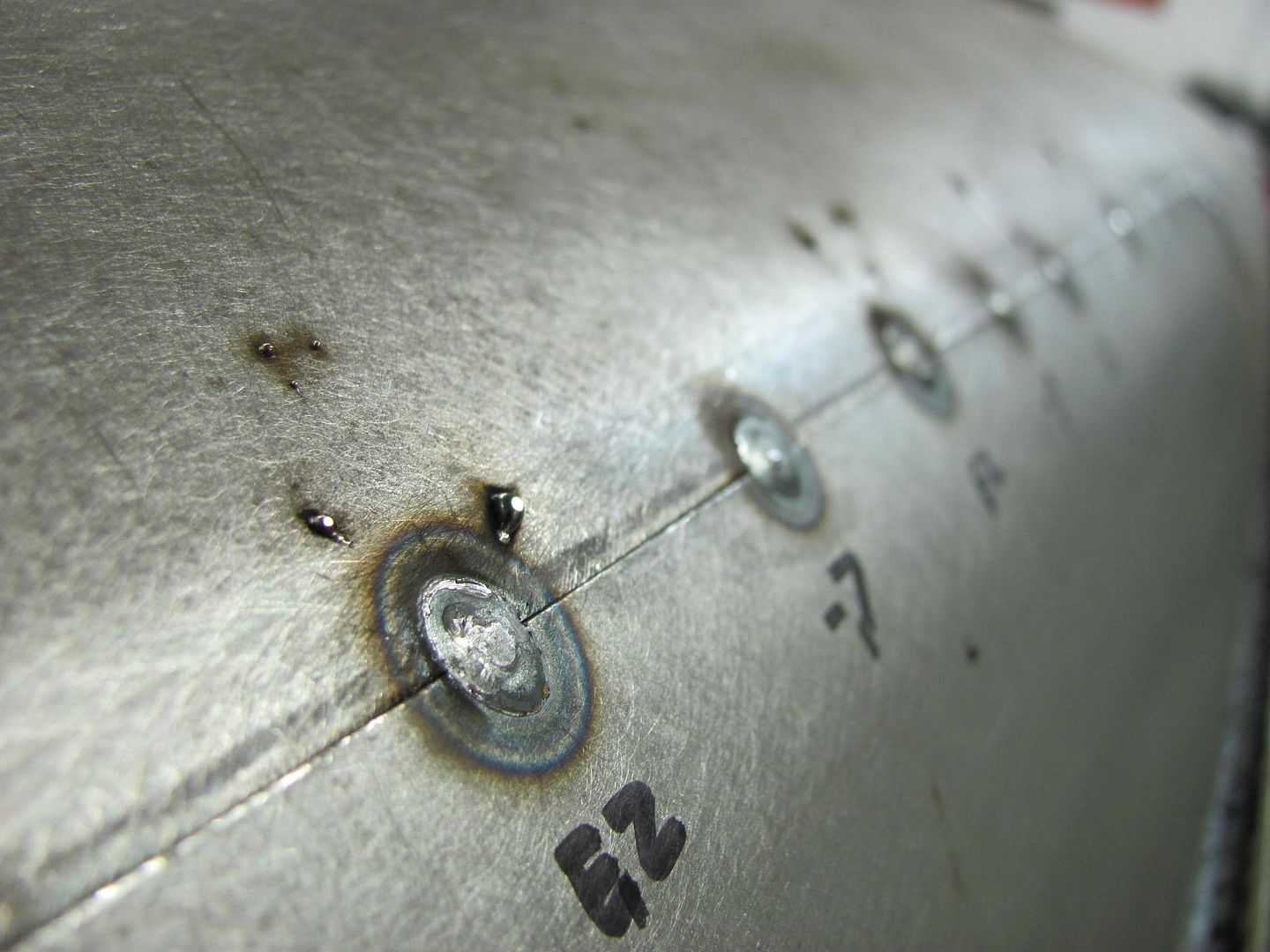
Well today I had a phone call from 3 Mules to tell me the .023 welding wire was in. I had ordered .023 ER70S-7, but what actually showed up was EZ Grind. I guess I was destined to try this stuff out...


Picture613.jpg


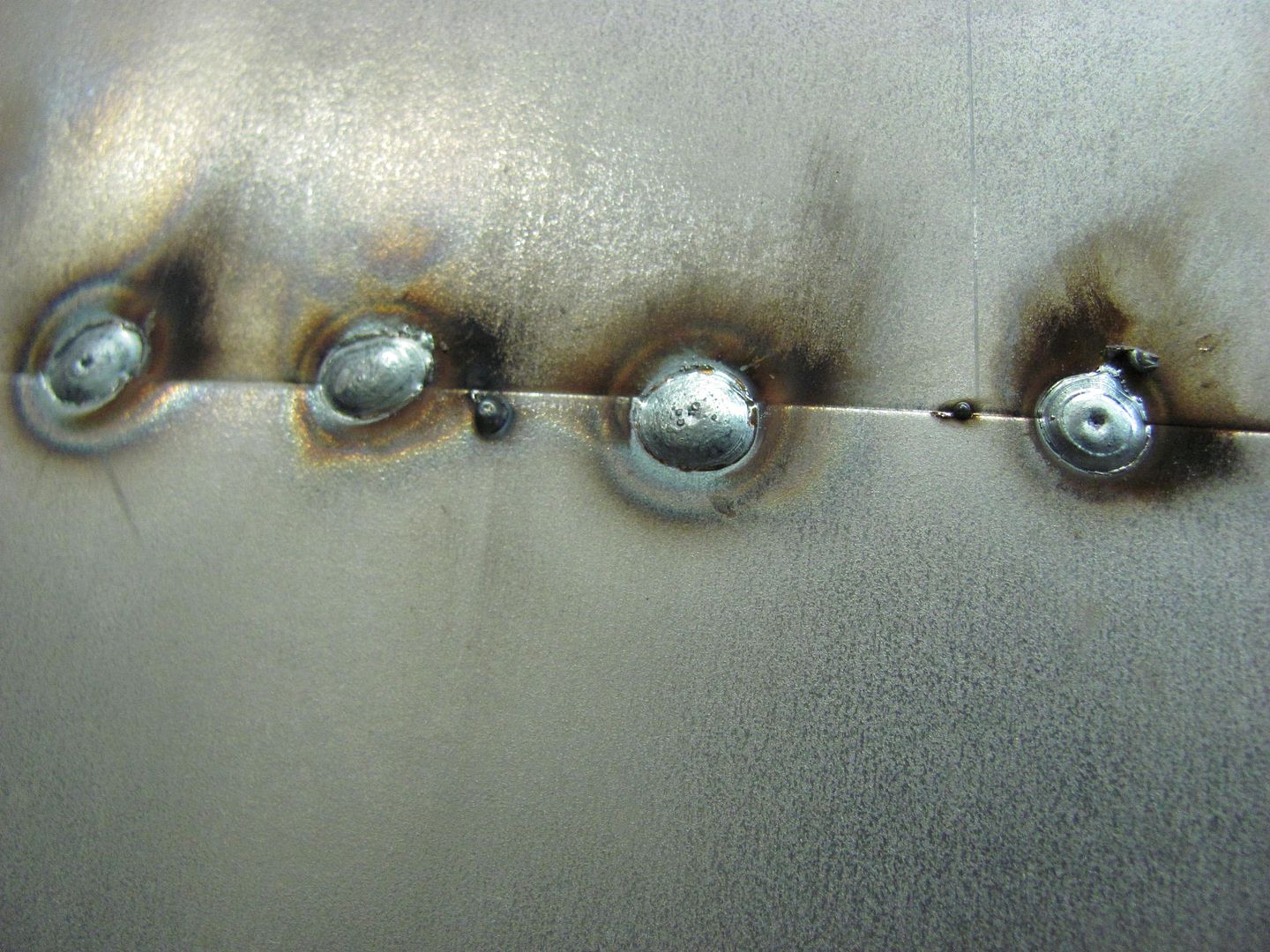
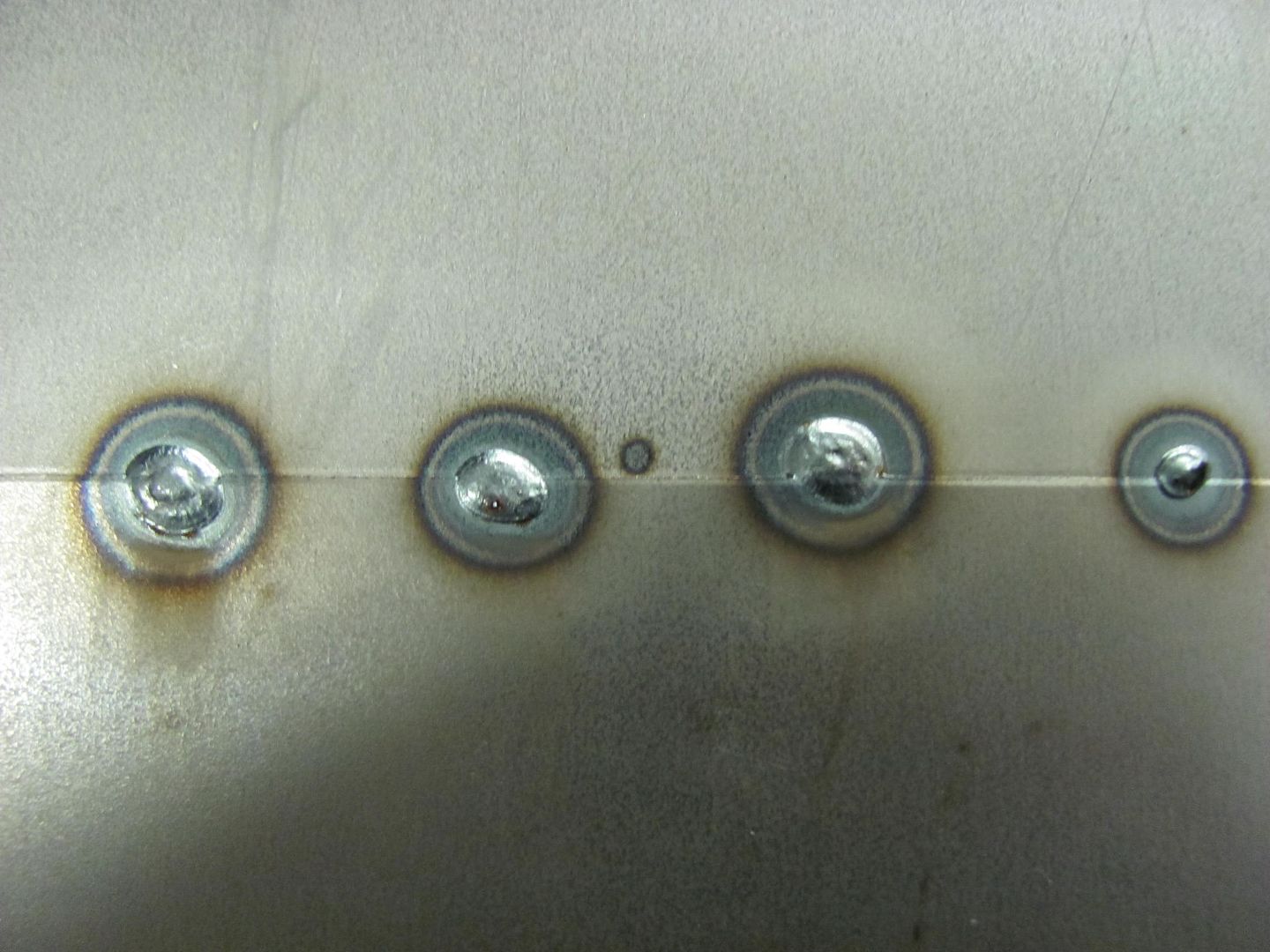
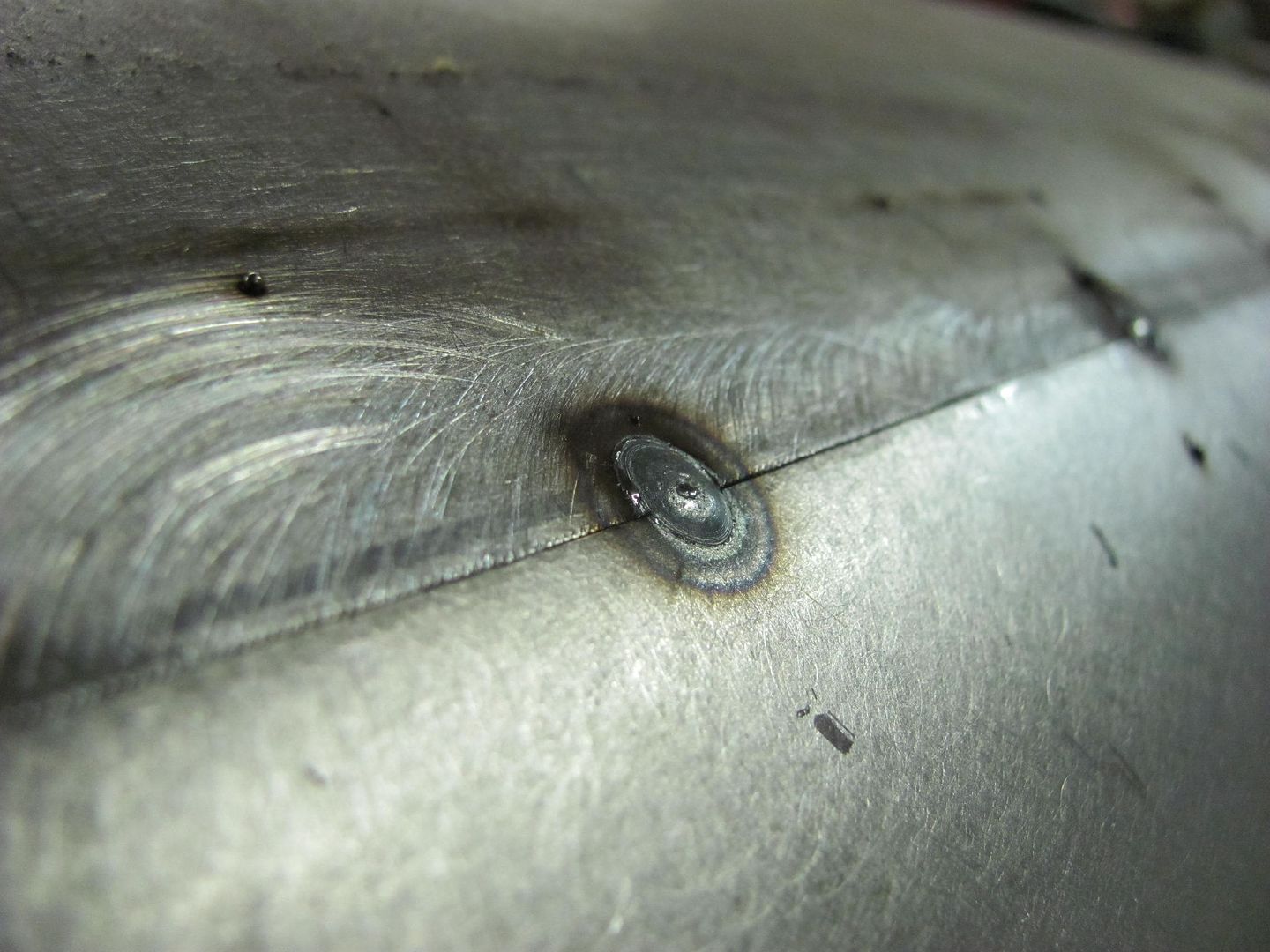
After about 45 minutes of changing wire, rollers, and trying different settings on the machine, we found dialing it in for 3/16 thick steel and using 1/2 second weld "application" showed about the best results.. Seems odd as the metal was 19 ga, or about .038 thick..


Picture614.jpg


front:


Picture615.jpg


rear:


Picture616.jpg


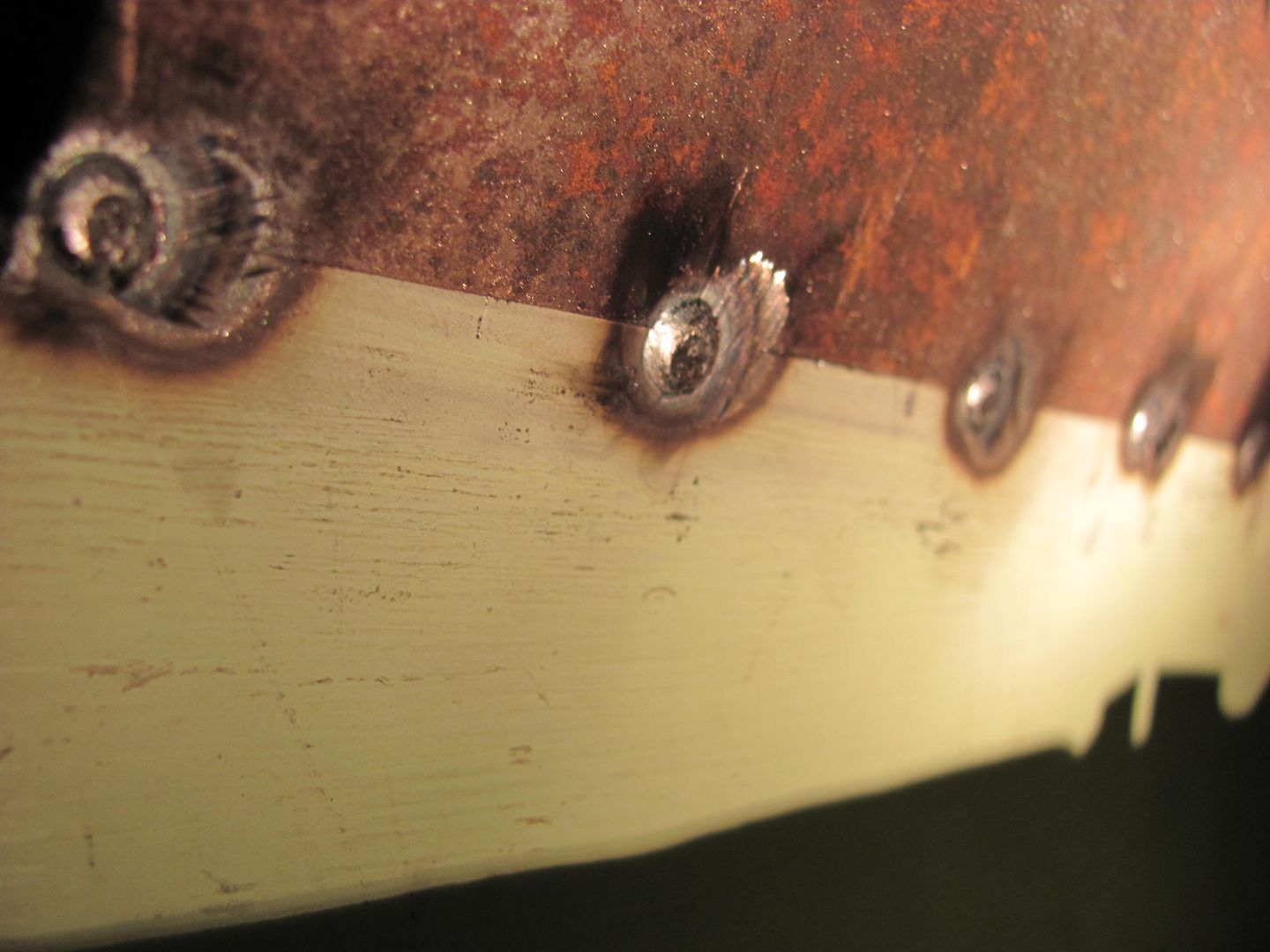
Comparative size of the weld proud.


Picture617.jpg


Picture618.jpg


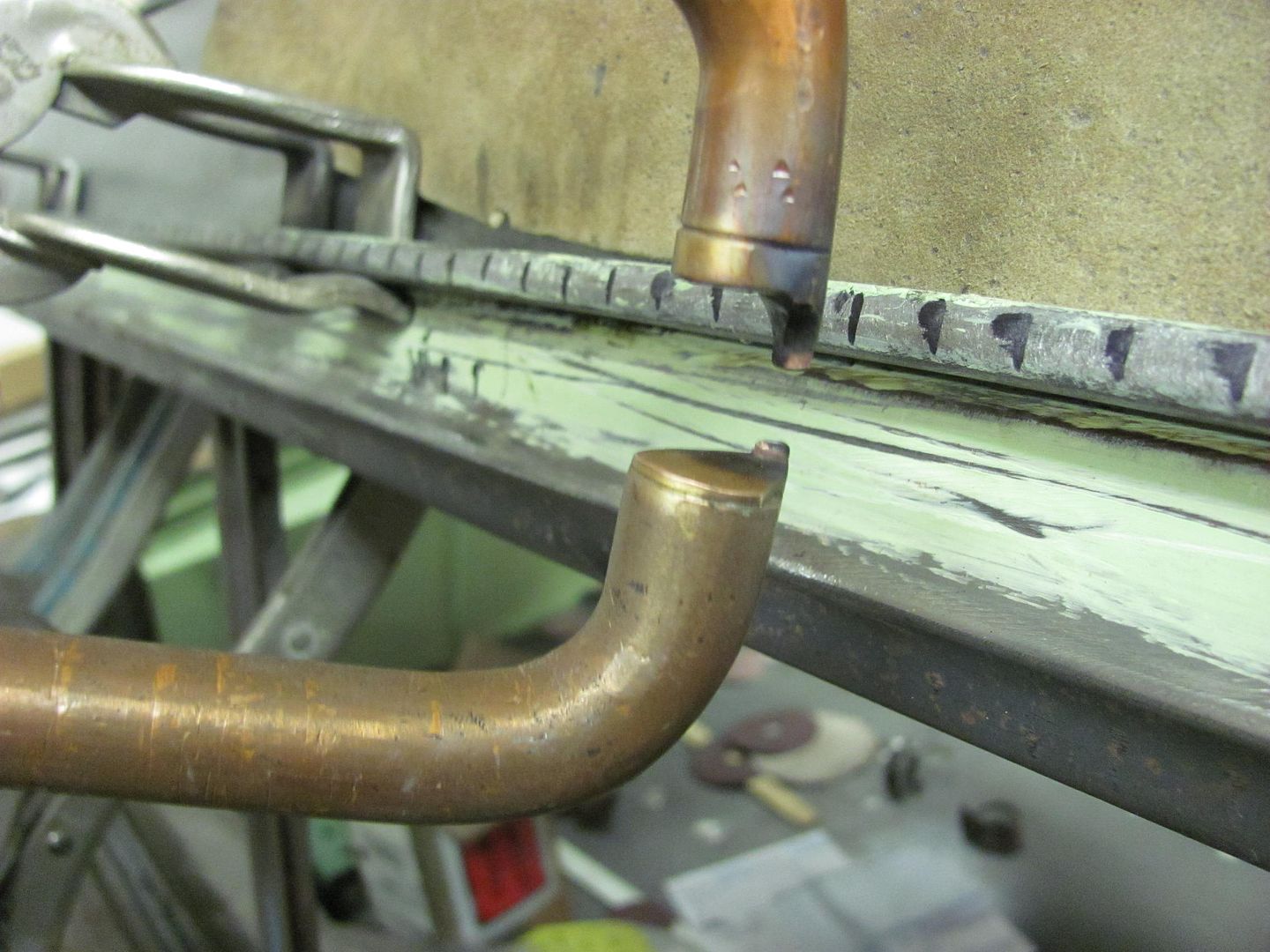
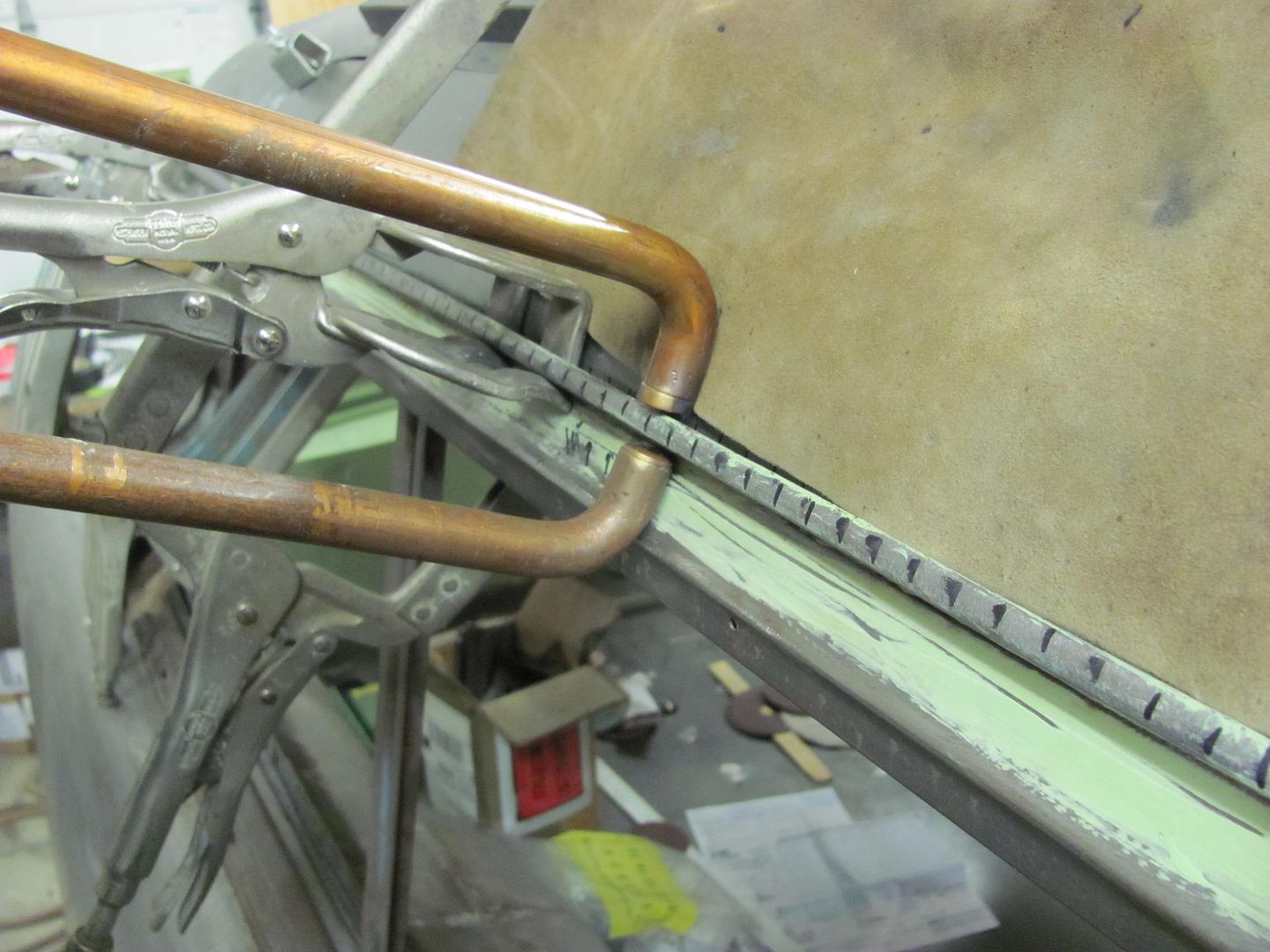
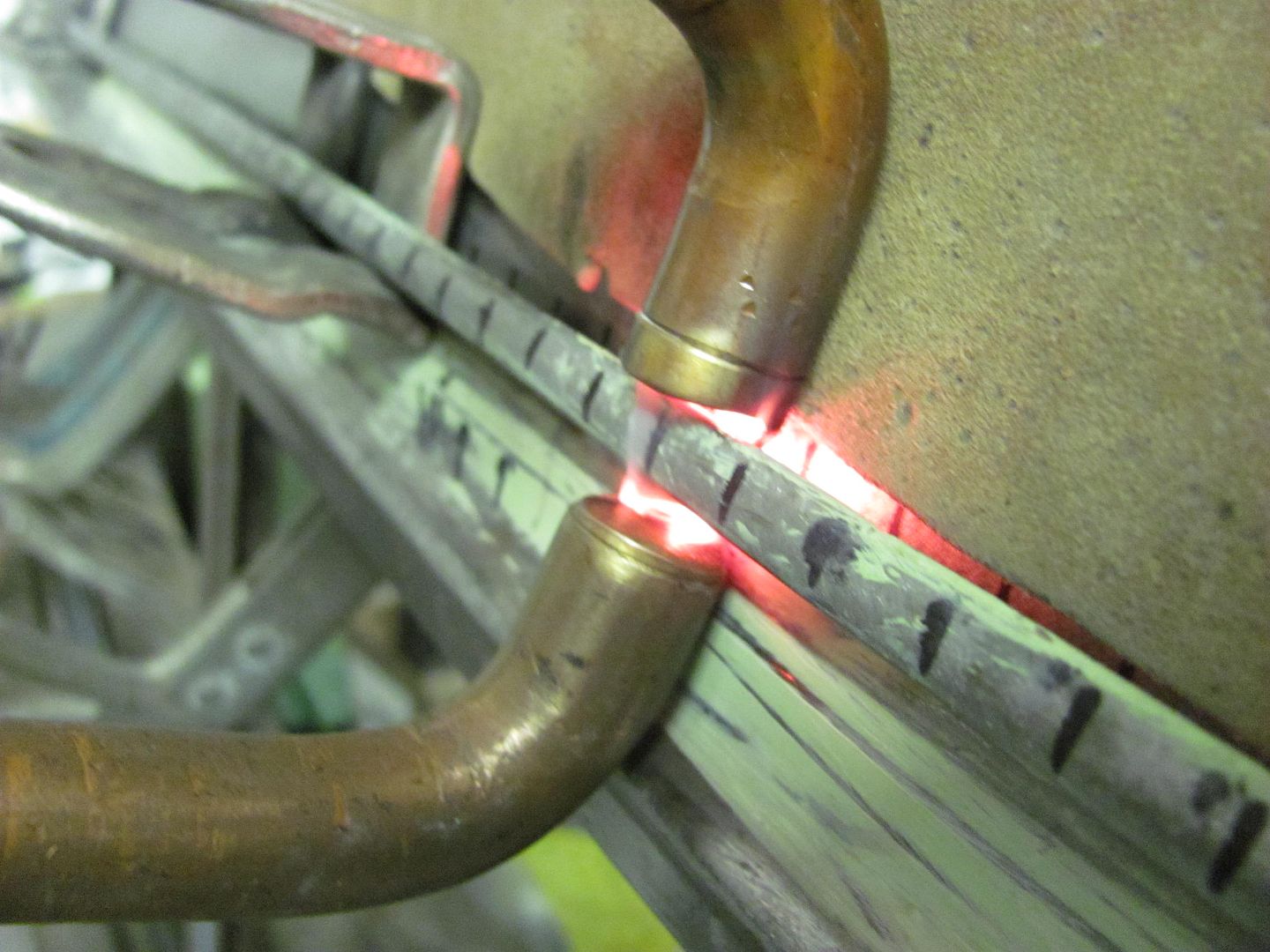
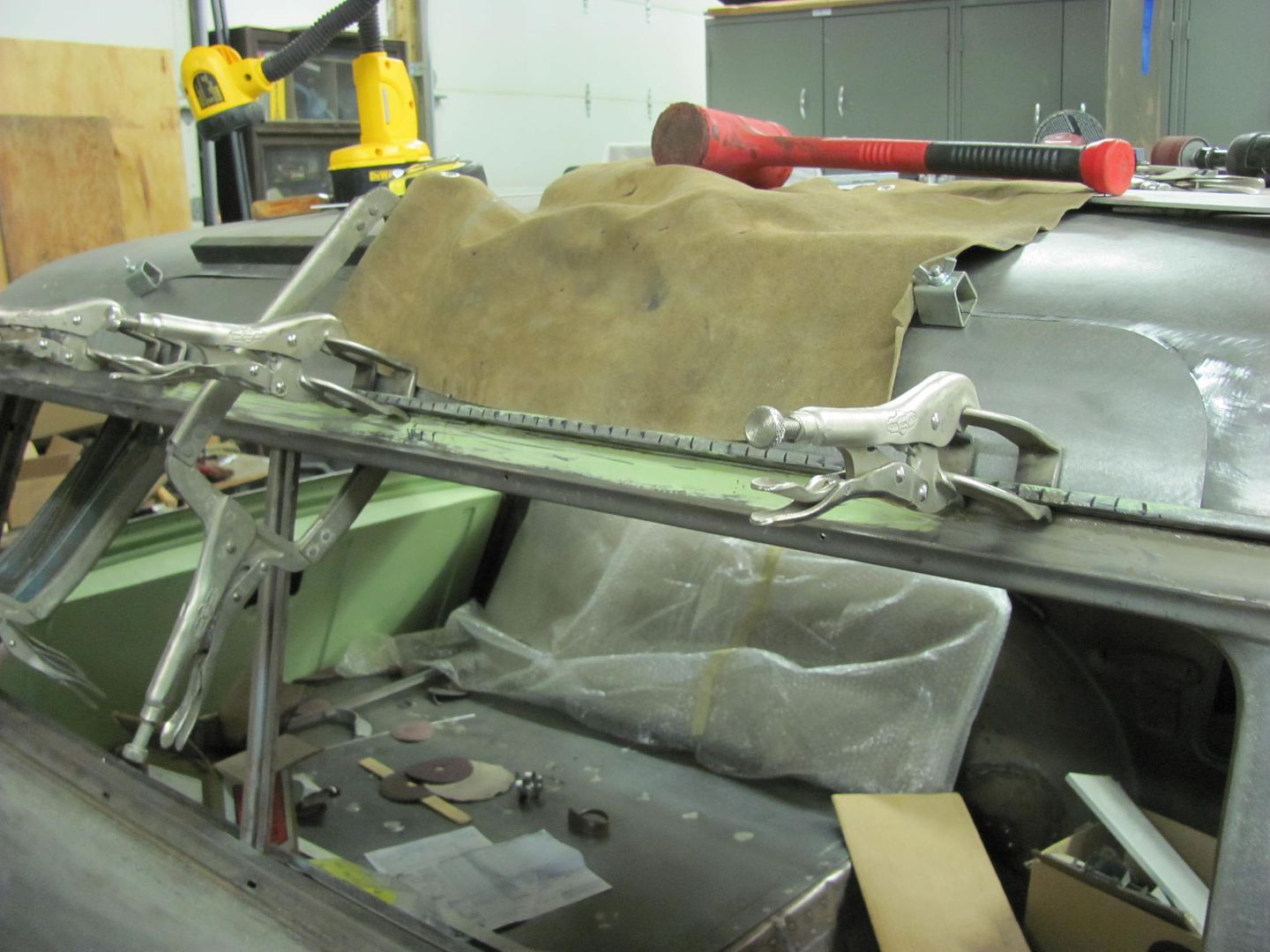
The special made tongs had returned from Houston, so we did the spot welds first to insure the panel was pulled down into the drip rail tightly..


Picture622.jpg


Picture619.jpg


Picture621.jpg


Picture623.jpg


Picture625.jpg


Picture626.jpg


Then the panels were aligned and tacked, starting at the rear and working toward the front...


Picture627.jpg


Picture628.jpg


Picture629.jpg


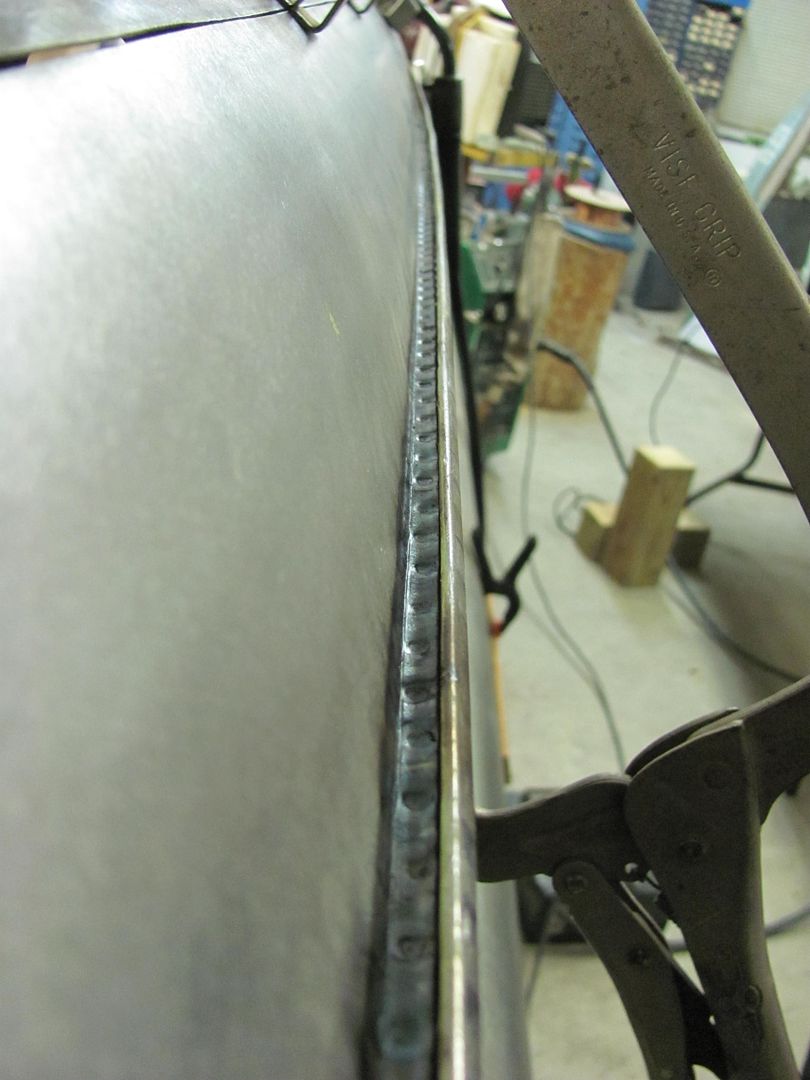
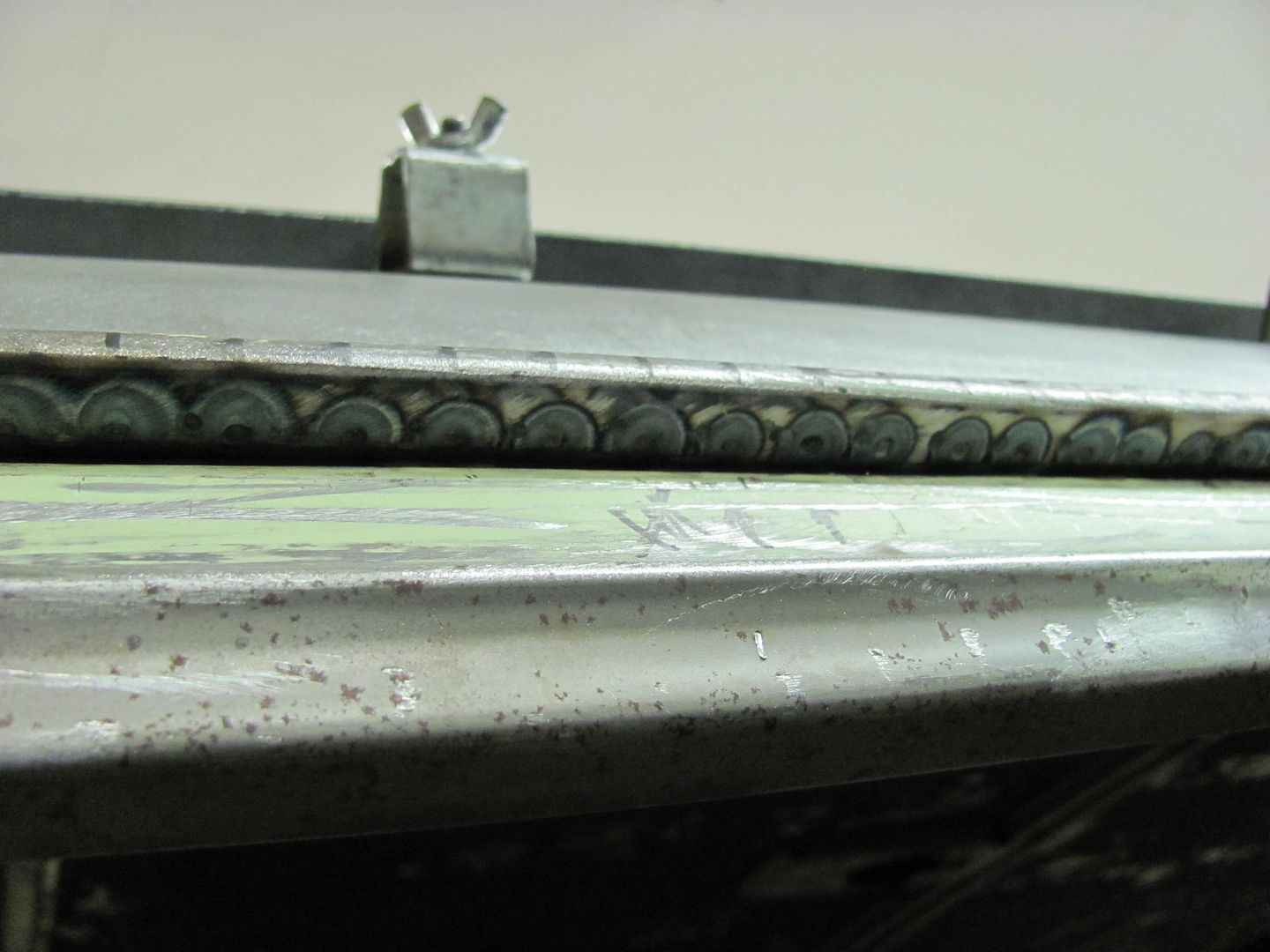
Full penetration welds....


Picture630.jpg


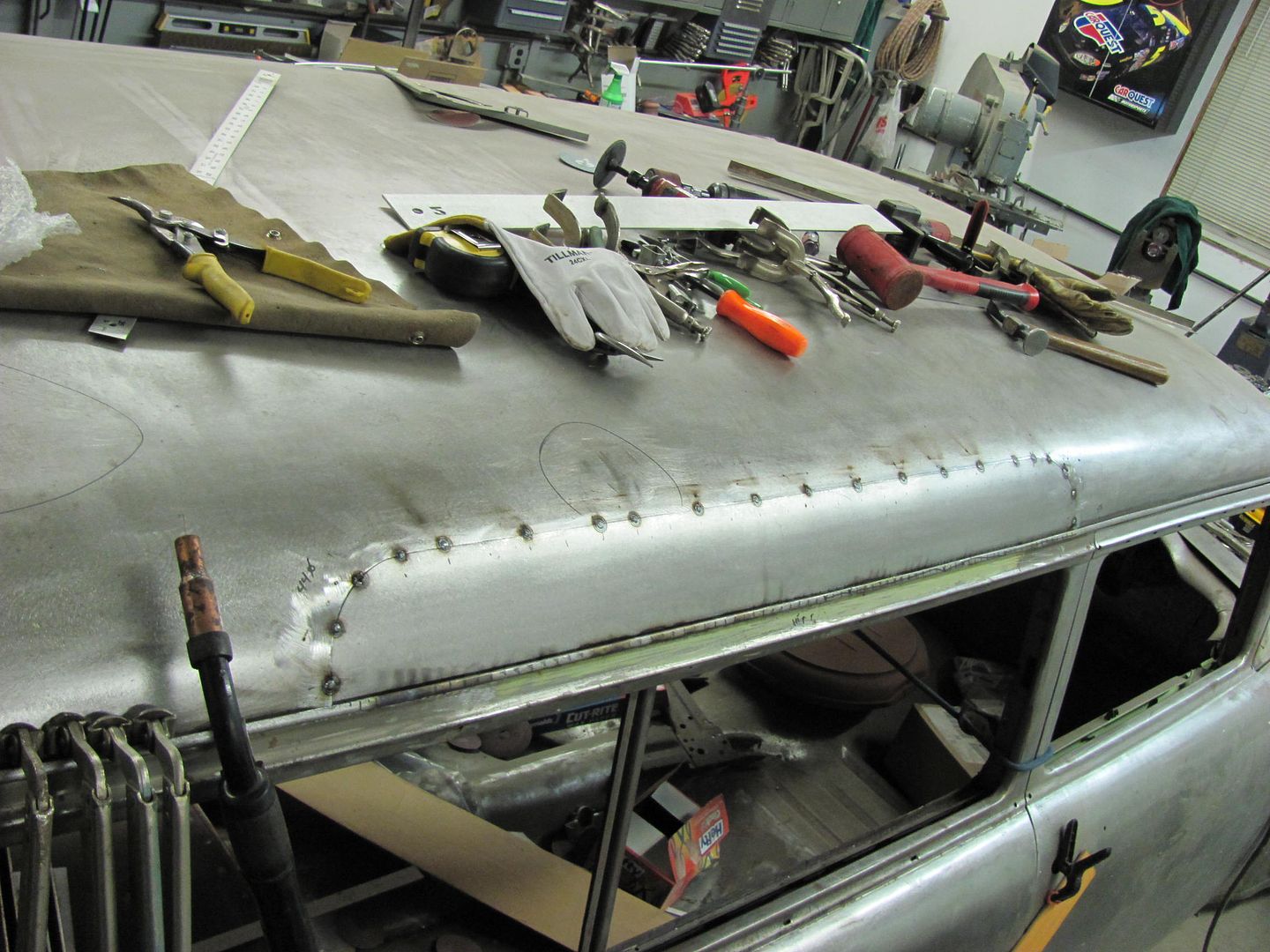
The patch should be well high enough for planishing this time...


Picture631.jpg


Here's where we left off.....


Picture632.jpg


Picture633.jpg
 
Last edited:

PeteMoore

Well-known member
Joined
Jan 25, 2011
Messages
453
Location
N.Ireland
Robert

Thank you for the explanation. Panel fitup isn't an issue being that my background is airframe engineering in the Royal Air Force, but the advice on planishing is priceless.

Thank you once again.

Pete
 

NASTYZEN

Well-known member
Joined
Jun 11, 2010
Messages
2,823
Location
St-Colomban,Que. Canada
That's looking good Robert. Better than the first.:)
But seriously, you make a daunting task look easy. Big surfaces like that can be tricky as hell.
I like your spot welder, I have a scar from one of those... Don't touch the tongs with inside of your wrists.
I was once spot welding under a prototype stretched GM van when one of the clowns in the shop sneaked over to the van with a sledge hammer and scared the **** out of me. He hit it so hard that I dropped the spot welder onto my wrist, burning the **** out of it! I was so angry that I threw a hammer at him full force. I lost it, but not completely, instead of nailing him in the forehead I managed to throw it on the floor just ahead of his feet and it went clean between his legs.:lol_hitti
No one messed with me again in that shop.
 

8man

Well-known member
Joined
Oct 16, 2013
Messages
630
Location
Bryan, Texas
Started reading this and couldn't stop. You have been complimented ad nauseum, and for good reason. You have done a great job of teaching! I have enjoyed all of your insights.

As someone who has not done any metal fab, ever, I started the re-build of a 79 Jeep Cherokee and have been learning and loving it. I did floor pans first and learned clean metal will weld with a MIG, otherwise if splatters all over you and doesn't' fuse the panels together. I learned to do short bursts with the MIG for "dot" welding to keep down heat, but had NO idea about planishing the weld until now.

I just wish I had found your site earlier. Thank you for doing such a great job of sharing your knowledge. I am waiting for the welding video.
 

e-tek

Well-known member
Joined
Dec 19, 2007
Messages
10,690
Location
Saskatoon, SK
That's looking good Robert. Better than the first.:)
But seriously, you make a daunting task look easy. Big surfaces like that can be tricky as hell.
I like your spot welder, I have a scar from one of those... Don't touch the tongs with inside of your wrists.
I was once spot welding under a prototype stretched GM van when one of the clowns in the shop sneaked over to the van with a sledge hammer and scared the **** out of me. He hit it so hard that I dropped the spot welder onto my wrist, burning the **** out of it! I was so angry that I threw a hammer at him full force. I lost it, but not completely, instead of nailing him in the forehead I managed to throw it on the floor just ahead of his feet and it went clean between his legs.:lol_hitti
No one messed with me again in that shop.

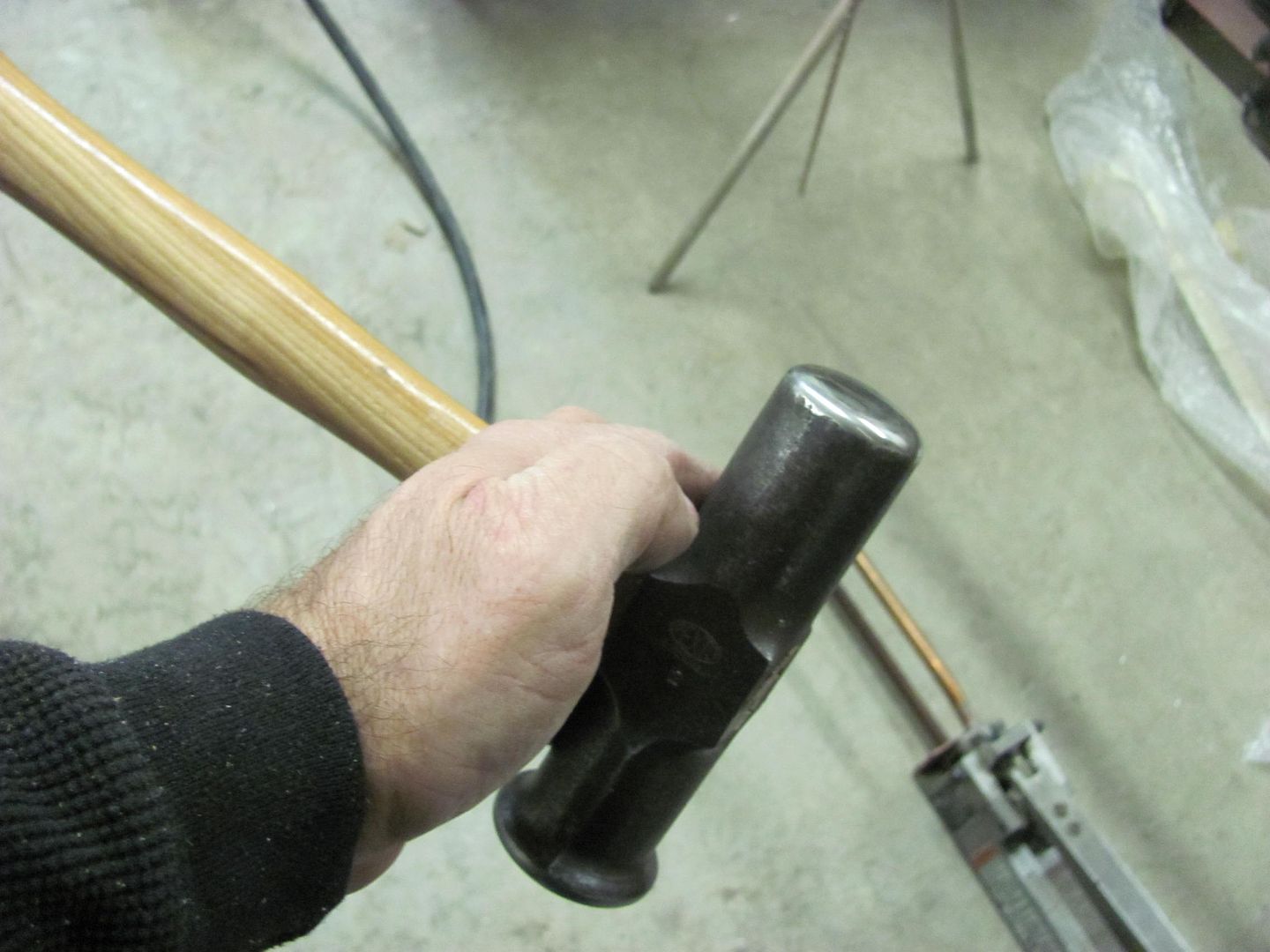
I know a guy who has been out of work for quite a while due to getting a ball peen hammer in the head in a shop and as I was reading your post I thought: "Really? Could it be?...." But then you said your hammer didn't end up connecting. Would have been one hell of a coincidence!

And Robert - the lady that owns the wagon called. She wants you to get it done, or she's going to have it towed to my place! I said she's better off keeping it with you - it may take longer, but it'll weigh less in the end!! :bounce: ;)
Keep up the great work....I mean teaching! :D
 
OP
M

MP&C

Well-known member
Joined
Oct 21, 2009
Messages
4,396
Location
Leonardtown, MD
And Robert - the lady that owns the wagon called. She wants you to get it done, or she's going to have it towed to my place! I said she's better off keeping it with you - it may take longer, but it'll weigh less in the end!! :bounce: ;)

I don't know, with your bondo cracking and falling out they may weigh about the same. :bounce: ;)
 
OP
M

MP&C

Well-known member
Joined
Oct 21, 2009
Messages
4,396
Location
Leonardtown, MD
Actually now that I've used the EZ grind, I prefer the -7. Both have nice flat welds, but the EZ tends to leave a patch of soot around the weld, and is more prone to splatter. I just think the -7 was cleaner. In planishing, comparing the roof repair to the earlier fender shaves using .035 -7 wire, to me the -7 appears to planish easier.. So if I had the choice, I would choose -7. If availability is an issue, either should be better than the harder welds of the -6 wire..
 
To avoid these ads, REGISTER NOW!
OP
M

MP&C

Well-known member
Joined
Oct 21, 2009
Messages
4,396
Location
Leonardtown, MD
Yes, ER70S-7... It has slightly higher manganese qty in the composition which gives it the better wetting quality or flowout into the parent metal.
 
OP
M

MP&C

Well-known member
Joined
Oct 21, 2009
Messages
4,396
Location
Leonardtown, MD
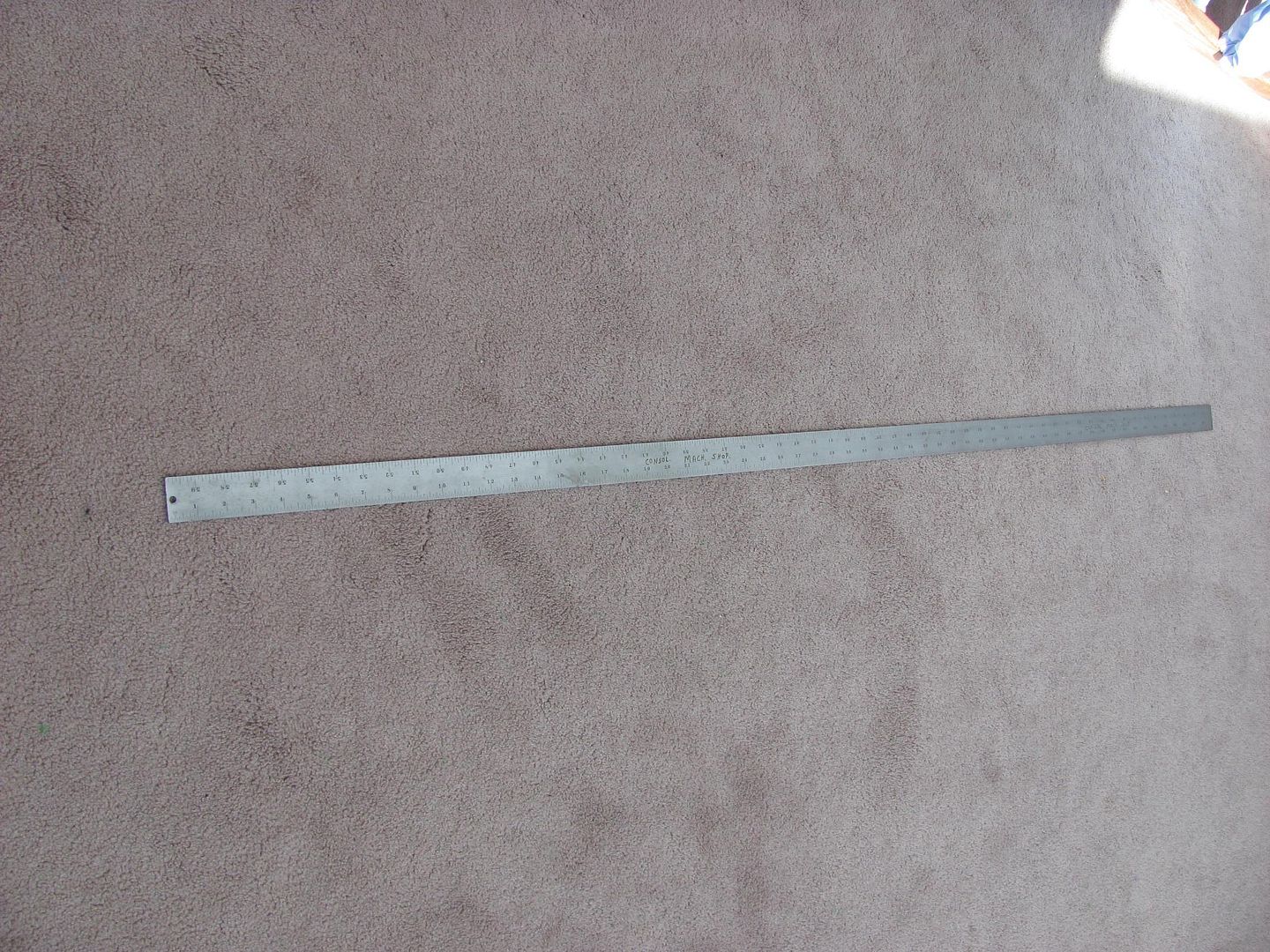
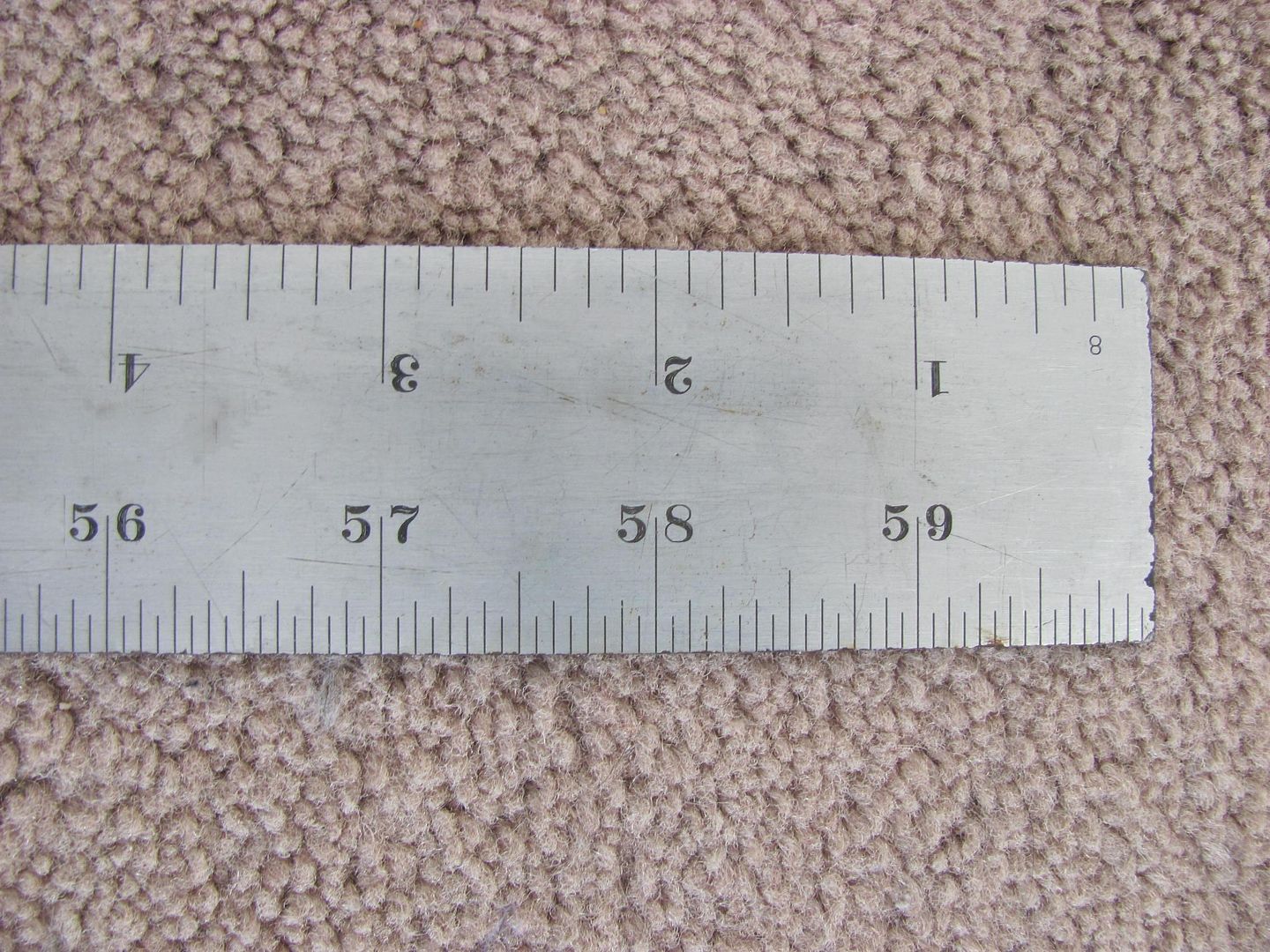
"New" Starrett rule for the shop came in. Bought from Finley31 here on the classifieds. Should come in handy in some metal layout...


Picture636.jpg


Picture637.jpg


Picture638.jpg
 
OP
M

MP&C

Well-known member
Joined
Oct 21, 2009
Messages
4,396
Location
Leonardtown, MD
Well after a week in FL, time to get back in the shop.. I wasn't totally pleased with the .023 EZ grind, but in all fairness I think some of the issue is my welder. It never has been too keen on .023 wire, so looks like my BIL is going to get a new roll of wire for his Hobart.

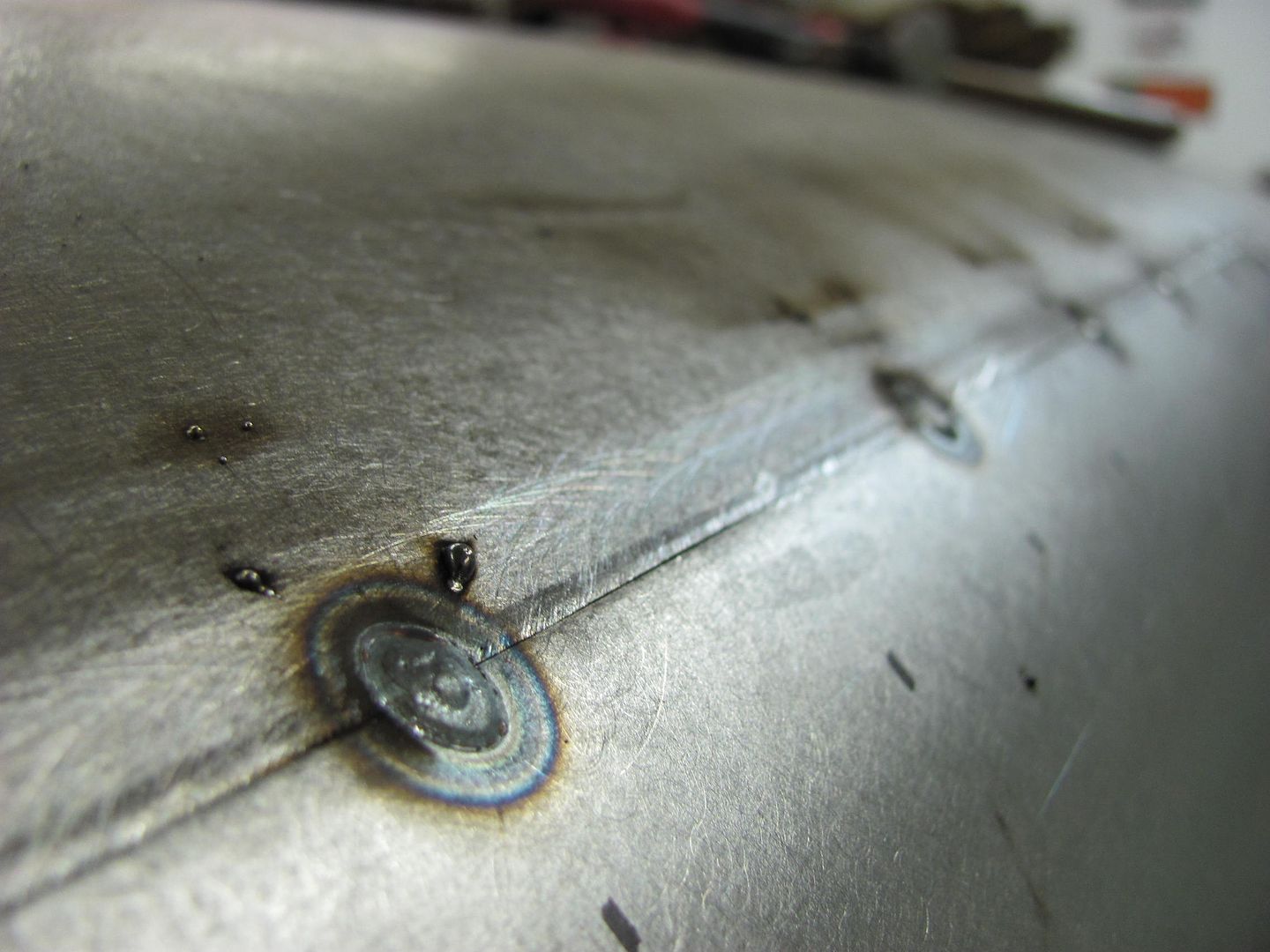
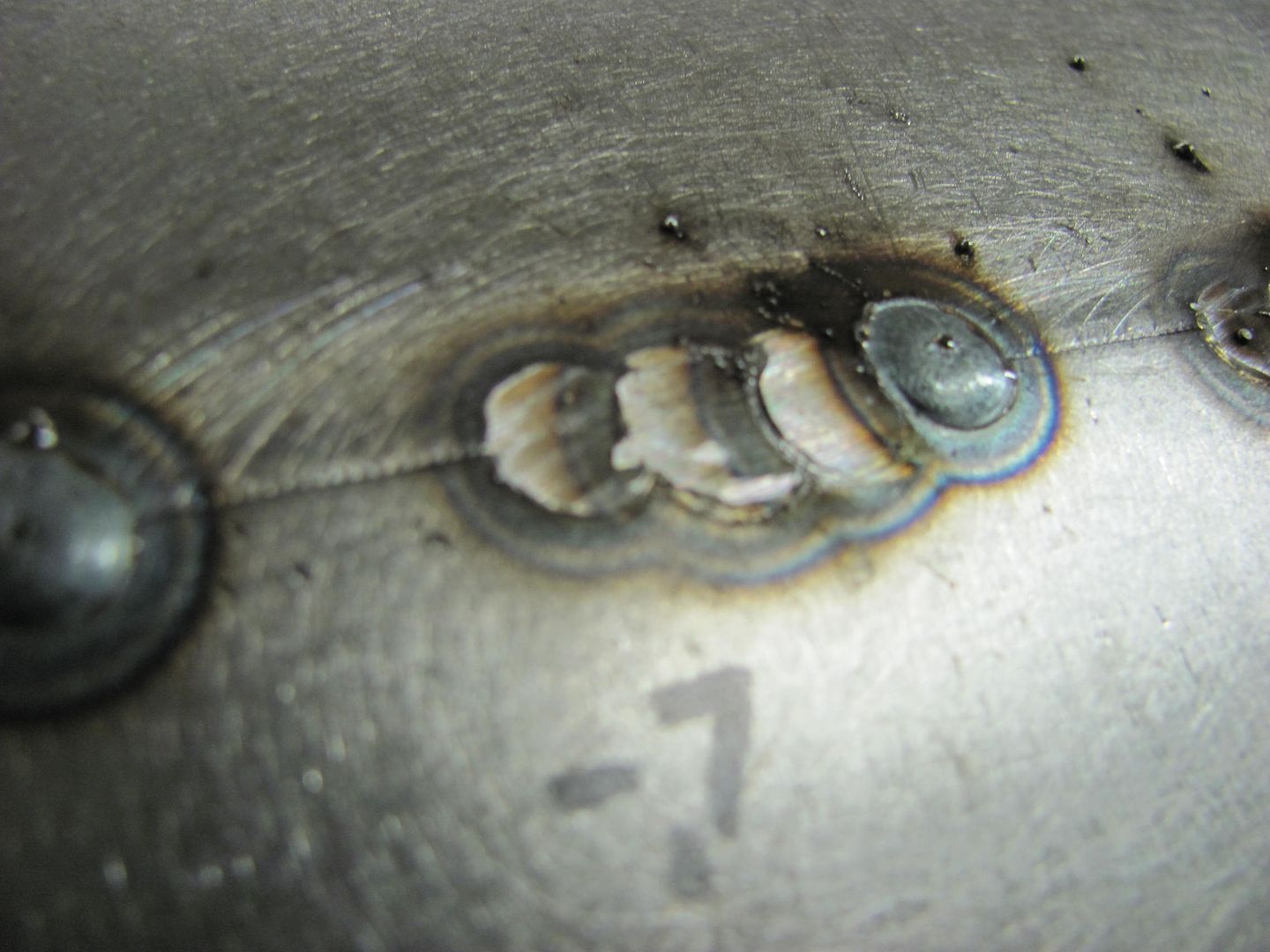
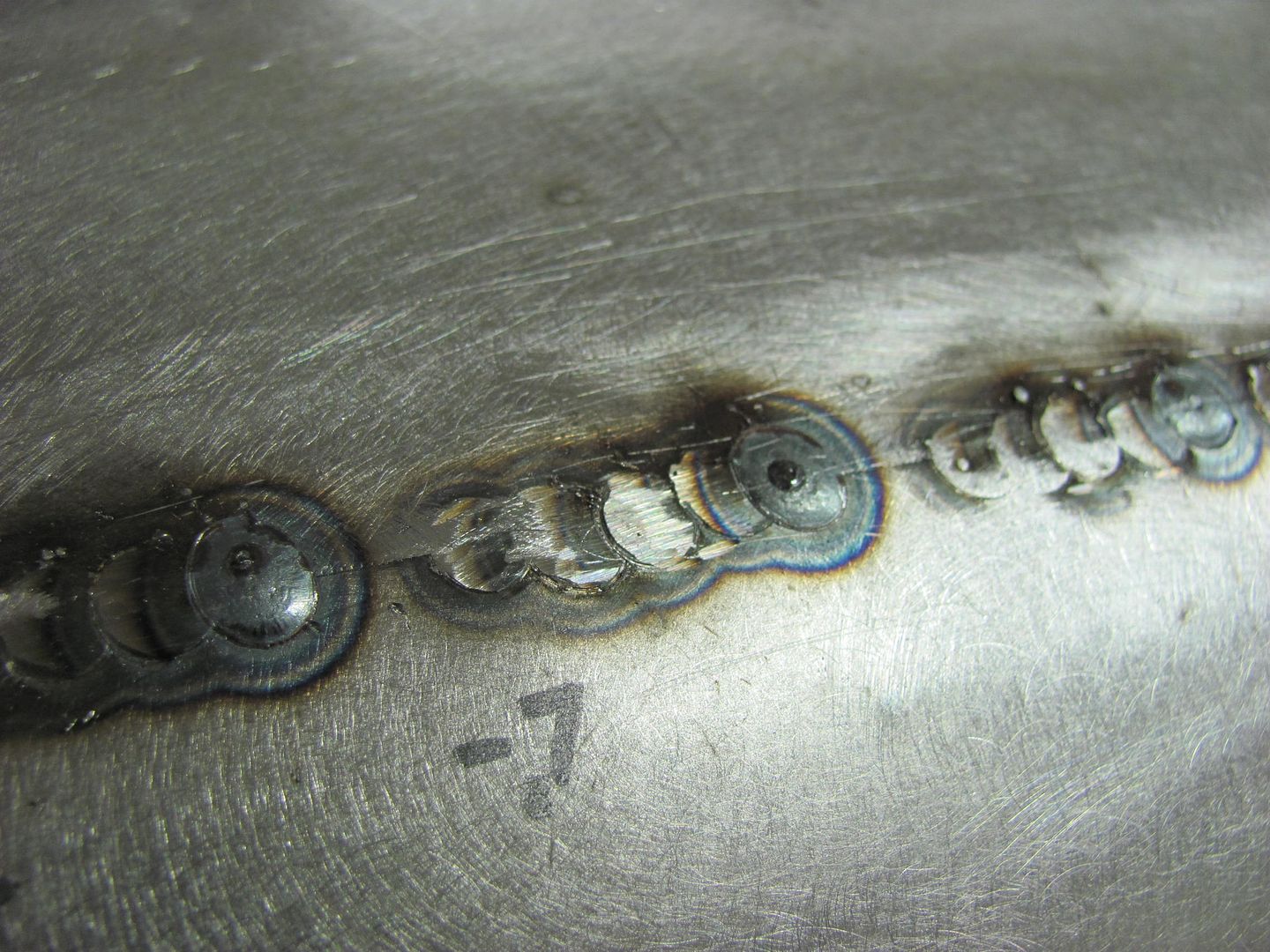
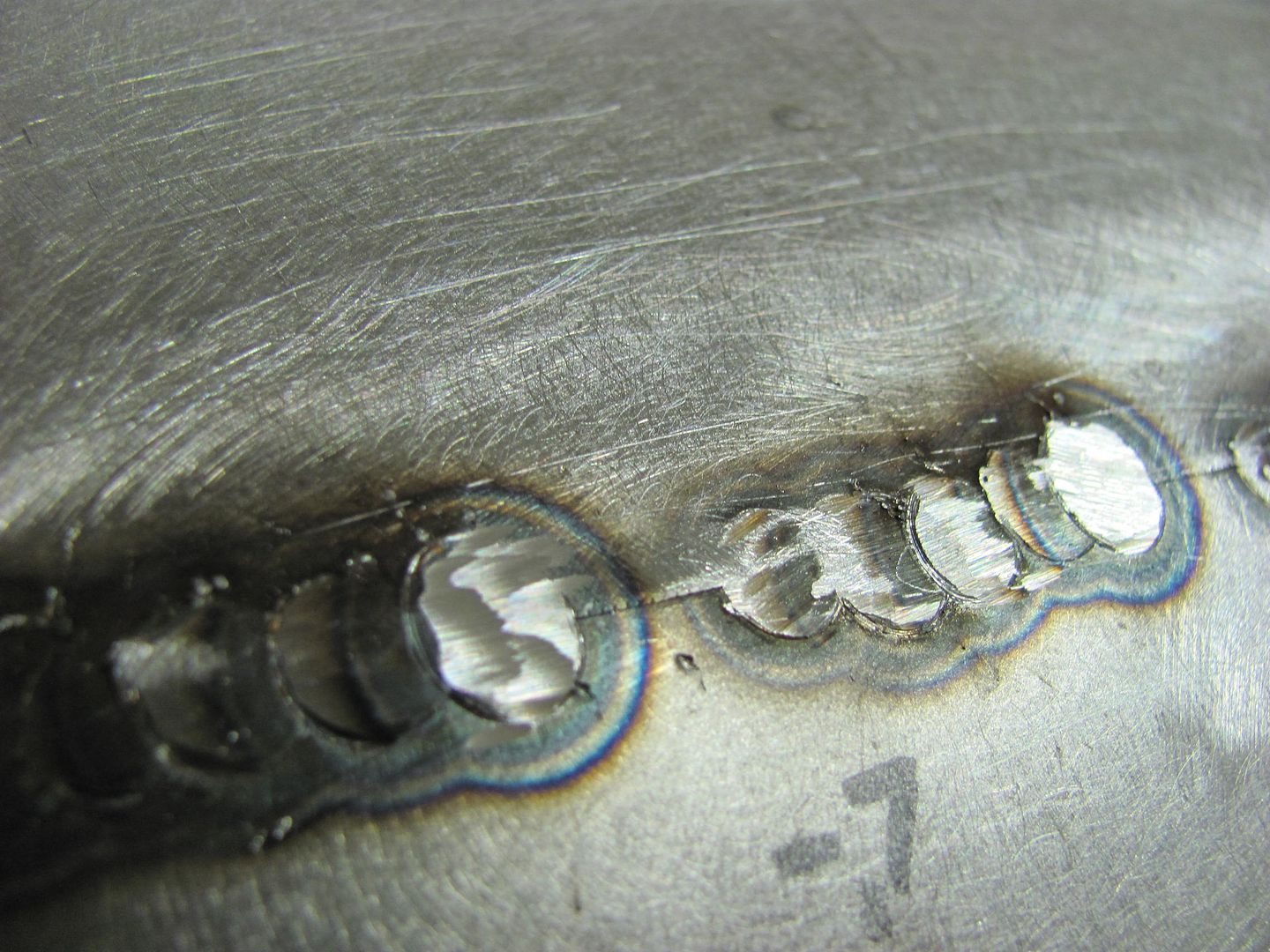
Put the .035 ER70S-7 back in, dialed in the settings for 3/16 thick steel, and ran some test welds...


Picture648.jpg


Front side....


Picture645.jpg


Picture646.jpg


Rear side....


Picture647.jpg


Comparing the EZ grind to the -7 shows less splatter...


Picture649.jpg


Picture650.jpg


The roof cross member made part of the weld seam inaccessible, so it was removed on one end for planishing access...


Picture652.jpg


Picture653.jpg


Picture655.jpg


Welds ground down to just above panel surface...


Picture656.jpg


Our planishing implements this evening.... Low crown hammer and used the Pexto blocking hammer as a dolly...


Picture659.jpg


Picture660.jpg


Picture661.jpg


This shows the weld dots planished....


Picture657.jpg


Picture658.jpg


Full penetration welds.....


Picture662.jpg


Weld, planish, grind, repeat.


Picture668.jpg


We're about halfway done, hope to finish it up tomorrow...


Picture669.jpg
 

yaidunno

Well-known member
Joined
Feb 10, 2011
Messages
1,336
Location
WI
Great looking welds Robert, looks like im going to have to pick up a spool of -7 before i try and tackle any sheet metal projects. I see the Starrett rule is already being put to use!
 

mechan

Well-known member
Joined
Apr 16, 2009
Messages
401
Great looking welds Robert, looks like im going to have to pick up a spool of -7 before i try and tackle any sheet metal projects. I see the Starrett rule is already being put to use!

That -7 looks nice!
 
OP
M

MP&C

Well-known member
Joined
Oct 21, 2009
Messages
4,396
Location
Leonardtown, MD
It definitely welds flatter. The only thing I'd suggest is to not be afraid of a little heat. You see so many guys mud daubing with the bead sitting up on top of the panel, no weld penetration at all. This means a cold joint that is subject to failure from vibration and normal road conditions. This only comes back to bite you after all the paintwork is done and the panel is coming apart a year or two later.

I had my machine set up for 3/16 steel on both those wires, try some scrap samples and focus primarily on full weld penetration and secondary on adjusting the heat up/down to flatten out the weld to give less need for cleanup...
 

sz0k30

Well-known member
Joined
Feb 12, 2014
Messages
881
Location
SE Michigan
Robert,

Amazing! Spent a few hours going thru this thread. Some of the funnest time I've had in a long time.

Thanks.
 
OP
M

MP&C

Well-known member
Joined
Oct 21, 2009
Messages
4,396
Location
Leonardtown, MD
Big Mike, glad I could help! :D

Roman, Have you posted any pics of your barn full of cars?


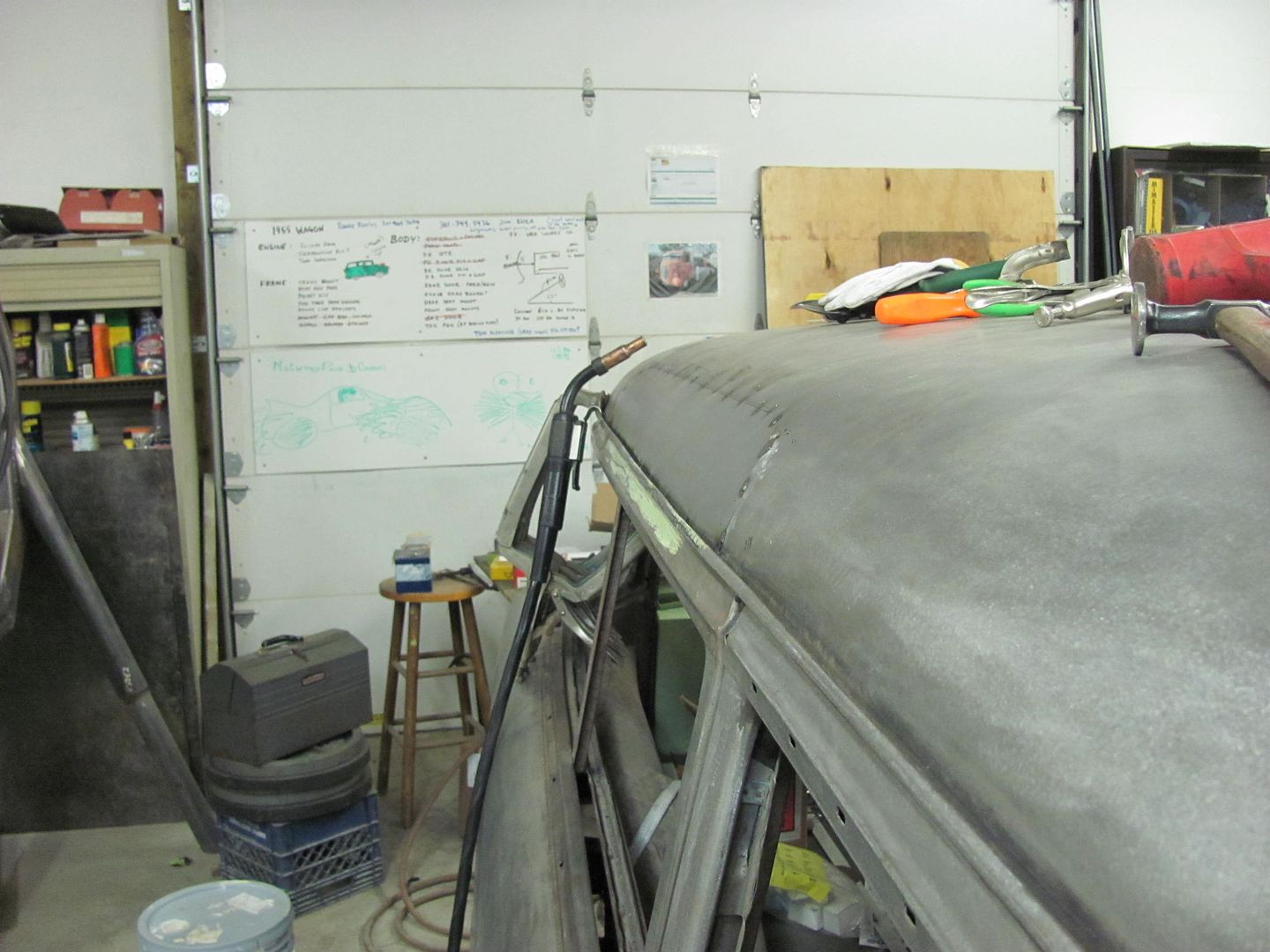
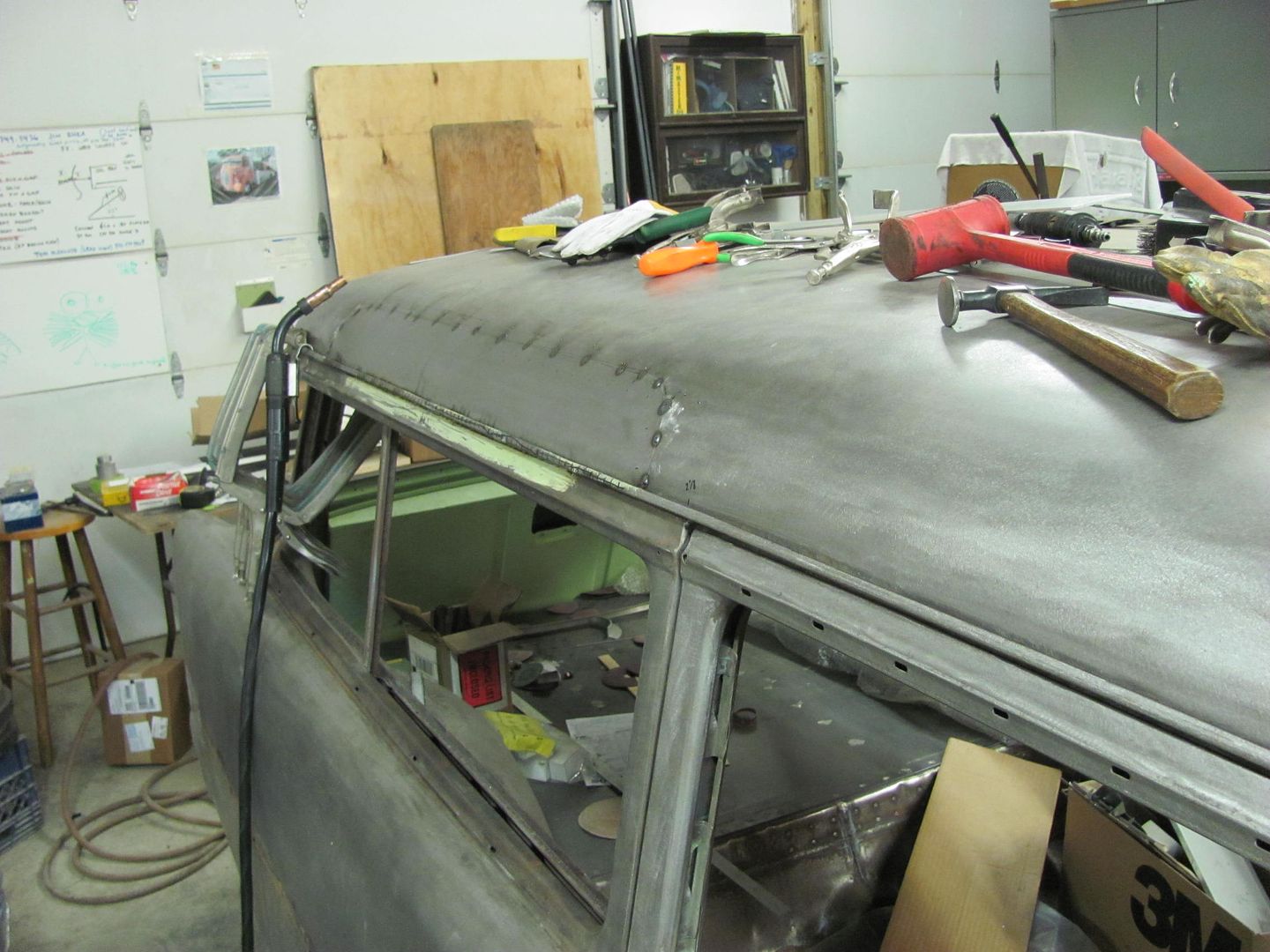
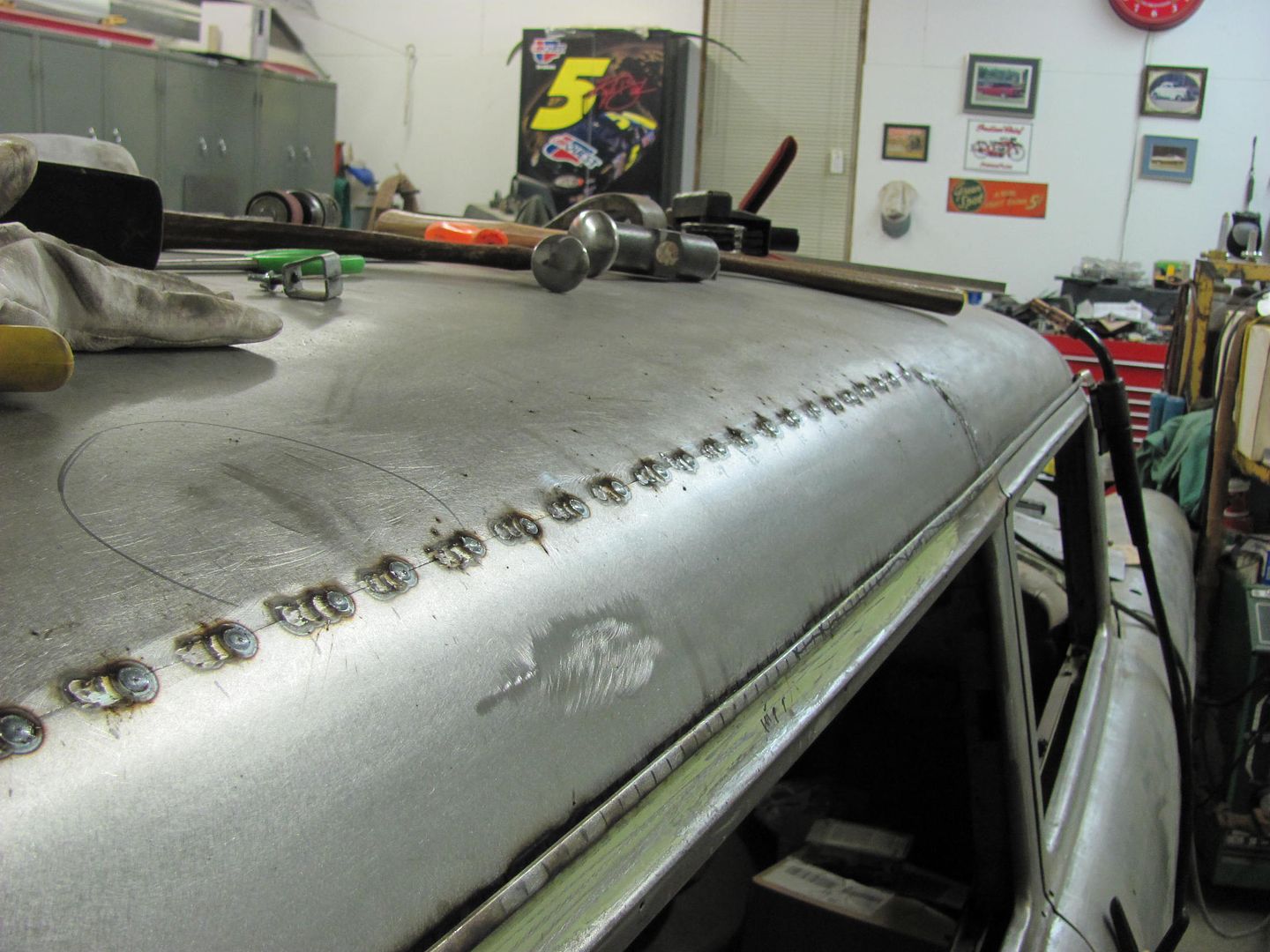
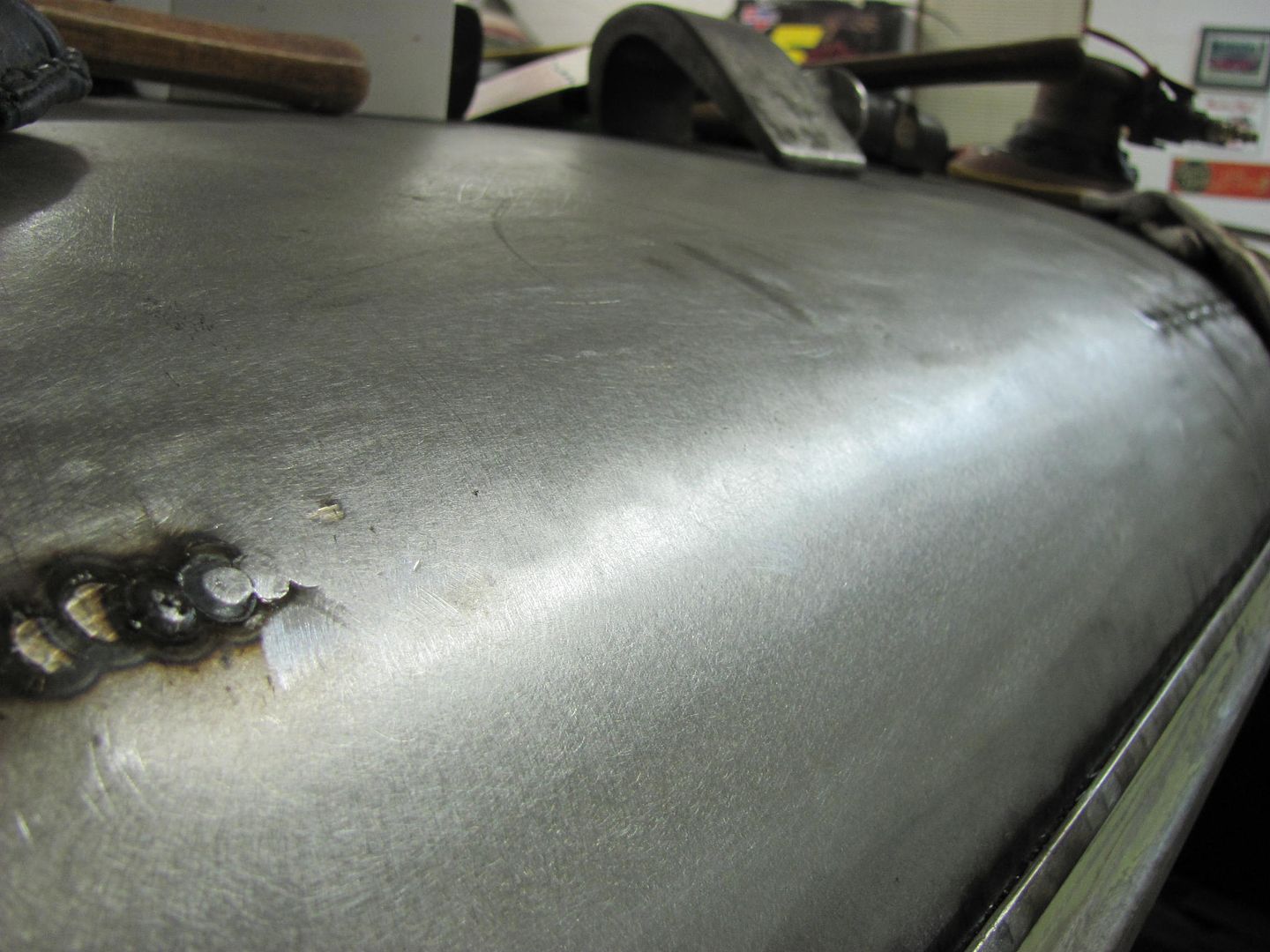
Well this evening was a short night, back to the day job tomorrow, so we'll have to call it early. Did get the bulk of the welding done. planished, and started to dress the welds. This will still need some final metal bumping, but I like this much better already!


Picture671.jpg


Picture672.jpg


Picture673.jpg


Picture674.jpg


Sorry I didn't have as many in-process pictures, got in a rush this evening....until next time..
 

stinkity stoink

Well-known member
Joined
Apr 8, 2007
Messages
729
Location
New Jersey
Robert . I see you have the little hand held beater bag. I was wondering do you use that in you're planishing procedure sometimes? I ask because I have a spot that is low on my 1/4 that I welded in and can't seem to raise it. I was thinking of holding the beater bag on the outside of the panel and giving a few bumps inside to try and raise it.
I am not sure if this is a good idea and don't want to get my self in trouble.
thanks
Dave
P.S
as usual great work. Thanks for posting
 
OP
M

MP&C

Well-known member
Joined
Oct 21, 2009
Messages
4,396
Location
Leonardtown, MD
Dave, is the low spot adjacent to the weld? If so, the likely culprit is the weld and HAZ has shrunk, and you will get a ripple effect just outside of that in between the "shrinking area" and "unaffected area" as the differing forces try to manipulate the panel. It may need some planishing/stretching of the weld and HAZ right there next to the low area, and you may find it will disappear. But to answer your question, I don't use it in for planishing, but do use it as a "low impact" dolly, such as door skins or just panel bumping where you want to limit any amount of stretch. Having said that, stretching alone does not always immediately fix issues like you have there, and some bumping may also be needed, so in that case the small shot bag does come in handy..

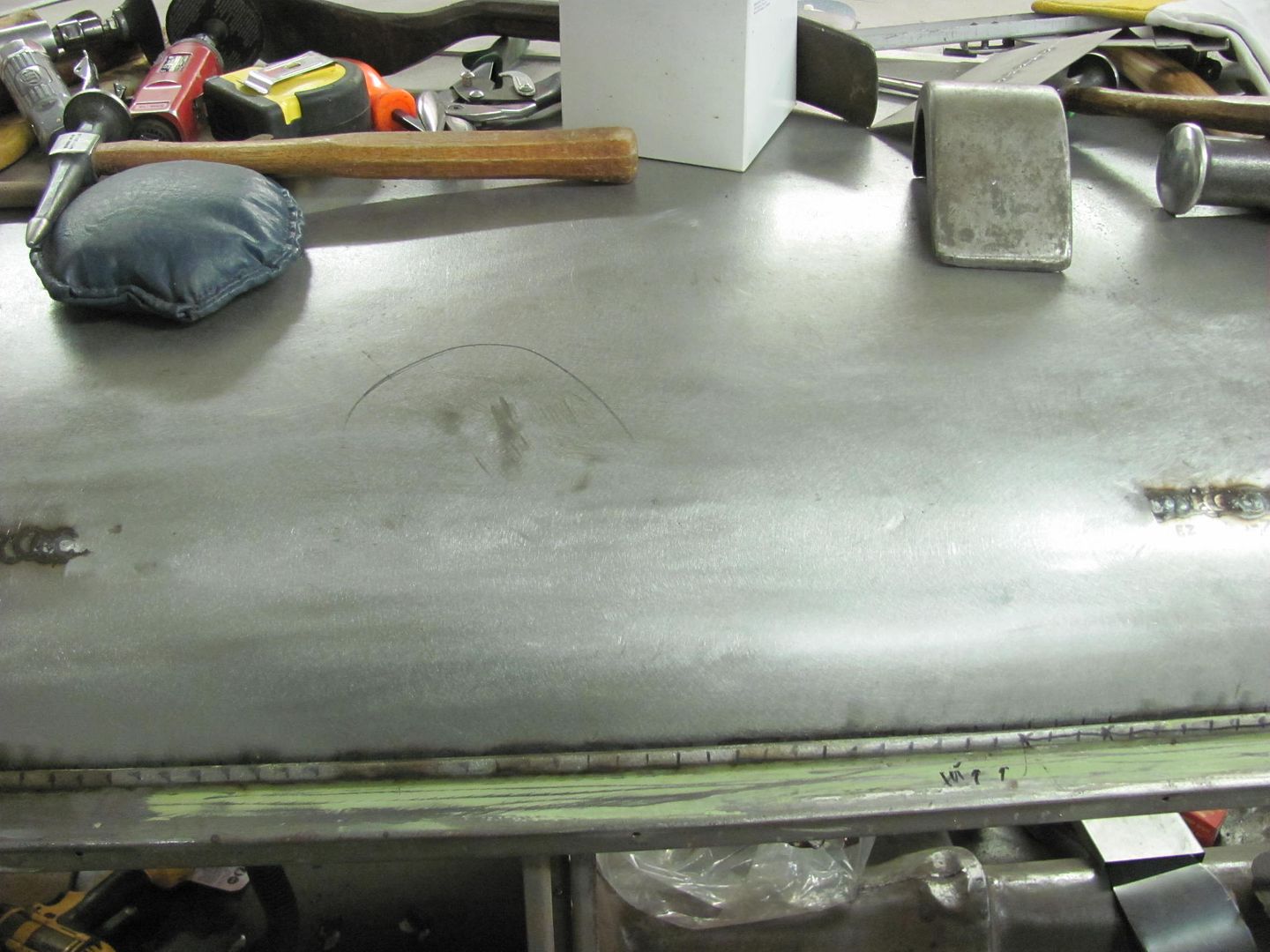
Looking back at the picture above, there was a low spot in the roof skin circled in pencil that I used the shot bag to address. For the minimal amount of time needed to correct small defects like those, in many cases it actually takes longer to apply and smooth filler.
 
Last edited:

hemiyota

New member
Joined
Feb 5, 2014
Messages
2
I read, a while back, that you traveled the DE to pick up your 19 ga steel. Where do you get it from? I'm right near the De line, on the Eastern Shore.....
 
OP
M

MP&C

Well-known member
Joined
Oct 21, 2009
Messages
4,396
Location
Leonardtown, MD
Ryerson Steel. You do need a business account to buy from them. If you don't need full sheet size, I do have mine sheared in 24" x 48" that with some slight trimming will fit into a USPS flat rate game board box....
 
OP
M

MP&C

Well-known member
Joined
Oct 21, 2009
Messages
4,396
Location
Leonardtown, MD
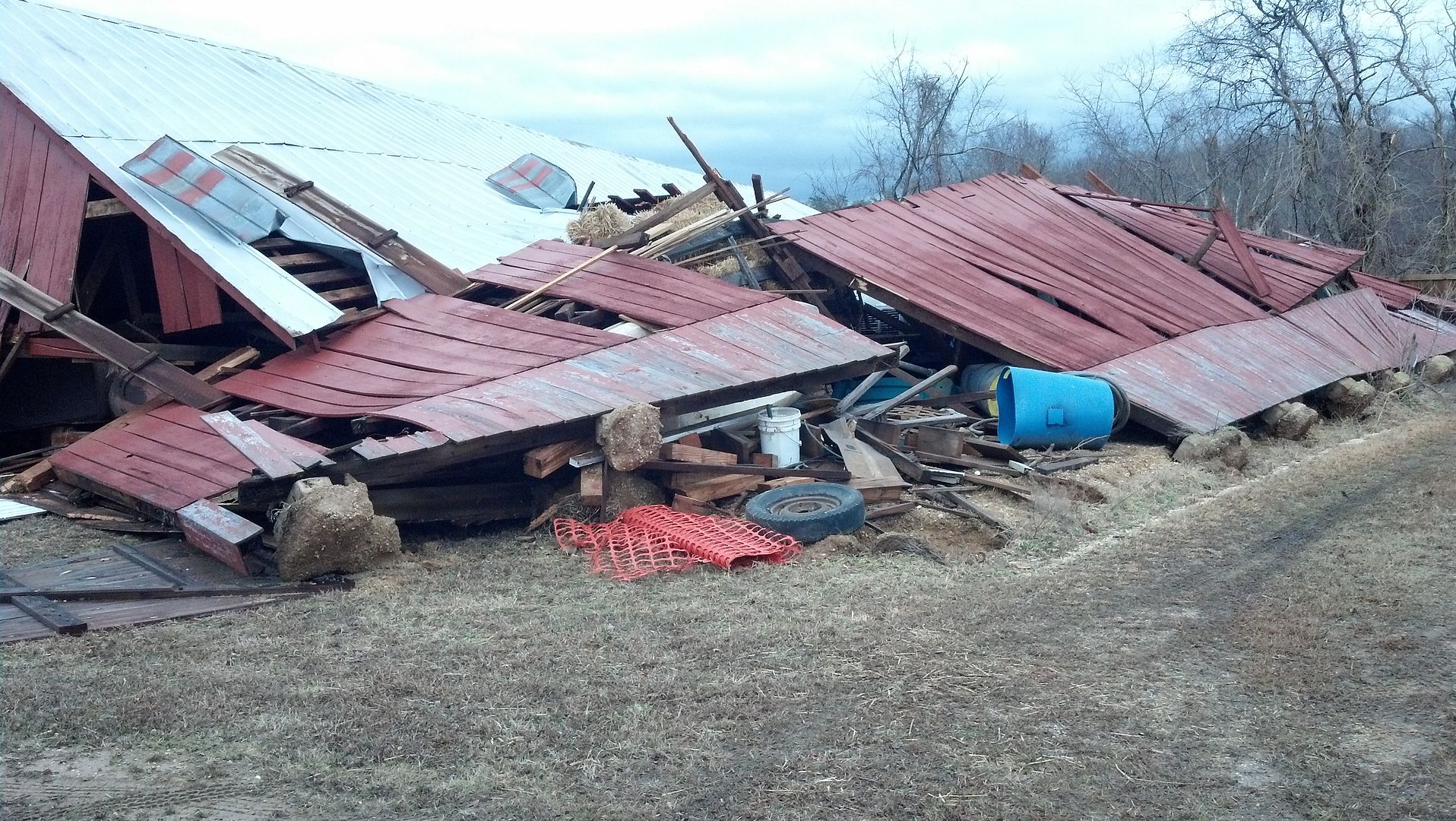
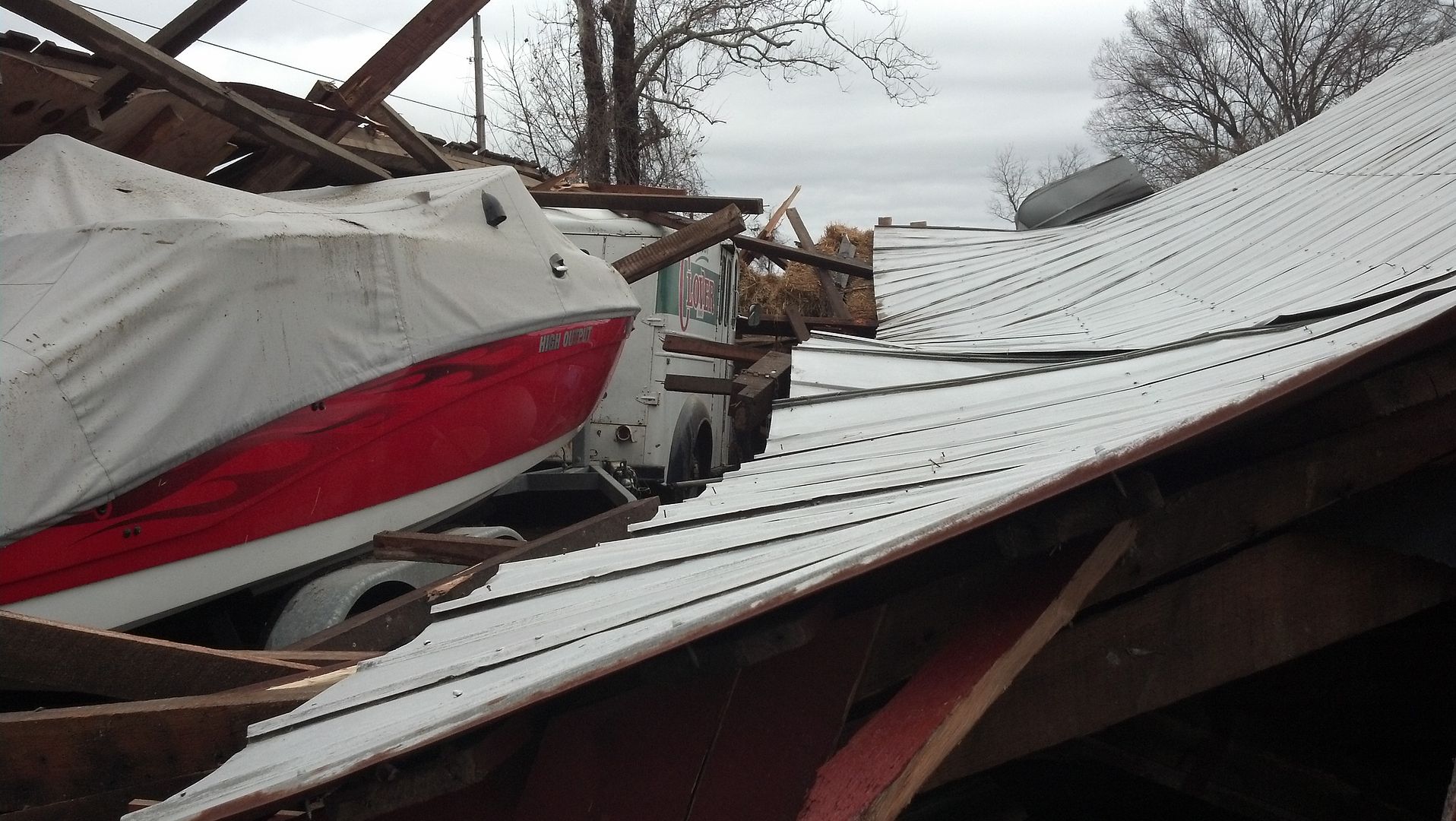
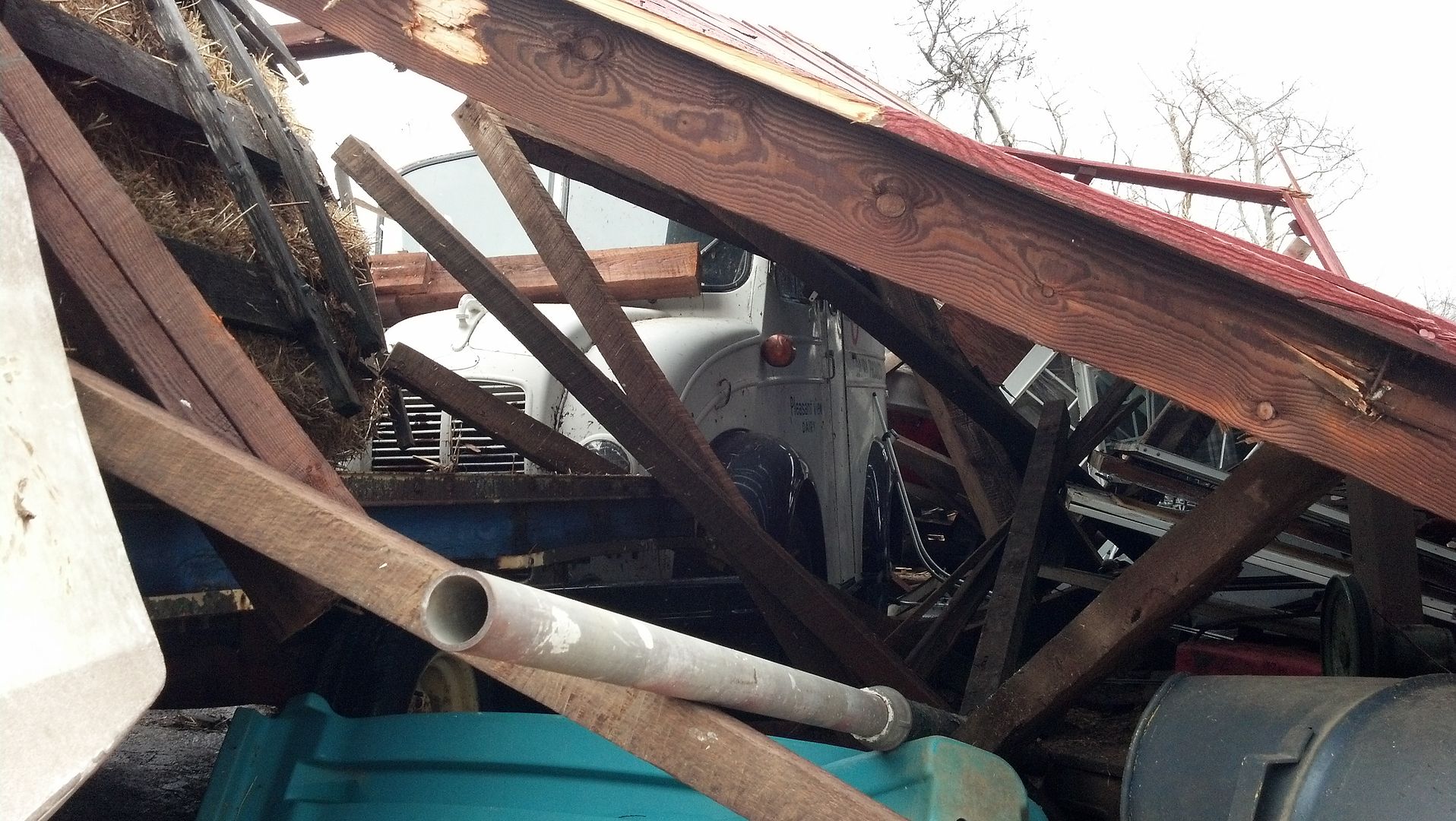
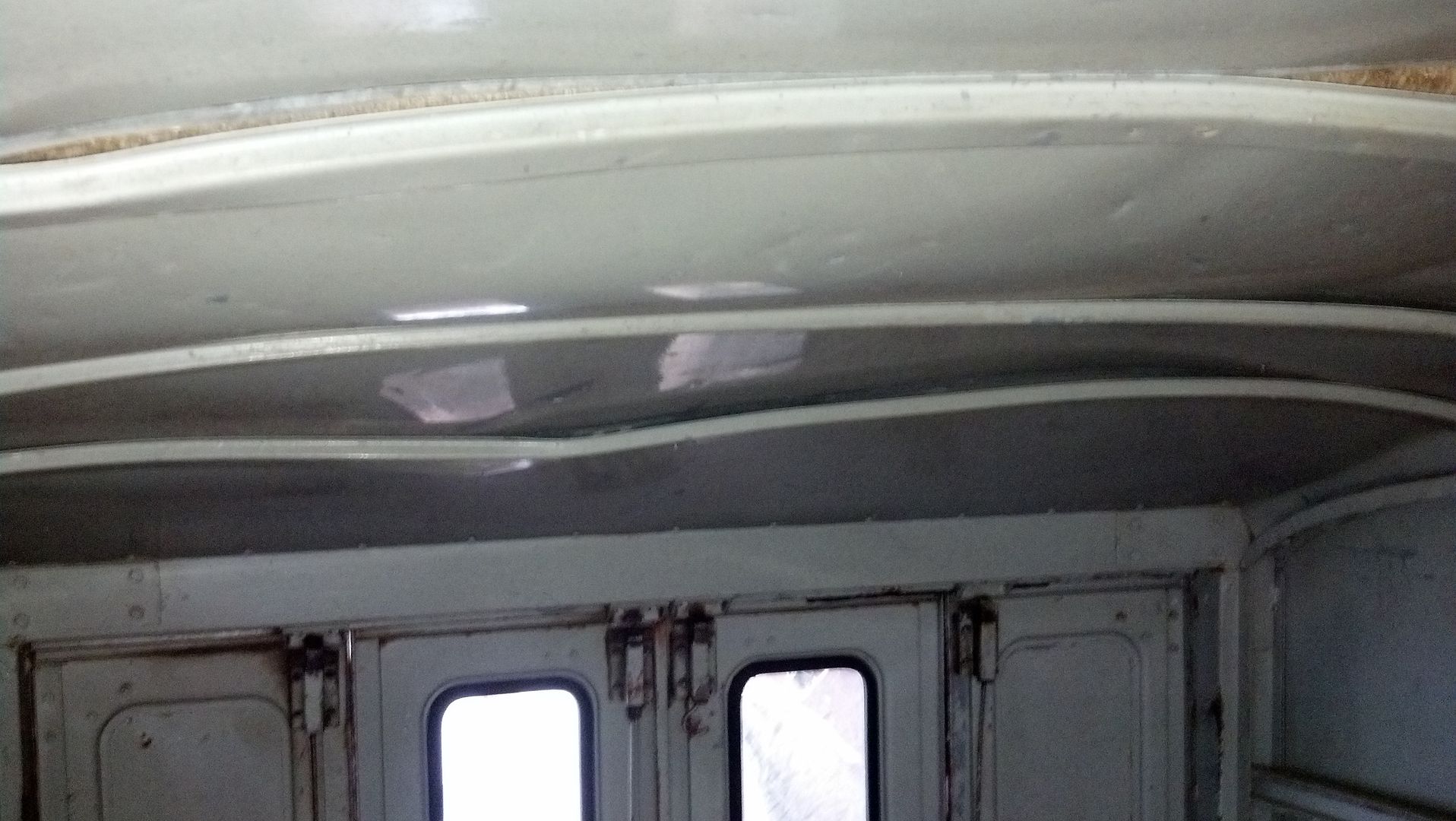
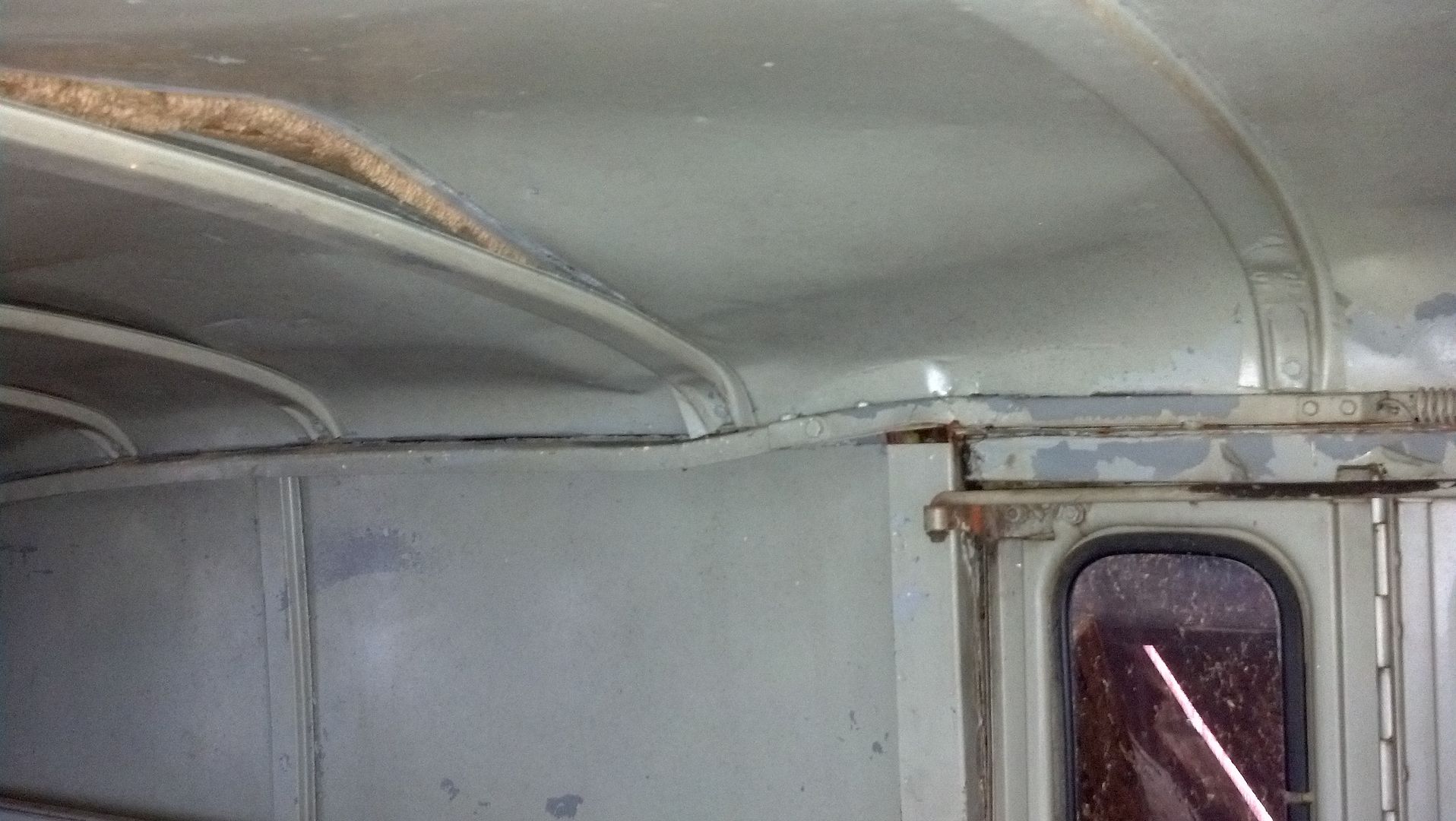
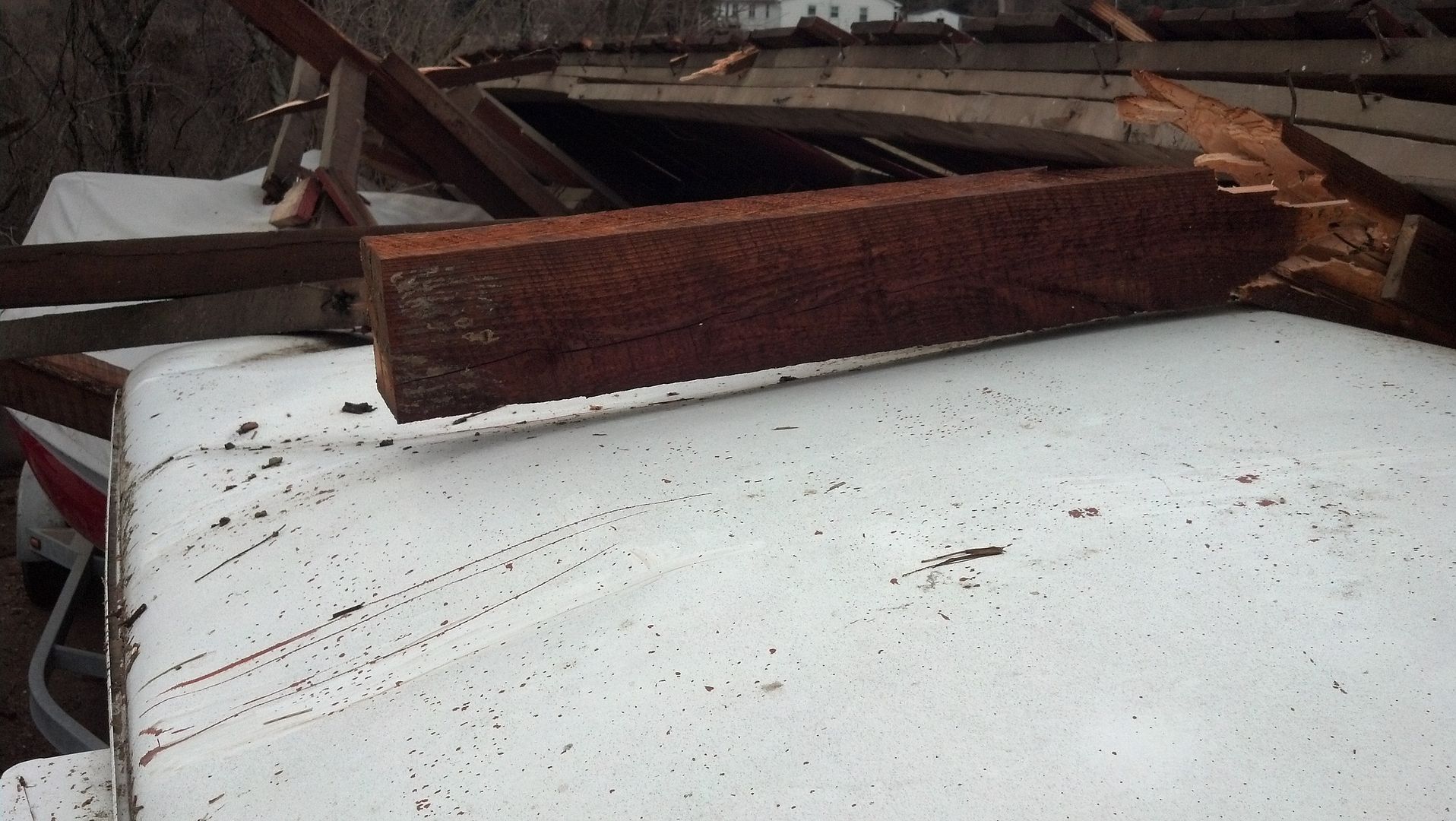
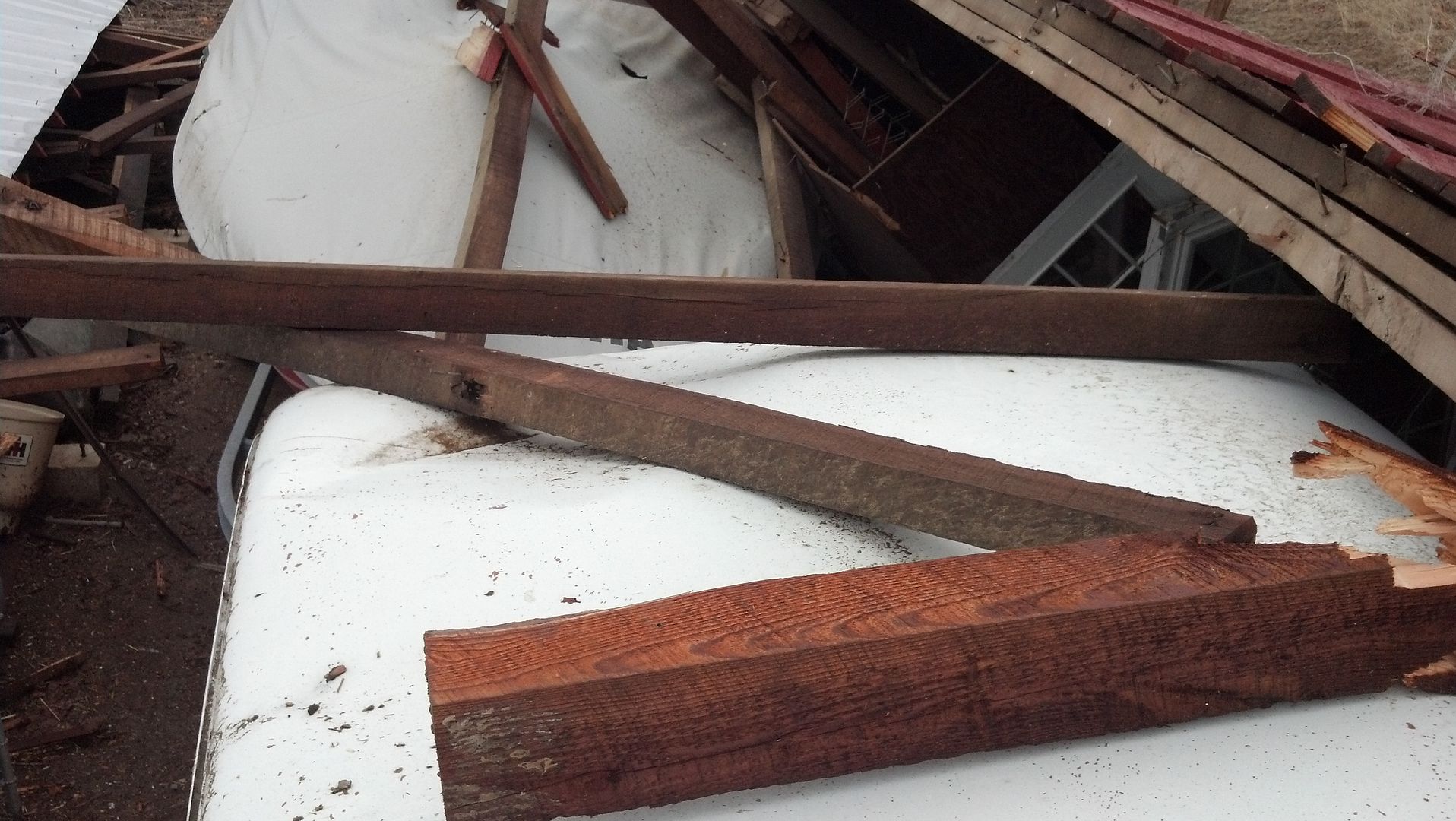
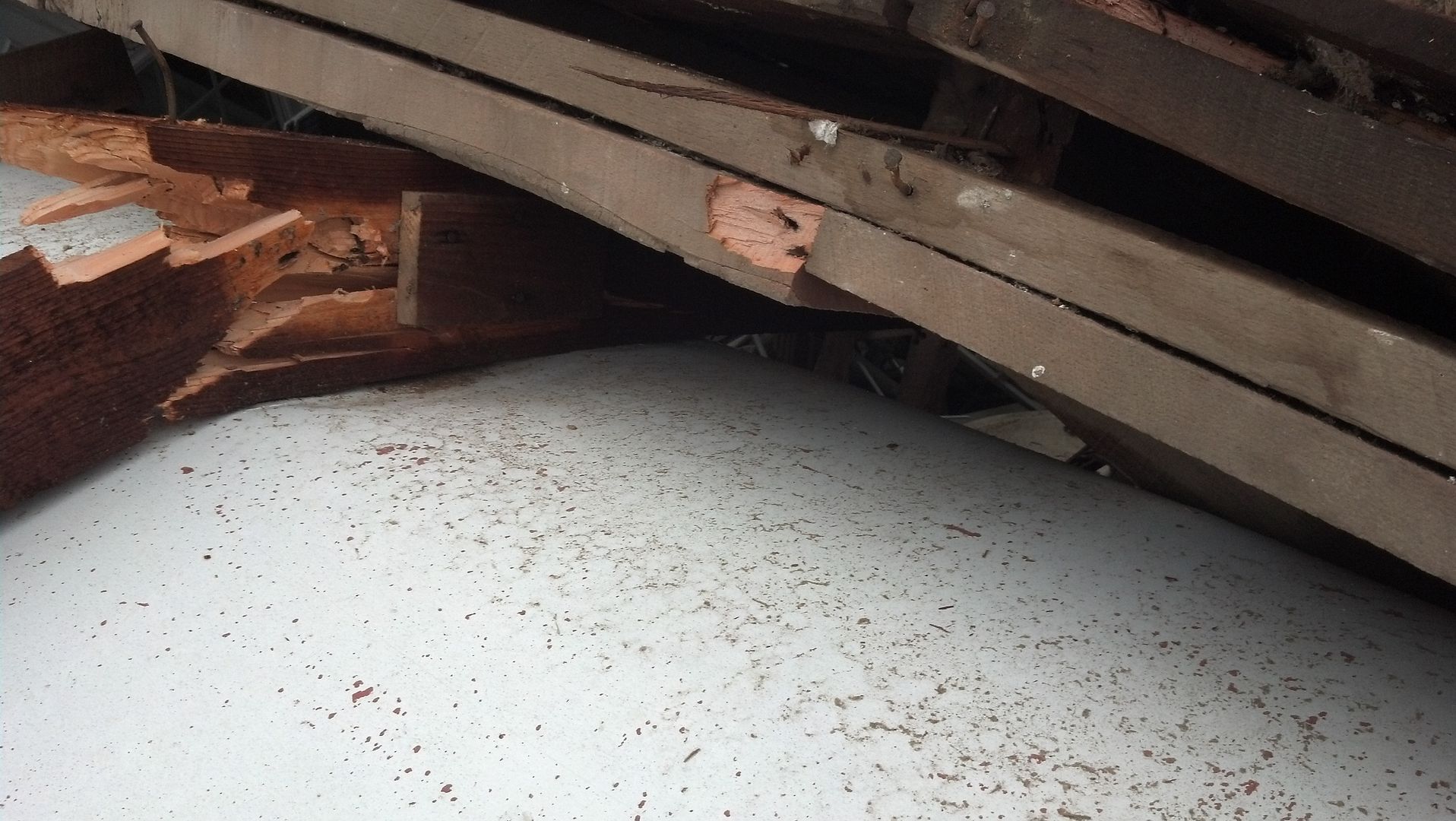
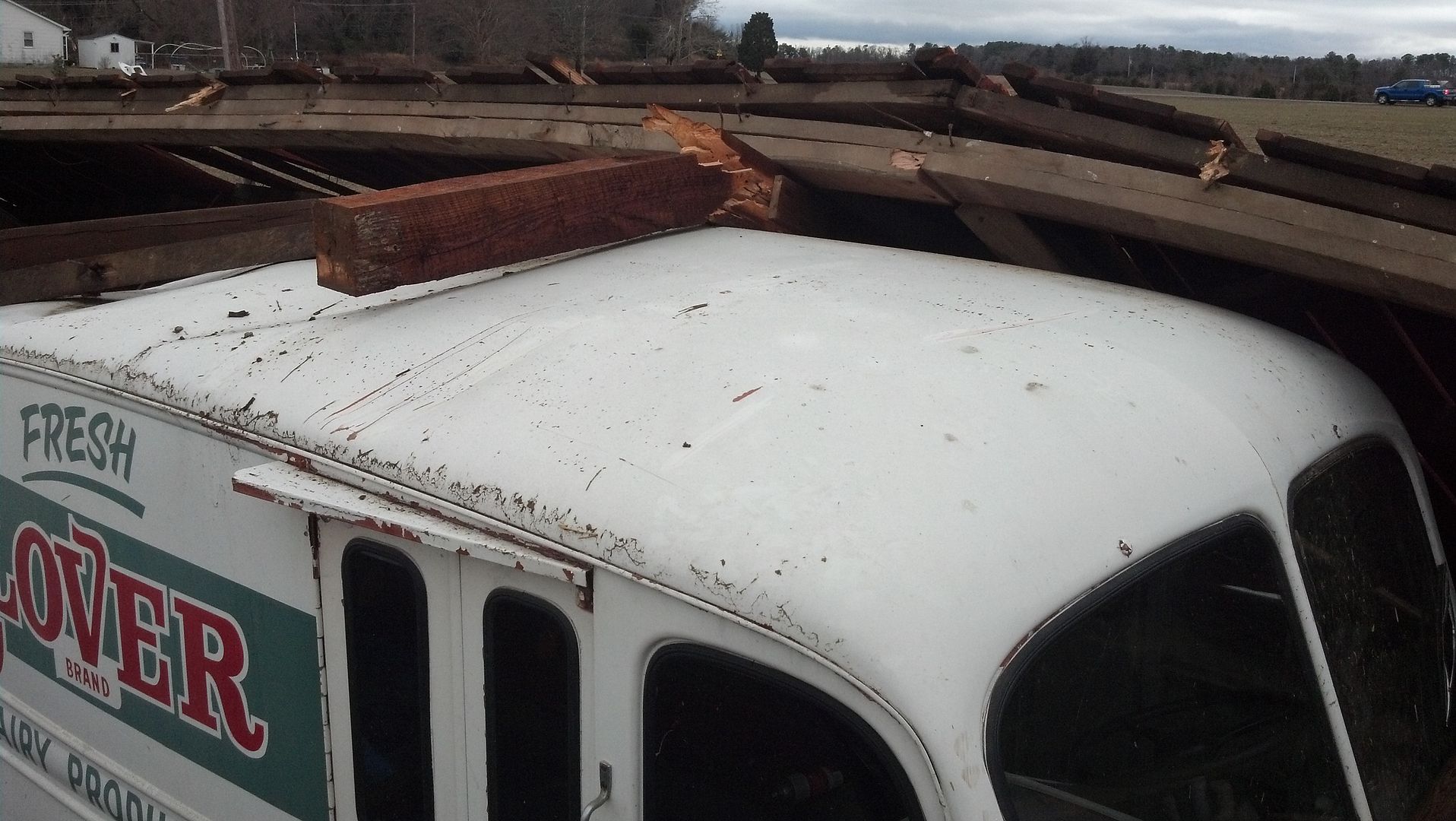
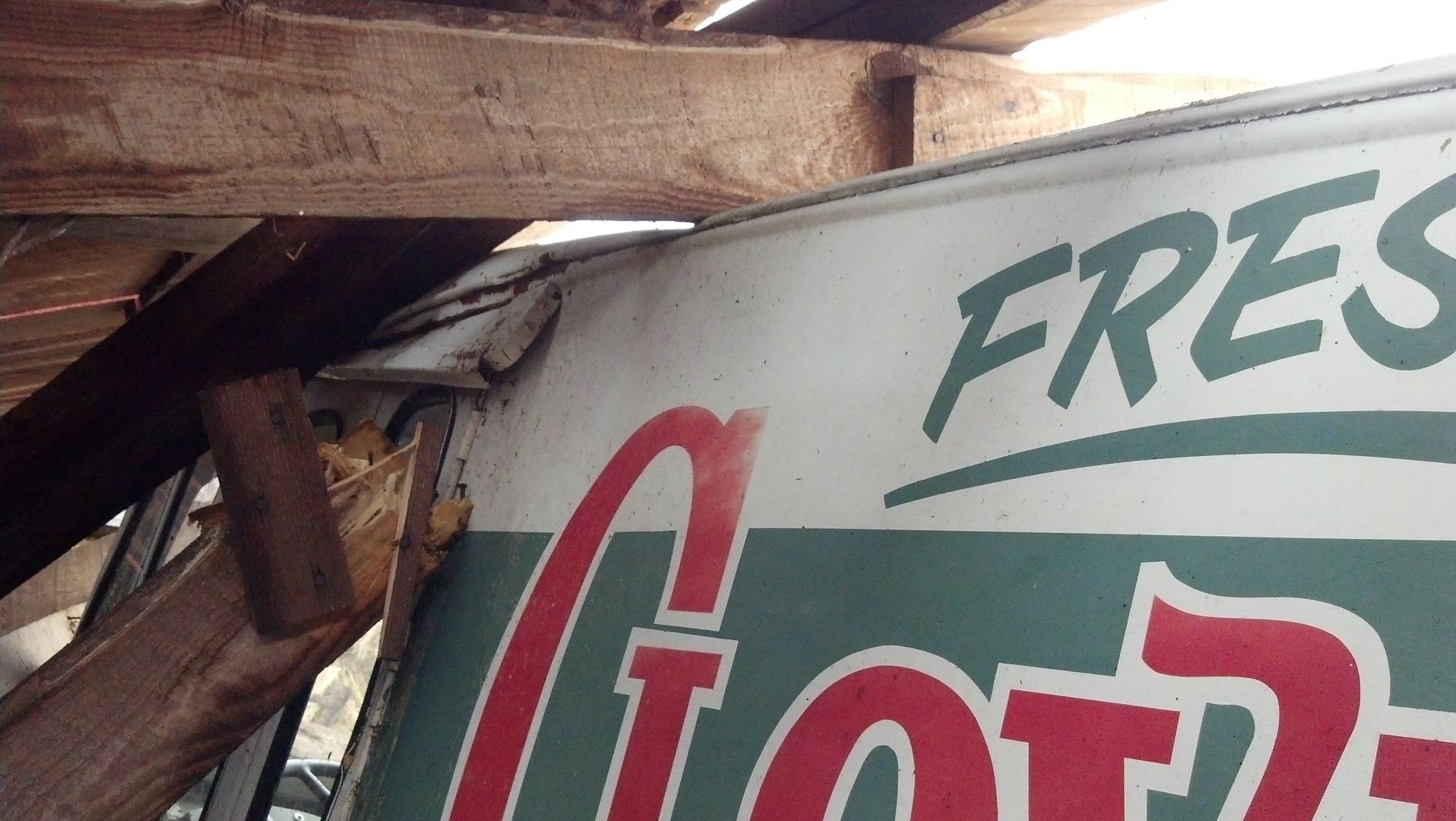
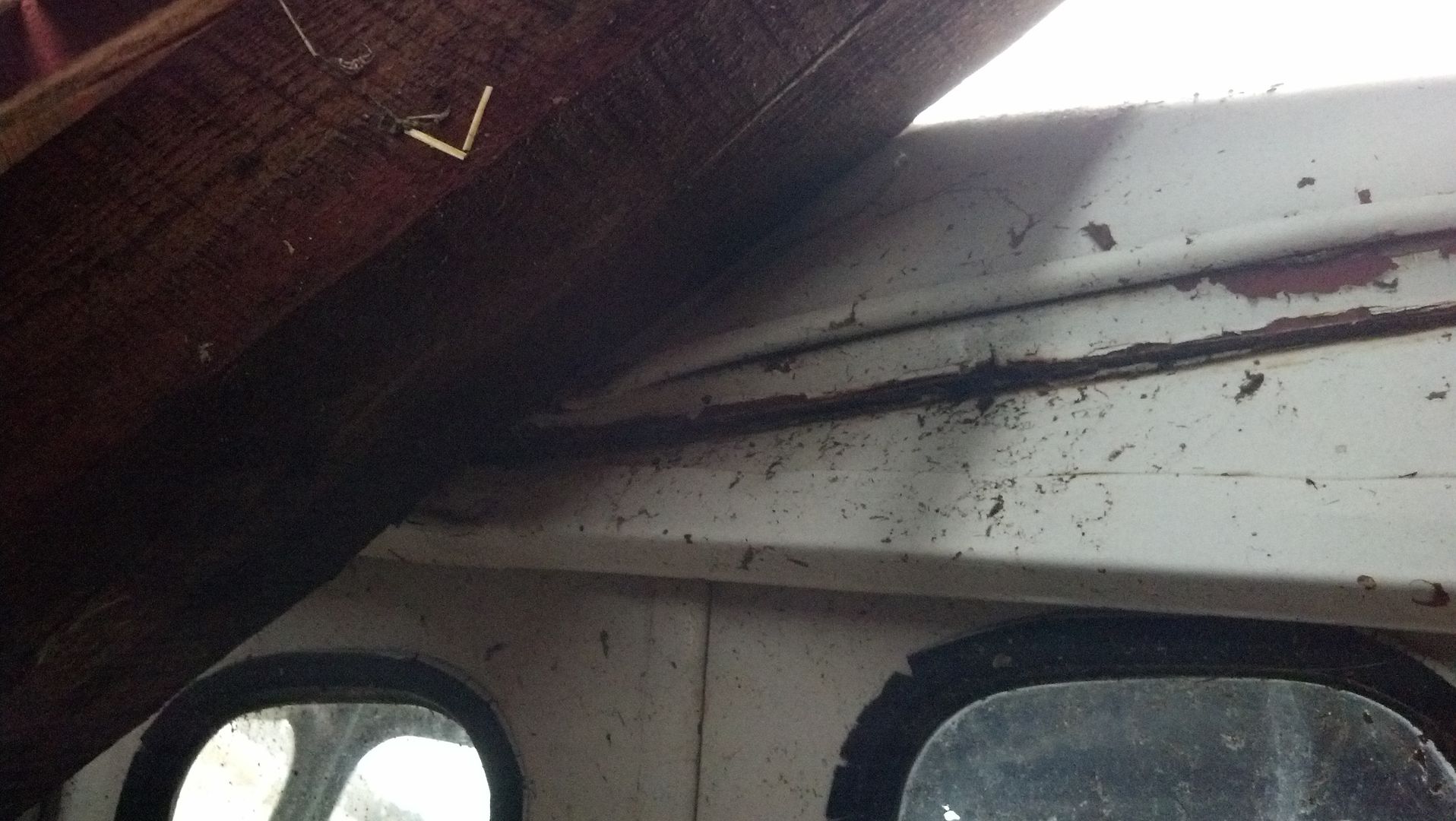
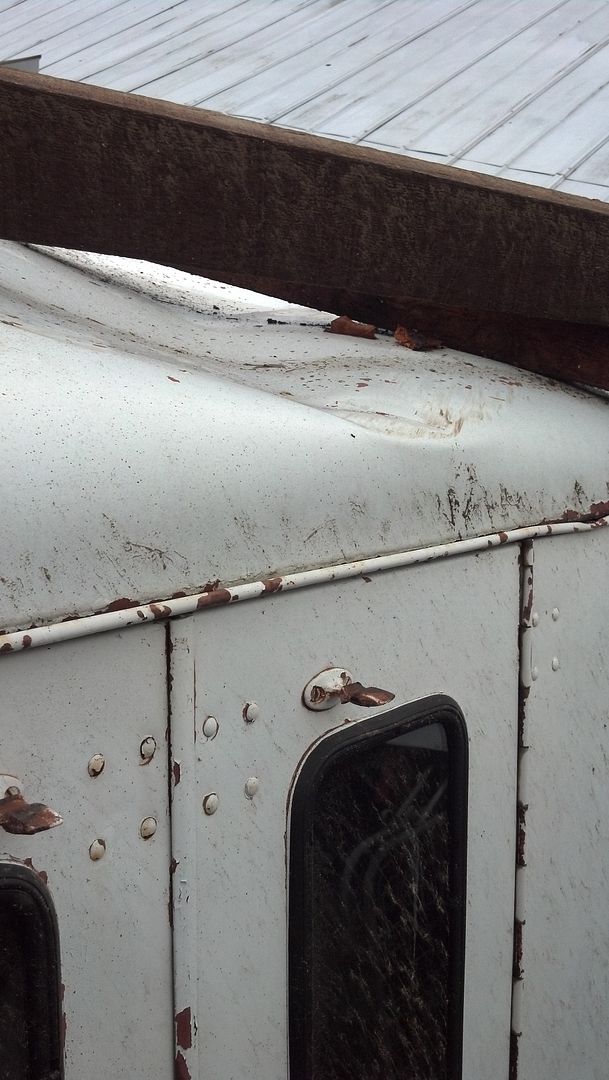
One of the upcoming projects for the shop is a very original and solid Divco milk truck. The rust issues are limited to some very minor spots just behind the doors at the bottom of the body.

Today, some strong storms rolled through with tornado watches all over. The Divco owner called me shortly afterward to let me know the scope of the work has changed somewhat...


2014-02-21_001.jpg


2014-02-21_002.jpg


2014-02-21_003.jpg


2014-02-21_004.jpg


2014-02-21_005.jpg


2014-02-21_006.jpg


2014-02-21_007.jpg


2014-02-21_008.jpg


2014-02-21_009.jpg


2014-02-21_010.jpg


2014-02-21_011.jpg


2014-02-21_012.jpg
 
To avoid these ads, REGISTER NOW!
Top Bottom