To avoid these ads, REGISTER NOW!

Multimeter

Halfsackzac

Member
Joined
Feb 24, 2024
Messages
17
Location
Iowa
Good morning, I am a heavy equipment road tech and looking to upgrade my low quality multimeter, I am between two right now but am also welcome to suggestions that don’t break the bank.

Option 1 is a like new Fluke 175 on marketplace for 100 dollars, it does not come with leads and the one thing I’m not sure that I like is it does not have the option to check temperature like other meters do.

My other meter I have been looking at is the power probe cat-Iv which seems to be a little more (mechanic) friendly and not so much for electricians.

I’m by no means an electrical expert but I do find myself diagnosing a lot in the field and don’t want to rely on a low quality meter.

Thanks in advance!
 
To avoid these ads, REGISTER NOW!

spyerx

Well-known member
Joined
Dec 29, 2019
Messages
134
Location
SoCal
(I'm not a pro but have several old cars I work on). I use a Fluke 87v. That model has higher resolution and temperature but other than that, the 175 is pretty similar and a good meter. If it's in good condition $100 is a good buy. Temp you can always use an IR probe.

For auto work you really need: DC voltage, DC load (these meters are limited unless you get an external clamp meter), frequency/cycle (ie for testing sensors), resistance, continuity, duty cycle, min/max/average logging.

Klein also has meters around $100 that do most / all of this (MM720 for example)
 

richfinn

Well-known member
Joined
Jan 29, 2011
Messages
4,814
Location
Leeds, Yorkshire, England
Does anyone have any experience with the power probe cat-iv?

I would take a chance on the Fluke to be honest (I like my older Fluke 112)

The Fluke user interface, update rate, bar graphing, separate mA jack, and rugged holster are all worth more than the temperature feature IMHO.

That's just from a quick look at a pic of the Power Probe Meter, I've never seen one in the field!!!
 

cvairwerks

Well-known member
Joined
Aug 12, 2016
Messages
7,210
Location
Within hearing distance of Texas Motor Speedway
Being on the road, you are better off with the Fluke, due to it's rugged construction. I've seen guys drop our Flukes 10 feet off the top of the airplane and it keeps on working.
Klein makes a decent two laser IR Temp Gun and unless you need more accuracy or a greater temp range, it should fit your needs for under 60$, new.

For probes, either Pomona or Probe Master make great probes and probe kits. Just be sure to order the correct configuration for the meter you end up buying. There are a couple of different input jack configurations out there.
 
Last edited:

Firebrick43

Well-known member
Joined
May 12, 2015
Messages
14,035
Location
West central Indiana
Good morning, I am a heavy equipment road tech and looking to upgrade my low quality multimeter, I am between two right now but am also welcome to suggestions that don’t break the bank.

Option 1 is a like new Fluke 175 on marketplace for 100 dollars, it does not come with leads and the one thing I’m not sure that I like is it does not have the option to check temperature like other meters do.

My other meter I have been looking at is the power probe cat-Iv which seems to be a little more (mechanic) friendly and not so much for electricians.

I’m by no means an electrical expert but I do find myself diagnosing a lot in the field and don’t want to rely on a low quality meter.

Thanks in advance!

Do you have test thermocouples in your equipment to hook up to? If not, skip the temp feature on the fluke and use an IR gun. Much easier to check for basic a cold cylinder or hot spots than a fluke.

If your engines to have installed thermocouples like some large engines do then the fluke feature is worthwhile
 

2ndGearRubber

Well-known member
Joined
Mar 24, 2014
Messages
14,185
Location
Pittsburgh
You basically need Volts DC, ohms, and current DC for automotive electrical. Beyond that I'd tell you to just buy a labscope and not piss around with a meter. More information in the same time as a meter.

Power probe generally does not make garbage. I'm using a TPI multimeter, South Korean made, who I believe was a previous supplier to snap on. Prior to that I used an ESI meter. I don't think you need to spend wild money, I've had more issues with test leads problems than distrust in a meter.
 

MJD1

Well-known member
Joined
Dec 28, 2014
Messages
607
I use a Klein AC-DC clamp meter rated for 800 amps. Let's me test amp draw on the large gauge wiring used on large trucks and heavy equipment. I bought a magnetic tether that works good to hang the meter when checking multiple circuits in a fuse panel or junction box. Most of the time I'm just using the audio function to check continuity.
 

Wrench97

Well-known member
Joined
Jun 23, 2018
Messages
12,091
Location
Southeastern Pa
I have a Fluke 325> https://www.tequipment.net/Fluke/32...BBUrtOwxIZOfGxv56Zc3eij2CV9QAHTBoCRRcQAvD_BwE
It's a clamp meter reads AC/DC current, temp with the probe, as well as voltage, Capacitance, voltage and Freq. there is a learning curve to make sure you're on DC scales and not AC. It's great for a fast check of output amps on alternators, starter draw amps or any other circuit amp draw. Keep an eye out for a good used one I've seen them in the $150 range.

I also have a Matco MD251 good basic meter defaults to DC values. $143 new> https://www.matcotools.com/catalog/...ic-digital-multimeter?referer=TWF0Y29NZXRlcnM

I worked with a guy that had the PP meter, he knocked it off the skid plate of a semi it broke when it hit the floor of the shop.
 

L.Cheapo

Well-known member
Joined
Oct 23, 2014
Messages
5,920
One thing to understand about Fluke. You are paying a lot for durability. If you tend to abuse them, it is well worth it. If your use is mostly on a bench, you can save money with a less stout brand.
This is true. My new 87Vmax doubles as a self defense weapon.

It works pretty well as a multimeter too.

I had a Craftsman multimeter for years that started giving erroneous results. No idea how...new battery, different leads, etc. Was always off by a couple volts. That nearly cost me a bunch of unnecessary money. So I went Fluke and haven't looked back.
 

Hohn

Well-known member
Joined
Aug 25, 2016
Messages
2,642
Location
Diesel Central, Indiana
One thing to understand about Fluke. You are paying a lot for durability. If you tend to abuse them, it is well worth it. If your use is mostly on a bench, you can save money with a less stout brand.
Mostly you’re paying for the Fluke brand. Lots of industrial/gov tests are actually tied to specific Fluje models, says my friend who is a line engineer for Duke.

I have Brymen and uni-T. The Brymen has been superb and cost much less than fluke.


I have the eevblog blue Brymen and it’s very good and reasonably priced.


Chipm

Well-known member
Joined
Mar 10, 2020
Messages
429
Location
Georgia
I went through this recently and settled on a Fluke 88. I am very happy with it.
 

bwringer

Well-known member
Joined
Jan 1, 2013
Messages
10,274
Location
Indianapolis
For vehicle work, I'd absolutely get an amp clamp that works with DC. It's an absolute game-changer.

That Fluke 325 linked above is a good example, although it's $350.

Something like the Klein CL390 at about $100 might be a good choice if you're not overly aroused by Fluke, and it's probably on the shelf at the nearest Home Despot.
 

theoldwizard1

Well-known member
Joined
Feb 22, 2011
Messages
43,155
Location
SE MI
Fluke are overkill. Not really necessary for automotive work. (There a few models that have peak detect and hold for voltage and current that are useful, but PRICEY !)

There are dozen of good meters in the $30-$100 range. Get one that has a "rubber boot". If you have the money, get a second one ! One that has a AC/DC amp clamp. (Good second meter UNI-T UT210E - Amazon $54

What is more important is having good test leads and adapters. You should have at least one (black) lead that is 20' - 25'. Leads/adapters/probes should have sheathed banana jacks/plugs.

If you watch any automotive electric diagnostician vides (South Main Auto, Pine Hollow Auto Diagnostics, Watch Wes Work), these folks make MAXIMUM use of 12V test lights. They frequently make their own 1A and 5A test light in addition to "traditional" test light (1/4A, 250ma).
 

garfunkle24

Well-known member
Joined
Mar 18, 2008
Messages
3,429
Location
Saskatoon, Canada
^100% correct and lots of other good advice here.

That said I've had a Fluke 88v for about 18 years, bouncing around in the back of a service truck in -45 to + 35c temps (also a HD road tech) and it's never skipped a beat. It doesn't owe me a penny. But also back then there wasn't nearly the same choice or great value meters like there are now.

The fuses are stupid expensive and annoying to replace and 9v batteries are a pain in the ****. As theoldwizard1 alluded to, I probably have more invested in probes and stuff than the meter.

Pulse width can be kinda nice to have but as 2ndGear mentioned you may as well get into a scope at that point.

If i'm doing quite a bit of diag now, I hook up my PP3 for quick basic checks and as a good battery ground for my multimeter. Then if required the multimeter comes out for further tests. Then the scope.

TLDR: A ~$100 Klein/Uni-T/Bryman will likely do all you need.
 
To avoid these ads, REGISTER NOW!

Hohn

Well-known member
Joined
Aug 25, 2016
Messages
2,642
Location
Diesel Central, Indiana
Fluke are overkill. Not really necessary for automotive work. (There a few models that have peak detect and hold for voltage and current that are useful, but PRICEY !)

There are dozen of good meters in the $30-$100 range. Get one that has a "rubber boot". If you have the money, get a second one ! One that has a AC/DC amp clamp. (Good second meter UNI-T UT210E - Amazon $54

What is more important is having good test leads and adapters. You should have at least one (black) lead that is 20' - 25'. Leads/adapters/probes should have sheathed banana jacks/plugs.

If you watch any automotive electric diagnostician vides (South Main Auto, Pine Hollow Auto Diagnostics, Watch Wes Work), these folks make MAXIMUM use of 12V test lights. They frequently make their own 1A and 5A test light in addition to "traditional" test light (1/4A, 250ma).
I have the uni-t amp clamp and it’s very good.
 

AJHD

Well-known member
Joined
Jan 4, 2020
Messages
3,021
Location
AZ
I vote for the Fluke 115. Rugged, easy to use and a large display .

My primary meter is a Fluke 115. Does almost everything I've needed it to. Would like to pick up a Fluke ac/dc clamp meter at some point for amps.

Anyway, the new PowerProbe meters look interesting.


tool_scrounge

Well-known member
Joined
Jul 20, 2010
Messages
4,189
Location
Southern California
I own a number of fluke meters purchased used. A while back I also purchased a Fluke 515a portable calibrator to check how good the was the meter calibrations.

All the Fluke meters were well within specification when tested with the calibrator. I was surprised on how closely they all matched.
 

richfinn

Well-known member
Joined
Jan 29, 2011
Messages
4,814
Location
Leeds, Yorkshire, England
IMG_20240830_001153_514.jpg

Fluke 112 and a little UNI-T UT210E clamp meter, both very affordable and accurate with the right features for "outdoors" mechanic work. The test light I'm using as the load in this little experiment is a little OTC 3633. I like the Fluke silicone leads and PICO/Pomona for clips and probes all very reliable.
 
Last edited:

AJHD

Well-known member
Joined
Jan 4, 2020
Messages
3,021
Location
AZ
IMG_20240830_001153_514.jpg

Fluke 112 and a little UNI-T UT210E clamp meter, both very affordable and accurate with the right features for "outdoors" mechanic work. The test light I'm using as the load in this little experiment is a little OTC "scanner danner". I like the Fluke silicone leads and PICO/Pomona for clips and probes all very reliable.

I also have one of those UNI-T clamp meters. I've always wanted a better one, but the Fluke ac/dc variety has always been too expensive for me.

The silicone Fluke leads are definitely worth the upgrade. I need to get some of those banana clamp adapters though.
 

Attachments

  • 20210129_193733.jpg
    20210129_193733.jpg
    832.8 KB · Views: 23
Last edited:

richfinn

Well-known member
Joined
Jan 29, 2011
Messages
4,814
Location
Leeds, Yorkshire, England
I also have one of those UNI-T clamp meters. I've always wanted a better one, but the Fluke ac/dc variety has always been too expensive for me.

The silicone Fluke leads are definitely worth the upgrade. I need to get some of those banana clamp adapters though.

Don't waste your money, you won't beat the UNI-T for accuracy unless you spend a small fortune, the cheaper Fluke 300 series models only go down to 0.1 amps.

I use this one for parasitic draws/fuel pump draw/Diesel glow plugs all the time (it's a nice size for auto work).

The only real limitation with the UNI-T for automotive work is a maximum of 100A (I just use the Pico and a dedicated clamp when I need more than that)

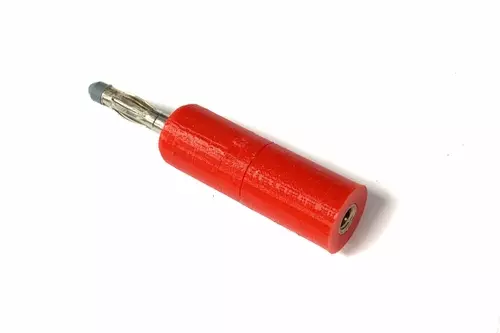
The 4mm test light tip adapter is from Warwick Test Supplies in the UK


The PICO clips are the best (I've tried all the plastic insulated versions and they just don't last like these)


Test leads

 
Last edited:

Chipm

Well-known member
Joined
Mar 10, 2020
Messages
429
Location
Georgia
For vehicle work, I'd absolutely get an amp clamp that works with DC. It's an absolute game-changer.

That Fluke 325 linked above is a good example, although it's $350.

Something like the Klein CL390 at about $100 might be a good choice if you're not overly aroused by Fluke, and it's probably on the shelf at the nearest Home Despot.
With amp clamp, make sure DC resolution is sufficient. I bought a Milwaukee something-or-other then realized it only showed 0.1A so was fairly useless for parasitic draw testing, which is all I wanted it for.
 

justtools

Well-known member
Joined
Aug 16, 2008
Messages
416
I work for a gm dealership. the Required meter from gm is a fluke 87v currently. I have an 87v and a 179. I am a big fluke fan. A coworker of mine uses a snap on and when he gets a reading on his meter he questions he uses mine to compare, Flukes are more money upfront but they work for years. If money is a little tight buy a fluke used. the 175 is my choice for the 2 you listed.
 

Hohn

Well-known member
Joined
Aug 25, 2016
Messages
2,642
Location
Diesel Central, Indiana
∆ This, UNI-T UT210E all the way 👍
I'm using the UT216C.

I really wanted inrush and true RMS mostly to satisfy my curiosity. It keeps the 0.01 amp resolution and adds some useful features while still being reasonably priced.

The more advanced AC features are nice but they do require a "Test lead" of some sort. I just bought a stubby pigtail extension cord of heavy gauge and stripped the outer in sulation off the cable to I could clamp an individual conductor. It works pretty well.

Plus 6000 count vs 2000 display.
 

mhejl

Well-known member
Joined
Aug 7, 2015
Messages
328
Location
DFW Texas
Warning on the used Fluke - check the battery contacts!

I bought a used Fluke 51 II temp meter (with a $150 80PK probe) for a song and when I got it home and opened it up to change batteries the contacts had been eaten by leaking batteries with a horribly done solder blob to "fix" it.

Fortunately, I found a brand new back panel and was still under 1/3 the cost of a new meter. At least Fluke keeps parts around. I only use lithium batteries in tools like these.

I have a Uni-T clamp mentioned above - I doubt you'd be able to find parts - but they're not $$$ like Flukes. I have 3 Fluke DMMs and rarely use the Uni-T or Power Probe III.

BTW, Fluke owns Pumona now, IIRC.
 

Steve_P

Well-known member
Joined
Sep 15, 2010
Messages
5,185
If you're working on heavy equipment you are going to drop the meter- as others have said. While you can buy a $30 AstroAi meter on Amazon that will do everything you need, and more, I'm not aware of any of the cheap meters that give you the option to buy the protective surround like Fluke offers; and this surround is what makes a Fluke so durable. As others have said, I've seen an 87V dropped 6+ feet off ladders and onto concrete multiple times over the decades, and they survive. Yes, you are paying for the Fluke name, for sure. But, as said, it's still the standard in manufacturing and industry mostly because of the durability that the case provides.

Edit- for leads and accessories, Probe Master is the way to go.
 

mrjaw14

Well-known member
Joined
May 22, 2012
Messages
1,958
Location
Nashville, TN
You need more than one meter. I have 5 meters plus an oscilloscope and some times you need more than one at a time. Get the Fluke, buy a set of leads. I like the banana to banana leads that I can mix and match probe tips. that will give the most accurate results. being able to put an alligator clip on one, backprobe on another is invaluable because you have the best connection possible on your leads. you can do this with other meters too, not just Fluke, but Fluke is the gold standard for accuracy and reliability in the USA.

I've measured things with cheaper meters that just didn't seem "right" and I ultimately went to my Fluke for the real answer. turns out it was right.
 
OP
H

Halfsackzac

Member
Joined
Feb 24, 2024
Messages
17
Location
Iowa
Well it was decided today. Talked the guy down to 100 dollars for the fluke 175. Picked it up an hour ago and it looks brand new. Took it to a buddies house who has a fluke 179 that gets calibrated every year for his job and everything was the exact same from this one to his. I think for a meter that retails for 400+ dollars I did pretty good. Just gotta pick up some leads for it.
 

cvairwerks

Well-known member
Joined
Aug 12, 2016
Messages
7,210
Location
Within hearing distance of Texas Motor Speedway
So explain to me how "heavy equipment" electrical work is "different" than automotive ?

Need longer leads ? 24V ?
Ever work on equipment out in the field? Makes working on a car in the garage like being in a fine dining establishment. Field work is generally nasty work, out in whatever condition the equipment was operating in. Be it mud, slime, water, dust, rain, snow, frost, sun ect, and the tech is crawling around in it. All the support you have is what's on your truck. Some of these operations are hours away from civilization and the customer is paying travel time charges as well as the repair costs. Break a cheap meter or tool and have to make a 4 hour round trip for a replacement and not only is your boss going to be pissed, but also the customer that has 4 more hours of downtime waiting on his half million dollar or more machine to be back in action....The broke machine that has idled up a dozen other machines and crew and is costing them 100,000$ an hour or more.

Sometimes inexpensive is fine, but in some places, you can't afford inexpensive.
 

spyerx

Well-known member
Joined
Dec 29, 2019
Messages
134
Location
SoCal
Well it was decided today. Talked the guy down to 100 dollars for the fluke 175. Picked it up an hour ago and it looks brand new. Took it to a buddies house who has a fluke 179 that gets calibrated every year for his job and everything was the exact same from this one to his. I think for a meter that retails for 400+ dollars I did pretty good. Just gotta pick up some leads for it.

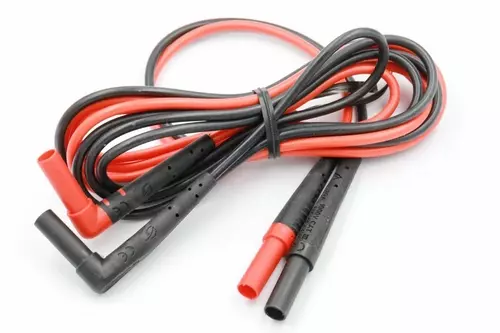
Get the good fluke leads. Silicone wires so they don't twist up: Fluke TL175 Twistguard Test Leads. The Klein leads are pretty good too.

As mentioned you'll also want a setup that allows you to connect alligator clips and back probes. If you're only doing automotive low voltage stuff you can checkout amazon for cheaper setups for this (or even make them from parts from an electronics store). If you are going to do line voltage or other higher voltage work I'd lean towards the kits from Fluke or other known brands. The really thin back probes are super useful for testing harnesses and connections.
 
To avoid these ads, REGISTER NOW!
Top Bottom