To avoid these ads, REGISTER NOW!

Museum-Quality Concrete/Construction

strutaeng

Well-known member
Joined
Dec 12, 2011
Messages
2,261
Location
Dallas, TX
I know, not really a garage related topic, but it's a concrete topic... :)

I see a lot of threads about concrete like strength, finish, durability, etc. Lot's of folks see a little crack on their newly-poured concrete slab and ask if the sky is going to fall, etc. On some threads I've mentioned the term museum-quality concrete. What exactly is that anyways?

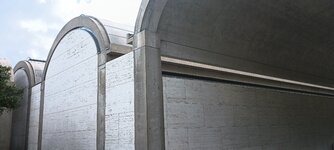
Last week I chaperoned to my kid's field trip to the Kimbell Art Museum in Fort Worth, Texas. For those that don't know, the Kimbell is a world-renowned building built in 1972 and designed by Estonia born Louis Kahn. It's a relatively small building composed of a series of these post-tensioned cycloid vaults. Spans are like 100' or so. Very simple and elegant design. This was early post-tensioned concrete.

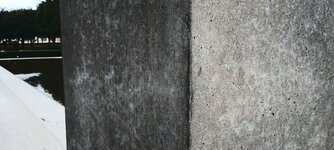
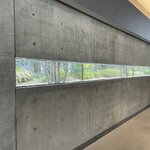
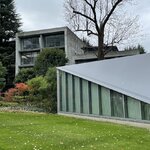
In 2013 the Renzo Piano pavilion was completed across the lawn of the same property. Actually my first time going to the Kimbell since this part was completed. It's a different building, slightly different materials, but pays a tribute to the original building. The concrete is incredible, similar to the Ft. Worth Modern Art Museum just across the street from my memory. I know that getting this quality of concrete takes an enormous amount of effort, from design, concrete supplier, contractors, subs, etc., not to mention cost, hence why I've called that, museum-quality. Anyways, I just snapped some random photos with my phone, nothing really specific. I'm certainly not a concrete materials expert, but I have worked on some cool projects similar to these on the consultant side and have learned how some of these unique buildings are put together.

So if you find yourself in some museum kinda bored, look around and check out the structure...whether concrete, steel, timber. Better yet, if you are in the area, stop by and check this out, as well as the other museums all within walking distance of each other.
 

Attachments

  • IMG_20231027_110533659[1].jpg
    IMG_20231027_110533659[1].jpg
    857.4 KB · Views: 398
  • IMG_20231027_123038511.jpg
    IMG_20231027_123038511.jpg
    297.7 KB · Views: 388
  • IMG_20231027_112122615.jpg
    IMG_20231027_112122615.jpg
    791.5 KB · Views: 387
  • IMG_20231027_112108567.jpg
    IMG_20231027_112108567.jpg
    530.6 KB · Views: 390
  • IMG_20231027_112105652.jpg
    IMG_20231027_112105652.jpg
    234.7 KB · Views: 395
  • IMG_20231027_112056529.jpg
    IMG_20231027_112056529.jpg
    521.7 KB · Views: 387
  • IMG_20231027_111058676.jpg
    IMG_20231027_111058676.jpg
    676.9 KB · Views: 377
  • IMG_20231027_111047108.jpg
    IMG_20231027_111047108.jpg
    655.5 KB · Views: 370
  • IMG_20231027_110605181.jpg
    IMG_20231027_110605181.jpg
    324 KB · Views: 340
  • IMG_20231027_110554772.jpg
    IMG_20231027_110554772.jpg
    271.1 KB · Views: 327
Last edited:
To avoid these ads, REGISTER NOW!

ConCretin

Well-known member
Joined
Jan 20, 2011
Messages
3,378
Location
Central Maine
That’s not craftsmanship nor museum quality, that is a ”sack and patch” finish. Easily achievable on any concrete if someone wants to pay for it.
With all due respect, that is a ridiculous and uninformed statement. That is an as-cast architectural concrete finish, which required meticulous design and craftsmanship to construct....... not to mention an obscene amount of money.
 

whateg01

Well-known member
Joined
Mar 13, 2006
Messages
11,219
Location
doo dah, kansas, usa
Is that not largely a function of the forms used? The forms we used when I did foundations were beat up, rough, had remnants of previous jobs left behind. When I made a concrete pedestal for a piece of yard art last summer, I smoothed the forms I used and applied a mold release (hair spray) and the pedestal came out smooth.
 

Snapped-off

Well-known member
Joined
Feb 22, 2012
Messages
4,746
Location
Indiana
When people want a 20k concrete job budgeted down to 5k, I'm sure you'll probably lose some of those fine details..
 

ConCretin

Well-known member
Joined
Jan 20, 2011
Messages
3,378
Location
Central Maine
Form facing materials are part of the equation but form design is also critical. Every form element must be designed for minimal deflection. In addition, the forms need to be virtually waterproof to avoid mix water from escaping, which creates color variations and sand streaking. The carpentry needs to be of finish quality. Panel sizes and tie layouts need to be arranged symetrically. Then there's crack control. A rich, free flowing mix with properly sized aggregate is important as is extremely thorough vibration.

This type of concrete is orders of magnitude more difficult than the average structural wall. You literally need to get it right the first time because invisible repairs are extremely difficult.
 
Last edited:

Rusted Nut

Well-known member
Joined
Dec 11, 2022
Messages
1,805
Location
PNW
With all due respect, that is a ridiculous and uninformed statement. That is an as-cast architectural concrete finish, which required meticulous design and craftsmanship to construct....... not to mention an obscene amount of money.
Do you know for sure that is “as cast”? If so, then I retract my statement. I have never seen concrete like that with some post pour finishing.
 
OP
S

strutaeng

Well-known member
Joined
Dec 12, 2011
Messages
2,261
Location
Dallas, TX
Thank you @LLWillysfan ...I would hope you'd chime in.
@Rusted Nut definitely as cast. I know what sack and patch, parging, rubbing, etc. looks like. Not stained either. None of that here. Actually, I don't even recall seeing any shrinkage cracks! Unbelievable.

I'm not sure on the form work. I believe they use some MDO or phenolic overlay plywood. Very likely a one-time use? On some of these projects a mockup is almost always required and usually part of the contract requirements.

We just finished a project with board-formed concrete smallish retaining walls (although it wasn't architectural exposed concrete). We required a mockup and the contractor wound up doing two of them to get the desired grain effect on the concrete from the wood forms . The concrete sub still struggled with a bit of honeycombing on the actual walls. Obviously wasn't anything near what the Kimbell resembles, it was more like a rustic look. Likely will get grafitti as it was in a public park. LOL

Just to clarify, I'm not implying that this kind of construction is ONLY found on museums. I've seen some really high end homes with this type of construction. But unless you live in one of those homes, you probably would not know. On the other hand, museums are open to the general public so that's what anyone can relate to ☺️...just gotta keep it down on the noise, as our third graders quickly found out.

Nothing really like this on your typical tilt-wall concrete panel warehouse, retail, cast-in-place or precast parking garages, or commerical buildings that I can recall; those buildings typically get an architectural "finish" (we call that a "fu-fu finish", except parking garages and warehouses. Some hospitals or university buildings may have a similar marquee building or even a museum on their campus. Whoever is the pilatrophist with the highest donation would get their name on the entrance of that building.
 
Last edited:

ConCretin

Well-known member
Joined
Jan 20, 2011
Messages
3,378
Location
Central Maine
Do you know for sure that is “as cast”? If so, then I retract my statement. I have never seen concrete like that with some post pour finishing.
First off, Rusted Nut, I'd like to apologize for my snarky response. It was unwarranted.

It's definately an as-cast finish. You can see the sheen imparted by the smooth form facing material and there are still tiny air pockets still visible, all of which would be obscured by any subsequent finishing operations. They obviously had to patch the tie holes and I'm sure there was a little rework required here and there but most of that concrete looked like that right out of the forms.

A 'sack and patch' finish involves patching defects & tie holes followed by the application of a loose mortar onto the surface. The excess mortar is removed with burlap or the edge of a steel trowel. This is done to fill all the air holes and provide a more uniform color but it doesn't hide much.

The point I was trying to make was that the entire approach to architectural concrete is fundamentally different than it would be for a basic structural wall. It wouldn't be uncommon to sack an architectural concrete wall but it's not going to change a sows ear into a silk purse.
 

CSRPenFab

Well-known member
Joined
Oct 27, 2015
Messages
5,148
Location
Meridian Idaho
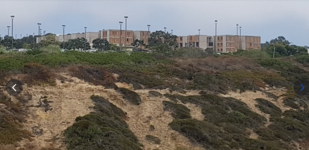
Very nice. Years ago, I got to do some fire protection engineering work at the Jonas Salk Institute in Torrey Pines near La Jolla CA. The campus is on a cliff over the ocean with amazing views. Kahn built this masterpiece in the 1960's, and it's amazing. The modular research labs have "interstitial" spaces between each floor and are plumbed with Pyrex glass piping for all the various hazardous chemicals used there. Lots of nasty stuff like Aids research, so bio security is really strict.

It's an amazing building and I highly recommend a free tour if you're ever in the area. Interesting thing is the primate research lab that is built fully underground to keep the animal rights protestors at bay.

1698763228676.png
1698763281729.png
1698763332606.png
1698763370485.png
 

Rusted Nut

Well-known member
Joined
Dec 11, 2022
Messages
1,805
Location
PNW
First off, Rusted Nut, I'd like to apologize for my snarky response. It was unwarranted.

It's definately an as-cast finish. You can see the sheen imparted by the smooth form facing material and there are still tiny air pockets still visible, all of which would be obscured by any subsequent finishing operations. They obviously had to patch the tie holes and I'm sure there was a little rework required here and there but most of that concrete looked like that right out of the forms.

A 'sack and patch' finish involves patching defects & tie holes followed by the application of a loose mortar onto the surface. The excess mortar is removed with burlap or the edge of a steel trowel. This is done to fill all the air holes and provide a more uniform color but it doesn't hide much.

The point I was trying to make was that the entire approach to architectural concrete is fundamentally different than it would be for a basic structural wall. It wouldn't be uncommon to sack an architectural concrete wall but it's not going to change a sows ear into a silk purse.
You are forgiven for being snarky. I guess my initial post was a bit snarky as well. I’m a commercial superintendent and have done a number of projects where the contract documents state as cast finishes, and then owner hates the finish and demands it be re done to look like such and such a project, that was a sack and patch or similar.

Taking a better look at the photos, yes I see the pin holes and such, it is “as cast”. A nice job at that!
 

Stuart in MN

Well-known member
Joined
Sep 8, 2005
Messages
23,052
Location
Minneapolis
Looks like it's held up well too. 20 years isn't necessarily that old for a building, but we've all seen exterior concrete work that looks pretty lousy after just a few years exposed to the elements.
 

kyrbz

Well-known member
Joined
Jan 30, 2012
Messages
1,309
Location
midwest US
I love concrete construction. I'm kind of a connoisseur of Brutalist architecture. Another great concrete museum in my neck of the woods is Tadao Ando's Pulitzer Arts Foundation in St. Louis, MO. First pic isn't mine, but the rest are from my visit when it was hosting the Ruth Asawa Retrospective in 2018.

Screen Shot 2023-10-31 at 11.02.09 PM.png

IMG_3467.JPG

IMG_3559.JPG

IMG_3560.JPG

IMG_3593.JPG

IMG_3602.JPG
 
Last edited:

kyrbz

Well-known member
Joined
Jan 30, 2012
Messages
1,309
Location
midwest US
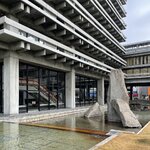
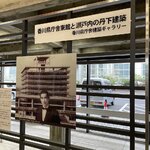
Another great piece of concrete architecture I visited recently is Pritzker Prize winner Kenzo Tange's mid century modern brutalist masterpiece, the Kagawa Prefecture Government Hall on the Island of Shikoku in Japan. Completed in 1958, it still functions as the Kagawa Prefecture Hall but now houses an exhibition on the first floor with drawings, models, photographs, and construction mock ups dedicated to Kenzo Tange's life work.

kt1.jpeg

kt2.jpeg kt3.jpeg kt4.jpeg kt5.jpeg kt6.jpeg kt7.jpeg kt8.jpeg kt9.jpeg kt10.jpeg
 
Last edited:

bb29510

Well-known member
Joined
Dec 27, 2022
Messages
1,216
the biggest problem with quality concrete is when the contractor says, all concrete cracks, he needs to be fired, a boot up his *** and thrown off the nearest cliff. it cracks because his labor *****, his craftman *****, and he stupid
 
To avoid these ads, REGISTER NOW!

Fixr

Well-known member
Joined
Dec 23, 2012
Messages
9,702
Location
SW VA
the biggest problem with quality concrete is when the contractor says, all concrete cracks, he needs to be fired, a boot up his *** and thrown off the nearest cliff. it cracks because his labor *****, his craftman *****, and he stupid
Yeah, I kinda came to that conclusion after walking through airport terminals and other huge spaces with acres of uncracked concrete floors and very few expansion joints, much less saw cuts.
 

niget2002

Well-known member
Joined
Oct 2, 2012
Messages
11,123
Location
Josephine, TX
Wife and I went to an exhibit there many moons ago.. pre-kid, actually.

We need to plan another trip over there. It makes for a good day trip.
 

kyrbz

Well-known member
Joined
Jan 30, 2012
Messages
1,309
Location
midwest US
Not a museum or even architecture, but I really like tetrapods for some reason. Pics were taken in Yonago, Japan

tetra1.jpeg

tetra2.jpeg

tetra3.jpeg
 
Last edited:

NORTON'S SHOP

Well-known member
Joined
Dec 30, 2010
Messages
1,576
Location
Upper Midwest
With all due respect, that is a ridiculous and uninformed statement. That is an as-cast architectural concrete finish, which required meticulous design and craftsmanship to construct....... not to mention an obscene amount of money.
http://www.american-artstone.com/

Check out the above website. Most; if not all; of the work shown in this thread would never be allowed to go out their door.
 

ConCretin

Well-known member
Joined
Jan 20, 2011
Messages
3,378
Location
Central Maine
http://www.american-artstone.com/

Check out the above website. Most; if not all; of the work shown in this thread would never be allowed to go out their door.
I wish you hadn't picked that statement to quote. lol. It was so snarky I felt the need to apologize.

In fairness, there is a huge difference between constructing a structural cast in place element on a job site and a precast decorative item in an offsite plant. With that said, the best examples of each method wouldn't be that far apart.
 

whateg01

Well-known member
Joined
Mar 13, 2006
Messages
11,219
Location
doo dah, kansas, usa
If every general contractor or foundation crew took the time and effort and paid week enough to have the kind of people that can make great work happen, it would be too expensive for most people to swallow.
 

kyrbz

Well-known member
Joined
Jan 30, 2012
Messages
1,309
Location
midwest US
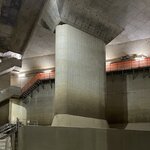
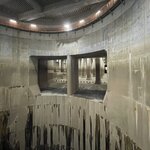
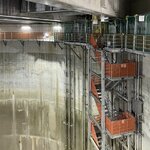
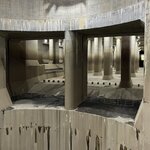
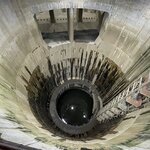
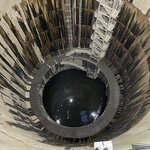
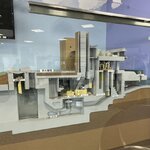
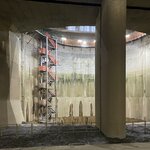
I recently did a tour of the Metropolitan Area Outer Underground Discharge Channel in Saitama, Japan. It's the world’s largest underground flood protection system designed to keep the greater Tokyo region from flooding. Construction started in 1992 and was completed in 2006. It consist of several huge underground concrete silos strategically placed around Tokyo that are 213' deep by 106' diameter. The silos are all connected by underground tunnels so that if one silo is receiving more water than the others, the water level is equalized through the tunnels. The last silo at the pumping station has a large opening in the side that allows the water to flow into the "tank" which is a room 581' long x 256' wide with the ceiling supported by 59 - 83' tall pillars. From the tank the water is pumped out by 78 - 13,000hp pumps that discharge 200 metric tons of water per second. The scale and amount of concrete in this project is hard to comprehend. The tour starts above ground at the control center pumping station. They have a scale working model that actually fills up with water and pumps it out to demonstrate how the system works. There is also a scale model of the boring Machine used to connect the silos to the tank/pumping station. The tours then proceeds to the tank room and finally partially descends the last silo connected to the tank.

u1.jpeg

u2.jpeg

u3.jpeg

u19.jpeg

u5.jpeg

t20.jpeg

u6.jpeg

u7.jpeg

u8.jpeg

u9.jpeg
 
Last edited:

kyrbz

Well-known member
Joined
Jan 30, 2012
Messages
1,309
Location
midwest US
These pics are mostly from the above ground control center pumping station with the models. The second to last pic shows the control center from the outside. The "tank room" is below the large field in the foreground of that pic. There is a large access door that bulldozers and cleaning equipment are craned down for cleaning and maintenance. The last pic is looking towards the entrance to the last silo in the system with Mt. Fuji in the distance

t21.jpeg

u10.jpeg

u11.jpeg

u12.jpeg

u13.jpeg

u18.jpeg

u15.jpeg

u16.jpeg

u17.jpeg
 

PopcornSutton

Well-known member
Joined
Jun 10, 2024
Messages
782
Location
Northern Tip of VA
What a wonderful old thread, before my time here. Glad it was brought back up again. Having done a fair amount of concrete form work myself, the attention to detail in the forms can't be stressed enough. When CC mentioned the forms are like finish carpentry, he is right! Any and all mistakes or imperfections in the forms will be transmitted to the finished wall. Even the slightest hammer mark from nailing chamfer strips will be seen. The design of the forms is huge. The tie layout is unavoidable, but can be done where they look like there are supposed to be there. The support/framework which isn't part of the finish face, is just as important to prevent bowing and pillowing. But all the great form work is for not if the placement isn't proper. The rate of pour, the ******** men, concrete supplier all play just as important part. Very challenging construction.
 

bb29510

Well-known member
Joined
Dec 27, 2022
Messages
1,216
alot of that is the twenty foot rule, you cant stand closer than twenty feet to inspect it. yes, Im being serious, its in the spec. also we use a lot of chemicals in out concrete. mid range water reducers, High range. Ice. chill water. etc its not your father concrete mix. 4000 is the basic mix and its about $160 a yard
 

PopcornSutton

Well-known member
Joined
Jun 10, 2024
Messages
782
Location
Northern Tip of VA
The 20 foot rule is used for masonry work much more often than poured concrete work. You can't hide mortar joints whether left as a finished wall or painted, the joints are still there. And considering most masonry work done today, they should make it 50.

The thread referenced "museum quality" concrete work. That just negated the every day acceptable work.
 

bb29510

Well-known member
Joined
Dec 27, 2022
Messages
1,216
im sorry, I been doing quality control of concrete for 43 years now, I guess I need to call my boss and tell him the 20 foot rule is BS and we need to stop doing quality contro
 

PopcornSutton

Well-known member
Joined
Jun 10, 2024
Messages
782
Location
Northern Tip of VA
Read my last sentence. It doesn't matter if it's concrete or masonry, if work is specified as museum quality, things change.
 
Last edited:

Joemctag

Well-known member
Joined
Aug 11, 2017
Messages
813
Location
Outside raleigh nc
Form facing materials are part of the equation but form design is also critical. Every form element must be designed for minimal deflection. In addition, the forms need to be virtually waterproof to avoid mix water from escaping, which creates color variations and sand streaking. The carpentry needs to be of finish quality. Panel sizes and tie layouts need to be arranged symetrically. Then there's crack control. A rich, free flowing mix with properly sized aggregate is important as is extremely thorough vibration.

This type of concrete is orders of magnitude more difficult than the average structural wall. You literally need to get it right the first time because invisible repairs are extremely difficult.
And because mock-ups (samples) would be required to be acceptable to the architect, a contractor who wasn’t up to it wouldn’t go on to do the work. You only get one chance if you don’t want to demolish and re-do.
 
To avoid these ads, REGISTER NOW!
Top Bottom