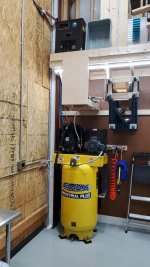
Hi folks, newbie here with first post. Love this forum. There is so much great info.
This message is in reply to pcmeiners post dated 01/18/2020. (Apparently I'm restricted from posting links until I have 5 or more posts...)
Been working on a design for the same thing the OP discussed in excellent detail. Very informative - so thnx for taking the time with that.
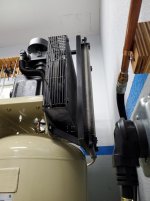
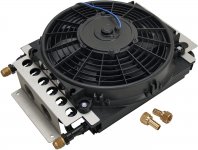
My reason for this post is to correct what may be a misconception regarding Hayden and their products that I was able to learn after talking to their employees. Hayden Automotive, which manufacturers the 1260 and 1290 Heavy Duty Oil Coolers that have been referenced here, is a completely different company than Hayden Industrial which also make heat exchangers. One is not a division of the other. Many years ago (approx 20?) they use to be under the same umbrella. Bottom line: Hayden Industrial does not manufacture the 1260 and the 1290.
I had been trying to get similar design data for pressure and temp limits on the 1260 and 1290 which is not published anywhere. It took a few phone calls but eventually got connected with an engineer for Hayden Automotive. The take away for me is the pressure rating on pretty much all the Hayden Automotive coolers is about 150 psi. The engineer went on to explain that Hayden Automotive does not need the higher pressure rating when dealing with oil/transmission cooling in the automotive sector. I don't remember the temperature limits but seem to recall they are not as high as the products from Hayden Industrial. Would they work as an aftercooler? Apparently they do as other's have experienced. Not bashing them at all.
The following information copied fm the previous post is taken from Hayden Industrial (as the poster made reference to)
"Plate Fin & Finned Tube Heat Exchanger
Specifications
•Maximum operating pressure of 300 PSI
•Maximum operating temperature of 350°"
These numbers are not the pressure rating and temp rating for the 1260 or the 1290. The 1260 and 1290 are made by Hayden Automotive. Again, these are two completely different companies that make products for different applications.
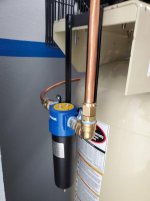
That important distinction took me quite a few days to get my head around. I'm posting this here in a effort to help others as they search for their own solutions to drying compressed air.
thnx for reading and standing by for the incoming.