Welcome to the cult. We have Koolade and cookies.
I thought cars and boats were expensive until I went down this rabbit hole. It is a lot of fun though. Well worth it.
I keep cars pretty inexpensive, and as long as I can keep my machine shop under $10k I'll be saving money even if I just do small parts. Time is another matter altogether, but I'm having a good time here.
That's a good start, I'd add these two items if you don't already have them:
1. Edge/center finder
2. Vernier calipers
I have a set of vernier calipers that I've been very happy with, and just realized that I need a center finder ... I'm not sure what use case exists for an edge finder yet. I just know that they're fun wobbly things that you put into a milling machine that aren't designed to cut.
I'm going to add 'machinist square' to the list as well. I'm not sure any of my edges are perpendicular, and don't have a great way to measure them. My distances from one face to the other are good, but for all I know everything I make could be a parallelogram.
I'm pretty sure he's using "bridgeport" as a verb. I think he means "to mill".
Yes, but then immediately no.
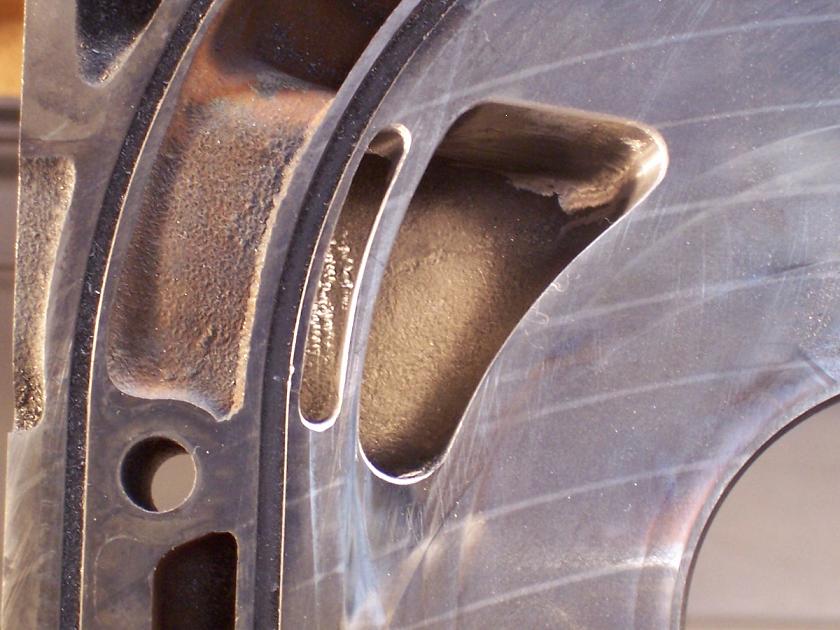
We have LAYERS of misunderstanding here, but I think I can explain. In a rotary engine, rotors live inside a housing. On either side is an 'iron' and that 'iron' has the exhaust port. Enlarging that exhaust port is just like swapping to larger valve and a longer exhaust-duration cam (with different exhaust valve timing. That's referred to as
porting the
irons. This is great, but if you remove all the material possible to make the best power possible, the side seals (which seal the rotor against the iron) will fall into the port and snap off. Bad things ensue.
To get around the side seals falling in, you leave a 'bridge' of steel in the iron, and mill out as much material as possible along the rotor face, without risking the side seal. Leaving the 'bridge' while 'porting' is referred to as
bridgeporting.
So when bridgeporting a rotary engine, you can certainly use a bridgeport to mill a bridgeport.
IF the head tilts 45* left or right then a dial test indicator (DTI) in the spindle will tram the head in X axis to the fixed jaw of your vice. As vpd66 said, you can shim the column to tram the Y axis.
You'll soon find that the SB at the maker space is too far away and you will need a lathe next to the mill in your shop. It is indeed a very slippery slope that you are treading on. Move ahead with caution as it can expensive. Been there, done that, and can no longer afford the tee shirt..
I'm looking at a small benchtop lathe for under $1k (similar to the milling machine) and I've been looking for a belt sander for awhile. I think my next project is going to be a vertical adapter for my horizontal bandsaw. It'd badly needed at this point.
Here's what I've accomplished so far. I took the aluminum hood spacers out of my CRX the day I bought it, and tossed them into a bin. I dug them out today, and decided I'd try my hand at making the soft jaws. It ... sort of worked.
Doing this without parallels was extremely challenging. I ended up grabbing a flycutter bit (don't know why it was in my toolbox, but it's very old and this is my first time using a milling machine) and using that to space the block up in the vise. Without that, I would've been milling the top of my vise, and I'm told that's not ideal.
I trammed the headstock in the only way I could figure out how:
1. Plunge to the surface of the work piece
2. Read the swirly patterns
3. If swirls are on the left, lean the headstock right. If swirls are on the right, lean the headstock left.
4. Repeat until swirls are on both left and right at the same time.
I don't have a way to tram the table/vise, but based on the cuts I'm getting, it looks fine. After a cut along the top of the work piece, I pointed the vernier calipers at the top of the vise and measured the distance to the freshly-cut surface of the work piece. It was within .005" over 4 inches, so ... I guess that's good enough for me.
After that, the biggest challenge I had was with the drilling chuck/collet. First, all my bits are too long (I sure do wish I had more headstock travel now). Second, I don't have the key for this crappy chuck, so it really didn't grip well. I managed to drill a couple of holes based on the original jaws, and even managed to countersink them, but it wasn't a fun process.
I don't think I'm going to get a replacement key for this, I'm much happier with keyless chucks. If you need the mechanical advantage of a gear to hold a drill bit in place, you need to slow down and take smaller bites anyway.
Overall, I'm calling this first operation a success. I'll have to thin that jaw down a bit, then make a second identical copy. Probably not tonight though, I'm getting pretty hungry.