To avoid these ads, REGISTER NOW!

My first machining tool

drummingpariah

Well-known member
Joined
Jul 20, 2009
Messages
306
Location
Manchester, NH
I've avoided machining for years now, knowing that it's a massive rabbit hole that many people never emerge from. This weekend, I made a bad decision and bought a milling machine: A simple little Grizzly G0758. It's powerful enough that I can bridgeport irons and mill rotors for high-speed operation ... but not so huge that I need to pour a pad for it and rent a forklift when I move out of here.

33239139584_c880d7d4ea_b.jpg


It came with a lot of tooling, but has highlighted several shortcomings I have in my shop. Parallels, measuring tools, and a vertical conversion plate for my horizontal bandsaw are all going to have to happen in the near future to make real use of this thing. Most of that is on order though, so I expect to be screwing up some parts in the near future.

I've watched a ton of Clickspring and This old Tony, but I'm looking for some good introductory projects to tackle once I have my parallels. So far, I'm planning some soft 6061 jaws for all my bench vises. They seem simple and inexpensive enough, and still give me an excuse to familiarize myself with the in's and out's of machining.
 
To avoid these ads, REGISTER NOW!

matt_i

Well-known member
Joined
Mar 14, 2008
Messages
10,716
Location
SE Michigan
A lot of what I do with my mill is jig-drilling...sort of precision placement of holes in mating parts. Excellent as a setup tool for removing broken bolts when armed with a solid carbide spot drill. Soft jaws and slots sound like good first projects. I don't think you can tram the head on that one.
 

theoldwizard1

Well-known member
Joined
Feb 22, 2011
Messages
43,072
Location
SE MI
Nice looking machine ! I wonder why Grizzly calls it a mill/drill ? Most mill/drills, that I have seen, have a round column so the head can be swung to the side and you the distance to the floor to work with. Of course, then you have to square up the head when you move it back.

Also the maximum spindle-to-table is 8-3/4" while the larger G0619 is 14-3/4". unless you are using a very low profile height, you are not going to have much usable Z-axis. I know that columns will flex with tool pressure, but stepping up to a knee mill costs a lot of $$$ !
 

buildyourown

Well-known member
Joined
Jan 8, 2010
Messages
185
Start making tools.
Vise stop for you milling vise.
step jaws.
Machinable Soft jaws
v blocks
 

LXCam

ALLIANCE MEMBER
Joined
Apr 23, 2013
Messages
19,070
Location
AZ
Major congrats on your new money pit! ;)


As you already eluded too you know the real cost isn't the tool, it's the tooling. But you'll never going to regret getting that mill. Those are nice little units and once you learn how to true it up and how to make chips without screwing the pooch it's going to provide years of usefulness.
 

vpd66

Well-known member
Joined
Mar 1, 2010
Messages
709
Location
Central Wisconsin
Because the spindle is designed for the side loads of milling and as matt noted, you can't tram the head, so accuracy is limited to the assembly of the machine.

You can still tram the head of that machine you just have to get creative. The column should bolt to the base with 4 large bolts. Simply loosening the bolts and putting shim stock under certain corners will allow you to square the head to the table. Before you even plug the machine in you should tram the head.
 
Last edited:

stioc

Well-known member
Joined
May 2, 2005
Messages
1,317
Location
SoCal
Congrats man! I too got a mill/drill a couple of months ago as my first machining tool. There are a couple of books on milling/milling-projects out there but as someone mentioned the most common use is milling slots and drilling very accurate holes in a pattern - especially if you have a DRO setup it makes it a breeze. You can also cut radius on parts with a rotary table but I have yet to try that.

Be warned though that despite my best efforts to resist it the lathe followed me home within a few weeks of getting the mill. The two really go together to do any sort of complex projects. I find myself using the lathe more often for some reason.

Oh and if it's a solid column I wouldn't worry about tramming etc, the accuracy is most likely plenty good for anything you'd want to do for a while.
 

rsanter

Well-known member
Joined
Dec 22, 2007
Messages
18,487
Location
visalia ca
You are right....you have made a bad choice.
Nor open your wallet and pour the money out......


Actually I'm going to tell,you to start small. Start by making some little,projects that you can do with the tooling that you do have. This will get you familiar with the machine before you take on any specific work you want to do.
While you over time will need more tooling than the machine cost you, you can do a lot of basic work with just a few items.
Also start going to some auctions and flea markets that have tooling and stock up on some bargains.
You will also want to look for a local used machine dealer. Often they sell the basic used cutters cheap as most businesses just buy new.

Bob
 

braidmeister

Well-known member
Joined
Mar 31, 2011
Messages
589
Congratulations on your new machine.

It's called a Mill/Drill because in addition to the Z adjustment on the dovetailed column, it also has a quill (with DRO as you can see) and hand wheel for drilling. The machine isn't meant to mill using the quill in the downward position. You'll want to lock it in the up position to mill. This is way nicer than working the column for drilling/countersink operations.

Yes...tramming. You will want to check that the column is square to the base with a large precision square. You'll then want to adjust tram via the 4 bolts that control the head tilt for the X direction. You'll want some aluminum foil (about .0005 or so for regular; .001 for heavy duty thickness) or precision shims to pack out the column at the top or bottom of the base, for the Y direction.

Be patient when tramming in the Y...you should only have to do it once. Also make sure the machine is bolted down solid and that it is a level as you can get it.
 

Kevin54

MEMBER EMERITUS
Joined
Jan 12, 2005
Messages
29,341
Location
Urbana, Ohio
I've watched a ton of Clickspring and This old Tony, but I'm looking for some good introductory projects to tackle once I have my parallels. So far, I'm planning some soft 6061 jaws for all my bench vises. They seem simple and inexpensive enough, and still give me an excuse to familiarize myself with the in's and out's of machining.
__________________

If you are looking for tools to make, get online at www.mscdirect.com or www.travers.com and order yourself one of their catalogs. They are nice and thick. The catalogs will give you a great idea on things to make for machinist tooling. I have made angle plates, squares, 1-2-3 blocks, vee blocks, vises, specialty parallels and blocks of different sizes, vise stops, quill stops, part stops, and the list goes on. If you get bitten by the machining bug......there is no return.
 
OP
D

drummingpariah

Well-known member
Joined
Jul 20, 2009
Messages
306
Location
Manchester, NH
Wow. I go away for one day and come back to THIS?

A lot of what I do with my mill is jig-drilling...sort of precision placement of holes in mating parts. Excellent as a setup tool for removing broken bolts when armed with a solid carbide spot drill. Soft jaws and slots sound like good first projects. I don't think you can tram the head on that one.

I'm new to this, so I might be missing terms here, but the headstock rotates on the X axis 45 degrees. That's been my biggest challenge to overcome so far, as left/right cuts only end up cutting with one side of the endmills. Trying to get it perpendicular with the table (really, with the vise) is difficult without measuring tools.

Nice looking machine ! I wonder why Grizzly calls it a mill/drill ? Most mill/drills, that I have seen, have a round column so the head can be swung to the side and you the distance to the floor to work with. Of course, then you have to square up the head when you move it back.

Also the maximum spindle-to-table is 8-3/4" while the larger G0619 is 14-3/4". unless you are using a very low profile height, you are not going to have much usable Z-axis. I know that columns will flex with tool pressure, but stepping up to a knee mill costs a lot of $$$ !

I'll measure that. It looks like I have more Z-axis than I can currently dream of having. I got a good deal on this used with a bunch of tooling, so I'm not complaining even if it's limited.

Start making tools.
Vise stop for you milling vise.
step jaws.
Machinable Soft jaws
v blocks

That sounds like a perfect place to start. I'm still learning the names for all the things, so having something to search for is pretty helpful.

Major congrats on your new money pit! ;)

As you already eluded too you know the real cost isn't the tool, it's the tooling. But you'll never going to regret getting that mill. Those are nice little units and once you learn how to true it up and how to make chips without screwing the pooch it's going to provide years of usefulness.

That's the plan. I can take these skills and direct them at the bigger milling machine we're getting for the Makerspace.

Because the spindle is designed for the side loads of milling and as matt noted, you can't tram the head, so accuracy is limited to the assembly of the machine.

If I understand correctly, I can tram the X axis but not the Y axis.
http://www.hoaglun.com/blog/2015/tram-the-g0758-mill

You can still tram the head of that machine you just have to get creative. The column should bolt to the base with 4 large bolts. Simply loosening the bolts and putting shim stock under certain corners will allow you to square the head to the table. Before you even plug the machine in you should tram the head.

... so maybe I can tram the Y axis as well.

Be warned though that despite my best efforts to resist it the lathe followed me home within a few weeks of getting the mill. The two really go together to do any sort of complex projects. I find myself using the lathe more often for some reason.

I decided to start with the milling machine, because I already have access to a Southbend lathe at the Makerspace, a couple miles away (see more here: http://www.garagejournal.com/forum/showpost.php?p=6079933&postcount=42)

What does, "bridgeport irons and mill rotors", mean?

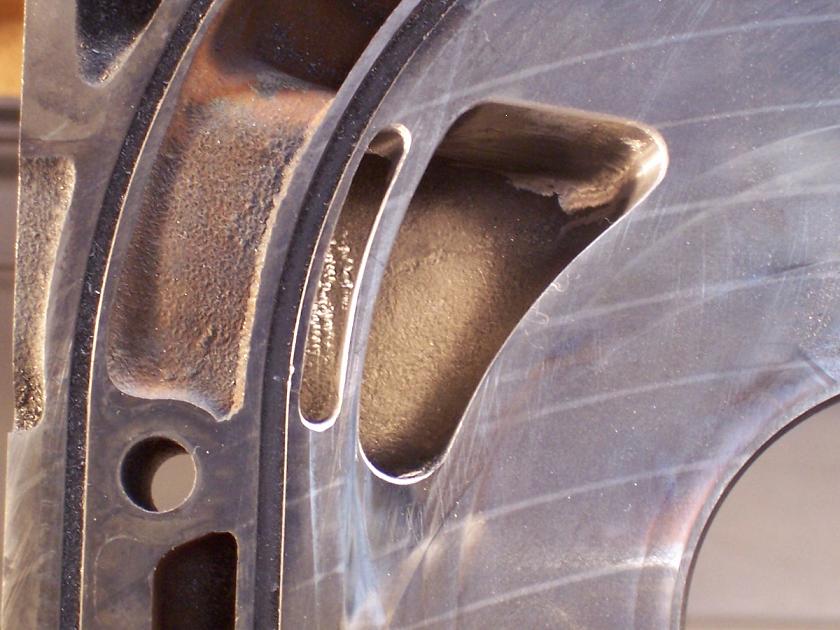
Rotary engines are funny things with funny names. They don't have cams or valves, just holes that are exposed at specific points in engine rotation. Changing the shape of those holes changes what amounts to 'cam timing'
123471d1122199266-my-turbo-bridgeport-pics-pic3.jpg


I have milled a few rotors, but don't think I have ever bridgeported any irons.
(In lighthearted fun)

You've never enjoyed the deafening pain of a noisy rotary engine, then :-D

You are right....you have made a bad choice.
Nor open your wallet and pour the money out......


Actually I'm going to tell,you to start small. Start by making some little,projects that you can do with the tooling that you do have. This will get you familiar with the machine before you take on any specific work you want to do.
While you over time will need more tooling than the machine cost you, you can do a lot of basic work with just a few items.
Also start going to some auctions and flea markets that have tooling and stock up on some bargains.
You will also want to look for a local used machine dealer. Often they sell the basic used cutters cheap as most businesses just buy new.

Bob

Thanks Bob. I've started by just trying to square up some stock. I figure doing that is a good, cheap way to get a bunch of passes and lots of practice without going through a bunch of material.

Congratulations on your new machine.

It's called a Mill/Drill because in addition to the Z adjustment on the dovetailed column, it also has a quill (with DRO as you can see) and hand wheel for drilling. The machine isn't meant to mill using the quill in the downward position. You'll want to lock it in the up position to mill. This is way nicer than working the column for drilling/countersink operations.

Yes...tramming. You will want to check that the column is square to the base with a large precision square. You'll then want to adjust tram via the 4 bolts that control the head tilt for the X direction. You'll want some aluminum foil (about .0005 or so for regular; .001 for heavy duty thickness) or precision shims to pack out the column at the top or bottom of the base, for the Y direction.

Be patient when tramming in the Y...you should only have to do it once. Also make sure the machine is bolted down solid and that it is a level as you can get it.

It is neither bolted down solidly nor level right now, but I'm getting ready to build a stand for this. The plan is to bolt that to the wall with some rubber bushings to dampen the vibration noise, and bolt the milling machine to some 1/4" plate on the top of it. I just need to decide what tools should be attached to that stand, and I'll dig right in.

If you are looking for tools to make, get online at www.mscdirect.com or www.travers.com and order yourself one of their catalogs. They are nice and thick. The catalogs will give you a great idea on things to make for machinist tooling. I have made angle plates, squares, 1-2-3 blocks, vee blocks, vises, specialty parallels and blocks of different sizes, vise stops, quill stops, part stops, and the list goes on. If you get bitten by the machining bug......there is no return.

I've ordered a basic set of 1-2-3 blocks, a basic set of parallels, and a dial gauge. I THINK that will cover the basics of what I need to get started.

I'm hoping to head into the garage in the next hour or so, and I'll TRY to finish up a set of aluminum jaws. We'll see how this goes!
 

gte718p

Well-known member
Joined
Mar 12, 2009
Messages
3,949
Welcome to the cult. We have Koolade and cookies.

I thought cars and boats were expensive until I went down this rabbit hole. It is a lot of fun though. Well worth it.
 

stioc

Well-known member
Joined
May 2, 2005
Messages
1,317
Location
SoCal
I've ordered a basic set of 1-2-3 blocks, a basic set of parallels, and a dial gauge. I THINK that will cover the basics of what I need to get started.

That's a good start, I'd add these two items if you don't already have them:
1. Edge/center finder
2. Vernier calipers
 

rmack898

Well-known member
Joined
Jan 23, 2007
Messages
3,140
Location
Honu Grove NE Florida
IF the head tilts 45* left or right then a dial test indicator (DTI) in the spindle will tram the head in X axis to the fixed jaw of your vice. As vpd66 said, you can shim the column to tram the Y axis.

You'll soon find that the SB at the maker space is too far away and you will need a lathe next to the mill in your shop. It is indeed a very slippery slope that you are treading on. Move ahead with caution as it can expensive. Been there, done that, and can no longer afford the tee shirt..
 
OP
D

drummingpariah

Well-known member
Joined
Jul 20, 2009
Messages
306
Location
Manchester, NH
Welcome to the cult. We have Koolade and cookies.

I thought cars and boats were expensive until I went down this rabbit hole. It is a lot of fun though. Well worth it.

I keep cars pretty inexpensive, and as long as I can keep my machine shop under $10k I'll be saving money even if I just do small parts. Time is another matter altogether, but I'm having a good time here.

That's a good start, I'd add these two items if you don't already have them:
1. Edge/center finder
2. Vernier calipers

I have a set of vernier calipers that I've been very happy with, and just realized that I need a center finder ... I'm not sure what use case exists for an edge finder yet. I just know that they're fun wobbly things that you put into a milling machine that aren't designed to cut.

I'm going to add 'machinist square' to the list as well. I'm not sure any of my edges are perpendicular, and don't have a great way to measure them. My distances from one face to the other are good, but for all I know everything I make could be a parallelogram.

I'm pretty sure he's using "bridgeport" as a verb. I think he means "to mill".

Yes, but then immediately no.

We have LAYERS of misunderstanding here, but I think I can explain. In a rotary engine, rotors live inside a housing. On either side is an 'iron' and that 'iron' has the exhaust port. Enlarging that exhaust port is just like swapping to larger valve and a longer exhaust-duration cam (with different exhaust valve timing. That's referred to as porting the irons. This is great, but if you remove all the material possible to make the best power possible, the side seals (which seal the rotor against the iron) will fall into the port and snap off. Bad things ensue.

To get around the side seals falling in, you leave a 'bridge' of steel in the iron, and mill out as much material as possible along the rotor face, without risking the side seal. Leaving the 'bridge' while 'porting' is referred to as bridgeporting.

So when bridgeporting a rotary engine, you can certainly use a bridgeport to mill a bridgeport.

IF the head tilts 45* left or right then a dial test indicator (DTI) in the spindle will tram the head in X axis to the fixed jaw of your vice. As vpd66 said, you can shim the column to tram the Y axis.

You'll soon find that the SB at the maker space is too far away and you will need a lathe next to the mill in your shop. It is indeed a very slippery slope that you are treading on. Move ahead with caution as it can expensive. Been there, done that, and can no longer afford the tee shirt..

I'm looking at a small benchtop lathe for under $1k (similar to the milling machine) and I've been looking for a belt sander for awhile. I think my next project is going to be a vertical adapter for my horizontal bandsaw. It'd badly needed at this point.

Here's what I've accomplished so far. I took the aluminum hood spacers out of my CRX the day I bought it, and tossed them into a bin. I dug them out today, and decided I'd try my hand at making the soft jaws. It ... sort of worked.

33744360700_dbdc16f2d0_b.jpg


Doing this without parallels was extremely challenging. I ended up grabbing a flycutter bit (don't know why it was in my toolbox, but it's very old and this is my first time using a milling machine) and using that to space the block up in the vise. Without that, I would've been milling the top of my vise, and I'm told that's not ideal.

I trammed the headstock in the only way I could figure out how:
1. Plunge to the surface of the work piece
2. Read the swirly patterns
3. If swirls are on the left, lean the headstock right. If swirls are on the right, lean the headstock left.
4. Repeat until swirls are on both left and right at the same time.

I don't have a way to tram the table/vise, but based on the cuts I'm getting, it looks fine. After a cut along the top of the work piece, I pointed the vernier calipers at the top of the vise and measured the distance to the freshly-cut surface of the work piece. It was within .005" over 4 inches, so ... I guess that's good enough for me.

After that, the biggest challenge I had was with the drilling chuck/collet. First, all my bits are too long (I sure do wish I had more headstock travel now). Second, I don't have the key for this crappy chuck, so it really didn't grip well. I managed to drill a couple of holes based on the original jaws, and even managed to countersink them, but it wasn't a fun process.

I don't think I'm going to get a replacement key for this, I'm much happier with keyless chucks. If you need the mechanical advantage of a gear to hold a drill bit in place, you need to slow down and take smaller bites anyway.

Overall, I'm calling this first operation a success. I'll have to thin that jaw down a bit, then make a second identical copy. Probably not tonight though, I'm getting pretty hungry.
 
Last edited:
To avoid these ads, REGISTER NOW!

bullnerd

Well-known member
Joined
Sep 17, 2012
Messages
5,690
Location
Jersey
Ahhh.....got it.

I have stood next to the burnout box many Friday nights listening to rotarys scream!

Right up until they drop the clutch and it shuts the engine down! At least the guys that got wrong anyway.

You'd be surprised how many "machinists" cant make a square with a milling machine.
 
OP
D

drummingpariah

Well-known member
Joined
Jul 20, 2009
Messages
306
Location
Manchester, NH
Surely you guys are not using vernier calipers, but dial calipers instead?

I had always thought dial calipers were a type of vernier calipers. Now I know, I'm using dial calipers. :dunno:

Ahhh.....got it.

I have stood next to the burnout box many Friday nights listening to rotarys scream!

Right up until they drop the clutch and it shuts the engine down! At least the guys that got wrong anyway.

You'd be surprised how many "machinists" cant make a square with a milling machine.

I dunno, it took me a few hours to get set up enough to make a square-type shape. I think I could turn out little rectangles of aluminum pretty quickly now, though. There must be a market for this rare skill I've unlocked! I'm going to make a fortune! :lol:
 

happymachinist

Well-known member
Joined
Jul 2, 2015
Messages
118
Location
Central NE
An edge/center finder is useful when positioning holes accurately from the edge of your part. A combo unit might be the way to go to save a little money.

Stub or screw machine length bits are available that are shorter and will help with your Z axis limitation.

You might also look into a set of center drills. They will help prevent your twist drills from wandering off location and increase your location accuracy.

Also, always remember to take the lash out of your lead screws when moving to location. Say if you edge find in the X positive Y negative direction (upper left of your part) you need to hit your numbers moving in the same direction. I can elaborate more if needed.

Good luck!


Sent from my XT1254 using Tapatalk
 

dr_clyde

Well-known member
Joined
Jan 7, 2009
Messages
6,421
Location
Holland, MI
drummingpariah Yes said:
porting[/B] the irons. This is great, but if you remove all the material possible to make the best power possible, the side seals (which seal the rotor against the iron) will fall into the port and snap off. Bad things ensue.

To get around the side seals falling in, you leave a 'bridge' of steel in the iron, and mill out as much material as possible along the rotor face, without risking the side seal. Leaving the 'bridge' while 'porting' is referred to as bridgeporting.

So when bridgeporting a rotary engine, you can certainly use a bridgeport to mill a bridgeport.


Huh. You learn something every day. In my world, we take the rotary out and replace it with at V8 :lol_hitti

What car is it attached to? A good friend of mine is working on an 87 RX7.
 

bullnerd

Well-known member
Joined
Sep 17, 2012
Messages
5,690
Location
Jersey
"I dunno, it took me a few hours to get set up enough to make a square-type shape. I think I could turn out little rectangles of aluminum pretty quickly now, though. There must be a market for this rare skill I've unlocked! I'm going to make a fortune! "

Your a natural!

I've seen a lot of guys make parallelograms trying to square a piece of stock for machining.

"You might also look into a set of center drills. They will help prevent your twist drills from wandering off location and increase your location accuracy."

I prefer spot drills, center drills are for the lathe.
 

pmason0

Well-known member
Joined
Nov 12, 2011
Messages
251
Location
East Tennessee
Have fun, last fall I bought a G0759, to play around with, probably spent as much money as the mill for accessories. The good or bad thing I MCS and Shars local to me.
 
OP
D

drummingpariah

Well-known member
Joined
Jul 20, 2009
Messages
306
Location
Manchester, NH
Awesome job! You jumped right in and made something cool, thanks for posting!

Thanks! I'll be excited when it's mounted in the vise and I clamp my first piece of work. Right now, it's just a 'work in progress' and I'm allergic to those.

An edge/center finder is useful when positioning holes accurately from the edge of your part. A combo unit might be the way to go to save a little money.

Stub or screw machine length bits are available that are shorter and will help with your Z axis limitation.

You might also look into a set of center drills. They will help prevent your twist drills from wandering off location and increase your location accuracy.

Also, always remember to take the lash out of your lead screws when moving to location. Say if you edge find in the X positive Y negative direction (upper left of your part) you need to hit your numbers moving in the same direction. I can elaborate more if needed.

Huh. You learn something every day. In my world, we take the rotary out and replace it with at V8 :lol_hitti

What car is it attached to? A good friend of mine is working on an 87 RX7.

It's a Datsun s30 (240z/260z/280z) ... sort of. My first s30 came with a 283 sbc, and when that died I put a 400ci sbc in it. There's nothing quite like the sound of a lopey v8 with big side dumps.

21743897151_c071e933a3_c.jpg


After a few more s30's, I ended up with my current project. It's a street-legal tube-frame rotary-powered hillclimb racecar. Most of the build is being tracked here:
http://www.garagejournal.com/forum/showthread.php?t=269098

"I dunno, it took me a few hours to get set up enough to make a square-type shape. I think I could turn out little rectangles of aluminum pretty quickly now, though. There must be a market for this rare skill I've unlocked! I'm going to make a fortune! "

Your a natural!

I've seen a lot of guys make parallelograms trying to square a piece of stock for machining.

"You might also look into a set of center drills. They will help prevent your twist drills from wandering off location and increase your location accuracy."

I prefer spot drills, center drills are for the lathe.

I have some research to do on drilling bits. I've always seen them as 'round thing that makes a hole' and never noticed the variations other than diameter.

Have fun, last fall I bought a G0759, to play around with, probably spent as much money as the mill for accessories. The good or bad thing I MCS and Shars local to me.

Part of the selling point for this was how much tooling it came with for $1k. I knew from the outset that it'd be an expensive endeavor.
 

Kevin54

MEMBER EMERITUS
Joined
Jan 12, 2005
Messages
29,341
Location
Urbana, Ohio
I trammed the headstock in the only way I could figure out how:
1. Plunge to the surface of the work piece
2. Read the swirly patterns
3. If swirls are on the left, lean the headstock right. If swirls are on the right, lean the headstock left.
4. Repeat until swirls are on both left and right at the same time.

You need a dial indicator and an arm that will fasten to the quill. for one, you will need it to tram the head. Secondly, you will need it to square your vise to the table. As far as tramming the head according to your cut pattern....good luck on that. If you do hit it, it was pure luck.

Every one that I have taught to machine, the first thing to learn was how to tram a mill and square a vise. Once that is done, you can make yourself a set of temporary parallels. Also, if you are going to make precision items, pick yourself up a 10" or 12" height gage. then you can make an adapter for your dial indicator to precisely layout holes. You also need a precision square to check for squareness on machined blocks of material.

One other little tip when learning to machine......metal WILL move on you. If you have a longer piece of metal or a metal plate that you want to machine down. You have to machine both sides. Especially when machining down the thin side of the plate or bar. Cutting only one side relieves the material and can actually bow it. A couple of cuts off of each side, depending on the thickness of the cut will insure the part stays straight(er). Learn what metal does and how it reacts. Look at it as you are looking at it in slow motion. What is the cutter doing, what is the metal doing, What does the different sounds mean? Once you can do that, you are on your way.
 

Kevin54

MEMBER EMERITUS
Joined
Jan 12, 2005
Messages
29,341
Location
Urbana, Ohio
I have some research to do on drilling bits. I've always seen them as 'round thing that makes a hole' and never noticed the variations other than diameter.

Drilling bits are most commonly just called drill bits. But aside from that, never depend on a drill bit to make a "precision" hole. ALWAYS use a reamer or a boring bar. A drill bit will actually make a faceted hole depending on material. If you are just drilling a hole for a bolt, that is fine. But drilling a hole for a dowel pin....you should always use a reamer.
 
OP
D

drummingpariah

Well-known member
Joined
Jul 20, 2009
Messages
306
Location
Manchester, NH
So much new nomenclature to learn. I'm trying not to get too hung up on doing precision work yet. For now, my focus has been on calculating an appropriate cutting speed, getting measurements as close as I can, and knowing what I need to know or own to do a better job.

Not having enough measuring equipment to tram the machine is the biggest problem, at this point.

Later, I'd like to be able to bore the bolt holes in the rotary housings/irons to accept alignment dowels ... but the engine won't need that kind of upgrade for at least a year.
 

theoldwizard1

Well-known member
Joined
Feb 22, 2011
Messages
43,072
Location
SE MI
IF the head tilts 45* left or right then a dial test indicator (DTI) in the spindle will tram the head in X axis to the fixed jaw of your vice. As vpd66 said, you can shim the column to tram the Y axis.

A couple of years ago I thought I wanted a bench top mill. I did lots of research and ultimately realized I really did not have enough use for one and that the "accessories" (which are really MANDATORY) will drian your pocket boom fast !

The biggest take away I had from that learning experience is if you are buying a benchtop mill, get one with a FIXED Z-column. Spend the time to shim it perpendicular to X and Y and don't mess with it !

All bench top mills have a limited Z range so doing any milling that is NOT perpendicular to X and Y requires a tilting vice which take up even more of you Z range. There are aftermaket tables for extend X and Y on the benchtop mills, but nobody is selling and extra tall Z column, likely because the higher the head is, the more the column will flex.
 
Last edited:

buildyourown

Well-known member
Joined
Jan 8, 2010
Messages
185
I'm a machinist by trade.

You dont need much in tools to get started
6" caliper
6" scale
0-1 mic
test indicator


You can do a LOT with that. All those are pretty cheap used too.
Grab some screw machine length drill bits if you are cramped for z travel.
 

rk_tek

Well-known member
Joined
Apr 12, 2015
Messages
153
Location
Bella Vista, AR
Congrats on the new mill. It's no less a money pit than anything rotary. I've had 3 rx7's. I sold the last one with 2 spare engines, 3 transmissions, and enough spare electronics for 2 space shuttles. I miss the sound, but not the constant task of chasing down intermittent problems.
 

turfgnome

Well-known member
Joined
Jun 30, 2013
Messages
258
So much new nomenclature to learn. I'm trying not to get too hung up on doing precision work yet. For now, my focus has been on calculating an appropriate cutting speed, getting measurements as close as I can, and knowing what I need to know or own to do a better job.

Not having enough measuring equipment to tram the machine is the biggest problem, at this point.

Later, I'd like to be able to bore the bolt holes in the rotary housings/irons to accept alignment dowels ... but the engine won't need that kind of upgrade for at least a year.

I have found for most jobs that I use my mill for it acts as a glorified drill press, don't get me wrong I would not get rid of it but most of the time you do not need to be as precise as most here act like.
 

stioc

Well-known member
Joined
May 2, 2005
Messages
1,317
Location
SoCal
I have found for most jobs that I use my mill for it acts as a glorified drill press, don't get me wrong I would not get rid of it but most of the time you do not need to be as precise as most here act like.

Kind of like a lathe is a glorified hand-drill in a vise with a big chuck :lol_hitti

In all seriousness there is some truth to both statements. Precision will come with time (I'm not there yet either being a newbie myself) but uses for a mill? slotting, cutting dove tails, making T-nuts or T-slots, making brackets and adapters (intake manifold, carburetor adapters, transmission adapters etc) are all things you can do on a mill. Oh and with a CNC mill you can do all sorts of shapes, signs etc so the sky's the limit in the right hands.
 

turfgnome

Well-known member
Joined
Jun 30, 2013
Messages
258
Kind of like a lathe is a glorified hand-drill in a vise with a big chuck :lol_hitti

In all seriousness there is some truth to both statements. Precision will come with time (I'm not there yet either being a newbie myself) but uses for a mill? slotting, cutting dove tails, making T-nuts or T-slots, making brackets and adapters (intake manifold, carburetor adapters, transmission adapters etc) are all things you can do on a mill. Oh and with a CNC mill you can do all sorts of shapes, signs etc so the sky's the limit in the right hands.

come on now, I never said that is what a mill is, just that is what I and a lot of others use it for. Yes from time to time I make a precise part, just most of the time within 1/8 of an inch is good enough. My lathe on the other hand is for the most part more precise work. Depends on the person and needs. And with practice you can do the shapes with a manual mill, my first time using one a guy wrote my name in the piece using the mill, slickist operation I have ever seen to this day.
 
Last edited:

superskaterxes

Well-known member
Joined
Jul 31, 2013
Messages
418
Location
Maryland
i am in the same boat as you so i will be following this thread. Im a car nut myself and im always making brackets with other tools when a mill would have save me hours. Ive been looking at benchtop machines but just haven't pulled the trigger yet. Get yourself a good DRO and that will be your best measurement tool to use with the mill.
 
To avoid these ads, REGISTER NOW!
Top Bottom