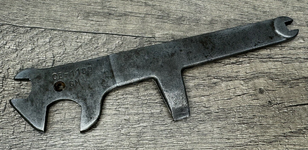
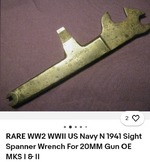
Those things are tiny, comparatively speaking.
Well I was using your postulations as the basis for my searches!Thanks for confirming my postulation!![]()
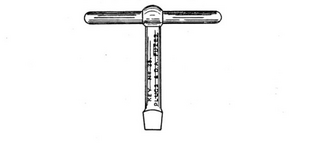
True, but those were used on small arms. Scaling up to larger guns, you can see how manufacturers supporting the ordnance discipline with tools could scale a similar design up. Or not and we're just talking ourselves into it!Those things are tiny, comparatively speaking.
Agreed. My searches have been futile.I think the biggest clue has got to be the AS&S.
Or not and we're just talking ourselves into it!![]()
If the manuals I had found listing screwdrivers and keys in association with a gun using a hydraulic buffer (such as the one I posted, for example) had included an illustration or description of tools, I would've posted it. I haven't found one yet....seems reasonable they would be described/pictured in tech manuals...
No skills required. Instead of using Google, use Google Books. Everything else is the same, but the corpus is all historical documents, and only historical documents. It's reader nerd heaven. No YouTube. No sales. No websites. Just old books.I currently lack the computer skills to access them.
Thanks for the Google books heads-up; yes I only use regular google; will enlist the help of my grandkids to move forward.If the manuals I had found listing screwdrivers and keys in association with a gun using a hydraulic buffer (such as the one I posted, for example) had included an illustration or description of tools, I would've posted it. I haven't found one yet.
No skills required. Instead of using Google, use Google Books. Everything else is the same, but the corpus is all historical documents, and only historical documents. It's reader nerd heaven. No YouTube. No sales. No websites. Just old books.
A yes or no answer would provide a misguided impression. There are dozens of TM's for large British guns with hydraulic buffers on Google Books, all dated between the 1880's and early 20th century, all of them referencing screwdrivers and/or keys in descriptions, in lists, in tables, etc, but most of them do not include an illustration of any of the tools. The guns, carriages, valves, packing diagrams, etc, are illustrated, but no tools. So it's not that I can't find this tool, explicitly. This tool might in fact be the tool or a tool like it being referenced. But the manuals are not definitive.Do I understand correctly, you have accessed artillery TM's with hyd. buffers & the tool kits DO NOT show this tool?


Absolutely fantastic research. Since your earlier post, I dabbled around using reg. Google; found several mentions of an oil drain tool on a British hyd/buffer system, but the picture was unintelligible. Maybe this could be another lead.A yes or no answer would provide a misguided impression. There are dozens of TM's for large British guns with hydraulic buffers on Google Books, all dated between the 1880's and early 20th century, all of them referencing screwdrivers and/or keys in descriptions, in lists, in tables, etc, but most of them do not include an illustration of any of the tools. The guns, carriages, valves, packing diagrams, etc, are illustrated, but no tools. So it's not that I can't find this tool, explicitly. This tool might in fact be the tool or a tool like it being referenced. But the manuals are not definitive.
Here is a good example, from a 1914 Q.F. (Quick Firing) 15-pounder, which literally cites a "Key, hydraulic buffer" by name, but provides no illustration or description.
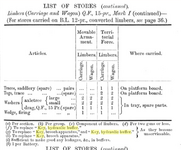
Other keys (breech, fuze, fuze hole, primer, etc) are listed and described (though not illustrated), but not the hydraulic buffer key. Not sure why.
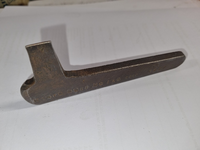
I have found a few later manuals starting to show more tools. Here is a figure from the 1928 Handbook for the BL 60-pounder, for example. I like the robust look of the blade. I really like the look (and implicit turning and spinning function) of that tommy bar with respect to my artistic rendering and extended logic of @Mintgrun's very good observation! But note that it's not associated with the hydraulic buffer. I'm getting strong inferences. But it's not definitive.
![]()
Squire! I gotta piss! Whadda' mean you lost the fricken KEY!?!?
You're welcome. It is the most important resource/reference in the vintage tool collectors research toolkit. First stop for me encountering any marking on any tool I don't know is GJ Search. Because there is no more diverse corpus for vintage hand tool terminology on the internet, and because I don't post questions before I look myself. (Dad didn't raise a lazy loafer.Thanks for the Google books heads-up;
I noticed that the Detailed description differed from the Ad, saying, "Starting with the largest spanner this is marked BR (M) 1/8 and 3/4, marked AS&SW to Back, this spanner has been cleaned and dressed, the next spanner is marked BR, 11/16 BS - 5/8 W and 1 1/8 BS - 1 W AS&SW to back." I messaged the seller to clarify and inquire if he might elaborate on either variation. (Could be the same if the "W" is Works.)I have been chasing AS&S.
Thanks.Armstrong, Stevens & Sons was making tools during that time in the UK.
Well, they hid that Item Details button well, took three looks over the listing to find it.I noticed that the Detailed description differed from the Ad, saying, "Starting with the largest spanner this is marked BR (M) 1/8 and 3/4, marked AS&SW to Back, this spanner has been cleaned and dressed, the next spanner is marked BR, 11/16 BS - 5/8 W and 1 1/8 BS - 1 W AS&SW to back." I messaged the seller to clarify and inquire if he might elaborate on either variation. (Could be the same if the "W" is Works.
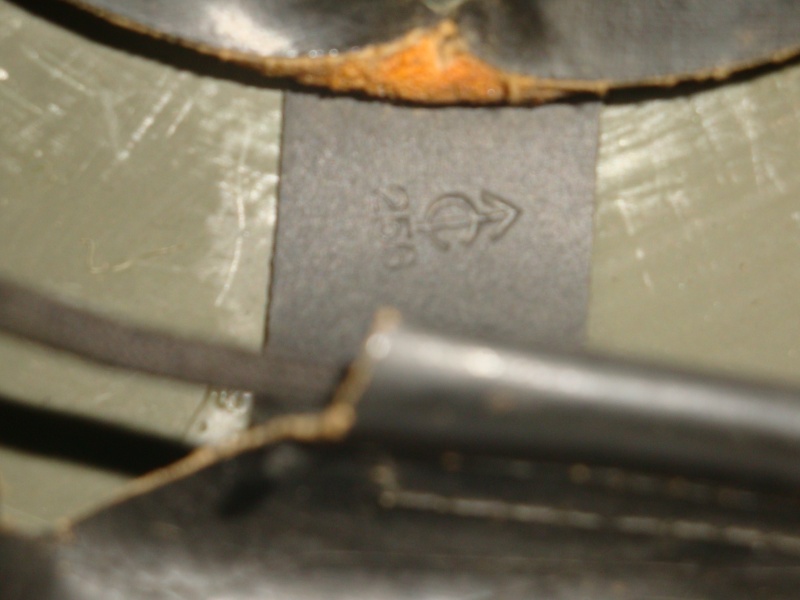
Did anyone provide a brand / manufacturer?I found the small C mark shown on a forum asking about helmet liners from WW2. It was identical to the OP's tool and was said to be English.
It looks like just an acceptance mark.Did anyone provide a brand / manufacturer?
www.cdnmilitarycollectors.com
I have no input. Other than to say nice screen name photo ☺
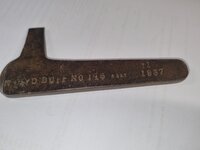
Thanks, Dan. At the risk of breaking my arm patting myself on the back, my take-away from that discussion is that it's not Canadian, but British, clearly some form of certification or acceptance, clearly martial, and evidently based on the number of examples, very common in the 1937-1939 timeframe, same as the tool. I think it strongly suggests the tool in question is military or martial, or at the very least, government order.Here is the discussion for those interested.
Save your shoulder, the tool is mark 19571937-1939
We've been in the gun tool category all along, 3bay, mainly via the look and the words I suspected might be short for HYDRAULIC BUFFER, and Tom thought it looked modified, and these lend a lot of credence! If we could find examples made by Armstrong, Stevens, & Son (or whatever "AS&S" stands for, if something else) produced in the 1937 timeframe and bearing the certification marking, we'd really be cooking.I'm thinking modified gun wrench.
What tool are you referring to?Save your shoulder, the tool is mark 1957