To avoid these ads, REGISTER NOW!

New 200-amp service drop installation before connecting workshop - help/advice needed

gamp945

Well-known member
Joined
Jun 4, 2014
Messages
1,549
Hi all,

I am not a pro and may not use correct terminology. Feel free to correct me.

I need to install a new 200-amp service drop to my residence before I can connect my workshop's subpanel to the home. The reason for this order of operations is because my existing 1960s load center is out of circuits, and the service should ideally be upgraded from 100A to 200A.

I will have a pro install a new meter socket / cut-off switch to the exterior of the home. Before I hire a pro, I want to make some preparations to ensure that some of the finer points get completed to my satisfaction.

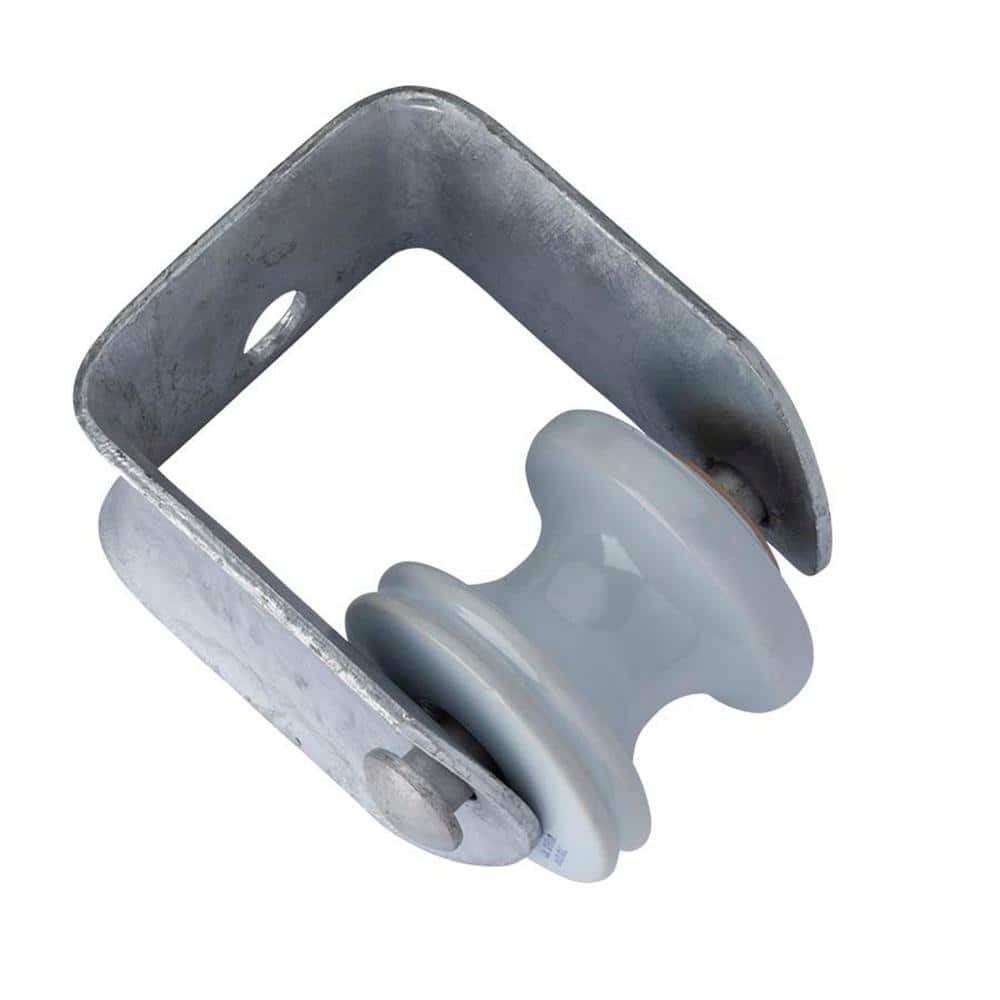
First, my existing triplex wire is connected to a clevis/house knob (terminology?) that just screws in to the eaves' subfascia. Photo below. This shoddy work was done by a pro and I want to properly install a new house knob for the new pro to connect the new triplex to.

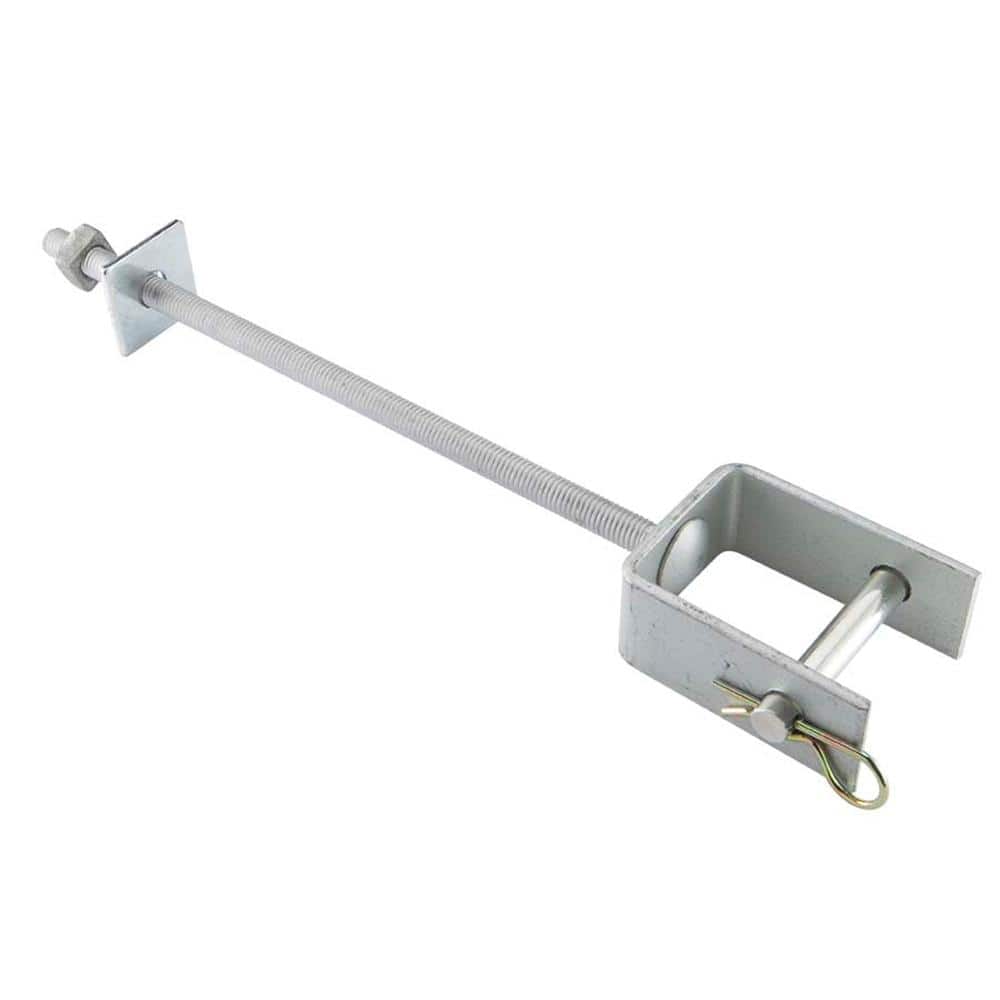
I assume there is some relevant code on house knobs. Can anyone help me out? My searching so far has not been fruitful. In particular, what is the proper way to connect the clevis/house knob to the subfascia? I assume some sort of through-bolt with a large washer on the inside of the eaves/subfascia would be much stronger than the screw-in type. Specific links to a high-quality clevis/house knob would be much appreciated.

Note that I do NOT want to install the new weather head through the roof. I want to keep it on the side of the house.

Also note that the exposed wood to the left of the house knob is from a prior fastening location. A pro re-installed the same 1960s clevis a couple inches to the right of the original location, where you see it now. The tension in the cable appears to be pulling the house knob slighly away from the subfascia. Very shoddy!

Thanks for reading!

IMG_3561_(Medium).jpegIMG_3565_(Medium).jpeg
 
To avoid these ads, REGISTER NOW!

sparky 1971

Well-known member
Joined
Oct 9, 2018
Messages
8,112
Location
Central Iowa
You might not have a choice but to go through the roof. Everything that gets touched, permit wise, has to be brought up to the current code cycle your area is on. If you don't have the proper clearances over the yard or driveway for the triplex, the only way to get it high enough will be to go through the roof with a 2" mast. If it goes through the roof, the weather head has to be a minimum of 3' above the roof.

I also don't remember if it's NEC or the local POCO that I usually deal with, but the attachment point for the triplex has to be a minimum of 12" below the weather head to prevent water from running back into the mast (drip loop).
 
OP
G

gamp945

Well-known member
Joined
Jun 4, 2014
Messages
1,549
I've measured and there is easily 12' of clearance over the driveway, and also easily 12' of clearance over the pedestrian area on the side of the house. To my knowledge, 12' of clearance is required over traffic areas, and 10' over pedestrian areas. So I believe there is enough height to install on the side of the house rather than through the roof.
 

RichieP_MechE

Well-known member
Joined
Jun 23, 2021
Messages
184
Location
Near Pittsburgh
Not much in the code book for point of attachment for a service entrance. All I can find is 230.27
Screenshot 2022-09-17 155701.png
A bolt-through style insulator with a through bolt should be more secure than a screw-in, though there is nothing inherently wrong with that type either. Though in your application, the screw in type isn't ideal with the moment load that you're getting with the cable's tension acting at about 90 degrees to the screw axis.

I don't know of the best brand of house insulators, but my local supply house carries ones made by M&W Electric Manufacturing Co. The quality seems fine. http://www.mwelectricmfg.com/

Your power company might have a document that describes the requirements for the service entrance. Your current setup would not pass in my area - PoCo requires the point of attachment to be lower than the weather head.

First Energy Service Entrance.png
 

wyliesdiesels

Well-known member
Joined
Aug 14, 2012
Messages
20,195
Location
Modesto, CA
Hi all,

I am not a pro and may not use correct terminology. Feel free to correct me.

I need to install a new 200-amp service drop to my residence before I can connect my workshop's subpanel to the home. The reason for this order of operations is because my existing 1960s load center is out of circuits, and the service should ideally be upgraded from 100A to 200A.
Just because youre adding a subpanel doesnt mean you need to increase your service size. you may run just fine off of 100a.... since you didnt list your major loads, no way to know.

also, many Pocos require load calcs before approving a service upgrade. you should check with your PoCo to make sure

I will have a pro install a new meter socket / cut-off switch to the exterior of the home. Before I hire a pro, I want to make some preparations to ensure that some of the finer points get completed to my satisfaction.
Easier said than done.
Since youre gonna install a disconnect, this means the main service panel inside your home will need to be converted into a subpanel, with an isolated neutral bus, and 4-wire feeder. Some panels are not easily convertible due to the way the neutral bus is attached.

Can you post pictures of your main with the cover on and off?

what kind of wire do you have feeding the panel?

Also the GEC to the rods & bonding wires going to the water and gas lines will need to be moved to the new disconnect.

I assume there is some relevant code on house knobs. Can anyone help me out? My searching so far has not been fruitful. In particular, what is the proper way to connect the clevis/house knob to the subfascia? I assume some sort of through-bolt with a large washer on the inside of the eaves/subfascia would be much stronger than the screw-in type. Specific links to a high-quality clevis/house knob would be much appreciated.

The threaded bolt you have now is typically how its done and is the proper way.... you could switch to a thru bolt style
Note that I do NOT want to install the new weather head through the roof. I want to keep it on the side of the house.

Thats gonna be a problem since its not to code. the attachment point needs to be below the weatherhead to impede water intrusion as @sparky 1971 brought up

why dont you want a mast through the roof? thats the proper way to do it. not the way you have it.

Also note that the exposed wood to the left of the house knob is from a prior fastening location. A pro re-installed the same 1960s clevis a couple inches to the right of the original location, where you see it now. The tension in the cable appears to be pulling the house knob slighly away from the subfascia. Very shoddy!

Thanks for reading!
nothing wrong with how they installed it. the tension is due to the drop wire being too short.
 

sparky 1971

Well-known member
Joined
Oct 9, 2018
Messages
8,112
Location
Central Iowa
To add another thing that's already been touched on, the local POCO (Mid American energy, otherwise known as Warren Buffet Power and Light), will not connect a new service to a screw in eyebolt. They require a 5/8" threaded eyebolt through framing with a nut on the inside. I've never been asked to prove it, but have heard stories of other guys trying to sneak it by. Not saying this is the case where you are, but it's possible. If it goes through the fascia, that's gonna be a loooong bolt to get in far enough to get a nut on it.
 
Last edited:
OP
G

gamp945

Well-known member
Joined
Jun 4, 2014
Messages
1,549
Thanks for the reply, wylie.

My PoCo does not require load calcs. I removed the natural gas connection to my home and have gone 100% electric. I am also adding electric vehicle chargers and a workshop. I definitely need 200A service.

The home's load center is also being replaced with a 200A panel, so the existing panel is irrelevant now.

As RichieP noted, the near 90-degree angle of entrance is not ideal for a threaded bolt house knob, even if it technically meets code. Even if a through-bolt is not necessary, I think it is a good upgrade.

I don't want a mast through the rough for a number of reasons I won't go into here. The existing weatherhead location will be moved to near the peak of the roof, and the attachment point will be below that. There is plenty of height on the side of the house to accomplish this. I had a PoCo rep out a couple weeks ago and he confirmed.

I'm still looking for a good source for a through-bolt house knob. I checked out M&W's catalog that RichieP linked to, and I don't see that they make a through-bolt style. I have found a couple by Halex though:


Any suggestions?
 

wyliesdiesels

Well-known member
Joined
Aug 14, 2012
Messages
20,195
Location
Modesto, CA
Since you are gonna be connecting your workshop to your house and are replacing the meter pan, load center etc, have you considered putting in a meter main instead? It might be easier to feed the workshop from that instead of from inside the house. unless of course the load center in the house is on an outside wall
 
OP
G

gamp945

Well-known member
Joined
Jun 4, 2014
Messages
1,549
Wylie, I thought about using a meter main but decided against it. The load center is on the opposite side of the wall where the meter pan is in the photos above, so connecting the new panel to the new meter pan/cutoff will be quite easy.
 

u2slow

Well-known member
Joined
Nov 20, 2011
Messages
3,630
Location
BC
As already covered, your Poco calls the shots on services. This can force you into a mast, or a thru-bolted attachment point... regardless of how your existing drop is arranged. They may or may not allow outdoor main panels.

I figured out my own 90A shop power without the service upgrade. I put in a house main panel with more spaces. 200A upgrade is off in the future somewhere.
 

sparky 1971

Well-known member
Joined
Oct 9, 2018
Messages
8,112
Location
Central Iowa
Wylie, I thought about using a meter main but decided against it. The load center is on the opposite side of the wall where the meter pan is in the photos above, so connecting the new panel to the new meter pan/cutoff will be quite easy.
If you're on the 2020 code cycle, you will have to have an exterior disconnect. The easiest way is with a meter main. You could also use a regular 3R disconnect, but that's going to be ugly, IMO. I wouldn't want one on the side of my house.

As far as the overhead service, is changing to underground an option? We do it here all the time, but if it's in an overhead area, the customer is responsible for trenching and getting the wire to the pole.
 

Jim greengo

Well-known member
Joined
Sep 3, 2018
Messages
7,415
Location
Behind my house
You might not have a choice but to go through the roof. Everything that gets touched, permit wise, has to be brought up to the current code cycle your area is on. If you don't have the proper clearances over the yard or driveway for the triplex, the only way to get it high enough will be to go through the roof with a 2" mast. If it goes through the roof, the weather head has to be a minimum of 3' above the roof.

I also don't remember if it's NEC or the local POCO that I usually deal with, but the attachment point for the triplex has to be a minimum of 12" below the weather head to prevent water from running back into the mast (drip loop).
Dont forget to use rigid pipe instead of emt if you run it through the roof.
 

unslow1

Well-known member
Joined
Mar 3, 2012
Messages
7,882
Location
Illinois
I've had two places with separate service to the garage/shop. Have you asked about that. One of my friends did his as a new service to the garage then ran the house off the garage.
 

wyliesdiesels

Well-known member
Joined
Aug 14, 2012
Messages
20,195
Location
Modesto, CA
I've had two places with separate service to the garage/shop. Have you asked about that. One of my friends did his as a new service to the garage then ran the house off the garage.
most PoCos charge higher fees for second service and some dont even allow 2 services to same property.
 
OP
G

gamp945

Well-known member
Joined
Jun 4, 2014
Messages
1,549
If you're on the 2020 code cycle, you will have to have an exterior disconnect. The easiest way is with a meter main. You could also use a regular 3R disconnect, but that's going to be ugly, IMO. I wouldn't want one on the side of my house.

As far as the overhead service, is changing to underground an option? We do it here all the time, but if it's in an overhead area, the customer is responsible for trenching and getting the wire to the pole.
I goofed on my terminology. I thought you were referring to an exterior load center, which I did consider but decided against. I am indeed installing a meter main with a disconnect:


Unfortunately changing to underground is not an option (or at least not feasible).
 

wyliesdiesels

Well-known member
Joined
Aug 14, 2012
Messages
20,195
Location
Modesto, CA

Jim greengo

Well-known member
Joined
Sep 3, 2018
Messages
7,415
Location
Behind my house
most PoCos charge higher fees for second service and some dont even allow 2 services to same property.
Around here omaha doesnt like it,unless its commercial zones property.
But you can walk across the street to where I am in bellevue and they're fine with it in residential areas.
 

jeepxj

Well-known member
Joined
Mar 2, 2008
Messages
17,964
Its ugly but maybe your POCO will allow for a bracket to not blast through the roof.

ex:

1663535415684.png

1663535426074.png
 
To avoid these ads, REGISTER NOW!

sparky 1971

Well-known member
Joined
Oct 9, 2018
Messages
8,112
Location
Central Iowa
NEC 230.54(F) Drip Loops. Drip loops shall be formed on individual conductors. To prevent the entrance of moisture, service entrance conductors shall be connected to the service-drop or overhead service conductors either (1) below the level of the service head or (2) below the level of termination of the service-entrance cable sheath.

The triplex has to attach lower than the weatherhead. Code doesn't specify how much lower, but the POCO I mostly deal with insists if being a minimum of 12" below. I can't tell how tall the house is, but the low spot of the drop just got a hell of a lot lower when this is taken into consideration.
 

Norcal

Well-known member
Joined
Mar 16, 2008
Messages
13,786
Its ugly but maybe your POCO will allow for a bracket to not blast through the roof.

ex:

1663535415684.png

1663535426074.png
I am thankful that SE cable is not a approved method in PG&E's Greenbook, any SE cable around here is 60+ years old. The point of attachment of the overhead drop needs to be below the weatherhead to have a proper drip loop.
 

jeepxj

Well-known member
Joined
Mar 2, 2008
Messages
17,964
I am thankful that SE cable is not a approved method in PG&E's Greenbook, any SE cable around here is 60+ years old. The point of attachment of the overhead drop needs to be below the weatherhead to have a proper drip loop.

nothing says you can't bring the weather head out onto that pole and mount it higher that the attachment point.
 

theoldwizard1

Well-known member
Joined
Feb 22, 2011
Messages
43,509
Location
SE MI
A neighbor who IS a professional electrician built a large garage/shop. He had a problem with he drop from the pole to the house being too low to begin with, so he installed a 400A drop ! Meter on the back of the garage. Split into 200A for the shop and 200A for the house. I think he ran the feed to the house underground. The panels on the back of the garage were HUGE !

He told me that the POCO would not install 400A service, so he bought the appropriate cable, climbed the pole and did it himself !
 

wyliesdiesels

Well-known member
Joined
Aug 14, 2012
Messages
20,195
Location
Modesto, CA
A neighbor who IS a professional electrician built a large garage/shop. He had a problem with he drop from the pole to the house being too low to begin with, so he installed a 400A drop ! Meter on the back of the garage. Split into 200A for the shop and 200A for the house. I think he ran the feed to the house underground. The panels on the back of the garage were HUGE !

He told me that the POCO would not install 400A service, so he bought the appropriate cable, climbed the pole and did it himself !
he would get arrested if he did that here
 

wyliesdiesels

Well-known member
Joined
Aug 14, 2012
Messages
20,195
Location
Modesto, CA
care to copy the section and how it works? Why is using that bracket I posted not acceptable mounting location for a weather head?
you can setup an account and view the code for free here


sparky 1971

Well-known member
Joined
Oct 9, 2018
Messages
8,112
Location
Central Iowa
care to copy the section and how it works? Why is using that bracket I posted not acceptable mounting location for a weather head?
230.54(C) says that the head has to be above the point of attachment. It goes hand in hand with 230.54(F) that I already posted above. There is an exception that states if it's impractical, the point of attachment can be located not more than 24" away. The customer not wanting it to go through the roof doesn't make it impractical.

As far as the home made bracket, there's that pesky code that states everything has to be listed for the use.
 

sparky 1971

Well-known member
Joined
Oct 9, 2018
Messages
8,112
Location
Central Iowa
Beats the snot outta me. I was just showing a bracket possibility that passed inspection out here.
Are you sure it was inspected? I've seen plenty of Rube Goldberg inventions that were hooked up with no inspection. Not that there weren't codes against it, just nobody to enforce it. The rural POCO's don't care. They don't have anyone inspecting anything on their end, just a crew to go out and hook 'er up.
 

jeepxj

Well-known member
Joined
Mar 2, 2008
Messages
17,964
230.54(C) says that the head has to be above the point of attachment. There is an exception that states if it's impractical, the point of attachment can be located not more than 24" away. The customer not wanting it to go through the roof doesn't make it impractical.

As far as the home made bracket, there's that pesky code that states everything has to be listed for the use.

I’m legit not trolling with this stupid question. Struggling tonight.

By screwing the support eye into the house does that mean the fascia board is listed as a proper support?

edit: also on that bracket what i'm saying is kick the mast out, then bring the weather head above the the point of attachment.
 

jeepxj

Well-known member
Joined
Mar 2, 2008
Messages
17,964
Are you sure it was inspected? I've seen plenty of Rube Goldberg inventions that were hooked up with no inspection. Not that there weren't codes against it, just nobody to enforce it. The rural POCO's don't care. They don't have anyone inspecting anything on their end, just a crew to go out and hook 'er up.
It’s in NJ. You have to get inspected to plug in a toaster it would seem anymore. It was inspected five or so years ago.
 

sparky 1971

Well-known member
Joined
Oct 9, 2018
Messages
8,112
Location
Central Iowa
I’m legit not trolling with this stupid question. Struggling tonight.

By screwing the support eye into the house does that mean the fascia board is listed as a proper support?
It wouldn't pass the POCO around here. They want a bolt through framing with a nut on the inside. Thats a helluva long bolt to get through the soffit in order to install the nut. And if it's screwed to the fascia, the only way it could be below the weather head is with a mast through the roof. It would then have a mast attachment.
 

sparky 1971

Well-known member
Joined
Oct 9, 2018
Messages
8,112
Location
Central Iowa
It’s in NJ. You have to get inspected to plug in a toaster it would seem anymore. It was inspected five or so years ago.
There's also the do it all inspectors that know a little bit about one aspect of construction, but nothing about anything else. The inspector that let that go may have been a plumbers helper for two weeks and that was qualification enough for the jurisdiction. For the most part, we have dedicated electrical inspectors around here and a few do it all at once guys that know absolutely nothing about what they are inspecting.
 
Last edited:

jeepxj

Well-known member
Joined
Mar 2, 2008
Messages
17,964
There's also the do it all inspectors that know a little bit about one aspect of construction, but nothing about anything else. The inspector that let that go may have been a plumbers helper for two weeks and that was qualification enough for the jurisdiction. For the most part, we have dedicated electrical inspectors around here, some do it all at once guys that know absolutely nothing about what they are inspecting.

Yea I get that. luck of the draw on what inspector shows up with what experience and particular bug up their *** that day.

edit: brb signing up for my new inspector gig where my rules are made up and ill pass anything for a donation.
 

wyliesdiesels

Well-known member
Joined
Aug 14, 2012
Messages
20,195
Location
Modesto, CA
Only if got caught !
The PoCo has live active monitoring of their meters. any meter that transmits a power loss signal (has a battery in it) sends an alarm and a dispatch to a troubleshooter who goes out and determines if someone is messing with their equipment.

If a troubleshooter rolls up and sees someone changed the service around, felony charges are next to come if suspect is still there along with fines to the homeowner. they dont play around here.

Profit gouge and execute (PG&E; the other power company in the surrounding area) on the other-hand doesnt care if a meter is disconnected
 

sparky 1971

Well-known member
Joined
Oct 9, 2018
Messages
8,112
Location
Central Iowa
The PoCo has live active monitoring of their meters. any meter that transmits a power loss signal (has a battery in it) sends an alarm and a dispatch to a troubleshooter who goes out and determines if someone is messing with their equipment.

If a troubleshooter rolls up and sees someone changed the service around, felony charges are next to come if suspect is still there along with fines to the homeowner. they dont play around here.

Profit gouge and execute (PG&E; the other power company in the surrounding area) on the other-hand doesnt care if a meter is disconnected
Mid American is the big boy around here. They don't want anyone pulling the meter but their own people, but don't have monitoring. I've had more than one lineman "accidentally" drop a fist full of meter seals. Of course I, disliking litter as much as I do, was sure to pick them up. But I'll be damned if I didn't pull a meter at some podunk trailer house on top of a hill in the middle of a forest and have the REC show up within 15 minutes. Two line crews just happened to be finishing up a job about two miles away at the nearest neighbors when the alarm got set off. I didn't get in any trouble, but still... They only have about 300 customers total and alarms on the meters?
 
To avoid these ads, REGISTER NOW!
Top Bottom