To avoid these ads, REGISTER NOW!

Orienting a 5-15 receptacle

To avoid these ads, REGISTER NOW!

Stuff

Well-known member
Joined
Aug 31, 2013
Messages
572

Stuff

Well-known member
Joined
Aug 31, 2013
Messages
572
Should horizontal outlets be aligned neutral up?
I tried that in an outside receptacle with an in-use cover. Had to flip it hot up so that the ground down angled cord would fit and close the cover.
 

Crazyjake8493

Well-known member
Joined
Sep 26, 2014
Messages
3,968
Location
Upstate NY
Maybe folks should go off and stick some knives in outlets to experiment and put this to bed??? lol

In the end, all we have to do is look at the box for the most common electrical appliance out there, and the proper way is clearly instructed:

919-YOzmSRL._SX522_.jpg

Just don't install that in an auditorium!
 

mcbane

Well-known member
Joined
Jul 23, 2017
Messages
794
Location
California
I have yet to encounter a big wall wart style plug designed to work well with a ground up outlet. And while I have seen lots of electrical mishaps, I have yet to see a knife fall and land between an outlet and whatever was plugged into it.

These days I always install ground down.
 

ishiboo

Well-known member
Joined
Oct 27, 2010
Messages
9,481
Location
Oshkosh, WI
I have yet to encounter a big wall wart style plug designed to work well with a ground up outlet. And while I have seen lots of electrical mishaps, I have yet to see a knife fall and land between an outlet and whatever was plugged into it.

These days I always install ground down.

Wall warts typically have the same size hot/neutral though, don't they? So they can work either direction.

I install everything ground down. Plugs are either designed to go straight out, or straight down with the ground at the bottom.

That's different from 5-50 for example, for some reason those molded plugs all assume the ground will be on the top.
 

PCustoms

Well-known member
Joined
Jul 23, 2011
Messages
23,012
Location
VT
I have yet to encounter a big wall wart style plug designed to work well with a ground up outlet. And while I have seen lots of electrical mishaps, I have yet to see a knife fall and land between an outlet and whatever was plugged into it.

These days I always install ground down.

Not a knife, but had a piece of carbon fiber fall on a bandsaw plug partly pulled out. Smoldered for a few minutes before someone noticed. Also seen a piece of filler rod short across a grinder plug, but this one shorted almost instantly.

I mounted all mine ground up, it's a PITA for some of the power strips and the windo AC.
 

mcbane

Well-known member
Joined
Jul 23, 2017
Messages
794
Location
California
Wall warts typically have the same size hot/neutral though, don't they? So they can work either direction.

I have encountered numerous wall warts that have a ground prong. No way to invert the wall wart unless you want to cut off that prong.
 

nh_yota

Well-known member
Joined
Mar 10, 2015
Messages
4,077
Location
Seacoast New Hampshire
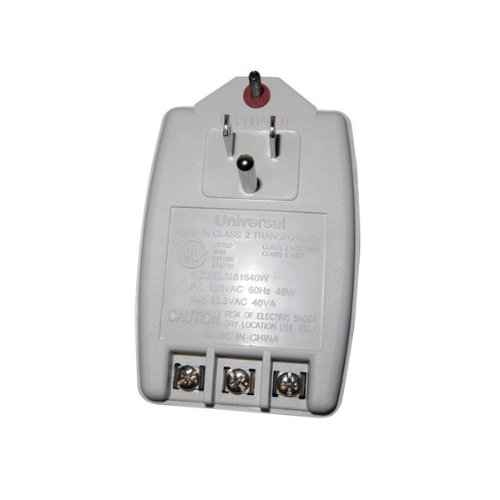
I've always thought that duplex receptacles should be built with one facing up and the other facing down so you can fit two wall warts on them.
 

Stuff

Well-known member
Joined
Aug 31, 2013
Messages
572
I've always thought that duplex receptacles should be built with one facing up and the other facing down so you can fit two wall warts on them.

Someone must have anticipated your good idea so found a way to prevent that and screw things up.

41JCLYj3ILL.jpg
 
To avoid these ads, REGISTER NOW!

Crazyjake8493

Well-known member
Joined
Sep 26, 2014
Messages
3,968
Location
Upstate NY
I have seen them on alarm systems, video game consoles, and a laptop charger.

Hmm. No experience with alarm systems, but I've never had a game console with one. All my laptop chargers have been the square white thing Mac uses, or the style with the converter/brick in the middle of the cord somewhere.
 

Git

Well-known member
Joined
May 18, 2008
Messages
6,894
Location
S Cal
Around here - the only time you see a ground up is on an outlet that is controlled by a wall switch
 

Norcal

Well-known member
Joined
Mar 16, 2008
Messages
13,758
4 pages & nothing settled, now anyone viewing this thread can see what a utter waste of time discussion of receptacle orientation is. :evil:

:deadhorse :deadhorse :deadhorse :deadhorse


Still boils down to personal preference, or job specs, not any code.
 

75gmck25

Well-known member
Joined
Jul 21, 2014
Messages
1,325
Location
Alexandria, VA
It reminds me a lot of car discussions about the best brand, type and weight oil to use in a particular car. The discussion never really ends.

Bruce
 

mm08822

Well-known member
Joined
Jan 13, 2012
Messages
5,954
Location
NJ
4 pages & nothing settled, now anyone viewing this thread can see what a utter waste of time discussion of receptacle orientation is. :evil:

:deadhorse :deadhorse :deadhorse :deadhorse

Still boils down to personal preference, or job specs, not any code.
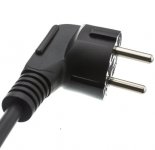
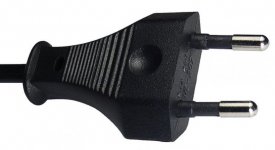
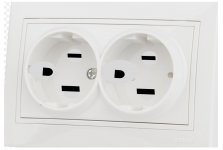
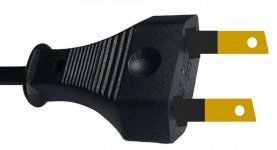
And NEMA'tized versions of Schuko would make it all a non-issue and eliminate the present shock risks we all live with day-day.
It's just a protected pin and sleeve concept.

Screen Shot 01-16-18 at 06.11 PM.JPG

Screen Shot 01-16-18 at 06.07 PM.JPG

Screen Shot 01-16-18 at 06.04 PM.jpg
 

Norcal

Well-known member
Joined
Mar 16, 2008
Messages
13,758
And NEMA'tized versions of Schuko would make it all a non-issue and eliminate the present shock risks we all live with day-day.
It's just a protected pin and sleeve concept.

Screen Shot 01-16-18 at 06.11 PM.JPG

Screen Shot 01-16-18 at 06.07 PM.JPG

Screen Shot 01-16-18 at 06.04 PM.jpg

So you want to have 250V rated devices with a 120V supply? No thanks.
 

mm08822

Well-known member
Joined
Jan 13, 2012
Messages
5,954
Location
NJ
So you want to have 250V rated devices with a 120V supply? No thanks.

Nope. You missed the point entirely.

Im talking about the concept of recessing the receptacle socket so the plug blades are covered before being energized.
Would be very easy for many sizes.
 

Barnabas

Well-known member
Joined
Nov 24, 2013
Messages
361
Location
Raleigh, NC
When I worked as a residential electrician, we installed ground down except the one behind the refrigerator was installed ground up.
 

Norcal

Well-known member
Joined
Mar 16, 2008
Messages
13,758
Nope. You missed the point entirely.

Im talking about the concept of recessing the receptacle socket so the plug blades are covered before being energized.
Would be very easy for many sizes.

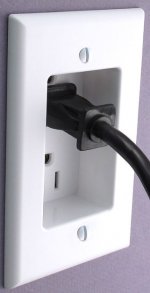
You can buy them already, used one behind my wall mounted TV, the Brit 13A plugs have insulating material for a short distance after the prongs emerge from the plug body, the ground prong (their lingo "earth" pin), also opens the safety shutters on the receptacle it's a more robust version of the required tamper resistant receptacles.

https://www.worldstandards.eu/electricity/plugs-and-sockets/g/
 

mm08822

Well-known member
Joined
Jan 13, 2012
Messages
5,954
Location
NJ
You can buy them already, used one behind my wall mounted TV, the Brit 13A plugs have insulating material for a short distance after the prongs emerge from the plug body, the ground prong (their lingo "earth" pin), also opens the safety shutters on the receptacle it's a more robust version of the required tamper resistant receptacles.

https://www.worldstandards.eu/electricity/plugs-and-sockets/g/

The recessed recept used behind tv's is getting closer...but still not what I had in mind. Had to make my own.

This is almost ........................................this.

Screen Shot 01-16-18 at 10.51 PM.JPG..................Screen Shot 01-17-18 at 12.10 AM.JPG

and Nema'tized plugs to go along with it.....

Screen Shot 01-17-18 at 12.08 AM.jpg Screen Shot 01-17-18 at 12.09 AM.JPG

And finish it off with shutters on the recept that work well, not today's garbage.
 

Norcal

Well-known member
Joined
Mar 16, 2008
Messages
13,758
My extension cords say the insulation is 600V rated. I don't see the issue.

Then please refrain from doing wiring, electrical manufacturers make devices for every voltage, ampere rating, mixing them creates a dangerous condition, 125V, rated are used for 120 volts, 250V, for 208,240 volts.
 

PCustoms

Well-known member
Joined
Jul 23, 2011
Messages
23,012
Location
VT
Then please refrain from doing wiring, electrical manufacturers make devices for every voltage, ampere rating, mixing them creates a dangerous condition, 125V, rated are used for 120 volts, 250V, for 208,240 volts.

What are you talking about?

Sjoo, thhn etc is either going to have a 300 or 600v (I think there's a higher one too) rating. I've never seen a wire rated at just 125v.
 

Norcal

Well-known member
Joined
Mar 16, 2008
Messages
13,758
What are you talking about?

Sjoo, thhn etc is either going to have a 300 or 600v (I think there's a higher one too) rating. I've never seen a wire rated at just 125v.

You are the one discussing wire, that was never part of the discussion, DEVICES and their rating is the topic.
 

u3b3rg33k

Well-known member
Joined
Dec 18, 2017
Messages
4,048
You are the one discussing wire, that was never part of the discussion, DEVICES and their rating is the topic.

Device ratings on appliances? i don't see discussion of that here. someone was talking about euro-style outlets above. do you consider those devices?
device power inlet ratings are typically nominal - not exact. 110V gear is rated for many things - 110V, 115V, 117V, 120V, 125V are "normal" device ratings.

I've only ever seen things go wrong when 117V gear gets plugged into 208V because someone measured voltage line to neutral, then attached to a PDU where it's line to line. inlet fuse popped.

Personally I prefer all gear to have auto-rainging switch mode power supplies. 90-250V or bust.
 

mm08822

Well-known member
Joined
Jan 13, 2012
Messages
5,954
Location
NJ
SMH……
This thread is about wiring device orientation and all of the reasons/practices for one position over the other. I brought up an existing utilized concept that could easily be transitioned into the NEMA world and would remove virtually all of the reasons listed above.

Nowhere was there any suggestion to miss-apply voltage/current levels of wiring devices to different voltage systems. Hence, my second post with mocked up with NEMA 5-15 devices superimposed onto the original Shucko style pics used b/c the terms "concept" and "NEMA’tized" were glossed over in the original post.

Devices as used in typical NEC context is not an (energy consuming) utilization load but are wiring devices that transfer or control electricity, specifically a receptacle in this thread. Otherwise, cb’s, switches, etc.

Voltage rating of cords and auto-ranging loads etc. is irrelevant to the topic.
 
To avoid these ads, REGISTER NOW!
Top Bottom